


9,99 €
Mehr erfahren.
- Herausgeber: 50Minutes.com
- Kategorie: Ratgeber
- Serie: Health & Wellbeing
- Sprache: Englisch
Change is only 50 minutes away! Find out everything you need to know about sophrology with this straightforward guide.
Sophrology is a powerful tool for promoting physical and mental health, and can be used for a range of purposes, from treating stress and insomnia to preparing for surgery or childbirth. The discipline was developed by the Colombian psychiatrist Alfonso Caycedo in the 1960s, and its popularity has risen steadily ever since. With this guide, you can quickly gain an understanding of its basic principles and applications and see the benefits for yourself!
In just 50 minutes you will be able to:
• Understand the history and key principles of sophrology
• Find out how sophrology can help you in various areas of your life
• Practise some simple sophrology exercises at home
ABOUT 50MINUTES.COM | HEALTH AND WELLBEING
The Health and Wellbeing series from the 50Minutes collection is perfect for anyone looking to be healthier and happier in their personal life. Our guides cover a range of topics, from social anxiety to getting ready for a new baby, and provide simple, practical advice and suggestions to allow you to reduce stress, strengthen your relationships and increase your wellbeing.
Das E-Book können Sie in Legimi-Apps oder einer beliebigen App lesen, die das folgende Format unterstützen:
Seitenzahl: 32
Veröffentlichungsjahr: 2018
Ähnliche
















SOPHROLOGY FOR BEGINNERS
SIMPLE TECHNIQUES FOR RELAXATION AND WELLBEING
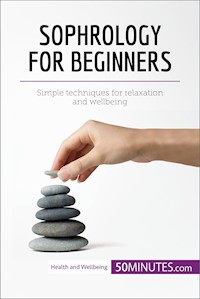
Problem: sophrology aims to restore mental and physical balance through a range of techniques inspired by both Eastern and Western approaches, but the discipline is still relatively little-known. Once you have grasped the basic principles of this method, you will be able to incorporate it into your everyday life for therapeutic purposes and for your personal development.Aims: to understand the basic principles of sophrology and learn some simple exercises to carry out at home, either to deal with problems such as stress and insomnia or simply to gain a better understanding of your body, relax and boost your overall wellbeing.FAQs:Is sophrology the same thing as hypnosis?Is sophrology the same thing as meditation, yoga or psychoanalysis?Can I carry out sophrology without the help of a sophrologist?Who can carry out sophrology and how does it work?How long does a course of sophrology last?What happens during a course of sophrology?How can I become a Caycedian sophrologist?Sophrology was developed in the 1960s by the Colombian psychiatrist Alfonso Caycedo (born in 1932) with the help of a team of other doctors and scientists. The term is a neologism which combines three Greek roots: sos (“harmony”), phron (which is linked to the mind and wisdom) and logos (“word”, “reason” or “discourse”). The approach synthesises a number of Eastern meditation techniques and Western relaxation methods in order to expand the individual’s consciousness and enable them to unlock their full potential.
Sophrology is suitable for individuals of any age and level of fitness, and is equally effective for people who are suffering from illness and people who are in generally good health. It can be used in the treatment of addiction, psychosomatic illnesses and anxiety, and is also helpful as an accompaniment to children’s activities and sports.
The main aim of sophrology is to create a sense of harmony between the practitioner’s mind and body by reaching a profound state of relaxation on the border between sleep and wakefulness (referred to as the sophroliminal level).
The discipline is based on the principle that our bodies and minds are inextricably linked, and involves physical exercises that aim to strengthen our consciousness and alter our perception of reality. Sophrology raises our awareness of the connections between our body and mind and teaches us that our perception of events is relative and can be changed. This helps us to develop a positive attitude and greater resistance to stress and everyday physical and mental suffering.
Sophrology teaches us to gain a better understanding of ourselves, get back in touch with our feelings, think positively, boost our concentration and manage stress effectively. It also makes us aware of our own potential and can help rebuild our self-confidence, making it an excellent way to maintain inner balance and achieve overall wellbeing.
WHAT IS SOPHROLOGY?
THE HISTORY OF SOPHROLOGY
Sophrology was established in 1960 by the psychiatrist Alfonso Caycedo, an expert in hypnosis, and its popularity has grown steadily ever since. By the 1970s, it was being used in medical and paramedical treatments and being taught in psychiatry faculties in some 60 countries.
Caycedo initially carried out hypnosis alongside some of the psychiatric treatments that were in use at the time (for example, on patients who had undergone electric shock treatment) in hospitals in Spain. However, he soon decided to develop an alternative, more scientifically rigorous method. In 1960, he coined the term “sophrology” and founded the Sophrology Society in Spain.




