


Erhalten Sie Zugang zu diesem und mehr als 300000 Büchern ab EUR 5,99 monatlich.
- Herausgeber: Books on Demand
- Kategorie: Geisteswissenschaft
- Sprache: Englisch
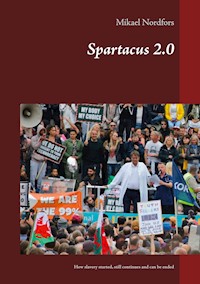
With the development of the Internet, traveling and modern media, the world has become a "global village", where everyone can contact everyone else directly. On the other hand, the economic power over the world has been more and more centralized, and we are seeing the development into more and more of the "one percent society", where only the super-rich ripe the fruits of the increased productivity. This book postulates that a new organizational model and political system named Demosocracy can become the antidote to the corrupted power hierarchies that currently govern our world. Demos means people, Sophus means wisdom and Kratia means power in the Ancient Greek language. Demosocracy creates wise governance by combining the hands-on experience and control of the crowd with the knowledge and wisdom of the experts (who in this system are not corrupt).
Sie lesen das E-Book in den Legimi-Apps auf:
Seitenzahl: 239
Veröffentlichungsjahr: 2021
Das E-Book (TTS) können Sie hören im Abo „Legimi Premium” in Legimi-Apps auf:
Ähnliche




















Table of contents:
Introduction:
Chapter 1. Wherever you go, you see slaves
Chapter 2: The Origins of Slavery
Chapter 3: The Consequences of Slavery
Chapter 4: Corruption
Chapter 5: The Carrot
Chapter 6: The Whip
Chapter 7: Death, a Big Adventure, or the Ultimate Catastrophe?
Chapter 8: Democracy
Chapter 9: Liquid Democracy and Demosocracy
Chapter 10: Demosocratic Economy
Chapter 11: Demosocratic media:
Chapter 12: Demosocratic Medicine
Chapter 13: Demosocratic Consciousness:
Chapter 14: How can we step by step form our new society?
Chapter 15: Freedom Town, a vision of a slave-free municipality
Introduction:
This is the second, edited version of the book from November 2019, “Demosocracy, The Solution to The Political Dilemma” The initial co-writer, Loke Hagberg asked me to not be a co-writer anymore because of personal reasons. I thank him deeply for his support to help creating this book from the start and for his support in proof-reading and giving constructive feedback and ideas. I have added some updated info relevant to the Covid 10 crisis, near death experiences and the psychological consequences of slavery that were not present in the previous edition.
The purpose of this book is to help to create a world free from slavery, tyranny, and oppression.
The root of this problem has to do with the institution of slavery that was a byproduct of the change from the hunter and gatherer society to the large-scale agricultural society many thousand years ago. This change had the advantage of us being able to feed more people but had the disadvantage to make us leave the way of life we have been adapted to for millions of years. The result was a society called” the conquering culture” dominated by people with power addiction, fighting and manipulating each other in their insatiable quest for world dominance, with slavery, oppression, wars, and limited freedom of expression as a consequence.
The invention of democracy and its implementation has limited some of the worst consequences of this phenomenon, but there is still a long way to go in order to create an oppression-free society.
With the development of the Internet, traveling and modern media, the world has become a "global village", where everyone can contact everyone else directly. On the other hand, the economic power over the world has been more and more centralized, and we are seeing the development into more and more of the "one percent society", where only the super-rich ripe the fruits of the increased productivity.
This book postulates that a new organizational model and political system named Demosocracy can become the antidote to the corrupted power hierarchies that currently govern our world. Demos means people, Sophus means wisdom and Kratia means power in the Ancient Greek language. Demosocracy creates wise governance by combining the hands-on experience and control of the crowd with the knowledge and wisdom of the experts (who in this system are not corrupt).
This invention has hopefully solved the ancient old debate from Plato’s” the state” if the experts (Sophus) or the people (Demos), shall rule(Kratia). The solution is not either or, but both, in a harmonious co-operation. This is called Demosocracy, and I am sure that Socrates would have agreed about this, if he had been alive today.
In Demosocracy, everyone has equal access to decision making and can decide for themselves when they want to take an active part in politics, company decisions and decisions in their local surroundings or choose not to - with the help of modern technology, assisted by the best experts available.
There will be maximal transparency and no power positions to fight about. However, implementing Demosocracy is not only about introducing a new voting system and a new way to organize politics, law, science and businesses. It is also a new way of thinking and relating, and has great therapeutic implications for mankind that I hope it can lead us to a freer society with a decentralized, human-friendly and high-tech new garden of Eden as result.
About the author:
Mikael Nordfors is the father of Liquid Democracy and Demosocracy and the first person in the world who created a party and a software for Liquid Democracy. Nordfors is also a medical doctor, author, pianist and composer. He is a co-author of the International Bestseller Hypericum & Depression and the producer/composer/of four Music CD: s.
He has been advising many high-level officials and governments like former President Michail Gorbachev, the United Nations, the Labor Party in Great Britain, the Democracy Collaborative and the Federal Election Committee in the US, President Benazir Bhutto of Pakistan, the Patriarch of the Greek Orthodox Church, and the Swedish, Canadian and Finnish Governments.
Chapter 1. Wherever you go, you see slaves…
Today, many of us feel like we are powerless to shape our own reality. We are stuck in this anonymous machine we call society. We have our daily duties, carry them out and sometimes have spare-time. A lot of time is spent hunting for meaning, meaningful relations, meaningful activities – and they are all marketed in a way that always keeps you hunting, it can never stop, you can never be complete. Wherever you go, you will see the faces of unhappy slaves, a wage-slave, working in a factory, an opinion-slave, working in science or media, with the choice of freely expressing themselves or losing their work and reputation, a medicine slave, having to prescribe poisonous medicines that do not heal in a system kidnapped by the medical industry, a political-slave, having to adapt to the viewpoints to what is popular, in order to get re-elected, a fashion-slave, an upper class-slave, having to confirm to all the stiff manners of the upper class, or get rejected, a company-slave, doing all the right things in order to make a career, a teacher-slave, having to teach the children to become slaves, a
consumer-slave, needing to have money in order to survive…
Even the masters are slaves in a way. The business CEO is a slave under the pressure from the shareholders and the board, and board members and owner’s slaves of the stiff demands from the international competition. When you walk in the street in a major western city, you see all these slaves stressing around, hardly noticing their surroundings in the hunt to be” good enough”, and this never happens, just like in the myth of King Sisyphus, who was forced to roll an immense boulder up a hill only for it to roll down when it nears the top, repeating this action for eternity.
What is a slave?
Encyclopedia Britannica (1) defines slavery as” A condition in which one human being was owned by another. A slave was considered by law as property, or chattel, and was deprived of most of the rights ordinarily held by free persons.”
Even if formal slavery was abolished in most countries of the western world more than 100 years ago, the repercussions of this terrible invention are still widespread among us, and we all suffer greatly from the culture, religious believes and economic system created by slavery.
A slave has some basic characteristics:
1. A slave is owned by someone else.
This means that they are not free. They cannot do whatever they like without asking for permission first. They are neither responsible, nor in charge of their own life.
2. A slave is a commodity, not a human being with a spirit.
The wage-slave is a commodity of their employer, the consumer-slave a commodity for the market, the medical-slave a commodity to the health system, and in the end, the citizen is a commodity of the state.
This mentality destroys our perception of ourselves and our relationships. We start to view everyone as a commodity supposed to be used, instead of real person with their own needs and values, independent of us. Our children and our partner will be our property instead of fellow beings, our friends are stepping stones in order to make a career, or possible customers for a multi-level marketing system.
In the family movie” Madagascar” this is very well illustrated in the scene where the Lion Alex comes to the jungle for the first time, whereupon his friends from the Zoo suddenly are transformed from friends to” steaks”.
This mentality has poisoned our society and is sometimes masked under the term” a professional attitude” In the working situation as lawyers, doctors, banking employees etc., we are not supposed to show any feelings, neither engage emotionally in our relationships with co-workers and customers. The result is that we spend most of our day in some sort of emotional vacuum, which can be one of the main causes for the widespread prevalence of depression insomnia and anxiety in our society.
3. Slaves have no right of respect, or human rights.
The owner of a slave can do whatever they like to their property. They can punish them, rape them and even kill them without any repercussions, just as they can throw out their sofa any time. The only reason to care for them is that they are of value to the owner and can be used. If the owner tortures their slaves too much or don’t give them food, they will not be good workers, and in the end make the owner lose money. just as their sofa will not look beautiful and be comfortable to sit inside when they receive guests if they do not take care of it. The commodities have no value in themselves and can be replaced at any time.
4. Slaves have a price tag.
Slaves always carry a price tag and can be sold and bought on the market any time.
In our culture, most of us have price tags, and can be bought and sold on the market any time. We have sexual price tags on the sexual market and price tags on the employment market. We compete fiercely with our fellow beings in order to raise our price tags.
This price tag also reflects our self-perception and makes us unconsciously divide ourselves in different status-realms and takes away the true self-confidence from everyone. We identify ourselves with our price tag, and the slaves with a high price tag often becomes arrogant, and the ones with a low-price tag suffers from bad self-confidence. The result is the creation of a false ego, where we identify ourselves with our role as commodity instead of our true nature.
It does not matter whether the price tag is 10 dollars or a 100 million dollars, a slave is still a slave.
Natural hierarchy will exist as long as there are scarce resources and supply and demand thus govern those prices. The point is that the perception should primarily not focus on the price and instead on intrinsic value.
5. Slaves never work enough.
As the masters wants to get maximum profit out of their commodity, the slaves are almost always forced to work much more than they want and what is healthy for their mind, body and spirit. In special cases (where the rights of the workers are plenty) they keep wages down to the minimum level for maximum productivity.
6. Slaves have no intrinsic value and are not supposed to stand up for themselves.
As a consequence of the greed of their masters, their slaves are newer considered to be good enough.
This is cemented in the Mosaic religions in the story of original sin. When you are punished capriciously, you are primed to believe that you are arbitrarily guilty as well.
It is of utter importance for the masters to take away the self confidence from their property, in order to make them obey, and think more of the wishes of their masters, than on their own needs.
7. Slaves are not equal to free humans and are supposed to kneel down to their masters.
You have to behave differently to you masters than to your fellow slaves, don’t look into their eyes, not be too friendly etc.
8. Slaves can be sold any time
Slaves have no right to personal relationships. Children can be separated from their mothers, siblings from each other and husbands from wives.
In tribal societies, the tribe always stay together, and in most cases, the extended families live together for the rest of their life. These strong personal bonds are one of the main foundations of human well-being, and the main reason that poor people in the third world, who have a more tribal lifestyle often are and look much happier. Major epidemic studies have found much lesser prevalence of psychiatric diseases in third world countries, with a more preserved extended family structure than in the west (2).
The new killer in the western world is loneliness, and lack of meaningful human relationships. Now, many are sitting alone in their one-room flats, watching the TV series” friends”, or playing computer games instead of meeting real friends.
Families are often separated over many continents, and friend bonds are often not as strong as the tribal family bonds. You often choose friends because of common interests, or that they fulfill your expectations of a friend. If you or your friend have a crisis, is sick, or have a bad day, you are less likely to not walk out of the relationship if he/she is a family member compared to if you have no familiar ties.
Nowadays, the young people spend so much time with their computers, that they don’t even have time to meet each other and have sex. The sexual debut age has increased with more than one year in the US (3).
One of the reasons that the royal families and the upper class often had many divorces and bad marital relationship might be that they were most of the time not brought up by their real parents, but by slaves (nannies), who were exchangeable, so that their parents didn’t have to bother taking care of children.
In the movie The King's Speech from 2010(4), King George VI only met his parents once a week in his childhood in a scene that resembles a military parade more than a close relationship. The same is now happening to us in the western world, where our children more and more are brought up by exchangeable wage slaves in impersonal day-care institutions and schools. Living alone with a frustrated lonely mother in a small flat is also not a good alternative for a child, compared to being taken care of by an extended family in a tribal community. The same is true for the elderly.
I once visited a lecture by the famous clown-doctor Patch Adams, where he asked the audience:” How many of you would like to spend your last days in a nursing home?”
No-one raised their hands. Then he asked the obvious question:” Why do we then have nursing homes?”
We believe there is a strong relationship between the repercussions of slavery, and the fatal epidemic of loneliness and alienation in the western world.
9. Slaves are not Supposed to be Happy
In many cities in the western world, it is considered as a sign of mental illness if you look happy. If a slave looks too happy, the master might think he has been lazy and have not performed his tasks properly.
10. Slaves are not supposed to have Love
Slaves does not have time for love. To love also means taking care of your own and the other persons needs and comfort. That is a luxury slaves cannot afford. They can also be separated ant time from their loved ones by being sold, which means investing in love and strong personal relationships is futile.
11. Slaves have no right to govern their own Sexuality.
Prostitution and trafficking are consequences of slavery. The Masters, who are often incapable of having mutual loving relationships (or have them to preserve power within the family) compensates this by the use sexual slaves or prostitution.
12. The ultimate slaves are the (non-human) Animals. (5)
Before slavery, the total biomass of wild animals on our planet was ca 400 million tons.
Now it is:
600 million tons of the animals are cattle and livestock, 350 million tons are human beings and 20 million tons are wild animals. Soon, there will be no free wild life on our planet if this development continues.
The Master Demon
The result of the slave mentality is that we all will end up with some kind of faceless ghost-like entity in our subconsciousness, that constantly whispers to ourselves:” You are not good enough”,” You don’t work hard enough”,” Nobody cares about you”,” You are not allowed to do what you ally want” etc.
This demon is the result of many years of programming from our slave dominated society, and is not as present in tribal people as in the western world. We believe this is the main reason they are happier, although they most of the time have much lower material standard. In this book, we will teach you some techniques on how to exorcize this ghost.
Summary:
The slavery system has made us lose our self-respect and freedom, made us identify ourselves and our fellow beings with our price tag and our position in society, instead with our true spiritual self. This has taken away very much of our natural love for life and our fellow human beings. We become spiritual zombies, remotely controlled by someone we hardly not even know and feel powerless without any inherent value, separated from our relatives and fellow beings. We feel helpless, not in control, and that is one of the main causes for the growing rates of depression and the galloping use of psychiatric medications and illegal drugs in the present” civilized” world.
It also is the main reason for wars, poverty, inequality, starvation in spite of massive increases in production capacity and the emptiness many feel inside that they try to compensate with consumption, entertainment and porno.
John Lennon describes it on the spot in the lyrics of his song
” A Working-Class Hero”
“As soon as you're born, they make you feel small
By giving you no time instead of it all
Till the pain is so big you feel nothing at all
A working-class hero is something to be
A working-class hero is something to be
They hurt you at home and they hit you at school
They hate you if you're clever and they despise a fool
Till you're so fucking crazy you can't follow their rules
A working-class hero is something to be
When they've tortured and scared you for twenty odd years
Then they expect you to pick a career
When you can't really function, you're so full of fear
A working-class hero is something to be
A working-class hero is something to be
Keep you doped with religion and sex and TV
And you think you're so clever and classless and free
But you're still fucking peasants as far as I can see
A working-class hero is something to be
A working-class hero is something to be
There's room at the top they are telling you still
But first you must learn how to smile as you kill
If you want to be like the folks on the hill
A working-class hero is something to be
A working-class hero is something to be
If you want to be a hero well just follow me
If you want to be a hero well just follow me”
This picture might make you anxious, maybe you disagree, maybe you even like life this way – no matter what, you can have it better, there is another society possible – one where we cooperate and co-shape reality in a meaningful way that makes us feel complete every day, where we can have more spare-time and spend it on things which are actually meaningful. We can end slavery.
How? You may ask, perhaps you do not believe it.
It is rather easy really, but to diagnose the problems of the current state, we need to analyze how we got here…
References chapter 1:
1:https://www.britannica.com/search?query=slavery
2: Psychol Med Monogr Suppl. 1992;20:1-97. Schizophrenia: manifestations, incidence and course in different cultures. A World Health Organization ten-country study. Jablensky A1, Sartorius N, Ernberg G, Anker M, Korten A, Cooper JE, Day R, Bertelsen A.
3:https://www.theguardian.com/commentisfree/2018/nov/21/millennials-sex-stressed-young people worry
4:https://en.wikipedia.org/wiki/The_King%27s_Speech
5:https://www.pnas.org/content/pnas/suppl/2018/07/13/1711842115.DC1/1711842115.sapp.pdf
Illustrations:
https://upload.wikimedia.org/wikipedia/commons/b/b2/New_office.jpg
https://www.pnas.org/content/pnas/suppl/2018/07/13/1711842115.DC1/1711842115.sapp.pdf
Chapter 2: The Origins of Slavery.
The Garden of Eden:
Animals that are governed by their instincts experience behavior's that are necessary for survival as pleasurable and comfortable, while that which constitutes a danger to them is perceived as unpleasant. A lion does not need to muster a lot of self-discipline to go out hunting. A squirrel does not need a five-year plan to gather nuts. And people need not to be forced to go out in the forest in order to gather berries and hunt. Moose hunting in northern Sweden is a veritable festival. During the autumn weekends, the forests are crowded by mushroom and berry pickers who enjoy filling their baskets even though it is really much simpler to buy the berries in a store.
Almost all human recreational activities are related to hiking, hunting, gathering of food or making us attractive to God/gods and the opposite sex.
The hunter and collectors still live strong among us, but now we have transformed hunting to sports, and collecting to shopping.
Maybe it's our time as hunters and gatherers, which in the Bible is symbolized by the Garden of Eden - a time when we still lived well on what nature had to offer and our work to survive did not take so much time that we have no time to play, sing, enjoy and rest.
According to new findings, our hunter-gatherer times were a real golden age when we only needed to work approximately four hours per day with relatively pleasurable activities such as hunting and collecting and could spend the rest of the time devoted to rest and social activities. (1)
Even today there are a few people who live like this in some remote islands or in the inaccessible jungles of South America, Africa and Asia. These people live in harmony with nature (until their existence is threatened by multinational forest companies, huge dams or highway facilities), they are often very loving towards their children and have enormous reverence and respect for both their ancestors and nature itself.
Social organization is characterized by small, autonomous units where everyone knows each other and live in an "extended family" with much warmth, closeness, and community. Private property is an unfamiliar concept and the tribe members share collectively both to life's joys and its difficulties. There is often a certain hierarchy, with a chief and a shaman ("medicine man") in the organization's peak, but these positions are dependent on the tribal members' support to in order to maintain their status.
There are a number of laws and taboos, but these are not formalized in writing and lives in an oral tradition, just as the tribe's history, myths, legends about ancestors and creation stories.
There is no indication that the war in the modern sense occurred in the hunters' and gatherers era. The graves that have been found from the pre-agricultural times contains far fewer cracked skulls and other signs of violent death, than subsequent burial places. (1)
The Emergence of the Conqueror Culture:
5000-10000 years ago, there was a huge upheaval in people's living conditions.
Essentially there were two inventions that were behind this, namely the agricultural revolution and the written language. Perhaps this is how it could have happened: Starvation and deprivation due to poor hunting or gathering, food shortages and increased competition for land forced led to a new kind of organization. It was found that the availability of food increased if you started to actively plant crop. This new organization enabled us to supply food for many more people in the same area. It also meant that we left the kind of life we had lived for millions of years.
Instead of following our instincts and desires in order to live in harmony with nature, we had to walk behind a plow twelve hours a day, reaping, threshing, building houses and storage buildings, clear land, mine coal and metals. We had to cultivate "character" and "self-discipline". We needed the work ethic that could force us up before dawn and keep us going until we fell into bed at night. Religion incorporated these ideals into our belief systems, and the only way to avoid hell and end up in a better place was to obey and believe.
The height of self-discipline and mortification stood for saints. Relaxation and normal human desires were seen as immoral and destructive principles and representations of "the devil".
With the concept of private property and money came a tremendous increase in the number of conquests, power struggles, conflicts and war. We were able to expand our territory and our assets by attacking nearby communities. A warrior class emerged, which could also be used to protect the new ruling class privileges against its own subjects. The upper class could thus live a life of parties, hunting and gathering while property-less slaves had to work hard in order to survive - a pattern that has not changed significantly during the latest millenniums in our history.
War became a profitable business. A large army usually beats a small one, which meant we were forced to organize ourselves in bigger and bigger unities in order to survive. Almost all small, tribal communities were conquered and enslaved, until the major kingdoms covered almost the entire planet. The only surviving natural tribal societies existed in places not yet accessible to the conquering culture in remote places like the Amazons and distant islands of the South Pacific etc.
In his book” Saharasia” (2), Professor James DeMeo from the United States do a cross-cultural review and mapping of data from over 1000 different human cultures. An early period of generally peaceful social conditions is documented in the prehistory of humanity, but with a large shift towards patriarchal-authoritarian and violent social conditions in the Sahara region following a major climate shift from fertile grasslands to harsh desert conditions at ca. 5000-4000 BC. Then living conditions and cultures changed drastically. This also coincides with the introduction of agriculture in ancient Turkey / Mesopotamia about 10,000 years ago. Large epochs of cultural diffusion are also presented on maps showing how violent patriarchal authoritarian, sex-repressive and child-abusive behaviors spread from their Sahar-Asia origins to almost every corner of the world. It presents previously unknown geographical patterns in dozens of different human behaviors, beliefs, and social institutions representative of human violence and war-like aggression, such as slavery, caste systems, genital mutilation, and women's oppression.
Written language was invented and developed to facilitate information transfer in the growing kingdoms and principalities. Written law and religion would maintain order in a society where the oral tradition was no longer the key.
Use of aggressive, proselytizing of religions such as Christianity and Islam were promoted, in which, despite its founder's sermons on love, respect and tolerance had conquest and obedience as the first item on the program. Religion's main message was blind obedience and submission to God, King, and Country. In the name of religion, a number of restrictions on sexuality and bodily pleasures also were inflicted. The Mosaic religions removed all remnants about reincarnation, which was the common belief in many earlier cultures like the Celts, Egypt, Hindus, Buddhists, and many native people and introduced the concept of a heaven for the obedient and an eternal hell for the disobedient.
Frustrated males with low self-confidence, full of guilt were easier to enslave and force to go to war, than happy, self-confident and loving people. Men were not allowed to settle down and start a family before they had been fighting as soldiers.
The women should at the contrary marry as soon as possible so that they could breed many children that could make the state even more powerful by breeding more warriors and slaves. Women's sexuality was denied, and punished severely if it still showed up. The witch hunts in Europe during the 17th century had a clear mood of repressed sexuality and women's power, forces so strong that only cruel torture and painful death was enough to keep them curbed.
The religions also preached strict upbringing of the children with corporal punishment and hard work. The "black pedagogy" as the psychoanalyst Alice Miller (3) described it, had as its purpose to train children into obedient workers, warriors and birth mothers. This was achieved not without problems, as mental health problems, neuroses and personality disorders were sometimes the result of too much self-denial and discipline.




