


Erhalten Sie Zugang zu diesem und mehr als 300000 Büchern ab EUR 5,99 monatlich.
- Herausgeber: Nahdet Misr
- Kategorie: Fachliteratur
- Sprache: Englisch
يتناول «ستارت أب عربية » قصص نجاح لرواد أعمال شركات ناشئة في منطقة الشرق الأوسط، فقد حقق أبطال هذه القصص نجاحًا مبهرًا في مجالات التكنولوجيا على مستوى العالم حتى صارت شركاتهم من أهم مراكز التكنولوجيا المفعمة بالحركة والنشاط على مستوى العالم، فكانت شركاتهم بمثابة نقطة تحول سريعة في عالم الأعمال بالمنطقة فقد أدت إلى تدفق فرص جديدة لا نهائية للثراء والتأثير الاجتماعي، كل ذلك بما لدى أبطال القصص من رؤية جريئة وإبداع وإصرار. فلم يقتصر رواد الأعمال هؤلاء على الانتصار على التحديات المعتادة لشركات ناشئة في مجال التكنولوجيا بل نجحوا أيضًا في كسر عادات راسخة ومعتقدات قاصرة واجتازوا الخطوط الحمراء وعايشوا بيئات صعبة. إن «ستارت أب عربية » أشبه برحلة شائقة لقارئ شغوف بالتعرف على رواد أعمال طموحين قد يرسمون مستقبل العالم العربي، فقصصهم ليست دروس في عالم الأعمال فقط بل تعد دراسات حالة متعمقة توضح لأي مدى تجتاز التكنولوجيا والإبداع عوائق اجتماعية بالية فتمهد الطريق لمستقبل أفضل.
Sie lesen das E-Book in den Legimi-Apps auf:
Seitenzahl: 622
Veröffentlichungsjahr: 2018
Das E-Book (TTS) können Sie hören im Abo „Legimi Premium” in Legimi-Apps auf:
Ähnliche


















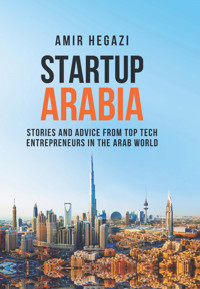
STARTUP ARABIA
STORIES AND ADVICE FROM TOP TECH ENTREPRENEURS IN THE ARAB WORLD
A M I R H E G A Z I
Startup Arabia: Stories and Advice from Top TechEntrepreneurs in the Arab World
Author: Amir Hegazi
General Supervision: Dalia Mohamed Ibrahim
Copyright © 2018 Amir Hegazi.
Copyright © 2018 Nahdet Misr Publishing House upon agreement with Amir Hegazi
All Rights Reserved.
No part of this publication may be reproduced, distributed, or transmitted in any form or by any means, including photocopying, recording, or other electronic or mechanical methods, without the prior written permission of the publisher, except in the case of brief quotations embodied in critical reviews and certain other noncommercial uses permitted by copyright law.
ISBN: 978 - 977 - 14 - 5668 - 1
Legal Deposit No.: 19228/2018
2nd ed.:Oct. 2018
Tel.: 02 33472864 - 33466434
Fax: 02 33462576
Customer Service: 16766
Website: www.nahdetmisr.com
21 Ahmed Orabi St. E-mail: [email protected] Mohandseen. Giza
Dedicated to anyone who dreamed of changing the world and decided to do something about it.
INTRODUCTION
،،ALL HUMANS ARE BORN ENTREPRENEURS.
— MUHAMMAD YUNUS, NOBEL PEACE PRIZE WINNER AND FOUNDER OF GRAMEEN BANK
The year: 2005. The place: Dubai. I had just landed in Dubai International Airport for the first time. This had to be the biggest airport I’d ever been to. I didn’t recall ever seeing immigration lines this long. W here were all these people coming from, and where were they going? Dubai sure seemed to be a travel hub connecting east and west.
I came to realize later that Dubai was also a sort of international oasis, drawing folks from everywhere set on finding something they didn’t have back home. For some, Dubai represented a chance; for others, an opportunity. For both, it offered hope. This sure was starting to feel all too reminiscent of “the American dream” and the story of New York at the turn of the 20th century. Could Dubai possibly be the new
going to be traveling throughout the region, meeting television broadcasters to pitch them on joining our online live streaming platform. We eventually signed every top television broadcaster and media company in the region on an exclusive basis for all their digital rights. It was my first encounter doing business in the region, and it was an adventure in every sense of the word.
I remember my boss asking at the time, upon seeing the itinerary I had planned for the trip, with Dubai and Doha as our first two stops, “Why are we starting with the small countries?” Little did he, or I for that matter, know what those gems in the desert held in terms of potential yet to be mined, not in terms of oil or so-called “black gold,” but rather in terms of human imagination and the relentless spirit to catch up to and even surpass the rest of the world.
I practically lived on a plane for a good part of the three years that followed, hopping from country to country across this vast region, from Qatar and Egypt, to Lebanon and Morocco, to Sudan and Palestine, literally on a daily basis. I was everywhere, always on the move. The pace was insane, but I couldn’t have asked for a better crash course into the culture, the political-economics scene, and the business landscape.
It never failed to amaze me, traveling in this part of the world, how similar and different each country is: similar in the instant connection and rapport you feel with someone, as a fellow Arab, given the shared language, history, and culture everywhere you went, but diametrically different in every other way.
You get on a short flight of just forty-five minutes to the next country over, and suddenly everything seems to change; the mood in the air itself is different, the scenery, the extent of openness, the level of formality, the pace of business, you name it. Every place had its own flavor and seemed to resemble its own unique era, like you were in a time machine of some sort, from the futuristic science-fiction landscape of DIFC (Dubai International Financial Center), to the Bedouin villages at the outskirts of Amman, to the nightlife scene in Beirut, to
the ancient ruins in Cairo. It was all too surreal and yet captivating at the same time.
Another striking element was, no matter where you went, the language and spirit of business was always the same, being focused on fixing existing problems and creating new opportunities. Remarkably, there was an undertone of admiration for successful American businesses and businessmen whenever the topic came up among local business leaders, though combined with an air of national and patriotic pride and resolve to build something great of their own locally.
Through all this travel and the countless number of projects I got involved with, I saw it all. I was fortunate to experience firsthand business conducted at different levels and from different corners of the region, and from different roles and perspectives, where in some cases I was a mere fly on the wall, and in others I ran the show. More recently, I oversaw Souq.com marketplace, the largest e-commerce platform in the Arab world, where I was quite involved in the inner workings of this thriving startup as we strived to “make history” per our internal mantra. I also got to engage and work with hundreds of SMEs (small and medium-size enterprises) across multiple markets and witness both their success and growing pains. I’m proud of our accomplishments at Souq.com, which are a great testament to its leadership and the commitment of its staff.
Looking back, I wouldn’t trade any of this experience for the world. It was quite an eye-opener and transformative on a personal level. In a way, I got to sit in the driver’s seat, watching globalization in action. Change was happening right before my eyes, not just in terms of the ever-changing skyline and infrastructure, but less ostensibly in terms of the mindset and attitudes around business, especially among the new generation.
Things have evolved quite a bit from the days where I had to polish my shoes before and after every meeting, walking up the unpaved sandy roads and under construction sites at Dubai Internet City; when I had meetings with small, unheard-of young companies with funny logos in small squeezed-up offices and nearby hookah cafes and hearing their ambition to become the next Yahoo!, PayPal, or eBay of the region; when fortunes were made and lost in the real estate market in the background. It was definitely the wild, wild east, as anyone who was there at the time will attest.
Fast-forward to today’s environment with a more thriving startup ecosystem, which was unheard of just ten years ago. Mature and sophisticated companies are on the rise. There are even a few exceptional ones that managed to lure global investment and acquisitions from world-class companies.
Certainly, things have changed significantly in the region since 2005, when I first set foot in Dubai, and are changing as we speak. Though perhaps international perception influenced by international mainstream media has yet to catch up to this new reality. Granted, there are serious and unresolved issues that continue to haunt and pose a serious risk to the stability of some parts of the region. Nevertheless, that’s not the full story, and there are many untold positive stories that get brushed by the wayside.
This book is meant to shed light on a few of those insightful and inspiring stories being created by remarkable tech entrepreneurs in the Middle East who refused to accept the status quo, managed to transcend cultural beliefs and limitations, and are now rewriting the region’s destiny. It attempts to capture their own personal stories, the companies they built, their advice to fellow entrepreneurs, and their perspectives in general.
Whenever possible, I tried to present diverse types of entrepreneurs, with diverse nationalities and locations, with diverse backgrounds, in diverse fields, at diverse stages of company development, and with diverse experiences and perspectives, though all are founders of very successful or very promising tech companies, or both.
Many business books try to box success into a neat set of qualities, when the reality is that successful entrepreneurs are as different as
they come. Entrepreneurship is perhaps the only profession, if you consider it as such, where success isn’t tied to any given set of qualities or skills. It offers you the opportunity to fully utilize your strengths and all the while work around your weaknesses, by finding the right co-founder, eliciting the help of mentors and advisers, hiring personnel with specific skills you lack, etc. In a way, it’s the most malleable profession of all, whereas in every other profession, your success is directly tied to your given domain expertise.
My “shot for the moon” aim for this book is to help awaken dreamers and encourage them not to abandon their aspirations by accepting their current realities in the name of “being realistic.” Quite the contrary: I hope they will think, act, and live up to their dreams. There is hidden power in such pursuit. Whenever you set out pursuing a dream (or for many, searching for a dream), you’re already a success. Failure stems only from inaction. I encourage you to go after your personal dream and follow an entrepreneurial path. You owe it yourself to tap the best from within you and never hold back.
I would very much enjoy hearing from you. I hope you find value in the following pages and commit to apply whatever lessons you may learn.
AMIR HEGAZI [email protected] www.StartupArabiaBook.com
SAMIH TOUKAN
Catalyzing the tech revolution in the Arab world
Founder and Chairman of Jabbar Internet Group Co-Founder of Souq.com Co-Founder and CEO of Maktoob.com
WWW.JABBAR.COM WWW.SOUQ.COM WWW.MAKTOOB.COM
SAMIH TOUKAN is the founder and chairman of Jabbar Internet Group. In 2000, Samih founded and became the CEO of Maktoob.com, the world’s first Arabic email service and largest Arab online community, with more than 16 million users. Maktoob.com was acquired by Yahoo! in 2009 for $164 million. He is the co-founder of Souq.com, the largest e-commerce platform in the Arab world, which was recently acquired by Amazon.com for about $600 million. He is also the founder of several other startups in the tech space. Previously, Samih had several years of experience with Andersen Consulting in technology consulting, systems development, and internet services. Prior, he co-founded Business Optimization Consultants in 1994.
On September 9, 2009, Samih received the Al Hussein Medal for Distinguished Performance of the First Order from His Majesty King Abdullah II in recognition of his contribution to the IT and telecommunications sector in Jordan and the region. From 2003 to 2005, he was appointed by the Jordanian government as a member of the board of the Social Security Investment Fund (a fund of several billion dollars). He is also an active angel investor, investing in several startups in the region. He also acts as a mentor to several entrepreneurs. He holds a bachelor’s degree in electrical engineering from the University of London and a master’s in management and international business from HEC University in France.
How did you initially become interested in technology?
My passion for technology and engineering started very early on, as long as I remember, and that was a few ages ago (laughs). In 1985, I graduated from Bishop School in Jordan. I then went to England to study for A level. While studying in England, my dream was to create something that makes an impact on the Arab world. Everyone is capable of contributing something meaningful. I had that belief and ambition from a very young age.
Growing up, I loved computer programming. Outside of my studies, I spent a lot of time programming. Back then, computer language was very basic. I also went beyond programming and learned machine language assembly. I remember I had a ZX Sinclair personal computer. It was a British-made, powerful, small personal computer. At that time, “powerful” meant less powerful than any smart phone you are holding in your hand right now! It was even pre-floppy disk. We used to have to load programs through a tape recorder, and every program would take half an hour to load. If there was an error, you had to repeat the whole process all over again, until you loaded that program into the computer.
،،EVERYONE IS CAPABLE OF CONTRIBUTING SOMETHING MEANINGFUL.
My passion for computers and giving back to the Arab world was the basis for my obsession with Arabic, more specifically creating an Arabic interface for the computer or what is referred to as “Arabizing.” So my passion for Arabizing was there very early on and intertwined all throughout my path.
At that time, one of the most popular pieces of software was a game called “Football Manager,” which I Arabized when I was just 16 years old. I actually contacted the owners of the company in Bournemouth, England, and went to see them. I showed them the Arabic version of the game and said, “I want to distribute this in Jordan.” So we signed the contract. That was the first business contract I had ever done in my life. I went back to Jordan for the summer holiday and tried to sell the Arabized version I had developed to bookstores. I didn’t have any experience in distribution, marketing, or sales, or any business experience in general. I was just a kid, and I went around and showed them this program I created and tried to convince them to buy.
The computer at that time wasn’t anything like today. A very limited number of people had access to computers, mainly through libraries or universities. Having a personal computer was such a luxury and not common at all. Without really any planning or studying, I tried to distribute the program. I naturally failed miserably. I sold just two or three copies. So, that was the first failure in my life. I like telling that story and the fact that I started my career on top of a failure and I have no shame of that. Of course, it was a personal success in the sense of following my passion and actually creating the program, but it was a failure in a business sense. I could not execute, distribute, market, or sell the program because I didn’t have any understanding or skills to do so.
After I graduated from engineering, I decided to go to France and study business management and business administration. I finished in two years. I then moved back to Jordan. At that point, I had developed both technical and soft skills. Though everything I’d learned so far was theoretical since I had only done internships. I didn’t have any real-world business experience.
My first job in Jordan was with Andersen Consulting, which is now Accenture. I worked in management consulting. I developed software and technology for companies in the region. I did that for three years. That’s when I connected with my longtime friend Hussam Khoury, who ironically also worked for Andersen Consulting in Canada. He and I talked about him coming back to Jordan and transferring from the Andersen Consulting office in Canada to its office in Jordan. His family wanted him to come back home as well. I told him, “Why don’t you come back to the region? The region is quite stable now, and things seem to be on an upward trend.” He ended up returning to Jordan in 1992, and we worked together for a year or two at Andersen Consulting. Then we decided to start our own business.
We left Andersen Consulting in 1994 to start our own consulting company in Amman. We called it BOC (Business Optimization Consultants). At the time, management consulting was a new concept in Jordan and the region. Not many companies understood it. The market was not that big, but we decided to give it a shot nevertheless. We managed to raise $30,000 seed capital and signed our first client, Aramex, the top local logistics company in the region. We developed their website, which was the first Arabic website in the region.
We developed a website for a company, I remember, called Zara Natural Dead Sea products. They were selling their products all over the world. So they accepted our idea because they thought putting a website online would get them sales. It actually worked. This was way before there was any e-commerce in the region.
We developed a rental car booking website for Thrifty Rent-A-Car. We developed websites for King Hussein of Jordan, companies, banks, and other websites all across the Arab world, in Syria, Egypt, and Saudi Arabia. We were quite good in creating websites. This is also how we picked up the skills to eventually create Maktoob.
Looking back, BOC was modestly successful, though I wouldn’t say it was an easy journey. We managed to get a few clients but faced a lot of challenges. It was somewhat like a roller-coaster; sometimes we did great, and other times we struggled. This is something the youth need to understand. In a startup, things take time, and you will face many challenges. Early on, we faced lack of funding and a small consulting market in Jordan to work with. Nevertheless, we persevered and survived. We acquired different projects. Some succeeded, and some failed.
How did the idea of Maktoob come about?
After three years, Hussam and I decided that it was time to move beyond management consulting and launch our own product, instead of continuing to develop websites or solutions for other companies. Besides many of the challenges we faced with BOC, consulting had its inherit limitations. You’re managing other companies’ projects. So it’s never really your vision, nor are you in full control. Those projects are also never scalable enough. They weren’t going to create the real impact I was after or deliver products that could reach a bigger scale in the Arab world.
So, in 1999, after different ideas and trials, we came up with an experimental project under BOC, which we called Maktoob. The idea was based on creating the first Arabic email on the internet. At the time, Hotmail was the first webmail product brand, and it was the email that everybody used. So, we thought, “Why don’t we create Hotmail in Arabic and make it available to the Arab world?” Back then, the number of internet users in the region was relatively small. It was really in the thousands. I’m talking 1999 here. Our vision was that if the internet was going to spread to millions in the Arab world, then the Arabic language will become a key factor. So we decided to focus on the Arabic language when we created the webmail product. After all, email at the time was the most important internet service out there.
،،IN A WAY, THE RISKIEST THING IN BUSINESS IS NOT TAKING ANY RISKS.
I remember early on, we participated in a big technology exhibition in Jordan and another one in Egypt. We got 5,000 users right off the bat and realized there was a gold mine there. We got very excited about the potential. We realized right then and there that this was the future and this was the product that we should focus on. It was scalable and had the potential to reach all of the Arab world, much better than any consulting project we undertook with BOC. So we decided to stop our consulting work and focus on this Arabic webmail product. That was really the birth of this new dream, Maktoob.
Sure, it was a risky move. We already had a successful consulting business. We had paying clients. We had a good name, and we were good at what we did. Nevertheless, we saw the future in Maktoob, and we just went for it. It was definitely a calculated risk. This is a lesson for entrepreneurs: Sometimes you need to just go for things and take that risk. Sometimes you make the wrong decision, but if you don’t take that risk of changing, you may not survive. We all have seen big, world-class companies disappear because they didn’t take risks and change. You barely hear of Nokia these days or Blackberry. There are many examples. Companies need to keep changing and adapting. In business, you need to re-evaluate yourself every few years and see where the trends are going and adapt to these trends and make the necessary changes, even if it means taking on new risks. So, in a way, the riskiest thing in business is not taking any risks.
Our next goal was to go from 5,000 users to 100,000 users. I remember our first marketing campaign we called “Sajjil, Ana Arabi,” meaning “Register, I’m an Arab,” based on a poem by Mahmoud Darwish, a very famous Palestinian poet. We played on that theme, with the idea that we needed to be proud Arabs and create our own personal Arabic email and start using the Arabic language for communication online. The campaign was a success.
We started to see that this was starting to spread virally and became very excited about the potential. At the time, Hotmail used a clever thing, which was a simple tagline at the end of every email, “This email is sent by Hotmail.” We used the same, “This email is sent by Maktoob. Register for free.” So, with every email sent, you had an embedded call to action. When you email people, they get to see that. It was automatic viral marketing. That worked quite well.
So, in 2000, we officially registered Maktoob as a company. We were no longer an experimental project. We were now a real business. We then went to our first investor meeting with EFG Hermes in Egypt. I remember we presented them with our business plan. It was simply based on increasing the number of users to reach millions of users in the Arab world. It also had different revenue streams, mainly advertising. Other revenue streams would come into the picture later, including revenues from e-commerce, online payments, and other online services.
We continued to focus on Arabic email. That was now our forte. We would not do anything else yet. We had a business plan to start adding other services later, but not until we got email right. We also focused on growing our user base. We relied on what’s referred to as “guerrilla marketing” and “viral marketing” tactics, as well as exhibitions that reach directly to our target users. We used to get a hundred users per day, then a thousand users per day, then two thousand users per day. It just continued to grow and grow. It was fascinating!
Did you ever encounter skepticism about the idea of Maktoob early on?
Definitely, at the beginning when we started Maktoob, many people were skeptical. Even our families, they were saying, “What are you doing? Why would you drop your current established business and do Arabic email? There is Hotmail already. People already use email in English. Why would they switch to Arabic email? People will keep using the internet in English. Why are you wasting your time on this?”
At the time, the small minority who used the internet, the thousands who had access to the internet, were the privileged. They were either educated outside or they already spoke English. They were not the masses. We thought if the internet is going to spread, and it will eventually, Arabic will be a key factor. So we didn’t listen to the naysayers. We stuck to our vision and continued to focus on language and email because it was the fastest thing that we could spread.
What were some of the challenges you faced during this period?
We faced many challenges in those early years, mainly related to our exponential growth. For one, we struggled a bit with the technology and making sure we had uninterrupted service. Sometimes, our servers went down and we had to fix them or add more capacity quickly. So, we were always asking ourselves, “How could we make our email more reliable? How could we decrease downtime?” With email, your uptime rate should be at least 99.999 percent of the time. Meanwhile, in the beginning, our uptime rate was probably at only 80 or 90 percent.
It was a very challenging phase. This was a new industry, and the technology was very new. Nobody in the region really knew this technology or had scaled their user base to the level we did. So this was certainly uncharted territory. We had to learn a lot and develop those skills in-house. We called ourselves a “university” with our own internal workshops and training center.
Once we fixed our uptime rate and some basic metrics, we started experimenting by adding new features and services to the email. We added the first Arabic chat, for example, which was a very important feature. It helped further attract and engage users and accelerate our growth. At the time, Java programming had just come out, so we decided to create a Java virtual keyboard. That was a huge hit back then. Millions of Arabs in the U.S. and Europe wanted to use Arabic email or Arabic chat to communicate but did not have an Arabic keyboard. They were now able to click our virtual keyboard that pops up on their computer screen. We even used to send Arabic stickers that users ordered, so they could stick Arabic letters on their keyboard. Then suddenly people in the U.S. and Europe had an Arabic keyboard and could communicate virtually in Arabic for the first time!
These were innovations at the time. By today’s technology standards, they are nothing, but at the time, they were amazing innovations. They really helped us grow around the world, not just in the Arab world, but in the U.S. and Europe as well.
We eventually started generating revenue and eventually profit. By then, we were ready for the next step, which was to start creating other services and to become a portal rather than just an email. We added news, games and sports. Eventually, we got in everything as we continued to do Arabic email. Our positioning was still “The first and the largest Arabic email,” except now we were becoming the largest Arabic portal as well.
All the while, we kept trying different things. We succeeded in many things. We also tried projects that didn’t work out. For example, we had a project called Maktoob TV at the later stages of Maktoob, where we tried to display UGC (user-generated content) on real TV. We had a TV station on air. The concept allowed you to submit material from your laptop or computer straight to live TV. Unfortunately, that wasn’t a very successful project, and we had to shut down and move on. On the other hand, Souq and CashU were obviously two very successful projects that we started.
We initially started Maktoob Shopping, which didn’t work out great. Then, we turned it into Mazad Maktoob, which eventually became Souq. So we founded Souq in 2005 with Ronaldo Mouchawar, who remains its CEO till today. Ronaldo is a world-class leader, and his accomplishments over the years speak for themselves. Though Souq strategy shifted multiple times and the company had to pivot a number of times, it eventually settled into being an online marketplace model. It sold products it owned as well as enabled third parties to sell on its platform, including brands, merchants, and individual sellers.
Amazon had invented the model in the U.S., but Souq had to adapt the model to local needs. I really believe Souq wouldn’t have survived if it didn’t continue to listen to its local customers and solve for local problems. Of course, Souq went on to become the first and largest e-commerce platform in the region. It enjoyed tremendous success. It was ultimately acquired for about $600 million to Amazon in 2017. This was, of course, a huge milestone for Souq, the group, and the region as a whole.
CashU was another project we undertook in those early days. It was created to provide an online payment method and a digital alternative to credit cards. CashU was successful, even profitable. It was a very innovative product. You could open your CashU wallet (or electronic funds) and you could buy scratch cards from different distributors and use them as a form of online payment. We had agreements with different offline distributors and retail outlets, in which you could just walk, say, in a neighborhood store, give them cash, then fill your account online. Then you could use your wallet to pay online merchants on our network. Our network, of course, was growing. Had it not been for the heavy financial sector regulations, CashU could’ve really grown way beyond what it did. Unfortunately, there were too many hurdles to overcome to really scale regionally. This was another great product ahead of its time. CashU was eventually sold to a regional investor.
،،EVENTUALLY, MAKTOOB REACHED SIXTEEN MILLION USERS WHEN WE SOLD TO YAHOO! IN 2009. IT WAS A GREAT ACHIEVEMENT AND OUTCOME FOR THE TEAM AND MYSELF, AS WELL AS INVESTORS AND EVERYONE WHO WAS INVOLVED IN BUILDING THE COMPANY THOSE TEN YEARS.
Out of CashU, PAYFORT was born. PAYFORT is a digital internet credit card processor that remains under Souq.com Group, which owned 100 percent of it and is now owned by Amazon. It’s a great company that has grown very fast and is now one of the largest internet credit card processing companies in the region.
All in all, Maktoob evolved from email to portal, hosting multiple services, and then to what we called the Maktoob Group, an umbrella of various companies. I’m talking here maybe three years in each stage that made up the entire nine or ten years’ journey.
Eventually, Maktoob reached sixteen million users when we sold to Yahoo! in 2009. It was a great achievement and outcome for the team and myself, as well as investors and everyone who was involved in building the company those ten years. We were proud of what we had accomplished and how far we’d come.
When we sold to Yahoo! in 2009, they decided to take the Maktoob portal and ran with its team, all 250 people, and the management team including its exceptional general manager, Ahmed Nassef, who was now to oversee Yahoo!’s business in the region. They all became Yahoo! employees. Yahoo! left all the other Maktoob group companies, which we had to spin off into another entity, which remained under Jabbar Internet Group, including Souq and CashU.
Both Souq and CashU were now incubated by Jabbar, operating under our offices, and were part of our daily management. They used our financing. A lot of internal services were shared including legal, accounting, HR, etc.
How different was Souq’s journey pre-and post-Yahoo! acquisition?
I think Souq before Yahoo! was different from Souq after Yahoo! The reason is that while Souq before Jabbar was growing, we were still experimenting and learning. Also, on the financing side, we didn’t have the full financial bandwidth Souq needed. We had some financing that was being distributed to different projects. After the Yahoo!-Maktoob deal, there was more financing available for Souq. As a result of that deal, we were able to inject more money as investors into Souq, so that gave Souq a big push.
I would say after 2010, this was the beginning of the real growth of Souq. We had more money, more focus, and we started to gradually develop Souq into a company on its own and detach it slowly from Jabbar. We knew Jabbar was a platform that supports startups and would incubate them. At some point, these companies will have the potential to grow and have the right financing to continue to grow on their own.
So we spun off Souq fully with its own team. We even transferred Jabbar CFO to Souq, and I helped Ronaldo hire a top management team. We continued to be involved with Souq, not so much on a daily basis, but maybe on a weekly or monthly basis as active members of its board. We also started raising funds for Souq over several rounds, with Tiger Global Management in New York and with Naspers from South Africa, and then with the last round, two years ago, from a diverse range of investors.
Again, I always trace back all this to Maktoob. For me, Maktoob was like a tree; for every branch, there was something. You had Maktoob.com, you had Souq.com, you had CashU, and from CashU came PAYFORT and so on. Even though not under our group, many employees that were at Maktoob and left decided to start their own companies utilizing a lot of the learning they had at Maktoob. So out of that Maktoob tree branched out twenty, twenty-five, or thirty companies and maybe more, now. Now, Souq itself is branching out into several companies.
For our industry in the region, this was the beginning, and from it, a lot of things came out. This is the direct effect. Now, if we talk about indirect effects—like how much did Souq help in employment, how many people; small merchants and individuals at home could sell, buy, trade and so on—this has indirectly affected hundreds of thousands of people.
You also have the indirect effect of the whole Maktoob-Yahoo! deal. You now have increased investment in the region, more interest from global players, more interest from local and regional big investors, who did not want to invest in online business initially. They then saw an example success story when Maktoob was sold to Yahoo! and now Souq to Amazon. I think this significantly accelerated the pace of investment in the ecosystem. Not to mention, it inspired and continued to inspire entrepreneurs to follow suit and build their own success stories. It pushes them; it motivates them to create new ideas and products and think big.
،،REGARDLESS OF HOW MUCH MONEY YOU HAVE, YOU NEED TO MANAGE YOUR CASH FLOW VERY CAREFULLY. IN BUSINESS, YOU HAVE UPS AND DOWNS, AND THERE ARE CYCLES. YOU NEED TO PLAN VERY WELL. YOU DON’T NEED TO START SPENDING MONEY YOU JUST RAISED. JUST LIKE YOU CANNOT RUN BEFORE YOU WALK.
To what do you attribute Maktoob’s success?
Looking back, one thing we learned early on and did very well was that we were extremely prudent in using our funds. We did not spend left, right, and center, and we were very strategic and measured in where we allocated our money. Our competition at that time was a company called Arabia Online. It was funded $22 million by Prince Waleed Bin Talal, the famous Saudi billionaire businessman. Meanwhile, we had just raised $2 million. So we naturally had to cut down on our expenses. We managed cash flow very carefully.
I always give this advice to the startups we invest in and the ones I mentor: “Regardless of how much money you have, you need to manage your cash flow very carefully. In business, you have ups and downs, and there are cycles. You need to plan very well. You don’t need to start spending money you just raised. Just like you cannot run before you walk.”
Arabia Online at the time was hiring very expensive expats and very expensive management. They were spending millions of dollars on TV marketing. I think that was a waste. The market was still small. It was growing, sure, but you cannot go on TV and create TV ads when internet penetration was only 5 percent. Maybe TV ads today make more sense because internet penetration is more like 50-60 percent, but at that time, 95 percent of your money spent on TV advertising was wasted.
Meanwhile, we were more of a bootstrapped kind of company. We hired people slowly and accounted for every dollar spent. We also insisted on focusing on Arabic email for the first few years, to keep our operating cost down and not to spread our resources too thin or on too many projects. Meanwhile, Arabia Online focused on doing everything from the outset—news, games—and ended up spending the money very quickly. Eventually, they went out of business. Believe it or not, $22 million vanished in just a few years!
What lessons did you learn from this journey you can share with entrepreneurs?
The first lesson I would say is related to passion or “shaghaf” in Arabic. It’s very important for a person to love and be passionate about something and to be convinced about every job they do. If you work in something you are not passionate or convinced about, you are not going to produce good results. This is probably one of the many issues we have in the Arab world. People do not follow their passion, or they are not able to for some reason.
Success in the world and the Arab world is not limited to technology, engineering, or medicine as previously thought. People can be passionate about anything, whether it is physics, music, history, or whatever. For example, we are now investors in a weather company, ArabiaWeather, which was founded by Mohammed Al-Shaker, a Jordanian entrepreneur. When I first met with Mohammed, I felt his passion. He was telling me that when he was a kid, he was always looking at the weather and the clouds. So he was able to translate his lifelong passion in weather into a thriving company now. It started as a Jordanian company, and then we supported him and helped him transform it from a Jordanian company into a pan-Arab company. Often people who do not have access to funding or certain privilege or education are able to succeed if they have the passion and the ability to execute and persevere.
The second lesson is related to having a vision or “ruaya” in Arabic. When I was a young student, I always thought, “How can I help contribute to the Arab world entering the era of technology? How can I build a product that makes an impact, that is able to reach a large number of Arab users?” I didn’t have an idea of what that product was at the time; nevertheless, the intention sets the direction you will be moving into. So you learn and build the skills you will need down the road. So always look three, five, or even ten years ahead. What is the vision that you want to reach? This vision is much bigger than financial gain. Many entrepreneurs might be thinking, “Oh, I want to make money, and I want to become a millionaire.” That’s not a vision.
،،IF YOU WORK IN SOMETHING YOU ARE NOT PASSIONATE OR CONVINCED ABOUT, YOU ARE NOT GOING TO PRODUCE GOOD RESULTS.
I believe, in the end—with success—profit and financial gain will come for everybody who is serious and hardworking. Ultimately, you will get the financial gain and the profit, but that should not be your purpose. Your purpose should always be on making a difference.
The ones that create companies and say, “OK, I’m going to sell it in two or three years and make millions,” these I don’t think are the successful ones. The successful ones are the ones who persevere. It took us ten years for Maktoob to exit; it took us twelve years for Souq to exit. It requires a lot of vision. It involves a lot of hard work, a lot of challenges to overcome, a lot of patience. It just takes time. It’s not something that you can flip in a few years.
The third lesson was how to deal with failure, more specifically to not get discouraged by failure, rather use it to be more determined to succeed. Failure is a great teacher. Use failure to identify and learn new skills you’re missing and that you need to succeed. You can always try in different ways, with different skills, and on different projects, but with the same vision.
The lesson for the youth is not to be scared of failure; rather, embrace it. Whenever you fail, you should get up and be determined to learn the reasons you failed. How can you try again? Eventually, you will succeed. Many, many successful people failed several times before they succeeded. It’s a continuous thing. Even today, we work on projects and with companies that fail. We learn and we continue. If you give up, you will never make it.
What’s your advice to entrepreneurs regarding creating a team?
It’s also very important to work as a team and think about creating a team. Make your team feel that they are part of the company and that they own the company.
Maktoob was the first tech company in the Arab world to offer stock options to our employees. At that time, we did not know what stock options were. We had to research that and bring it in. We thought it was a great tool to motivate our employees.
Our employees didn’t understand it initially, but we explained it. At the beginning, employees favored getting a slightly higher salary than stock options because it was a new concept for them. There weren’t success stories before us to prove anything. When we sold Maktoob to Yahoo!, things changed, and everyone made money. They were part of the success.
Now most startups if not all offer stock options from the very beginning to their employees. I think that is very important. It is also important for an entrepreneur to not keep the whole cake to themselves. Share it with your co-founders, with your employees, with your stakeholders, and so on. At the end, the more you share and the more you collaborate, the more successful you will be.
In your experience, what makes an effective co-founders partnership?
Hussam and I are different. I am more on the risk-taking side, and Hussam is more on the wiser, calmer side. We complement each other nicely. If you think about it that way, in terms of the relationship being complementary, I think you will succeed in your partnership. So, when I disagree with Hussam, we would always work things out at the end of the day. When I think about it, I ask myself, “Could I have done it without Hussam?” and the answer is always “No,” because when I was down, he would motivate me, and vice versa. We’ve always supported each other. Sometimes, when I am making a decision, he might just give me an angle, a thought, or something that I didn’t think of or I didn’t see. I might be too excited and want to do the idea tomorrow, and then he comes and says, “Calm down, look at this, there is a risk here and there is a risk there,” and I realize he’s right and I shouldn’t jump too quickly.
It’s the same from his side. If he takes it too slowly, I push him to move faster. So, when you think of a partnership, it’s OK to disagree and fight, but you always need to look at the bigger picture to make this work as a partnership. Rarely do you find companies with one person; no one person can do it all. I always encourage companies to at least have two founders who complement each other but share the same passion and commitment and vision.
As an entrepreneur, when do you know if you should stick to an idea or when you should give up?
This flows from the last question. I tend to stick very much to the idea, to a strategy, to anything, until the last minute. Meanwhile, Hussam tends to give up quicker than me. We learned with time that there has to be a balance. It’s somewhere in the middle. I can’t give you the exact stage where you give up on a product or you stick to it. I often stuck to things too long and Hussam often gave up too early.
So it’s a balancing act. Sometimes it’s wrong to give up too early, because sometimes things need more time. If you’ve launched an online product, for example, where internet penetration was not there, your timing was off. So you need to stick to it until the market catches up and things start to happen. With Maktoob, we passed through difficult times. We could have given up easily, but we didn’t; we stuck to our plans. So it’s important to stick to it when you have a vision.
At the same time, if you see that something is not working and is consuming a lot of money and has little or no upside, you must decide if that is something that you need to put your ego aside, close it down, and say, “I failed in this.” Then move on to the next one. At one point you will need to do that; we’ve done it with many projects. On the other hand, you cannot give up too early on projects because they need time, they need financing, they need to run their course. You also cannot stick around too long with failed projects or the wrong people.
،،THE LESSON FOR THE YOUTH IS NOT TO BE SCARED OF FAILURE; RATHER, EMBRACE IT. WHENEVER YOU FAIL, YOU SHOULD GET UP AND BE DETERMINED TO LEARN THE REASONS YOU FAILED. HOW CAN YOU TRY AGAIN? EVENTUALLY, YOU WILL SUCCEED.
Do you believe there’s such a thing as work-life balance in early startup days?
Well, I don’t know if there is such a thing in the early days of any startup. Initially, we used to work day and night, to be honest. I would say I am a big believer in a balance between everything in life. Try to balance your work, life, family, health, and so on. I say that in theory because in my early stages, I was working 24-7. I had passion and went after it with everything I had. I liked what I did, and I wanted to do it.
When you have a startup, you need to work hard. You need to put in a lot of effort and time. It’s not a nine to five job, for sure. It’s your life, and you’re going to spend many years doing this, and there’s a lot at stake. It’s pretty much all you’re going to think about day and night. You’re going to dream about it. So, it’s definitely an all-consuming effort, but try as much as possible to find some balance.
What’s the single biggest missing thing needed to empower the next generation of entrepreneurs in the Arab world?
There are many missing things, and obviously there is no one solution fits all. The one thing that comes to mind, though, is a company in Jordan called Hello World Kids that we just invested in. They created a coding curriculum for schools starting at the age of ten and have already signed fifty schools, both private and public schools. So kids that are ten years old will learn programming. This is very important. In my own journey, I learned to code and developed passion for technology at an early age, and that really shaped me. So imagine if this becomes a language like English or Arabic that our kids learn from an early age.
Do you believe that business leaders have responsibility to give back to the startup community?
An entrepreneur by definition implies creating value and contributing. When you create a company, hire people and become successful, you are giving back. That means you employ people, solve problems, find solutions that can help your society, country or the Arab world in general. You are, by definition, giving back, even if not officially. Take Souq, for example. When you hire 3,000 or 4,000 people and you are enabling thousands of merchants on your platform, you are really giving back.
As an investor, you’re also giving back. After the Yahoo! acquisition, I started thinking, “OK, now how do I give back even more?” So I decided to invest more in startups. There are a lot of young people with ideas that need angel investing, and they need venture capital. So I’m now also looking into creating a social fund that is geared to making an impact. I want to encourage startups that can solve massive local problems or offer scalable solutions for their society, whether in transportation, healthcare, or whatever. Thus, further helping develop the overall ecosystem. That’s one area I’m looking at now.
،،IF SOUQ AND MAKTOOB DIDN’T CREATE THE IMPACT THEY ARE CREATING REGARDING SOLVING LOCAL PROBLEMS, MOTIVATING THE YOUNG, PUSHING THE ECOSYSTEM, GENERATING MORE INVESTMENT IN THE REGION, AND MORE COMPANIES AND IDEAS, I WOULDN’T CONSIDER THEM AS SUCCESSFUL NO MATTER HOW MUCH MONEY THEY GENERATED.
Of course, There are many ways of giving back. You can also give back by being a mentor and mentoring startups and young entrepreneurs. We’ve done a lot of that for no return and continue to do so. We sit on advisory boards and just give a few hours with companies every month to teach them things that we’ve learned over time. We don’t want them to repeat the same mistakes we made, and we don’t want them to fail. We can do this just by giving them advice.
I think if Souq and Maktoob didn’t create the impact they are creating regarding solving local problems, motivating the young, pushing the ecosystem, generating more investment in the region, and more companies and ideas, I wouldn’t consider them as successful no matter how much money they generated.
MONA ATAYA
Creating the go-to online shopping destination for mothers
Founder and CEO of Mumzworld
WWW.MUMZWORLD.COM
MONA ATAYA is the founder and CEO of Mumzworld, which she founded in 2011 and is currently one of the leading e-commerce brands in the Middle East. Mona is also co-founder of Bayt.com, one of the pioneering recruitment platforms in the region. She graduated with a dual honors degree in marketing and finance. Mona has also worked for such companies as Procter & Gamble and Johnson & Johnson.
Tell us a bit about your life growing up.
I am the second of five children. There are two boys and three girls in our family. We come from a family of entrepreneurs. My father and his father were entrepreneurs. They moved to Lebanon from Palestine in the late 1940s, when they left their home in Zeeb on the Sea of Palestine and moved to Beirut. My grandfather set up from nothing. My father was the eldest of thirteen children, and so we grew up and thrived in a large family and extended-family environment.
We were brought up in Kuwait, where we attended British schools. We were taught early on that hard work was the reaper of all benefits and not to feel entitled to anything. Education, sports and community involvement were the cornerstones of our upbringing. We were encouraged and rewarded as we excelled in our academics and sports and were taught to always look at improving ourselves and our surroundings.
Our younger years were very fun and happy. Our parents were not strict at all; they gave us a lot of autonomy. They were fun, loving and trusted us a lot. I think it’s that environment of trust, happiness and comfort that allowed us to be confident in our abilities. This combined with high expectations allowed us to feel that hard work was what it was all about. We learned that every effort you put in eventually comes back to you—in your work, in your successes, perhaps even in your children. Nothing goes to waste. These were the values I grew up with.
In 1990, I graduated from college and planned to move back to our home in Kuwait. I shipped all my belongings home while my family and I were vacationing in Europe. I was excited because I was planning on getting a job, working for a couple of years in Kuwait, and then going back to do my MBA. It was all planned out. About two weeks before we were all supposed to return home, Kuwait was invaded. So returning home was no longer an option. We were uprooted and had to start from scratch and build a new home. Our lives took an unexpected turn in a heartbeat.
As a family, we decided that we would mobilize and move to the United States. We moved to Washington, D.C. I was at this intersection point. I needed to decide whether I wanted to go back and do my master’s or look for work. So I decided to explore both options and looked at the possibility of doing an MBA and finding work.
I had met the head of human resources of P&G (Procter & Gamble) during a career conference. I sent them my resume even though they were only looking at hiring MBAs. I had worked throughout my college years and had many internships. I knew that I had the profile that a company like P&G would want. They were looking for leaders; they were looking for problem-solvers; they were looking for people with initiative who were smart and had good grades. I believed I checked off all of those boxes and had those qualities.
The only thing I didn’t have was an MBA, so I had nothing to lose by applying. I went to the library and spent the next few hours writing my first official resume. I knew that I didn’t have an MBA, but what I did have was a caliber of skills that others didn’t have, skills that were uniquely me. I articulated that in my cover letter and mailed it. Two weeks later, they invited me to an assessment. A couple of weeks later, I got a call to attend the second assessment. Following that, I was invited to fly to Cincinnati for my first round of interviews. I was just 20. I was very excited. This was the first time that a company had sent me a plane ticket. I flew to Cincinnati and stayed in a wonderful hotel. It felt surreal; I felt grown-up. This was the real world.
I stayed up all night researching Procter & Gamble and everything that P&G stood for. Who were they as an organization? What did they look for? What made them successful? Why would I be the right fit for them? What were my experiences? What about my character made me the right person for this organization? I spent the entire night formulating my answers in my mind. It was important for me to be convinced, too. They were a global brand that was looking for exceptionally smart people who would create impact. That is what I was about. I was formulating my thoughts so that I could articulate what I knew I had.
I had a few rounds of interviews. Those interviews were rigorous, but I enjoyed every minute. Eventually, the HR team invited me to lunch, and afterward, they offered me the job right then and there. I was over the moon.
،، IT’S OK TO BE DIFFERENT BECAUSE LEADERS ARE NOT THE SAME. LEADERS ARE NOT THE HERD; THEY ARE THE ONES WHO DARE TO BE DIFFERENT, WHO ARE AUTHENTIC IN THEIR VALUES AND STEADFAST IN THEIR BELIEFS.
They then invited me to the local bar to celebrate. I don’t drink. They all took out champagne glasses. They gave me one and said, “Let’s celebrate your offer.” I turned down the champagne glass and asked for a glass of water instead.
I remember later on, one of the managers told me that I should have taken the glass and sipped a little rather than decline. That was my first experience with pressure to conform to “make the crowd happy.”
No, I don’t drink. So why should I pretend to be something that I’m not? I always aim to be authentic and true to who I am, even if it is different or out of the norm. My integrity has served me well, and it’s what I teach my children. It’s OK to be different because leaders are not the same. Leaders are not the herd; they are the ones who dare to be different, who are authentic in their values and steadfast in their beliefs.
That was how I got started in my career. I learned so much during those formative years about how to develop, validate, and execute a business concept, relying on my insights and understanding of certain key dynamics and trends, as well as being diligent about understanding the data. As an entrepreneur, you really need both: intuition and data.
How did Dubai and Bayt come into the picture?
My brother called me one afternoon in 2000. He said he had an idea: He wanted to revolutionize the recruitment ecosystem in the Arab world, and he wanted to connect job seekers and employers in a faster, easier and more effective way. Back then, internet penetration was less than 2 percent. Putting a resume online was inconceivable. His vision was very admirable, but I initially thought the idea was a challenging one to bring to life. We were living in a region where confidentiality was ingrained in the culture and where the majority of employees and job seekers weren’t even online.
After a lot of thinking and soul-searching, I made my decision to resign from Johnson & Johnson, where I was working at the time, and joined his new startup. I fundamentally believed in the social impact story of Bayt. At the end of the day, my motivation was always to create social impact. I was driven by the constant urge to do something relevant for the region I loved and was proud of.
We set up offices in November 2000 on Sheikh Zayed Road in Dubai, and the years that followed were very exciting. We were on an adrenaline rush from day one. We didn’t have a lot of money. Our offices
were small and basic. We had a black sofa that we took turns napping on because we hardly slept. We were working 24-7. I think that’s what made Bayt successful early on: The team gelled together very well; we had a great idea and solid execution; and our timing was just right.
As a marketer, it was the first time I was exposed to this startup reality—build a business and ecosystem that’s underdeveloped with money that you don’t have. I had to figure out how to be creative in all my decisions. I recall how I managed to get a $100,000 media campaign and not pay anything for it by bartering. I challenged myself to improvise and to create win-win solutions to add value to partners and suppliers, with very limited resources.
We grew and became a leader in the jobs market in the region and became a highly admired and respected brand very quickly. I felt very proud to be part of Bayt and continue to feel very proud to be part of that evolution.
While I was at Bayt, I became a mother. My first children were twin boys. My third child was a boy. I have two teen boys now and a 10-year-old.
How did the idea of Mumzworld come about?
As an entrepreneur, you’re problem-solving day in and day out. For the first time in a very long time, I was unable to find solutions to what I needed as a mother-consumer. I was pregnant with twin boys, and I was overwhelmed. I had no guidance, no playbook that told me what to do. Sure, there was a lot of advice and content on international sites, but my needs were different. I’m a mother from the Middle East, and I was exposed to different challenges. Who could help me with certain questions that I had? There were no resources for me to tap into.
This lack of information didn’t allow me to make informed decisions. For example, I needed to buy a stroller for my twin boys. I had no information to guide me. Do I buy a double stroller that’s face-toface? Do I buy a double stroller that’s back-to-back? There is dust there in the U.S. and Europe; meanwhile there is sand here in Dubai. I can’t buy a stroller with certain types of wheels; instead I need a stroller that will move on the sand, move through narrow doors. How do I find that?




