


44,99 €
Mehr erfahren.
- Herausgeber: John Wiley & Sons
- Kategorie: Fachliteratur
- Sprache: Englisch
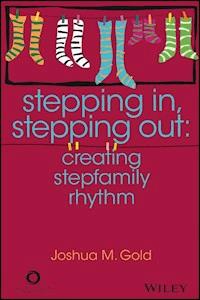
This much-needed resource offers insight into building and maintaining satisfying and successful stepfamily relationships. As the number of stepfamilies continues to increase, counselors and other mental health professionals are likely to encounter clients seeking help in navigating these often complicated relationships. In this book, Dr. Gold emphasizes the principles and practices of narrative therapy as a means to address key concerns within the family system, reauthor dominant social myths surrounding stepfamily life, and create realistic treatment plans that are inclusive of all members of the family. Detailing the inherent strengths and challenges of the stepfamily experience, he provides an in-depth examination of the roles of each member in a blended family, including stepfathers and stepmothers, ex-spouses, grandparents, and children. This book is an excellent guide to thoughtful, practical, and empirically validated interventions for helping stepfamilies thrive. *Requests for digital versions from ACA can be found on www.wiley.com. *To purchase print copies, please visit the ACA website *Reproduction requests for material from books published by ACA should be directed to [email protected].
Sie lesen das E-Book in den Legimi-Apps auf:
Seitenzahl: 303
Veröffentlichungsjahr: 2015
Ähnliche



















CONTENTS
Cover
Title Page
Copyright
Preface
About the Author
Acknowledgments
Chapter 1: Introduction: What We Know About Stepfamilies
Chapter 2: Developmental Schemas of Stepfamilies
Chapter 3: Marital Issues in Stepfamilies
Chapter 4: Stepparenting
Chapter 5: Stepfather Families
Chapter 6: Stepmother Families
Chapter 7: Mutual-Child Stepfamilies
Chapter 8: Extended Stepfamily Constellations: Relationships With Ex-Spouses
Chapter 9: Extended Stepfamily Constellations: Relationships With Stepgrandparents
Chapter 10: Future Directions in the Study of Stepfamilies
References
Index
Technical Support
End User License Agreement
Guide
Cover
Table of Contents
Begin Reading
Chapter 1
Pages
ii
iii
v
vi
vii
viii
ix
x
xi
xii
xiii
xiv
xv
xvi
1
2
3
4
5
6
7
8
9
10
11
12
13
14
15
16
17
18
19
20
21
22
23
24
25
26
27
28
29
30
31
32
33
34
35
36
37
38
39
40
41
42
43
44
45
46
47
48
49
50
51
52
53
54
55
56
57
58
59
60
61
62
63
64
65
66
67
68
69
70
71
72
73
74
75
76
77
78
79
80
81
82
83
84
85
86
87
88
89
90
91
92
93
94
95
96
97
98
99
100
101
102
103
104
105
106
107
108
109
110
111
112
113
114
115
116
117
118
119
120
121
122
123
124
125
126
127
128
129
130
131
132
133
134
135
136
137
138
Stepping In, Stepping Out:
Creating Stepfamily Rhythm
Joshua M. Gold
American Counseling Association
6101 Stevenson Avenue, Suite 600 Alexandria, VA 22304counseling.org
Copyright © 2016 by the American Counseling Association. All rights reserved. Printed in the United States of America. Except as permitted under the United States Copyright Act of 1976, no part of this publication may be reproduced or distributed in any form or by any means, or stored in a database or retrieval system, without the written permission of the publisher.
10 9 8 7 6 5 4 3 2 1
American Counseling Association
6101 Stevenson Avenue, Suite 600
Alexandria, VA 22304
Associate Publisher Carolyn C. Baker
Digital and Print Development Editor Nancy Driver
Production Manager Bonny E. Gaston
Copy Editor Ida Audeh
Text and cover design by Bonny E. Gaston
Library of Congress Cataloging-in-Publication Data
Gold, Joshua M. (Joshua Mark)
Stepping in, stepping out: creating stepfamily rhythm/Joshua Gold.
pages cm
Includes bibliographical references and index.
ISBN 978-1-55620-331-2 (pbk.: alk. paper) 1. Stepfamilies. 2. Family counseling. I. Title.
HQ759.92.G65 2016
306.874′7—dc23
2015023361
Preface
In the 1970s, U.S. viewers watched as The Brady Bunch (Schwartz, 1969–1974) homogenized two families into a perfectly blended home, as if nothing in the world was unusual or in any way challenging about the circumstances. In 30-minute sequences, siblings resolved benign disputes of jealousy, bad manners, and mindless pranks as if they had always been together and treated both parent and stepparent with apparent respect and affection. America bought it, romanticizing the uniqueness of that family. Today, there is nothing unique about combined families, the numbers having risen dramatically in the last 45 years (Gosselin & David, 2007; Jones, 2003; Lewis & Kreider, 2015). The rise in combined families has opened our collective eyes to just how fictitious the television stepfamily depictions of The Brady Bunch (and later Eight is Enough; Moore, 1977–1981) truly were (Carter & McGoldrick, 2005a; Jones, 2003). While the growing numbers of stepfamilies have reduced their uniqueness as a family unit, growing interest in these families as worthy of scholarly and clinical study has uncovered the distinctiveness within each stepfamily.
The dynamics of each stepfamily is shaped by the personalities involved and the dynamics of previous relationships. The diverse composition of stepfamilies (biological parent, stepparent, child, stepchild, mutual child plus one, or perhaps two ex-spouses plus extended present and ex-family members) generates multiple levels of initial tension around the simultaneous adjustment to new and multiple roles and relationships. Conflicts are rooted in insecurity, brought on by the uncertainty of how to enact these roles while living them at the same time. Similar dynamics apply to those grown children whose parents remarry (Harris, 2014). Children coming into a combined family are most often those who have experienced either a divorce between their natural parents or the death of a parent. Their emotional senses have been brought to new heights. The foundation they once held as stable and solid is gone, and life is no longer routine (Jones, 2003). Stepparents often find themselves the brunt of these frustrations and fears. This is uncharted water for everyone; “our culture lacks any established patterns or rituals to help handle the complex relationships of acquired family members” (Carter & McGoldrick, 2005b, p. 417; Gold, 2009).
Lesen Sie weiter in der vollständigen Ausgabe!
Lesen Sie weiter in der vollständigen Ausgabe!
Lesen Sie weiter in der vollständigen Ausgabe!
Lesen Sie weiter in der vollständigen Ausgabe!
Lesen Sie weiter in der vollständigen Ausgabe!
Lesen Sie weiter in der vollständigen Ausgabe!
Lesen Sie weiter in der vollständigen Ausgabe!
Lesen Sie weiter in der vollständigen Ausgabe!
Lesen Sie weiter in der vollständigen Ausgabe!
Lesen Sie weiter in der vollständigen Ausgabe!
Lesen Sie weiter in der vollständigen Ausgabe!
Lesen Sie weiter in der vollständigen Ausgabe!
Lesen Sie weiter in der vollständigen Ausgabe!
Lesen Sie weiter in der vollständigen Ausgabe!
Lesen Sie weiter in der vollständigen Ausgabe!
Lesen Sie weiter in der vollständigen Ausgabe!




