


12,99 €
Mehr erfahren.
- Herausgeber: Phillip B. Chute
- Kategorie: Fachliteratur
- Sprache: Englisch
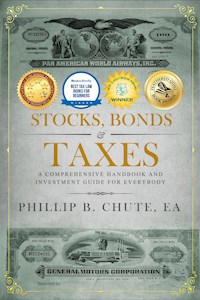
The book your stock broker doesn’t want you to own.
There are many how-to invest books. What a serious investor needs is a book that provides a broad and thorough understanding. This book gives the core information required to invest intelligently.
This book isn’t simply stock tips for beginners; this book is also for the investor with a solid portfolio. Many investors rely on others for the how and why, even after years in. Knowledge is power and this book gives the investor the knowledge to become a powerful investor.
No serious investor should consider buying, selling, or investing before reading this book!
Investing
- How to deal and make money in a declining Stock Market!
- Find out how professionals and wealthy people trade and invest!
- Read the pros and cons of every kind of investment strategy!
- Find out when the IRS makes personal house calls on investors!
- Investor knowledge is power, this book gives it all to you!
- How to increase your yield on most investments!
Life planning
- All about living trusts.
- Probate and estate rules and laws.
- Cybercurrency
- How to handle IRS audits.
- Tax court & the hazards of litigation.
- How to handle bankruptcy, bad debt, and credit scores.
Phillip Bruce Chute, EA has been Enrolled to Practice before the Internal Revenue Service since 1976. He was a Registered Investment Advisor and Registered Securities Principal for 20 years.
Das E-Book können Sie in Legimi-Apps oder einer beliebigen App lesen, die das folgende Format unterstützen:
Veröffentlichungsjahr: 2021
Ähnliche



















STOCKS, BONDS
& TAXES
A Comprehensive Handbook and Investment Guide for Everybody
PHILLIP BRUCE CHUTE, EA
This publication is to provide accurate and authoritative information in regards to the subject matter covered. The reader should understand that the publisher is not engaged in rendering legal, accounting, or other professional service. If legal or other expert assistance is required, the services of a competent professional should be sought.
All rights reserved. No part of this book
may be reproduced or used in any manner without
written permission of the copyright owner,
except the use of quotations in a book review.
For more information, email:
Copyright © 2020 as
Stocks, Bonds, and Taxes
by Phillip B. Chute
Third paperback edition 2020
Editing: Leslie Adkison & Nenita Lariosa
Book design by: German Creative
Book Formatting: Sarah Dietz
ISBN 978-1-7328855-3-0
www.phillipbchute.com
DISCLAIMER
On December 22, 2017, President Trump signed the Tax Cuts and Jobs Act, which contained 115 new tax provisions effective in 2018. This publication will contain many of the new relevant provisions.
The book material is based on personal experiences, with a tip of the hat to Wikipedia, Wall Street Journal, Investopedia and the myriad of state and federal government agencies and public information sources available today.
Because Federal and State taxes are a constantly moving target, professional counsel is recommended before making financial decisions.
The Author, Phillip Bruce Chute, EA
ABOUT THIS BOOK
This book is a compilation of investment information about securities, stocks, bonds, insurance, and essentials for the typical investor who needs a better understanding of the mechanics of New York’s Wall Street and the insurance giants of New England. The format is broken down into the type of investment, commissions or cost, FINRA compliance law, tax laws, successful strategies, charts and graph aids, trading tips, pros and cons of specific investment and financing. Notice the term “law”, the foundation of all transactions, which must conform to legal parameters to be valid, and the tax effects and consequences. A glossary provides practical reference information. The scope of this book is quite broad and reaches beyond the normal investment situation encountered by an investor meeting with his/her financial planner. It is not a book of theory, but of real-life practice.
The purpose of this book is to provide the intelligent reader with enough information to be at least as knowledgeable as the stockbroker or insurance agent he/she is dealing with, and to be capable of conducting personal planning and trading with confidence. It has been the experience of the author that most people are rightly overwhelmed by the limited information presented to them by the sophisticated and highly educated sales people making presentations. Informed people who can resist sales pressure enough to comprehend what they are doing make the best investment decisions. Good investments are made when the buyer can put the sales pitch person on hold until he/she can reference a book such as this to further understand the implications of these important decisions. Because the nature of money and finance is complex and always exposed to risk, an attempt is made to simplify the text and real examples are given.
This book is not designed by the author to show you how to be rich instantly with your savings. He intended to show you the risk, costs, and mechanics of investments so you will understand your true potential in the investment business and make money the old-fashioned way…by being smart and informed. As an insurance salesperson once told him, “Sell the sizzle, not the steak.”
There are also dozens of success stories, not only of dollars and entrepreneurs, but also of individuals and their successes. Included are reflective examples of our powerful American economy and how the chess pieces of character and energy move together. Success is never without hard work and diligence to a sound goal, as these real-life strategies testify.
Are worm farms a good investment? Read the real-life Horror Stories and find out what investors did with them. Also, find out why new huge tractor-trailer rigs were surprisingly delivered to the front doors of wealthy investors, why the investor’s high yield Mexican bank bonds were unredeemable, or about the investor who bought unsalable common stocks in a large Long Beach bank, or why the millionaire bought worthless tax-exempt muni (municipal) bonds, etc. All investments are tax-related and focused on the Tax Code because it has become the center of all economic decisions.
ABOUT THE AUTHOR
Phillip Bruce Chuteis an Enrolled Agent, tested, licensed, and appointed by the IRS directly. He has prepared and supervised over 25,000 tax returns over 30 years or more. These are individual, business, fiduciary, estate, corporate, partnership, and many kinds of business entities. He has also represented clients in hundreds of audits including payroll and sales tax, secured and unsecured property taxes, workman’s compensation, Labor Board, IRS and FTB office and field individual taxes, corporate taxes, and estate taxes.
Phil, as his clients respectfully address him, obtained his first securities license to protect his clients, as a direct result of witnessing terrible investment machinations done by financial salespeople. As a focused, committed financial salesperson, business consultant, tax expert, and as a securities principal supervising other brokers by the National Association of Security Dealers’ (now FINRA) tough rules, he has become an authority in all aspects of finance.
Aside from holding the highest credential award by the IRS by passing the Special Enrollment Examinations to become an Enrolled Agent, the author served concurrently as a supervising principal of the Office of Supervisory Jurisdiction and branch manager of various security brokerage firms for twenty years. For five years, he was the President and Registered Financial Advisor of Pacific Financial Advisors Corporation. An author of AmericanIndependent Business, a college-level textbook on small businesses and entrepreneurship, Phillip B Chute is listed in the Who’s Who Marquis book on successful business professionals and won National and International writing awards for Kiwanis International.
table of contents
SECTION I: INVESTMENTs
part ONE: equities
Chapter 1: Initial Public Stock Offers, Securities Exchange Commission Registration
Chapter2:Small Capital Stock
Chapter3: Blue Chip Stocks
Chapter 4: ADR’s & Foreign Stocks, Precious Metals
Chapter 5: Options & Margin Accounts, Designated Securities, ETF, Commodities Trading, Discretionary Trading, Insider Trading, Speculation
Chapter 6: Stock Exchanges, Internet Trading,Broker-Dealers, Securities Exchange Commission, National Association of Security Dealers, Registered Representatives & Principals, Registered Investment Advisors
Chapter 7: Pseudo Stock Investments
Chapter 8: Dividends, Stock Splits, Voting-Nonvoting, Preferred Stocks, Common Stocks & Rights
Chapter 9: Close Corporations, Section 1244 Securities, Venture Capital
Chapter 10: Real Estate Investment Trusts
PART TWO: BONDS
Chapter 11: Tax-Exempt Municipal Bonds
Chapter 12: Government Issues, Zero Coupon Bond Concepts, Federal Reserve Board Decisions
Chapter 13: High Yield Bonds, Corporate Bonds, Debentures, Convertible Preferred
Chapter 14: Collateralized Mortgage Obligations Insured Government Agency Housing Issues
Chapter 15: Money Market, Certificates of Deposit, Foreign Currency & Interest Rate, Arbitrage, Bond Derivatives, Speculative Hedge funds
Chapter 16: Utilities
PART THREE: MUTUAL FUNDS
Chapter 17: Mutual Funds, Family of Funds Concept, Types of Investment
Chapter 18: Mutual Fund Operations, ABC & Breakpoint Commission Structure, Liquidity, Buy & Hold Strategies, Telephone Redemption, Dollar Cost Averaging, Beta Risk Pyramid, Reinvesting
PART FOUR: OTHER INVESTMENTS
Chapter 19: Life Insurance, Fixed Annuities, Fixed Indexed Annuities
Chapter 20: Indexed-Investment Annuities
Chapter 21: Managed Accounts
Chapter 22: Unit Trusts
Chapter 23: Limited Partnerships, Oil-Gas Well Deals, Solar–Electric Car Credits, Virtual Currencies
Chapter 24: Commodities
Chapter 25: Low-Income Housing Credits
SECTION II: LIFE PLANNINg
PART FIVE: FINANCIAL PLANNING
Chapter 26: Individual Retirement Plans, SEP IRAs, ROTH IRAs, Social Security, Educational Savings Plans, Tax Penalties
Chapter 27: Pension Plans: 401 (k), Money Purchase, Employee Stock Options, Deferred Compensation, Savings Matching
Chapter 28: Corporate Deductions, Dividend Exclusion, Pension Costs, Prenuptial-Postnuptial Agreements, Marriage-Divorce, Insurance Considerations
Chapter 29: Passive/Active investor Participation, RentalReal Estate, Foundations, Tax Avoidance Schemes, Business Forms & Considerations
PART SIX: DEATH & TAXES
Chapter 30: Gift and Estate Taxes, Marital Exemption
Chapter 31: Living Trusts, Bypass Trusts, Grantor Trusts, Generation-Skipping Dynasty Trusts, Charitable Remainder Trusts
Chapter 32: Fiduciaries, Executors, Wills, Statutory Fees, Will Substitutes, Grant Deeds, Tax Basis of Assets, Titling Assets, Ancillary Probate, Reverse Mortgages
PART SEVEN: OTHER IMPORTANT FINANCIAL CONSIDERATIONS
Chapter 33: Bankruptcies, Credit Scores, Bad Debt, Audits, Goals & Economic Considerations
PICTURE APPENDICES
APPENDIX A: STOCK CERTIFICATES
APPENDIX B: GERMAN CURRENCY
APPENDIX C: BONDS
GLOSSARY OF INVESTMENT TERMS
REFERENCES
INDEx
MORE ABOUT THE AUTHOR
SECTION IINVESTMENTS
PART ONEEQUITIES
Equity capital is the stockbroker term for corporate stock issued for cash. Thus, it is outside ownership in the corporation. This interest, usually expressed as voting common shares, is sold through various financial firms that are authorized through the Securities Exchange Commission (SEC). Equities are the common currency of the average citizen today. Stocks are owned by almost all pension/retirement plans, in individual portfolios, and in everyday economic discussions. Several television stations are devoted full-time to live trading and economarket discussions. Economic events such as a large company layoff or merger are transformed into headlines of stock market movements that appear in newspaper headlines or bylines on the hourly news. Equities are the stock market and woven into the fabric of daily American life. Although the top 5% of the population owns 90% of all wealth, there is enough left for trading, investment, pensions, and speculation by the typical middle-class citizen today.
Accessibility of the equity markets by individual Internet trading has expanded public awareness and participation to an extent never imagined by the cyber dreamers of these times. The Internet stocks themselves have added fuel to the fire that has driven the NASDAQ and Dow Jones Industrial Average Composite (DJIA) to unheard of levels. The swift driving forces behind modern computerized equity trading operate without historic reference to the times when the Chosen Few Bankers, behind closed boardroom doors, traded stocks until Thomas Edison invented the ticker-tape machine.
The Financial Industry Regulatory Authority (FINRA), formerly The National Association of Securities Dealers (NASD), is a Self-Regulatory Organization (SRO) in which stockbrokers and dealers pay all the dues and expenses. The organization strictly monitors the professional conduct of the Broker/Dealer (BD) firms and account executive representatives through their licensing and audit functions.FINRA, under the umbrella of the Securities Exchange Commission (SEC), is the investigative and compliance function for security sales and trading. Their sanctions and penalties are quite harsh in comparison to other professional organizations, which tend to act fraternally for member protection. Because of the fiduciary exposure of individuals to securities representatives and their firms handling client funds, the FINRA is a welcome ally for the average investor.
CHAPTER ONE
INITIAL PUBLIC STOCK OFFERS, SECURITIES EXCHANGE COmMISSION REGISTRATION
The SEC subjects new Initial Public Stock Offerings (IPO) going public to the sale of their shares of corporate stock for operating capital, to intense scrutiny. The company must have been in business prior to the offer, complete registration questionnaires, disclose antecedents about the management, satisfy capital requirements, and provide certified financial statements to satisfy the SEC that the business is a viable going concern and that the offer is not fraudulent. After Registration, all corporations must file periodic form 10Q every three months to report earnings. Of course, nobody can GUARANTEE (that word is never used in the securitiesbusiness) the real future of the company. The underwriting process is complex and expensive. Only large brokerage houses and a few specialized banking institutions handle new issues. The UNDERWRITER charges about 7% of the new issue and sets the price for the Initial Public Offering. This offering is a selective offering, which is sold in blocks to large brokerage firms (their other selling division) and institutional buyers such as mutual funds. These funds and firms are advised to hold the stocks, for say…a month at least, to avoid speculation. What really happens is that they FLIP the stock over and sell it on the secondary market for a quick profit after a minute or two.
The corporate seller usually authorizes common voting stock, which has no-par value. By not having a stated value, such as $10 per share, the stock sale price per share can vary and will be booked at the actual amount sold instead of a fixed price. If it was fixed at $10, the stock could be sold for only $10 initially, which would create corporate accounting and tax problems if the public would not pay (cash price, which is defined as what two unrelated parties would pay for any item in an open arms-length transaction) that much or it could be sold for more on the open market.
A Committee on Uniform Securities Identification Procedure (CUSIP) nine-digit alphanumeric number is assigned and noted on the left-hand top corner of the stock certificates. Every time a security (including bonds) is traded, this number is used. This agency has assigned the numbers to all North American U.S. and Canadian financial instruments since 1962.
NEW ISSUES are always a highly speculative venture and subjected to much fraud. First, why are we buying a new issue? We are speculating that the price we pay for the shares of stock will increase dramatically once offered. We are hoping it will run away and become a Microsoft. Therein lies the truth. We are hoping it will run away NEXT WEEK, after we buy it (buy low, sell high)! Now we join the line of speculators. First, is the guy who owned the STOCK OPTIONS of the company before it went public (privately held) along with his VENTURE CAPITAL investors. He is selling his shares or new shares (which might be restricted to one year after the IPO) that will pour money into his business and generate higher salaries and perks for him as well as an increase in the value of his original holdings. Next, there is the underwriter institution that creates a huge commission to issue the stock. The underwriter can set the initial price, which can create much speculation if it is priced under the “perceived” market value. Then, there is the brokerage or institutional firm who will buy an allocated block of the stock for them, unless they know it is a dog. They will control the now secondary speculative market prices, after it is first offered, by calling their list of investors and telling them how great it is. This stock is not listed on the open market yet, so the few brokerages or investment bankers really control the issue. Then, you buy the remaining public shares. Did you buy it when it was first sold on the secondary market at $7.50 by the initial institutional while $5 buyers were now taking their first profits, or a week later when it was at $10, when everybody was now reselling higher? Or the next month when the same shares are bidding for $23.50, orthe next year when they bottomed out at $2.50? The first Broker-Dealer or institution who bought the allocated block of shares at $5 for their own account hopes to sell when the market is higher, and he is in a great position to know when to move because he is actually “MAKING THE MARKET” by controlling the limited and allocated issue.
The STOCKBROKERsales rep is not forgotten in the FEEDING FRENZY arrangement since he can earn a maximum commission on the deal, both when the issue is first SOLD TO the investor, when it is SOLD BY the investor and when it is RESOLD to another investor. He can also allocate new issues to selective clients, which enables him to sell doggy issues along with potential “HOT ISSUES” or set the investor off for the next new really good deal. Most market-making brokerage or investment firms are asked to hold the initial issue new stocks up to a month to discourage excessive trading and speculation, which is rarely done, because that is why the investors are there in the first place.
Most of the IPO trading traffic these days is done on E-stocks, which are Internet-related speculations. The venture capitalists deal in three basic categories leading to the IPO. These are vertical portals, business-to-business portals, and e-commerce superstores. These are not generally technology issues, but purely over-the-Internet electronic speculations.
All IPOs must be registered and approved by the SEC before they can be sold to the public. Many fraudulent stock offers are now appearing on the INTERNET. The best way to buy any stock on the Internet is to work through a broker. This is the only official control over legitimate offerings. Many new Internet HOT TIP publications can hype new issues with fantastic predictions. The people offering the issues may pay them off or be connected insiders, so beware. Continuous fortuitous statements issue from principals about their holdings and undisclosed options. The SEC receives hundreds of calls each day from investors who are concerned about dubious Internet offerings. The SEC filed formal charges against only one scam per month, until late 1998 when they filed 44 in one day, which is still only a fraction of the actual total. Sometimes they only order the peddler to “CEASE & DESIST”, which is another way of saying your money is gone forever and the bad guys are leaving on vacation. This means that you are on your own if you buy any security or investment not offered through a reputable firm. Do not invest money for any IPO that you cannot afford to lose, because IPO is another word for SPECULATION. Best to let it age a little while and settle down, unless you like sleeping with your eyes wide open.
There are many good companies helped by going public because they have large capital requirements for expansion, equipment or other needs besides speculation or profit-taking. Only very large issues will ultimately be accepted for sale over the New York Stock Exchange Big Board in public trading. IPO’s will not be listed in the financial section of your local newspaper under NASDAQ, NEW YORK, or AMERICANexchanges, unless they are large private companies going public. Some newer stocks are now listed in the NASDAQ Small Capital Issues section.
PLANNING TIPS
New initial stock issues should have two key points. The first is the particular INDUSTRY the company is located in and the second is why the company should be especially successful as a COMPETITOR in that industry. Gather information, if possible, on the industry (is it a growth industry like software or a dying industry usingBessemer steel furnaces?) and ask the sales rep for data on the company and its officers. He can send it by fax or e-mail if he wants to make a sale. You will not have much time because he will be working the phone, so be brief and call him back in the same day (keep in mind that they may close early because most trading halts at 4 PM New York time and these guys start early at 9:30 in the morning). Some IPO’s are solid gold, (I sold a lot of Tesla at $20 when it first went public) and the stock shares are allocated to the BD’s BEST CLIENTS (best is a term meaning large trades, sales, and commissions). Evening trading under the NASDAQ, although automated, will certainly result in much loss of sleep by brokers, as well as clients. Moreover, we all know that the more stocks are traded, the higher the price can go!
Because of intense speculation during late 1998 and early 1999 shares ofstock for new issues were traded over ten times daily, some of the large brokerage firms closed out MARGIN ACCOUNTS (interest bearing accounts for investors which are offered by the broker firms with bank backing) for all Internet stock trades. The volatility of the prices caused too many margin calls on these accounts whenever the prices dropped.
Most stock issues are packaged with financing leverage by huge institutionalized broker firms and associated banks. They are available, like most individual stock issues, for purchase through mutual funds and investment advisor fiduciaries. Individual stocks traded over the market will sell for about 1% commissions, which is down from the traditional 5% before discount brokers took over the trading business. Some discount brokers in 2020 sell for zero commissions on stock trades. They simply make money on other security products, especially insurance related and advisory clients (these accounts are charged large fees based on portfolio value) which we will cover later.
Internet trading firms are now entering the IPO market and will be offering smaller offerings directly to the investor on a Dutch auction (each person bidding separately) basis, which will eliminate some of the excessive middleman profit taking between investment bankers and brokerage or institutional firms. It will also bring a higher price and more cash to the corporation owning the stocks that are being offered, because the price will correspond to the market, and would not be conservatively underpriced, which offers speculative opportunities especially benefiting the controlling first buyer brokerage firms and institutions. Some of these new offers will spend multimillions on advertising a software application, which may not have any value if it doesn’t fly.
TAXES
All stock sales are subject to rules on profits or losses. The gains are the greater of the selling price over the purchase price. Commissions and ticket charges reduce selling prices or increase purchase costs. SHORT-TERMGAINS, which are sales of investments held less than one year, are taxed as ORDINARY INCOME (your highest tax bracket). For LONG-TERMGAINS of over the one-year holding period, the tax rate will be maxed out at 0 to 20% according to the applicable tax rates on an individual’s tax return (which have a new high of 37%). If your taxable bracket is a lowly 10%, then the long-term capital gains tax is reduced to only 0%. All short-term and long-term losses will offset capital gains and are subject to a loss deduction limit of up to $3,000 per year against other income. Excess losses can be carried forward to future year tax returns, never backward. By now, you should know that tax laws are constantly changing, like marking the spot where your hat fell off before floating down the river. Capital Gains tax brackets at the time of printing (2020) begin at 0%, 15% and 20% depending on taxable income and filing status. Qualified dividends, which are dividends from equities--not bonds, are also taxed at capital gains rates.
TAX TABLES FOR CAPITAL GAINS AND QUALIFIED DIVIDENDS
Effective 2020 the breakpoints are:
Brokerage tax statements usually list the sales of the securities or bonds and the costs. Sometimes the costs are not all identified because the securities were transferred from another broker account and the purchase amount is unknown to the new dealer. In that case, the costs are undisclosed and the clients must identify their original costs or guess to fill in the cost space. Never leave it blank because it results in taxes on the sale amount.
Stock options are issued by management agreements which generally allow future taxation as wages or taxable gains. They are not usually exercised (the kill price and dates are set at the time of employment agreement) unless there is a gain on the value of the equities. Some broker firms handling the transactions kindly note the individual wage tax treatment on the year-end broker statements at tax time. Other brokers leave it off with questionable results (because the brokerage tax statements show the sale as a taxable event), causing immense conflict between the tax preparers and clients.
To compute taxable capital gains profits (or losses):
ORIGINAL COST OF SECURITY
$
PURCHASE COSTS
(commissions, ticket charges, other)
+
REINVESTED DIVIDENDS & GAINS
(which were taxed on 1099 forms)
+
NET SALE (A)
+ $
TOTAL COST (BASIS) (B)
$
SELLING PRICE
+ $
SELLING EXPENSES (commissions, ticket charges, other) *
-
TAXABLE GAIN
(A) $___________ LESS
(B) $_(_________)_
(COMPUTE FOR EACH SECURITY TRANSACTION, THEN SEGREGATE ALL SHORT-TERM {under one-year holding period} FROM LONG-TERM CAPITAL GAINS OR LOSSES).
* When scheduling these items on Schedule D of the individual tax return, it is best to show the selling price alone (soit will match the 1099 form with the IRS computer) and add the selling expenses to the cost-basis purchase price.
Fortunately, all broker firms will segregate the data for you under short term, long term, income, and purchase or unallocated cost for stocks moved into their brokerage with unknown costs. Bonds are usually segregated from equities.
LEGAL-COMPLIANCE
SPECULATIVE ISSUES CANNOT BE LEGALLY SOLD TO UNSOPHISTICATED (low income, uneducated, small net worth, no prior experiencewith stocks) or ELDERLY INDIVIDUALS (who do not have a stock portfolio). Some brokers also tell great stories over the phone to sell an issue, even though insider information is illegal for securities trading, so a tape recording (which could also be illegal) or another person listening to the conversation on another phone would be a great asset if the issue were misrepresented. Sales spiels are supposed to be reviewed and approved by the SEC and the broker-dealer compliance principals. If you experience a loss and feel you were misinformed (nice word meaning LIED TO), first call your sales rep to find out what happened and get the facts straight. Although a telephone complaint may be ignored or misconstrued by the sales rep, a written complaint to the broker-dealer must, by securities compliance law, always generate a serious response if you have a loss and you feel you were misinformed. If their response is inadequate and you still feel you have suffered real losses directly due to their activity and want commissions or losses repaid, then write directly to NASDat 1735 K Street NW Washington, D.C. 20006 or their replacement FINRA at 100 F Street, NE Washington, D.C. 20549. These organizations are Broker-Dealer self-financed Self-Regulatory Organizations(SRO) who will immediately query the BD who will talk to the sales rep and then respond in writing both to the FINRA and you. This is a very serious business at this level and can endanger licenses, so the response is appropriate. It is also important that your complaint be accurate and documented. They will arbitrate the claim if reasonable. The Securities Exchange Commission will also respond to complaints of official or national importance (they are government funded).
A large brokerage firm in Beverly Hills, California, advertised that they would not charge commissions for trades made to certain stocks. The slick professionally prepared booklet offered many deals to new clients, who would save a ton of money by NOT CHARGING COMMISSIONS. Well then, how do they make enough money to pay for the beautiful advertising and overhead? The SEC looked into it and found that they were simply marking up the prices on some stocks (by making the market) they were buying for customers. There was a million-dollar fine connected to the cease and desist order from the audit so the firm may now need a new approach to finding new clients or making money on them. Beware of the FREE LUNCH, which can be very costly.
About suing the broker-dealer on the above issue. Most broker-dealers require an ARBITRATION AGREEMENT from clients before they will open an account. This eliminates frivolous and nuisance suits from unscrupulous lawyers and their clients. In-house broker-dealer attorneys estimate it costs over $25,000 to successfully defend any suit, no matter how small or absurd. New clients who won’t sign will not become new clients. The FINRA would recommend an arbitration panel hearing with you if the issue remains unresolved. You will have your day in conference with their retired or independent professionals within a few short months.
Some unregulated or sparsely unregulated Hedge Funds or other firms acting on the edge of the law sometimes come to light as the Bernie MadoffPonzi Schemein 2008, which reached National province after the lawyers got busy and resulted in tax code changes afterward to account for losses from clawback restitutions paid to other investors for prior years.
SUCCESSFUL STRATEGIES
There can be no greater success story than of a person who bought Dell Computer when it first went public. The legend of college student Michael Dell building computers in his garage and selling them directly to consumers still holds true today as his huge firm now sells them over the Internet and by other DIRECT SALES methods. By building a reliable product and eliminating retail outlet costs, he capitalized on a fundamental advantage as well as maintaining close contact with his customers. Without being blinded by component manufacturing giant IBM’s leasing philosophy, or Apple Computer’s creating software to sell hardware, he adhered to the philosophy that a computer is a metal box filled with basic components, which can be bought on the street. The fast-changing computer component business was a challenge he was able to master by shortening the gap between customer orders and manufacturing, thus avoiding finished goods inventory buildup. By carefully crafting a selling philosophy of avoiding middlemen retailers such as Radio Shack which sold the first micro-computers (Tandy), he stuck to direct sales by media advertising until achieving NIRVANA (not a stock issue but an elevated state of being) on the Internet that connected his clients directly to him. Now his international firm literally assembles computers to the wholesale and retail seller’s specifications in short order from parts manufactured overseas and south of the border. Other computer manufacturers are attempting to copy his mode of operation. An investment in a VISIONARY person, not just the firm, is the true test of entrepreneurial investment when the business comes out the chute as an IPO.
A Dell investor, careful of his small retirement savings, took advantage of his good investment luck by selling off his original investment shares (because Dell keeps dividing like an amoeba) periodically. Thus, he TAKES SOME OF HIS PROFITS out as the stock runs up the ladder. No matter what happens to the market (a high tide raises all the boats, a low tide can beach them), he will have covered his end if it declines. This careful person will keep most of his profits, whatever happens to the market or his investment. Instead of a STOP-LOSS on the price, he simply limited his holdings.
No, I will not take up too much space here talking about Elon Musk and Tesla, because that would be another book about the visionary’s vision and risk-taking. I did sell a lot of Tesla when it went out the door at $20 and now it floats between $500 and $900 still without making any profit. Musk applied the First Principle of Aristotle which is to change things you have to go back to the beginning and change the old approaches to the project. Everything must be new, do not apply old solutions to new problems. And do whatever is in your power to make it work.
Elon Musk is currently the CEO and founder of several successful companies including Tesla and Space X. Elon Musk realized that nobody had an electric car and designed his Tesla from the ground up changing manufacturing, design, and sales techniques anew. He threw out the Wernher Von Braun's rocket technology used by NASA from WW II and designed his fabulous rocket program including the recovery of major components, from anew. He created the Boring Company to drill underneath Los Angeles for a limited low-cost transportation solution. This visionary is capable of starting new business concepts from the First Principles theory of tossing the accepted handed down theories and "reinventing the wheel".
Elon Musk’s first principles:
Identify and define your current assumptions.
Find your root problem.
Breakdown the problem into its fundamental principles.
Ask yourself powerful questions about the problem. Break it down into basic truths.
Create new solutions from scratch.
If you ask yourself powerful questions about your problem then a new unique solution may come to you.
Elon Musk’s 6 hiring tips for leadership principles:
Move.
The ability to keep up with current trends and stay competitive
.
Do the Impossible
. Think outside the box
Constantly Innovate
Reason from “First Principles”.
Identify root problems and solve problems
Think Like Owners.
Leaders should be supportive in business development like an owner would be.
We are all in.
Teamwork.
HORROR STORY - BAD IPO
A friend, tired of buying losing California Lotto tickets, invested his small savings into an IPO, which purported to generate a KILLER PROFIT. This fellow was in bad shape financially and based his future on this hot deal. The IPO went up a little, then down a little and settled on a trip to nowhere. The fellow was lucky to have relatives take him in afterward when he was between jobs and broke.
This item should be labeled “Future Horror Story”. There is always a loophole to every rule and law of the land because lawyers for lawyers write them. The Securities Act of 1933 (Truth in Securities Law), which covers the registration of securities and new offers, had a small business registration exemption for offerings under $1 million with only minimum restrictions. This was a useful measure allowing small businesses to incorporate and issue their stock. The result, however, was a recent Fortune Magazine article that showed a small storefront retail business selling shares of stock to school children and people off the street. The article indicated that this small business focus was not to make money from operations, but was in the business of selling its stocks. Only the future will tell if the business will succeed in either, but the eye should always be set on EARNING PROFITS, not taking money from lenders or shareholders because there is always the day when all accounts must be satisfied and reconciled.
SECOND HORROR STORY - CRITICAL PATH INC
Another IPO example is Critical Path Inc., which had a market capitalization (the value of all shares outstanding at a current market price) of $1,400,000,000 and lost $11,400,000 on sales of less than one million in 1998. What will happen if the company continues to lose money? For every dollar, in sales, they lose eleven. A corner liquor store or gas station can easily do a million dollars annually in sales. Where did the money go? How was it put to use? Why are people buying the stocks?
PROS AND CONS ABOUT IPO’S
Don’t speculate with money you cannot afford to lose.
Be wary and cautious about telephone sales spiels.
Most IPO’s are old and tired by the time the general trading public gets to trade them.
Do your homework about the new firm before you invest.
Find out if your Broker is trustworthy.
Brokerage firms make a market with new issues and have great control over the sales method and pricing.
Don’t use borrowed money for speculation. That is money you do not have to lose.
Remember always that all firms must earn a profit to survive in the end that includes Tesla Motors.
TAX TIPS
The good news is that there are no tax problems with losses.
Tax gains or losses are not recognized until the equity is sold or exchanged so it is a good idea to sell losers before year-end (November, not December because of tax rules).
Stocks with large gains might be sold at the same time (not same stocks) that have big losses and if the trading expenses are small, they can be bought back again later on in the next year. Be careful of exchange trading the same stock.
Exchanges (selling a security for losses and buying it back right away) create tax problems.
Capital losses are limited to maximum offsets of $3,000 per year against ordinary income after offsetting other capital gains. The remaining losses carry forward to future years.
If the $3,000 capital loss cannot offset income in any year, it still reduces the loss carryforward while the losses not used that year become a part of a Net Operating Loss, which is a separate loss to carry back or forward to other tax years.
The Wall Street Journal lists valuable trading information and closing prices daily for the largest 1,000 companies in the USA.
CHAPTER TWO
SMALL CAPITAL STOCKS
Small company stocks, a.k.a. SMALL-CAPS, are the growth stocks. They are traded on the National Association of Securities Dealers Automated Quotations(NASDAQ) Exchange, which handles the newer (smaller) publicly traded issues. The initial private offering, after stabilizing and reaching a certain size, will aspire to public trading which puts upward pressure on the price and guarantees press coverage of the principals and financial activity, good or bad. An example of how large a company must be to jump into public trading and rub shoulders with IBM and Microsoft, can be found with a very large company which holds over 1/3 billion equity position in real estate and is always THINKING about going public. Because the company is not publicly held, I cannot disclose the name here.
Some successful firms reverse their public exposure by buying back all their shares to go private and take the pressure off quarterly earnings reporting and public exposure of liability and risk.
Small caps are growth-oriented. They actively seek growth capital through stock issues or alternate financing. Because they are focused on growth and capital formation, they will not pay dividends. All earnings, if any, will be plowed back into internal growth or debt reduction. These are the exciting issues, highly traded and fresh in the public mind. Microsoft is an example of how a company with intense visionary leadership under Bill Gates, started out by working with the giant old Blue-Chip Company, IBM, and grew larger than them are by focusing on mind-ware (software) instead of hardware. The results are in the papers every day.
The Civil War, over a hundred years ago, changed our economy into a manufacturing economy, leaving farming behind as the basic economic structure of the nation. A hundred years later, companies such as Microsoft grew out of nowhere, usurping the industrial giants in size and scope with nuclear growth unheard of in an economy where health is measured by the size of the manufacturing assets section of the balance sheet. This change was so profound that the Dow Jones Industrial average stock listing has been changed to include software and mindware such as Facebook businesses in the Industrial Index of 30 largest traded stocks.
What does it all mean? To the investor, we have companies not paying dividends, which is interest on capital related to earnings, paying investors back instead by the growth of stocks expressed by price changes in the public marketplace. In real terms, reflecting the fundamental changes in the economy, there are much greater future returns on investment in this area. This highly volatile investment area, holding huge amounts of public capital including most mutual funds and pension money, can change in value overnight on a press release or a distant world event. This is where the true focus of capitalism rests today with investor confidence leading the sum of the values to all-time highs.
Small caps are subject to stock splits. A stock split is created when the price of the stock has reached a very high level and the Board of Directors of the firm meet to decide that they can sell more shares if the offering price were less. Then, they do the official paperwork and issue new shares to shareholders on record and the owners now have two or more shares for every old share they held. The equity position is the same, because the transaction merely creates more certificates much like breaking a ten-dollar bill into two fives. Investors usually love stock splits because it increases the number of shares held (a psychic satisfaction), proves the price has been rising, and makes the stock more affordable again. These are referred to as diluted shares by the market. A stock that never splits is successful Berkshire Hathaway. Warren Buffet is the chairman and chief executive and it would take a mortgage refi to buy a share at present highs. On 12/31/19, the closing price of the Berkshire Hathaway stock was $339,590 per share.
Stocks are usually sold in round lots of 100 shares, so being able to buy a hundred shares for half the money definitely has an appeal to the trading public, especially small investors. Of course, investors can do a number on their uninformed collegiate when they inform their economic rivals at the Saturday party that they now own over (1,000 or more) shares of XYZ company instead of the 500 they held the week before. These are diluted shares. That is, each share is worth only half as much as it was before the split. It also makes tracking difficult because if you own ten shares of stock, were they ten shares before they became a hundred or a thousand?
Small stocks generally do not issue preferred stock shares that guaranteed dividends. (Theyact like bondswithout maturity dates.) They also issue millions of shares to distribute to management in one form or another. Different classes of stock can be divided into votingshares and non-voting shares (a.k.a. A shares or B shares). Some preferred stocks can be exchanged into common shares.
The actual certificates of stock purchased can be held by the investor or at the brokerage firm. The sales rep will always ask you if you want the shares held in-house or not. It is best to leave it with the broker to save handling because if you decide to trade it later on, the certificates must be properly endorsed on the back and sent to the broker before the trade can be properly completed. The settlement time for a trade is now one business day (T plus 1), so there is not much time to fool with the certificates if you are a serious trader. This really brings us into the electronic age for trading. Of course, many investors hold older certificates good for pinning on the den wall, because they have no value at all. My clients leave them with me so I can wallpaper the hallway in my office. Most people without walk-in safes simply lose them and need to sign a lost certificate affidavit when sale day happens.
Corporate mergers create unique situations where the old certificates trade for new certificates or are bought outright. Many elderly people scramble to locate these certificates when the certified letter comes in the mail. Best to keep them in a bank safe deposit box or a home safe that is big and heavy enough to offer fire protection and also give a hernia to anybody but a professional mover. If the merger cashes out the stocks the registered owner simply gets a check in the mail and another reporting line on the tax return.
The securities’ Corporate Secretary dutifully records all certificates in an official register. This can be automated today, instead of the black fountain pen of yesterday, and the Secretary can be located in a broker office or a bank investment department.
Trading can be monitored today while watching the television's financial channels or on your computer. This brings the market literally to the doorstep. It is incredible to watch a billion shares of stocks change hands in a single day. Sometimes the market will begin in highly negative territory and turn completely around before the day is over. The trading results are delayed by twenty minutes to slow down speculation from the media watchers. The New York Stock Exchange hours are from 9:30 am to 4 PM Eastern Standard Time, three hours ahead of the Pacific Western states. NASDAQ hours are the same but will probably be extended into the evenings one day so that day traders can become night traders.
Stock reverse splits have been in the news recently. This is an event caused when companies issue fewer shares to replace outstanding shares. Thus if 100,000 shares were outstanding at $1 each, a one for ten would result in 10,000 new shares of stock outstanding valued at $10 each. This can be an attempt to keep the stock listed on the NASDAQ exchange by keeping the value high enough to trade. I remember when Ford Motor Company was in danger of being delisted and the common stock was trading at just over two dollars. Naturally, I put a lot of clients into it because I had faith in the new aerospace management, while GMC and Chrysler kept with their old management in place. I was chewed out for bringing clients into a possible bankruptcy, but saved when the shares recovered to $14 the next year.
A company can also buy all outstanding shares of stock and delist itself by going private with few founder owners again. A business buying its own stock creates treasury stock. This reduces the pressure to issue dividends, keeps the corporate affairs away from the public eye, reduces SEC scrutiny, and puts a wall around the company which is probably now closely held by few related family members. By not issuing dividends, required by the IRS code, the company can hoard cash although also subject to tax codes of holding company concerns. A holding company, according to the IRS, is a corporation that hoards cash and fails to pay taxable dividends. The management of a delisted private company can consist of fewer members who lack the normal controls for shareholder and public involvement.
Some companies sell their shares directly to the public as an effort to reduce investor load or commission expenses. These companies will handle the actual registration of the shares and issue the shares to people investing on a one-for-one basis. These are in addition to the corporations that allow shareholders to reinvest dividends without paying brokerage commissions. Be sure of the financial strength of any firm doing this because they may not be strong enough to be listed on the stock exchanges and quite risky. Any transactions away from the licensing and controls of a broker-dealer should be suspect. Naturally, they would be located on an Internet trading site.
Stock repurchasing is a rare event where a company decides, usually because of very close family or management ownership, to repurchase all the publicly held shares and become a privately owned and operated corporation. This keeps the pressure off management to appease public shareholders with short-term positive events that increase costs in the long run. A true example of bad public stewardship was a major firm near San Francisco, which traded higher present earnings for a long-term expense. They sold a large transportation terminal to boost current earnings a few cents and creating a tax liability from leasing it back unprofitably in the future.
PLANNING TIPS
Keep in mind that commissions are usually charged on every transaction, usually from 1% up to 5% (the legal limit) plus ticket or delivery charges. It is true that some brokerage firms do not charge commissions but not the big reputable ones. Thus, to buy a small lot of stocks one day and sell them the next and go on a wild trading frenzy can consume the entire investment with costs and make the sales rep really happy until you disappear. Best to hold securities long enough to see if there is a trend developing rather than sell and buy at a panic or whim. Buying and selling on short notice using arbitrage is truly speculative, so keep in mind that there are costs involved. The larger the purchase, the smaller the commission percentage charged. Odd lot purchases of less than 100 shares have higher charges to offset trading difficulties. Discount brokers charge fewer commissions than regular brokers. Know what stock you are buying, that is, do your own research. Investors sometimes do better on their own knowledge than the sales rep on the phone exaggerating his hot deal of the day. Insider tips are always illegal. Most public data about corporate events are old and public before you hear about it, which leaves the average investor behind the curve. The magic trick is to be predictive, that is to see and read or feel trends, instead of history. It helps to be psychic, but reading the Wall Street Journal daily will help a lot.
Upon becoming a shareholder, many firms invite their new owners to participate in a corporate dividend direct stock-purchasing plan. You have now joined their mailing list. This plan allows shareholders to buy shares of stock directly from them with your cash dividends, without paying any commissions or ticket charges. This is a good way to save money on B/D commissions and charges in a small way if you wish to increase your holdings in the firm. Your purchases will also reflect dollar-cost-averaging because you will be averaging the ups and downs of the market by buying at three-month intervals.
TAXES
As with small caps, all stock sales are subject to the capital gains rules for gains or losses. Most broker-dealers are now using sophisticated software to track purchases through sales to provide 1099 Bforms at year-end with both costs and sales data for the sale. This is a lifesaver because it is very confusing to match confirmations with 1099 forms, especially on some of the trades made many years ago. Short-term gains from securities held less than one year are taxable as additional income at the highest rate on an individual’s tax return. Long-term gains from securities held more than one year are taxable at more favorable tax rates.
LEGAL COMPLIANCE
Beware of the telephone solicitor. Today’s hot tip of the day could be tomorrow’s disaster. For this reason, every sales ticket the broker sales rep makes out is checked off for solicited (him/her advising you) or unsolicited (you tell him/her what to buy) trades. This is an important issue if there are heavy losses involved. Again, elderly and unsophisticated investors are not usually considered qualified clients for speculative stock trading. Florida land schemes are the oldest bad news, but oil wells and now gold mines are more common. I have a tax client who claims to have direct conversations with a foreign gold mine promoter and now is part of his tip-of-the-day-club with info that never pans out. This is a penny stock and it takes many pennies to equal $1,000.
SUCCESSFUL STRATEGIES
Timing is everything. In the securities business, there must be a buyer and a seller for every trade. Some small-cap stocks explode in value after millions of dollars are spent to complete grand expansion plans. The financial printers happily run the presses overtime to create new stock certificates. Everybody makes money except for the business. Sometimes a person needs to be psychic to know when to get off the train and take the money and run. An example of rags to riches to rags is Boston Capital, which went public in 1993 and built over a thousand restaurants with over a billion dollars in sales (you may have noticed that this author likes round numbers). The investors profited by the sheer size of the growth that was the entire goal, with the belief that profits would automatically follow. An investor would have made money at any time from IPO inception purchases at $20 share prices to $50 a year later, and more from a stock split that same year which further increased stock sales, as investors bid up the prices. These are only paper profits unless the stocks are sold. That was also the best time to be a seller, not a buyer.
In 1997, the operation collapsed and the stock price fell on the NASDAQ to 25 cents (pink sheet of delisted stocks). A Chapter 11 bankruptcy was filed to sort out the business shortcomings that October to preempt a short-term bank loan coming due. An investor must watch the profitability of a firm to decide when it will succeed past the growth stage. Businesses must ultimately provide profits for investors to prove substance. A favorite IRS audit question for business owners deducting losses is “are you in business to make a profit or is this a non-deductible hobby?” Wash Salesare created when a sale is made on a security, mainly to take a loss for tax purposes, when the stock is replaced within 30 days. This sale is disallowed by the IRS as a capital loss because the intent is to create a tax loss while replacing the security. Most of these sales occur in December and are replaced in January. Trading brokerage firms are responsible for reporting the loss.
HORROR STORY - RECKLESS INTERNET TRADER
An unsophisticated machinist was laid up with a work-related disability. Finally, after a long period of litigation (in California medical and insurance matters are traditionally conducted at attorney’s offices instead of medical clinics or company benefit departments), he received the big settlement check of $40,000. Then, he discovered the stock market, where he could get rich and never go back to work again. At first, he tired several local brokers for his stock trades. They were too slow for him so he bought a computer. With this marvelous machine, he was able to buy software, which put him online for stock prices and direct trading. Now he wheeled and dealt on his own with no annoying broker to interfere. He was so excited at his new occupation that he began trading more and more, buying dozens of stocks with no plan and sometimes trading the same security two or three times in the same day. After three months, he was broke and borrowing money for his trading addiction. It was all over. All he had to show for the experience was a huge box of trading confirmations. Atyear-end, he was also unable to reconstruct all his trades to match the sales-based 1099 forms received in January and February. All sales must be offset with purchase costs because the IRS adds the 1099 sale income forms together as taxable income. To make matters worse, he could not afford to pay a qualified tax person to prepare his taxes.
PROS & CONS ABOUT SMALL-CAP STOCKS
The profits are there for new firms with good fundamentals (product, management
,
market, plan, capital, and good luck).
Prepare to hold the new security for the long run, unless you are an unemployed day trader.
Watch out for trading costs such as ticket charges, commissions, cash wiring costs, overnight mail, etc.
Pay attention to the one-year threshold on capital gains taxes if the stock earns a profit and you wish to trade.
Stocks are
delisted
from
NASDAQ
when the trading price drops to less than one dollar, so your stock could vanish from the daily newspapers if it does badly (
Chapter
7
or
11
bankruptcy territory
).
A Chapter 7 bankruptcy is liquidation and bankruptcy 11 is a 5-year court-supervised recovery mode.
It can be tax-wise profitable to sell your losers by year end December to take advantage of the tax losses. Beware of wash sales rules.
Small-cap securities are generally newer issues or small firms. If they do not grow internally, then they may never become big-cap and could disappear altogether.
Leave the stock certificates with the broker to facilitate trading as the handling term is only one day.
Don’t put all your money into equities. Diversify to protect against market changes.
Review all of your investments and know where your money is. Create a schedule or ledger to do this.
Know and understand what you are buying. There is a great risk in buying into small or new companies. Do some homework besides liking the name.
Be cautious of Internet bulletin boards and newsletters that hype unknown stocks; they could be self-serving for individuals or brokers who are making a market in the issue and illegally promoting it for quick profits.
CHAPTER THREEBLUE CHIP STOCKS
Blue-chip stocks are generally from older established companies, which are usually included in the DJIA and listed on the New York Stock Exchange. They represent the surviving mature industrial giants and conglomerates of this industrial age. The Dow Jones Industrials Averages (DJIA), which now include non-industrial companies, a field of over 3,000 companies, including the 30 largest industrials of the DJIndustrial Average (the DJIA is an adjusted value which allows for historic stock splits and dividends, times the current closing daily prices of the 30 shares), are composed of these giants.
The Dow Jonesor Fortune500companies, and the Standard & Poor 500companies are the largest firms in the investment universe. They are huge compared to other businesses, the giants of the industrial (and software-services) world. The DowJones 30 Industrials, upon which the daily market is indexed, consisted of the following companies (asof December 31, 2019):
American Express Co. (AXP)
Apple Inc. (APPL)
Boeing Co. (BA)
Caterpillar Inc. (CAT)
Cisco Systems Inc. (CSCO)
Chevron Corp. (CVX)
DowDuPont Inc. (DWDP)
Exxon Mobil Corp. (XOM)
Goldman Sachs Group Inc. (GS)
Home Depot Inc. (HD)
International Business Machines Corp. (IBM)
Intel Corp (INTC)
Johnson & Johnson (JNJ)
Coca-Cola Co. (KO)
JPMorgan Chase & Co (JPM)
McDonald's Corp. (MCD)
3M (MMM)
Merck & Co Inc. (MRK)
Microsoft Corp (MSFT)
Nike Inc. (NKE)
Pfizer Inc. (PFE)
Procter & Gamble Co. (PG)
Travelers Companies Inc. (TRV)
UnitedHealth Group Inc. (UNH)
United Technologies Corp. (UTX)
Verizon Communications Inc. (VZ)
Visa Inc. (V)
Walgreens Boots Alliance Inc. (WBA)
Walmart Inc. (WMT)
Walt Disney Co. (DIS)
Every day the DJIA is the sum of the values of the above companies and is used as an index of the whole market. As the prices of these thirty huge firms goes up and down, so goes the market. The Standard & Poor 500 stocks are a better guide of the market-indexed activity because it is broader than the narrow Dow 30.




