


67,99 €
Mehr erfahren.
- Herausgeber: John Wiley & Sons
- Kategorie: Fachliteratur
- Serie: Wiley Finance Editions
- Sprache: Englisch
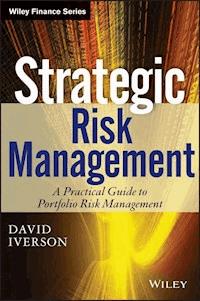
A comprehensive guide to the key investment decisions all investors must make and how to manage the risk that entails Since all investors seek maximize returns balanced against acceptable risks, successful investment management is all about successful risk management. Strategic Risk Management uses that reality as a starting point, showing investors how to make risk management a process rather than just another tool in the investor's kit. The book highlights and explains primary investment risks and shows readers how to manage them across the key areas of any fund, including investment objectives, asset allocation, asset class strategy, and manager selection. With a strong focus on risk management at the time of asset allocation and at the time of implementation, the book offers important guidance for managers of benefit plans, endowments, defined contribution schemes, and family trusts. * Offers a thorough examination of the role of risk management in the decision-making process for asset allocation, manager selection, and other duties of fund managers * Written by the current head of portfolio design for the New Zealand Superannuation Fund * Addresses the fundamental importance of risk management in today's post-crisis fund management landscape Strategic Risk Management is a comprehensive and easy-to-read guide that identifies the primary risks investors face and reveals how best to manage them.
Sie lesen das E-Book in den Legimi-Apps auf:
Seitenzahl: 393
Veröffentlichungsjahr: 2013
Ähnliche



















Contents
Cover
Series
Title Page
Copyright Page
Dedication
Acknowledgments
Preface
WHAT THIS BOOK OFFERS
IS THIS BOOK FOR YOU?
HOW THE BOOK IS STRUCTURED
Chapter 1: Strategic Risk Management Framework
ORGANIZING FRAMEWORK
WHAT RISKS DOES THE FUND FACE AT EACH LEVEL?
SUMMARY
PUTTING THE IDEAS INTO ACTION
Chapter 2: Governance Risk
WHY GOVERNANCE MATTERS
GOOD GOVERNANCE
SIGNS OF POOR GOVERNANCE
Chapter 3: Investment Beliefs
WHY HAVE INVESTMENT BELIEFS?
KNOWLEDGE AND INVESTMENT BELIEFS
INVESTMENT BELIEFS AND STRATEGY
CATEGORIES OF INVESTMENT BELIEFS
EXAMPLES OF INVESTMENT BELIEFS
APPROACH TO DEVELOPING INVESTMENT BELIEFS
PUTTING THE IDEAS INTO ACTION
Chapter 4: Fund's Purpose
CLEAR DEFINITION
POSSIBLE WAYS TO EXPRESS OBJECTIVES
EXAMPLES
Chapter 5: Strategic Asset Allocation
GUIDING PRINCIPLES
KEY STEPS
CAPITAL MARKET ASSUMPTIONS
CANDIDATE PORTFOLIOS
Chapter 6: Hedge Funds
NOT AN ASSET CLASS
TYPES OF STRATEGIES
CHARACTERISTICS OF HEDGE FUNDS
RISKS OF INVESTING IN HEDGE FUNDS
RISK AND RETURN CHARACTERISTICS
GOOD IMPLEMENTATION
REASONABLE RISK AND RETURN EXPECTATIONS
Chapter 7: Private Equity
TYPES OF PRIVATE EQUITY
STAGES OF INVESTMENT
FEATURES OF PRIVATE EQUITY
RISKS OF PRIVATE EQUITY
MANAGING THE RISKS
FUND OF FUNDS
SUITABILITY FOR AN INVESTOR'S PORTFOLIO
RISK AND RETURN CHARACTERISTICS
REASONABLE RISK AND RETURN EXPECTATIONS
ACHIEVING PRIVATE EQUITY ALLOCATIONS
Chapter 8: Benchmarks
WHAT ARE BENCHMARKS FOR?
CHARACTERISTICS OF GOOD BENCHMARKS
MARKET CAPITALIZATION AND BENCHMARKS
Chapter 9: Tactical Asset Allocation
TACTICAL VERSUS STRATEGIC ASSET ALLOCATION
APPROACHES TO TAA
TAA VERSUS GLOBAL TAA VERSUS DAA
INVESTMENT BELIEFS
CONDITIONS FOR SUCCESS
TAA PROCESS
EVIDENCE OF VALUE ADDED
MARKET TIMING AND TIME OUT OF THE MARKET
GTAA
Chapter 10: Active versus Passive Management
DECISION FRAMEWORK
EVIDENCE ON MARKET EFFICIENCY
WHAT BARRIERS EXIST TO ACCEPTANCE OF THE CONCEPT OF MARKET EFFICIENCY?
Chapter 11: Passive Management
PHYSICAL ALTERNATIVES
SYNTHETIC IMPLEMENTATION
RISK CONSIDERATIONS
OPERATIONAL CONSIDERATIONS
MANAGING RISK WITH DERIVATIVES—AN EXAMPLE OF ALPHA–BETA SEPARATION
Chapter 12: Active Global Equities Structure
ACTIVE RISK AND RETURN
STYLE RISKS
MANAGEMENT STRUCTURE
MARKET EXTENSIONS
Chapter 13: Active Global Fixed Income Structure
STYLE
MANAGEMENT STRUCTURE
MARKET EXTENSIONS
Chapter 14: Manager Selection
HIRING MANAGERS
FIRING MANAGERS
FEES
PERFORMANCE-/INCENTIVE-BASED INVESTMENT MANAGEMENT FEES
Chapter 15: Execution
REBALANCING
TRANSITIONING MANAGERS
Chapter 16: Review and Monitoring
LEVELS OF PERFORMANCE REPORTING
SAMPLE REPORTS
CONCLUSION
Chapter 17: Case Study 1—Defined Benefit Plan
BACKGROUND
FINANCIAL POSITION AND ACTUARIAL VALUATION
ENGAGING AN INVESTMENT ADVISOR
INVESTMENT OBJECTIVES
ASSET ALLOCATION STRATEGY
Chapter 18: Case Study 2—DC Member Investment Choice Fund
PLAN CHARACTERISTICS
REVIEW OF THE PLAN
INVESTMENT OBJECTIVES
FUND DESIGN
INVESTMENT STRATEGY
MANAGER STRUCTURE
References
About the Author
Index
Founded in 1807, John Wiley & Sons is the oldest independent publishing company in the United States. With offices in North America, Europe, Australia, and Asia, Wiley is globally committed to developing and marketing print and electronic products and services for our customers' professional and personal knowledge and understanding.
The Wiley Finance series contains books written specifically for finance and investment professionals as well as sophisticated individual investors and their financial advisors. Book topics range from portfolio management to e-commerce, risk management, financial engineering, valuation and financial instrument analysis, as well as much more.
For a list of available titles, visit our Web site at www.WileyFinance.com.
Copyright © 2013 by John Wiley & Sons Singapore Pte. Ltd.
Published by John Wiley & Sons Singapore Pte. Ltd. 1 Fusionopolis Walk, #07-01, Solaris South Tower, Singapore 138628
All rights reserved.
No part of this publication may be reproduced, stored in a retrieval system, or transmitted in any form or by any means, electronic, mechanical, photocopying, recording, scanning, or otherwise, except as expressly permitted by law, without either the prior written permission of the Publisher, or authorization through payment of the appropriate photocopy fee to the Copyright Clearance Center. Requests for permission should be addressed to the Publisher, John Wiley & Sons Singapore Pte. Ltd., 1 Fusionopolis Walk, #07-01, Solaris South Tower, Singapore 138628, tel: 65–6643–8000, fax: 65–6643–8008, e-mail: [email protected].
Limit of Liability/Disclaimer of Warranty: While the publisher and author have used their best efforts in preparing this book, they make no representations or warranties with respect to the accuracy or completeness of the contents of this book and specifically disclaim any implied warranties of merchantability or fitness for a particular purpose. No warranty may be created or extended by sales representatives or written sales materials. The advice and strategies contained herein may not be suitable for your situation. You should consult with a professional where appropriate. Neither the publisher nor the author shall be liable for any loss of profit or any other commercial damages, including but not limited to special, incidental, consequential, or other damages.
Other Wiley Editorial Offices
John Wiley & Sons, 111 River Street, Hoboken, NJ 07030, USA John Wiley & Sons, The Atrium, Southern Gate, Chichester, West Sussex, P019 8SQ, United Kingdom John Wiley & Sons (Canada) Ltd., 5353 Dundas Street West, Suite 400, Toronto, Ontario, M9B 6HB, Canada John Wiley & Sons Australia Ltd., 42 McDougall Street, Milton, Queensland 4064, Australia Wiley-VCH, Boschstrasse 12, D-69469 Weinheim, Germany
Library of Congress Cataloging-in-Publication Data
ISBN 978-1-118-17640-5 (Hardcover) ISBN 978-1-118-17641-2 (ePDF) ISBN 978-1-118-17643-6 (ePub)
To my wonderful wife, Jennifer, for her unwavering support and dedication in raising our three young children while this book was being written
Acknowledgments
I am grateful to many people for their contributions, support, and encouragement over the years.
During my university education in finance and investment management, Robert (Jerry) Bowman supervised my thesis and instilled a strong research discipline that has stood me in good stead during my career. Others at the University of Auckland include Henk Berkman, David Emanuel, Joe Cheung, and Alistair Marsden.
Then there are numerous colleagues over the years who have challenged, debated, and provided much guidance, such as John McMahon, John Lake, Rodney Dickens, and Paul Scully.
The passion to write this book was sparked by my time in investment consulting. I owe special thanks to Craig Ansley, Ed Schuck, and John Williams. The opportunity to work with many clients to whom I provided investment advice has given me the focus and perspective for this book.
The team at John Wiley & Sons has provided wonderful support. Special thanks to Nick Melchior for his encouragement.
Finally, I pay tribute to my family, in particular the extraordinary support provided by my wife, Jennifer, without whom this book could not have been written.
Preface
In the wake of the global financial crisis, investors of all types, institutional funds, retail investors, and endowments, have had some response to what they have learned. The range of responses has been wide.
Some funds have reevaluated investment risk by incorporating a higher chance of more extreme market events in their risk expectations or assessing whether the expected diversification benefits provided by the mix of asset classes were valid. Others have reevaluated their tolerance for investment risk; the intellectual exercise of assessing risk tolerance beforehand is no substitute for actually experiencing and feeling investment risk when it happens. Some funds have chosen to reduce their reliance on a static strategic asset allocation, sometimes referred to as a set-and-forget approach, in favor of a more dynamic approach; this is usually termed dynamic asset allocation or strategic tilting. Further diversification is the approach others have taken. This may involve diversification in terms of (1) the addition of, or increased allocation to, alternative asset classes, or (2) better diversification within asset classes, usually some “indexed” approach that takes an other-than-market-capitalization approach. Finally, the active-passive decision has been challenged—the decision to employ active investment managers as opposed to simply gaining market participation through index funds.
What is immediately obvious is that different investors experienced risk differently. Their experience affected the choices they made.
A natural question, though, is: Were these the right decisions? The answer to this question is the subject of this book; it lies in whether the risks faced are clearly recognized and thoroughly understood and appropriately managed beforehand. Without such understanding, it is difficult to respond to an event like the global financial crisis in a sound and strategic way.
It is fair to say that some funds have reacted to the global financial crisis; others have responded. By this I mean it appears that some funds have changed something for change's sake; others appear to have genuinely challenged the rationale upon which their investment approach rests and made sensible changes, or not.
WHAT THIS BOOK OFFERS
This book offers a simple yet comprehensive discussion of what risks face almost any investment fund; it takes a strategic, wide perspective of risk. The key themes and messages are these:
Funds face a range of risks across all aspects of their operations.One key risk a fund faces is asset allocation risk. This is the central decision every fund needs to make. However, deciding this risk is more than a numerical exercise. There are various aspects to doing it properly: correctly assessing the fund's tolerance for investment risk (which are ultimately the beneficiaries of any fund), proper implementation of the chosen asset allocation, and having a robust review process.Another key, but often unrecognized risk is not having a sound governance, or decision-making, structure in place. A sound structure means having an appropriate board structure, clear processes in place to effectively choose asset class and manager exposures, suitable monitoring of those exposures, and clarity about when and how these are changed. Without sound decision making, there can be no effective risk management.Risk management is not about risk measurement, risk reduction, or even risk diversification.IS THIS BOOK FOR YOU?
We focus on the principles underlying the management of key, strategic risks and avoid overly technical explanations to make the book accessible to a wide range of professionals, senior managers, board members, and even beneficiaries who need to know what risks exist in their funds (whether pension, endowment, foundation, or trust) and how to manage these risks. Practical examples are provided to illustrate the principles and help convey the ideas clearly.
HOW THE BOOK IS STRUCTURED
This book identifies seven key strategic risks each and every fund, investor, or pool of capital faces in the management of investments. These are:
These are, simplistically, related to key types of decisions that must be addressed. At a high level, these decisions are fund-level, strategy-level, implementation-level, and review-level decisions. The chart on the next page shows these decision types, key strategic risks, and specific decisions on the left-hand side. In the center is a fund schematic of what is meant by each specific decision level and risk type. At the far right is a chapter guide with the key issues covered in each chapter.
Structure of Book and Chapter Guide
CHAPTER 1
Strategic Risk Management Framework
No one person can do everything required to run a fund well. Intermediaries are employed to act in the fund's best interests.
Board members, for example, are responsible for a fund's management and must consider the benefit of people whose money is in the fund. Also, the day-to-day investment management decisions typically are delegated to investment professionals other than the board members. When you consider the fund as a whole and those involved, the natural question becomes: “How do you best ensure the fund's objective is met with a high degree of confidence?” You could ask the question another way: “What are the key risks my fund faces, and how should I best manage them?” This question is central to all investment management activities.
This chapter deals with the first part of the question; the rest of the book deals with the second part.
ORGANIZING FRAMEWORK
What risks does my fund face? To answer this question, we need a way of thinking about the fund so we can identify the risks within it. Any fund can be thought of in terms of the types of decisions that can be made. This is shown in Table 1.1.
Table 1.1 Types of Decisions
Decision LevelDecision TypeFundGovernanceFund's purposeStrategyStrategic asset allocationTactical asset allocationAsset class structureImplementationManager selectionSecurity selectionExecutionReviewPerformance review/monitoringSource: Based on Curwood (2007).
The decision types can be split into four levels: fund, strategy, implementation, and review. Each decision level is described in turn.
Fund
Decisions at the fund level essentially involve key elements of planning for the fund. This means that objectives are established and uses of the fund prioritized. The key statement is the fund's investment policy, which captures the types and amounts of investment risk that are acceptable to achieve the objectives.
Lesen Sie weiter in der vollständigen Ausgabe!
Lesen Sie weiter in der vollständigen Ausgabe!
Lesen Sie weiter in der vollständigen Ausgabe!
Lesen Sie weiter in der vollständigen Ausgabe!
Lesen Sie weiter in der vollständigen Ausgabe!
Lesen Sie weiter in der vollständigen Ausgabe!
Lesen Sie weiter in der vollständigen Ausgabe!
Lesen Sie weiter in der vollständigen Ausgabe!
Lesen Sie weiter in der vollständigen Ausgabe!
Lesen Sie weiter in der vollständigen Ausgabe!
Lesen Sie weiter in der vollständigen Ausgabe!
Lesen Sie weiter in der vollständigen Ausgabe!
Lesen Sie weiter in der vollständigen Ausgabe!
Lesen Sie weiter in der vollständigen Ausgabe!
Lesen Sie weiter in der vollständigen Ausgabe!
Lesen Sie weiter in der vollständigen Ausgabe!
Lesen Sie weiter in der vollständigen Ausgabe!
Lesen Sie weiter in der vollständigen Ausgabe!
Lesen Sie weiter in der vollständigen Ausgabe!
Lesen Sie weiter in der vollständigen Ausgabe!




