


Erhalten Sie Zugang zu diesem und mehr als 300000 Büchern ab EUR 5,99 monatlich.
- Herausgeber: epubli
- Kategorie: Fachliteratur
- Sprache: Englisch
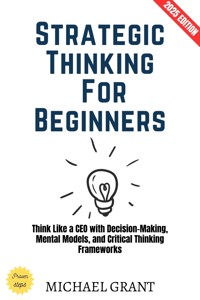
Strategic Thinking for Beginners In a world filled with distractions, noise, and constant change, clear and forward-thinking decisions are no longer a luxury—they're a necessity. Strategic Thinking for Beginners is your essential guide to seeing further, thinking deeper, and making choices that align with long-term purpose rather than short-term pressure. This book offers a practical and approachable path to mastering one of the most valuable skills in life and leadership. You won't find abstract theories or overwhelming jargon here—just clear insights and real-life applications that show how anyone, in any role, can start thinking more strategically. Whether you're facing a career crossroads, solving everyday challenges, or planning for something bigger, the tools and mindset shared in these pages will help you lead with clarity and direction. Through a blend of thought-provoking explanations, real-world examples, and powerful mental frameworks, you'll begin shifting your perspective from reactive to proactive, from overwhelmed to focused. This book doesn't just teach you how to think—it shows you how to think better. Inside This Book, You'll Discover: The Beginner's Mindset: Thinking Beyond the Obvious Breaking Down Problems Like a Strategist The Power of Asking the Right Questions Short-Term Tactics vs Long-Term Strategy Mental Models That Sharpen Strategic Insight Thinking in Systems: Connecting the Dots From Learning to Leading: Applying Strategy in Real Life No matter your background or goals, the ability to think strategically will elevate your decisions, shape your habits, and help you create a future by design, not by default. Scroll Up and Grab Your Copy Today!
Sie lesen das E-Book in den Legimi-Apps auf:
Seitenzahl: 113
Veröffentlichungsjahr: 2025
Das E-Book (TTS) können Sie hören im Abo „Legimi Premium” in Legimi-Apps auf:
Ähnliche

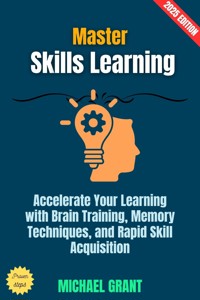











Strategic Thinking for Beginners
Think Like a CEO with Decision-Making, Mental Models, and Critical Thinking Frameworks
Michael Grant
Table of Content
What Is Strategic Thinking, Really?
The Beginner’s Mindset: Thinking Beyond the Obvious
Breaking Down Problems Like a Strategist
The Power of Asking the Right Questions
Seeing the Big Picture Without Getting Lost in the Details
Short-Term Tactics vs Long-Term Strategy
Mental Models That Sharpen Strategic Insight
Thinking in Systems: Connecting the Dots
Anticipating Consequences: Thinking Ahead with Clarity
Decision-Making Under Uncertainty
The Role of Creativity in Strategic Thinking
Strategic Tools You Can Start Using Today
Case Studies: How Great Thinkers Solve Complex Problems
Building Your Own Strategic Thinking Habits
From Learning to Leading: Applying Strategy in Real Life
Conclusion
© Copyright [2025] [Michael Grant] All rights reserved.
- No part of this book may be reproduced, stored in a retrieval system, or transmitted in any form or by any means, electronic, mechanical, photocopying, recording, or otherwise, without prior written permission of the publisher, except for brief quotations in a review or scholarly article.
- This is an original work of fiction [or non-fiction] by [Michael Grant]. Any resemblance to actual persons, living or dead, or actual events is purely coincidental.
Legal Notice:
The reader is solely responsible for any actions taken based on the information contained in this book. The author and publisher expressly disclaim any responsibility or liability for any damages or losses incurred by the reader as a result of such actions.
Disclaimer:
This book is intended for educational purposes only. The information contained within is not intended as, and should not be construed as medical, legal, or professional advice. The content is provided as general information and is not a substitute for professional advice or treatment.
This declaration is made for the purpose of asserting my legal ownership of the copyright in the Work and to serve as proof of ownership for any legal, publishing, or distribution purposes. I declare under penalty of perjury that the foregoing is true and correct.
Strategic thinking is often misunderstood. It’s wrapped in corporate jargon, locked behind boardroom doors, or reserved for long-term planners drawing lines on distant horizons. But the truth is simpler and far more empowering: strategic thinking is a skill anyone can learn, and it can transform how you approach decisions, solve problems, and lead your life.
This book was written for those who are just beginning to explore the world of strategy—whether you’re a student, a creative, a professional, an entrepreneur, or simply someone who wants to make better choices. You don’t need a background in business or a high-stakes role to think strategically. You need only a desire to see the bigger picture, make deliberate moves, and stop drifting through decisions without direction.
Strategic thinking is not about knowing everything. It’s about asking better questions, understanding systems, and balancing short-term action with long-term vision. It’s the difference between reacting and responding, between rushing and reflecting, between moving and moving forward with purpose.
In the chapters ahead, you’ll discover what strategic thinking really means—not in abstract terms, but in clear, grounded language. You’ll learn how to develop a mindset that goes beyond the obvious. You’ll see how great thinkers break down problems, ask the right questions, anticipate consequences, and navigate uncertainty with clarity. These ideas won’t just sit on the page—they’ll connect to real life through examples, case studies, and tools you can start applying today.
You’ll learn how to sharpen your insight with mental models, think in systems, and find the balance between long-term strategy and short-term tactics. You'll explore how creativity fuels strategy, how to build habits that support clearer decision-making, and how to move from learning strategy to living it. Whether you’re managing a career, building something new, leading others, or trying to lead yourself better, these chapters are your starting point.
This isn’t a book to read and forget. It’s a book to return to, reflect on, and integrate into your everyday thinking. The goal isn’t to turn you into a master strategist overnight—it’s to offer you a foundation that grows with practice. Strategic thinking is not a destination. It’s a discipline. And once you begin to see the world through its lens, everything changes.
Welcome to your starting point. Let’s begin.
What Is Strategic Thinking, Really?
Strategic thinking is one of those terms that gets thrown around often in business meetings, leadership books, and personal development seminars, yet few people can clearly define it when asked. At first glance, it might seem like a fancy way of saying "planning ahead" or "being smart about decisions." But in reality, strategic thinking goes much deeper than that. It’s not just about what decisions are made—it’s about how they are made, the lens through which situations are viewed, and the deliberate process of assessing the bigger picture. It’s both an art and a discipline, a mindset and a method, that anyone can learn with intention and practice.
For beginners, understanding strategic thinking starts with shedding the assumption that strategy is only for CEOs, generals, or chess masters. It's not about having a high IQ or decades of experience in a specific industry. Strategic thinking is simply the ability to step back from immediate tasks, look at the broader situation, and identify the smartest path forward. It involves clarity, intention, awareness, and often, restraint. It's the difference between reacting to what’s happening and responding with purpose to where you want to go. It’s not about being perfect or always right—it’s about choosing to think before you act and aligning your actions with your goals.
At its core, strategic thinking requires time and space to consider context. In our fast-paced world, this can feel like a luxury, but in truth, it’s a necessity. When we’re stuck in reactive mode, jumping from one problem to the next, we rarely have time to consider why we’re doing something or whether there might be a better way. Strategic thinking invites you to pause and ask yourself: What’s really going on here? What am I trying to achieve? What factors are influencing this situation? What are the options in front of me—and are there others I’m not seeing? This kind of questioning becomes second nature over time, but in the beginning, it takes deliberate effort to slow down and think.
Another key aspect of strategic thinking is perspective. Beginners often get trapped in linear thinking, looking for a clear A-to-B path or relying on old habits. Strategic thinkers, on the other hand, constantly shift perspective. They zoom out to understand the larger system or environment they’re operating in, and they zoom in to examine specific elements or leverage points that can create change. They consider multiple outcomes, scenarios, and ripple effects. They also challenge their own assumptions, recognizing that the first idea is rarely the best and that comfort with uncertainty is part of the game.
Clarity of purpose is essential. Strategic thinking always ties back to a clear goal or vision. Without a destination, even the most thoughtful strategy is just wandering. A beginner in strategic thinking learns to align their thoughts and decisions with what they value most or what they aim to achieve—whether that’s launching a new business, leading a project, improving a system, or even just managing their time more effectively. This clarity turns vague aspirations into grounded action plans and helps filter distractions or short-term temptations that don’t serve the larger goal.
Importantly, strategic thinking isn't only about intellect—it’s also about emotional discipline. Beginners often overlook the emotional side of strategy, yet it plays a powerful role. A person reacting out of fear, frustration, or impatience is less likely to think strategically. Strategic thinkers know how to regulate their emotional responses, remain calm under pressure, and separate facts from feelings. They step back from the heat of the moment to evaluate rather than explode, to understand rather than assume. This emotional intelligence is what allows strategy to be consistent, thoughtful, and sustainable.
One of the most misunderstood aspects of strategic thinking is that it’s not about having all the answers—it’s about knowing which questions to ask and being comfortable navigating the unknown. Beginners often feel like they need to know everything before they can be strategic, but in truth, strategic thinkers are often operating with incomplete information. What makes them effective is their ability to frame problems in a useful way, recognize patterns, and make informed guesses based on the data available. They understand that action is necessary even without total certainty, and they build flexibility into their plans.
Another valuable piece of strategic thinking is the balance between optimism and realism. Beginners might lean too heavily toward one side—either getting overly optimistic and ignoring risks, or becoming so cautious that they never take a step forward. Strategic thinking requires both hope and honesty. You must be able to imagine a better future and believe in progress, while also being willing to confront uncomfortable truths and limitations. That balance is what allows you to make choices that are bold yet grounded, visionary yet practical.
Strategic thinking also requires time management, though not in the typical to-do list sense. Instead, it’s about using your time and mental energy on what really matters. Many people spend their days reacting to what’s urgent instead of focusing on what’s important. Strategic thinkers flip that equation. They prioritize the high-impact tasks, the long-term wins, the actions that create leverage. For beginners, this shift can feel counterintuitive or even risky—ignoring the ringing phone to focus on planning tomorrow’s meeting, for example—but over time, it becomes clear that the most successful people invest their attention where it counts.
Learning to think strategically also means getting comfortable with ambiguity. Beginners often seek clarity and immediate direction, but strategy often involves gray areas, complex choices, and competing interests. There may not be a perfect path forward, and that’s okay. Strategic thinkers accept ambiguity as part of the process and focus on making the best possible choice based on their current understanding. They adjust as they go, stay curious, and update their approach as new information becomes available. This mindset of adaptability and openness is what separates rigid planning from true strategic thinking.
While strategic thinking can feel abstract at first, it becomes more tangible with practice. Every decision becomes an opportunity to apply it. Whether you're deciding how to spend your afternoon, how to handle a conversation, or how to approach a long-term goal, you can ask: What’s the outcome I want? What are the options? What’s the context? What might the consequences be? These questions might feel unnatural at first, but they become powerful tools that sharpen your thinking and build your confidence over time.
Ultimately, strategic thinking isn’t a gift for a chosen few—it’s a learnable skill. It starts with awareness, grows through practice, and deepens through experience. For a beginner, the most important thing is to start seeing the world through a strategic lens: to pause before acting, to ask better questions, to look ahead rather than just around. As you begin to do this consistently, you’ll notice that your decisions become more effective, your actions more aligned, and your results more satisfying.
In many ways, strategic thinking is simply about giving yourself permission to think more deeply, more intentionally, and more creatively. It’s not about being rigid or overly intellectual—it’s about being thoughtful and wise in how you navigate challenges and opportunities. And once you begin to experience the benefits of thinking strategically, it becomes a habit you won’t want to break. What starts as a new way of thinking soon becomes your second nature, helping you not only solve problems but also shape your future with purpose.
The Beginner’s Mindset: Thinking Beyond the Obvious
The journey into strategic thinking doesn’t begin with mastering tools or learning models. It begins with a mindset. Not the mindset of an expert, but the mindset of a beginner—curious, open, and willing to see the world with fresh eyes. Strategic thinking isn’t reserved for those with decades of experience or a library of theories memorized. It flourishes most when the thinker embraces not-knowing. This might seem paradoxical at first. Isn’t strategy about being smart, sharp, ahead of the curve? Yes—but true insight often comes from those willing to look past what everyone else accepts as obvious and ask the questions no one else dares to consider.
A beginner’s mindset allows room for exploration. It resists the trap of assuming that things are the way they are simply because that’s how they’ve always been. Where others might jump to solutions, the beginner pauses to understand the problem more deeply. Where many rush to conclusions, the beginner lingers in the discomfort of the unknown. This is not a sign of indecision or lack of intelligence—it’s a strategic strength. Staying open to multiple interpretations, unexpected connections, and alternative routes is what allows fresh thinking to emerge. Without that openness, strategic decisions are often just recycled ideas in new packaging.
Thinking beyond the obvious starts with challenging surface-level thinking. Most people are conditioned to look for quick fixes, default answers, or whatever has worked in the past. This shortcut thinking is useful in simple situations but can be dangerous when applied to complex problems. The beginner questions the status quo. They wonder, “What if we did the opposite?” or “Why does this even exist?” or “Who benefits from keeping things this way?” These kinds of questions shake up old assumptions and create room for creative and strategic insights to appear. The obvious is safe. The strategic often lives just beyond that safety net.




