


82,99 €
Mehr erfahren.
- Herausgeber: John Wiley & Sons
- Kategorie: Geisteswissenschaft
- Sprache: Englisch
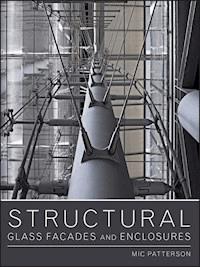
A COMPREHENSIVE GUIDE TO STRUCTURAL GLASS FACADES FOR ARCHITECTS, ENGINEERS, AND BUILDERS Once an experimental building form, structural glass facades have matured into a fully robust technology. Structural Glass Facades and Enclosures documents, defines, and categorizes the current state of the art in long-span glass facade design and construction, with a focus on structural systems, glass cladding options, and implementation strategies for innovative design. A comparative analysis of these various systems is included, along with designs and design practices for enhancing transparency; engineering issues; material, process, and fabrication considerations; installation means and methods; and project delivery strategies for implementing innovative building technology in today's construction marketplace. The reader will find information here that is not available together in any single resource, including: * Structural system types and design options, with integrated glass system options and their application on each of the structural types * An in-depth discussion of design, fabrication, and installation issues relative to each system type, accompanied by illustrations and photographs * A discussion of the challenges of implementing innovative design and technology in the construction industry, and operational practices to improve the probability of success * A series of in-depth case studies documenting representative samples of stunning built works that employ the technology and design principles identified in the book Structural Glass Facades and Enclosures provides expert content for putting cutting-edge technology into real-life practice, creating new potential for fresh applications embracing both aesthetic and performance solutions, and for the adoption of the technology by architects, builders, and facade practitioners.
Sie lesen das E-Book in den Legimi-Apps auf:
Seitenzahl: 483
Veröffentlichungsjahr: 2011
Ähnliche




















Table of Contents
Cover
Title Page
Copyright
Preface
The Case Studies
Acknowledgments
Introduction
Curtain Wall Systems versus SGFs
SGF Technology
The Vision
SGF Technology Is Poised for Wider Application
Growing Interest in the Use of SGF
Endnotes
Chapter 1: Context: Glass and Structure
Interwoven Strands
The Evolution of SGFs
Implementing Innovative Building Technology
Organization of System Types
Endnotes
Chapter 2: Glass and Glazing Systems
Glass as an Architectural Material
Glazing Systems
Endnotes
Chapter 3: Linear Structural Systems
Mullion Systems
Truss Systems
Endnotes
Chapter 4: Space Structures and Gridshells
Space Grid Structures
Gridshells
Cable-strut Systems
Endnotes
Chapter 5: Cable Structures
Cable Mullion Systems
Flat Cable Nets
Double-curved Cable Nets
Design Considerations
Structural Behavior
Constructability
Economy
Endnotes
Chapter 6: Glass as a Structural Material
Heat-treating
Chemical Tempering
Laminating
Glass Fin Systems
Connections
Endnotes
Chapter 7: LA Live Tower
Introduction
Facade Program
Strategies for Sustainability
Summary
Endnotes
Chapter 8: Suvarnabhumi Bangkok International Airport (SBIA)
Introduction
Facade Program
Strategies for Sustainability
Summary
Endnotes
Chapter 9: Eli and Edythe Broad Stage
Introduction
Facade Program
Strategies for Sustainability
Summary
Endnotes
Chapter 10: 300 New Jersey Avenue (51 Louisiana Avenue)
Introduction
Facade Program
Strategies for Sustainability
Summary
Endnotes
Chapter 11: Vivian and Seymour Milstein Family Heart Center
Introduction
Facade Program
Strategies for Sustainability
Summary
Endnotes
Chapter 12: Strasbourg Railway Station Multimodal Hub
Introduction
Facade Program
Strategies for Sustainability
Summary
Endnotes
Chapter 13: Eli and Edythe Broad CIRM Center for Regenerative Medicine and Stem Cell Research
Introduction
Facade Program
Strategies for Sustainability
Summary
Chapter 14: Richard J. Klarcheck Information Commons, Loyola University
Introduction
Facade Program
Strategies for Sustainability
Summary
Endnotes
Chapter 15: Newseum
Introduction
Facade Program
Summary
Endnotes
Chapter 16: Alice Tully Hall at Lincoln Center
Introduction
Facade Program
Summary
Chapter 17: TKTS Booth and Revitalization of Father Duffy Square
Introduction
Glass Structure
Project Delivery
Installation Strategy
Strategies for Sustainability
Summary
Endnotes
Figure Credits
Chapter 1
Chapter 2
Chapter 3
Chapter 4
Chapter 5
Chapter 6
Chapter 7
Chapter 8
Chapter 9
Chapter 10
Chapter 11
Chapter 12
Chapter 13
Chapter 14
Chapter 15
Chapter 16
Chapter 17
Index
To my parents and my bride, with the utmost gratitude, esteem, and love.
This book is printed on acid-free paper. ∞
Copyright © 2011 by John Wiley & Sons, Inc. All rights reserved.
Published by John Wiley & Sons, Inc., Hoboken, New Jersey.
Published simultaneously in Canada.
No part of this publication may be reproduced, stored in a retrieval system, or transmitted in any form or by any means, electronic, mechanical, photocopying, recording, scanning, or otherwise, except as permitted under Section 107 or 108 of the 1976 United States Copyright Act, without either the prior written permission of the Publisher, or authorization through payment of the appropriate per-copy fee to the Copyright Clearance Center, Inc., 222 Rosewood Drive, Danvers, MA 01923, 978-750-8400, fax 978-646-8600, or on the web at www.copyright.com. Requests to the Publisher for permission should be addressed to the Permissions Department, John Wiley & Sons, Inc., 111 River Street, Hoboken, NJ 07030, 201-748-6011, fax 201-748-6008, or online at http://www.wiley.com/go/permissions.
Limit of Liability/Disclaimer of Warranty: While the Publisher and author have used their best efforts in preparing this book, they make no representations or warranties with respect to the accuracy or completeness of the contents of this book and specifically disclaim any implied warranties of merchantability or fitness for a particular purpose. No warranty may be created or extended by sales representatives or written sales materials. The advice and strategies contained herein may not be suitable for your situation. You should consult with a professional where appropriate. Neither the Publisher nor author shall be liable for any loss of profit or any other commercial damages, including but not limited to special, incidental, consequential, or other damages.
For general information on our other products and services, or technical support, please contact our Customer Care Department within the United States at 800-762-2974, outside the United States at 317-572-3993 or fax 317-572-4002.
Wiley also publishes its books in a variety of electronic formats. Some content that appears in print may not be available in electronic books.
For more information about Wiley products, visit our Web site at http://www.wiley.com.
Library of Congress Cataloging-in-Publication Data:
Patterson, Michael, 1949–
Structural glass facades and enclosures / Michael Patterson.
p. cm.
Includes index.
ISBN 978-0-470-50243-3 (cloth); 978-0-470-93183-7 (ebk); 978-0-470-93184- 4 (ebk); 978-0-470-93185-1 (ebk); 978-0-470-95028-9 (ebk); 978-0-470-95053-1 (ebk)
1. Glass construction. 2. Facades. I. Title.
TH1560.P38 2011
693’.96--dc22
2010030986
Printed in the United States of America
10 9 8 7 6 5 4 3 2 1
Preface
This book is about the technology of a building form I refer to as structural glass facades (SGFs). It derives from academic experiences over the past few years in the School of Architecture at the University of Southern California. I left academia after completing my undergraduate work to get some real-world experience, with every intention of returning to pursue graduate work. Twenty-five years later, I did. In the interim, I designed and built SGFs with a team of the finest and brightest people ever to walk a building site. So, while the text derives from academic experience, it is rooted in the joy of building: the pursuit of innovation, the manipulation of material and process, the collaborative realization of a mere idea, the utter novelty of every new project, the camaraderie, and, of course, the blood, sweat, and broken bones to be found buried beneath every building; it is the construction industry, after all.
This book is for the next tier of would-be adopters of SGFs, those who have admired the built applications and wished for the budget, or the know-how, or knowledge of what the options were, or what issues were involved in implementing an SGF project. At its core, SGF is a mature technology, tried and tested with many examples, with many of the early development and testing costs characteristic of any emergent technology paid for, and with an infrastructure of capable material suppliers and fabricators ready to go to work on your project. There will always be a cutting edge to this technology; that is the source of inspiration that fuels the evolution. However, as happened with glass fin walls, the technology will ultimately diffuse into the broader marketplace. If this book has the good fortune to facilitate that diffusion, it will be because of the stunning project work it includes.
The Case Studies
The selection of the case studies presented in Chapters 7 to 17 was no simple matter, and the juggling of projects to include continued up to the last possible minute. There were several criteria I developed in making the selections:
I chose to have fewer but deeper case studies. Some of the selected projects could easily be the subject of an entire book. I wanted at least to consider such issues as project delivery, fabrication, testing, and installation, in addition to the usual design focus.I chose to present projects of varying size and complexity rather than to focus only on the grandest or most complex.I chose to focus, mainly though not exclusively, on work completed in the United States. The technology was certainly created and developed in Europe, where there is an abundance of exceptionally worthy candidates for SGF case studies, but these projects invariably receive a great deal of coverage in books and magazines; those in the United States are less well publicized. I had no problem identifying a number of relatively recent projects that had received little or no significant coverage. I ended up with two projects outside of the United States that I simply could not bring myself to exclude.I have long been frustrated by the tendency to document completed projects in a series of photographs taken right after project completion, when everything is buffed and polished and looking its majestic best. A professional photographer with a large-format camera rents a man-lift to access some vantage points that no pedestrian or building occupant will ever experience and produces spectacular high-dynamic-range images that look somehow otherworldly, like a building on Neptune. I personally find a building much more engaging during the process of construction, when it is still partially opened up, the structural frame is revealed, the cladding is crawling its way up, and a tower crane hovers over all like a crown. So, in this book, I have made an effort to include images documenting fabrication, testing, mockups, and installation. It is a challenge; what you discover when you examine such material is that while some of the images are absolutely stunning, most of them are unusable because they were taken with a cell phone or small-format pocket camera, and the images are postage stamp size when printed. It is a tragedy, and the source of many curses from this author (I have started buying decent cameras for people who spend a lot of time on the building site, and I have begun teaching basic digital photography classes). I did, however, manage to find a few images that reflect pieces of the fabrication and installation process. But in the end, the intent to feature process over finished project may well have been in vain; there was no way to avoid using the amazing photographs of pros like Rainer Viertlböck and Paúl Rivera, and great photography combined with the inherent sexiness of SGFs will no doubt overshadow the crusty rawness of the jobsite photos.
The case studies started with a class exercise I gave in a course I had the great pleasure to teach at the School of Architecture, University of Southern California. The course, titled “Skin and Bones,” focused on SGF technology and the use of glass in the building skin. The class of 20 consisted mostly of graduate students, with a scattering of undergraduate and PhD students. We quickly discovered that they were all equal in their ignorance of glass as a building material. We had great fun exploring glass and the glass systems and structures that comprise SGF technology. We worked out a comprehensive strategy for the case studies, which we embodied in a format that included everything from site and climate analysis to concept development and sustainability features. The structural system, glass, and the glass system were to be the core content of each case study, but I was amazed to discover the diversity of approach the students pursued. Some became immersed in climate analysis, producing pages of colorful charts and graphs. Others explored the green aspects of the architecture: the in-floor radiant thermal conditioning, the natural ventilation system, the daylighting strategy. Most of them treaded very lightly in the core areas, leaving that work to me with respect to this book and providing me with a clear demonstration of my shortcomings as an instructor. I now know the importance of narrowing the focus! Nonetheless, many of these case studies started with a student, and I want to express my appreciation to all of them for their efforts; we had an extraordinary time with “Skin and Bones.”
I became aware a long time ago that it is not necessary to know everything about a subject, or to be able to do everything yourself, to accomplish something. If you intend to conquer a nation, you are likely to need some help. The same is true if you intend to build a building or an SGF. Just the design of a building entails teams of designers, consultants, specialists of various sorts, and lots of workers. The real power is in knowing how to get a thing done, not necessarily knowing how to do it yourself. I have found that this includes new and innovative building technology as well. I have had a nearly lifelong passion for exposed structural systems and highly transparent glass facades. I was going to be a brain surgeon, but then I saw the Centre Pompidou and decided that I had to find a way to get involved with the technology. I succeeded in that pursuit, and it put me in touch with a great many designers who shared this passion and wanted to include some form of advanced facade technology in their project work. A few were successful in adopting the technology; most never tried. The reasons are many but have to do with:
Discomfort arising from lack of familiarity with the technologyConcerns about risk and liabilityCostGiven a career building things that my team and I had never done before, and that in many cases nobody had ever done before, I had to learn to deal with these concerns. I had many conversations about the challenges and risk of delivering innovation within the context of a fixed-price construction contract, a risk profile that has placed the ability to obtain surety bonding foremost among the prerequisites for conducting business in this unique marketplace. Working together, my project team members developed a strategy we called “managing the process of innovation”—an implementation strategy for developing and delivering innovative building technology. It was an experimental endeavor, both the business and the product, and it was good work that brought many opportunities.
It is my hope that this book in some small way may encourage, or even inspire, some on the sidelines to step out and push the building envelope.
Acknowledgments
Many people helped the development of this book in the form of information and materials related to the content, especially the case studies. I am sincerely grateful to the following people and organizations: Ian Ritchie and Heather Mack with Ian Ritchie Architects; Carl D’Silva with Murphy/Jahn; Richard Green with Front; Stacey Hooper and Stacey Williams with ZGF Architects LLP; Jeff and Howard Haber with W&W Glass Inc.; Tim Eliassen with TriPyramid Structures; Mark Danettell with Thornton Tomasetti; Nick Leahy with Perkins Eastman; Michael Ludvik; Jean-François Blassel and Rozenn Samper with RFR; Herbert Friedl and Birte Matheus with Seele GmbH; and Franz Safford with Innovation Glass.
When creating case studies, success is a direct measure of the cooperation received from the people close to the work. Everyone is busy and no one has time, but these people made the time to support this work, and it could not have been done without them. I only hope to have done them and these stunning projects justice. The ultimate credit goes to the many people who made these projects happen. The errors and misinterpretations in the reporting belong to me alone.
Much of this book is ultimately rooted in the work of ASI Advanced Structures and the shared experience of designing and building so many challenging projects with such an incredibly talented group of people. These people and experiences taught me most of what I know, and I want to thank all who shared in that endeavor.
This book is the result of recent academic pursuits at the University of Southern California School of Architecture. The quality of this learning experience was much enhanced by the remarkable faculty in the Chase L. Leavitt Graduate Building Science Program, and the new PhD program focused on the building facade; my deepest gratitude to Professors Doug Noble, Goetz Schierle, and Marc Schiler. As always, my fellows are my teachers: thanks to the MBS and PhD students with whom I have shared such invigorating learning experiences.
The students in my advanced facades class at USC, “Skin and Bones,” provided input and feedback on the content of this book, with some contributions to the case studies included here. I would like to thank them all for their participation: Sahar Boloorchi, Rudy Calderon, Deepa Chandrashekaran, Andrew Dutton, Lei Fu, Shenyuan Guo, Ryan Hansanuwat, Ryan Kamo, Priyanka Karpe, Jason Kirchhoff, Alex Kuby, Shih-Hsin Lin, Ying Liu, Yara Masri, James Roussos, Erick Toss, Lizzie Valmont, Lutao Wang, Andrew Yapp, and Liang Zheng.
I am particularly appreciative of the support of the Enclos organization, especially my talented colleagues at the Advanced Technology Studio. Special thanks to Jonny Lowery, Dan Green, Robb Lange, Jeff Vaglio, T.J. DeGanyar, and Jason Kerchhoff for help with the case studies. And thanks to Gregg Sage for his tolerance, encouragement, and vision of what the future might bring.
Thanks to my publisher John Wiley & Sons for providing this opportunity, and specifically to Senior Editor John Czarnecki, Associate AIA; Editorial Assistant Sadie Abuhoff; and Senior Production Editor Donna Conte for their patience, work, and support.
Finally, and most of all, I want to thank my family and friends for their patience, trust, and encouragement, especially Victoria Mercedes Patterson, without whom none of this would be conceivable.
Introduction
Structural glass facades and structural glass facade technology, along with the acronym SGF, are terms used in this book to describe a relatively recent form of building technology comprising a component of the building envelope. The use of facade here is synonymous with building skin. SGFs integrate structure and cladding, and can be used in long-span applications and where heightened transparency and the expression of structure are often predominant design objectives. The structural expression often takes the form of an attempt to dematerialize the structural system. The structures are exposed and generally finely detailed, with an emphasis on craftsmanship as a consequence. The design pursuit of enhanced transparency in these facade systems has resulted in the development of increasingly refined tension-based structural systems, where bending and compression elements are minimized or eliminated altogether. This class of building technology is most effectively categorized by the structural systems that have developed to support these facades.
The various structural systems can support any of the glass system types discussed briefly in Chapter 2. While the technology may be classified by the structure types, it was the advent of point-fixed (frameless) glazing systems that propelled the early development and application of SGFs, and while associated with a cost premium, point-fixed glazing systems remain the most commonly used. These systems are mechanically bolted or clamped to supporting structure rather than continuously supported along two or four edges, as are conventional glazing systems.
However, while literal transparency, dematerialization of structure, and point-fixed glazing systems have come to characterize SGFs, the technology is not limited to their use. Other glazing systems have been developed and frequently used in response to objectives beyond mere transparency. Similarly, some designs have been developed as an expression of structure rather than as an attempt to make them disappear. In fact, the current state of the technology can support design drivers ranging widely from controlled transparency to cost.
SGF technology remains emergent, still evolving, yet it is not new. Rather, it is mature and robust, ready for broader infiltration into the building marketplace. There is, however, no consistent nomenclature in general use describing this technology. Sweets Catalog, the largest product catalog in the construction marketplace, includes Section 08970, “Structural Glass Curtain Walls,” which includes brochures by glazing subcontractors featuring project examples of SGFs. The use of the term curtain wall in describing these works is generally confusing, if not inappropriate.
Curtain Wall Systems versus SGFs
While curtain walls dominate the building envelope, especially in high-rise construction projects, and often incorporate glass as a cladding element, they are differentiated from SGFs in several important respects discussed following. Curtain walls are a glass system type; SGFs combine a glass system type and an exposed structural system. Curtain walls are integrated glass system types, typically with a high level of prefabrication, that are configured to accommodate the short- to mid-range spans typical between floor slabs of multistory buildings. SGFs integrate a glass system type with an expressed structural system and are capable of a much greater spanning range. The spanning requirement of the glass system is often a relatively small increment, while the primary spanning capacity is transferred to the facade’s structural system. Framed systems dominate curtain wall applications, although frameless curtain walls of some interest have been completed and do present some potential advantages over the framed systems. Conversely, frameless systems find most frequent use with SGFs, although interesting examples of the use of framed systems can be found. SGF technology is inclusive and embraces many forms, from simple mullion systems to all-glass structures, from floor-to-floor spanning systems to those that span hundreds of feet.
The difference between curtain walls and SGFs is partially one of application. Curtain walls are exterior cladding systems intended for multistory buildings, mid- and high-rise structures in particular, where the wall system is required to span conventional single-story heights. The systems typically span between floor slabs. Early systems used steel framing members, but virtually all contemporary systems are of aluminum. Vertical mullions of extruded aluminum are most commonly used as the spanning members, and the vertical and horizontal mullions provide full perimeter support to the glass.
No one seems certain about the precise source of the term curtain wall, at least with respect to its contemporary usage in describing the exterior wall systems used to clad mid- and high-rise structures. The term dates from medieval times, when it was used to describe the heavy stone castle walls “draped” between strategically spaced towers. This bears little relation to the current usage that emerged in the early to mid-twentieth century. Its application in this context likely refers to the nonbearing attribute of a new cladding technology that emerged in the same time frame, and developed through the mid-twentieth century and beyond, to facilitate the enclosure of the recently developed high-rise steel (and, later, reinforced concrete) framing systems. Replacing the load-bearing masonry wall construction practice of the time, curtain wall systems are non-load-bearing cladding systems simply “hung” from the building structure like a curtain.
Typical curtain wall spans follow conventional floor slab spacing at approximately 10 to 15 ft (3 to 4.6 m), although units spanning over 40 ft (12 m) have been used in areas with larger spans, as sometimes occurs at pedestrian, penthouse, or other areas of the building where larger ceiling heights are desired. Long-span curtain wall units often require deep aluminum mullions and steel reinforcing.
Another source of potential confusion is the term structural glass. This term is sometimes used in reference to point-fixed glazing systems, and also in referencing glass used in actual structural applications, such as a beam or column element. The term could as easily refer to heat-treated glass. In contrast, the use of the word structure in SGFs refers to the structural system that acts as the spanning element supporting the facade, glass being but one of the possible materials involved. Structural glazing, on the other hand, refers to glass that is bonded to supporting structure with a structural adhesive material in the absence of any mechanical capture of the glass pane. Compagno1 comments that a more appropriate term for this reference would be bonded glazing, as the supporting frame is typically the same as that of a conventionally captured curtain wall system. Similarly, there is no consistent or generally accepted categorization or term for other glass and structure system types that comprise SGF technology.
It is conceivable that opaque panel materials other than glass could be used as the exclusive cladding element on a long-span facade structure. It is also conceivable that transparent or translucent plastic materials could be used. The former condition would effectively remove the resulting facade from the class described herein. The latter condition represents a special case so infrequently encountered as to be of no particular consequence to this naming strategy.
SGF Technology
The structural systems used in support of SGFs are explored in the following chapters. Many of the applications of this technology inhabit the top of the pyramid when it comes to complexity and cost. The intent here is to describe the fundamental elements of this technology in a clear and simple form, and in a manner that may provide for better understanding and wider application by the building community, resulting in simpler, more efficient, and economical solutions that begin to fill out the base of the pyramid. To facilitate this simplification, the technology is viewed in terms of the limited application of essentially vertical, mostly planar facade structures as a partial element of the building skin, and in fact, this does represent the majority of existing applications. However, SGF technology is capable of a remarkable diversity of form, as is evident from the case studies in Chapters 7 to 17. All of the basic structural systems can be used in sloped and overhead applications. More significantly, many of the systems can be used to form complete building enclosures. The structural systems can be combined to open up new possibilities of form and performance, creating hybrid structural systems. An example of this is the Berlin Central Station train shed designed by von Gerkan Marg and Partners (GMP) architects with Schlaich Bergermann and Partner engineers, completed in 2005. The vaulted enclosure spans six tracks and curves slightly in plan following the curvature of the tracks; the section is gradually reduced toward either end as the vaults move away from the central station. Flat, multicentered arched cable trusses are set on 43 ft (13 m) centers, and cable-stiffened gridshells span between the trusses.2
That the technology can embrace such enormous complexity in geometry and form has been of the utmost interest to the small group of highly innovative practitioners that have developed it and pioneered its use. There will always be a tip of the pyramid to this technology, the cutting edge in long-span glass facades represented by highly custom, innovative designs that push the envelope of the technology beyond the current state of the art. There is also the potential for harvesting the spinoff from these predecessor structures, repackaging it in a simplified, efficient, more accessible form with broader potential market applications, and transferring the resulting technology to a new group of users.
This is an exciting time in the evolution of the glass facade. Both the aesthetic and performance demands on the building skin have escalated dramatically in recent years. Thermal performance is critical to reducing energy consumption and carbon emissions in buildings, and the importance of acoustical performance grows as an increasing percentage of the global population takes up residence in the densest urban centers. At the same time, designers have more tools and techniques at their disposal than ever before. These take the form of new glass materials and coatings, analytical software, and design strategies that deviate substantially and purposefully from the “glass box” approach of the modernist. While many of the early SGF applications were completed with no regard to the performance aspects of the facade, this has changed dramatically in recent years. Nearly every one of the case studies included is part of a project that involves sophisticated strategies for enhanced building performance embracing sustainability and green building practice.
A unique building technology for the realization of SGFs is evidenced by the diverse and growing body of completed works that feature prominently in the built environment. The aim of this book is to identify and explore the various elements that comprise this technology, including the architectural glass used both as cladding and occasionally as structure, the exposed structural systems used in support of the facades, and the glass systems that serve to fix the glass to the supporting structure, and then to explore their application in a group of case study projects.
The Vision
The vision combines disparate elements of natural form: a spider’s web of structure with a soap bubble film, minimalist filigree structures hovering in a sea of light, seamless transparent membranes spanning vast spaces, disappearing with a shimmer, reappearing in a brilliant reflection of their surroundings. Such has been the stuff of dreams for building designers since the early nineteenth century with the concepts of the garden city movement for sun-drenched interior spaces, followed at midcentury by the construction of the great iron and glass conservatories in Europe and England that first demonstrated the exciting potential of glass in architecture. Today these dreams are being realized through the development of a robust technology built on advances in structural design technique and material science, and through a growing body of completed and increasingly innovative structures.
The building skin is a vitally important architectural consideration. No other building system impacts both the appearance and performance of a building as does the skin. The use of glass as a component of the building envelope has been increasing since its initial introduction as a building material in the days of the Roman Empire, accelerating in the twentieth century owing to the development of high-rise steel framing systems, an enabling glass manufacturing process, and curtain wall cladding techniques.
The driving force of a new genre of structure has been the design intent of maximizing transparency, and its most common form the long-span glass wall, although advanced facade designs are increasingly assuming larger areas of the building envelope and in some cases acting as the entire enclosure. The push for transparency has resulted in the emergence of new glass facade types in spot applications over the past three decades. The new designs play off the primary attribute of glass, its transparency, and increasingly off the structural properties of glass and the integration of glass components into the structural system. As a body, these completed works represent a discrete building technology.
Characteristics of this technology include highly crafted and exposed structural systems, integration of structure and form, simultaneous dematerialization and expression of structure, complex geometries, extensive use of tensile elements, specialized materials and processes, an integration of structure and cladding system, and a complex array of design variables ranging from facade transparency to thermal performance and bomb blast considerations. While the facade structure types are derived from the broad arena of structural form, they have become differentiated in their application as part of a facade design.
The facade structures have developed in parallel with the development and application of frameless or point-fixed glazing systems. While any type of glazing system can be supported by the facade structural systems, the point-fixed systems are favored because of their optimal transparency and provision of an uninterrupted glazing plane. Structural systems with minimized component profiles were desired to further enhance the transparency of the point-fixed glass systems. This led to structure designs making extensive use of tensile structural elements in the form of rod or cable materials. A structural element designed only to accommodate tension loads can be reduced significantly in diameter compared to a similar element that must accommodate both tension and compression loads. This thus becomes a primary strategy in dematerializing the structure, as discussed in Chapter 3.
SGF Technology Is Poised for Wider Application
This facade technology has been evolving for over 30 years, with considerably varied application in the commercial building marketplace. Public sector works include airports, courthouses, convention centers, civic centers, and museums. Private sector works include corporate headquarter buildings, hotels, retail and mixed-use centers, churches, institutes, and other privately funded public buildings.
While applications have been limited to a small niche market in the overall construction industry, many innovative designs have been introduced over the years, with many more creative imitations and variations springing from them. As a result, this technology has matured over the years and is no longer largely comprised of experimental structures. It has been tried and tested in a considerable diversity of built form; structural systems have been adapted to facade applications; specifications and methods have been developed, tested, and disseminated; practitioners have built hundreds of highly innovative facade structures in a variety of applications; and development costs have been absorbed. An infrastructure of material suppliers, fabricators, and erectors has developed in response to increasing project opportunities. These factors have combined to make the technology more competitive. Thus, this body of facade types represents a mature building technology positioned for broader application in the marketplace.
Growing Interest in the Use of SGF
At the same time, owing to the high profile and success of projects featuring advanced facade designs, increasing numbers of architects are interested in incorporating SGF technology into their building designs. The new facade designs are becoming increasingly valued by the design community for both their varied aesthetic and their ability to provide controlled transparency ranging from very high to modulated in response to environmental considerations. This combination of growing interest and a maturing technology holds promise for significant growth in the current small niche market of SGF technology.
There is also interesting potential for SGF technology to act as a catalyst for change and development of the more conventional glass facade systems. With its novel designs and innovative use of new materials and processes, SGF applications may point the way to future advances in building skin development. Several of the case studies included here involve the application of SGFs in high-performance facade applications, including double-skin walls.
Few designers fail to find the prospect of sweeping glass surfaces engaging; there is something very close to universal appeal when it comes to light-filled interior spaces blurring the demarcation between interior and exterior, spaces providing view and sunlight and an expansive feeling of openness and scale. Long, sweeping spans of glass are not appropriate for every project, of course, but architects are increasingly looking for such an opportunity, and more developers are wondering about the possibility of incorporating this technology into their special building projects. The use of high-transparency facades has matured to the point that perceived deterrents of cost, complexity, and risk are waning in the wake of a growing body of successful applications. The technology is now more accessible and economical than ever before.
This book is about the technology of long-span glass facades and building enclosures: the design issues, structural systems, materials, and methods that comprise this technology. It surveys current work through a group of case studies, and in doing so will be of interest to anyone engaged in the building arts: architects, engineers, designers, developers, contractors, students, and others inspired by the use of glass in architecture, but especially those interested in actually utilizing this technology. This book is about sharing a passion and perhaps, in the process, creating broader interest in the use of SGF technology, whether by the architect interested in a highly glazed concept for a new airport facility, the developer of a new office tower contemplating a dramatic lobby space that merges interior and exterior public spaces, a glazing contractor contemplating a first-time bid on a project that includes a tension-based SGF, or a student wishing to explore a structural glass enclosure on a studio project. The strategy is to:
Inform readers about the possibilities and variations of form and structure, what has been done, what is possible, and perhaps some avenues of possible future explorationCompare the various options with respect to primary considerations of relative aesthetics, transparency, materials, spanning capacity, deflection behavior, reaction loading, constructability, maintenance, and costIdentify the key issues that the design and build teams must address to ensure successful integration of this technology into a building program, arming the designer, the builder, and the implementer with the right questions and an indication of where to find the answersThere may be some benefit in reading through the material in sequence, but this is not necessary to access and benefit from the technical and descriptive content within. The reader is encouraged to explore the material as interest dictates.
Endnotes
1 A. Compagno, Intelligent Glass Facades (Birkhauser, Basel, 1999), p. 16.
2http://www.sbp.de/en#build/show/16-Berlin_Main_Station
Chapter 1
Context: Glass and Structure
Interwoven Strands
Structural glass facade (SGF) technology evolved from a variety of innovative experimental structures over the past three decades or more. With its roots in Northern Europe, the technology can be traced back to a few seminal projects and a handful of pioneering architects and engineers. From a broader perspective, the technology can be seen within the fabric of the built environment as a complex of interwoven strands from the same loom, the primary ones including:
Lesen Sie weiter in der vollständigen Ausgabe!
Lesen Sie weiter in der vollständigen Ausgabe!
Lesen Sie weiter in der vollständigen Ausgabe!
Lesen Sie weiter in der vollständigen Ausgabe!
Lesen Sie weiter in der vollständigen Ausgabe!
Lesen Sie weiter in der vollständigen Ausgabe!
Lesen Sie weiter in der vollständigen Ausgabe!
Lesen Sie weiter in der vollständigen Ausgabe!
Lesen Sie weiter in der vollständigen Ausgabe!
Lesen Sie weiter in der vollständigen Ausgabe!
Lesen Sie weiter in der vollständigen Ausgabe!
Lesen Sie weiter in der vollständigen Ausgabe!
Lesen Sie weiter in der vollständigen Ausgabe!
Lesen Sie weiter in der vollständigen Ausgabe!
Lesen Sie weiter in der vollständigen Ausgabe!
Lesen Sie weiter in der vollständigen Ausgabe!
Lesen Sie weiter in der vollständigen Ausgabe!
Lesen Sie weiter in der vollständigen Ausgabe!




