


21,99 €
Mehr erfahren.
- Herausgeber: John Wiley & Sons
- Kategorie: Fachliteratur
- Sprache: Englisch
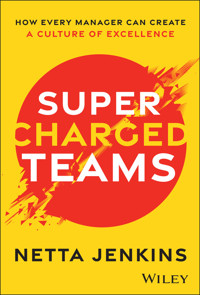
A bold leadership reset for every level, from first-time manager to seasoned executive
You and your team are dispensable, but not with Super Charged Teams, which shatters the outdated myth that leadership is defined by title, tenure, or hierarchy. Managers are culture-shapers, trust-builders, and performance accelerators.
Backed by real stories, actionable behavioral psychological insights, and proven frameworks, this book equips managers at every stage whether you’re applying for roles, newly promoted, leading other managers, or sitting in the C-suite with the tools to become the kind of leader people reach their highest level of performance.
Inside Super Charged Teams, you’ll discover how to:
- Build high-performing, deeply engaged teams
- Stop quiet talent takedowns before they start
- Lead through change without eroding trust
- Position yourself for promotion and top-tier compensation
- Future-proof your career and avoid layoffs
- Break outdated management habits that quietly sabotage results
- Create a workplace where innovation, retention, and impact thrive
Whether you're leading one person or an entire department, this is your playbook for building energized teams, unlocking consistent high performance, and adding transformational value to your workplace.
Sie lesen das E-Book in den Legimi-Apps auf:
Seitenzahl: 222
Veröffentlichungsjahr: 2026
Ähnliche


















Table of Contents
Cover
Table of Contents
Title Page
Copyright
Dedication
Introduction
Creating a Culture of Excellence
What This Book Will Teach You
CHAPTER 1: The Rookie's Rise: First‐Time Managers
Transitioning from Individual Contributor: Embracing the New Role
Hired as a Manager: A Different Path, Similar Challenges
Building Trust from Day One
Avoiding Rookie Mistakes
Embracing New Behaviors
Navigating the Inherited Peer Dynamic
Laying a Solid Foundation for New Managers
Avoiding the Pitfalls
Establishing Team Values and a Social Contract
Connecting with Organizational Influencers
Building Good Habits Early
End of Chapter Reflections
CHAPTER 2: Ascending the Ranks: Emerging Leader
More Responsibilities: Shifting from Hands to Head and Heart
The Importance of Risk and Productivity
Taking the Next Step
More Direct Reports: The Shift to Talent Development and Succession Planning
Balancing Strategic Thinking with Day‐to‐Day Management
Establishing a Strategic Foundation Early
End of Chapter Reflections
CHAPTER 3: The Middle Maze: Navigating Middle Management
Balancing Act: Expectations from Above, Below, and Side to Side
Challenges Faced by Middle Managers
How Middle Managers Balance or Decide What Takes Precedence
Employee Well‐Being
The Importance of a Personal Board of Directors
Strategic Communicator: Bridging Gaps Effectively
Board of Directors: Your Day One Crew
Navigating the Solitude of Lonely Land
There Is Power in the Middle
End of Chapter Reflections
CHAPTER 4: Pinnacle Players: The Role of Senior Managers
Visionaries at the Helm: Crafting Strategic Plans
Business Plan Approach: A Formula for Success
Overseeing the Overlooked: Managing Multiple Functions
The Bridge Builders: Connecting Leadership with Teams
Leading with Precision and Purpose
End of Chapter Reflections
CHAPTER 5: Talent Architects: Cultivating Future Leaders
Identifying Diamonds: Recognizing Potential
DIGS Formula
The Balancing Act: Employee Care versus Business Demands
Putting Leadership into Practice: Supporting Employees Through Crisis
Managing Through Crisis: Supporting Employees in Times of Uncertainty
Creating a Culture of Psychological Safety: The REE Method
Creating Future Leaders: Redefining Potential
Bringing It All Together: The Long‐Term View on Potential
End of Chapter Reflections
CHAPTER 6: Heart versus Hustle: Compassionate Productivity
Compassion Meets Productivity
Fairness and Flexibility: The Balance of Decision‐Making
The Pressure Cooker: Hiring Right, Firing Fast
Moving Beyond the Checkbox Mentality
Tools and Resources: Keeping Yourself Fresh
Balancing Heart and Hustle
End of Chapter Reflections
CHAPTER 7: Policy in Action: Navigating Firm‐Wide Policies and Processes
Translating Policies into Practical Actions
Workforce, Workplace, and Marketplace: Three Categories of Policy Influence
Avoiding the Pitfalls of “Check‐the‐Box” Management
Managing Firm‐Wide Policies Effectively
Reimagine HR Policies from a Manager's Lens
The Lasting Impact of Policy Leadership
End of Chapter Reflections
References
CHAPTER 8: Breaking the Mold: Managing Experienced Managers
Challenging the Status Quo: Overcoming Preconceptions
Feedback That Matters: Honest and Constructive
Navigating HR Nuances: Communicating with Clarity
Creating a Visionary Leadership Style
Leading Experienced Managers with Purpose
End of Chapter Reflections
References
CHAPTER 9: Business Titans: Leading as Heads of Business
The Weight of Accountability
Strength Under Scrutiny: Maintaining Composure
The Risk of “Yes People”
Visionary Leadership: Staying Connected to the Core
A Job Like No Other
End of Chapter Reflections
CHAPTER 10: From Company‐Wide Meetings to Daily Grind: Staying Connected
Managing by Walking Around
Your Calendar Reflects Your Values
Creating a Culture of Listening
Humanizing Leadership
Balancing High‐Level Goals with Daily Realities
The Balancing Act of Modern Leadership
End of Chapter Reflections
CHAPTER 11: Embracing the Beast: Thriving in the Global Complex World of Management
The New Reality of Leadership: Continuous Learning and Adaptation
Building Emotional Intelligence in a Global World
The Many Paths to Learning
Creating a Culture of Excellence
Navigating a Global Workforce
Thriving in the Complexity
End of Chapter Reflections
CHAPTER 12: The Future of Leadership and the Culture of Excellence
The Future of Management: Trends and Predictions
Three Core Competencies for a Culture of Excellence
Respect: Creating a Foundation of Trust
Solution‐Oriented Thinking: Driving Progress Through Innovation
Agility: The Ability to Adapt and Thrive
Action Plan: Driving Continuous Improvement Across Core Competencies
Leadership as a Daily Choice
End of Chapter Reflections
Acknowledgments
About the Author
Index
End User License Agreement
Guide
Cover
Table of Contents
Title Page
Copyright
Dedication
Introduction
Begin Reading
Acknowledgments
About the Author
Index
End User License Agreement
Pages
iii
iv
v
ix
x
xi
xii
xiii
xiv
xv
1
2
3
4
5
6
7
8
9
10
11
12
13
14
15
16
17
18
19
20
21
22
23
24
25
26
27
28
29
30
31
32
33
35
36
37
38
39
40
41
42
43
44
45
46
47
48
49
50
51
53
54
55
56
57
58
59
60
61
63
64
65
66
67
68
69
70
71
72
73
74
75
76
77
78
79
80
81
82
83
84
85
86
87
88
89
90
91
92
93
94
95
96
97
98
99
100
101
102
103
104
105
107
108
109
110
111
112
113
114
115
116
117
118
119
120
121
122
123
124
125
126
127
128
129
130
131
132
133
135
136
137
138
139
140
141
142
143
144
145
146
147
148
149
150
151
152
153
154
155
156
157
158
159
161
162
163
164
165
166
167
168
169
170
171
172
173
174
175
176
177
178
179
180
181
183
184
185
186
187
188
189
190
191
HOW EVERY MANAGER CAN CREATE A CULTURE OF EXCELLENCE
SUPER CHARGED TEAMS
NETTA JENKINS
Copyright © 2026 by John Wiley & Sons, Inc. All rights reserved, including rights for text and data mining and training of artificial intelligence technologies or similar technologies.
Published by John Wiley & Sons, Inc., Hoboken, New Jersey.
No part of this publication may be reproduced, stored in a retrieval system, or transmitted in any form or by any means, electronic, mechanical, photocopying, recording, scanning, or otherwise, except as permitted under Section 107 or 108 of the 1976 United States Copyright Act, without either the prior written permission of the Publisher, or authorization through payment of the appropriate per‐copy fee to the Copyright Clearance Center, Inc., 222 Rosewood Drive, Danvers, MA 01923, (978) 750‐8400, fax (978) 750‐4470, or on the web at www.copyright.com. Requests to the Publisher for permission should be addressed to the Permissions Department, John Wiley & Sons, Inc., 111 River Street, Hoboken, NJ 07030, (201) 748‐6011, fax (201) 748‐6008, or online at http://www.wiley.com/go/permission.
The manufacturer's authorized representative according to the EU General Product Safety Regulation is Wiley‐VCH GmbH, Boschstr. 12, 69469 Weinheim, Germany, e‐mail: [email protected].
Trademarks: Wiley and the Wiley logo are trademarks or registered trademarks of John Wiley & Sons, Inc. and/or its affiliates in the United States and other countries and may not be used without written permission. All other trademarks are the property of their respective owners. John Wiley & Sons, Inc. is not associated with any product or vendor mentioned in this book.
Limit of Liability/Disclaimer of Warranty: While the publisher and author have used their best efforts in preparing this book, they make no representations or warranties with respect to the accuracy or completeness of the contents of this book and specifically disclaim any implied warranties of merchantability or fitness for a particular purpose. No warranty may be created or extended by sales representatives or written sales materials. The advice and strategies contained herein may not be suitable for your situation. You should consult with a professional where appropriate. Further, readers should be aware that websites listed in this work may have changed or disappeared between when this work was written and when it is read. Neither the publisher nor authors shall be liable for any loss of profit or any other commercial damages, including but not limited to special, incidental, consequential, or other damages.
For general information on our other products and services or for technical support, please contact our Customer Care Department within the United States at (800) 762‐2974, outside the United States at (317) 572‐3993 or fax (317) 572‐4002.
Wiley also publishes its books in a variety of electronic formats. Some content that appears in print may not be available in electronic formats. For more information about Wiley products, visit our web site at www.wiley.com.
Library of Congress Cataloging‐in‐Publication Data is Available:
ISBN: 9781394305322 (Cloth)ISBN: 9781394305339 (ePub)ISBN: 9781394305353 (ePDF)
Cover Design: WileyCover Image: © ne2pi/Getty Images Author Photo: Tyrone Gaye, Photographer
I dedicate this book to lifelong learners of all ages in the world, those who understand that true growth comes not just from learning, but from unlearning.
The most underrated skill in leadership is the ability to challenge outdated beliefs and shed habits that no longer serve progress. In a world that evolves rapidly, yesterday's best practices won't always shape tomorrow's success.
And to my incredible children, now just five and six, who already embody respect, solution‐oriented thinking, and agility.
Thank you for every moment when I was deep in focus, staring at my screen, lost in thought, ignoring the repeated “Mommy … Mom … Mommy” as I rushed to capture an idea before it slipped away. Instead of crying or throwing a tantrum, you took action. You grabbed your stool, climbed to the fridge for water, or hopped onto the counter to get your snack. You didn't wait; you adapted.
You created a culture of excellence at home, teaching me the very principles I write about.
The world has yet to witness the full power of your leadership. I can't wait to see it unfold.
Every day, you teach me more about my own leadership. I am endlessly grateful and deeply blessed.
Introduction
It wasn't obvious on my first day as a fintech vice president leading global inclusive strategy where my management journey would eventually take me. After my manager's departure, I found myself reporting directly to the CFO, who unexpectedly tapped me to assume acting COO responsibilities. These new duties went far beyond my initial role. I was charged with developing and leading strategy sessions that brought all VPs and senior leaders together, fostering alignment, collaboration, and streamlined execution. The aim was clear: Unite our leadership under a shared understanding of priorities, creating a cohesive front capable of tackling the company's most pressing challenges.
One of the most striking examples of this collaboration involved resolving significant bottlenecks in the DevOps process. Deployment of a major feature update had stalled due to disjointed communication and misaligned goals among departments. Developers were submitting incomplete documented code, QA teams faced delays due to unclear requirements, IT deprioritized crucial infrastructure updates, and product managers kept introducing last‐minute changes. The resulting frustration, missed deadlines, and declining morale were rippling across the company.
These strategy sessions became a proving ground for cross‐functional alignment. Leaders from every function were tasked with addressing their role in the process and committing to actionable solutions. For example, the product management team embraced clearer feature definitions during planning phases and limited mid‐sprint changes to only those that were absolutely critical. Meanwhile, engineering implemented a code submission checklist and assigned a liaison to work directly with DevOps to resolve issues before they escalated. These measures reduced last‐minute disruptions, improved communication, and built accountability across the board.
More than just solving operational issues, these sessions laid the foundation for a culture of shared ownership and proactive problem‐solving – a culture that didn't rely on top‐down directives but empowered leaders to act as stewards of their functions. This experience taught me that leadership wasn't about micromanaging processes but about creating frameworks where teams could thrive and succeed together.
My journey didn't start with a neatly formed team or a perfectly laid‐out roadmap. It grew from challenges like these situations that demanded creativity, collaboration, and resilience. Leadership wasn't about the title; it was about gathering dynamic talent, empowering them to succeed, and aligning their efforts toward a shared vision. It was about creating an environment where people weren't just meeting expectations but were surpassing them.
One of the most rewarding aspects of this journey is witnessing the transformation of a group of individuals into a cohesive, high‐performing team. Achieving a supercharged team starts with recognizing and gathering dynamic talent. When I joined the organization as a VP, I didn't have a team fully formed; it grew organically over time. Each direct report came with their own story, strengths, and lessons that would profoundly shape my understanding of leadership. There was the office manager, persistent and driven, who refused to let a closed door stop her. She kept getting on my calendar, scheduling meetings even when I didn't have any open roles. Her tenacity was unmistakable. She asked how she could support my projects, even though it was outside the scope of her role, and consistently sought ways to add value. As I got to know her, I started to identify the signs of a natural leader, someone who took initiative, was solution‐oriented, and was eager to learn about the work I was doing. She may not have had all the experience I was looking for, but her determination and potential were undeniable. When I finally expanded my team, she stepped up, proving herself in ways that exceeded expectations. Today, she's at the senior director level of my new tech company, a testament to how investing in people can elevate not just careers but entire organizations.
Another was an engineer, quiet but brilliant. She approached me with a bold idea: to merge technical expertise with inclusive strategies. That idea evolved from a side project into the framework for a tool that became central to my new company. Her dedication and technical acumen reshaped not only the work we were doing but also how we thought about leveraging technology for impact.
Then there was the “go to market” leader, so energized by the mission of my team that he actively sought to join, carving out a role to contribute his expertise. But leadership isn't always smooth sailing. When the company faced a downturn, layoffs became unavoidable, and I had to make the heart‐wrenching decision to let him go. Still, my commitment to his growth didn't end there. I pivoted as a leader, tapping into my network, leveraging every connection to help him land a new role, and ensuring that his journey continued positively, even beyond my team and my organization.
The work my team and I were doing didn't go unnoticed. It wasn't long before I started to see where we could have an effect, opportunities to innovate, to bring inclusive behaviors and business impact into direct alignment. Without waiting for permission, I expanded beyond my job description, leaning into product development to build something entirely new. That initiative led to an $8 million RFP win for the company, with the client explicitly calling out the insights and results my team generated as a key factor. But stepping beyond the boundaries of my role wasn't without its risks, and I often wondered how my approach might be perceived.
Then came the call from the CEO. I braced myself, fully expecting a reprimand for coloring outside the lines. Instead, he praised the work and offered me something I never expected: “I see incredible potential in what you've built. My venture capital firm is ready to financially invest into product development and provide funding for you to lead a team and bring this to market.” That offer to build a new company wasn't just a reflection of the work I had done. That leap didn't happen because I followed the rules. It happened because I understood the rules enough to reshape them, supercharged my team to drive results, and because I myself worked for a leader who created the kind of environment where risks weren't punished – they were rewarded.
As I stepped into the unknown, the real test of leadership began. Before I could offer competitive compensation or even basic benefits, my direct reports chose to follow me into this new opportunity. Their willingness to take this risk was the deepest affirmation of what leadership can achieve. It's not about perfection; it's about trust and a shared vision. The fact that these individuals believed in me enough to take such a bold step continues to fuel my commitment to fostering a measurable culture where people feel supported, valued, and inspired to grow. Each of them had come into my orbit in their own unique way, and each taught me invaluable lessons about leadership.
Creating a Culture of Excellence
This book is devoted to guiding you toward management success and at the heart of this story is a culture of excellence. It's a philosophy that prioritizes effort, intention, and resilience over unattainable perfection. A culture of excellence is built on three core principles: respect, solution‐oriented thinking, and agility. These elements resonate deeply with human psychology. Regardless of background, experience, or ability, people have an innate desire to feel respected; it's a fundamental psychological need that fosters trust, belonging, and collaboration.
Solution‐oriented thinking taps into our brain's natural drive to overcome challenges, promoting positivity and resilience while reducing the stress associated with workplace obstacles.
Agility, on the other hand, aligns with the psychology of adaptability, encouraging individuals and teams to embrace change and thrive in dynamic environments. Together, these principles create a powerful framework for building healthy high‐performing teams.
Investing in people and creating an environment where everyone, from the newest hire to the most seasoned leader, leads to impact. This culture doesn't happen by accident. It's built through intentional leadership, clear communication, and a relentless focus on growth. What does a culture of excellence look like in action? It's a CEO who creates psychological safety, encouraging risk‐taking and innovation. It's a manager who sees a determined office administrator who desires more and nurtures that potential into leadership rising to senior director level in four years. It's a leader who isn't afraid to have hard conversations and make tough decisions while standing by their people.
What This Book Will Teach You
This book is a playbook for managers at every stage of their journey. Whether you're stepping into your first managerial role, navigating the complexities of middle management, guiding entire departments as a senior leader, or leading the entire organization as the CEO, Supercharged Teams: How Every Manager Can Create a Culture of Excellence provides the tools, insights, and strategies to help you thrive.
The lessons in this book aren't theoretical; they're drawn from real experiences, from navigating layoffs to launching new ventures, from building frameworks to building trust. We'll explore the stages of management, from rookie managers to seasoned executives, and unpack the nuances of leading through challenges, making tough decisions, and building teams that excel, no matter the circumstances. You'll learn how to transition from doing the work to enabling it, how to bridge gaps between vision and execution, and how to inspire trust and drive performance at every level.
This book is rooted in the belief that excellence inspires excellence. From the CEO who gave me the space to innovate, to building a mission for my team, to the direct reports who trusted me to lead them in those efforts, excellence is contagious. And it starts with leaders who are willing to invest in their teams, challenge the status quo, and prioritize people as much as performance. Leadership is a journey, and excellence is a choice. This book is your guide to making that choice every day, at every level, and in every decision.
CHAPTER 1The Rookie's Rise: First‐Time Managers
Stepping into the role of a manager for the first time is like trading in your solo ride for the keys to a carpool van. One moment you're cruising along as an individual contributor, focused on your own projects, enjoying the freedom of charting your own path. Then, suddenly, you're responsible for steering a whole team, each passenger with their own needs, goals, and directions they want to go. It's exhilarating. You're now in charge of the entire fleet, guiding the group toward a common destination. But it's also daunting, like learning to navigate a new kind of vehicle while making sure no one's left behind.
This new role comes with the responsibility of making sure everyone arrives safely and on time, even if the roads get bumpy. Now you're expected to master a whole new set of skills: people management, compensation decisions, employee relations, and more. And to make it even more complex, the passengers you're guiding might just be the same colleagues you used to sit next to in the break room. It's a whole new route, and the journey can be filled with detours and roadblocks, but it's one worth taking.
This book is for managers at every level, but we're starting at the beginning because whether you're a new manager or a seasoned leader, understanding these foundational principles is crucial. The journey of becoming a manager is filled with opportunities to learn and grow, but it also comes with its share of challenges. How you handle this transition will set the tone not just for your career but for the careers of those you lead.
For senior leaders, this chapter offers valuable insights to help coach and mentor new managers, providing them with the guidance they need to succeed in their new roles. It's also a reminder that no matter how advanced your career may be, going back to the basics is never a bad idea. Revisiting these core principles can help you refine your approach, offer more effective support to your team, and even rediscover techniques that can be applied at any level of leadership. So, whether you're just starting out or have decades of experience, this chapter is designed to be a resource for growth, reflection, and continuous improvement.
Transitioning from Individual Contributor: Embracing the New Role
One of the most significant shifts in your career is moving from an individual contributor (IC) to a manager. As an IC, your success was measured by your ability to execute tasks, complete projects, and deliver results. Your world was your work. But as a manager, your world expands to include the work of others. It's no longer just about what you do; it's about how you guide, support, and empower your team to achieve collective success.
This transition can be tricky, especially when you find yourself managing former peers. One day you're grabbing lunch with them, and the next you're responsible for their performance reviews. The dynamic changes, and it's essential to recognize and embrace that change. You may feel like you're being thrown into the deep end, expected to know how to handle compensation discussions, manage employee relations, and respond to the results of employee surveys, all without much preparation. But here's the truth: No one expects you to know everything from day one, but they do expect that you'll approach this new role with openness, a willingness to learn, and the ability to adapt.
Hired as a Manager: A Different Path, Similar Challenges
While transitioning from an IC to a manager is one path, some managers are hired directly into their roles from outside the company. This path presents its own unique set of challenges and opportunities. When you're hired as a manager, you bring a fresh perspective and likely a wealth of experience from other organizations. However, you also face the challenge of stepping into a team with established dynamics, processes, and relationships, all of which you'll need to understand and navigate quickly.
The similarities between these two paths are significant. Whether promoted from within or hired externally, both types of managers must build trust, establish credibility, and quickly get up to speed with their new responsibilities. However, for those hired externally, there's an additional layer of getting to know the company culture, learning the unspoken rules, and integrating yourself into an already established team without the benefit of prior relationships.
For new managers hired from outside, the key is to strike a balance between observing and leading. You need to take the time to understand the team's current state: what's working, what's not, and where the opportunities for improvement lie before making sweeping changes. Your fresh perspective is valuable, but it's crucial to build trust by showing respect for the team's existing processes and expertise.




