


38,99 €
Mehr erfahren.
- Herausgeber: John Wiley & Sons
- Kategorie: Fachliteratur
- Serie: Wiley Corporate F&A
- Sprache: Englisch
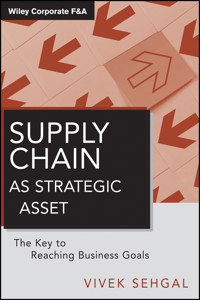
Hands-on guidance for creating competitive advantages through strategy realization How can your supply chain create competitive advantages and help achieve business goals? Drawing from the author's abundant research and analysis, this resourceful book shows how aligning the supply chain design with business strategy helps build competitive capabilities, prioritize capital investments, and takes your firm beyond the industry best-practices to create competitive advantages, not just competitive parity. Summarizing the current literature on business and supply chain strategies, this book provides path-breaking new direction to build your own winning supply chain strategy. Real-life cases show how this strategy alignment has produced results for the most successful companies and how it can be achieved in your firm. * An overview of the concepts of business strategy, the current thinking on supply chain strategy and why it is inadequate to drive competitive advantage through supply chain design * Process for establishing your own supply chain strategy to build competitive advantage * The place of technology in creating business capabilities in modern corporations and why managing technology should be a core competence and an integral part of strategy planning * Step-by-step direction and examples for creating strategy alignment and designing a supply chain that goes beyond supporting your operations * Case studies including Wal-mart, Cemex, Kmart, HP, Dell, and others Consolidating the lessons learned along with implementation guidance, Supply Chain as Strategic Asset is the must-read road map for designing a supply chain that will be vital in achieving your business goals.
Sie lesen das E-Book in den Legimi-Apps auf:
Seitenzahl: 527
Veröffentlichungsjahr: 2010
Ähnliche


















Table of Contents
Cover
Title
Copyright
Dedication
Preface
How Is This Book Organized?
A Note on Terms Used to Denote Strategies
Acknowledgments
Introduction
Chapter 1: Planning and Realizing the Goals of a Business Strategy
Strategy
Strategy Realization through Functional Capabilities
Strategy Planning: The Missing Link
Technology as the Enabler
Creating Competitive Advantage through Functional Capabilities
The Alignment of Business, Functional, and Technology Strategies
Chapter 2: Understanding Strategy
What Is Strategy?
Attributes of Strategy
Levels of Strategy Planning
The Strategic Horizon of Impact
Chapter 3: Concepts of Business Strategy
Porter’s Generic Strategies
The Resource-Based View
Capabilities-Based Strategies
Creating Advantages by Viewing the Corporation as the Sum of Its Components
Creating Advantages through the Value Chain
Developing Competitive Advantages through Capabilities
Understanding Advantage
Beyond the Business Strategy: Functional and Deployment Strategies
Chapter 4: Exploring Functional Strategy
What Is Functional Strategy?
Why Is the Functional Strategy Important?
Steps in Creating the Functional Strategy
Chapter 5: Current Thinking on Supply Chain Strategy
Current Thinking on Supply Chain Strategies
Understanding the Supply Chain Sphere of Influence
What Drives Your Supply Chain?
Chapter 6: Creating a Functional Supply Chain Strategy
The Effect of an Industry Segment on Supply Chain Design
The Effect of a Business Strategy on Supply Chain Design
The Effect of the Primary Driver on Supply Chain Design
Supply Chain Strategy and Business Strategy
Chapter 7: Technology Strategy
What Is Technology Strategy?
Components of a Technology Strategy
Why Develop a Technology Strategy?
Technology Strategy and Organization
Process Overview and Deliverables for Creating Technology Strategy
Chapter 8: Supply Chain Nirvana: Bringing It All Together
What Is Supply Chain Nirvana?
Defining a Supply Chain Strategy That Works
What Can a Well-Aligned Supply Chain Strategy Do for You?
How to Get There
Keeping It All Together
Appendix A: Sample Artifacts for Creating an Effective Supply Chain Strategy
Appendix B: An Overview of the Scope of the Supply Chain in Modern Corporations
Supply Chain Planning
Supply Chain Execution
Supply Chain Collaboration
Appendix C: The Supply Chain and Corporate Financial Performance
Cost of Sales
Inventory
Working Capital
Tune Your Supply Chain for Financial Performance
Notes
Introduction
Chapter 1
Chapter 2
Chapter 3
Chapter 5
Chapter 6
Chapter 7
Chapter 8
Bibliography
About the Author
Index
End User License Agreement
List of Illustrations
Introduction
Figure I.1 U.S. Productivity for Nonfarm Business Sector, Index (Output per Hour)
Chapter 1: Planning and Realizing the Goals of a Business Strategy
Figure 1.1 Strategy Life Cycle
Figure 1.2 Scope of Strategy Realization
Figure 1.3 A Strategy Requires Capabilities
Figure 1.4 Capabilities Required by a Business Strategy
Figure 1.5 From Business Strategy to Functional Strategy to Deployment Strategy
Chapter 2: Understanding Strategy
Figure 2.1 Value Creation Frontier
Figure 2.2 Porter’s Five Forces Framework for Strategy
Figure 2.3 Axes of Strategy’s Impact
Figure 2.4 Organizational Hierarchy of Business Strategy
Figure 2.5 Capabilities Required by Business Strategy
Figure 2.6 Strategic Horizon of Impact along Function, Organization, and Time
Chapter 3: Concepts of Business Strategy
Figure 3.1 Cost Strategy Showing a Firm’s Cost Advantage
Figure 3.2 Cost Strategy May Lead to Higher Profitability and/or Increased Market Share
Figure 3.3 Components of a Corporation
Figure 3.4 Components of a Corporation Immersed in Its Culture
Figure 3.5 Deconstructing the Distribution Function
Figure 3.6 From Strategy to Competitive Advantages
Figure 3.7 From Strategy to Competitive Advantages through Functional Competencies
Figure 3.8 Understanding Advantage
Figure 3.9 A Business Strategy May Drive Many Functional Strategies
Chapter 4: Exploring Functional Strategy
Figure 4.1 Business Capabilities Have Finite Windows of Opportunity to Create Competitive Advantages
Figure 4.2 The Components of a Corporation and Change Management
Figure 4.3 Corporate Ecosystem of Functional Capabilities
Figure 4.4 Functional Ecosystem Showing Partial List of Business Functions
Figure 4.5 Hierarchy of Capabilities
Figure 4.6 Deconstructing Supply Chain Functions
Figure 4.7 Deconstructing Demand Planning Functions
Figure 4.8 Part of a Capability Maturity Map Showing the Statistical Forecasting Subfunctions
Figure 4.9 Example of a Capability Maturity Map for Supply Chain Functions in a Retail Context
Chapter 5: Current Thinking on Supply Chain Strategy
Figure 5.1 Effect of External Factors on Demand Management
Figure 5.2 Effect of Horizon on the Accuracy of Demand Forecasting
Figure 5.3 Higher Accuracy Results by Forecasting the Demand for Subassemblies
Figure 5.4 Supply Chain Sphere of Influence
Figure 5.5 Supply Chain Core Objective
Figure 5.6 Demand-Driven Supply Chain
Figure 5.7 Supply-Driven Supply Chain
Figure 5.8 Inventory or Resource-Driven Supply Chains
Chapter 6: Creating a Functional Supply Chain Strategy
Figure 6.1 Factors Affecting Supply Chain Strategy
Figure 6.2 Process Flow for Developing a Supply Chain Strategy
Figure 6.3 Sustainability Matrix for Competitive Advantages
Figure 6.4 Inventory Turns at Home Depot
Figure 6.5 Relative Priority of Supply Chain Design Dimensions for Cost-based Strategy
Chapter 7: Technology Strategy
Figure 7.1 Technology Strategy Matrix
Figure 7.2 Technology Strategy Matrix with Business Functions
Figure 7.3 Technology Strategy Matrix with Merged Business Function
Figure 7.4 Overview of the Process for Creating a Technology Strategy
Figure 7.5 Technology Strategy Process Life Cycle
Chapter 8: Supply Chain Nirvana: Bringing It All Together
Figure 8.1 Top-Down View of Business, Functional, and Deployment Strategies
Figure 8.2 Bottom-Up View of Business, Functional, and Deployment Strategies
Figure 8.3 Overview of Steps in Creating an Effective Supply Chain Strategy
Figure 8.4 Wal-Mart's Inventory Turns from FY2000 to FY2010
Figure 8.5 What Can Supply Chain Strategy Do for You?
Figure 8.6 Sales and Inventory Chart for Wal-Mart
Figure 8.7 Gross Margin Chart for Wal-Mart
Figure 8.8 The Supply-Chain Nirvana
Figure 8.9 A Proposed Supply-Chain Organization with Integrated Operations
Appendix A: Sample Artifacts for Creating an Effective Supply Chain Strategy
Figure A.1 Functional Landscape: Supply Chain Planning
Figure A.2 System Landscape: Demand and Supply Planning
Figure A.3 Capability Maturity Map: Initial Stage
Figure A.4 Capability Maturity Map: Intermediate Stage
Figure A.5 Capability Maturity Map: Evolution over Time
Appendix B: An Overview of the Scope of the Supply Chain in Modern Corporations
Figure B.1 Core and Extended Supply Chain Functions
Figure B.2 Overview of Supply Chain Landscape
Figure B.3 Supply Chain Planning Functions
Figure B.4 Supply Chain Execution Functions
Figure B.5 Supply Chain Collaboration Functions
Figure B.6 Supply Chain Functions and ERP Systems
Appendix C: The Supply Chain and Corporate Financial Performance
Figure C.1 Effects of Reducing Inventory on the Corporate Financials
Figure C.2 Relationship between Operational Processes Managed by Supply Chain Functions and the Corporate Results
List of Tables
Chapter 4: Exploring Functional Strategy
Table 4.1 An Example of Functional Deconstruction of Demand Planning Business Function
Chapter 5: Current Thinking on Supply Chain Strategy
Table 5.1 Comparison of Well-Known Supply Chain Strategies of Lean, Agile, Speculation, and Postponement to the Generic Business Strategies of Porter
Table 5.2 Characteristics of a Business Suitable for the Design of a Demand-Driven Supply Chain
Table 5.3 Characteristics of a Business Suitable for the Design of a Supply-Driven Supply Chain
Table 5.4 Characteristics of a Business Suitable for Designing an Inventory-Driven Supply Chain
Table 5.5 Characteristics of a Business Suitable for the Design of a Resource-Driven Supply Chain
Chapter 6: Creating a Functional Supply Chain Strategy
Table 6.1 Supply Chain Design Focus for Cost and Differentiation Business Strategies
Chapter 8: Supply Chain Nirvana: Bringing It All Together
Table 8.1 Functional Analysis for Demand Forecasting to Establish the Value of the Business Function for the Firm
Table 8.2 Most of the Components of the Cost of Sales Are Managed through Supply Chain Processes
Appendix A: Sample Artifacts for Creating an Effective Supply Chain Strategy
Table A.1 Functional Catalog: Demand Planning
Table A.2 Function, Organization, Applications Relationship Matrix
Table A.3 Assessment Scorecard: Function-App
Appendix C: The Supply Chain and Corporate Financial Performance
Table C.1 Components of Cost of Sales and Supply Chain Processes That Help Manage Them
Guide
Cover
Table of Contents
Begin Reading
Pages
cover
contents
i
v
vi
vii
xiii
xiv
xv
xvi
xvii
xviii
xix
xxi
xxii
xxiii
xxiv
xxv
xxvi
xxvii
1
2
3
4
5
6
7
8
9
10
11
12
13
14
15
16
17
18
19
20
21
22
23
24
25
26
27
28
29
30
31
32
33
34
35
36
37
38
39
40
41
42
43
44
45
46
47
48
49
50
51
52
53
54
55
56
57
58
59
60
61
62
63
64
65
66
67
68
69
70
71
72
73
74
75
76
77
78
79
80
81
82
83
84
85
86
87
88
89
90
91
92
93
94
95
96
97
98
99
100
101
102
103
104
105
106
107
108
109
110
111
112
113
114
115
116
117
118
119
120
121
122
123
124
125
126
127
128
129
130
131
132
133
134
135
136
137
138
139
140
141
142
143
144
145
146
147
148
149
150
151
152
153
154
155
156
157
158
159
160
161
162
163
164
165
166
167
168
169
170
171
172
173
174
175
176
177
178
179
180
181
182
183
184
185
186
187
188
189
190
191
192
193
194
195
196
197
198
199
200
201
202
203
204
205
206
207
208
209
210
211
212
213
214
215
216
217
218
219
220
221
222
223
224
225
226
227
228
229
230
231
232
233
234
235
236
237
238
239
240
241
242
243
244
245
246
247
248
249
250
251
252
253
255
256
257
258
259
260
261
262
263
264
265
266
267
268
269
270
271
272
273
274
275
276
277
278
279
280
281
282
283
284
285
286
287
288
289
290
291
292
293
294
295
296
297
299
301
302
303
304
305
Additional Praise for Supply Chain as Strategic Asset: The Key to Reaching Business Goals
“Supply Chain as Strategic Asset serves as a great prequel to Enterprise Supply Chain Management. Sehgal's new book helps wrap the framework of strategic planning around the supply chain capabilities previously covered. The combination of business theory with practical case studies and examples help drive home valuable lessons that executives should take to heart.”
—David Landau, Vice President, Manhattan Associates
“Business processes are the source of competitive advantage in the 21st century. Vivek Sehgal expertly connects the dots between business strategy and supply chain strategy. He explains that supply chain strategy must be derived from business strategy, but also that competitive advantage through supply chain must be built into the processes by pro-active design. The time for pushing industry best practices is over. As Vivek explains, now is the time to pro-actively create superior processes that will result in the creation of competitive advantage.”
—Dustin Mattison, Founder,logipi.com
“It goes without saying that a lot has changed and continues to change in business today. For those businesses with significant working capital commitment and risk associated with a smoothly functioning and adaptable supply chain these are challenging times. There are very few people who can translate the importance of a value added supply chain to a business than Mr. Sehgal. Take the translation one step further and you have a manual that peels back the layers for understanding and actionable knowledge. Like Vivek's previous book this is a must have on the shelf for not only supply chain executives, but those executives who want their supply chain capabilities to be competitive differentiators.”
—Craig LaFrance, Director of Business Development, CDC Software
Supply Chain as Strategic Asset
The Key to Reaching Business Goals
VIVEK SEHGAL
Copyright © 2011 by Vivek Sehgal. All rights reserved.
Published by John Wiley & Sons, Inc., Hoboken, New Jersey.
Published simultaneously in Canada.
No part of this publication may be reproduced, stored in a retrieval system, or transmitted in any form or by any means, electronic, mechanical, photocopying, recording, scanning, or otherwise, except as permitted under Section 107 or 108 of the 1976 United States Copyright Act, without either the prior written permission of the Publisher, or authorization through payment of the appropriate per-copy fee to the Copyright Clearance Center, Inc., 222 Rosewood Drive, Danvers, MA 01923, (978) 750-8400, fax (978) 646-8600, or on the Web at www.copyright.com. Requests to the Publisher for permission should be addressed to the Permissions Department, John Wiley & Sons, Inc., 111 River Street, Hoboken, NJ 07030, (201) 748-6011, fax (201) 748-6008, or online at http://www.wiley.com/go/permissions.
Limit of Liability/Disclaimer of Warranty: While the publisher and author have used their best efforts in preparing this book, they make no representations or warranties with respect to the accuracy or completeness of the contents of this book and specifically disclaim any implied warranties of merchantability or fitness for a particular purpose. No warranty may be created or extended by sales representatives or written sales materials. The advice and strategies contained herein may not be suitable for your situation. You should consult with a professional where appropriate. Neither the publisher nor author shall be liable for any loss of profit or any other commercial damages, including but not limited to special, incidental, consequential, or other damages.
For general information on our other products and services or for technical support, please contact our Customer Care Department within the United States at (800) 762-2974, outside the United States at (317) 572-3993 or fax (317) 572-4002.
Wiley also publishes its books in a variety of electronic formats. Some content that appears in print may not be available in electronic books. For more information about Wiley products, visit our web site at www.wiley.com.
Library of Congress Cataloging-in-Publication Data:
Sehgal, Vivek.
Supply chain as strategic asset : the key to reaching business goals / Vivek Sehgal.
p. cm. — (Wiley corporate f&a; 22)
Includes index.
ISBN 978-0-470-87477-6 (hardback); ISBN 978-0-470-93966-6 (ebk);
ISBN 978-0-470-93967-3 (ebk); ISBN 978-1-118-00287-2 (ebk)
1. Business logistics. 2. Strategic management. I. Title.
HD38.5.S444 2011
658.7—dc22
2010031878
To Devyani, Parth, and Richa
Preface
Creating an effective supply chain is essential for a business to compete. But the scope of supply chains is so great that it is a tough task simply to describe what an effective supply chain is, let alone create one. This book provides a valuable road map for defining and creating a supply chain strategy that will help you build an effective supply chain that supports your business strategy. It begins by providing an overview of the development of the strategic management discipline to its current state and then proceeds to define supply chain strategies, reviewing the strengths and weaknesses along with the reasoning behind the selection of one specific strategy over others. It also investigates the relationship between some well-known business strategies and how they may affect the selection of the supply chain strategy.
Lesen Sie weiter in der vollständigen Ausgabe!
Lesen Sie weiter in der vollständigen Ausgabe!
Lesen Sie weiter in der vollständigen Ausgabe!
Lesen Sie weiter in der vollständigen Ausgabe!
Lesen Sie weiter in der vollständigen Ausgabe!
Lesen Sie weiter in der vollständigen Ausgabe!
Lesen Sie weiter in der vollständigen Ausgabe!
Lesen Sie weiter in der vollständigen Ausgabe!
Lesen Sie weiter in der vollständigen Ausgabe!
Lesen Sie weiter in der vollständigen Ausgabe!
Lesen Sie weiter in der vollständigen Ausgabe!
Lesen Sie weiter in der vollständigen Ausgabe!
Lesen Sie weiter in der vollständigen Ausgabe!
Lesen Sie weiter in der vollständigen Ausgabe!
Lesen Sie weiter in der vollständigen Ausgabe!
Lesen Sie weiter in der vollständigen Ausgabe!
Lesen Sie weiter in der vollständigen Ausgabe!
Lesen Sie weiter in der vollständigen Ausgabe!




