


126,99 €
Mehr erfahren.
- Herausgeber: John Wiley & Sons
- Kategorie: Fachliteratur
- Sprache: Englisch
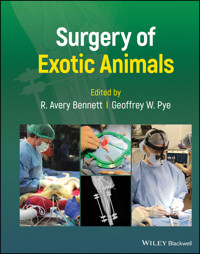
The first book to provide veterinarians with in-depth guidance on exotic animal surgical principles and techniques
As the popularity of exotic animals continues to grow, it is becoming increasingly important for veterinarians to be knowledgeable and skilled in common surgical procedures for a wide range of exotic species. Written for practitioners and board-certified surgeons with a working knowledge of domestic animal surgery, Surgery of Exotic Animals is the first clinical manual to provide comprehensive guidance on surgical principles and common procedures in exotic pets, zoo animals, and wildlife.
Edited by internationally recognized leaders in exotic animal surgery and zoological medicine, this much-needed volume covers invertebrates, fish, amphibians, reptiles, birds, and both terrestrial and marine mammals. Contributions from a team of surgery and zoo specialists offer detailed descriptions of common surgeries and provide a wealth of color images demonstrating how each procedure is performed—including regional anatomy and surgical approaches. An invaluable one-stop source of authoritative surgical information on exotic species, this book:
- Provides illustrated guidance on surgical principles and common surgeries performed in exotic species
- Describes general principles, instrumentation, equipment, suture materials, and magnification surgery
- Covers a wide range of procedures such as small and large mammal dental surgery, avian soft tissue surgery, reptile orthopedic surgery, and primate surgery
- Includes chapters on surgical oncology, megavertebrate laparoscopy, and minimally invasive surgery techniques
Surgery of Exotic Animals is an indispensable clinical guide and reference for all private veterinary practitioners; exotic, zoo, and wildlife veterinarians; laboratory animal veterinarians; veterinary students; and veterinary technicians.
Sie lesen das E-Book in den Legimi-Apps auf:
Seitenzahl: 1277
Veröffentlichungsjahr: 2021
Ähnliche



















Table of Contents
Cover
Title Page
Copyright Page
Dedication Page
List of Contributors
Preface
About the Editors
1 General Principles, Instruments, and Equipment
Introduction
Presurgical Considerations
Instrumentation and Equipment
Instrumentation
References
2 Suture Materials
Introduction
Suture Materials
Absorbable Suture Materials
Biologic Absorbable Suture Material
Synthetic Absorbable Suture Materials
Nonabsorbable Suture Materials
Biologic Nonabsorbable Suture Materials
Barbed and Antibacterial‐Coated Suture
Tissue Healing
Sutures in Exotic Animals
Conclusion
Acknowledgments
References
3 Magnification Surgery
Introduction
Optics and Principles of Magnification
The Operating Microscope
Instrumentation
References
4 Invertebrate Surgery
Introduction
Porifera (Sponges)
Coelenterates
Gastropod Mollusks
Cephalopod Mollusks
Annelids
Crustaceans
Arachnids
Limulus
Insects
Echinoderms
Urochordates
References
5 Fish Surgery
Perioperative and Postoperative Surgical Management
Wounds
Skin Surgery
Orthopedic Surgery
Ophthalmic Surgery
Coelomic Surgery
Swim Bladder Surgery
Reproductive Surgery
Urinary Surgery
Digestive Tract Surgery
Minimally Invasive Surgery
Telemetry and Microchip Implantation
References
6 Amphibian Surgery
Introduction
Perioperative and Postoperative Considerations
Wound Healing
Skin Surgery
Orthopedic Surgery
Ophthalmic Surgery
Coelomic Surgery
Urogenital Surgery
Gastrointestinal Tract Surgery
Minimally Invasive Surgery
Telemetry and Microchip Implantation
References
7 Reptile Orthopedic Surgery
Introduction
Anatomy and Physiology
Diagnostics
Trauma
Joint Disease
References
8 Surgical Approaches to the Reptile Coelom
Chelonian Coelom
Snake Coelom
Lizard and Crocodilian Coelom
References
9 Reptiles
Anatomy
Surgery of the Female Reproductive Tract
Orchidectomy
Reproductive Organ Prolapse
Non Reproductive Cloacal Organ Prolapses
Cystotomy
Gastrointestinal Procedures
References
10 Avian Orthopedics
Biology of Bone Healing
Patient Evaluation
Fracture Management Options
Luxation Management Options
Angular Limb Deformities (ALD)
Postoperative Care
Monitoring for Healing and Complications
Beak Repair
References
11 Approaches to the Caudal Coelom (Abdomen) of Birds
Anatomy
Patient Preparation
Skin Incision
Left Lateral Celiotomy
Right Lateral Celiotomy
Transverse Celiotomy
References
12 Avian Reproductive Procedures
The Male Reproductive Tract
The Female Reproductive Tract
References
13 Surgery of the Avian Gastrointestinal Tract
Anatomy and Physiology
Surgery of the Mouth
Surgery of the Esophagus
Surgery of the Stomach
Proventriculotomy and Ventriculotomy
Proventriculotomy or Ventriculotomy Through the Isthmus
Gastrotomy in Carnivores and Piscivores
Gastrotomy in Ratites
Ventriculotomy
Surgery of the Intestines
Surgery of the Cloaca
Pancreatic Biopsy
Postoperative Management
References
14 Surgery of the Avian Respiratory System and Cranial Coelom
Surgery of the Upper Respiratory Tract
Surgery of the Lower Respiratory Tract
Surgery of the Cranial Coelom
References
15 Minimally Invasive Surgery Techniques in Exotic Animals
Introduction
Instrumentation
Patient Positioning
Laparoscopy
Coelioscopy in Birds and Reptiles
Specific Laparoscopic Techniques
Other Diagnostic Techniques
Thoracoscopy
Thoracoscopic Procedures
Summary
References
16 Orthopedic Surgery in Small Mammals
Anatomy and Physiology
Diagnostics
Joint Disease
Trauma
Bone Composition and Bone Healing
Principles of Fracture Stabilization
Fractures
Repair of Specific Fractures
Fractures of the Humerus
Fractures of the Radius and Ulna
Fractures of the Metacarpal Bones
Fractures of the Pelvic Bones
Fractures of the Femur
Fractures of the Tibia and Fibula
References
17 Rabbit Soft Tissue Surgery
Introduction
Celiotomy
Thoracic Surgery
Enucleation and Exenteration
Ear Surgery
Abscess Management
References
18 Ferret Soft Tissue Surgery
Surgical Abdominal Anatomy
Celiotomy and Closure
Surgical Procedures
Pyloric Outflow Obstruction
Oral Cavity Disease
Abdominal Organ Biopsy
Urogenital Surgery
Urolithiasis
Preputial Masses
Miscellaneous Procedures
References
19 Rodent Soft Tissue Surgery
Introduction
Reproductive Tract Surgery
Cutaneous and Subcutaneous Masses
Gastrointestinal Surgery
Urinary Tract Surgery
Intraabdominal Masses
Thoracic Surgery
Enucleation and Exenteration
Ear Surgery
Tail Degloving
Pododermatitis
Recovery
References
20 Soft Tissue Surgery in Hedgehogs
Ovariohysterectomy and Mammary Tumor Removal
Orchiectomy
Posthitis and Paraphimosis
Neoplastic Disease in Hedgehogs
Proptosis and Enucleation
Leg and Foot Injuries
Intervertebral Disc Disease
References
21 Surgery of the Sugar Glider
Introduction
Orchiectomy
Penectomy
Abdominal Surgical Approach
Ovariectomy and Ovariohysterectomy
Patagial Surgery
Tail Amputation
Removal of the Paracloacal Glands
References
22 Small Mammal Dental Surgery
Incisor Extraction
Cheek Tooth Extraction
Surgery of Mandibular Abscesses
Apicoectomy
Alternative Methods of Abscess‐Treatment
Surgery of Rostral Maxillary Abscesses
Lateral Fenestration of the Nasolacrimal Duct
Dorsal Rhinostomy
Surgery of Retrobulbar Abscesses
Treatment of Jaw Fractures
Stabilization of a Mandibular Symphysiolysis
Condylectomy
Alveolectomy and Mandibulectomy
References
23 Large Mammal Dental Surgery
Introduction
Preprocedure Considerations
Terminology
Elephants
Tusks
Partial Pulpectomy
Tusk Extraction
Molars
Chronic Alveolar Osteitis and Osteomyelitis
Surgical Fistulation
References
24 Primate Surgery
Personal Protective Equipment and Zoonotic Concerns During Surgery
Integument and Appendages
Respiratory Tract
Abdominal Surgery
Trichobezoar and Phytobezoar
Gastrointestinal Neoplasms
Reproductive Surgery
Acknowledgment
References
25 Marine Mammal Surgery
Background
Surgery of Pinnipeds
Surgery of Cetaceans
References
26 Megavertebrate Laparoscopy
Instrumentation
Elephant Laparoscopy and Minimally Invasive Surgery
Vasectomy
Functional Ovariectomy
Body Wall Closure
Rhinoceros Laparoscopy
Ovariectomy
Hippopotamus Laparoscopy
References
27 Zoo Animal Surgery
General Considerations
Surgeries
References
28 Surgical Oncology in Exotics
Principles of Surgical Oncology and Application to Exotics
Birds
Rabbits
Ferrets
Rodents
Reptiles
References
Index
End User License Agreement
List of Tables
Chapter 1
Table 1.1 Loss of approximately 20% of total blood volume results in cardio...
Chapter 2
Table 2.1 Percentage of retained tensile strength following implantation an...
Chapter 10
Table 10.1 Preferred and alternative methods of IM pin fixation.
Table 10.2 Fracture stabilization methods.
Table 10.3 Stabilization techniques for luxations.
Chapter 17
Table 17.1 A summary of the differences between gut stasis, a moving foreig...
Chapter 24
Table 24.1 Overview of common routes of NHP zoonotic exposure and partial l...
Table 24.2 Variations in number of upper and lower respiratory structures f...
Chapter 25
Table 25.1 Pharmaceutical options for management of pinnipeds post cataract...
List of Illustrations
Chapter 1
Figure 1.1 The surgeon must adhere to proper aseptic technique wearing clean...
Figure 1.2 This 1.2 kg patient is being draped for a thoracotomy. First quar...
Figure 1.3 Straight and right‐angled hemostatic clip appliers are available....
Figure 1.4 A “hemostatic taco” made of gelatin sponge (G) wrapped in oxidize...
Figure 1.5 An Alm retractor (a) uses a thumb screw to open the jaws, while t...
Figure 1.6 The Lone Star retractor system consists of a plastic ring with no...
Figure 1.7 Microsurgical instruments should be a standard length with miniat...
Figure 1.8 Hold the instruments like a pen (a) and not across the palm (b) f...
Figure 1.9 The basic microsurgical pack should consist of a needle holder, s...
Figure 1.10 Ophthalmic bulb syringe is useful for irrigation in small patien...
Chapter 2
Figure 2.1 Inflammatory reactions after implantation of different suture mat...
Chapter 3
Figure 3.1 Optics of magnification aids that use a two‐lens system. Note the...
Figure 3.2 Binocular head–body of the operating microscope. Contains the eye...
Figure 3.3 Eyepieces contribute to the total magnification of an operating m...
Figure 3.4 Eyepieces of an operating microscope are adjustable to accommodat...
Figure 3.5 Field of view is the extent of the operating field seen in focus ...
Figure 3.6 Operating microscope foot pedal displaying the joystick for adjus...
Figure 3.7 The surgeon should sit at the operating table with hips slightly ...
Figure 3.8 Resting the elbows and antebrachii on the surgical table at 90° t...
Figure 3.9 Adjust the diopter settings for each eye, one eye at a time, to e...
Figure 3.10 The author's through‐the‐lens (TTL) mounted loupes. Note the ste...
Figure 3.11 Small collection of microsurgical instruments. From right to lef...
Figure 3.12 A stable hand position with fingers stacked on one another holdi...
Figure 3.13 Double Acland microvascular clamps on an approximating frame. Th...
Figure 3.14 Alternate stable hand position with fingers splayed instead of s...
Figure 3.15 The surgeon's thumb and first two fingers should surround the in...
Chapter 4
Figure 4.1 This schematic shows the cellular structure of a sponge (
Halisarc
...
Figure 4.2 This schematic shows three stages of regeneration in the sponge,
Figure 4.3 This aquarium is filled with coral “frags” representing a number ...
Figure 4.4 This image illustrates the major external anatomical features of ...
Figure 4.5 This apple snail (Ampullariidae) suffered a fractured shell after...
Figure 4.6 The same snail in Figure 4.5 after the application of an epoxy br...
Figure 4.7 This series of images shows how earthworms can be a model for vas...
Figure 4.8 This image shows the careful removal of a retained exoskeleton fr...
Figure 4.9 These images illustrate fracture repair of a horseshoe crab (
Limu
...
Figure 4.10 This cockroach (
Blaberus discoidalis
) has been outfitted with a ...
Chapter 5
Figure 5.1 (a) Positioning for a CT‐scan in an anesthetized koi (
Cyprinus ca
...
Figure 5.2 Anesthetic equipment used for a large 8 kg koi (
Cyprinus carpio
) ...
Figure 5.3 Intervention in the oropharyngeal cavity of a Ranchu goldfish (
Ca
...
Figure 5.4 Use of adjunctive cryotherapy for excision of an odontoma in an a...
Figure 5.5 Use of a hand‐held electrocautery during a lateral celiotomy in a...
Figure 5.6 Large ulceration on the ventrum of a female koi (
Cyprinus carpio
)...
Figure 5.7 Excision of a neoplastic mass of the vent of a koi (
Cyprinus carp
...
Figure 5.8 Intralesional bleomycin injection into a myxoma on the head of an...
Figure 5.9 Opercular plasty in an anesthetized Asian arowana (
Scleropages fo
...
Figure 5.10 Fibrous tissue obstructing the oral cavity of a koi (
Cyprinus ca
...
Figure 5.11 Green spotted pufferfish (
Tetraodon nigroviridis
) before (a) and...
Figure 5.12 Fluorescein staining of a large corneal ulceration in a lookdown...
Figure 5.13 Enucleation of a rockfish (
Sebastes caurinus
) with a retinal tum...
Figure 5.14 Suture of the periorbital tissue after an enucleation in a saith...
Figure 5.15 Enucleation of a sea horse (
Hippocampus erectus
) with a retro‐or...
Figure 5.16 Incision of the coelom between the pelvic fins and the digestive...
Figure 5.17 Right lateral radiograph of a positively buoyant goldfish (
Caras
...
Figure 5.18 Ovariectomy in an Oranda goldfish (
Carassius auratus
): the head ...
Figure 5.19 Whole body right lateral radiograph (a) and ultrasound image (b)...
Figure 5.20 A goldfish (
Carassius auratus
) showing its impacted intestine ex...
Chapter 6
Figure 6.1 A wound on the lateral aspect of the tarsus in a laboratory Afric...
Figure 6.2 Possible intravenous injection sites in amphibians.
Figure 6.3 Cutaneous everting suture pattern with monofilament absorbable su...
Figure 6.4 Amputation of the tip of the tail of a California newt (
Taricha t
...
Figure 6.5 Surgical toe amputation in an African bullfrog (
Pyxicephalus adsp
...
Figure 6.6 An albino axolotl (
Ambystoma mexicanum
) presented with a traumati...
Figure 6.7 Enucleation of the right eye in an Oriental fire‐bellied toad (Bo...
Figure 6.8 Exploratory celiotomy in an Argentine horned frog (
Ceratophrys or
...
Figure 6.9 Location of the ovaries (white arrow) in a reproductively active ...
Figure 6.10 Gastrotomy in an axolotl (
Ambystoma mexicanum
) anesthetized with...
Figure 6.11 Gastrotomy in an axolotl (
Ambystoma mexicanum
): (a) suture of th...
Chapter 7
Figure 7.1 A
dorso‐ventral
(
DV
) projection of the entire skeleton of a...
Figure 7.2 A CT reconstruction of a juvenile African spurred tortoise (
Centr
...
Figure 7.3 A DV projection of a green iguana (
Iguana iguana
) showing chronic...
Figure 7.4 Full body DV projection of a female African spurred thighed torto...
Figure 7.5 Typical motor vehicle trauma to the plastron of a red‐eared slide...
Figure 7.6 Examples of commonly available small bone plates. (a) A 2.0/2.7 m...
Figure 7.7 Severe fracture of the carapace in a painted turtle (
Chrysemys pi
...
Figure 7.8 Fractured carapace in a red‐eared slider (
Trachemys scripta
) show...
Figure 7.9 A full body DV view of a chelonian (species unknown) showing luxa...
Figure 7.10 A lateral radiograph of a red‐tailed Boa (
Boa constrictor
) showi...
Figure 7.11 Intraoperative photograph showing approach to the spine to obtai...
Chapter 8
Figure 8.1 (a) Skin incision for a prefemoral celiotomy in a chelonian. (b) ...
Figure 8.2 (a–d) Computed tomography of a chelonian used for surgical planni...
Figure 8.3 A diamond‐edged cutting wheel is used to create the plastron oste...
Figure 8.4 (a) An oscillating saw is used to create the plastron osteotomy i...
Figure 8.5 A ring retractor can be used to improve exposure of the coelomic ...
Figure 8.6 If the plastron osteotomy flap is cut with an inward beveled edge...
Figure 8.7 (a, b) Fiberglass and epoxy resin can be used to stabilize the pl...
Figure 8.8 Placing tape directly over the edges of the plastron osteotomy si...
Figure 8.9 (a–g) A three‐year‐old female leopard tortoise (
Stigmochelys pard
...
Figure 8.10 A combination of a prefemoral approach with an adjacent plastron...
Figure 8.11 Closure of a prefemoral approach in combination with adjacent pl...
Figure 8.12 (a–c) For a snake celiotomy, (a) elevate the second scale from t...
Figure 8.13 Closure of snake skin following a celiotomy using a horizontal m...
Figure 8.14 The ventral abdominal vein in a lizard runs directly dorsal to t...
Figure 8.15 A paramedian celiotomy incision closure following castration in ...
Figure 8.16 (a, b) For closure of a celiotomy in a snake or lizard, (a) roll...
Figure 8.17 To approach the kidney for biopsy in a lizard, make an incision ...
Chapter 9
Figure 9.1 A postmortem image of a boa constrictor demonstrating the three c...
Figure 9.2 Dystocia in this Brazilian rainbow boa (
Epicrates cenchria
) was t...
Figure 9.3 This python suffered dystocia and an oviduct volvulus around a si...
Figure 9.4 This albino Burmese python developed dystocia requiring multiple ...
Figure 9.5 Cadaveric image of a sexually immature green iguana undergoing bi...
Figure 9.6 Intraoperative images from a sexually mature female green iguana ...
Figure 9.7 Removed oviducts full of eggs following salpingectomy in a green ...
Figure 9.8 In a young green iguana, it only requires one or two hemostatic c...
Figure 9.9 Intraoperative picture of a sexually active male green iguana und...
Figure 9.10 An eastern diamondback rattlesnake presenting for unilateral hem...
Figure 9.11 Prolapsed oviduct in a California desert tortoise (
Gopherus agas
...
Figure 9.12 This tortoise presented for paraparesis. This radiograph showed ...
Figure 9.13 A ventrodorsal (a) and lateral (b) radiograph of a green iguana ...
Figure 9.14 Cystic calculus in a California desert tortoise (
Gopherus agassi
...
Figure 9.15 Intraoperative images of a ventral cystotomy in a green iguana w...
Figure 9.16 Image of an egg in the urinary bladder of a tortoise (a). Note t...
Figure 9.17 A cystic calculus in a green iguana (
Iguana iguana
) that was mis...
Figure 9.18 The ileocecocolic junction in a green iguana (
Iguana iguana
) dem...
Figure 9.19 Intraoperative image of a boa constrictor undergoing gastrotomy ...
Figure 9.20 Ventrodorsal radiograph of a green iguana (
Iguana iguana
) with c...
Figure 9.21 Intraoperative image of leopard gecko diagnosed with a small int...
Figure 9.22 Radiographs of a green iguana (
Iguana iguana
) that was housed on...
Figure 9.23 This tortoise was diagnosed with colonic impaction. Medical mana...
Figure 9.24 Intraoperative image of a green sea turtle with a small intestin...
Chapter 10
Figure 10.1 Figure‐of‐eight bandage application. Coaptation is started by wr...
Figure 10.2 Radiographs of an adult bald eagle (
Haliaeetus leucocephalus
)
, ...
Figure 10.3 Curved edge splint application (Ponder and Redig 2016). Select a...
Figure 10.4 Tape splint application. Apply two layers of tape on the medial ...
Figure 10.5 Lateral radiograph showing a short oblique mid‐tibiotarsal fract...
Figure 10.6 Radiographs of a simple transverse distal radius and ulna fractu...
Figure 10.7 Radiograph of a long oblique mid‐humeral fracture stabilized wit...
Figure 10.8 Various plate types. From top left to right: 6‐hole 2.0 mm dynam...
Figure 10.9 Locking and nonlocking screws (a) placed in a 5‐hole LCP that ac...
Figure 10.10 Radiographs of a blue‐fronted amazon (
Amazona aestiva
) show a c...
Figure 10.11 A red‐tailed hawk (
Buteo jamaicensis
) presented with right‐side...
Figure 10.12 Craniocaudal (a) and lateral (b) radiographs of a mid‐diaphysea...
Figure 10.13 Picture of the components of the IMEX SK ESF system. From top l...
Figure 10.14 Lateral radiograph showing a segmental fracture of the mid‐to‐d...
Figure 10.15 Picture of a type I (unilateral, uniplanar) ESF (a), type Ib (u...
Figure 10.16 Picture of the supplies needed for making an acrylic connecting...
Figure 10.17 Acrylx 2‐part resin comes with an applicator, multiuse cartridg...
Figure 10.18 Radiographs of adult red‐tailed hawk found down on the road wit...
Figure 10.19 Radiographs of an adult red‐shouldered hawk with a complete, se...
Figure 10.20 Schematic of various configurations of IM‐ESF. In terms of biom...
Figure 10.21 Radiographs of a three‐year‐old Harris hawk (
Parabuteo unicinct
...
Figure 10.22 Photograph of proper IM pin (a) being bent with either a Frazie...
Figure 10.23 Bilateral application of external ring fixators to a bald eagle...
Figure 10.24 Photographs of corticocancellous bone harvest. Aseptically prep...
Figure 10.25 Avulsion fracture of the ventral tubercle (arrow) of the proxim...
Figure 10.26 Radiographs of mild caudodorsal elbow luxation (a) and normal c...
Figure 10.27 Lateral (a) and cranial/caudal (b) radiographs of a dorsal luxa...
Figure 10.28 Radiographs of a craniodorsal right‐sided coxofemoral luxation ...
Figure 10.29 Ventrodorsal (a) and lateral (b) radiograph of a toggle pin app...
Figure 10.30 CT DICOM images were acquired to make a digital 3‐D rendering (...
Figure 10.31 Photographs of a juvenile bald eagle (
Haliaeetus leucocephalus
)...
Figure 10.32 Pictures of a blue and gold macaw (
Ara ararauna
) with mild scis...
Figure 10.33 Subadult Scarlet macaw (
Ara macao
) with mandibular prognathism ...
Figure 10.34 Left‐sided traumatic beak injury in a bald eagle (
Haliaeetus le
...
Figure 10.35 Photographs of a right‐sided, minimally contaminated mandibular...
Figure 10.36 Photograph of a scarlet macaw (
Ara macao
) with the upper and lo...
Chapter 11
Figure 11.1 A chicken prepared for aseptic surgery. Huck towels have been pl...
Figure 11.2 The Harrison tip bipolar forceps (a) has a 45°
°
bend on one...
Figure 11.3 To incise avian skin with bipolar forceps, tent the skin with fo...
Figure 11.4 A left lateral celiotomy provides exposure to much of the viscer...
Figure 11.5 Position for left lateral celiotomy (drawing) (a) and an umbrell...
Figure 11.6 When positioned for a lateral celiotomy a fold of skin is create...
Figure 11.7 After making the skin incision for a left lateral celiotomy iden...
Figure 11.8 Superficial branches of the femoral artery and vein need to be l...
Figure 11.9 Make the incision in the body wall beginning at the last rib. Th...
Figure 11.10 After incising the body wall with bipolar electrosurgery a self...
Figure 11.11 Close with a simple continuous pattern in the intercostal and a...
Figure 11.12 A ventral midline celiotomy enters the intestinal peritoneal ca...
Figure 11.13 Immediately inside the ventral coelomic wall is the duodenal lo...
Chapter 12
Figure 12.1 Male chicken left reproductive anatomy. Testis (T), epididymis (...
Figure 12.2 Intraoperative view of castration in a rooster. The left testis ...
Figure 12.3 Cadaver dissection demonstrating how to perform orchidectomy in ...
Figure 12.4 Intraoperative image of castration of an umbrella cockatoo. The ...
Figure 12.5 To perform a vasectomy using the left lateral approach (a), gras...
Figure 12.6 The mesovarium is difficult to identify because it is short and ...
Figure 12.7 Anatomy of the female reproductive tract in a juvenile cockatiel...
Figure 12.8 Intraoperative anatomy of a juvenile chicken during ovariectomy....
Figure 12.9 Large follicles in a mature bird often obstruct visualization of...
Figure 12.10 Intraoperative view of ovariectomy in an umbrella cockatoo (
Cac
...
Figure 12.11 In a juvenile bird, the vessels are not well developed and the ...
Figure 12.12 LigaSure™ has been evaluated for use for avian ovariectomy. Fol...
Figure 12.13 Anatomy of the oviduct showing the infundibulum, magnum, isthmu...
Figure 12.14 Intraoperative image of a juvenile lovebird (
Agapornis
sp.). A ...
Figure 12.15 Intraoperative image of a juvenile cockatiel (
Nymphicus holland
...
Figure 12.16 A salpingohysterotomy was performed in this love bird (
Agaporni
...
Chapter 13
Figure 13.1 Overview of the avian gastrointestinal tract. (a) Crop, (b) prov...
Figure 13.2 The proventriculus (P), isthmus (arrow), and the large and muscu...
Figure 13.3 A duodenal loop (a) showing pancreas (b) within the loop. The bl...
Figure 13.4 (a,b) Orthogonal radiographs of a double‐crested cormorant revea...
Figure 13.5 For a proventriculotomy, (a) start the incision in a hypovascula...
Figure 13.6 Use thumbs forceps for counter pressure to pass sutures to avoid...
Figure 13.7 Orthogonal radiographs of an ostrich coelom revealing various fo...
Figure 13.8 The stomach of an ostrich is exteriorized and sutured to the ski...
Figure 13.9 Drawing of a cloacotomy visualizing the coprourodeal fold (cu), ...
Figure 13.10 (a) Circumferential cloacal papillomatosis affecting the procto...
Figure 13.11 Cloacal prolapse in a cockatoo.
Figure 13.12 (a) Ventral midline and bilateral parasternal flap approach to ...
Figure 13.13 (a) Dilated vent in a cockatoo with chronic cloacal prolapse. (...
Figure 13.14 For placement of a duodenostomy feeding tube (a) the duodenum i...
Figure 13.15 Pancreatic biopsy of the caudal edge of the ventral lobe. This ...
Chapter 14
Figure 14.1 Correction of choanal atresia in an African grey parrot (
Psittac
...
Figure 14.2 Knowledge of the anatomy and relationship of the infraorbital si...
Figure 14.3 (a, b) Magnetic resonance imaging in a scarlet macaw (
Ara macao
)...
Figure 14.4 To access the mass in the rostral diverticulum (or one in the ma...
Figure 14.5 The defect in the beak was covered with a dental mesh that was t...
Figure 14.6 To access the preorbital diverticulum of the avian infraorbital ...
Figure 14.7 Leg cranial positioning of a pigeon (
Columba livia
) for air sac ...
Figure 14.8 Leg caudal positioning of a pigeon (
Columba livia
) for air sac c...
Figure 14.9 Hand position on hemostats to prevent overpenetration when creat...
Figure 14.10 Positioning of a bird for tracheotomy to allow the best visuali...
Figure 14.11 For an avian tracheostomy, (a) incise the skin on ventral midli...
Figure 14.12 For an avian tracheotomy, (a) place stay sutures around the tra...
Figure 14.13 (a) To remove a tracheal foreign body, gently remove the foreig...
Figure 14.14 This crane had been intubated for anesthesia for a quarantine p...
Figure 14.15 Multiple cartilage rings may need to be removed where a trachea...
Figure 14.16 For an approach to the cranial coelom, (a) incise the skin over...
Figure 14.17 To close the cranial coelom, reattach the wedge, by (a) passing...
Figure 14.18 Bifid sternum in an African grey parrot (
Psittacus erithacus
). ...
Figure 14.19 To surgically correct bifid sternum in a bird, (a) carefully in...
Chapter 15
Figure 15.1 Triangulation involves using a scope portal in the center and tw...
Figure 15.2 Use a finger to push on the body wall while visualizing internal...
Figure 15.3 A Sils™ Port (Medtronic, Minneapolis, MN) (single incision, sing...
Figure 15.4 Exteriorize the mass (a) and perform an intestinal resection and...
Figure 15.5 The entry point for avian endoscopy with the leg pulled over the...
Figure 15.6 Once the coelomic cavity has been entered identify the liver (L)...
Figure 15.7 Landmarks for scope portal placement (blue dot) for a lateral ap...
Figure 15.8 For coelioscopy in chelonians, pull the hind limb caudally to al...
Figure 15.9 Use cup biopsy forceps to obtain liver biopsies (a). The biopsy ...
Figure 15.10 Obtain gastrointestinal biopsies using a scope‐assisted techniq...
Figure 15.11 For laparoscopic ovariectomy using a three‐port technique, gras...
Figure 15.12 Surgitie™ (Medtronic) is a suture loop on a stick that will pas...
Figure 15.13 Intraoperative image of a juvenile cockatiel (
Nymphicus holland
...
Figure 15.14 Endoscopic view during vasectomy of a male pigeon. (a) left tes...
Figure 15.15 Intraoperative view of internal inguinal ring (a).The black...
Figure 15.16 Sites for instrument and scope portals (blue dots) for castrati...
Figure 15.17 Intraoperative thoracoscopic view of a primary lung tumor (a). ...
Chapter 16
Figure 16.1 Luxation of the elbow in a rabbit (a). It was successfully reduc...
Figure 16.2 A pre‐operative radiograph showing an elbow luxation in a ferret...
Figure 16.3 A radiographic image showing a traumatic lateral shoulder luxati...
Figure 16.4 A cranial‐caudal view of a proximal tibia fracture in a juvenile...
Figure 16.5 Bandaging materials commonly available in most veterinary clinic...
Figure 16.6 Craniocaudal (a) and lateral (b) radiographic images of a fractu...
Figure 16.7 A modified Schroeder–Thomas splint applied to stabilize an open ...
Figure 16.8 Lateral (a) and craniocaudal (b) radiographic images of a chinch...
Figure 16.9 A lateral radiographic image of a chinchilla with a distal diaph...
Figure 16.10 A 4 hole 1.5 mm locking plate, locking screws, and drill guide ...
Figure 16.11 (a) The IMEX 1.0 VetKISS microplating system and (b) cut‐to‐len...
Figure 16.12 An IMEX mini SK External skeletal fixator with 1.6 mm half pins...
Figure 16.13 A hybrid external skeletal fixator placed on a distal humeral f...
Figure 16.14 A pre‐ and postoperative femur fracture in a juvenile raccoon s...
Figure 16.15 Lateral radiographic image of a raccoon with a distal Salter–Ha...
Chapter 17
Figure 17.1 Image of the gastrointestinal track of a rabbit. Approximately 1...
Figure 17.2 Ventrodorsal (a) and lateral (b) images of a rabbit with a duode...
Figure 17.3 Lateral radiograph of a rabbit with a single cystic calculus (a)...
Figure 17.4 Transvesicular percutaneous cystolithotomy for removal of a sing...
Figure 17.5 Radiographs of a male (a) and female (b) rabbit with a distal ur...
Figure 17.6 The uterus of a rabbit with uterine adenocarcinoma. If it has no...
Figure 17.7 The abdominal anatomy of a female rabbit after removal of the bo...
Figure 17.8 Intraoperative image of a rabbit ovariohysterectomy. Note the co...
Figure 17.9 The junction of the two uterine horns with the vaginal vault (a)...
Figure 17.10 The uterine blood vessels (arrows) are located farther from the...
Figure 17.11 While male rabbits have a large inguinal canal that allows the ...
Figure 17.12 The genital anatomy of a male rabbit. The finger is pushing to ...
Figure 17.13 For orchiectomy in a rabbit, the skin incision can be made cran...
Figure 17.14 Open orchiectomy in a rabbit. The tunic has been incised and th...
Figure 17.15 Closed orchiectomy in a rabbit. The ligament of the tail of the...
Figure 17.16 Because the testes move freely into the abdomen, a caudal abdom...
Figure 17.17 Lateral radiograph of a rabbit with a thymoma. The mass is disp...
Figure 17.18 Intraoperative image of a lateral thoracotomy for a lung lobe a...
Figure 17.19 Intraoperative images of a ventral midline thoracotomy in a rab...
Figure 17.20 The anatomy of the lungs of a rabbit. (2) right cranial lobe; (...
Figure 17.21 Intraoperative image of a rabbit undergoing exenteration for a ...
Figure 17.22 Image of an intraocular abscess caused by
Pasteurella multocida
Figure 17.23 Image of the anatomy of the ear canal of a rabbit.
Figure 17.24 Facial nerve palsy in a rabbit with an abscess surrounding the ...
Figure 17.25 Image from a CT scan of a rabbit with otitis media on the right...
Figure 17.26 Intraoperative image of a rabbit undergoing a ventral bulla ost...
Figure 17.27 A partial or subtotal ear canal ablation with lateral bulla ost...
Figure 17.28 Rabbits do not have a horizontal ear canal and the tympanum is ...
Figure 17.29 Intraoperative image of a rabbit with a maxillary abscess resul...
Chapter 18
Figure 18.1 The gastric lymph node, normally prominent in ferrets (arrow).
Figure 18.2 The appearance of a normal ferret spleen.
Figure 18.3 The urethral opening is located ventrally on the terminal curve ...
Figure 18.4 Ferrets have little subcutaneous tissue and a wide linea alba as...
Figure 18.5 This ferret had a very large left adrenal mass that appeared to ...
Figure 18.6 This invasive right adrenal mass is wrapping around dorsal to an...
Figure 18.7 Temporary balloon occlusion of the caudal vena cava in ferrets c...
Figure 18.8 An insulinoma (arrow) in the right limb of the pancreas of a fer...
Figure 18.9 This enlarged spleen in a five‐year‐old ferret was histologicall...
Figure 18.10 A vessel‐sealing device being used for splenectomy in a ferret‐...
Figure 18.11 Lateral radiograph of a ferret with radiographic evidence of an...
Figure 18.12 Ultrasound transverse image of a segment of small intestine in ...
Figure 18.13 Single‐layer simple continuous closure of a gastrotomy in a fer...
Figure 18.14 Transverse closure of an enterotomy following removal of a fore...
Figure 18.15 Ventrodorsal image of a ferret with gastric outflow obstruction...
Figure 18.16 (a) A ferret with gastric outflow obstruction caused by a mass ...
Figure 18.17 This ferret presented with a zygomatic mucocele following enucl...
Figure 18.18 A male ferret with a prostatic cyst filled with green odiferous...
Figure 18.19 Lateral abdominal radiograph of a ferret with a cystic calculus...
Figure 18.20 A large preputial adenocarcinoma. Resection required wide margi...
Figure 18.21 This ferret had a smaller preputial mass removed leaving the gl...
Figure 18.22 Because of the strong odor of the anal sac secretions, for diss...
Figure 18.23 A ferret with third‐degree heart block having a pacemaker place...
Chapter 19
Figure 19.1 (A) The epididymal fat (b) is attached to the epididymis and ext...
Figure 19.2 Histrichomorph rodents do not have a distinct scrotum and the te...
Figure 19.3 (a) When performing an orchidectomy in a murine rodent (mouse), ...
Figure 19.4 Bilateral cystic ovaries in a guinea pig.
Figure 19.5 When performing an ovariectomy in a rodent (rat) make a skin inc...
Figure 19.6 A dorsoventral radiograph of a gravid guinea pig about to farrow...
Figure 19.7 Rat mammary fibroadenomas can grow quite large (a). This tumor w...
Figure 19.8 Histologically confirmed Zymbal's gland tumor in a rat.
Figure 19.9 Lateral and ventrodorsal positive contrast gastrograms of a gast...
Figure 19.10 This hamster developed a cheek pouch fistula at the caudal exte...
Figure 19.11 (a, b) A radiodense urethral calculus located at the urethral p...
Figure 19.12 A male guinea pig presented for dysuria. Radiographs (a, b) sho...
Figure 19.13 A yoke used to prevent self‐mutilation in a prairie dog with a ...
Chapter 20
Figure 20.1 The uterus is bicornuate with a single cervix, but no uterine bo...
Figure 20.2 A female African hedgehog (
Atelerix albiventris
) undergoing a mi...
Figure 20.3 Hedgehogs have a unique defense mechanism whereby they roll into...
Figure 20.4 (a) Ventral midline celiotomy for removal of a granulosa thecal ...
Figure 20.5 (a) An enlarged left uterine horn observed at the time of surger...
Figure 20.6 (a) Preparation of an adult female African hedgehog
(Atelerix al
...
Figure 20.7 (a) Left partial maxillectomy for removal of an oral osteosarcom...
Figure 20.8 (a) A constricting string held in hemostats causing strangulatio...
Chapter 21
Figure 21.1 Intratesticular administration of lidocaine in a sugar glider,
P
...
Figure 21.2 Laser‐aided castration and scrotal ablation of a sugar glider,
P
...
Figure 21.3 Scalpel‐assisted castration and scrotal ablation of a sugar glid...
Figure 21.4 Castration of a sugar glider,
Petaurus breviceps
, using a scrota...
Figure 21.5 Normal penile anatomy of a sugar glider,
Petaurus breviceps
, sho...
Figure 21.6 Catheterization of the urethra of a sugar glider,
Petaurus brevi
...
Figure 21.7 Ventral paramedian laparotomy site for a female sugar glider,
Pe
...
Figure 21.8 Reproductive tract and lower urinary tract anatomy of a female s...
Figure 21.9 Reproductive tract and lower urinary tract anatomy of a multipar...
Figure 21.10 The patagium of the sugar glider,
Petaurus breviceps
, stretches...
Figure 21.11 A dermal hemangiosarcoma from the patagium of a sugar glider,
P
...
Chapter 22
Figure 22.1 Apically infected left mandibular incisor in a rabbit: (a) luxat...
Figure 22.2 Mandibular abscess in two guinea pigs (mandible specimens, caudo...
Figure 22.3 Anatomical relationship between the apices of the mandibular inc...
Figure 22.4 Rostral mandibular abscess in a guinea pig due to apical infecti...
Figure 22.5 Lateral osteotomy of the left maxillary incisor tooth socket in ...
Figure 22.6 Dentinoid formation in two rabbits: (a) intraoral radiograph of ...
Figure 22.7 Two rat specimens: (a) incisor malocclusion and far advanced man...
Figure 22.8 Prairie dog with elodontoma of both maxillary incisors and multi...
Figure 22.9 Lateral osteotomy of the right upper incisor alveolus in a prair...
Figure 22.10 Maxillary specimen of a prairie dog: (a) dorsal aspect of the n...
Figure 22.11 Site (yellow circle) just rostral to the eyes (yellow line) to ...
Figure 22.12 Extraction of the first two left maxillary cheek teeth in a rab...
Figure 22.13 Mandible specimens of two rabbits: (a) horizontal intraalveolar...
Figure 22.14 Intraoperative view of an apical alveolar osteotomy to gain ret...
Figure 22.15 Specimens of two guinea pigs with mandibular abscesses: (a) aft...
Figure 22.16 Anatomical sites of the facial tuberosity in rabbits: (a) maxil...
Figure 22.17 Anatomy of the area surrounding the first upper cheek tooth (P4...
Figure 22.18 Ventral osteotomy of the left incisor alveolus in a rabbit: (a)...
Figure 22.19 Unilocular mandibular abscess in a rabbit: (a) preoperative, (b...
Figure 22.20 Open wound treatment following retrograde tooth extraction (man...
Figure 22.21 Apicoectomy in two different guinea pigs: (a) intraoperative vi...
Figure 22.22 Maxillary specimen of a rabbit with implanted AIPMMA beads (bla...
Figure 22.23 Maxillary specimen of a rabbit showing the osteotomy site (yell...
Figure 22.24 Postmortem specimen of a rabbit suffering from chronic rhinitis...
Figure 22.25 Lateral fenestration of the nasolacrimal duct: (a) exposure of ...
Figure 22.26 Dorsal rhinostomy in a postmortem rabbit specimen: (a) mobiliza...
Figure 22.27 Rabbit with bulbous retrobulbar bone proliferation due to apica...
Figure 22.28 Specimen of a guinea pig with extreme retrograde elongation of ...
Figure 22.29 Rabbit with a dental‐related retrobulbar abscess (P2‐M3) (dorsa...
Figure 22.30 Exenteratio bulbi in a rabbit: (a) situation after skin incisio...
Figure 22.31 Post extraction of the last two maxillary molars (M2‐M3) in a r...
Figure 22.32 Skull specimen of a rabbit showing partial resection of the zyg...
Figure 22.33 Rabbit specimen with a comminuted fracture of the caudal mandib...
Figure 22.34 Two rabbits with mandibular fractures stabilized with external ...
Figure 22.35 Mandibular specimen of a rabbit with an assumed mid‐body fractu...
Figure 22.36 Fixation of jaw fracture‐related incisor separations in two rab...
Figure 22.37 Long‐term follow‐up of a rabbit two years after partial (caudal...
Figure 22.38 Mandibular specimen of two rabbits with a tooth‐related mandibu...
Chapter 23
Figure 23.1 Two views of a newly fractured tusk in an African elephant (
Loxo
...
Figure 23.2 A partial pulpectomy of a vital tusk has been performed in an Af...
Figure 23.3 Following application of calcium hydroxide paste between the vit...
Figure 23.4 Final acrylic restoration following a partial pulpectomy on a vi...
Figure 23.5 A radiograph (a) and a photograph (b) demonstrating normal denti...
Figure 23.6 Photographs of longitudinal dentinal bridge formation in an infe...
Figure 23.7 Stone models and metal crowns fabricated for the tusks of a juve...
Figure 23.8 Custom‐made internal extraction devices, automotive and custom s...
Figure 23.9 Automotive slide‐hammer and wench‐assisted extraction of a large...
Figure 23.10 Elephant skull with mandibular molar ramps. Super‐eruption of t...
Figure 23.11 High‐speed die grinders, custom‐made molar extraction device, c...
Figure 23.12 Impacted African elephant (
Loxodonta africana
) molar that resul...
Figure 23.13 Custom‐made elephant water flossing device. The device can be c...
Figure 23.14 Radiograph of the right mandible of a southern steenbok (
Raphic
...
Figure 23.15 A southern steenbok (
Raphicerus campestris
) with alveolar ostei...
Figure 23.16 Photograph of the approach for an apicoectomy of a mandibular m...
Figure 23.17 Radiograph (a) and photograph (b) of a mandibular molar of a so...
Figure 23.18 Final radiograph of a southern steenbok (
Raphicerus campestris
)...
Chapter 24
Figure 24.1 Personal protective equipment and veterinary standard precaution...
Figure 24.2 Personal protective gear used when netting a monkey to protect a...
Figure 24.3 Clipping affected areas can reveal trauma that was not evident o...
Figure 24.4 Surgical closure of traumatic wounds in nonhuman primates is sim...
Figure 24.5 NHPs are often adept at removing bandages. Bandaging with joints...
Figure 24.6 Amputation of distal tail. (a) Curved incisions are made to crea...
Figure 24.7 An orangutan (
Pongo pygmaeus
) undergoing an air sacculotomy. (a)...
Figure 24.8 (a) A closed short oblique femoral fracture repair in a capuchin...
Figure 24.9 Fracture management requires limiting activity during fracture h...
Figure 24.10 Lone Star retractor system is an example of self‐retaining, atr...
Figure 24.11 The self‐retaining Alexis wound protector/retractors provide 36...
Figure 24.12 Morgagni hernia location shown on the diaphragm near the xyphoi...
Figure 24.13 Inguinal hernia. Unilateral swelling at the region of the ingui...
Figure 24.14 Demonstrating the surgical approach for a right indirect hernia...
Figure 24.15 Demonstrating the surgical approach for a right direct hernia. ...
Figure 24.16 Perineal hernia in two female rhesus macaques (
Macaca mulatta
) ...
Figure 24.17 Fistulogram in a female gorilla (
Gorilla gorilla
) showing a ret...
Figure 24.18 CT of a left‐sided retroperitoneal abscess in a gorilla. Upper ...
Figure 24.19
Acanthocephala
parasites, aka thorny‐headed worms, need to be r...
Figure 24.20 Bezoar surgery in an Angolan colobus (
Colobus angolensis
) showi...
Figure 24.21 Phytobezoar removed from an Angolan colobus with intestinal blo...
Figure 24.22 Cholelithiasis and cholecystitis in a rhesus macaque. A postmor...
Figure 24.23 Stillbirth titi monkey fetus (
Callicebus sp
) depicting a monodi...
Figure 24.24 Comparing uterine types. (a) the bicornuate elongated carnivore...
Figure 24.25 Abnormal placenta attachments which could precipitate a cesarea...
Figure 24.26 Cesarean section in a rhesus macaque showing the delivery of th...
Figure 24.27 Lidocaine injected along but not into the vas deferens before s...
Figure 24.28 Vasectomy procedure showing the vas deferens protruding through...
Figure 24.29 Vasectomy procedure showing interposing tunica vaginalis fascia...
Chapter 25
Figure 25.1 Both eyes of a harbor seal (
Phoca vitulina
). The right eye (OD) ...
Figure 25.2 The right eye (OD) of a California sea lion (
Zalophus california
...
Figure 25.3 Intraoperative image of the cataractous lens being removed from ...
Figure 25.4 The right eye (OD) of a gray seal (
Halichoerus grypus
) that unde...
Figure 25.5 The left eye of a California sea lion (
Zalophus californianus
) i...
Figure 25.6 Osteomyelitis of digit in a stranded sea lion. (a) Soft tissue s...
Figure 25.7 A three‐port technique for laparoscopic ovariectomy in a gray se...
Figure 25.8 Hiatal hernia in an elephant seal. (a) Lateral thoracic radiogra...
Figure 25.9 Laparoscopic renal biopsy in a bottlenose dolphin. (a) After inc...
Chapter 26
Figure 26.1 From top to bottom, the two different sizes of laparoscopes that...
Figure 26.2 A 10 mm claw grasper placed inside of the operating channel of t...
Figure 26.3 Four different laparoscopic instruments that can be used in mega...
Figure 26.4 A close up of laparoscopic instruments. (a) Babcock forceps, (b)...
Figure 26.5 Overall view of an anesthetized free‐ranging African elephant (
L
...
Figure 26.6 African elephant (
Loxodonta africana
) immediately after a laparo...
Figure 26.7 Placement of a retractor through the skin incision on an anesthe...
Figure 26.8 Retractors being used to separate the skin incision and visualiz...
Figure 26.9 Perineum being pulled out from the incision and exteriorized so ...
Figure 26.10 Cannula, laparoscope, and additional accessory port in use on a...
Figure 26.11 Internal image of the left hemiabdomen through the laparoscope ...
Figure 26.12 Right side of a Southern white rhinoceros (
Ceratotherium simum
)...
Figure 26.13 Left flank laparoscopic ovariectomy in a Southern white rhinoce...
Figure 26.14 Intraabdominal image of the right hemiabdomen in a standing fem...
Chapter 27
Figure 27.1 An adult 120 kg Malayan tiger,
Panthera tigris jacksoni
, with a ...
Figure 27.2 Epididymectomy in a bull.
Chapter 28
Figure 28.1 Margin of 3 cm measured and marked around a subcutaneous tumor....
Figure 28.2 An adult female Amazon parrot with oral squamous cell carcinoma ...
Figure 28.3 A ferret with a preputial adenocarcinoma.
Figure 28.4 A mass on the tip of the tail being aspirated. Chordoma was the ...
Figure 28.5 An adult female guinea pig presented with bilateral flank alopec...
Figure 28.6 An ovarian mass being removed from an eastern diamondback rattle...
Guide
Cover Page
Title Page
Copyright Page
Dedicatino Page
List of Contributors
Preface
About the Editors
Table of Contents
Begin Reading
Index
Wiley End User License Agreement
Pages
iii
iv
v
ix
x
xi
xii
1
2
3
4
5
6
7
8
9
10
11
12
13
14
15
16
17
18
19
20
21
22
23
24
25
26
27
28
29
30
31
32
33
34
35
36
37
38
39
40
41
42
43
44
45
46
47
48
49
50
51
52
53
54
55
56
57
58
59
60
61
62
63
64
65
66
67
68
69
70
71
72
73
74
75
76
77
78
79
80
81
82
83
84
85
86
87
88
89
90
91
92
93
94
95
96
97
98
99
100
101
102
103
104
105
106
107
108
109
110
111
112
113
114
115
116
117
118
119
120
121
122
123
124
125
126
127
128
129
130
131
132
133
134
135
136
137
138
139
140
141
142
143
144
145
146
147
148
149
150
151
152
153
154
155
156
157
158
159
160
161
162
163
164
165
166
167
168
169
170
171
172
173
174
175
176
177
178
179
180
181
182
183
184
185
186
187
188
189
190
191
192
193
194
195
196
197
198
199
200
201
202
203
204
205
206
207
208
209
210
211
212
213
214
215
216
217
218
219
220
221
222
223
224
225
226
227
228
229
230
231
232
233
234
235
236
237
238
239
240
241
242
243
244
245
246
247
248
249
250
251
252
253
254
255
256
257
258
259
260
261
262
263
264
265
266
267
268
269
270
271
272
273
274
275
276
277
278
279
280
281
282
283
284
285
286
287
288
289
290
291
292
293
294
295
296
297
298
299
300
301
302
303
304
305
306
307
308
309
310
311
312
313
314
315
316
317
318
319
320
321
322
323
324
325
326
327
328
329
330
331
332
333
334
335
336
337
338
339
340
341
342
343
344
345
346
347
348
349
350
351
352
353
354
355
356
357
358
359
360
361
362
363
364
365
366
367
368
369
370
371
372
373
374
375
376
377
378
379
380
381
382
383
384
385
386
387
388
389
390
391
392
393
394
395
396
397
398
399
400
401
402
403
404
405
406
407
408
409
410
411
412
413
414
415
416
417
418
419
420
421
422
423
424
425
426
427
428
429
430
431
432
433
434
435
436
437
438
439
440
441
442
443
444
445
446
447
448
449
450
451
452
453
454
455
456
457
458
459
460
461
462
464
463
465
466
Surgery of Exotic Animals
Edited by
R. Avery Bennett, DVM, MS, DACVS
Department of Small Animal Clinical Services Louisiana State University
School of Veterinary Medicine
Baton Rouge, LA, USA
Geoffrey W. Pye, BVSc, MSc, DACZM
Disney’s Animals, Science, and Environment Team
Disney’s Animal Kingdom
Bay Lake, FL, USA
This edition first published 2022© 2022 John Wiley & Sons, Inc.
All rights reserved. No part of this publication may be reproduced, stored in a retrieval system, or transmitted, in any form or by any means, electronic, mechanical, photocopying, recording or otherwise, except as permitted by law. Advice on how to obtain permission to reuse material from this title is available at http://www.wiley.com/go/permissions.
The right of R. Avery Bennett and Geoffrey W. Pye to be identified as the authors of the editorial material in this work has been asserted in accordance with law.
Registered OfficeJohn Wiley & Sons, Inc., 111 River Street, Hoboken, NJ 07030, USA
Editorial Office111 River Street, Hoboken, NJ 07030, USA
For details of our global editorial offices, customer services, and more information about Wiley products visit us at www.wiley.com.
Wiley also publishes its books in a variety of electronic formats and by print‐on‐demand. Some content that appears in standard print versions of this book may not be available in other formats.
Limit of Liability/Disclaimer of WarrantyThe contents of this work are intended to further general scientific research, understanding, and discussion only and are not intended and should not be relied upon as recommending or promoting scientific method, diagnosis, or treatment by physicians for any particular patient. In view of ongoing research, equipment modifications, changes in governmental regulations, and the constant flow of information relating to the use of medicines, equipment, and devices, the reader is urged to review and evaluate the information provided in the package insert or instructions for each medicine, equipment, or device for, among other things, any changes in the instructions or indication of usage and for added warnings and precautions. While the publisher and authors have used their best efforts in preparing this work, they make no representations or warranties with respect to the accuracy or completeness of the contents of this work and specifically disclaim all warranties, including without limitation any implied warranties of merchantability or fitness for a particular purpose. No warranty may be created or extended by sales representatives, written sales materials or promotional statements for this work. The fact that an organization, website, or product is referred to in this work as a citation and/or potential source of further information does not mean that the publisher and authors endorse the information or services the organization, website, or product may provide or recommendations it may make. This work is sold with the understanding that the publisher is not engaged in rendering professional services. The advice and strategies contained herein may not be suitable for your situation. You should consult with a specialist where appropriate. Further, readers should be aware that websites listed in this work may have changed or disappeared between when this work was written and when it is read. Neither the publisher nor authors shall be liable for any loss of profit or any other commercial damages, including but not limited to special, incidental, consequential, or other damages.
Library of Congress Cataloging‐in‐Publication Data
Names: Bennett, R. Avery, editor. | Pye, Geoffrey W., editor.Title: Surgery of exotic animals / edited by R. Avery Bennett, Geoffrey W. Pye.Description: First edition. | Hoboken, NJ : Wiley‐Blackwell, 2022. | Includes bibliographical references and index.Identifiers: LCCN 2021028715 (print) | LCCN 2021028716 (ebook) | ISBN 9781119139584 (hardback) | ISBN 9781119139591 (adobe pdf) | ISBN 9781119139607 (epub)Subjects: MESH: Animals, Exotic | Surgery, Veterinary–methodsClassification: LCC SF997.5.E95 (print) | LCC SF997.5.E95 (ebook) | NLM SF 997.5.E95 | DDC 636.089/7–dc23LC record available at https://lccn.loc.gov/2021028715LC ebook record available at https://lccn.loc.gov/2021028716
Cover Design: WileyCover Image: © Kerri A. D’Ancicco, Michael Karlin, Geoffrey W. Pye, R. Avery Bennett
AverySince childhood I have been fascinated with veterinary medicine and the diversity of species. Because of various events I abandoned my dream of becoming a veterinarian and obtained a Bachelor of Science degree in Secondary Education. After being a teacher for three years, I joined the Peace Corps and served in Belize. It was while serving, I decided to try again to complete my preveterinary sciences to be eligible to apply. During Veterinary School, my interests were surgery and zoological medicine. While I applied for residencies in both, I was granted a residency in Small Animal Surgery. After graduation, I went into my Rotating Internship at Texas A&M University where I met Elizabeth A. Russo, DVM, MS, DACVIM. Liz was my first mentor in zoological medicine. She had done a residency in Zoological Medicine at the Bronx Zoo, but I remember her telling me she felt she had not learned medicine. So, she completed at residency in Small Animal Medicine and Surgery and became a Diplomate of the American College of Veterinary Internal Medicine. Her goal was to apply the principles she had learned in her training to become a board certified specialist in Internal Medicine to exotic animal species. While she passed away before I finished my training in Veterinary Surgery, I modeled my career after her, applying the principles and techniques I learned in my training becoming a boarded Veterinary Surgeon to exotic animals. I dedicate this book to Claudio Ribeiro da Silva, my husband and life partner; and to Elizabeth A Russo, DVM, MS, DACVIM for inspiring me to advance the field of surgery in exotic animals. For many years Geoff has pushed me to write this book and, in all honesty, without him this book would never have come to be. All my thanks to you, Geoff!
GeoffThere are always pivotal moments and people that change the trajectory of life. For me, I have been lucky to have both hugely influence my life and career. I dedicate this book to my parents, Cath and Bill, who instilled in me a love for nature, and to my family, Dodi, Hannah, and Zach, who instill in me a love for life and have been immensely supportive in this endeavor. I wish to recognize Drs. Jim Carpenter, Pat Morris, Don Janssen, and Scott Terrell who took leaps of faith based on what they saw I could be rather than who I was and have provided me with so many opportunities and learnings that have helped me grow my career and as a person. Finally I would like to thank Avery for being a patient and amazing mentor and encouraging my passion for surgery. “May I make a suggestion?,” as I incorrectly held an instrument, chose an inappropriate suture, planned to cut in the wrong place/grab the wrong tissue, or looked to create too much surgical trauma, lives fondly in my many memories of Avery. Thank you sir.
List of Contributors
R. Avery Bennett, DVM, MS, DACVSAdjunct Professor of Companion Animal SurgeryDepartment of Small Animal Clinical ServicesSchool of Veterinary Medicine, Louisiana State UniversityBaton Rouge, LA, USA
Elizabeth Bicknese, DVM, MPVM, cVMASenior Veterinarian, Veterinary Services, San Diego Zoo Wildlife AllianceSan Diego, CA, USA
Estella Böhmer, DVM, Dr. med vetClinic of Small Animal Surgery and Reproduction, Center of Veterinary Clinical MedicineLudwig‐Maximilians‐University VeterinärstrMunich, Germany
Carmen M. H. Colitz, DVM, PhD, MBA, DACVO, DCLOVE (hon)All Animal Eye Care in Jupiter Pet Emergency and Specialty CenterJupiter, FL, USA
Brett Darrow, DVM, DACVS, CCRPStaff Veterinary SurgeonCapital Veterinary SpecialistsDepartment of Veterinary SurgeryJacksonville, FL, USA
Daniel J. Duffy BVM&S(Hons.), MS, FHEA, MRCVS, DACVS‐SA, DECVSAssistant Professor Orthopaedic SurgeryNorth Carolina State University College of Veterinary MedicineDepartment of Clinical SciencesRaleigh, NC, USA
David A. Fagan, DDSExecutive DirectorThe Colyer InstituteSan Diego, CA, USA
Dean A. Hendrickson, DVM, MS, DACVSProfessor of Equine SurgeryColorado State University College of Veterinary Medicine and Biomedical SciencesDepartment of Clinical Sciences, Veterinary Teaching HospitalFort Collins, CO, USA
Jennifer L. Higgins, DVM, PhDColorado State University College of Veterinary Medicine and Biomedical SciencesDepartment of Clinical Sciences, Veterinary Teaching HospitalFort Collins, CO, USA
Gregory A. Lewbart VMD, MS, DACZM, DECZM (ZHM)Professor of Aquatic, Wildlife, and Zoological MedicineNorth Carolina State UniversityCollege of Veterinary MedicineDepartment of Clinical SciencesRaleigh, NC, USA
Catriona MacPhail, DVM, PhDProfessor of Small Animal SurgeryColorado State UniversityDepartment of Clinical SciencesFort Collins, CO, USA
Elizabeth A. Maxwell, DVM, MS, DACVS‐SA, CVPPClinical Assistant Professor, Surgical OncologyUniversity of FloridaDepartment of Small Animal Clinical SciencesCollege of Veterinary MedicineGainesville, FL, USA
Michael S. McFadden, MS, DVM, DACVS‐SAOwner, Houston Mobile Veterinary SurgeryMagnolia, TX, USA
Stephen J. Mehler, DVM, DACVS‐SAChief Medical OfficerVeterinarian Recommended SolutionsBlue Bell, PA, USACo‐FounderMain Line Veterinary SpecialistsDevon, PA, USA
Michael B. Mison, DVM, DACVS‐SAProfessor of Clinical SurgeryUniversity of Pennsylvania School of Veterinary MedicineDepartment of Clinical Sciences and Advanced MedicinePhiladelphia, PA, USA
James E. Oosterhuis, DVMPrincipal VeterinarianSan Diego Zoo Safari ParkEscondido, CA, USA
Director of Research and Medical CareThe Colyer InstituteSan Diego, CA, USA
Heidi Phillips, DVM, DACVS‐SAAssociate Professor, Small Animal SurgeryUniversity of Illinois College of Veterinary MedicineDepartment of Veterinary Clinical MedicineUrbana, IL, USA
Geoffrey W. Pye, BVSc, MS, DACZMAnimal Health DirectorDisney’s Animals, Science, and Environment TeamDisney’s Animal Kingdom, Bay Lake, FL, USA
Mark Stetter, DVM, DACZMDean & ProfessorColorado State UniversityDepartment of Clinical SciencesCollege of Veterinary Medicine & Biomedical SciencesFort Collins, CO, USA
Claire Vergneau‐Grosset, DVM, IPSAV, CES, DACZMAssistant Professor – Zoological Medicine Service, Veterinarian of the Aquarium du Québec




