


Erhalten Sie Zugang zu diesem und mehr als 300000 Büchern ab EUR 5,99 monatlich.
- Herausgeber: The History Press
- Kategorie: Geisteswissenschaft
- Sprache: Englisch
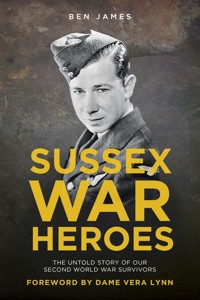
A generation of ordinary young men and women were thrust into the most extraordinary of situations when the Second World War was declared. Sussex is full of war heroes, but soon they will be gone – along with their stories. This is not a book about Victoria Cross winners or the celebrities of days gone by, but the untold accounts of everyday heroes who 'did their bit'. It is about former train engineer Bob Morrell, who was beaten, starved and tortured in the brutal Japanese prisoner camps. It is about ex-pub landlord John Akehurst, who gave the Germans the run-around Northern Europe after being shot down. And it is about Shindy Perez and her remarkable escape from the gas chambers of Auschwitz. As this important period passes from living memory into history, this is likely to be the last time that these personal tales are told, tales which should never be forgotten.
Sie lesen das E-Book in den Legimi-Apps auf:
Seitenzahl: 359
Veröffentlichungsjahr: 2016
Das E-Book (TTS) können Sie hören im Abo „Legimi Premium” in Legimi-Apps auf:
Ähnliche




















To Mum, Dad and Alice
ACKNOWLEDGEMENTS
I would like to thank a number of people for their help with making this book happen. Firstly, The History Press for agreeing to publish it and in particular Nicola Guy, Ruth Boyes and Emily Locke. For allowing me to use their photographs, I am extremely grateful to those at The Argus.
Special mention must go to Dame Vera Lynn for agreeing to write a foreword and her daughter Virginia for arranging it all.
Most importantly of all, thanks goes to the survivors who allowed me into their homes and offered me coffee, tea, biscuits and even whiskey. They put up with me pestering them for hours on end, asking dozens of questions about something that happened more than seventy years ago.
Some of the subjects we covered were not easy to talk about and I no doubt caused some distress by bringing up these matters. However, those I spoke to were nothing but hospitable, helpful and so incredibly modest.
I would like to thank my mother, Jane, and father, Phillip, who instilled in me an interest and passion for history and in particular for the Second World War. Finally, my partner Alice, without whom this would not have been possible. Her advice and guidance resulted in the book you are holding.
CONTENTS
Title
Dedication
Acknowledgements
Foreword by Dame Vera Lynn
Introduction
Arthur Ayres Dunkirk, Deserts and Drop Zones
Bill Lucas DFC Hitler, the Olympics and Me
Bob Morrell To Hell and Back in the Far East
Shindy Perez Surviving Auschwitz’s Gas Chambers
John Buckeridge Life and Death on Snakeshead Ridge
Jack Lyon My Part in the Great Escape
Patrick Delaforce From Gold Beach to the Gallows
Maurice Macey Spitfires, Skylarks and the Caterpillar Club
John Akehurst DFM The Reluctant Hero
Sources
Plates
Copyright
DAME VERA LYNN
FOREWORD
In the winter of 1940, at the height of the Blitz, I was still performing in London’s theatres. In the West End there were air-raid shelters, sand bags outside buildings, and windows were taped to stop them from shattering. But other than that, it was a city unchanged.
The bombs fell each night, but the people of London were not going to let that stop them, they wanted to carry on as usual. People went to work, the buses ran and the restaurants and hotels remained open. There was no hysteria and no panic.
Entertainment was seen as key, with the morale of the British people vital to the war effort. So it was a busy time for me and I was in demand not only for live performances, but for radio appearances and the like. But I knew that what I was doing was important, it was more than just singing.
I was living in Barking at the time and would travel into the West End each day in my little Austin 10. I loved that car but it did have a canvas top so I would always have my tin helmet on the passenger seat just in case the air-raid sirens went.
I would park up outside the Palladium or Adelphi or wherever I was that night – you could park anywhere in London in those days – and I went to get some dinner before I would go on stage and sing. By the time I had finished the Germans would often be on their way over and I would have to make a decision. It was quite a journey home, which took me through what was known as Bomb Alley – a part of the East End regularly targeted by the Germans. So I had a rule: if I had gone through Aldgate by the time the sirens went, then I would continue home, with my tin helmet on. If I hadn’t reached Aldgate, then I would turn back and return to the theatre and spend the night there. Behind the stage door there was a big thick wall, where they kept the scenery and props. I would sit behind that and I would listen to the bombing outside with the theatre nightwatchman for company.
Each morning London would wake; the people would assess the damage and get on with life. There was no question of giving in; we knew we had to get through it. I have always thought of that resilience, that strength and that fighting spirit as something unique to the British. My generation had that special something in abundance, but I would like to think that if something like that happened again, the current generation would be the same.
The spirit I witnessed during the darkest days of the Blitz in London is the same that got our brave boys through their darkest days fighting in Europe, Africa and the Far East. Without this strength of mind and character I am not sure we would have made it through.
Like everyone else during the war, I wanted to do my bit. Everyone had their talents and mine happened to be singing. I had been on the stage since the age of 7 and I was well known by September 1939. But I knew I was not just singing for singing’s sake any more, I knew it was more important than that.
In 1941 I began recording a regular show for the BBC called ‘Sincerely Yours’ and I would travel to the recording studios in Maida Vale and Piccadilly. I would sing, respond to requests from servicemen and do whatever I could for the war effort. At the time I was also receiving thousands of letters from around the world from British servicemen. They were asking for me to reply, send messages to their loved ones and give dedications on the radio. I realised how much these men must have been missing home and I made sure I replied to each and every one. With the help of my mother and another girl, who we got to help with the workload, we typed responses to all of them and had hundreds of photos of myself printed to send out.
I knew how important it was, some of these men had been away from home for four, five, six years, and just to hear from someone they could relate to meant so much to them.
But I wanted to do more, especially for those who were fighting thousands of miles from home. I had read in the newspapers about the boys fighting out in the heat in Burma and so I decided I would go there. I asked ENSA (Entertainments National Service Association) if they could arrange it for me, but they initially said no because it was too dangerous. I somehow managed to persuade them and after being made an honorary colonel – I was not allowed to go out there as a civilian – I packed my bags and set off with my pianist.
First we stopped off in Egypt, before visiting more troops in India, and then finally we reached our journey’s end, Burma. It was hot, humid and the conditions were basic to say the least. But it was worth it to see the reaction of the boys out there. Some of them had not seen a woman for four or five years. Their spirits were lifted and I truly knew then the importance of what I was doing. They had been through a terrible time and many of their friends had died. The English countryside must have felt like a world away to them and there was no guarantee of when they would return.
As I was leaving, a young soldier said to me, ‘Now you are here, home doesn’t seem so far away’. That meant a lot and I have never forgotten it.
They were all so brave and just so grateful that I had come out to see them. They would ask about home and how we were getting on and what we were eating and simple things like that. But the sad reality was that many of them would never see home, their loved ones and families again.
In the years since I have met hundreds, if not thousands of veterans at events and commemorations. Like those in this book, they all share that incredible fighting spirit, courage and humility. They never make a big deal of what they did for this country during the war, but the fact is, if it were not for them, the world could be a very different place today.
I was a young woman at the time, but it is a period of my life I will never forget. I often think back to my experiences in Burma as it has a special place in my heart. I have always tried to help out where I can in the years since and I was awarded the Burma Star medal in 1985. I attended and performed at the Burma reunion for fifty years at the Albert Hall and they were fantastic events to be part of. The audience would be full of veterans and together we would remember the brave boys who didn’t make it home. But as each year passed, I noticed a change. With each concert there would be fewer and fewer veterans and more family members taking their place. With most of the veterans of the Second World War now well into their nineties, it will not be long until they are all gone. That is why books such as this are more important than ever. We must record their stories before they are lost. We must remember them.
Dame Vera Lynn,
February 2016
INTRODUCTION
On an unremarkable December morning in 2014, I was sitting at my desk in a dark corner of The Argus’s Hollingbury office, cursing the limited power of the central heating. With two jumpers and a winter coat not quite managing to keep me warm, I got up to make myself a coffee when the phone went.
Many journalists will recognise the following dilemma. If I pick it up, I could be on the phone for the next twenty minutes, absorbing someone’s rant about their neighbour’s overgrown hedge or some other trivial matter us Brits like to moan about. On the other hand, it could be the next Watergate – or the Sussex-based equivalent.
With empty mug in shivering hand and halfway to the kitchen, my curiosity got the better of me and I ran back and answered it.
‘My father has just died and I have found this incredible diary you have to come and look at,’ was the gist of the conversation after the usual pleasantries.
Almost every son thinks his father is incredible – as I do mine – but as reporters up and down the country will know, what a son thinks is so fascinating about his father is usually of little or no interest to the wider public.
But being a sucker for history and hopeful this man’s house would be warmer than the office, I took a punt and went for a drive to Peacehaven. Over the next couple of hours I was told John Akehurst’s story. His friends and neighbours knew him as a former pub landlord who was quiet, polite and unassuming. But there was another side to him, one that the modest family man did not speak about.
Like many of his generation, with war on the horizon, he joined up. He went on to become one of the most experienced members of Bomber Command, clocking up more than 750 flying hours. Such was his talent that he was recruited for Winston Churchill’s secret Special Operations Executive (SOE) and carried out covert missions across occupied Europe, including the assassination of Hitler’s right-hand man Reinhard Heydrich. He later crash-landed in Germany and went on the run for weeks before being captured. He tried to escape by jumping from a moving train, which saw him court-martialled by the Nazis and put in solitary confinement for nine months. After spending the next few years in prisoner-of-war camps across Europe, he escaped during a forced march behind the backs of the distracted guards.
His incredible story is fit for a Hollywood blockbuster. Yet his neighbours, friends and even his own family knew little, if anything, of it. And had it not been for his diary, nobody ever would.
Amazed at how such an incredible story had gone untold for seventy-odd years, I started to wonder if there might be others out there like John. Just days later I received another call, this time from Margaret Martin from the Java Far East Prisoners of War Club. She wanted to raise awareness for their work and suggested I speak to one of their local veterans who fought out in the Far East. I did not get my hopes up, having convinced myself that John’s story was a one-off, and made the short drive to Bob Morrell’s terraced home in Brighton.
Within minutes of sitting down, my writing hand was cramping as I struggled to keep up with his remarkable story. Just like John, here was a man who had endured almost unthinkable horrors during the war. But when he returned, he went home, found work and got on with his life. If you passed Bob in the street today, you would not give him a second glance – blissfully unaware of the physical and mental trauma he faced while fighting for our freedom.
From this point on, I knew I had to get their stories out there. I called some of my contacts and asked if they knew of any other locals who had served in the war. Within weeks I had spoken to an Auschwitz survivor, a participant in the Great Escape, a Bomber Command pilot cum Olympic athlete and one of the first soldiers through the gates of Bergen-Belsen concentration camp – and all within just a few miles of where I live. I am sure the same is true wherever you are in the country, but this book is about those from Sussex – the place I now call home.
The men and women I have met and interviewed over the last few months are both the inspiration and subject matter of this book. Because, while the Second World War is the event that brings them all together, this is not a book about war. It is not about leaders, armies, weapons and battle tactics. It is about human beings and our courage and resolve. It is about how we cope when we are pushed to our physical and mental limits, and about how we find hope when all appears to be lost. Because history is not a set of dates and figures, it is about ordinary people doing extraordinary things.
With each chapter you will be introduced to a resident of Sussex who lived through and experienced in some way the most all-encompassing total war the world has ever seen. Some of the most pivotal moments are covered, be it D-Day, the evacuation of Dunkirk or the Holocaust, and all through the eyes of those who were there on the ground.
With the interview subjects now well into their twilight years, this is likely to be the last time these personal tales are told. And so, as this incredible period passes from living memory into history, we are at a crucial point in our understanding and remembrance of the Second World War. We will soon lose our most significant primary source from one of the most destructive events of all time and this is our final opportunity to hear from those who were there.
Oral history is a powerful means of storytelling. But given the horrors that their generation faced, many found it too difficult to talk about their wartime experiences and took their stories to the grave. That is why the accounts in this book are all the more poignant.
So next time you see an old man or woman struggling across the road or getting off a bus, ask yourself what they might have done during the war. You’d be surprised.
Ben James
February 2016
ARTHUR AYRES
DUNKIRK, DESERTSAND DROP ZONES
Most of the experiences of those in this book offer a mere snapshot of the Second World War. But for Arthur Ayres, his story spans the entirety of the six-year conflict. From the beach at Dunkirk to the sands of the Western Desert and bridges of north Holland, he saw it all. But despite spending the best part of his youth trying not to be killed by the Nazis, it was an unlikely friendship with a German officer that saved his life.
Arthur joined the Territorial Army (TA) in late 1939, having become bored with his job as a plasterer. He was not someone who had been destined to join the forces from an early age, nor did he particularly want to. His dad served and was injured in the First World War, but it was hardly a family tradition.
‘I’m not sure why I joined, I guess I was bored, it was one of those spur of the moment things. I remember coming back from work one day to where we were living in Mile Oak Road, Portslade, and my mum and dad were waiting for me. They said it had been on the radio that all Territorials must report to the drill hall in Brighton, which was in Queen’s Square. I wasn’t worried, but I was an only child so I think they were certainly anxious about what would happen to me.’
At the drill hall, Arthur’s details were taken and he was issued with a helmet and gas mask and told to report back at 9 a.m. sharp the following morning. He went home for a final night in his own bed and a last home-cooked meal before he ventured into the unknown.
He recalls: ‘There were no tears at the door, but I suspected my mother would break down after I left.’
When he arrived back at the drill hall, trucks were waiting to take the men to Worthing, where they would be based for the next six weeks. Arthur had been assigned to the 211 Field Park Company of the Royal Engineers, who were based at Muir House in Broadwater. There he would undertake basic training, which consisted mainly of drill on Broadwater Green and marches in full kit around Worthing. But it wasn’t all bad, as Arthur, who still lives in Portslade, remembers.
‘We were spoilt really; we had three meals a day served to us in the Odeon cinema by the girls there. The lads used to love that; they were all very pretty and very good to us. We used to go and lie on the beach as well when we had the chance, it was all very relaxed compared to the training that was to come.’
Arthur remembers one lazy morning in particular, the morning of Sunday, 3 September. He was on the beach at Worthing with some of the other boys, gazing out to sea, pondering what the future had in store. All of a sudden two trucks arrived to take them back to Muir House where they were told to line up. Their commanding officer, Captain Reggie Matthews, addressed them and delivered the news they had all been expecting.
‘He said, “I have some grave news, England has just declared war on Germany”. I remember looking down at my watch, it was 11.05 a.m. I looked at the others around me and they all looked rather worried, but we just got on with it. We were at war. It had all happened so quickly.’
After their six weeks in Worthing they were to take the train to Chard, in Somerset, for their next block of training. The girls from the Odeon cinema came to bid them farewell at the station and there were tears as well as hugs and kisses. But at the other end, their reception was not so welcoming. Their new sergeant major knew it had been easy for them so far, and he was determined to let them know it.
‘He glared at us and said, “Good morning you shower of bastards, you have had a bloody holiday up until now, from now on I am going to make proper bloody soldiers of you shower. Do you understand me?” We all said loud and clear “Yes sir” and tried to keep on the right side of him. This was proper training now, we were getting ready for war.’
Arthur was based in Somerset for the next few months, where he went through battle training and was taught to use a Bren gun, the British light machine gun which doubled as a makeshift anti-aircraft gun. The training was tough, physically and mentally, but Arthur could feel himself getting fitter and stronger with each day. With numbers thin on the ground they were joined by soldiers from the Royal Engineers from Yorkshire, which led to great rivalries and friendly arguments about who had the most beautiful countryside. But with Easter 1940 just around the corner, regional rivalries would have to be put aside as they received their deployment to France.
Arthur and his pals were sent to Southampton where they boarded a ship bound for Cherbourg. They were now part of the British Expeditionary Force (BEF) with the objective of pushing the Germans back and stopping their march into France. As part of a huge convoy they made their way east, passing through many of the famous towns and battlefields of the First World War: Vernon, Pissy, Armentières. They eventually reached Bailleul, on the French-Belgian border, where Arthur was to have his first encounter with the enemy.
‘I remember being in this field with my mate on the back of a truck with a Bren gun, we were on our own. I had just remarked how quiet it was when I spotted a fighter plane in the distance. Within seconds I could see it was German, I could make out the black crosses on its wings and fuselage. I gripped the gun tightly and took aim but we had a stupid order back then that we couldn’t fire unless told to do so by an officer. I sent my friend to find an officer to give the order, but as he was running off, the plane began to circle me. It suddenly banked and came in low and I just waited for the chatter of its machine gun. It couldn’t have missed me from where it was; I really thought that was it.
‘But to my amazement, with the dark-clad pilot now visible, he leaned out of his window and waved at me. Stunned, I looked back and he was gone. To this day I have no idea what that was about, maybe he had run out of ammunition. Thankfully the officer permission rule soon changed after that.’
They continued east into Belgium where there was little resistance on the ground. Their main concern was the Luftwaffe pilots who regularly attacked from the skies. One particularly ferocious raid came as they were crossing the border into Belgium on 11 May. Their trucks were slowly navigating a windy country lane when six German Junkers JU 87s, or Stuka dive-bombers as they were more commonly known, attacked. They plummeted towards the earth in their familiar fashion before dropping their payload and pulling up sharply. Arthur went to grab his gun and open fire when an officer cried out ‘You are wasting your time, take cover in the ditch’. He dived in and waited it out; hoping one of the bombs did not have his name on it. The terrifying screech as the bombers began their dive rattled his eardrums before the explosion shook every bone in his body.
‘It was terrifying; I remember one fell very close to me. When it exploded it showered me with earth and small stones, but I was alright. Then, above the tremendous noise, I heard the strange sound of Scottish reel. I was amazed to see a solider sitting under a tree playing the harmonica. I don’t know what he was thinking.’
Miraculously, there were no causalities from the raid, with all of the bombs landing in the fields around the convoy. They soon arrived in Zwevegem, in west Belgium, where they were ordered to dig in and hold the position at all costs against the fast-approaching German Army. This was to be Arthur’s first real combat and as he looked along the line at his fellow soldiers, he wondered what was going through their minds. He then thought of the enemy he was about to face, who were perhaps not so different from him, other than the country in which they were born. ‘I wondered what it would feel like to shoot and kill those fellow human beings, who happened to be the enemy, knowing they would be shooting to kill me.’
But Arthur was not about to find out. With the Germans now in sight, a dispatch rider on a motorbike came roaring up behind. ‘Pack up you chaps,’ he shouted, ‘we are leaving; it’s every man for himself. You are to make for a town on the coast called Dunkirk.’
Of course, nowadays Dunkirk is well known, synonymous with British wartime spirit and courage. But back then, Arthur had never heard of the place and certainly had no idea how to get there. With the rider revving up his engine and about to leave, Arthur shouted for directions. ‘Just head for that black smoke in the sky,’ was the response. Half the British Army was already at the port city awaiting evacuation. As daunting as it was, they were to head for the destruction straight ahead of them.
The men packed up and made their way back to the town of Zwevegem where they hoped to hitch a ride to Dunkirk, which was more than 50 miles away. However, all the officers had taken the vehicles, leaving them to walk to the evacuation point with the Belgian refugees.
‘They looked at us as we went on our way, their grim faces full of anxiety. They made me feel as if we had let them down.’
But there was no time to ponder what ifs, with the German forces getting ever closer. The road to Dunkirk was a strange sight, littered with British supplies that had been (or were in the process of being) destroyed so the enemy could not get their hands on them. However, it did mean the men had plenty to eat and drink as they made their retreat.
‘I remember there were tins of corned beef, packets of biscuits and strong navy rum. I didn’t drink much, but some of the men had a bit too much. One soldier in particular had his fair share as, when a French officer appeared on horseback, he threw him off and jumped on the poor frightened animal and headed off in the direction of Dunkirk. The French officer was absolutely furious. He drew his pistol and started firing at the soldier as he galloped off. We couldn’t help but laugh.’
The light soon started to fade but the men had to keep going and, as darkness set it, the black smoke above Dunkirk became a red glow in the sky. It did not look inviting, but they had no other option but to continue.
Although Dunkirk saw the BEF lose its foothold in mainland Europe, it has gone down in history as a glorious display of British spirit and an organisational triumph. Nevertheless, the scene Arthur faced as he arrived at the beach was anything but glorious. Thousands upon thousands of injured men were lined up, waiting for their transport out while German fighters swooped down and let rip with their machine guns. Stuka dive-bombers targeted ships and direct hits saw men killed in their dozens.
‘It was awful. Soon after I got there I heard the sound of aircraft approaching. There was a mad panic as men tried to find cover before the clatter of their machine guns. I saw bodies falling face down in the sand, lying still in grotesque positions. A few brave souls raised their rifles and fired at the aircraft but there was little chance of them hitting anything. The planes came back over again and I could clearly see the pilots hunched over in the cockpits. They had a free run at us, there was no protection. Then came the cries for medics to attend to the dying and wounded.’
But despite the dire situation, Arthur remembers a sense of calm and order on the beach as the men queued up for the next available ship.
‘They were coming in all shapes and sizes. I was amazed at the organisation; there was no pushing or rushing toward the next boat. Everyone waited their turn, nobody tried to jump the queue, it was all very British.’
Before long the Stukas were back and, as they screeched towards the beach, Arthur dived for cover. ‘I saw the bombs leave the planes and saw the clouds of sand mingled with human bodies that were flung into the air as they exploded. One small boat loaded with men received a direct hit as it pulled away from the shore. Seconds later the sea was littered with pieces of timber and broken human remains. This was the first time in my life I had witnessed carnage of this nature. I felt sick.
‘As the planes left, one flew in my direction. I watched in horror as the small black object left the plane and fell towards me. My heart pounding, I crouched low in the sand dune, trying to bury my head in the sand. I waited, heard the loud whine before the bomb exploded about 10 yards away. The ground shook and then there was a rush of air before pieces of shrapnel flew over my head. I got to my feet and saw the medics trying to separate the dead from the wounded, I didn’t envy their gruesome task.’
With the attack over, Arthur took stock of his situation and set about deciding what he was to do next. Was he to wait in line for a ship to arrive, only to be target practice for the next attack from the Luftwaffe? Or was he to try and get out a different way?
With the familiar whine of German fighters approaching once more, his mind was made up for him, and he ran towards the harbour where a merchant ship looked to be preparing to leave.
‘I ran as quick as I could and, as I approached, it started to pull out and I was left with a 6ft gap to jump in order to make it to a rope hanging down the side. I couldn’t swim so if I missed it, I would be dead. I took a run-up and jumped. I managed to grab the rope and clung on for dear life. My rifle fell from my shoulder into the water. My fingers tightened on the rope and I hung on grimly. I shuddered; if I lost my grip and fell into that murky blackness I would drown. Thankfully I managed to scramble up to the top and helping hands pulled me over.’
But Arthur was not out of danger just yet, as the Stukas turned their attention to the ship, which had both English and French soldiers on board. Thankfully their bombs dropped into the water on either side and the captain set a course for the Kent coast. When one of the soldiers sighted the White Cliffs of Dover a huge cheer went up: they were finally safe. But before they could get into the harbour a Royal Navy destroyer approached and signalled with its lamps something in Morse code. To the surprise and disappointment of the men, the ship changed course and headed out west. They assumed it would instead dock in Southampton and they tried to get some sleep.
‘We awoke as we approached land and I remember someone saying, “That isn’t Southampton, that’s Cherbourg.” We had been taken back to France because we were on a foreign ship – it was registered in Scandinavia – and the authorities wouldn’t let us dock in England. The British officer who met us in Cherbourg was very apologetic. We were taken to some barracks and given food and a cup of tea, which was like nectar compared to the water on the ship. Then three days later, a paddle steamer came to collect us and finally take us home.’
Between 27 May and 4 June 1940, 338,226 Allied soldiers were rescued from Dunkirk by a makeshift fleet of more than 800 vessels, including paddle steamers, private charters and fishing boats. More than 3,500 British soldiers were killed during the evacuation and many more were wounded and taken prisoner. But the huge rescue operation had saved the British Army and enabled those who were evacuated to live to fight another day – as Arthur would.
Once back in England, he regrouped with his company at Port Meadow camp near Oxford, before heading to Woodlands, a small mining town outside Doncaster, on 7 July. He spent nearly four months training there before he was posted to a Kent village called Lamberhurst, where he was billeted with five other men in a house overlooking the local golf course. With the threat of German paratroopers dropping in behind enemy lines, he was put on nightly guard duty, patrolling the course. Most evenings he could hear the bombers overhead making their way to and from London.
During his period in the village, Arthur underwent various training courses and was taught to drive trucks and motorbikes in anticipation of his next deployment. But there was also a certain amount of downtime, with regular dances held in the village pub, The Chequers Inn, which doubled up as their headquarters.
In May 1941 he was moved further east to Charing, where, along with a Welshman he called Taffy, he was put in charge of a large store of explosives being held in a chalk pit about 2 miles from the village. The pair lived on site and with a German invasion expected they were on twenty-four-hour guard.
‘We rigged up an ingenious system of tripwires around the quarry, consisting of tins and a thin wire. One night about midnight we were alerted by the sound of rattling, so after grabbing our rifles we ran out into the moonlit night. Taffy grabbed my arm and pointed to what looked like helmeted figures walking slowly along. Silently we crept up the banks and cautiously approached the dark figures. “Halt, who goes there?” Taffy called. Then he started laughing. I peered into the darkness – what we had taken to be German paratroopers was a line of cows.’
It would not be the last incident at the quarry, as two weeks later – after returning from a patrol – Arthur heard an aircraft overhead. Unlike the London-bound bombers that passed most nights, this one sounded a lot lower. He gazed into the night sky, trying to spot an outline and see if it was friend or foe, when he heard the terrifying whining sound of a bomb dropping. He dived for cover, knowing that if the explosive hit the quarry it would blow a huge hole in the countryside.
‘There was a heavy crump from above the quarry, closely followed by a flash of light, then came a large explosion. The ground shook and big lumps of chalk, sods of earth and grass showered down on me. Something heavy thudded down close by and shining my torch I was shocked to see it was the headless body of a cow, its shattered body lying in a gory mess.’
Thankfully the bomb had just missed the quarry and the only casualty of the raid was the poor cow.
By the end of June, Arthur was on the move again, this time to a small village called Bridge near Canterbury. Rather appropriately given the village’s name, he learnt how to build pontoon bridges before being moved on to Maidstone, where he received his orders for deployment to North Africa.
Arthur was assigned new khaki kit, given all manner of injections and received talks on how to survive in the desert. In particular, the men were told not to sunbathe in the day, to steer clear of the insects (especially scorpions), and to avoid the women for fear of catching venereal diseases.
With the Allies losing the war, Churchill looked to Africa and Lieutenant General Montgomery for a victory. But with the British out in the Western Desert facing both the Germans, under Rommel, and the Italians, more troops were needed.
Following fourteen days’ embarkation leave, Arthur boarded the SS Orontes in Liverpool on 29 May 1942. Fifteen days later they docked in Freetown, Sierra Leone, on the west coast of Africa. After five days in the harbour without getting off, they set sail for Cape Town, where for the first time in thirty days they were allowed ashore and were met on the quayside by local women bearing tea and sandwiches. For three days they rested up before sailing round the Cape of Good Hope and heading north from Durban, past Madagascar and finally anchoring at Fort Tewfik – now called Suez Port – at the southern end of the Suez Canal. It was now 22 July and it had been nearly two months since they had left Liverpool, but with the threat of U-boat attacks making the Mediterranean too dangerous, it was their only option.
At Fort Tewfik a train took them on the final leg of their epic journey to Khatatba, in Egypt, where they were based with thousands of other British soldiers. The heat was stifling and the men spent much of the middle of the day sheltering in their tents. That was if they had cleared them of the poisonous scorpions and the sand flies – which would soon be the bane of their day-to-day existence.
But they were not to stick around for long, as plans were afoot for an advance. After special desert training, Arthur was handed a new badge for his uniform, which featured a white shield with a yellow cross through it. He was now part of Montgomery’s fearsome Eighth Army.
‘I remember that around October there were rumours of a big offensive, but we didn’t really know what it was. We were stationed near the Gurkha Regiment and they would go out on patrol each night and it was said that they came back with all sorts of macabre souvenirs, such as the fingers and ears of their victims. Around the same time a lot of tanks were passing through and the Royal Artillery lined up a great amount of guns just in front of our position.
‘Darkness fell on 23 October and we settled down for the evening. But not for long. Suddenly the still of the night was shattered by the 25-pounder guns firing. The noise was deafening and as we crawled from our tents we witnessed an awesome sight. All along the ridge the night sky was lit up by the flashes of guns. It was a spectacle I will never forget. The barrage seemed to go on forever but when the guns did stop firing, the ringing in my ears lasted for several minutes. Then up ahead came the clanking of heavy tanks moving forward. The battle of El Alamein had begun.’
The Allies had been losing the war and they needed a victory to turn the tide. El Alamein was a last throw of the dice for the British in Africa, and one that those in charge knew would be costly. But if successful, the Germans would be driven off the continent, securing a key supply line for the Allies in the process.
The huge bombardment that had woken Arthur was codenamed Operation Lightfoot. More than 800 guns had rained down half a million shells and such was the ferocity of the attack, it is said the gunners’ ears bled.1 The aim was to soften up Rommel’s defences before the infantry and armour pushed on, assisted by the engineers who would clear the minefields in their path.
The following morning, Arthur and the rest of his unit advanced into the unknown. Nobody knew if anyone had survived the bombardment. But almost immediately after setting off from camp, they spotted a group of Italian soldiers moving towards them. But these men were not about to fight, they had been taken prisoner.
‘They were a dirty bedraggled bunch of men, seeming to have no fight left in them and they silently sank to the ground when ordered to halt.’
Arthur and his men pushed on further into the desert, the devastation of the artillery attack clear to see. ‘We passed burnt-out tanks. Armoured cars and lorries, some ours, some the enemies. At times we could smell the stench of dead bodies that were still in their vehicles. It was awful. You would look in some and there would be these blackened, burnt bodies just sitting up. It was difficult to believe they were living and breathing just hours before. Poor men.’
But the battle was not over and the Royal Engineers were tasked with clearing a huge minefield – dubbed the Devil’s Garden – that the Germans were sheltering behind.
‘The mines were very sensitive and it was a difficult and dangerous task. We would have to prod around and if you hit something hard, you would slowly dig it out and place it on the back of a truck which would take them away to be detonated safely. One day the truck, which was packed with mines on the back, blew up. There was nothing left of the vehicle other than the burnt rubber from the tyres. All six men were blown to pieces.
‘It was a very dangerous job. I remember another time I was blowing some mines up when I saw three Arabs riding camels on the ridge about 500 yards away. They rode serenely along, unaware of our presence. The corporal in charge told me to carry on, as they were too far away to come to any harm. I pressed down the plunger, there was a bright flash followed by a deafening explosion and the earth shook beneath our feet. Glancing over the top of our protective pile of sandbags I saw the three camels travelling like racehorses, disappearing in a cloud of dust. We must have given them one hell of a fright.’
Many historians see El Alamein as the turning point in the war. The intense bombardment set up the British infantry advance, and once the minefield was cleared, the armour rolled through and crushed what was left of the enemy.
The victory resulted in 30,000 German casualties, with 500 tanks destroyed, and it marked the beginning of the end for Rommel in North Africa. The Western Desert was now in British hands, the Suez Canal safe and access was secured to the Middle East and the Persian oilfields. It was a significant victory, one not lost on Churchill, who later reflected: ‘Before Alamein we never had a victory. After Alamein we never had a defeat.’2
By the end of November, Arthur was in Benghazi, Libya, which had been abandoned by the Italians. The thrill of El Alamein was now a distant memory and the 22 year old soon became bored at his new base, thousands of miles from home. With so much free time on his hands, he took to painting after one day discovering several tins of oils. He used sandbags from the battlefield as his canvasses and one of his designs still hangs proudly in his dining room in Portslade.




