


2,99 €
Mehr erfahren.
- Herausgeber: T.S. AVINI
- Kategorie: Fachliteratur
- Sprache: Englisch
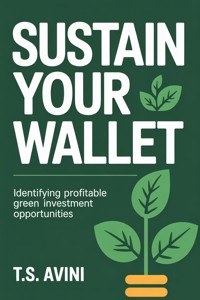
Delve into the world of sustainable investing with "Sustain Your Wallet: Identifying Profitable Green Investment Opportunities." This book offers a comprehensive guide for those looking to blend financial ambitions with environmental responsibility. Through insightful chapters, readers will:
- Explore the evolution of green finance, from the nuances of green bonds to the future of eco-friendly cryptocurrencies.
- Gain practical insights on investing in clean technologies, sustainable agriculture, and the rapidly expanding electric vehicle market.
- Analyze the role of government policies and learn how to identify genuine eco-friendly stocks, avoiding common pitfalls of greenwashing.
Engaging and informative, this book serves as both a compass and a roadmap for diversifying your portfolio with impactful, future-oriented investments. Embrace a strategy that ensures financial gains and a sustainable future. Begin your journey into green investment today and secure both your financial and environmental legacy.
Das E-Book können Sie in Legimi-Apps oder einer beliebigen App lesen, die das folgende Format unterstützen:
Veröffentlichungsjahr: 2025
Ähnliche




















Sustain Your Wallet
Sustain Your Wallet
Sustain Your Wallet
Table of Contents
Chapter 1: Introduction to Green Investment
Chapter 2: The Evolution of Sustainable Finance
Chapter 3: Understanding Green Bonds
Chapter 4: Renewable Energy: Powering Profitable Returns
Chapter 5: The Rise of Electric Vehicles
Chapter 6: Clean Technology: Innovations and Opportunities
Chapter 7: Water Investments: Tapping into Sustainable Profits
Chapter 8: Profiting from Sustainable Agriculture
Chapter 9: Sustainable Real Estate and Green Building
Chapter 10: Impact Investing 101: Aligning Values with Profit
Chapter 11: Carbon Credits: Navigating the Market
Chapter 12: ESG Funds: Exploring Environmental, Social, and Governance Criteria
Chapter 13: The Role of Government and Policy in Green Investments
Chapter 14: Identifying Green Stocks: A Strategic Approach
Chapter 15: Risk and Reward in Sustainable Investing
Chapter 16: Case Studies in Successful Green Investments
Chapter 17: The Future of Eco-Friendly Cryptocurrencies
Chapter 18: Diversifying Your Green Portfolio
Chapter 19: Greenwashing: Avoiding Unprofitable Traps
Chapter 20: Crafting a Sustainable Investment Strategy for Long-Term Success
About the Author
Title Page
Table of Contents
Sustain Your Wallet
Identifying Profitable Green Investment Opportunities
by T.S. AVINI
Table of Contents
1. Introduction to Green Investment
2. The Evolution of Sustainable Finance
3. Understanding Green Bonds
4. Renewable Energy: Powering Profitable Returns
5. The Rise of Electric Vehicles
6. Clean Technology: Innovations and Opportunities
7. Water Investments: Tapping into Sustainable Profits
8. Profiting from Sustainable Agriculture
9. Sustainable Real Estate and Green Building
10. Impact Investing 101: Aligning Values with Profit
11. Carbon Credits: Navigating the Market
12. ESG Funds: Exploring Environmental, Social, and Governance Criteria
13. The Role of Government and Policy in Green Investments
14. Identifying Green Stocks: A Strategic Approach
15. Risk and Reward in Sustainable Investing
16. Case Studies in Successful Green Investments
17. The Future of Eco-Friendly Cryptocurrencies
18. Diversifying Your Green Portfolio
19. Greenwashing: Avoiding Unprofitable Traps
20. Crafting a Sustainable Investment Strategy for Long-Term Success
Chapter 1: Introduction to Green Investment
In a world that is increasingly confronted with the pressing realities of climate change, resource depletion, and environmental degradation, the demand for sustainable practices has never been more urgent.
Against this backdrop, the concept of green investment emerges not just as a noble endeavor but as a vital component of contemporary financial strategy. This first chapter serves as an introduction to understanding green investment—a pathway that seeks to harmonize economic growth with environmental sustainability.
Green investment, at its core, is the practice of allocating capital to enterprises, technologies, or projects that offer environmental benefits.
These benefits can manifest in various forms such as reductions in carbon emissions, enhanced energy efficiency, sustainable agriculture, or any activity falling under the broader umbrella of environmental sustainability. The allure of green investment lies in its dual capacity to generate financial returns while contributing positively to the world’s ecological balance.
One of the primary drivers propelling the green investment movement is the growing recognition of climate change as an existential risk. Scientific consensus underscores that human activities are a significant contributor to global warming, necessitating urgent and effective measures to curb this trend.
As a consequence, investors—spanning individuals, corporations, and governments—are increasingly called to align their portfolios with the Paris Agreement's objective of limiting global temperature rise. This alignment creates a powerful financial impetus, attracting a new cadre of investors keen on fostering sustainability and resilience in the markets they support.
In parallel, technological advancements have bolstered the viability of green investments. Renewable energy technologies, including solar panels, wind turbines, and energy storage systems, have matured rapidly and now stand as competitive, often cheaper alternatives to traditional fossil fuel sources.
Microgrids, smart meters, and the Internet of Things (IoT) have revolutionized energy management systems, optimizing energy consumption and enabling efficiencies that were previously unattainable. Such innovations present lucrative opportunities for investors looking to tap into sectors that promise not only growth but transformation in how energy is produced and applied.
Governments worldwide recognize the potential of green investment as both an economic stimulus and a tool for environmental stewardship. Legislative frameworks and policy incentives designed to catalyze sustainable practices are now ubiquitous.
Green bonds, for instance, have emerged as a powerful financial instrument, channeling billions into projects that fulfill environmental objectives. Incentives such as tax credits for solar panel installation or subsidies for electric vehicle purchases further underscore government commitment to sustainable investment pathways.
However, as with any investment philosophy, venturing into green investment necessitates careful consideration and due diligence.
Investors must differentiate between genuine sustainable opportunities and what financiers have termed "greenwashing"—the misrepresentation of projects as environmentally friendly when they are anything but. Thorough assessment involves scrutinizing a project’s environmental impact reports, verifying compliance with established green certifications, and understanding the long-term ecological and financial impact of potential investments.
Furthermore, the financial landscape itself is evolving with newer metrics and frameworks aimed at quantifying an enterprise's environmental impact.
The rise of Environmental, Social, and Governance (ESG) criteria offers an evaluative lens for investors to assess not just sustainability, but ethical and social governance dimensions. ESG investing captures the broader narrative of a company’s operations, encompassing its environmental initiatives, social responsibility, and governance structure—thereby offering a more holistic view of its long-term viability and impact.
Nevertheless, the journey towards green investment is not without challenges. Political instability, regulatory uncertainties, and technological setbacks can pose significant risks.
Additionally, achieving sustainability often involves substantial upfront costs and requires patient capital willing to invest in long-term returns rather than immediate gains. Nevertheless, for those who persevere, green investment offers the promise of not only substantial financial returns but also the intangible benefit of contributing to the planet’s preservation for future generations.
It’s worth noting that In conclusion, green investment epitomizes the fusion of economic pragmatism with ecological conscience.
As we progress deeper into the 21st century, the question is not so much whether to embrace green investment, but how to do so effectively. This book is dedicated to exploring the myriad contours of the green investment landscape, equipping you with insights and strategies to make informed decisions that sustain both your wallet and the world.
The chapters that follow will delve into specific sectors ripe for green investment, discuss strategies to mitigate risks, and explore methods to maximize both financial and environmental returns.
Together, we will navigate the complex tapestry of green opportunities, charting a course toward investments that are as profitable as they are purposeful.
Chapter 2: The Evolution of Sustainable Finance
In recent decades, the finance industry's landscape has undergone a profound transformation, as the concept of sustainability has shifted from a niche consideration into a mainstream priority.
This chapter aims to provide a comprehensive understanding of the evolution of sustainable finance, offering insights beneficial for any investor keen on aligning their portfolio with environmentally-friendly principles, while still securing financial returns.
Understanding Sustainable Finance
Sustainable finance refers broadly to the practice of considering environmental, social, and governance (ESG) factors as part of financial services. Historically, the primary goal of finance has been the maximization of shareholder value.
However, as awareness of environmental degradation, social inequalities, and governance shortcomings has increased, so too has the desire to incorporate these elements into financial decision-making. This evolving landscape not only reflects changing societal values but also a growing recognition that sustainable practices can significantly impact long-term financial performance.
Early Moves: From Exclusion to Engagement
The origins of sustainable finance can be traced back to ethical investing, which emerged in the mid-20th century. Ethical investing primarily involved the exclusion of sin industries—such as tobacco, alcohol, and weapons—from investment portfolios.
While this approach certainly laid the groundwork, it was not until the 1990s that the broader potential of sustainable finance began to be realized. During this period, a series of corporate scandals highlighted the financial risks associated with poor corporate governance and irresponsible business practices, thus amplifying interest in more comprehensive sustainable investing strategies.
At first glance, Investors began to recognize the importance of engaging with companies to promote better ESG practices, shifting from simply excluding undesirable investments to actively fostering positive change.
Shareholder activism emerged as a potent tool, allowing investors to leverage their influence to encourage more sustainable corporate behaviors. By initiating dialogues with company management and advocating for higher ESG standards, investors played a crucial role in raising corporate awareness about the importance of sustainability.
The Rise of ESG Integration




