


2,99 €
Mehr erfahren.
- Herausgeber: T.S. AVINI
- Kategorie: Wissenschaft und neue Technologien
- Sprache: Englisch
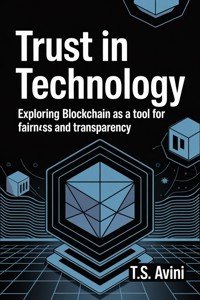
In a world increasingly shaped by digital interactions, trust is fragile yet vital. "Trust in Technology: Exploring Blockchain as a Tool for Fairness and Transparency" delves into how blockchain technology can rebuild this trust by offering unprecedented transparency and fairness. Discover the journey from trust-dependent traditional systems to blockchain's decentralized promise.
- Unpack how blockchain works and why it stands out against traditional databases for its immutable and transparent ledger system.
- Explore real-world applications across industries, from supply chains to healthcare, showcasing blockchain's transformative potential.
This insightful read challenges misconceptions, addresses potential pitfalls, and highlights how blockchain can redefine trust in the digital realm. Embrace this opportunity to understand how technology may shape a future where fairness and transparency are the norm. Are you ready to explore blockchain's revolutionary impact? Dive in now.
Das E-Book können Sie in Legimi-Apps oder einer beliebigen App lesen, die das folgende Format unterstützen:
Veröffentlichungsjahr: 2025
Ähnliche



















Trust in Technology
Trust in Technology
Trust in Technology
Table of Contents
Chapter 1: Introduction to Trust in Technology
Chapter 2: The Evolution of Blockchain
Chapter 3: Understanding Blockchain Basics
Chapter 4: The Mechanics of Trust: How Blockchain Works
Chapter 5: Blockchain vs Traditional Databases
Chapter 6: Transparency in the Digital Age
Chapter 7: The Role of Decentralization
Chapter 8: Blockchain's Impact on Financial Systems
Chapter 9: Revolutionizing Supply Chains with Blockchain
Chapter 10: Blockchain in Healthcare: A New Era of Accountability
Chapter 11: Reinventing Identity Management through Blockchain
Chapter 12: Governance and Blockchain: A Case for Fair Elections
Chapter 13: Challenges and Limitations of Blockchain Technology
Chapter 14: Regulatory Perspectives on Blockchain
Chapter 15: The Future of Blockchain in Energy and Environment
Chapter 16: Blockchain and the Creative Industries: Protecting Intellectual Property
Chapter 17: Riding the Cryptocurrency Wave: Trust in Digital Currencies
Chapter 18: Case Studies: Success Stories from Blockchain Applications
Chapter 19: Criticisms and Controversies Surrounding Blockchain
Chapter 20: The Next Frontier: Envisioning a Blockchain-Enabled World
About the Author
Title Page
Table of Contents
Trust in Technology
Exploring Blockchain as a Tool for Fairness and Transparency
by T.S. AVINI
Table of Contents
1. Introduction to Trust in Technology
2. The Evolution of Blockchain
3. Understanding Blockchain Basics
4. The Mechanics of Trust: How Blockchain Works
5. Blockchain vs Traditional Databases
6. Transparency in the Digital Age
7. The Role of Decentralization
8. Blockchain's Impact on Financial Systems
9. Revolutionizing Supply Chains with Blockchain
10. Blockchain in Healthcare: A New Era of Accountability
11. Reinventing Identity Management through Blockchain
12. Governance and Blockchain: A Case for Fair Elections
13. Challenges and Limitations of Blockchain Technology
14. Regulatory Perspectives on Blockchain
15. The Future of Blockchain in Energy and Environment
16. Blockchain and the Creative Industries: Protecting Intellectual Property
17. Riding the Cryptocurrency Wave: Trust in Digital Currencies
18. Case Studies: Success Stories from Blockchain Applications
19. Criticisms and Controversies Surrounding Blockchain
20. The Next Frontier: Envisioning a Blockchain-Enabled World
Chapter 1: Introduction to Trust in Technology
In an era where the digital landscape rapidly evolves, our reliance on technology continues to deepen, influencing every facet of our lives from personal relationships to global economics. At the heart of this evolution lies a fundamental pillar: trust.
As our world becomes increasingly interconnected, the challenge of building and maintaining trust in technology becomes both more complex and more crucial. This chapter delves into the essence of trust in the technological realm, setting the stage for a deeper exploration of one of its most promising solutions—blockchain technology.
To understand trust in technology, one must first define what trust entails. At its core, trust is the confident relationship with the unknown.
It implies a belief, often without direct proof, that systems, institutions, and technologies will behave as expected. In technology, trust is the assurance that digital systems are secure, reliable, and will execute tasks as intended without causing unexpected harm or risk. This trust is increasingly vital as technology becomes embedded in critical infrastructures such as healthcare, finance, and government, where failures can lead to significant consequences.
It’s worth noting that Traditionally, trust in technology has been established through central authorities or intermediaries—entities like banks, governments, and corporations that validate transactions, maintain records, and safeguard data. These institutions have historically served as the linchpins of digital trust, assuring users that their systems and interactions are secure and reliable.
However, this model is not without its flaws. Centralized systems are susceptible to corruption, inefficiencies, breaches, and a lack of transparency. This has led to growing skepticism and demands for more open, equitable systems.
In response to the limitations of centralized trust models, the technological landscape has witnessed the emergence of paradigms designed to distribute trust. One such disruptive force is blockchain technology.
Blockchain, often heralded as a revolutionary innovation, is a decentralization modality that promises to underpin new, transparent, and fair systems of record. At its most basic level, a blockchain is a digital ledger of transactions, duplicated and distributed across a vast network of computer systems on a blockchain. This decentralization ensures that no one entity has unilateral control, reducing the risk of corruption and enhancing transparency.
The pivotal feature of blockchain is its ability to provide a solution to the age-old problem of trust by eliminating the need for intermediaries. It achieves this through cryptographic security, immutability, and synchronization across participating nodes.
Every transaction is encrypted, time-stamped, and added to a block in a linear, chronological manner. Once added, these blocks are virtually immutable; any attempt to alter a transaction is easily detectable, fostering an unprecedented level of trust and transparency.
As with any disruptive technology, the deployment of blockchain is not without its challenges. Still, its potential to redefine the concept of trust in technology is immense.
The shift toward blockchain-like systems underscores a broader trend of democratizing trust, positioning it as a communal responsibility rather than the domain of a few centralized bodies. This is particularly relevant in the realm of smart contracts—self-executing contracts with the terms of the agreement directly written into lines of code on the blockchain. Smart contracts automate and enforce agreements, removing the need for a trusted third party and reducing transaction costs and time, while also minimizing fraud risk.
Furthermore, blockchain’s intrinsic transparency has significant implications for fairness and accountability. By providing an open ledger accessible to all participants, blockchain systems offer unparalleled visibility into transactional histories.
This can level the playing field in industries where power imbalances have traditionally led to unfair practices. For example, in supply chain management, blockchain can track the origin and journey of goods, ensuring ethical sourcing and fair prices. In the context of elections, it can safeguard the integrity of voting systems, reducing fraud and ensuring that every vote is counted accurately.
However, while blockchain holds great promise, its implementation is not a panacea for all trust-based issues in technology. Challenges such as scalability, data privacy, regulatory compliance, and energy consumption must be addressed to harness blockchain's full potential.
The scalability dilemma, for instance, refers to the difficulties of increasing transaction capacity without compromising performance or security. Meanwhile, the immutable nature of blockchains poses complex questions about data privacy and the right to be forgotten.
Regulation also presents both a challenge and an opportunity.
As governments navigate the nascent terrain of decentralized technologies, the frameworks they build will significantly shape blockchain's future. Well-considered regulations can provide clarity and security for businesses and consumers alike, promoting innovation while protecting against misuse.
Despite these challenges, blockchain represents a watershed moment in the quest for trust in technology.
Its decentralized, transparent framework offers a blueprint for reimagining how trust can be constructed and maintained in the digital age. As we venture further into this new era, it becomes increasingly clear that technologies that foster trust are not just beneficial; they are essential.
In conclusion, the nexus of trust and technology is wrought with complexities that require careful navigation. Blockchain offers a promising avenue towards fostering greater transparency, fairness, and accountability in our digital interactions, marking a significant departure from the traditional norms of centralized trust.
As this book will explore in the following chapters, understanding the nuances of blockchain technology and its applications is crucial for anyone looking to comprehend the future of trust in the digital world. By redefining the dynamics of trust, blockchain has the potential to fundamentally reshape our technological landscapes, paving the way for more equitable and transparent systems.
Chapter 2: The Evolution of Blockchain
The dawn of blockchain technology is often closely associated with the inception of Bitcoin, the pioneering cryptocurrency, and its mysterious creator, Satoshi Nakamoto.
However, unraveling the evolution of blockchain reveals a tapestry rich with technological ambition, human ingenuity, and a drive toward decentralization that reaches far beyond the creation of digital currency. This chapter seeks to explore the nuanced evolution of blockchain, charting its journey from a theoretical construct to a transformative technology with profound implications for fairness and transparency across various sectors.
The foundational premise of blockchain technology is the digital ledger—a concept long predating blockchain itself. Ledgers have been central to human civilization, from recording transactions on clay tablets in ancient Mesopotamia to the complex, centralized systems managing today's global financial transactions.




