


2,99 €
Mehr erfahren.
- Herausgeber: T.S. AVINI
- Kategorie: Ratgeber
- Sprache: Englisch
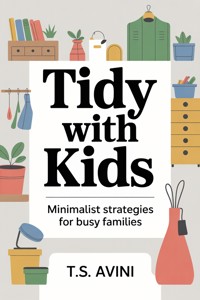
Dive into the transformative world of minimalism tailored for busy families in "Tidy with Kids." This guide offers practical strategies and heartfelt insights to declutter your home and life, creating a peaceful environment for the whole family. Discover how embracing less can foster more meaningful connections, creativity, and a sense of fulfillment.
- Learn the foundations of minimalism geared for families, helping you navigate the challenges of decluttering with kids in tow.
- Discover how to create kid-friendly routines and spaces that inspire focus, creativity, and independence.
Whether you're overwhelmed by toys, clothes, or the endless digital distractions, each chapter provides actionable tips to help your family thrive amidst the chaos of modern life. Transform your home into a sanctuary of simplicity today with "Tidy with Kids" and uncover the joy of a balanced, minimalist lifestyle.
Das E-Book können Sie in Legimi-Apps oder einer beliebigen App lesen, die das folgende Format unterstützen:
Veröffentlichungsjahr: 2025
Ähnliche

















Tidy with Kids
Tidy with Kids
Tidy with Kids
Table of Contents
Chapter 1: Introduction to Minimalism for Families
Chapter 2: Understanding the Benefits of a Tidy Home
Chapter 3: Shaping a Minimalist Mindset in Your Family
Chapter 4: Decluttering 101: Getting Started with Kids
Chapter 5: Creating Kid-Friendly Decluttering Challenges
Chapter 6: Streamlining Toys: Fostering Creativity with Less
Chapter 7: Capsule Wardrobes for Kids: Simplifying Style
Chapter 8: Minimalist Routines: Establishing Daily Habits
Chapter 9: Clutter-Free Homework Zones: Enhancing Focus
Chapter 10: Organizing Shared Spaces: Balancing Needs
Chapter 11: Mindful Consumption: Teaching Kids About Needs vs. Wants
Chapter 12: Sustainable Practices: Eco-Friendly Tidying
Chapter 13: Paper Management: Tackling School and Artwork Piles
Chapter 14: Digital Declutter: Managing Screen Time and Devices
Chapter 15: Meal Planning and Kitchen Simplification
Chapter 16: Family Time Over Stuff: Prioritizing Experiences
Chapter 17: Coping with Reluctant Family Members
Chapter 18: Handling Sentimental Items: Keeping Memories Without Clutter
Chapter 19: Adapting Minimalism Through Different Life Stages
Chapter 20: Conclusion: The Ongoing Journey of Simplification
About the Author
Title Page
Table of Contents
Tidy with Kids
Minimalist Strategies for Busy Families
by T.S. AVINI
Table of Contents
1. Introduction to Minimalism for Families
2. Understanding the Benefits of a Tidy Home
3. Shaping a Minimalist Mindset in Your Family
4. Decluttering 101: Getting Started with Kids
5. Creating Kid-Friendly Decluttering Challenges
6. Streamlining Toys: Fostering Creativity with Less
7. Capsule Wardrobes for Kids: Simplifying Style
8. Minimalist Routines: Establishing Daily Habits
9. Clutter-Free Homework Zones: Enhancing Focus
10. Organizing Shared Spaces: Balancing Needs
11. Mindful Consumption: Teaching Kids About Needs vs. Wants
12. Sustainable Practices: Eco-Friendly Tidying
13. Paper Management: Tackling School and Artwork Piles
14. Digital Declutter: Managing Screen Time and Devices
15. Meal Planning and Kitchen Simplification
16. Family Time Over Stuff: Prioritizing Experiences
17. Coping with Reluctant Family Members
18. Handling Sentimental Items: Keeping Memories Without Clutter
19. Adapting Minimalism Through Different Life Stages
20. Conclusion: The Ongoing Journey of Simplification
Chapter 1: Introduction to Minimalism for Families
In today’s fast-paced world, households swiftly become overwhelmed with the tangibles of daily life—a kitchen drawer overflowing with seldom-used gadgets, children’s toys sprawled across every room, closets bulging with clothes that remain untouched for years.
The modern family, constantly besieged by lists, commitments, and an ever-growing inventory of belongings, often struggles to find peace and balance amidst this chaos. But what if a simpler life, one where less truly is more, is the key to a happier, more harmonious household? This is where the philosophy and practice of minimalism comes into play, offering families a pathway to reclaiming time, space, and connection.
Minimalism is not about living in a stark, barren home with barely enough to get by. Rather, it is a deliberate focus on what is truly important.
It means making intentional decisions about what to keep, declutter, and finally let go. The essence of minimalism is living by design, not by default—or in other words, making choices that align with the values and needs of your family rather than adhering to consumer-driven perceptions of necessity. For busy families juggling deadlines, school runs, and extracurricular activities, minimalism offers a framework for creating physical and mental space to breathe, reflect, and engage meaningfully with one another.
In real life, Although minimalism might sound appealing, transforming a cluttered household into a streamlined sanctuary can feel daunting, especially when children are involved.
Kids tend to collect and accumulate possessions rapidly through gifts, hand-me-downs, and their ever-changing interests. However, when approached thoughtfully, minimalism can be adapted to fit even the most vibrant family life.
The journey to minimalism in a family home begins with a mindset shift. At its core, minimalism advocates for intentional living—emphasizing mindful consumption, prioritizing experiences over possessions, and nurturing personal connections.
For families just beginning, this might start with open conversations about values. What does your family treasure the most? Is it time together, travel, creativity, learning, or perhaps something else? Understanding shared values helps to define your family’s minimalist goals and acts as a guiding compass throughout decluttering processes.
Once clear values are established, it’s time to move to the physical aspect of minimalism: the decluttering itself. Family-wide participation is vital, especially in homes with children.
Engage kids in discussions about their belongings, helping them articulate what brings them joy or utility, and gently guide them in decision-making. For example, set a “one in, one out” rule for toys and clothing, transforming it into a positive habit rather than a chore. This teaches them critical skills of stewardship and discernment—and crucially, it instills in them the confidence and independence to curate their own environments.
I’ve seen this happen before: Decluttering doesn’t need to happen overnight. A gradual approach—a room or category at a time—helps prevent overwhelm and allows families to adjust to a new rhythm.
Begin in areas that experience the most friction, like entryways or playrooms where clutter accumulates quickly. Create dedicated spaces for daily items to establish routines that the entire family can follow. Labeling baskets and shelves can turn tidying into a simple, fun activity—even for younger children.
Empowering children within minimalism extends beyond decluttered toys and clothes. Encourage them to be creative and invested in the reorganization process.
Perhaps they choose the color of their storage bins or help decide the arrangement of shared play areas. Empower to instill pride and responsibility—a manifestation of minimalism that transcends mere appearance of clean spaces.
An essential, often overlooked, aspect of minimalist living is understanding when to say no. For parents, this could mean declining unnecessary social obligations or opting out of activities that drain rather than nurture.
Setting boundaries in how the family allocates time collectively opens windows for connection and memory-making—prized pillars of minimalist philosophy. Moreover, by prioritizing restful weekends, shared meals, and undistracted playtimes, families create space for spontaneity and togetherness, deepening bonds that toys and gadgets can’t forge.
To be honest, However, minimalism is a personal and unique experience. For each family, it requires customization and the flexibility to adapt when life circumstances change.
New milestones—school years, family expansions, or career shifts—may necessitate revisiting and revising minimalism goals to stay aligned with evolving priorities. Periodic evaluations can assess what’s working or needs adjustment, ensuring that the minimalist approach continues to support the family’s life instead of dictating it.
Ultimately, minimalism is about nurturing an environment that embodies peace, purpose, and presence, reflecting what you value most as a family.
By reducing clutter, families universally discover increased clarity, less stress, and more room for the meaningful moments often overshadowed by the clutter and noise of modern existence. This way of living is a lifelong journey, not a destination, and one ingrained with rewarding, ongoing lessons.
By embarking on the minimalist path, you are giving your family more than a clean surface-level refresh.
You’re cultivating an intentional and mindful life, enriched by fewer distractions and more genuine engagement with each other. Herein lies minimalism’s ultimate gift to families: the freedom to be, to love, and to grow together, creating lasting legacies uncluttered by the trappings of modern excess.
I’ve seen this happen before: As you turn the page, consider what minimalism means for your family and embrace the infinite possibilities of a simpler, more deliberate lifestyle orchestrated just for you.
Welcome to a new chapter—both metaphorically and within the pages to come—of inspired, connected, and intentional family living.
Chapter 2: Understanding the Benefits of a Tidy Home
In the whirlwind of family life, maintaining a tidy home often feels like chasing after the wind. Toys scattered across the living room floor, stacks of laundry folding into ever-looming towers, and the mysterious disappearance of important items in the clutter abyss are scenarios most parents find familiar.
However, beneath the surface of toys and laundry lies an opportunity to transform not just your living space, but the quality of life for your entire family. To harness the full potential of a tidy home, it’s essential to understand the multiple benefits it provides. This chapter will delve into these benefits, revealing why a tidy home is a worthy pursuit amidst the busyness of family life.
Elevating Mental Clarity and Reducing Stress
Many people don’t realize this, but Imagine stepping into a room that’s serene and organized versus one that looks like a hurricane just passed through.




