


2,99 €
Mehr erfahren.
- Herausgeber: T.S. AVINI
- Kategorie: Wissenschaft und neue Technologien
- Sprache: Englisch
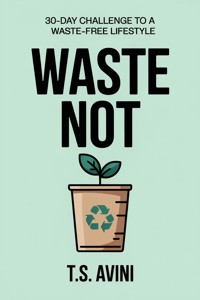
Embark on a 30-day challenge with "Waste Not" and discover the fulfilling world of waste-free living. This book offers a step-by-step guide to reducing waste in your daily routine, making sustainable choices accessible and achievable. An impactful journey awaits as you transition from plastic reliance to embracing eco-friendly alternatives and mindful consumption habits.
- Discover the detrimental effects of single-use plastics and how you can transition to reusable alternatives with ease.
- Unlock the secrets of meal planning and composting to minimize food waste and nourish the environment.
- Learn practical strategies for decluttering responsibly and enhancing your life with simplicity and sustainability.
With dedicated guidance and actionable insights, "Waste Not" empowers you to cultivate sustainable habits that extend beyond the challenge. Transform your lifestyle today for a greener tomorrow—join the movement and pave the way for a sustainable future. Your journey to a waste-free life begins now.
Das E-Book können Sie in Legimi-Apps oder einer beliebigen App lesen, die das folgende Format unterstützen:
Veröffentlichungsjahr: 2025
Ähnliche





Waste Not
Waste Not
Waste Not
Table of Contents
Chapter 1: Introduction: Embracing a Waste-Free Lifestyle
Chapter 2: Understanding Our Waste Problem
Chapter 3: The Benefits of Going Waste-Free
Chapter 4: Getting Started: Assessing Your Current Waste Habits
Chapter 5: The 30-Day Challenge: An Overview
Chapter 6: Week 1: Ditching Single-Use Plastics
Chapter 7: Day 1: Identifying Your Plastic Culprits
Chapter 8: Day 2: Switching to Reusable Alternatives
Chapter 9: Day 3: Reducing Plastic in the Kitchen
Chapter 10: Day 4: Plastic-Free Bathroom Essentials
Chapter 11: Week 2: Minimizing Food Waste
Chapter 12: Day 5: Planning and Prepping Meals Effectively
Chapter 13: Day 6: Composting 101
Chapter 14: Day 7: Understanding Expiration Dates
Chapter 15: Week 3: Simplifying Your Lifestyle
Chapter 16: Day 8: Decluttering Responsibly
Chapter 17: Day 9: Conscious Consumerism
Chapter 18: Day 10: Green Cleaning Methods
Chapter 19: Week 4: Building Sustainable Habits
Chapter 20: Day 11: Maintaining Momentum Beyond the Challenge
About the Author
Title Page
Table of Contents
Waste Not
"30-Day Challenge to a Waste-Free Lifestyle"
by T.S. AVINI
Table of Contents
1. Introduction: Embracing a Waste-Free Lifestyle
2. Understanding Our Waste Problem
3. The Benefits of Going Waste-Free
4. Getting Started: Assessing Your Current Waste Habits
5. The 30-Day Challenge: An Overview
6. Week 1: Ditching Single-Use Plastics
7. Day 1: Identifying Your Plastic Culprits
8. Day 2: Switching to Reusable Alternatives
9. Day 3: Reducing Plastic in the Kitchen
10. Day 4: Plastic-Free Bathroom Essentials
11. Week 2: Minimizing Food Waste
12. Day 5: Planning and Prepping Meals Effectively
13. Day 6: Composting 101
14. Day 7: Understanding Expiration Dates
15. Week 3: Simplifying Your Lifestyle
16. Day 8: Decluttering Responsibly
17. Day 9: Conscious Consumerism
18. Day 10: Green Cleaning Methods
19. Week 4: Building Sustainable Habits
20. Day 11: Maintaining Momentum Beyond the Challenge
Chapter 1: Introduction: Embracing a Waste-Free Lifestyle
Welcome to a transformative journey that promises not only to revolutionize how you live but also to reshape the world around you—a journey towards a waste-free lifestyle.
As you hold this book in your hands, you stand at the threshold of change. It's the start of a 30-day challenge that is as much about reducing waste as it is about rediscovering purpose and connection in your daily life.
Embarking on a waste-free lifestyle is a call to action, an invigorating invitation to rethink what it means to live conscientiously and sustainably.
Our planet’s waste production has spiraled to unsustainable levels, posing significant threats to our ecosystems and ultimately our own wellbeing. This challenge is not just about minimizing your trash output, but about cultivating a mindset that values environmental stewardship, resourcefulness, and community engagement.
Interestingly enough, The desire to live waste-free springs from an awareness that our current consumption patterns are threatening the delicate balance of our environment. Overflowing landfills, polluted oceans, and dwindling natural resources paint a bleak picture of environmental degradation.
Yet, within this reality lies the potent opportunity for individuals to effect change. Every piece of waste avoided, reused, or recycled contributes to a healthier planet.
Envision a world where resources are used thoughtfully, where the words "waste" and "disposable" are relics of a bygone era.
Adopting a waste-free lifestyle means moving away from the linear model of ‘take, make, dispose’, and embracing a circular ethos where products’ lifecycles are maximized, and materials are continuously repurposed.
Imagine: waking up in the morning and reaching for a mug that isn't made from plastic, drinking coffee brewed with grounds that you compost to enrich your garden. Picture cooking meals with fresh, local ingredients devoid of excess packaging and turning food scrap into nutrient-rich compost.
This vision, a tapestry of mindful acts, results in a profound shift in the way we perceive 'waste. ' It's about recognizing that our small, daily decisions echo across the globe.
As strange as it sounds, As you step into this challenge, understand that adopting a waste-free lifestyle doesn’t mean foregoing comforts or conveniences. On the contrary, it’s about discovering new pleasures in simplicity and sustainable practices.
It's about aligning your living habits with your principles, finding joy and satisfaction in actions that contribute to the greater good. Each page of this book is designed to equip you with practical tools and strategies, guiding you towards choices that honor both the earth and its inhabitants.
Motivation fuels change. Here, let us ignite a shared hope that sustainable practices can yield profound transformations.
Tap into the collective energy of a growing community committed to reducing waste, and let their stories inspire you. Imagine being a part of a global movement, where each of us plays a role in addressing one of the most pressing challenges of our time.
This journey is not without its share of challenges and myths to debunk.
You may have questions or encounter skepticism along the way: “Is it practical? Is it worth it?” Allow this challenge to guide you through solutions to common obstacles and misconceptions. You'll discover that the journey is filled with creative opportunities to innovate and simplify.
Let’s not forget, To succeed, it's crucial to maintain a sense of flexibility and adaptability. Environmental conditions fluctuate, and so do our lives.
A waste-free lifestyle need not be a rigid framework. Instead, think of it as a malleable practice—one that can ebb and flow with your personal circumstances, ushering in meaningful change while accommodating the nuances of daily life.
Here is an essential truth: you are not alone on this journey. You are accompanied by countless others who share your vision for a cleaner, healthier planet.
From innovative entrepreneurs to passionate activists, from educators to homemakers—the collective energy is palpable. Together, we can influence significant shifts within industries, communities, and individual households.
As you progress, remember to celebrate the small victories. Each step, whether mastering the art of home composting or choosing reusable over single-use, is a step forward.
Track your progress and savor the rewards of your efforts, both tangible and intangible. This transformation is as much about personal growth as it is about environmental impact.
As strange as it sounds, Finally, at the heart of this transformation lies empowerment. The power to change the world resides within your choices.
By living a waste-free lifestyle, you underscore the conviction that a single individual can make a meaningful difference. As you reclaim responsibility for your consumption patterns, you inspire others to consider the potential of their actions.
Embrace this challenge with enthusiasm and curiosity.
Let it fuel your desire to learn, to connect, and to leave a lasting legacy of environmental stewardship. This book is your guide, your cheerleader, and your companion in crafting a future that mirrors the world you aspire to create—one of harmony, sustainability, and respect for life's delicate balance.
Welcome to your waste-free lifestyle journey. Here's to a world where waste is not merely reduced—but redefined, in the spirit of mindful living.
Chapter 2: Understanding Our Waste Problem
When you think of "waste," what image comes to mind? Is it the overflowing trash bin after a family get-together, or perhaps the garbage truck trundling down your street in the early morning hours? While these are common associations, waste is a far bigger issue than just our individual curbside pick-up—it is both alarmingly vast and surprisingly intimate, touching every aspect of our lives and the environment.
To embark on this 30-day journey towards a waste-free lifestyle, it's vital to first take a step back and understand the enormity of the problem we're tackling.
The Global Waste Landscape
Let’s not forget, The modern age has been defined by unprecedented levels of consumption.
We live in a time of fast fashion, electronic upgrades, and single-use conveniences. The result? According to the World Bank, the world generates over two billion tons of waste every year, with that figure set to grow as populations and economies expand.
In many parts of the world, waste management infrastructure struggles to keep pace with the sheer volume of waste. In low-income countries, as much as 90% of waste is often disposed of in unregulated dumps or openly burned, leading to severe environmental and health repercussions. Even in well-developed regions, landfills are filling up at an alarming rate.
The U. S. , for example, has around 2,000 landfills, with some on the brink of closure because they’re running out of space, despite massive efforts in recycling and composting.
The Components of Waste
To combat waste, we must first dissect it. The typical waste stream consists of the following primary categories:
1.
**Organic Waste**: This includes leftover food, yard waste, and other biodegradable materials. Organic waste is 44% of the world’s waste and represents not just a massive component of the landfill content, but when improperly disposed of, it releases methane—a greenhouse gas even more potent than carbon dioxide.
2.
**Plastic Waste**: It’s estimated that around 8 million metric tons of plastic end up in our oceans every year. From packaging to everyday disposables like straws and bags, plastic persists in the environment, breaking down into microplastics that contaminate our water supplies and food chains.
I’ve seen this happen before: 3.




