


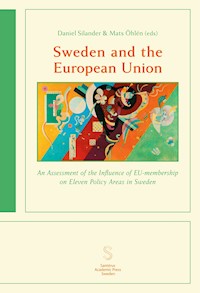
Sweden and the European Union E-Book
Erhalten Sie Zugang zu diesem und mehr als 300000 Büchern ab EUR 5,99 monatlich.
- Herausgeber: Books on Demand
- Kategorie: Geisteswissenschaft
- Sprache: Englisch
What has EU-membership meant for Swedish policy and policy-making since the country became a member in 1995? Has the policy changed in terms of organisation (form) and content (substance) as a result of an increasingly consolidated membership? Based on the assumption that Swedish policy is part of multilevel governance at a local, regional, national and European level, the focus is on the interaction between Swedish national policy and the EU. In this book Swedish policy refers to the following policy areas: economic, agricultural, environmental, social, education, gender equality, asylum and migration, crime prevention, foreign and security, neighbourhood and development and aid. Every policy area has been scrutinised over time, from the moment of entry into the EU until today. The book addresses students at various levels, as well as politicians, civil servants and journalists with regard to how Sweden and Europe in general, and Swedish policy and the EU in particular, are interwoven in one political system. Contributing authors Therese Bjärstig, Tobias Bromander, Fredrik Bynander, Katarina Eckerberg, Camilla Eriksson, Ingrid Grosse, Anne Haglund-Morrissey, Martin Nilsson, Anna Parkhouse, Charlotte Silander, Daniel Silander, Sofia Strid, Rebecka Ulfgard Villanueva, Mats Öhlén
Sie lesen das E-Book in den Legimi-Apps auf:
Seitenzahl: 550
Veröffentlichungsjahr: 2020
Das E-Book (TTS) können Sie hören im Abo „Legimi Premium” in Legimi-Apps auf:
Ähnliche



















Daniel Silander & Mats Öhlén (editors)
Sweden and the European Union
An Assessment of the Influence of EU-membership on Eleven Policy Areas in Sweden
www.santerus.se
ISBN 978-91-7335-057-0
© 2020 The authors and Santérus Academic Press Sweden
E-book production by Santérus Förlag, Stockholm 2020
Cover art: Composition ix. Painting by Wassily Kandinsky 1936. (Musée National d’Art Moderne, Centre Georges Pompidou, Paris).
Cover profile: Sven Bylander
Santérus Academic Press is an imprint of Santérus Förlag, Stockholm, Sweden
Preface
This book on Swedish politics and the European Union (eu) has been produced in a time characterised by a democratic deficit in Swedish citizens’ knowledge about the eu at home. On 17 July 2014, the Government decided to initiate an inquiry into the possibilities of improving transparency, participation and influence concerning policy issues within the eu and to investigate the level of knowledge Swedes have about the eu and how this knowledge level could be impacted by Swedish actors. Furthermore, the inquiry was to identify potential measures to improve transparency and participation of Swedish citizens in policy issues (Ju 2014:20). The main purpose was to ‘contribute to democratic development in line with the democracy policy goal of strengthening the individual’s capacity for influence’ (sou 2016: 9).
Based on the premise that a well-functioning Swedish democracy requires transparency, knowledge and the capacity for civic influence, the inquiry emphasises that while more and more issues are being discussed and decided at the European level and within the eu’s institutions, the conditions required for Swedish citizens to be informed on and influence policy issues decided on at the eu level have worsened. There are several reasons for this growing Swedish democratic deficit. One such reason is that the eu is a complex political project that can be difficult to understand and exert influence over from within. The inquiry, however, also points to deteriorating conditions in Sweden for transparency and participation insofar as national channels for demos are not sufficiently open, that the Swedish public conversation is too limited in its depiction of policy at the European level, and that the general knowledge among social groups regarding eu institutions and policy issues at the European level is too low.
The inquiry points in particular to an extensive lack of knowledge in Swedish society regarding the relationship between Swedish policy and the eu. This lack of knowledge is identified in those groups whose public assignment is to act as channels for and disseminate knowledge about democracy. The inquiry emphasises, inter alia, how politicians and civil servants in Swedish municipalities have limited knowledge of how municipal policy is linked to policy at the eu level, how journalists need to expand their knowledge of how the eu is structured and functions, and how the Swedish school system exhibits limited knowledge about how Swedish democracy and the eu are interconnected. Unfortunately, even political scientists at Swedish universities and university colleges demonstrate insufficient knowledge in this regard.
This lack of knowledge among Swedish people concerning Swedish policy and the eu is also affected by shifts of power and new functions for the political institutions. Among other things, it is emphasised that while the Swedish Government, at the expense of the Riksdag, has gained increased legislative power in the areas decided on at the eu level, information to the citizens has been limited, which has obstructed transparency, influence and support for the legislative work. This also applies to policy at the municipal level where the inquiry points to the absence of debate and discussions with citizens about how municipalities should act in matters that link the local to the European. Another problem in terms of the democratic deficit is the absence of a public conversation about Sweden, Swedish policy and the eu.
It is emphasised that neither the media nor Swedish political parties highlight how Swedish and European policies are intertwined or how Swedish institutions and eu institutions are interconnected in a common political system. Furthermore, there is no public conversation about the actual political parties and divisions that exist within the eu, but rather the picture provided is simplified in terms of Sweden and the eu without informing the citizen of the fact that there are major divisions within Sweden regarding how policy should be designed at the eu level.
This book is an attempt to contribute to a public conversation about Swedish policy and the eu. It is our hope that this type of book will fulfil an important function at schools and universities, but also for politicians, civil servants and the media with regard to how Sweden and Europe in general, and Swedish policy and the eu in particular, are interwoven in one political system.
References
Official Government Inquiry, sou 2016. eu på hemmaplan [eu on the home field]. Stockholm.
1. Swedish Politics and the EU
An Introduction
Daniel Silander & Mats Öhlén
Studies on international dependency in the 1960s, the comprehensive globalization literature of the 1990s and research on networks in the 2000s show that social sciences for a long time have focused on how international politics influence national politics. This study uses this tradition of studies as a basis on which to define how the European Union (eu) has impacted Sweden and Swedish politics. Sweden joined the eu on 1 January 1995. The Swedish Government with Ingvar Carlsson as prime minister applied for membership in the union on 1 July 1991. An agreement developed in March 1994 under Carl Bildt’s government, and the outcome of the advisory referendum on 13 November 1994 made way for membership. For a long time after the formal accession in 1995, political discussions continued among both politicians and citizens as to whether it was right or wrong to become a member and how membership could affect Sweden. However, a more active Swedish disposition towards the eu was realised when Sweden officially took over the presidency of the eu Council of Ministers in the first half of 2001 (see Johansson 2002, Tallberg 2001). Today, about 25 years after accession, Swedish participation is strongly rooted in the political establishment and among the majority of citizens (Standard Eurobarometer 2014).
The aim of this anthology is to analyse what being a member of the eu since 1995 means for Swedish politics. The purpose is to study what changes to the organisation (form) and content (substance) of Swedish policy have resulted from a more deeply ingrained membership. Based on the assumption that Swedish policy is a part of multilevel governance at a local, regional, national and European level, the focus is on the interaction between Swedish national policy and the eu. The study therefore partly analyses how Swedish policy is governed and shaped, and partly how the content of the policy has changed in the interplay between Swedish political institutions and the eu.
To understand how Swedish policy is affected, the concepts of Europeanisation, governance and policy processes are introduced (see Chapter 2). The use of this conceptual framework allows for a deeper understanding of how and why Swedish policy has changed. Swedish policy refers to the following eleven ‘policy areas’: economic policy, agricultural policy, environmental policy, social policy, education policy, gender equality policy, asylum and migration policy, crime prevention policy, foreign and security policy, neighbourhood policy and development and aid policy. Every policy area has been scrutinised over time, from the moment of eu membership until today.
Further discussion in this chapter provides a brief, overall picture of what it means for Sweden to be part of the eu. Chapter 2 presents the theoretical point of departure of the study, with a particular focus on Europeanisation, governance and policy processes. These concepts provide guidance in the individual analyses of policy areas that are subsequently presented in Chapters 3–13. It is important to point out that the various chapters take on an outside-in perspective, which means that the organisation and content of the change to Swedish policy is of interest. Sweden is also treated as a homogeneous actor in relation to the eu, which means that the primary focus is on the nation/state of Sweden rather than, for example, on regional or local actors. Each chapter can be read separately and provides insight into a specific policy area, but comparisons with other policy areas provide a more comprehensive picture of the change to Swedish policy. In conclusion, Chapter 14 therefore discusses the overall change to Swedish policy that has resulted from eu membership.
Sweden, the eu and Competencies
The policy change of recent decades has shown strong tendencies towards increased international cooperation. On the one hand, according to the historically prevalent intergovernmental cooperation, two or more states have agreed, by written treaty or verbally, to work together within one or more policy areas but with retained sovereignty. On the other hand, supranational cooperation has also emerged, which means that the states have partially abandoned their sovereignty to a supranational power and have become federal states with autonomy within specific areas. In a global comparison of regional development, these patterns have been most evident in Europe and throughout the eu.
The eu wields real power within Swedish, European and global policy. However, the eu is a complex project that constitutes a mix of international and supranational cooperation. In a number of areas, the eu has sovereignty over the member states, but in other areas, the member states assume this sovereignty. In addition, some policy areas are of no concern to the eu. The eu has therefore come to consist of institutions representing various interests in Europe. It is a hybrid, where some eu institutions represent the Union’s interests (Commission), whereas others represent the member states (Council of Ministers) and the individual citizens of the Union (European Parliament).
In short, it should be emphasised that the Commission’s right of initiative represents the Union’s interests and is a driving force in the Union’s work. The Commission enforces and monitors eu law, the budget and policy decisions that the Council of Ministers and the European Parliament make. The Commission is also the Union’s face to the rest of the world and is responsible for the establishment of international agreements. The Council of Ministers is the decision-making body and the legislative body of the Union, but it shares responsibility with the European Parliament within a number of areas, which have increased over time. In addition to adopting European regulations and directives together with the Council of Ministers, the European Parliament also approves the eu budget and controls the Commission by approving or rejecting Commissioners during elections to the Commission. Furthermore, the Court of Justice is responsible for monitoring compliance with community law, but it also provides interpretations of the law and settles legal disputes among member states, institutions, companies and citizens of the Union (Nugent 2010, Tallberg 2013).
For a long time, from the Maastricht Treaty in 1993 to the Lisbon Treaty in 2009, the eu organisation could be described using a metaphor of three pillars of cooperation areas. The first pillar was the European Communities (ec); it constituted the old cooperation in place since the 1950s but with the new addition of the Economic and Monetary Union (emu). The second pillar was the Common Foreign and Security Policy (cfsp), which was an attempt to coordinate a common foreign and security policy within the Union’s member states. The third pillar included police and judicial cooperation in criminal matters, as well as justice and home affairs, but many of these were subsequently moved to the first pillar.
Cooperation in the first pillar was largely supranational, which meant that supranational institutions steered policy by using decisions with a qualified majority, through the Commission’s legislative competence and the direct effect of the ec law at the time. Large parts of these areas were developed over decades following the creation of the European Coal and Steel Community in the 1950s, but in the 1990s, new areas were also added to the cooperation within the European Monetary Union (emu). The other two pillars were intergovernmental, which meant that the member states were formally independent in their decision-making and that different states made and implemented decisions unanimously. These areas were also newer within the Union cooperation or were areas where a deeper integration had historically proved difficult to realise. Therefore, the decision-making mechanism was intergovernmental, and each state retained the right not to participate (Nugent 2010, McCormick 2014).
The supranationality within the former first pillar’s policy areas has made the eu a unique international cooperation forum in comparison with other regional organisations/cooperations. This supranationality means that membership entails the transfer of decision-making rights to the supranational institutions of the eu. Membership also entails limited sovereignty insofar as membership has required the implementation of the eu’s regulations, particularly eu law. eu law is directly applicable to the member states and has constituted a part of the national law in each member state. In the event of conflicting eu law and national law, the former takes precedence, and Swedish courts are required to apply eu law. For citizens and organised actors, this entails the right to appeal to the Court of Justice to examine the rulings of national courts. The previous cooperation areas within pillars two and three lacked these supranational mechanisms. No legal obligation existed regarding the transfer of decision-making authority. Furthermore, member states (within the cooperation areas in pillars two and three) were not required to implement legal rules (Hettne & Bergström 2014, Gröning & Zetterquist 2010). On 13 December 2007, the eu’s heads of state and government signed the Lisbon Treaty in Lisbon, Portugal. The treaty officially entered into effect on 1 December 2009 and modified the aforementioned pillar structure of policy areas and responsibilities. Some important examples of changes are that the former intergovernmental cooperation in pillar two that concerned foreign and security policy was intensified between the member states via the Union, creating the position of high representative of the Union for foreign affairs and security policy, and through the establishment of the European External Action Service. Furthermore, the previous rotating presidency of the European Council was replaced with a permanent presidency for 2.5 years. Additional important reforms included a strengthening of the European Parliament’s power in legislative processes, giving it the same status as the Council of Ministers within an increasing number of areas. Another major transformation that the Lisbon Treaty sparked is that the pillar structure discussed above was replaced when the eu became a single legal entity. Previously, after the Maastricht Treaty, each pillar constituted its own legal entity with the right to ratify new international agreements. Through the new treaty, the Union’s powers were clarified in Articles 2 to 6 of the Treaty, by way of a division into three categories of decision-making competencies. These categories highlighted the party under whose responsibility a policy area falls, be it the individual member state or the Union. Within Sweden’s so-called competence catalogue, the policy areas were divided into three categories for the eu:exclusive competence, shared competence and supporting competence (Gröning & Zetterquist 2010, McCormick 2014).
The first category of exclusive competence (or assigned power) refers to the Union’s exclusive right to legislate and institutionalise legally binding acts, in which the role of the individual member state is only to implement the Union’s decisions. The member states assign this exclusive competence to the Union, which means that the Union’s laws and regulations come into being after the member states have jointly decided to give exclusive competence to the Union. The exclusive competence gives the Union the right to initiate and implement legislation for all of the member states, but the Commission must have a basis in one or more articles of the treaty to institute any binding legislation. The European Parliament and the Council of Ministers scrutinize the Commission’s legislative work, which ensures that the Commission’s legislative work is, in fact, based on the treaties. It is also the role of the Court of Justice to examine whether acts are based on the treaties, and if not, to annul them.
The second category of shared competence emphasises that each individual member state has the right to institutionalise legislation if the Union has not previously done so within the area. This means, in practice, that both the individual member state and the Union have the right to legislate and institutionalise binding legal agreements. If the individual member state has regulations within an area, the Union must not legislate in a manner that undermines or prevents the country’s act from being applied.
The third category of supporting competence emphasises that the Union has only a supporting role in relation to individual member states’ legislative processes through providing advice and coordination. The Union may not act in a way that forces member states to harmonise laws and regulations, as such an influence would imply that the Union is restricting the competence of the individual member state (regarding competencies, see European Commission, European Union).
These three categories of competencies illustrate how different policy areas can be included under various types of competencies, thus regulating the extent to which the individual member state or the Union has the main power to formulate regulations and directives. However, it should be emphasised that the policy areas that are not explicitly regulated in the eu treaties are entirely beyond the eu’s decision-making power, and if new policy areas fall under the eu’s competencies, all member states must approve this by ratifying amendments to the existing treaties, which requires unanimity. A single exception to this is the so-called Flexibility Clause (Article 352 of tfeu), which allows the eu to make decisions within a policy area where the treaty does not confer power on the eu. However, this is done only in cases where such action is required to achieve the overall objectives that the treaty sets for the specific policy area. However, the Council of Ministers must agree on such a necessary action of the eu, and the European Parliament must approve it.
The above division of competencies is the official design of the eu’s structure as it exists today. However, it should be emphasised that Swedish policy and that of the eu are rarely entirely designed based on the competence under which the issue formally resides. First, even if the eu has exclusive competencies within an area, member states are involved in the legislative process, as they have ministers on the Council of Ministers approving regulations and directives. In addition, the European Parliament has members from each country, who together with the Council of Ministers make proposals, amendments and decisions. In addition, the various member states should implement the Commission’s initiated proposals, following a decision to do so. Legislation is therefore often broad in the form of directives concerning targets to be achieved. Each member state is subsequently required to respond to it and shape it to implement nationally.
Second, even if the eu does not have competencies regarding a member state’s policy area development, it has been found that new Swedish laws and ordinances have increasingly come to refer to regulations and directives at the eu level. Furthermore, it has been emphasised that the eu’s adopted legislation is largely implemented at the regional and local levels in Sweden and that the eu influences an extensive number of policy issues raised at the municipal council’s table in Swedish policy, either in temporary projects or via eu legislation and rules (Sveriges riksdag, Swedish Parliament 2009).
As the complexity of the political process has increased with eu membership, Swedish political control and governance have been hampered. For Sweden, this has meant that it has become increasingly important to identify a national position at an early stage in the preparation and decision-making process, to demonstrate a uniform and well-organised policy and to find allies at the negotiating table so as to leave Sweden’s mark on the political agenda. In addition to this formal structure, a very important informal structure of lobbying consists of negotiations and pressure from the member states’ governments, parliaments and committees of institutions and politicians. These informal structures may also comprise contact with Commissioners and members of the European Parliament to influence what proposals are put forward and how these are formulated. Thus, in all decision-making processes within the eu are a formal and informal path of influence, where the formal pathways are visible, whereas hierarchical structures and the informal ones are more invisible and network based (Tallberg 2013, Blomgren & Berggren 2005).
Today, 1,200 Swedes are estimated to work within the eu, including politicians as well as civil servants. In addition to around 120 employees at the eu Representation in Brussels and an eu ambassador, an extensive staff of civil servants also exist within the Commission. Furthermore, there are politicians and/or civil servants within the European Council, the Commission, the Council of Ministers, the Court of Justice, the European Parliament, the Court of Auditors, the European Committee of the Regions and the European Economic and Social Committee. Our foremost Swedish representative vis-à-vis the eu is, of course, our prime minister, and under the prime minister are all of the Swedish ministers responsible for managing the eu issues within each policy area, which means interpreting and following the applicable eu regulations in the area, as well as coordinating the policy area in relation to Swedish structures. These ministers also represent Sweden within their particular affair areas before the Council of Ministers (Sveriges riksdag, Swedish Parliament a, b).
The prime minister’s state secretary is the chairman of the coordinating group for eu relations, which consists of all state secretaries. The coordinating group is responsible for the coordination of eu matters within the government offices and is the channel to the ministries. The ministries have their own eu-coordination functions for the internal organisation and for cooperation with other relevant ministries. Many eu matters naturally also concern multiple ministries, which requires a committee in consultation with all of the relevant ministries (Blomgren & Berggren 2005). eu membership saw the establishment of the Committee on European Union Affairs, which represents all parliamentary parties. The Committee has an advisory function and is an information channel between the Riksdag and the coordinating group for eu relations in the government offices. The coordinating group is required to consult the committee on eu matters. The coordinating group informs the committee of what matters should be discussed in the Council of Ministers, and a joint discussion is had on the government’s proposed position. The Committee on European Union Affairs can also convene a meeting to influence what issues should end up on the eu agenda and be discussed within the Council of Ministers (Blomgren & Berggren 2005).
Against this background, the next chapter introduces the theoretical departure points of the anthology. These then form the basis of the book’s analysis of changes to the Swedish policy areas from 1995 until today.
References
Blomgren, M & T Berggren (ed.) 2005. eu och Sverige – ett sammanlänkat statsskick [eu and Sweden – an interlinked form of government]. Stockholm: Liber.
European Commission 20150228. The European Citizens’ Initiative, official register. http://ec.europa.eu/citizens-initiative/public/competencies/faq?lg=en
European Union 20150228. Treaty Establishing a Constitution for Europe. https://europa.eu/european-union/sites/europaeu/files/docs/body/treaty_establishing_a_constitution_for_europe_en.pdf
Gröning, L & O Zetterquist 2010. Konstitution, institution och jurisdiktion [Constitution, Institution and Jurisdiction] Stockholm: Liber.
Hettne, J & C F Bergström 2014. Introduktion till eu-rätten [Introduction to eu law]. Lund: Studentlitteratur.
Johansson, K-M (ed.) 2002. Sverige i eu – dilemman, institutioner, politikområden [Sweden in the eu – dilemma, institutions, policy areas]. Stockholm: sns förlag.
McCormick, J 2014. Understanding the European Union – A Concise Introduction. London: Palgrave MacMillan.
Nugent, N 2010. The Government and Politics of the European Union. London: Palgrave Macmillan.
Standard Eurobarometer 82 autumn 2014. Public Opinion in the European Union – First Results. Brussels: European Commission.
Sveriges riksdag, Swedish Parliament 2009. Svensk lagstiftning som härrör från eu [Swedish legislation deriving from the eu]. Utredningstjänsten [Parliamentary Investigative Service] Ref. 2009:791.
Sveriges riksdag, Swedish Parliament, a 20150228.
eu Information Services. eu-lagar gäller före svenska lagar [eu laws before Swedish laws]. http://www.
eu-upplysningen.se/Sverige-i-eu/ eu-lagar-galler-framfor-svenska- lagar/ (in Swedish)
Sveriges riksdag, Swedish Parliament, b 20150215. eu Information Services. Mer än 1000 svenskar arbetar inom eu[More than 1000 Swedes work within the eu]. http://www.
eu-upplysningen.se/Sverige-i-eu/ Svenskar-i-eu/ (in Swedish)
Tallberg, J 2013. eu:s politiska system [The eu political system]. Lund: Studentlitteratur.
— (ed.) 2001. När Europa kom till Sverige – Ordförandeskapet i eu 2001 [When Europe came to Sweden – Presidency of the eu in 2001]. Stockholm: sns.
2. Europeanisation, Governance and Policy Processes
Mats Öhlén & Daniel Silander
There is no doubt that eu membership has influenced Sweden’s political system. Three examples may suffice to illustrate this. First, the full set of eu regulations (acquis communautaire) was incorporated into Swedish legislation once membership was in place. Second, Swedish actors on various levels became potential receivers of European Union (eu) funds. Third, Sweden’s external relations were either completely subordinated to the eu (as in the area of trade) or coordinated by it (as in foreign and security policy). The relevant question, however, is in what way the country’s political system has been influenced, and to what extent.
What does it mean to say that Sweden’s political system has been influenced by eu membership? A clarification is necessary here. In political science, it is customary to differentiate between politics, policy, and the polity. Politics involves what is usually referred to as the political game, which mostly relates to party politics and party organisations. Policy concerns the making of concrete political decisions and their implementation. The polity, finally, comprises the organisation of the state in terms of government and public administration. The focus of this book is on the second and third of these: policy and the polity. Thus, we are interested in how eu membership has affected the Swedish political system in terms of its content (i.e., its outcomes), and in terms of its form (i.e., its organisation). This book is not concerned, however, with how the country’s party system and political parties have been influenced in terms of organisation, strategy, or cleavages.
In this chapter, we introduce two central concepts for our book – Europeanisation and governance – before concluding with a section on policy processes. These concepts are vital for understanding how and why a member state of the eu – in this case Sweden – is influenced by its membership therein. Influence of a more technical type (e.g., a new regulatory framework for farmers) is relatively easy to identify, but gradual and subtle changes in terms of organisation and policy content are more difficult to pinpoint. We need more precise concepts if we are to understand the dynamics in the relationship between Sweden and the eu. By utilizing these concepts, we can add a theoretical aspect to the discussion on the consequences of eu membership. We hope thereby to provide a starting point from which various policy areas can be compared, and to contribute to a wider discussion on the consequences of eu membership for Swedish politics.
Europeanisation
Europeanisation relates specifically to a process whereby eu institutions and political arrangements, both formally and informally, influence their counterparts at the national level within the member states. Studies on this question emerged already in the 1970s, but it was in the 1990s that the theme became popular among academics. This likely reflected the creation of a political union in 1993, with the Treaty of Maastricht, and the intense integration process that followed. The main focus of studies in this area has been on explaining the processes involved, and on tracing significant variations amongst member states and amongst policy areas when it comes to the consequences of Europeanisation (Pollack 2010: 37). One central claim made in the literature is that the level of Europeanisation is likely the product of two factors: (1) how well demands from the Union mesh with existing institutions, rules, norms, and practices at the national level; and (2) how strongly different variables at the national level – such as the number of veto points or the resistance of national institutions to change – intervene (Cowles et al. 2001). The pressure to change will be weaker when there is a good fit between the eu level and the national level with regard to rules and institutions. Conversely, the pressure for change at the national level will be stronger when national institutions differ significantly from their counterparts at the level of the Union. However, the match between the two levels is not a constant. On the contrary, it varies over time and (especially) between different policy areas. Our aim in this book is to clarify this variation in the case of one particular member state: Sweden.
Demands and expectations for national adaptation as a consequence of eu membership take various forms (Tallberg et al. 2010: 17). On the one hand they may be formal, as when legislation and guidelines result in juridical demands for the adaptation of national rules and institutions. When a country joins the Union, for example, it must adopt the full framework of eu rules (acquis communautaire). The eu also adopts new treaties, new rules, and new targets over time, which in turn creates new demands and expectations for national adaptation. On the other hand, the pressure for national change has a more informal character when norms, ideas, and practices established at the Union level slowly influence national political systems. An example of this can be seen in the increasingly strong position of the governments of the member states, reflecting the role that they play in representing the latter in eu negotiations. Another example of such informal pressure is evident in the changes which national governments have made in their administrative organisation.
In the theoretical literature, the division into formal and informal demands for national change has been linked to two different logics of Europeanisation: the logic of consequences, and the logic of appropriateness (March & Olsen 1989, Börzel & Risse 2007). The logic of consequences is based on the assumption that actors are rational and that their preferences are fixed. In the context of the eu, this may apply to situations where actors try to link new proposals to the most suitable (from their perspective) paragraph in the treaties. For example, the European Commission might formulate a proposal in such a way as to link it clearly to a treaty paragraph, thereby positioning the proposal within a policy area over which the member states have limited influence once the proposal is approved. The logic of appropriateness, by contrast, involves an entirely different view on actors, opening up for a broader view on their preferences. Rooted in the social-constructivist tradition, it portrays the ideas, interests, and aims of actors as dynamic rather than static – as changing over time and according to context. Compared to the rationalist tradition, moreover, this approach entails a broader view on institutions – as involving rules and routines that define which actions are appropriate in each specific situation (March & Olsen 1989: 21). In this tradition, furthermore, rules, norms, and values are viewed as independent variables. Thus, through the behavioural expectations that they bear, institutions exert influence over the actors involved. They reward behaviour seen as appropriate, and they punish behaviour seen as inappropriate. In this way, they influence both actors and decisions.
Thus, the Europeanisation of national politics and policy may be both direct and indirect (see Vink & Graziano 2007). Direct effects are the result of specific demands from the eu – e.g., for new regulations in the area of agriculture. Indirect effects, by contrast, do not derive directly from eu decisions, but they still arise as a consequence of Union membership. Organisational changes in the public administration of member states – for the sake of a better fit with official eu policy areas – are an example. The Swedish constitution mentions nothing about eu influence on the country’s public administration, but pressures to adapt are in fact heavy. Ministries are continually reviewing how to coordinate their management of eu-related issues with various interest groups and with other agencies. They usually do this during an early phase of the decision-making process, thereby simplifying the formulation of Swedish opinions before negotiations are conducted in the Council, as well as – at a later stage – before the eu’s directives are implemented in Sweden (Beckman & Johansson 2002). Furthermore, public administration in Sweden is linked – as it is in all member states – to the policy process at the Union level. This generates further informal pressures to adapt. Most notably, Swedish public servants participate in various expert groups and in the so-called ‘comitology committees’. The role of the expert groups is primarily to provide advice as the Commission prepares new proposals. The task of the ‘comitology committees’ is to assist the Commission in implementing new eu legislation – in other words, to help it ensure that all of the member states enforce the new rules. Taken together, these elements point to an informal and indirect Europeanisation of Swedish public administration, at both the organisational and the individual level.
Some clarifications are in order where informal and indirect Europeanisation is concerned. For one thing, Europeanisation does not necessarily mean convergence, i.e., the shaping of all member states along the same lines by eu legislation and institutions. The relevant thing is the response of the actors – how they adapt to changes in the political context in which they work. Their adaptive responses may take different forms in different member states, as well as in different policy areas within a single member state. It is furthermore often difficult, methodologically speaking, to assess the impact of the Union on national political systems – whether for change or for continuity. Europeanisation is only one of several factors influencing political processes at the national level. Economic globalisation, intensified urbanisation, an ageing population, a transformed media landscape, a transformation in the values of the population – these are just a few of the factors that may strongly influence national political development.
Governance and Multilevel Governance
Governance can be described as a distinctive form of government. It is carried out through organised networks of public and private actors, which steer public policy towards common aims (Rhodes 1996: 660). In fact, governance can be regarded as the opposite of ‘government’, inasmuch as it lacks a clear single power centre.
It is in the eu, without any doubt, that we find the most visible instance of governance today. As compared with traditional international organisations, the eu involves cooperation of more advanced and institutionalised kind, for its member states have delegated their sovereignty to joint institutions in several areas. Yet the eu is far from being a traditional state, inasmuch as its member states have kept their sovereignty in many areas; moreover, they exert influence in areas which fall under the Union’s own competence, through their involvement in the Council and in the various bodies that support the Commission. The eu is thus a unique hybrid – part state, part international organisation (see chapter 1). This demands a new theoretical framework. Earlier accounts of the eu have tended to use models and concepts from established theories. Neofunctionalism and liberal intergovernmentalism, for example, theorize integration in terms of concepts within international relations. Theories of the eu as a political system proceed on the basis of models from comparative politics. The governance perspective, by contrast, portrays the eu as a unique fusion between a state-like system and an international organisation, in which ‘governing without government’ takes place.
The governance perspective is not one single theory about the eu or European integration, but rather a cluster of theories with the same general focus. According to Hix (1998), it has four characteristics. First, it portrays the Union’s governing processes as non-hierarchical, wherein public and private actors operating in networks devote substantial time and energy to deliberation and problem-solving. These actors are expected to abide by both formal and informal norms and rules. Second, according to this viewpoint, the governing processes of the Union are so unusual that traditional concepts do not suffice for analysing them. A new set of terms and concepts is thus essential. Third, scholars in this vein devote special attention to a specific type of policy process – one with a heavy stress on ‘deliberation’ and ‘persuasion’ – which is thought to characterise the eu in particular. In this model, actors adapt their goals and preferences to the needs of the process, and they put a stronger stress on good argument than on negotiating strength. Fourth, there is a tendency among these researchers to pay considerable attention to normative issues, such as the Union’s democratic deficit or its less than complete legitimacy. According to the governance perspective, then, the eu holds the potential for a new model of democracy which does not copy the national type. This new model is built instead on discussion and persuasion, along lines envisioned in theories of deliberative democracy (see Joerges 2001, for example).
Our focus so far has been on the broad governance perspective, and on the view of eu politics that it entails. A more specific view zeroes in on the built-in multilevel logic of the eu system. Traditional research on the Union has tended to focus on its central institutions in Brussels, Luxembourg, and Strasbourg; however, these institutions do not exist in a vacuum. Most of the actors that prepare and administer eu legislation are actually situated in the member states. For them, the European dimension is just another policy level, not a separate activity. In fact, a large portion of eu policy is prepared and implemented by national officials who spend hardly any time in Brussels. They are politicians, civil servants, or experts who spend most of their time as national decision-makers. They spend a great deal of their time trying to assess how the eu influences their primary activities at home, and how they can apply its legislation in their daily work. At a reasonable guess, some 80 percent of their daily work on eu matters is coloured by domestic concerns (Wallace et al. 2010: 9). This may seem paradoxical. On the face of it, it seems unreasonable that 80 percent of national legislation should derive from the Union, even as 80 percent of the political context in which national decision-makers carry out their work reflects domestic problems and demands. But this is exactly how the Union works. For this reason, the eu is best portrayed as a kind of fusion or amalgam between the two levels of governance. Decisions and competencies sought at the national level get compiled into European rules, which are then implemented nationally.
While the main focus of this book is on the European and national levels, it must be stressed that there are additional levels as well. All of the member states have various local and regional sub-levels, the competence of which is conditioned in varying degrees by eu rules and decisions. Many decision-makers at these levels have direct contact from time to time with the institutions of the Union. In Sweden, moreover, a decentralisation process took place in the 1980s and 1990s, which had significant consequences for the relationship between the state and the municipalities. Traditionally, the central government in Sweden directed the doings of the municipalities by issuing formal mandates to them; now, however, it generally seeks dialogue and coordination with them. This process began in the 1990s, with the explicit goal of strengthening the link between political institutions and the various actors associated with them. One example of this can be seen in the ‘region reform’ carried out in two prominent regions in the south of Sweden: Skåne and Västra Götaland. In these two regions, so-called ‘growth agreements’ were concluded. In consultation with local and regional business groups, political bodies in each region prepared plans for the economic development of the region and its municipalities (Pierre 2010: 263). A parallel tendency is the broad globalisation trend of recent decades, which has further weakened the role of the Swedish state. In several policy areas, including those where the eu is active, there are broad transnational consultations and agreements. These processes vary greatly in both range and significance, but they form part of a continuum of decision-making which includes several levels: local, regional, national, European (eu), and global (see Figure 2.1.). Many actors, moreover, are active on several different levels, and the way in which a given political issue develops often reflects a choice between these levels.
Today, the governance perspective has established itself in the academic literature to the extent that its main assumptions about how politics works – especially at the level of the Union – are generally accepted. However, this new model is not uncontroversial or without critics. In its treatment of political accountability, for instance, it may be less than clear. Blomgren & Bergman (2005) argue there is something modern and seductive about this new trend, with its concepts of governance, policy networks, multilevel governance, and the like. But it has an aura of being so complex and advanced as to render traditional methods for measuring democratic aspects like openness and accountability unusable. The authors of this book agree with this critique. If we proceed on the assumption that policy is increasingly shaped in processes without transparency or a clear power centre, then it is obvious that power is becoming blurrier and less visible. This in turn leads to difficulties when it comes to holding those in power accountable. The lobbyists and network actors involved in eu policy-making are generally unknown to the public, both in Sweden and in other member states. Accordingly, Blomgren & Bergman argue, the legitimacy of political processes within systems marked by governance is insufficient for handling politically delicate matters (like the redistribution of resources). This reminds us of the vital role that traditional institutions play in guaranteeing democracy and transparency. They are central for promoting social trust, and they set out clear frameworks for the exercise of political power (Pierre 2010: 263). When we analyse the impact of eu membership on Sweden, therefore, we must confront the problems of weak accountability and insufficient transparency head on.
Policy Processes in the eu
The term ‘policy’ has no direct equivalent in the Swedish language, and as in several other countries it has been integrated into the Swedish conceptual toolbox. To simplify the matter somewhat, a policy can be defined as a broad political goal within a certain area. Rather than being a single decision, it consists of a package of strategies and decisions on various levels (Hill 2005: 6–7). A policy process, in turn, comprises the whole pattern whereby policy is created, implemented, and evaluated. To a great extent, the research on policy processes is about understanding the dynamics in the different phases of the policy process, and how these are linked together. The traditional distinction between the sphere of politics and that of public administration is not so prominent here. In the research on policy processes, actors from both the political domain and the civil service feature explicitly. Our aim in this book is to advance the discussion on the consequences of eu membership for the organisation and content of politics in Sweden.
What are the different phases of a policy process? The research on this point is not unequivocal, but in broad terms they can be described as: (1) agenda-setting; (2) policy formulation; (3) decision-making; (4) implementation; and (5) evaluation (Buonnano & Nugent 2013: 101; Young 2010: 47).
Such ‘sequence-thinking’ around the policy process (see Figure 2.2) has been criticised for picturing it according to an abstract model of how the process should work, instead of how it works in reality. More specifically, researchers have criticised the approach for giving the impression of a rational process with a clear starting and ending point, in which each phase causes the next. In reality, the different phases often overlap or even melt together (Hill 2005: 135, Sabatier 1999: 7). Instead, therefore, the metaphor of a ‘cycle’ has become increasingly common among analysts of policy processes (see, e.g., Howlet et al. 2009; Parsons 1995). This tackles the critique mentioned above, since it portrays the policy process as a dynamic circular flow without a clear starting or ending point (see Figure 2.3). However, the critique regarding an overlap or fusion between different phases remains (see Kingdon 2003: 205). Nevertheless, the latter critique does not rule out the model as an analytical point of departure. Instead it cautions against relying on the model too heavily, due to the excessively simple and cut-and-dried way it portrays the policy process.
A short presentation of each phase of the policy process now follows. Note that the eu provides the point of departure here, as our main focus is on the institutions of the Union in conjunction with the member states. Agenda-setting is primarily about putting a certain issue on the political agenda. In this phase, there is considerable scope for various actors or ‘policy entrepreneurs’ to exercise influence. These may be interest groups, political parties, administrative agencies, or individual politicians. The type of actors involved depends on the issue, inasmuch as the Union has different competencies in different policy areas. On issues where the eu has exclusive or shared competence, the European Commission plays a prominent role, in view of its exclusive right to formulate proposals for new legislation. Here the efforts of policy entrepreneurs are focused mainly on getting the Commission to pay more attention to their specific issue, or on persuading it to view their issue in a particular way. By contrast, on issues where the eu has merely a coordinating role – as in relation to the common foreign and security policy – it is domestic policy entrepreneurs that have the key role.
When an issue is finally on the agenda, the phase of policy formulation begins. Realistic options are identified, and concrete proposals prepared. This phase is integrated with the agenda-setting phase in part, since the actors that seek to put an issue on the agenda usually have a concrete proposal for addressing it. At this stage of the process, however, the central actors are clearly fewer in number, being limited to a quite narrow circle of key actors around the Commission (Buonanno & Nugent 2013: 105).
Then, once a proposal has been presented, the decision-making phase begins. Now the matter is less complicated: the proposal is either accepted or rejected. As mentioned in chapter 1, there is great variation between different policy areas when it comes to procedures for decision-making. All decisions on the common foreign and security policy, for example, require unanimity in the Council. By contrast, a majority in both the Council and the European Parliament suffices for market regulation and environmental issues (a qualified majority in the Council, a simple one in the Parliament). There are also various combinations, where the procedures employed fall somewhere between these two extremes.
In the implementation phase, the object is mainly to make sure the new legislation is realised in the member states. This phase is particularly important in the eu, because the difficulty of reaching agreement in the decision-making phase often has the consequence that vaguely worded compromises are adopted. This in turn results in many situations where different interpretations are possible about how the legislation is to be implemented. Formally speaking, the Commission is responsible for ensuring that all legislation is implemented; however, the concrete enforcement of new rules and directives lies in the hands of the administration of each member state. Moreover, the implementation process is prepared through the so-called ‘comitology system’, in which representatives from the member states keep a watchful eye on the Commission, in order to ensure that the process does not exceed the boundaries set out in the legislation. As a result, civil servants at the national level have a stronger role in the phase of implementation than they do in that of agenda-setting or of policy formulation (Young 2010: 50).
In the last phase, finally, the effectiveness of the policy is evaluated. If the policy implemented does not solve the problems it was created to address, there is usually pressure for further action, or for an altogether different strategy. The evaluation of policies is especially problematic at the level of the Union. There are two main explanations for this. First, the distance between the body which formulates proposals (the Commission) and the actors that implement them (primarily the administrative agencies of the member states) is huge. Second, the feedback often taken for granted at the national level – from political parties, interest groups, critical citizens, and above all scrutinising media – is weak or non-existent at the eu level. The first problem has been solved to a degree through the comitology system, but the second can only be addressed over a long period – perhaps a very long period – during which the requisite institutions are built up.
It should be noted that the policy process within the eu takes different forms in different policy areas. In part this is a consequence of certain differences between the member states that existed earlier, and which to some degree persist. In this regard, political actors have shown impressive creativity in adapting working procedures, decision-making processes, and constellations of actors to the needs of the different policy areas. Over time, then, five different models for policy-making have evolved. Their unique traits are displayed in Table 2.1 below.
The first model for how eu-based policy should be formulated was the so-called community method, for which the common agricultural policy became a kind of template. The most notable feature of this model is the dominant position of the Commission throughout the process. The main logic consists in ‘locking-in’ the agricultural interest groups, by offering them better conditions through Union policies. This in turn guarantees support for the dominant position of the Commission. Nationally based organs then serve as subordinate agents for the common policy. The role of elected politicians – whether at the national level or in the European Parliament – is marginal in this policy model. However, the Court of Justice of the European Union may intervene occasionally, primarily to strengthen the legitimacy of the policy regime.1
The regulatory model evolved during the 1980s, in step with the establishment of the single market. To some degree, it emerged as a response to external pressures on the member states – from international markets – for enhanced competitiveness in an increasingly globalised economy. The new policy model, modern and flexible as it seemed, was thought to be suitable. It also freed national governments from difficult tasks. The role of the Union in this model is to develop transnational standards, adjusted to national variations. The typical policy process here starts with the formulation of goals and rules by the Commission, ‘in consultation’ with experts and interest groups. It is this consultation procedure that allows for a certain flexibility. The Council has a rather modest role in this regard, but it may serve as a forum for reaching agreement on harmonisation and minimum standards. The Court of Justice, on the other hand, plays a key role as a supervisor here, its function being to ensure that rules are followed and applied uniformly throughout the Union. eu agencies and bureaus are also important actors, due to their role in mediating between the Commission and national authorities. The strength of the regulatory model lies in its function as a forum for technical cooperation. The strong legal process also frees national politicians from slow decision-making processes.
The third model – the distributional model – arose to some extent as a reaction against the strong market focus of the 1980s. The heavy stress on markets resulted in the marginalisation of certain groups and regions, leading in turn to a stronger focus on economically weak regions within the Union. This latter development must also be viewed in light of the accession to the Union of several poorer countries: Spain, Portugal, Greece, and (to some degree) Ireland. This model highlights the importance of social cohesion. It also puts a heavy emphasis on the Union’s different regions – an emphasis which has stamped the whole policy model. The policy process here typically takes a certain course, whereby the Commission designs various programmes for social cohesion in consultation with local and regional authorities. The Council then approves the proposals, under intense pressure from the local and regional authorities which took part in the consultation. The European Parliament is involved as well, through the additional pressure which its members – primarily those from the regions in question – put on the Council to approve the programmes. The Committee of the Regions is also important here, even if its role is only consultative. The multilevel logic inherent in this process has furnished a template for theories of multilevel governance. Yet it bears noting that, while the pressure on the Council is often intense, the member states have the last say when it comes to financing far-reaching eu projects. And especially since the financial crisis of 2008, national governments have grown more restrictive in this regard. In this sense, the distributional model has receded in some degree. At the same time, however, the financial crisis has opened up for a new type of redistribution – through massive loans to specific member states. On the other hand, this type of redistribution does not follow the pattern of this model.
The fourth model – policy coordination – was at first seen as a strategy for bringing an issue within the eu’s remit.2 Since the 1990s, however, it has been seen as an established policy model in its own right. It usually goes by the name of the ‘open method of coordination’. This method was especially evident in the Lisbon Strategy of 2000, in which recommendations rather than binding laws were used to influence the policies of the member states. In the course typically taken in this model, the Commission starts the process by presenting, with the aid of a network of experts and/or related actors, some technical arguments for a common policy on a certain issue. Independent experts are then involved as supporters of the ideas or techniques recommended. Finally, meetings are arranged between groups of national experts, sometimes with the participation of ministers from various member states. The idea is that such meetings should have a ‘brain-storming’ rather than a negotiating character. This model of decision-making clearly differs from those above, as it entails no binding decisions. Instead, it is about creating networks and dynamic discussions. At its best, this method offers an opportunity to combine the experiences of experts and to devise better solutions. The inspiration for this model clearly comes from Habermas’ concept of a deliberative democracy, wherein the better argument – not superior bargaining power – determines the final decision. But this model has a crucial weakness. Citizens who are dissatisfied with the decisions that result find it difficult to pinpoint who is responsible for them: in other words, the procedures for ensuring political accountability are weak. The Lisbon Strategy was an example hereof. Hardly any of its goals were reached in practice (see Wyplosz 2010), and no specific individual or group could be held accountable for the failure.
Transgovernmentalism, finally, differs quite substantially from the other policy models, as it does not necessarily refer to the eu. In this model, cooperation begins between politicians from different member states (often no more than two or three), without any involvement from the eu. This collaboration may then ‘spill over’ into the sphere of the Union, and become a formal area of eu competence. This model recalls ‘classical intergovernmentalism’ in some measure (Rosamund 2002: 75–77); but it is more intense and more institutionalised, and as mentioned the resulting cooperation often spills over into the eu. The European Parliament and the Court of Justice are completely excluded in this policy model, and the role of the Commission is limited. The collaboration achieved, moreover, is rooted only weakly in national parliaments or among citizens. It is instead the Council and the European Council that have the key roles: the former through its steering and consolidation of the process; the latter through the general goals it sets out for it. A specific network of national politicians and experts also plays a key role here. The Council Secretariat is central in this regard, through the special forms of cooperation it sets up on the basis of the demands articulated by these various bodies and networks. This policy model is quite elitist in character, as indicated, but it is also highly results-oriented. The common currency is a result of such a spill-over process, as is the common foreign and security policy. In other instances, however, the cooperative scheme has remained separate from the eu, as in the case of nato or the Schengen Agreement.
Conclusion
The primary purpose in this chapter has been to contribute to a nuanced understanding of how and why politics in the member states (in our case Sweden) is affected by eu membership. We have sought to do this with the aid of certain theoretical concepts and models – of Europeanisation, governance, and policy processes. Without these concepts and models, even an analysis which appears to yield clear results runs a risk of lacking depth. Our focus in this book, simply put, is on how specific Swedish policy areas have changed – in terms of both organisation and content – as a consequence of eu membership. Of course it is no simple matter, methodologically speaking, to distinguish changes due to eu membership from those that arise from other causes. Identifying causal chains in social science is always problematic. All the same, we hope this chapter has developed a specific framework for addressing this question, and served as a starting point for analysis in the different policy areas. The specific area chapters that follow will problematize how and why the organisation and content of politics and policy in Sweden have changed. The object of the conceptual framework set out in this chapter is to advance our understanding of the Europeanisation process in Sweden, and to furnish the basis for more sophisticated comparison between the various policy areas.
References
Andersson, T. & T. Bergman 2005. ‘Unionens byråkrater: Kommissionen och de svenska statstjänstemännen’, In: Blomgren, M. & T. Bergman (eds.) euoch Sverige – ett sammanlänkat statsskick. Stockholm: Liber.
Blomgren, M. & T. Bergman 2005. ‘Ett sammanlänkat statsskick’, In: T. Bergman & M. Blomgren (eds.) euoch Sverige – ett sammanlänkat statsskick. Stockholm: Liber.
Börzel, T. A. & T. Risse 2007. ‘Europeanization: The domestic impact of eu politics’, In: K. E. Joergensen, M. A. Pollack & B. Rosamund (eds.) The Handbook of European Union Politics. London: Sage.
Cowles, M. Green, J. Caporaso & T. Risse (eds). 2001. Transforming Europe: Europeanization and Domestic Change. Ithaca, ny: Cornell University Press.
Hill, M. 2005. The Public Policy Process, 4th ed. Harlow: Pearson Longman.
Hix, S. 1998. ‘The Study of the European Union ii: The New Governance Agenda and its Rivals’. Journal of European Public Policy 5(1).
Howlett, M., M Ramesh & A. Perl 2009. Studying Public Policy: Policy Cycles and Policy Subsystems, third edition. Oxford: Oxford University Press.
Joerges, C. 2001. ‘Deliberative Supranationalism: A Defence’. European Integration Online Papers, 5/8. Available at http://eiop.or.at/eiop/pdf/2001-008.pdf (retrieved 2019-02-26).
Jönsson, C. 2010. ‘Organisering och förvaltning i globaliseringens tid’, In: B Rothstein (ed.) Politik som organisation: Förvaltningens grundproblem, 4th ed. Stockholm: sns.
Marsh, J. G. & J. P. Olsen 1989. Rediscovering institutions: the organizational basis of politics. New York: Free Press.
Pollack, M. A. 2010. ‘Theorizing eu Policy-Making’, In: Helen Wallace, Mark A. Pollack and Alasdair R. Young (eds.) Policy-Making in the European Union, sixth edition. Oxford: Oxford University Press.
Rhodes, R. A. W. 1996. ‘The New Governance: Governing without government’. Political Studies, 44/3.
Rosamund, B. 2002. Theories of European Integration. New York: Palgrave.
Sabatier, P. A. 1999. ‘The need for better theories’. In: P. A. Sabatier (ed.) Theories of the Policy Process. Boulder: Westview.
Tallberg, J., N. Aylott, C. F. Bergström, Å. Casula Vifell & J. Palme 2010. Europeiseringen av Sverige. Demokratirådets Rapport, Stockholm: sns.
Vink, M. P. & P. Graziano 2007. ‘Challenges of a New Research Agenda’, In: M. P. Vink & P. Graziano (eds.) Europeanization: New Research Agendas. Basingstoke: Palgrave.
Wallace, H., M. A. Pollack & A. R. Young 2010. ‘An Overview’, In: H. Wallace, M. A. Pollack & A. R. Young (eds.) Policy-Making in the European Union. Oxford: Oxford University Press.
Wyplosz, C. 2010. ‘The failure of the Lisbon strategy’. Voxeu.org, 12 January 2010. Available at https://voxeu.org/article/failure-lisbon-strategy (retrieved 26 February 2019).
Young, A. R. 2010. ‘The European Policy Process in a Comparative Perspective’, In: H. Wallace, M. A. Pollack & A. R. Young (eds.) Policy-Making in the European Union. Oxford: Oxford University Press.
1




