


15,99 €
Mehr erfahren.
- Herausgeber: Parkstone International
- Kategorie: Geisteswissenschaft
- Sprache: Englisch
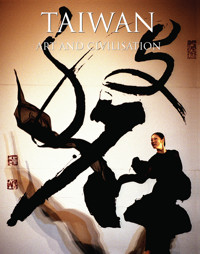
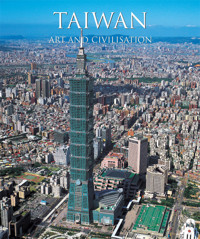
Taiwan's specific situation in Asia is the source of its thorn past. Situated in the South East of China, Taiwan was at the crossroads of many maritime routes and squeezed between its neighbors, China and Japan. After centuries of foreign occupation, Taiwan has a unique history. Taiwan, Art and Civilization sheds light on Taiwan's beautiful scenery as well as its colorful history in the form of a true initiatory trip. Through magnificent illustrations, Taiwan reveals its secret beauty, its fauna and flora intertwined with its unique architecture. Home of the traditional and the modern, the gorgeous island is also the home of a very dynamic artistic scene. One thus fully grasps why the Portuguese named her Ilha Formosa, beautiful island.
Das E-Book können Sie in Legimi-Apps oder einer beliebigen App lesen, die das folgende Format unterstützen:
Seitenzahl: 60
Veröffentlichungsjahr: 2023
Ähnliche



















Project manager: Dr. Hsiu-Huei Wang
© 2023 Confidential Concepts, for the present edition, USA
© 2023 For the present edition, Parkstone Press International, New York, USA
© 2023 All pictures from the Taiwan National Cultural Association
© 2023 English translation by Taiwan National Cultural Association
All rights reserved worldwide
Published by Parkstone Press International
An imprint of Confidential Concepts
Secretary General: Ms Yu-Chiou Tchen
ISBN: 978-1-78310-762-9
Taiwan
Art and Civilisation
Contents
An Invitation Knowing and Appreciating Taiwan’s Beauty
By Tchen Yu-Chiou Secretary General, National Cultural Association
Introduction By Janice Lai Director General, Taiwan Tourism Bureau
More than Thirty Thousand Years of History
A Natural Miracle
Architectural Style and Culture in Transition
Flourishing Performing Arts and Traditional Life
Vigorous Visual Arts
Index of Artists
List of Illustrations
Sky Lanterns
An Invitation Knowing and Appreciating Taiwan’s Beauty
By Tchen Yu-Chiou Secretary General, National Cultural Association
In the last forty years, studying and working have given me the chance to make innumerabletrips abroad.Among the foreigners I have met, many have been to or heard of my country Taiwan, while some do not even know where Taiwan is, or what kind of country it is. But when they hear me describe or introduce Taiwan, they often say something like:“Is that so!”or“Oh, spectacular, I didn’t know that!”
Yes, Taiwan is indeed a place full of surprises, a mesmerizing island.
This island nation, occupying only 36000 square kilometers, once implemented martial law for 38 years, the longest period of martial law in the world.During this period, due to its people’s hard-working nature, Taiwan became one of the world’s largest textile producing nations in the 1970s, and one of the leading computer productsmanufacturerin the 1990s. Entering the twenty-first century, Taiwan, withits populationof 23 million, is the sixteenth world economy in terms of GDP andthird in its foreign currency reserves. Its competitiveness stands at number 13 among 125 countries, according to the“2005-2007 Report on Global Competitiveness”of the World Economic Forum.
The second impressive thing about Taiwan is its natural environment and culture.
Taiwan’s geographical location is special, helping create a diverse natural scenery and ecology. Not only are plants from many different climatic zones represented; their habitat and species diversity are also uncommon. On this land, there are aborigines who share a common ancestry with theAustronesians, but who have developed their own culture that is uniquely Taiwanese. In recent centuries, however, as a result of historical factors such as immigration and colonization, there developed a phenomenon where Chinese Han culture, Western culture, and Japanese culture blended together.
Thus we see that Taiwan has long been multicultural, its different cultures coexisting symbiotically. The world not only witnesses different species existing here, but also different ethnic groups coexisting together, different cultures agitating, gradually forming the face of modern Taiwan, spurring this tiny island’s creativity and arts to truly amazing accomplishments. Especially since entering into the democratic era beginning in the 1990s, full progress and impressive achievements have been made in the visual and performing arts.
The diverse geography and assorted ethnic cultures have enabled the Taiwanese to bravely face difficulties and challenges, with unwavering stamina, in spite of repeated assaults, and a gentle, good-natured fellow-feeling. This capacity for life is also on constant display in the annual festivities and ceremonies.
To the Taiwanese and the world, Taiwan possesses two famous and conspicuouslandmarks: Yushan, the tallest mountain peak in East Asia, and the Taipei 101 skyscraper, the tallest building in the world. They represent imprints of natural history and modern science, respectively. Rising confidently out of the earth, with their tangible shapes, they show the world Taiwan’s intangible loftiness.
Even though the island of Taiwan is fifteen million years old, the Taiwanese are a vigorous, emerging peopleof recenttimes. They have not only preserved completely their traditional characters and traditional Chinese culture, but have also generated the most dazzling creative energy. In the Chinese-speaking world, Taiwan is also the most accomplished in establishing democracy and human rights standards.
Taiwan is like a diamond, small yet beautiful, small yet sparkling. Through this album’s words and pictures, I hope international friends can become further acquainted with Taiwan appreciate it. I also invite readers to share the beauty of this oriental island nation situated in the global village.
Introduction By Janice Lai Director General, Taiwan Tourism Bureau
It is my great privilege and pleasure to jot down a few paragraphs to introduce this splendid compendium, aimed at acquainting readers with Taiwan’s beauty. The brain-child of Mme Tchen Yu-Chiou, Secretary General of the National Cultural Association, can reasonablely be expected to be universal in its appeal. Mme Tchen studied music in Paris for nearly a decade and is an established, world-famous pianist.
It was her heart-felt love for Taiwan that brought her back to her native home and inspired this book.
This volume illustrates landscape and human activities of Taiwan in both words and photographs. The coverage is quite comprehensive, including landscapes, the visual arts, architecture and performing arts. Many readers are likely to be familiar with the Taroko gorges and the Cloud Gate Dance Theatre of Taiwan, internationally acclaimed site and performing arts ensemble included in these pages. But there are many other lesser-known attractions that remain to be explored and appreciated in Taiwan.
It is said a picture is worth a thousand words, and to a large degree, this book trusts the photos to speak for themselves. Viewed through the lenses of our photographers, one may amply see that Taiwan is indeed a mesmerizing island replete with delightful surprises.
Taiwan is an economically advanced country with a complex history. Today, it boasts a fervent democracy unrivalled in Southeast Asia. As you flip through these pages, you will see the cultural diversity of its long history.
With great pride, I present to you, the ultimate guide“Taiwan Art and Civilisation”. I am sure that this precious book will open new windows to the diversity and beauty of Taiwan.
Map of the island of Formosa and coastal China made by the Frenchman J.N. Bellin (1760).
More than Thirty Thousand Years of History
Thanks to archaeologists and the sites and artifacts they unearthed, it has been proven that the earliest inhabitants of Taiwan—a land at least fifteen million years old—can be traced back to thirty-seven thousand years ago. On Taiwan’s east coast, the Changbin Culture site in Taitung County silently tells of stone-age menusing




