


Erhalten Sie Zugang zu diesem und mehr als 300000 Büchern ab EUR 5,99 monatlich.
- Herausgeber: Books on Demand
- Kategorie: Geisteswissenschaft
- Sprache: Englisch
By describing twenty medium mountain tours, the author attempts to convey the essence of the meditation method he has developed. For the first time, meditation is explained in a scientific way. The starting point is the teaching of the psychoanalyst O. Count Wittgenstein, who assumed that the human being contains three parts within himself, which he can only combine in different ways to form a unity or unified personality. The final and ideal unity he calls the 'trialog'. As with the theme of mountain climbing, the author also explores cultural and psychological issues in order to ultimately reach the 'trialogue' through hiking, meditation and, above all, in-tellectual processing. The book also contains a guide to the practice of the method.
Sie lesen das E-Book in den Legimi-Apps auf:
Seitenzahl: 235
Veröffentlichungsjahr: 2021
Das E-Book (TTS) können Sie hören im Abo „Legimi Premium” in Legimi-Apps auf:
Ähnliche




















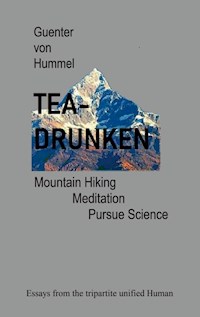
The cover picture shows the Machapuchare, an almost eight-thousander in the Himalayas. I did not climb this mountain, of course, but I hiked towards it and this tour was one of the most impressive ones, which also inspired most to the meditative-psychological reflections of this book. On the second page of each chapter I show a picture of the corresponding title.
Table of Contents
Introduction
South Tyrol, Tramin
Kampenwand, Germany
Towards Hocheppan
Madeira
Bali, Gunung Batur
Tiger's Nest, Bhutan
Mariposa Grove, Yosemite
Marmolada West Ridge
Monte Baldo, Italy
Teide-Tenerife
Grand Canyon
Moses Mountain, Egypt
Bergell, Switzerland
From Pokhara to Muktinath
Amalfi Coast
The Euganean Hills
La Palma, Gran Canaria and Lanzarote
Gorges de Vernon, France
Sheep Mountain, Austria
Appendix
Introduction
My didacting analyst O. Count Wittgenstein, from whom I received the important, practical part of my psychoanalytic training, wrote a book: "sagen, hören, sehen" (saying, hearing, seeing) with the subtitle "Vom dreiteilig-einigen Menschen" (From the tripartite unified Human). In it he used myths and fairy tales as well as philosophical and psychoanalytical forms of observation to formulate what he called a 'trialogical' goal. The picture below from his book shows this in an overview for the time being.
‘Trialogical' should mean that the 'tripartite' human being can find unity through a special kind of communication or through the 'logical practice' of psychoanalysis in the form of a tripartite logo and not only of a dialogue. It is not enough that only the therapist and the patient sit together, there has to be a third being or a third in the sense of the trialogue: S. Freud for example or the consensus of the psychoanalytical teaching. Only in this way, by means of a psychoanalytical 'working through' of the same tripartity of the X-, Y- and Z-axes, can a person arrive at self-unity in a comprehensive form. For man is not, of his own accord, a self-sufficiently resting personality. In this book I am also concerned with this 'tripartite unity', whereby I would like to assign the mountain hikes to the 'seeing' of Count Wittgenstein's book title, the meditation to the 'hearing' and the knowledge, the science, to the ‘saying’.
In this way I want to convey Count Wittgenstein's 'tripartite unity', but also the tripartism in other ways than only scientifically, namely by incorporating physical and meditative exercises. The last step, the 'trialogical goal', should be transferred to Count Wittgenstein accordingly and transferred to concrete lives, in approximately at the end of the second life-thirds be reached. By then one should have reached the point where one can reconcile the many opposing aspects shown in this illustration. Sometimes Count Wittgenstein meant already the phase after puberty to reach the 'trialogue', i.e. the stage of life where one has really overcome this phase. But even this phase, called postpubertal, can be completed quite late in life. Unfortunately, the postpubertal phase can also be found in many adults. In order to accelerate the process of maturity, it is therefore necessary to take some physical effort (e.g. hiking in the mountains) and meditation into psychoanalysis.
As mentioned above, 'trialogical' should also mean that one has to go beyond the mostly deceptive 'dialogue', which is understood here as a conversation between two people, to a 'three-way conversation', in which a reference to the unconscious, to the completely Other in ourselves, yes to the foreign in us as a third party is included. All the world today speaks of dialogue and thinks that it is possible to grasp everything interpersonal in full depth with it. However, Count Wittgenstein believed that one can proceed from the catalogical (the pure listing of handles) to the analogical (the entirely similar) and only then come to the real and true dialogical. It is therefore a three-step, three-conversational, psychoanalytic process to the true dialogue, which Count Wittgenstein just called 'trialogue'.
In a conversation Count Wittgenstein once indicated to me that he wanted to introduce the concept of 'trisexuality' in order to be able to expand Freud's basic assumption of a bisexuality that is invested in each human being. I found this curious, and I believe he never again announced or published anything in this direction, as much as the concept of 'trinity' - as just described - is important for psychoanalysis and ultimate maturity. Nevertheless, today I can get a better idea of what moved Count Wittgenstein at that time. There are too many sexualities, which Freud mostly characterized as 'infantile' and which man should transform through cultural development. Now remnants of this infantility remain in all forms of sexuality, even in heterosexuality, which is superficially classified as normal, a man who constantly needs another woman and has ten others in mind is problematic, neurotic, not to say perverted. And so I consider the 'trialogue', in which it also refers to the sexual, to be a good term, because man is not only born with immature sexuality and remains imprisoned in it, but also with an immature ‘logos’, a very rudimentary ability to say and speak, which he does not bring to full development.
In addition to the descriptions of various walking tours, I would also like to weave in remarks about a meditation that uses psychoanalysis as a scientific basis, but manages it without too much complex theory. I have reported in many non-fiction books about my own meditative method. However, because of their scientific pretensions, these reports sound very sober and no less complex than today's psychoanalytic literature, in which the many schools of thought can only with difficulty agree on a common set of terms. Nowadays psychoanalysis is too institutionalized, and so there is too much 'discomfort' in its culture, as Freud already complained in his time.
To return to 'seeing' and the mountain hikes: From the top of the mountains, one usually sees well into the distance, but at the same time one should also look at oneself in one's own inner proximity, because only in this way do outer and inner perception, which I also call the image-real, come together. And with the 'hearing' I connect the word-real correlating with it, which mainly refers to psychoanalysis, but also to what Count Wittgenstein indicated with basal and top-down administration. For as I understand meditation, this word-real comes more from above, from the top-down administration, supplemented by psychoanalysis, where it seems to come from below, where man is virtually administered by his unconscious desire, because he can only badly defend himself against these strivings from there.
After all, 'saying' will not only refer to science, but also to the relationship between man and woman, which is otherwise known only from hundreds of novels or from one's own life, which may not have been entirely successful. Nowhere is 'saying' so important as between the two sexes, where one thinks one already knows and knows everything about the other, thinks one has already discussed this with one's life partner and many other people, and yet nothing changes and improves. That's why the other part of psychoanalysis is in demand here, namely the one with which she claims to be a science. Here everything must be questioned exactly and only with love and good intentions alone it is not done. So it is precisely where intimate life is concerned that science is called for, albeit in a particularly human dimension.
Furthermore, it is not easy to integrate the other aspects of the realized, introjected and projected X-Y-Z-axes into the assignments of the X-Y-Z-axes, which are listed in the above illustration. The affiliations of both the axes and their designations overlap with so many parameters. And so I will try to think about sexual differentiation in my mountain hikes, as well as about top down management and administration in case of too close proximity. The ultimate goal is the 'trialogy' anyway, to which I will try to head over several chapters. I will include further remarks in the following texts.
1. Tramin - South Tyrol
You can climb the Roen directly from Tramin, four hours circa to the top. At the beginning, everything seems to go quite comfortably. A bit hilly, a dew-covered meadow, a forest, a small stream and a few swampy spots. At first the grass seems almost a little malachite green with a few marsh marigolds and restharrow herbs in between. But after that, the trail winds up the dark green forest. No one walks on this path, a few birds chirp, you are alone. At one point a small snake slithers by the side of the path and quickly disappears into the bushes. Two black beetles race on a tree bark. The times are probably long gone when one had to be afraid of larger animals in the forest. There are also no dangerous people to be expected. Yes, no people appear at all anymore. Almost no one knows this direct route, and apparently no tourists at all.
You can feel as if you were the owner of a large area of trees, branches and bushes and of a spicy-scented coniferous soil. It smells of the essential oil of spruces and larks, and I imagine that the earth here tastes a bit tart, clayey and just like ancient, healthy forest grounds. All this together results in something contemplative, in a mood of connection, in a 'perceptual identity'. Sigmund Freud contrasted this with the 'thinking identity' that we use today. In the 'perceptual identity' one feels identical with the wind, which plays around one, blows around one, breathes around one, and the soft coniferous soil, the diatomaceous earth of the stones and the humming of the small animals close as seldom else. But we modern people no longer smell and taste, nor do we grasp anything with the inner touch, as the philosopher D. Heller-Roazen called it.1 Rather, we immediately have something linguistic and conceptual at hand when it comes to what we take to be 'true'. In short: instead of the more pictorial, 'imaginary order', the image-real, we prefer the word-like, 'symbolic order', the word-real, and above all we do not reconcile the two. Precisely for this a third element is needed, which I want to create by my procedure.
It goes now steeper uphill. From time to time rocks can be seen, then it goes again through the high treed forest, a narrow path further and further up. Nevertheless, again the impression, you are master of the world, everything leans towards you, cooler mountain air spreads and gives the lungs a refresher. Still, it's not much fun. The path is exhausting and only after three and a half hours you reach a small plateau from which a via ferrata continues up. It is one of the usual metal ladders, not too difficult. Maybe even a little highlight, and then you're at the top. There's a bit of snow even in June, but again - at least at the time I was there, around 1965 - no people.
Just for this view into the vastness, into the endless valley, and for this being lifted off from all the hustle and bustle below, one has gone up. Deep down you can see lively green of various shades and the glittering flowing water of the river Adige. Many houses, farmsteads, wine terraces, orchards. Micro-vehicles, micro-people, micro-things and micro-animals moving along the streets below. Is this really the show, the painting, the vision you expected of life? For fitness, it was quite good to go to the top, but otherwise? Somewhere I hope from such a hike, without people work, without big meetings with other people, without small talk and also without other events, to meet the very big. Why should that not exist, that after a hike, after a lot of nature, effort, a great view and a few good thoughts and 'lifts up' something charismatic happens?2
But I am not a gusher, I hate these tree-whisperers, the excessive nature-enthusiasts, these neo-animists who believe that matter is alive.3 Their books are quite amusing and also interesting to read, but why do they have to come along so warm-heartedly, as if this autochthonous enjoying were not already in us and there even much more vividly experiencable? A few people come to my memory, even directly to my inner gaze, and I think the thoughts that were shared with them. They live partly no more, partly the thoughts were not so important. For what then were the people actually there, for what were the words exchanged?
Hard to bear how insignificant we all are, but there must be something else, nothing 'spiritual', rather something 'beyond our sentences', as the philosopher M. Foucault complained. Something different of our I-being, the image-word-real in the Other of the unconscious.4 Probably the word charisma is too strong for that. It would be enough if one could only return a bit to the perceptual identity and understand the view from above as an overflight, an overview of the essence of the world. However, the whole thing would then have to be held together - now I am going very far ahead - by a kind of an 'over-word'. Because the view weakens in the memory, but the word remains. It remains at least somewhat longer and also more precisely in the memory.
But since I don't have the 'overword' available yet, I want to forget first of all all this giant background of culture, religion, politics, sciences and what God knows what else is talked and done. I just wanted to talk about being up there, to have a little far-sightedness and to be content with the feeling of being alive. Breathing by itself is grandiose. But it's not enough and so I wrote it all down. Probably no one will read it, it will not be the great true. I repeat, the great truth must exist somewhere. Inside us, around us. It is good to remember it, for a moment, maybe. After that, you descend from the Roen another way. Towards the Mendel Pass, it is easier to walk. You reach a bench, a small sign of grace, sit down, close your eyes and wait.
Soon after, the silence begins to make itself felt. Never is the silence completely still. But the distant sounds of life down in the valley are even conducive to meditation. Fine rubbing, rustling and humming noises put even the smallest children into relaxation. You can even place an electric toothbrush near them to help them fall asleep more easily. And so the sounds of the human world coming from far away are also calming, and after a while a fine sound can be heard inside, as if one were concentrating on it. At the same time it is he who concentrates on me, and he becomes clearer and clearer.
Above, above and to the right in the head or in the depths of the brain or the unconscious, he emerges. Lacan refers to him as something 'real'.5 I have been meditating in this way for a long time, it is nothing special, the sound, tone or something similarly audible is carried by everyone. It is something vertical, as if one is plumbed in the sound, graded, up, down, down, up. If one has practiced a lot with it, and listens to it longer, it gets the character of something that wants to be heard, that wants to make itself noticeable and say something.
This is nothing pathological. At some point it becomes clear that it is one's own unconscious thoughts that become quite easily audible, that one can almost hear and then also suddenly almost thinks one can understand. They are not the usual thoughts that one thinks. Maybe they are no thoughts at all or only preforms of them, but at the moment of their increasing being grasped they are unconscious thoughts, they are even consciously understood. This does not mean that one fully comprehends them. They do not attain the form of a story, a prolonged expression, or even a revival. They are not charismatic, not the great true or the very great at all. But they do exist in real terms. The unconscious is the treasure house of signifiers Lacan claims, central place of units of interpretation, of directives, of riddle words, signs and slogans, of the unconscious other to be writ large, which has arisen in us internalized by the sounds of the environment, parents, teachers, analysts, in short: all this significant Others.
Often it deals just with insignificant memories, fantasies, which are immediately wiped away. Sometimes, however, peculiar sayings come to light, of which one has the feeling that they could really tell one something. Something essential. You then have to have good rationality to really focus only on the few clear and good syllables, half-sentences or saying-like thoughts. Clear ratio is needed as well as the irrational of the unconscious. In such moments there is no more question about the great true, because there is at least something corresponding to it. It is perhaps not great, this true, but there is something about it. As said it distributes instructions, revelations and even sometimes slogans.
From Roen you can also walk along the ridge to the Überetscher hut, then take a chair lift for a bit and finally reach the Mendel pass, from where a path leads again to the funicular to Kaltern. Again and again new, fantastic views into the valley show up. Somewhere off the path I stop again on a tree stump. It takes some time again, until in the silence a cloudy, concentrated something is established in the head, from which the said sound stands out and in this medium, in this inwardly expanding darkness, becomes an announcement. One cannot say from where exactly it comes, but now, in the silence where I sit there, the consciousness immediately grabs this approach of syllables or already almost whole words and makes a half-sentence out of it, or even more.
"Tea-drunken" I suddenly hear inside me, "tea-drunken"? Strangely, quietly and as if coming out of the depths of the bodily unconscious. It was quite clear, I did not mishear: "tea-drunken", what is that!? The rational immediately intervenes and sorts out in a matter of seconds whether what I have heard is nonsense or has hidden meaning. Can one get drunk on tea? Maybe, but I think the meaning consists of a more figurative sense. It is quite clear what it means, because when it comes from oneself, one usually knows it immediately. For me it had the meaning of a drunkenness through meditation in general, in which one does not become drunk from what usually makes one drunk. Such a drunkenness from nothing is often claimed.
Medieval mystics and Asian wisdom teachers mention such phenomena with words like sartori, samadhi or ecstasy. They are intoxicated by God, they say. I call such a thing a simple catharsis, a self-sublimation, a relaxing abreaction, the perception of a slight "trickling through" in the body image, a liberating switching in the neuro-psychic system, which then opens a channel for hearing thoughts. It is often the case in the normal state that one does not know whether a thought comes entirely from one's own ego or was triggered from somewhere else.
Despite everything: "tea-drunken" was a good and beautiful word, I thought to myself as I continued to walk down into the valley. My rationality told me it was okay. Because it is simply about something other, the Other as such, and less about all those giant background and foreground noises that I just mentioned we are usually at the mercy of: the clatter of the world, of politics, of people, of everyday problems. The silence somehow becomes audible in the moments when one relaxes and sinks a bit into inner contemplation, into leisure. And then it sometimes lets through a signifier that comes as if from afar or from the depths, an effective image-word-real that has meaning.
That long lasting silence starts to drone, as one says, is of course only true under the condition that it is tense, e.g. when people sit together because of a problem and nobody says anything. But in the situation when one rests exhausted from the hike, the silence rather begins to whisper, murmur or sound like thoughts.
On from above or right above as I claim is not to mean neurological orientation. It probably has only incidentally to do with the nerve junction that the left-brain speech center has an effect to the right. It also has something to do with the word association centers or simply the meaning context in which one is associated with others. Lacan says it are the echoes, unconsciously accumulating in the body, of all that is audible and heard that comes forward. It is the same with the usual whispering, when one cannot be sure what one has heard, as in the game 'whispering mail': the associations then begin to speak themselves.
Of course, one can also be drunk on tea, if one is a very special connoisseur of certain teas, of "Golden Assam" for example, or of "Kusmi Darjeeling" or any other second-flash product of recognized teas. But just then the drunkenness is only an additional emergence from the ceremony of tea preparation and consumption. It is a matter of psychological exaltation, of hyperthymia. I am a tea drinker, have also looked forward to tea after my hike, but translate the whole thing primarily as a metaphor for my attempts at meditation, for self-drunkenness, which is a meditation of the Other. I don't like artificial exaggeration, and I also always write the word 'spiritual' in quotation or interrogative marks.
That is to say, I do not get into ecstasy, not into a frenzy. One experiences something like that, which is perhaps a little mysterious but still easy to interpret in any good meditation. But it must be said, heard, thought as if set apart from any conscious thought, and understood rather as if from afar, from the depths or seemingly alien. That something speaks from the unconscious is a thing in itself. Something or someone wants to tell me something here that has just been circulating repressed or even split off in the unconscious and finally had the opportunity to burst forth. Wittgenstein would have said that it comes out of the conflictual tripartite and wants to express itself in a logo, a motto, a nimbus, a proper name unifying everything.
So what? "Tea-drunken" is not that strongly revealing. Or is it? I should write about it, it should be about writing down again, I couldn't discover any other sense - except that of catharsis, and that it is typical of meditation. Maybe I'm obsessive about writing, too. I've written thirty books about my psychoanalytic-meditative process, and I'm sure I've published over a hundred articles on the Internet about it. I am letter drunk, writing drunk, sharing drunk, that will be it. And it's enough, I shouldn't write more, it won't do. I'm not just drunk on tea leaves - that too to some extent - but on writable sheets of paper, printed pages, books and internet pages. I need to reduce the drunkenness, even if it's nice and my books can't say it all.
In any case, "tea-drunken" does not come from the Wittgensteinian `top-down-aministration' above, nor from the `basal administration' below, or from far or near. It has come from the middle, where it is really meditation, charisma, something between the 'saying' and the 'hearing'. And so I had to get up and also continue down the path into the valley to Tramin. Once down there, I immediately sat down at the typewriter and wrote these lines. At that time there were no laptops with voice recognition and other bells and whistles. You had to type flawlessly. You couldn't insert, change, and delete vocabulary in the text like you can on a PC today. Still, the fun was the same.
So after that, a tea. It was a tea from Sri Lanka, where we, family and friends, among others, once visited the tea pickers in the highlands. They seemed so humble and strong and at peace with themselves. But when we wanted to give them some money, they completely lost their dignity and fought greedily over the bills. It was not much that we gave, and we were struck by the obvious blatant poverty that was visibly behind this almost aggressive appearance. Horrified, we threw the money out of the car and urged the driver to continue. As long as I drink this tea, I will think about it and also about the fact that these workers are probably exploited, although they have a beautiful profession in the wild. But they are totally frustrated and have forgotten their dignity. And also what nonsense on our part to go so far away to another world.
1 Heller-Roazen, D., The Inner Touch, Der innere Sinn, Archeology of a Feeling, fischer wissenschaft (2012)
2 I will come back to the concept of charisma. I do not want to use it theologically or in a too everyday human way, but I want to keep it on a middle level, on which also psychoanalysis is located.
3 Bennett, J., Vibrant Matter, John Hope Franklin Center Book (2010)
4 Psychoanalyst J. Lacan calls the image-word-real the unconscious important Other, who is the main psychic instance through internalizations of significant others outside.
5 The 'real' according to the French psychoanalyst J. Lacan is not the inner or outer reality, but something that stands opposite the 'imaginary' and 'symbolic order' as a third.
2. Kampenwand
The Kampenwand is one of Munich's local mountains, so you have to have been there if you live here. My way up there, however, took place more than forty years later than the tour on the Roen just described. In old age, tours are recommended where you can take the cable car on the way back, so also now from Aschau, from where you need almost three hours to reach the summit and are back down in a quarter of an hour. The thing is no longer so romantic, because nowadays leisure efforts are popular, and so you can hardly get a seat at the top on the terrace of the summit restaurant. There is also nowhere to find a place to meditate. For this you wear special shoes and clothes and also support yourself with specially created sticks. Can't you do everything in simple sneakers?6
But in the meantime I can fall back on a large amount of 'pass-words', as I now call my proclamations from the unconscious. I call them that because they are identity words, which have to do with the imaginary-symbolic complex in the unconscious that makes us do and think so many things without knowing why. One of the best of these pass-words that came to me was, "Say your maiden name." At first, this probably sounds quite strange to a man. But that there can be such a thing at all, that 'it' (or better Id, the Freudian Id) actually speaks in you, is quite amazing. Now I can easily refer here again to the Other, who is after all the hoard of the signifiers, of the speech units. Moreover, the unconscious truth is just not the usual, generally communicated and consciously known truth. Also in the antiquity the unconscious spoke completely mysteriously as it is handed down from the Delphic oracle.
But with modern methods - like the analytic-cathartic meditation I developed - one can filter out all too speculative and enigmatic statements. Moreover, perhaps a little psychoanalytic knowledge is needed to translate such an identity or passport word into printable text, which was not too difficult in the case of the saying with the 'maiden name'. It should probably be about the feminine in myself and also about giving a name to the feminine desire. Freud had tried this in vain. One of the first psycho-analysts who corresponded with Freud about this was, interestingly enough, the Indian G. Bose.




