


Erhalten Sie Zugang zu diesem und mehr als 300000 Büchern ab EUR 5,99 monatlich.
- Herausgeber: The Lilliput Press
- Kategorie: Geisteswissenschaft
- Sprache: Englisch
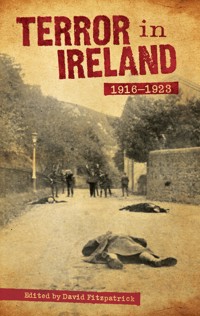
The practice of terror in revolutionary Ireland remains a highly controversial topic, which seldom receives either balanced or dispassionate treatment. This collection of essays is designed to illuminate the varied origins, forms and consequences of terror, whether practised by republicans or forces of the Crown. It is the fifth production of the Trinity History Workshop, an informal group of academic historians, research students, and undergraduates associated with Trinity College, Dublin. The Workshop's reputation was established in 1986 by its first collection, Ireland and the First World War, subsequently reissued by The Lilliput Press. The current volume is dedicated to the memory of a distinguished former member, the late Peter Hart, whose studies of both revolutionary and counter-revolutionary terror continue to arouse lively and sometimes intemperate debate. Several chapters emerged from papers delivered at a one-day conference in Trinity College in November 2010, while others have been specially commissioned for this book. The contributors, including gifted postgraduate and undergraduate students as well as prominent historians, tackle many facets of terror, such as 'Bloody Sunday', the Kilmichael Ambush and the Sack of Balbriggan. Scholars, students, political activists and all those interested in the Irish Revolution will find both provocation and enlightenment in this book. Its purpose is not to assign blame to one party or another, but to offer varied perspectives on one of the most contentious periods of Irish history. The book is enhanced by illustrations, maps and charts.
Sie lesen das E-Book in den Legimi-Apps auf:
Seitenzahl: 453
Veröffentlichungsjahr: 2012
Das E-Book (TTS) können Sie hören im Abo „Legimi Premium” in Legimi-Apps auf:
Ähnliche



















Terror in Ireland 1916–1923
edited by David Fitzpatrick
Trinity History Workshop
In memory of Peter David Hart, born 11 November 1963, died 22 July 2010.
Contents
Title Page
Dedication
Illustrations
Abbreviations
1. IntroductionDAVID FITZPATRICK
2. Terror in Twentieth-Century IrelandBRIAN HANLEY
3. ‘The shadow of a great fear’: Terror and Revolutionary IrelandANNE DOLAN
4. Violence and the Easter RisingFEARGHAL McGARRY
5. The Sack of Balbriggan and Tit-for-Tat TerrorROSS O’MAHONY
6. The Price of BalbrigganDAVID FITZPATRICK
7. ‘English Dogs’ or ‘Poor Devils’? The Dead of Bloody Sunday MorningJANE LEONARD
8. Counting Terror: Bloody Sunday and The Dead of the Irish RevolutionEUNAN O’HALPIN
9. Kilmichael Revisited: Tom Barry and the ‘False Surrender’EVE MORRISON
10. The Execution of ‘Spies and Informers’ in West Cork, 1921THOMASEARLS FITZGERALD
11. Revolution and Terror in Kildare, 1919–1923MICHAEL MURPHY
12. Persecuting the PeelersBRIAN HUGHES
13. Terror Confined? Prison Violence in Ireland, 1919–1921JUSTIN DOLAN STOVER
14. Republican Terrorism in Britain, 1920–1923GERARD NOONAN
Plates
Copyright
Illustrations
Plates
Coercion in Revolutionary Dublin
1. ‘The tank preserving the peace in disordered Dublin’ (The Graphic, 28 Feb. 1920)
2. ‘A motorist being searched by one of the military pickets’ (The Graphic, 10 Apr. 1920)
The Sack of Balbriggan
3. ‘Hosiery mills, Balbriggan’ (Fingal Local Studies Collection)
4. ‘The Square, Balbriggan’ (Fingal Local Studies Collection)
5. ‘The campaign of lawlessness in Ireland’ (The Graphic, 25 Sept. 1920)
6. ‘Part of a row of cottages which were destroyed by fire’ (The Graphic, 25 Sept. 1920)
Bloody Sunday
7. 119 Lower Baggot St, sidelong view (Jane Leonard, 2010)
8. 92 Lower Baggot St (Jane Leonard, 2010)
9. 38 Upper Mount St (Jane Leonard, 2010)
10. ‘A house of death’, 22 Lower Mount St (The Graphic, 27 Nov. 1920)
11. 28 Upper Pembroke St, portico (Jane Leonard, 2010)
12. 28 Upper Pembroke St, rear (Jane Leonard, 2010)
13. ‘Murder most foul in Dublin: the blackest Sunday in Irish history’ (The Graphic, 27 Nov. 1920)
14. ‘A field of death: where Hogan fell in Croke Park football ground struggle’ (The Graphic, 27 Nov. 1920)
15. Mrs Woodcock and Mrs Keenlyside (The Graphic, 27 Nov. 1920)
Aftermath of the Kilmichael Ambush
16. ‘The Martyrs of the Macroom Massacres’ (The Graphic, 11 Dec. 1920)
Maps and Charts
Map of properties affected by the Sack of Balbriggan84
Copy of map showing location of casualties and positions at Kilmichael Ambush165
Political inmates in Belfast prison, 1 May–31 December 1918221
Number of days served by Mountjoy prison rioters, October 1919227
Abbreviations
1. Introduction
David Fitzpatrick
I
Revolutionary terror is a topic of never-failing public interest, periodically revived by horrific news of contemporary attacks on civilians by revolutionaries or by oppressive régimes. In Ireland, the desire to analyse and interpret terrorism in the revolutionary period has been heightened by later conflicts in Northern Ireland, still not fully resolved. Did the British government organize, or collude in, a campaign of counter-revolutionary terror conducted by ‘murder squads’ or an ‘Anti-Sinn Féin Society’? Did the IRA, or maverick groups within it, select certain groups of civilians as ‘targets’ for terrorism, and, if so, why? How did the new government manage to apply coercion during the Civil War on an unprecedented scale, without following the example of its predecessor by losing legitimacy and popular support? To what extent did civilians endorse or subvert the various campaigns of terror that demanded their loyalty and claimed to act on their behalf?
Since its creation in 1986, the Trinity History Workshop has published four volumes of essays by undergraduate and graduate students (past and present) and staff associated with Trinity College, Dublin. These books continue to be widely read and cited, partly because they addressed topics in modern Irish history which had been neglected by academic historians. I myself edited Ireland and the First World War (1986, reissued with The Lilliput Press, 1988) and Revolution? Ireland, 1917–1923 (1990); David Dickson edited The Gorgeous Mask: Dublin, 1700–1850 (1987) and The Hidden Dublin: The Social and Sanitary Conditions of Dublin’s Working Classes in 1845 Described by Thomas Willis (2002). The purpose of this book is to present fresh findings by historians, associated with Trinity College, who have worked on aspects of terror and its victims. As befits a Workshop, most chapters have been substantially modified as a result of seminar and class discussions, not to mention editorial interference in matters of style and presentation. The outcome is a truly collaborative work of scholarship, in which students distinctly hold their own in the company of professional historians.
Versions of eight chapters were delivered to the Workshop’s inaugural seminar in November 2010; three chapters were distilled from undergraduate research essays; and two were specially commissioned from postgraduate students with relevant interests. Thomas Earls FitzGerald, Michael Murphy and Ross O’Mahony are Sophister students at Trinity College who took a course on ‘Revolution and Civil War in Ireland’ in 2010–11. Brian Hughes is a doctoral student at Trinity College; Eve Morrison, Gerard Noonan and Justin Dolan Stover have all been doctored since the inauguration of the Workshop. Jane Leonard, who contributed three chapters to earlier Workshop volumes, is the author of several studies of conflict and commemoration in twentieth-century Ireland. Brian Hanley and Fearghal McGarry, both holders of doctorates from Trinity College and authors of several books on modern Ireland, teach history in the University of Liverpool and the Queen’s University of Belfast. Anne Dolan, Eunan O’Halpin and the editor all teach at Trinity College and have published extensively in the field.
For financial assistance in organizing the seminar and publication, the Workshop is deeply grateful to the TCD Association and Trust, the Arts and Social Sciences Benefactions Fund, and David Ditchburn on behalf of the Department of History. We are also indebted to Antony Farrell and Fiona Dunne of The Lilliput Press for exempting us from some of the chores, rewarding yet tedious, associated with publication. The Workshop has come a long way since 1986, when its exclusively undergraduate contributors developed auxiliary skills as designers, photographers, typesetters, printers, paper-folders, fund-raisers, marketeers and distributors.
II
The current Workshop was inspired by the early and lamented death in July 2010 of Peter Hart, a contributor to Revolution? who went on to hold a Canada Council chair in Irish history at the Memorial University of Newfoundland, St John. Having studied at the Queen’s University in Kingston, Ontario and then Yale, he spent four productive years at Trinity College before being doctored in 1992. As a research student, he was remarkably self-assured and self-sufficient, a supervisor’s dream, slow to deliver drafts until a deluge of polished, eloquent chapters surged forth in the final months. His thesis had the rare distinction of being accepted exactly as it stood, and was subsequently published as The I.R.A. and Its Enemies: Violence and Community in Cork, 1916–23 (1998). Despite serious illness during the decade before his death at the age of forty-six, he maintained a steady flow of publications, conference papers and spirited dialogue with those who challenged his findings. His provocative and well-documented thesis-book and essays on The I.R.A. at War, 1916–1923 (2003), followed by Mick: The Real Michael Collins (2005), touched many raw nerves in Ireland and continue to arouse controversy. I remember him still as a brilliant boy, audacious yet unruffled.
In my view, he was a model for historians invading contentious territory: more interested in the dynamics of violence than its morality; lacking any clear political convictions beyond a preference for peace; lucid, sceptical, mild-mannered and unpretentious in his prose and debating style; adept at deploying sensational material to provoke discussion rather than to bully his readers; skilful in sifting and interpreting primary sources, if occasionally careless in citing them; influential in arousing academic and popular interest in the topics that he tackled. Hart’s fair-minded and compassionate scholarship was recognized in 1999 when his first book was awarded the Ewart-Biggs Memorial Prize. This remarkable work set the agenda for several recent studies by concentrating on Cork, the county most affected by revolutionary violence. In a contentious analysis of Tom Barry’s assertion that the execution of soldiers at Kilmichael in November 1920 was justified by their ‘false surrender’, Hart argued that Barry had invented the episode in order to disguise his own dishonorable conduct as a commandant. The reliability of Barry’s account and Hart’s critique are assessed by Eve Morrison, in a chapter based on witness statements for the Bureau of Military History and other oral testimony not previously made public.
The I.R.A. and Its Enemies also revealed that over 200 civilians in the county were killed by the IRA, of whom 36% were Protestants, five times the Protestant proportion in Cork’s population. Though these victims were usually identified as ‘spies’ or ‘informers’, Hart argued that many were selected as ‘soft targets’ on the basis of flimsy intelligence. Republican terrorism intensified in late 1920 and early 1921, in a ‘tit-for-tat’ cycle of reprisals and punishments for which uncontrolled Crown forces were at least equally culpable. But the fact that such killings peaked in early 1922, during the Truce period, suggested vengeance against various detested groups, now that the country was virtually unpoliced. Republican suspicions, all too often, were based on categorical assumptions about the unpatriotic disposition and corruptibility of groups such as declared ‘loyalists’, Freemasons, Orangemen, ex-servicemen, military deserters, ex-policemen, those associated in any way with the Crown forces or administration, and, most contentiously, Protestants. The execution of alleged ‘spies’ and ‘informers’, and the extent to which they were victims of sectarianism, are issues further explored in Thomas Earls FitzGerald’s chapter on West Cork in early 1921.
In essays such as ‘The Protestant Experience of Revolution’, first published in 1996 and reissued in The I.R.A. at War, Hart went further. He suggested that killings, raids, and arson were the tip of an iceberg of social exclusion and personal harassment amounting to ‘what might be termed “ethnic cleansing”’ (p. 237). This analysis called into question the morality and sincerity of the republican movement, which strenuously disavowed sectarianism and defined the enemy as Britain and her Irish garrison. Hart’s findings outraged readers for whom the integrity of the revolutionaries of 1916–21 was an article of faith. Even many who deplored and despised the actions of the IRA’s purported successors in Northern Ireland believed, or wished to believe, that the revolutionaries retained and acted on the high principles and motives attributed to the men and women of 1916. More sceptical analysts also judged the revolutionariesleniently by comparison with modern terrorists. Their revolution was much briefer than the Northern ‘Troubles’, they were less well armed and less ruthlessly efficient, the illegitimacy of their ‘British’ adversary was more demonstrable, and they enjoyed much broader public support (or at least acquiescence).
Whether for political, sentimental or historical reasons, Hart’s hypotheses of ‘ethnic cleansing’ and republican duplicity have provoked a steady stream of academic criticism and also counter-‘revisionist’ polemic, often ugly and personally offensive. Any slip in Hart’s footnotes is construed by some bloggers and letter-writers as deliberate falsification in pursuit of a preconceived revisionist agenda. Such enthusiasts may be reassured that there is no need for an intellectual guerrilla campaign against counter-insurgents masquerading as academic historians. This book is not an apologia for revisionism or for Peter Hart, but an attempt to restore balance and decorum to a debate of crucial importance to modern Irish history. Terror, more than most topics, is best discussed calmly and dispassionately.
III
First, some working definitions. Terror, apart from being a state of mind, may be defined as a conscious attempt to create an acute fear of violence against the person or property, which may affect individuals, groups or the population at large. Terrorists are those who perpetrate any form of terror, for any purpose. Terrorism implies a sustained and systematic attempt to generate terror. To make sense of terror, it is necessary to break down the concept according to its origins, rationale, practitioners, targets, forms and consequences.
Terror as practised in revolutionary Ireland had multiple and cosmopolitan origins. Within Ireland itself, characteristic techniques and rituals had evolved over centuries of agrarian, sectarian and republican agitation. Strong echoes of past Ribbon, Orange, and Fenian campaigns were audible in the Irish troubles from 1916 to 1923. But Irish revolutionaries also drew on the growing terrorist repertoire of communism, anti-colonialism and feminism, forming productive international alliances of convenience in the United States and Europe. The unusual severity of state terror after the 1916 rebellion, though exploiting ‘coercion acts’ introduced to quash nineteenth-century challenges, was largely a product of the subordination of political to military imperatives during the Great War. The governments of the new Irish states reapplied many of the coercive measures and methods devised by Lloyd George’s administration, sometimes with even greater ruthlessness. The forms of revolutionary and counter-insurgent terror were therefore the outcome of a long and complex process of experiment and imitation.
Terror may constitute a deliberate strategy to isolate adversaries from their own communities, to provoke counter-terror from adversaries in order to reinforce popular support for the terrorists, or to threaten and marginalize ‘deviants’ within the community that the terrorists claim to represent. In other cases, its rationale is simply revenge, giving rise to the cycles of ‘tit-for-tat terror’ that so interested Hart. Terror may also signify indiscriminate violence occasioned by fear of unknown adversaries, frustration at one’s inability to identify the enemy, or anarchic delight in destruction when normal inhibitions are lifted. A central issue for those confronting terror is to determine how far it is strategically planned and centrally directed, and how far it is irrational, uncontrolled and localized. Strategic terror invites a strategic response from adversaries, which may be more or less effective; irrational terror can only be counteracted, if at all, by the exercise of internal discipline within the responsible groups. For historians trying to assess the effectiveness of guerrilla warfare and counter-insurgency, the distinction between strategic and irrational terror is crucial.
As Brian Hanley’s chapter points out, responsibility for terror in twentieth-century Ireland has been shared by many groups, including republicans, social radicals, loyalists and agents of the state. Within each group, terror has been propagated not merely by armed activists but by the politicians, propagandists and unarmed supporters who contribute to the desired climate of fear. In moral or legal terms, it might be argued that those practising violence are more culpable than those abetting violence, or that state-directed terror is more legitimate than that undertaken against the state or between unofficial groups. Others might maintain that any action tending to further Irish independence, however distasteful, is justified by the intended outcome. Historians, however, should take care to banish such moral judgments from academic analysis, whose primary function is to explain what occurred by assessing events from the perspectives of victim, perpetrator and onlooker alike.
The range of targets or victims of terror is even broader than that of its perpetrators. In its simplest and least effective variant, terrorism is an informal version of a traditional war, being primarily directed against identified adversaries, who may not, however, be armed or uniformed. As demonstrated in Jane Leonard’s forensic biographical study of those attacked by the IRA on Bloody Sunday morning, terror directed against unarmed or off-duty targets, often misidentified as intelligence agents, was a recurrent and bloody ingredient of terror in revolutionary Ireland. Terror restricted to enemy combatants seldom prevails in civil conflicts, since opposing forces quickly raise a defensive shield that renders the targeted groups less accessible and, in some cases, virtually invulnerable. Hence the range of targets is often extended to embrace relatives and associates of identified adversaries, as Brian Hughes and Justin Dolan Stover show in their chapters on violence affecting policemen and prison officers. An even softer target is the ‘collaborator’ accused of sheltering, sustaining or supplying information to adversaries. As obvious ‘enemies’ move out of range, the terrorist is tempted to punish not only authenticated collaborators, ‘spies’ and ‘informers’, but also members of suspect sub-groups who might be disposed to act as collaborators. This form of terrorism, though ostensibly directed against the state or rival groups, typically concentrates on ‘deviants’ and ‘traitors’ within one’s own camp.
The most far-reaching form of terrorism, however, is that directed against entire communities accused of sustaining adversaries. This may embody a self-conscious strategy for isolating enemy terrorists from their own communities (as with ‘official reprisals’); or panic attacks motivated by revenge or frustration (as with many ‘unofficial reprisals’); or sectarian conflict, intended to promote the common interest of one community at the expense of another (as with the so-called ‘pogroms’ and counter-terror that tore Belfast apart between 1920 and 1922). According to Gerard Noonan’s chapter, revenge for state-directed violence in Ireland lay behind most republican terrorism in Britain, such as incendiary attacks on warehouses and farm buildings. The logic and consequences of unofficial reprisals are analysed in two chapters on the ‘Sack of Balbriggan’ in September 1920. Ross O’Mahony shows how one night of reprisals transformed a relatively peaceful district into the scene of ‘tit-for-tat terror’ spanning several months; while the editor identifies those compensated for malicious injuries and constructs a collective profile of victims utterly unlike that of revolutionary activists. Like the increasing focus of republican terror on deviants and traitors within the ‘nation’, reprisals against local communities were a sure sign of failure (military, political and moral). The more elusive the enemy, the less discriminate terrorist attacks became, so tending to discredit the perpetrators and to weaken popular support for their cause.
Terror in revolutionary Ireland was instilled by a variety of means, many of which are illustrated in Anne Dolan’s chapter. These included violent attacks on individuals or their property; indiscriminate attacks on crowds, ‘suspicious’ strangers, public buildings or transport; ‘boycotts’, exemplary punishments, abuse or humiliation; threats of violence calculated to inspire fear; and displays of power designed to awe and intimidate both enemies and recalcitrants. The task of cataloguing and counting the cost of revolutionary terror has scarcely begun, but Eunan O’Halpin’s report on The Dead of the Irish Revolution summarizes the most ambitious attempt so far to categorize all fatalities resultant from political violence between 1916 and 1921. Though fatalities are better documented than any other manifestations of terror, untapped sources such as compensation records also invite systematic studies of the broader impact of terrorism on Irish life.
Over the revolutionary period, the practice of terrorism was radically altered, as all protagonists discarded their initial inhibitions, devised new tactics to cope with increasingly effective opposition, and expressed their growing frustration in ever more ruthless brutality. The code of honour and fair play observed by the rebels of 1916, as portrayed in Fearghal McGarry’s chapter, rapidly disintegrated as the ‘War of Independence’ degenerated into a morass of ambushes and assassinations in the year preceding the Truce. Likewise, the admittedly crass and coercive attempts to restore ‘law and order’ between 1916 and 1919 soon seemed benign, by comparison with the campaign of reprisals against civilians conducted by paramilitary police in 1920. The Civil War caused further mutation, as anti-Treaty ‘Irregulars’ attempted to maintain guerrilla resistance in the absence of widespread popular support, while the new government applied state terror through systematic executions on a scale never attempted by the old régime. These issues are raised in Michael Murphy’s chapter on the unexpectedly vicious Civil War in Kildare, a county where the economic importance of the British military presence had discouraged vigorous prosecution of the War of Independence. Otherwise, most contributors concentrate on the Anglo–Irish struggle rather than the civil conflicts that ravaged both Southern and Northern Ireland in its aftermath.
Though this book cannot claim to encompass the entire terrain of its title, it deploys documentary evidence, often recently released, to confront major unsettled questions about the legacy of terror. What effects did the practice of terror have on the morale and mentality of its targets, and also of its perpetrators? What was its broader impact on the families, friends and descendants of the protagonists? How important were terrorist acts and threats in further alienating the Irish from the English, and Irish Protestants from Irish Catholics? To what extent, and in what sense, was terrorism effective? Did any protagonist gain from the use of terror between 1916 and 1923? On the whole, the contributors offer a bleak assessment of the origins, practice and consequences of revolutionary terror. Hovering in the background is another question, requiring a broader political analysis outside the scope of this book. Could a mutually acceptable Irish settlement have been achieved without the widespread use of terror? If so, how much was lost as the result of an unpredictable chain of events, instigated by the perverse determination of a few hundred rebels to challenge the British government of Ireland in 1916? What, then, was the ultimate cost of terror?
2. Terror in Twentieth-Century Ireland
Brian Hanley
The use of the term ‘terror’ in relation to political violence, in Ireland and elsewhere, is problematic. Its derivative ‘terrorist’ is generally seen as pejorative and is rarely, if ever, accepted by those to whom it is applied. Many would reject D. J. Whittaker’s contention that what he calls ‘social “facilitation”’ leads to tolerance for ‘terrorism’:
This concept refers to social habits and historical traditions that sanction the use of violence against the government, making it morally and politically justifiable … Social myths, traditions, and habits permit the development of terrorism as an established political custom. An excellent example of such a tradition is the case of Ireland, where the tradition of physical force dates from the eighteenth century, and the legend of Michael Collins in 1919–21 still inspires and partially excuses the much less discriminate and less effective terrorism of the contemporary Provisional IRA.1
By contrast, Sinn Féin’s Gerry Kelly has suggested that ‘a Palestinian, a us Congressman, a British soldier or an Irishman will have different views on what a just war is. There is no one definition of a just war, or of terrorism.’ Gerry Adams has stated that, for him, terrorism involves the ‘deliberate targeting of civilians. In my view the IRA has never deliberately targeted civilians.’2 Many who honour the memory of Michael Collins or Edward Carson would likewise deny that ‘terror’ was part of the strategy behind the campaigns that brought the two Irish states into being. It is worth noting that historians are not immune to viewing this subject from their own political standpoints.
The Oxford English Dictionary offers a number of definitions of terror: ‘the state of being terrified or greatly frightened; intense fear, fright, or dread; … a state of things in which the general community live in dread of death or outrage; … a policy intended to strike with terror those against whom it is adopted; the employment of methods of intimidation; the fact of terrorizing or condition of being terrorized.’3 Any act of violence, even if directed at specific targets, can lead to feelings of terror, so defined. There are many examples of this in the Irish context. A recurrent aspect of twentieth-century violence in Ireland was forcing people from their homes or workplaces, threatening them with future violence or otherwise making their lives intolerable. Such violence often had an inter-communal or sectarian aspect, as with the expulsion of Belfast Catholics and dissident Protestants from their workplaces in 1912 and 1920, or the wider attacks on northern nationalists between 1920 and 1922. Further riots and disorder forcing major population movements occurred in Belfast in July 1935, August 1969 and August 1971.
As Richard English observes, a number of other definitions of terrorism have suggested that it is primarily violence directed against non-combatants. Thus Kydd and Walter, in The Strategies of Terrorism, define it as ‘the use of violence against civilians by non-state actors to attain political goals’. The us State Department describes terrorism as ‘premeditated, politically motivated violence perpetrated against noncombatant targets by subnational groups or clandestine agents, usually intended to influence an audience’. Conor Gearty maintains that ‘violence is unequivocally terrorist when it is politically motivated and carried out by sub-state groups; when its victims are chosen at random; and when the purpose behind the violence is to communicate the message to a wider audience’. 4 Under these definitions, neither the Kilmichael ambush of November 1920 nor the preceding assassinations of military and intelligence personnel on Bloody Sunday were terrorist acts. In both cases the targets of the IRA were military or state actors, not civilians or non-combatants.
The emphasis in these definitions on ‘sub-state groups’ is clearly problematic, as states can, and do, engage in similar forms of terrorism. ‘The Terror’ was a term originally applied to ‘Government by intimidation’ in Robespierre’s France (1793–4). Likewise, the British state in Ireland, and both Irish states after 1921, were prepared to utilize terror tactics. In 1920–2, Crown forces were involved in forcing people from their homes, destroying property and intimidating and killing citizens. Well-known examples include the reprisals in Banbridge, Dromore and Lisburn and the burning of Cork City centre in 1920.5
Describing such actions of the British state in the revolutionary era as ‘terrorist’ is not problematic for Irish nationalists. More controversial has been the suggestion that the IRA in that era carried out actions that might be defined as sectarian terror, an argument that inspired much of the debate on Peter Hart’s The I.R.A. and Its Enemies. Hart examined the impact on West Cork’s Protestant population of a number of shootings in April 1922, documenting the fear that these killings produced and the flight that they helped provoke. Along with his allegations about the conduct of the IRA during the Kilmichael ambush, Hart’s interpretation touched a raw nerve. His work was enthusiastically endorsed by polemicists and self-publicists, eager to utilize his research for their own purposes. This further muddied the waters, as battle lines were drawn not just on the basis of what was said, but what was presumed to have been said.6 Though an early republican reviewer had stated that Hart’s work (along with that of Joost Augusteijn and David Fitzpatrick) ‘would add to anybody’s understanding of the reasons behind many of the military strategies implemented during the revolutionary period’, the debate degenerated into a tussle between those who felt duty-bound to defend the honour of the IRA, and those who wished to denounce them.7 Hart’s use of the term ‘ethnic cleansing’ to describe the events in West Cork certainly did not clarify the issue.8 As he himself later admitted, there was ‘no ethnic cleansing in the Irish revolution (though the attacks on Catholics in Belfast came close) but there was ethnically targeted violence’. Hart also conceded that ‘Unionist organizations embraced or acquiesced in sectarianism in a way nationalist ones – to their credit – did not’.9
The killings in West Cork had already been documented by republican activist Jim Lane, almost forty years ago:
In April 1922, at the time of the Truce, a pogrom every bit as vicious as any one in Belfast, took place in West Cork. Following the shooting dead of an IRA officer by a Protestant, armed men visited Protestant homes in the districts surrounding Bandon, and on one day alone nine Protestants were shot dead. A young boy of 18 years was shot in his home in Clonakilty, a married man with a young family was shot in Dunmanway, as well as two old men in their 70s and 80s. Elsewhere, in Ballineen, Enniskeane, and Castletown–Kenneigh the story was similar, a knock at the door at dead of night and the men of the house were taken out and shot before their families. By the weekend Protestants poured out of West Cork, taking the Rosslare boat to Britain. The week was finished off with the shooting of an old Protestant, aged over 70 years and crippled with arthritis.
Lane made clear that what differentiated that Cork case from killings of Catholics in Belfast was that, unlike the unionist government, Sinn Féin immediately condemned the killings and republicans moved to prevent any more.10 In the south, at least, these killings were exceptional, though the IRA’s retaliation at Altnaveigh, for B-Special violence in the South Armagh area during 1922, was also designed to instil terror.11
Many were genuinely shocked and upset by the idea that the ‘old’ IRA might have engaged in a sectarian slaughter that played a part in forcing people from their homes and indeed from Ireland. In some cases this reflected a long-standing desire among supporters of constitutional nationalism to draw a sharp distinction between the ‘old’ IRA and the modern version. As a nephew of the ‘Big Fella’ argued passionately in 1996, Michael Collins had ‘kept the fight to the fighting areas, whereas the IRA has committed countless acts on violence on civilians in the past 25 years. That sort of violence did not happen in Collins’s time.’ This was a view endorsed by many enthused by Neil Jordan’s movie of the same year, with one young cinema-goer claiming that ‘everybody knows the modern IRA are some of the most highly-trained terrorists in the world. The film shows that in 1920 they were only boys, most of them.’12 That such views were sincerely held was not surprising, given that they were endorsed by some historians. Speaking at Béal na mBláth in August 1982, John A. Murphy had argued that the ‘urban terrorist violence of the last 12 years … had no counterpart in the events of 60 years ago, at least not on the Irish side’. Then, he argued, the republicans had possessed ‘a popular vote, a popular mandate, the popular will – this is what crucially distinguishes the IRA of Collins’s day from today’s gunmen and bombers’. While accepting that many of those killed by the IRA had been Irish policemen, Murphy asserted that ‘the enemy fought by Michael Collins was undoubtedly the British Crown and its imperial servants’, who were ‘devoid of popular support in the greater part of Ireland.’ He contrasted this with the Provisional IRA, ‘a self-appointed group’ without a ‘mandate’ who wished to ‘terrorise the whole Unionist community’. Collins in contrast, Murphy claimed, had ‘ruled out the coercion of the Unionists in the north-east’.13
Partly in response to claims such as Murphy’s, many of the more brutal (and, for nationalists, unpalatable) aspects of the IRAcampaign had been documented in The Good Old IRA, published by the Sinn Féin Publicity Department in 1985. Its aim was to answer critics of the Provisional IRA who drew a distinction between the war waged by Collins and that being carried out by the Provisionals. This pamphlet included details of the shooting as alleged informers of dozens of ex-soldiers, cases where civilians (including women and children) were killed in cross-fire, and many killings of unarmed police and military. It did not claim to be:
a definitive list of IRA operations in the 1919–21 period. Indeed, the majority of attacks on RIC men, Black and Tans and regular soldiers are not included. Nor is the death of every civilian recorded. This list is morbid enough and is intended to illustrate a number of important points to confront those hypocritical revisionists who winsomely refer to the ‘Old IRA’ whilst deriding their more effective and, arguably, less bloody successors.
Furthermore: ‘Even if these operations are shocking revelations to those who have a romantic notion of the past then the risk of their disillusionment is worth the price of finally exposing the hypocrisy of those in the establishment who rest self-righteously on the rewards of those who in yesteryear’s freedom struggle made the supreme sacrifice.’ Confronting criticism that the Provisional campaign was being waged against fellow Irishmen, the pamphlet argued that ‘the reality is that in any colonial war native agents and informers, be they of the same or opposite race, religion, colour or creed, were struck down for being agents and informers. The same is true today.’ Far from claiming that the armed struggle had then possessed a democratic mandate, The Good Old IRA asserted that ‘nobody was asked to vote for war’ in December 1918 and implied that constitutional nationalists had been intimidated from standing against Sinn Féin in 1921, leaving republicans ‘not so much elected as selected ‘. As for freedom of the press and other niceties, it noted that Collins had once ordered the destruction of printing machinery at the Irish Independent at gunpoint.14 It was stirringly ‘revisionist’ stuff and would have been roundly denounced, if from the pen of someone critical of the IRA, old or new.
Much debate arose from Hart’s assertion that the IRA had killed Auxiliaries at Kilmichael after their surrender. Some of the criticism concerned Hart’s sources, but some reflected either a ‘misplaced belief that the IRA upheld codes of chivalry’ or the assumption that Tom Barry would not have lied about such an occurrence.15 Recent work by John O ‘Callaghan shows that of the eleven policeman killed at Dromkeen, Co. Limerick, in February 1921, at least two were killed after their surrender. The Dromkeen ambush was second only to Kilmichael in the number of Crown forces killed. It is noteworthy that the key figure involved in the Dromkeen shootings was a veteran of the wartime British army, and that the IRA commander had given orders before the ambush to ‘kill them without pity, without mercy’.16
The use of terror by the new Irish state to maintain itself during the Civil War had, for some, more justification. Tom Garvin has argued that the Free State’s policy of executions demoralized the anti-Treatyites and played an important role in their defeat. He quotes a claim by Tom Ryan, a National army officer in Tipperary, that ‘after the first executions, the morale of the Irregulars cracked. The rank-and-file deserted from the columns, particuarly the Trucileers. … The Irregulars were boastful after arrest right up to the executions. … Some Irregulars [were] convinced no Irishman would sign [an] execution order.’ Ryan also stated that, in response to a threat by anti-Treatyite Dinny Lacey to kill five brothers of National army officers if IRA prisoner Liam Deasy were executed, he sent a message warning Lacey that ‘should you … carry out your threat to execute the five prisoners now held, inside twenty-four hours of execution confirmation – every male member of the Lacey family in South Tipperary will be wiped out’.17 Though Ryan’s threat was not carried out, the impression given is that Lacey was sufficently worried not to act on his own threat.
Similarly, the unofficial killing of members of the anti-Treaty IRA, sometimes after abduction and usually carried out by officers of the CID, is deemed by Eunan O’Halpin to have had an impact on the IRA’s operations in Dublin. He suggests that the CID ‘succeeded in its task of suppressing small-scale republican activities in the Dublin area, not by the sophistication and efficiency of its intelligence work … but by the more direct method of striking terror into its opponents’.18 For some, there is a certain red-blooded attraction in the idea of the fledgling state, under siege from an irresponsible ‘public band’, adopting harsh but ultimately successful measures to ensure its survival.
It is worth noting however, that the anti-Treaty IRA’s decision to target politicians came after the first executions of their volunteers had taken place. Erskine Childers and several young IRA men had already been shot before the IRA responded to repression with assasination. Unofficial killings of anti-Treatyites, including teenagers, had been taking place since August. Thus Liam Lynch, the Chief of Staff, could argue in early November 1922 that ‘we (have) honourably stood by the rules of war. We have met the enemy in open warfare, pitting our weak arm against his strong one and our armed forces against the resources of the British Empire. We have not adopted against him the same tactics adopted against the British.’ While ‘our prisoners have been tortured and murdered in the most devilish fashion’, the anti-Treatyites had tried to fight a conventional war.19 That was to change, but it is worth considering how this turn was influenced by the use of both legal and extra-legal killing by the government.
The effectiveness of the executions policy is also open to question. Philip McConway has astutely noted that many executions took place in areas where the IRA was relatively weak such as Kildare (where seven men were shot in December 1922), yet there were no executions in areas such as Sligo where the IRA was extremely active. In fact, the executions policy may have stiffened republican resistance and further radicalized the IRA; it certainly contributed to long-lasting bitterness.20 This was the case in Kerry, where both executions and the killing of prisoners carried out in the spring of 1923 helped sustain an anti-Treaty tradition. During the 1930s, gardaí regarded the behaviour of the National army as being a key factor in the persistence of support for the IRA in Kerry. Noting the large crowds (including relatives of men killed in the Civil War) who attended a republican demonstration in January 1935, a local officer had ‘no doubt but that the Division was ruthlessly treated in the past and acts committed which will long live as a bitter memory to a big section of the youth – generous allowance must accordingly be made’.21 Less than a decade later, Military Intelligence accounted for residual republican support in Kerry by explaining that while many of those prepared to aid the IRA ‘cared little’ about republican policy, ‘some tragedy in the Tan or Civil War period’ was ‘very vivid in their minds’.22
In Dublin, it may be argued that the CID’s ‘dirty war’ simply added over twenty martyrs to the movement’s Roll of Honour, rather than terrorizing the IRA. Most of the killings may have been acts of vengeance for Michael Collins and other dead comrades, and devoid of political rationale. One republican prisoner beaten in custody in Portobello barracks remembered how his captors ‘threatened to murder me, beat me about the head and body with revolvers, stuck the muzzle of same down my ears and mouth’, while all the time asking ‘are you glad Mick is dead? Are you glad that Mick (bang) is dead?’23 It has been suggested that the killing of Noel Lemass in July 1923 was in retaliation for an ambush in June 1922 in which two army officers died.24 The fact that many of the worst offenders were former members of Collins’s ‘Squad’ points to wider questions about the role of ‘élite’ units in wartime, suggesting that their image as reluctant teenage warriors (reinforced by Jordan’s film, Michael Collins) cannot survive scrutiny.25 For some, such as the republican propagandist Frank Gallagher, the experience of war eventually led to rejection of the logic of militarism:
I know there are different views of how to best further the establishment of an Irish Republic. Some believe one of the ways is stealing up to an old man’s door, calling him out, shooting him down and running away. … I have been through that kind of thing in the past, and know where it leads. Those who came to worship the gun before 1921 were the first to surrender to Britain at the treaty time. And they afterwards became those who committed the most terrible outrages on captured Republicans.26
Though the anti-Treaty IRA burned over 200 ‘big houses’ belonging to unionists and killed some supporters of the Free State while raiding their homes, there was little widespread killing of uninvolved civilians during the Civil War.27 Yet other forms of terror characterized the widespread class conflicts of the period. In 1920, the Irish Farmers’ Union had contemplated forming a ‘Farmers’ Freedom Force’ or ‘White Guard’ to combat workers’ militias such as the ‘Red Guards’.28 In 1922, as strikes and occupations were brought to an end at gunpoint, the Labour movement warned both factions of the IRA against copying ‘the worst methods of British imperialism’ and engaging in ‘sheer imitation of the militarism of the British, French, German, American and other armies’.29 By 1923, the National army was intervening on the side of employers and farmers in industrial disputes.30
The dynamic behind the actions of British state forces in Ireland between 1916–21 remains more obscure than the strategies of the IRA.31 There has been relatively little modern published work on the Black and Tans or Auxiliaries.32 Padraig Óg Ó Ruairc’s listing of members of these forces recruited in Clare, with their previous occupations, offers a pointer towards future research.33 Ann Matthews and Robert Lynch have suggested some ways in which violence was directed specifically against women in this period.34 The preconceptions and mentalities of those who directed British Intelligence in Ireland have been well illustrated by Paul McMahon, while John Borgonovo’s study of Cork City has illuminated aspects of the Intelligence war at local level.35 We know even less about loyalists, who were central to much of the violence in Ulster between 1920 and 1922.36 Recently, Tim Wilson’s examination of Owen McMahon and his sons has shown what a powerful message was conveyed by killing a successful businessman, Home Ruler and director of Glentoran Football Club, in a mixed residential area that had seen relatively little trouble. The killers, if not acting on behalf of the state, were certainly members of its police forces.37 But there is still much to be revealed about the rôle of loyalist paramilitaries in that era, whether or not they acted in collusion with the Crown forces. We also know very little about their shadowy successors such as the Ulster Protestant League of the 1930s.38
Few would deny that much of the violence that occurred after 1969 was ‘terrorist’ in nature. It is worth noting that that while the IRA of the 1950s were strongly influenced by events in Palestine and Cyprus, they did not adopt the tactics of either Jewish or Greek Cypriot insurgents.39 There was republican praise for the Irgun who ‘belted the British out of Palestine’, but not emulation of their tactics, such as the bombing of the King David Hotel in which ninety-one people died.40 Between 1955 and 1958, EOKA in Cyprus killed over 100 civilians and targeted off-duty British soldiers and policemen in bomb attacks on resturants and bars.41 Yet the IRA of the 1950s attempted to fight their campaign with very different tactics, and (with one exception) did not target off-duty police or B-Specials. In 1965, Cathal Goulding urged IRA volunteers to ‘read of Cuba, of Algeria, of Cyprus’; but his organization increasingly limited its use of force to industrial and agrarian disputes, while not abandoning it as the ultimate tool for revolution.42
There was certainly an early and marked shift in the tactics of the Provisional IRA by comparison with those of the 1956–62 campaign. In August 1970 two RUC constables were blown up in Crossmaglen and later that year two local criminals were shot dead in Ballymurphy.43 Republicans were well aware that some of these actions might not be considered acceptable forms of military action. Hence none was claimed by the Provisonal IRA at the time. Even more shocking was the killing of three young, off-duty, Scottish soldiers in March 1971. The character of these killings, whose victims were ‘unarmed and lured’, was acknowledged by republicans to involve a step too far for most nationalists. As one leading IRA activist (Martin Meehan) later remarked, ‘it was not the type of job Patrick Pearse would have done’.44 Again, there was no admission of responsiblity. But in the context of increasing confrontation between nationalists and the British army, and the killing of unarmed civilians by soldiers, attitudes soon changed.
The Provisional IRA’s urban bombing campaign, beginning in 1970, had a military and economic rationale. In May 1972, this was expounded in Republican News, which proclaimed that a new weapon was winning the war:
The IRA’s new car bomb … first appeared in early March. Prior to the introduction of this bomb four or five armed men placed low powered bombs which only destroyed a single shop or building. Quite obviously the chances of being caught by the enemy were great. It is quite true to say that with this old type bomb the IRA destroyed the centre of Belfast. Nevertheless this bomb was rarely used in small towns for the obvious reason that men on foot doing this type of job would have no chance of escape. Consequently apart from Belfast, Derry and Newry there was little or no IRA bombing in any other town. Since March however nearly all major towns in Northern Ireland have been badly hit by the new car bomb. It is not clear whether Lisburn or Shipquay Street Derry was the first target of this bomb early in March. The Lisburn bomb destroyed eighty shops and the Derry bomb destroyed an entire street … then it was the turn of Banbridge, Bangor, Carrickfergus, Enniskillen and of course the centre of Belfast.45
There was little indication that the Provisional IRA either understood or cared about the human impact of these bombs, which during 1972 killed and injured hundreds and made normal life impossible for thousands.
Yet the biggest death toll in a bombing to that date had actually been the result of loyalist action. In December 1971, McGurk’s bar in Belfast’s North Queen Street had been bombed by the UVF. Fifteen people were killed and dozens injured. All were civilians. Yet this bombing never matched the notoriety of ‘Bloody Friday’ in the following year – though more people died – and for many years the authorities maintained that it was the result of an IRA operation, leading to speculation that the bomb had been prepared in McGurk’s itself.46 The loyalist view of their activities in those years was that ‘a strategy of counter-terrorism was both called for and adopted’.47 It should be recalled, however, that loyalist killings commenced in 1966, four years before the onset of the Provisional IRA’s campaign. It is also noteworthy that ‘the UVF had within its ranks volunteers who as former British soldiers in Cyprus, Borneo and Malaya, knew the limitations of conventional forces in combating terrorism. They had been involved in carrying out covert counterterrorist measures, including “dirty tricks”.’48
Other loyalist bombings were equally significant. The bombs in Dublin in December 1972, which killed two people, coincided with the debate on the Offences against the State Bill and were audible in the chamber of the Dáil. In the following days, ‘tension, bomb scares and rumours swept Dublin’.49 Few doubt that the bombs directly affected the vote on this Bill. The attacks were highly successful in generating fear and influencing politics. They were part of a series of bomb attacks in Donegal, Cavan, Monaghan, Louth and Dublin between 1971 and 1975. The worst were, of course, the Dublin and Monaghan bombings of May 1974, which left thirty-three dead, the largest toll until the Omagh bomb in 1998. In terms of responsibility, Seán Donlon of the Department of Foreign Affairs was sure there was ‘close collaboration between elements of the RUC and members of loyalist paramilitary organisations’. The consequences of such collusion being uncovered were spelt out by Justin Keating: ‘If there was a revelation of co-operation between British state terrorists and Northern unionist terrorists, the country would have become practically ungovernable. The outrage and reaction here would have been so powerful as to make it ungovernable.’50 But while the bombs seem to have terrified southerners, they did not lead to an appreciable rise in support for republicanism. What is notable is how little scholarly work has appeared on the bombs south of the border.51
Loyalist violence has sometimes been judged less harshly than that of republicans. Mainstream figures such as Sammy Wilson of the Democratic Unionist Party could assert that the ‘majority of Loyalist violence has been reactive’.52 John Taylor, when an Official Unionist MEP, even suggested that if loyalist paramilitaries were to be active then their efforts should be ‘directed to targets within the Republic of Ireland’.53 After the IRA ceasefire of 1994, Taylor argued that:
The Loyalist paramilitaries achieved something which perhaps the security forces could never have achieved, and that was they were a significant contribution to the IRA finally accepting that they couldn’t win. … Sometimes people don’t like to face this reality and some people say you shouldn’t say it, but I always think it’s important to say what is correct – that the Loyalist paramilitaries, in their illegal activity, actually began to overtake the IRA as the major paramiltary organization and terrorist organization in Northern Ireland. Indeed in the year before the ceasefire by the IRA the Loyalist paramilitaries killed more people than the IRA. So I think this got a message over to the IRA that no longer were they going to be the one and only terrorist organization. There was a comparable one now on the Loyalist side which was actually being more effective.54
This is the same logic by which some republicans claim that the Kingsmill massacre of January 1976 brought an end to loyalist attacks on Catholics in South Armagh for many years.55
The view of loyalist violence as reactive was shared by John Bruton:
I think the campaign of violence initiated by the IRA, firstly against the security forces then gradually spreading out to affect all of the Protestants has led to counter-terror on the part of the Protestants. … if the IRA stopped it wouldn’t be long before the Loyalist counter-terror would also stop and in that sense I think the IRA is the primary cause – not the sole cause but the primary cause – of violence.56
This blind spot with regard to loyalism has led Garret FitzGerald to suggest that unionist opposition to the Anglo-Irish Agreement ‘did not involve lethal violence’.57 In fact, opposition to the Agreement resulted in formation of the Ulster Resistance organization, in which the Democratic Unionist Party was involved, and the importation of South African arms. Between 1986 and 1994, loyalist paramilitaries killed 265 people.58 Their victims included republican activists but also members of their families; the majority were civilians, killed in attacks on pubs, workplaces and homes. Any balanced discussion of terror in twentieth-century Ireland must identify all of its origins and agencies, not just those which confirm our own opinions and prejudices.
NOTES
1. David J. Whittaker (ed.), The Terrorism Reader (London 2003; 1st edn 2001), p. 15.
2. Anthony McIntyre, ‘Calling a spade a shovel’, The Blanket, 28 Nov. 2001.
3. The Oxford English Dictionary (Oxford 1989 edn), vol. 17, pp. 820–1.
4. Richard English, Terrorism: How to Respond (Oxford 2009), pp. 3–4.
5. Pearse Lawlor, The Burnings, 1920 (Cork 2009); Gerry White and Brendan O’Shea, The Burning of Cork (Cork 2006); James S. Donnelly, Jr., ‘“Unofficial” British reprisals and IRA provocations, 1919–20: the cases of three Cork towns’, Éire-Ireland, 45, nos. 1–2 (2010), 152–97.
6. Eoghan Harris, Sunday Independent, 25 June 2010; Kevin Myers, Irish Independent, 3 Aug. 2010.
7. Aengus Ó Snodaigh, An Phoblacht / Republican News, 20 Aug. 1998.
8. ‘The Protestant experience of revolution in Southern Ireland’ in Peter Hart, The I.R.A. at War, 1916–1923 (Oxford 2003), pp. 223–40.
9. ‘Hart to heart’, History Ireland, 13, no. 2 (Mar.–Apr. 2005), 48–51.
10. Jim Lane, On the IRA: Belfast Brigade Area (Cork 1972), p. 6.
11. Robert Lynch, ‘Explaining the Altnaveigh massacre, June 1922’, Éire-Ireland, 45, nos. 3–4 (2010), 184–210.
12. IT, 9 Nov. 1996.
13. IT, 23 Aug. 1982.
14. Sinn Féin Publicity Department, The Good Old IRA: Tan War Operations (Dublin 1985), pp. 3, 1, 4, 7.
15. John Regan, review of Tom Barry: IRA Freedom Fighter by Meda Ryan, History, 91, no. 301 (2006), 163–4; RTÉ, Leargas documentary on Kilmichael, 28 Nov. 2000 (‘Tom Barry wasn’t capable of lying’).
16. John O’Callaghan, Revolutionary Limerick: The Republican Campaign for Independence in Limerick, 1913–1921 (Dublin 2010) pp. 139–41.
17. Tom Garvin, 1922 – The Birth of Irish Democracy (Dublin 1996), pp. viii, 119.
18. Eunan O’Halpin, Defending Ireland: The Irish State and Its Enemies since 1922 (Oxford 1999), p. 13.
19. CS to OCS of all areas, ‘General activities’, 4 Nov. 1922, UCDA, Twomey Papers, P69/02 (61–2).
20. Philip McConway to author, 1 Dec. 2010.
21. Chief Superintendent’s report, 10 Jan. 1935, NAD, Jus 8/201.
22. G2 Intelligence report, 26 Feb. 1942, MAD, G2/X/0058.
23. David O’Donoghue, The Devil’s Deal: The IRA, Nazi Germany and the Double Life of Jim O’Donovan (Dublin 2010), pp. 70–1.
24. C. H. Bretherton, The Real Ireland (London 1925) p. 77; Irish Independent




