


23,99 €
Mehr erfahren.
- Herausgeber: John Wiley & Sons
- Kategorie: Fachliteratur
- Sprache: Englisch
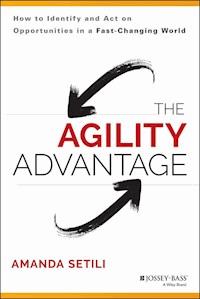
How to win market leadership in a fast-changing world In the past, companies could pick a strategy and stick with it, maintaining a competitive edge for years. But today, companies surge ahead, fall behind, or even disappear in mere months. If you and your company are going to thrive for the long run, you need to continuously evolve, change, and stay a step ahead of your competition. The ability to see and capitalize on new opportunities is the cornerstone of agility. Successful technology-based firms like Google, Tesla, and Amazon have all mastered agility within their core business practices, but companies in any sector can--and must--learn to spot new opportunities and make the right choices about what to invest in, what to change, and what to abandon. The Agility Advantage first shows how to identify those aspects of your business where agility is most crucial--where the business environment is changing fast--and which elements have the greatest impact on the customer's decision to buy. Amanda Setili then shows how to master the three components of agility: * Market agility: Gain ideas from your most demanding and forward-thinking customers and from outside your industry. Engage, observe, and mix with customers to identify the opportunities created by their changing demands. * Decision agility: Anticipate the changes that may affect you and turn even troubling trends into opportunities. Design your strategy to maximize learning and to manage risk. Generate diverse alternatives and make fast, fact-based decisions about which to pursue. * Execution agility: Build new capabilities, shed what doesn't fit, and take the first steps in a new direction. Experiment, then reinforce and build on what works. Enlist and inspire your organization around a compelling purpose and grant employees the autonomy and resources to continuously adapt and adjust course. The future will present more opportunities but narrower windows to capture them. With a wealth of valuable information and practical strategies, The Agility Advantage is essential reading to help any organization adapt and thrive--both today and tomorrow.
Sie lesen das E-Book in den Legimi-Apps auf:
Seitenzahl: 333
Veröffentlichungsjahr: 2014
Ähnliche



















Table of Contents
Title Page
Copyright
Dedication
Preface
The Impetus for This Book
What You Can Gain
A Caveat
How to Get the Most out of This Book
Chapter One: What Is Agility—and Why Is It Valuable?
What Is Agility?
Business Models Are Evolving Fast—with New Winners and New Losers
What Kind of Companies Need to Be Agile?
What We See in Agile Organizations
Changes in Technology, Culture, and the Economy Are Driving the Need for Greater Agility
Increase Agility Where It Makes the Most Difference
Where Is Agility Most Important in Your Business?
Notes
Chapter Two: See Through Your Customers' Eyes: How to See What Your Competitor Can't
Experience What Customers Do, Firsthand
Put Customers to Work
Get out of the Office and into the Field
Give Customers a Reason to Talk, Then Listen In
Encourage the Unexpected
In Conclusion
Notes
Chapter Three: Right Customers, Right Value, Right Time: Identify Your Most Attractive Customers and Pivot with Them
Your Customers Can Show You the Way
Your Products Can Show You the Way
Segment Customers According to
Why
They Are Using Your Products
Niches and Microcultures Reveal New Opportunities for Growth
Observe “Outlier” Customers
Continuous Customer Intelligence: Harnessing Data to Gain Up-to-the-Minute Foresight
Automate Customization
In Conclusion
Notes
Chapter Four: Love the Problem: Dig Deep to Find New Insights
Observe the Customers' Daily Environment, the Tools They Use, and the People They Interact With
Observe and Interview Customers to Identify Opportunities in Business-to-Business Markets
Enlist the Customer as Collaborator
Know What Problems You Are Trying to Solve
Understand Your Customers' Hearts, Minds, Habits, and Values
Understand How Your Customers Vary Across Cultures and Geographies
In Conclusion
Notes
Chapter Five: Turn Trends into Opportunities: Stop Preparing for the Future and Create It
How Can We Best Assess and Respond to Market Change?
What Types of Market Change Do We Need to Be Concerned About?
How Can We Best Identify and Prioritize the Marketplace Changes That May Affect Our Business?
Anticipate What Might Happen Next
Prioritize and Take Action
What Action Is UPS Taking to Respond to the Changes in Its Business Environment?
In Conclusion
Notes
Chapter Six: Create Breakthrough Strategies: Generate Creative Alternatives for Capitalizing on the Changes You See
Why Breakthrough Ideas Are Important
Lessons from AGCO on Developing Breakthrough Strategies
Techniques for Developing Breakthrough Thinking
In Conclusion
Notes
Chapter Seven: Manage Uncertainty: Be Courageous, Anticipate What Might Happen, and Address Risks Head-On
How Tesla Motors Succeeded, and Managed Risk
Further Thoughts on Managing Risk and Uncertainty
In Conclusion
Notes
Chapter Eight: Turning a Strategic Corner: Take the First Steps, Shed What Doesn't Fit, Experiment, and Reinforce
Communicate Intent
Take the First Steps
Shed What Doesn't Fit
Build New Capabilities
Experiment and Reinforce
In Conclusion
Notes
Chapter Nine: Agility as a Way of Life: Leverage the Power of Purpose, Autonomy, and Continuous Adaptation
Create Focus by Paring Your Priorities to the Essential Few
Paint a Picture of the Intended Future
Get the Right People on Board
Set an Example for Employee Behavior
Motivate Through Autonomy and Empowerment
Plan for the Unexpected
Improve and Adapt Continuously
The Importance of a Motivating Purpose
In Conclusion
Notes
Conclusion
Acknowledgments
About the Author
More from Wiley
Index
End User License Agreement
Pages
ix
x
xi
xii
1
2
3
4
5
6
7
8
9
10
11
12
13
14
15
16
17
18
19
21
22
23
24
25
26
27
28
29
30
31
32
33
34
35
36
37
38
39
40
41
42
43
44
45
46
47
48
49
50
51
52
53
54
55
56
57
58
59
60
61
62
63
64
65
67
68
69
70
71
72
73
74
75
76
77
78
79
80
81
82
83
84
85
86
87
88
89
90
91
92
93
94
95
96
97
98
99
100
101
102
103
104
105
106
107
108
109
110
111
112
113
114
115
116
117
118
119
120
121
122
123
124
125
126
127
128
129
130
131
132
133
134
135
136
137
139
140
141
142
143
144
145
146
147
148
149
150
151
152
153
154
155
156
157
158
159
161
162
163
164
165
166
167
168
169
170
171
172
173
174
175
176
177
178
179
180
181
182
183
185
186
187
188
189
190
191
192
193
194
195
196
197
198
199
200
201
202
203
204
205
206
207
209
210
221
222
223
225
227
228
229
230
231
232
233
234
235
236
237
238
239
240
241
Guide
Cover
Table of Contents
Preface
Begin Reading
List of Illustrations
Figure 1.1
Figure 1.2
Figure 2.1
Figure 3.1
Figure 3.2
Figure 3.3
Figure 3.4
Figure 4.1
Figure 5.1
Figure 5.2
Figure 5.3
Figure 6.1
Figure 6.2
Figure 7.1
Figure 8.1
Figure 8.2
Figure 8.3
List of Tables
Table 1.1
Table 2.1
Table 2.2
Table 3.1
Table 5.1
Table 6.1
Table 7.1
Table 7.2
Table 7.3
THE AGILITY ADVANTAGE
HOW TO IDENTIFY AND ACT ON OPPORTUNITIES IN A FAST-CHANGING WORLD
Amanda Setili
Copyright © 2014 by John Wiley and Sons, Inc. All rights reserved.
Published by Jossey-Bass
A Wiley Brand
One Montgomery Street, Suite 1200, San Francisco, CA 94104-4594— www.josseybass.com
No part of this publication may be reproduced, stored in a retrieval system, or transmitted in any form or by any means, electronic, mechanical, photocopying, recording, scanning, or otherwise, except as permitted under Section 107 or 108 of the 1976 United States Copyright Act, without either the prior written permission of the publisher, or authorization through payment of the appropriate per-copy fee to the Copyright Clearance Center, Inc., 222 Rosewood Drive, Danvers, MA 01923, 978-750-8400, fax 978-646-8600, or on the Web at www.copyright.com. Requests to the publisher for permission should be addressed to the Permissions Department, John Wiley & Sons, Inc., 111 River Street, Hoboken, NJ 07030, 201-748-6011, fax 201-748-6008, or online at www.wiley.com/go/permissions.
Limit of Liability/Disclaimer of Warranty: While the publisher and author have used their best efforts in preparing this book, they make no representations or warranties with respect to the accuracy or completeness of the contents of this book and specifically disclaim any implied warranties of merchantability or fitness for a particular purpose. No warranty may be created or extended by sales representatives or written sales materials. The advice and strategies contained herein may not be suitable for your situation. You should consult with a professional where appropriate. Neither the publisher nor author shall be liable for any loss of profit or any other commercial damages, including but not limited to special, incidental, consequential, or other damages. Readers should be aware that Internet Web sites offered as citations and/or sources for further information may have changed or disappeared between the time this was written and when it is read.
Jossey-Bass books and products are available through most bookstores. To contact Jossey-Bass directly call our Customer Care Department within the U.S. at 800-956-7739, outside the U.S. at 317-572-3986, or fax 317-572-4002.
Wiley publishes in a variety of print and electronic formats and by print-on-demand. Some material included with standard print versions of this book may not be included in e-books or in print-on-demand. If this book refers to media such as a CD or DVD that is not included in the version you purchased, you may download this material at http://booksupport.wiley.com. For more information about Wiley products, visit www.wiley.com.
Library of Congress Cataloging-in-Publication Data
Setili, Amanda, 1959-
The agility advantage : how to identify and act on opportunities in a fast-changing world / Amanda Setili.— First edition.
pages cm
Inclues bibliographical references and index.
ISBN 978-1-118-83638-5 (hardback); ISBN 978-1-118-96444-6 (pdf); ISBN 978-1-118-96443-9 (epub)
1. Strategic planning. 2. Diffusion of innovations. 3. Organizational change. I. Title.
HD30.28.S396 2014
658.4′012— dc23
FIRST EDITION
To Rob, Shannon, and Alison
Preface
In 2011, I founded the Strategic Agility® Think Tank. My goal in establishing this community of corporate peers—CEOs, division presidents, CFOs, CMOs, and leaders in sales, marketing, operations, and strategy—was for them to share ideas and best practices, better navigate their greatest challenges, and become more adept at seeing and capturing new market opportunities.
The community includes leaders of such companies as AT&T, AutoTrader, Best Buy, Bosch, Cbeyond, Cisco, Costco, Cox Communications, Equifax, Fiserv, Georgia-Pacific, Hilton, Intuit, Kraft, J. M. Huber, MeadWestvaco, Time Warner, UPS, and Xerox. The members of this group have learned from one another, and I've learned from them. Along the way, they have strengthened their organizational and personal performance, and I've gained more—and more varied—experience in helping companies navigate change.
My aim in writing this book is to help all organizations—large, established companies with huge investments in the status quo, as well as smaller, younger companies that are relatively light on their feet—become more nimble. In the pages that follow, you'll find examples, tools, and techniques to do just that.
The Impetus for This Book
I wrote this book after more than two decades of working with some of the world's leading companies, including Coca-Cola, Delta Air Lines, The Home Depot, Kimberly-Clark, and Walmart—companies that are, for the most part, great at what they do. Over the years, they had honed their operations, refined their products, and developed brands recognized worldwide. Planes ran on time, product flowed to store shelves, diaper innovations kept this year's babies drier than last year's. Yet the very things that made these companies so good at what they did—the hundreds of thousands of employees, the wealth of technology, and the assets spread across the globe—made it very difficult for them to respond effectively to change.
Change came in many forms for these companies, and from many different directions at once: deregulation, low-cost competitors, disruptive technologies, housing market ups and downs, private-label products, cultural trends—the list goes on and on.
In engagement after engagement, I helped my clients deal with the same basic question: How do we identify opportunities for growth, avoid threats on the horizon, and take advantage of market transformations to bring more value to customers and achieve a lasting advantage over our competitors?
What You Can Gain
If your markets are changing, which they almost always are, what can you do to stay ahead? In a word, you cultivate agility. I define agility as the ability to identify new opportunities and capitalize on them quickly. By following the principles, using the tools, and learning from the numerous real-world examples and case studies in this book, you can make your own organization more agile—and have change work to your advantage.
In these pages, I'll let you know how you can anticipate change and be prepared for it when it arrives, armed with the repertoire and resources required to deal effectively with what is ahead. You'll learn how to make sound decisions when data is scarce and the future is uncertain; how to navigate, experiment, and motivate when a sharp turn in strategic direction is required; and how to execute in a flexible way, so that you can adjust your course over time as further change occurs.
A Caveat
The companies I showcase in this book each demonstrate traits important for strategic agility. But they don't have it all figured out; no one does. Technological advances, changes in leadership, financial pressures, regulatory changes, and other events will affect their—and your—future business success.
The processes and systems you put in place to augment agility sometimes fall by the wayside or become outdated as fortunes change. Many companies are agile at one point in time, but later become rigid and insular. Sears Roebuck showed great agility in the 1950s. It later became one of the most calcified companies in the world, and now has a reputation for being out of touch with the market. Dell pioneered many methods for adapting quickly to market changes; specifically, its just-in-time supply chain innovations and systems for customizing product to meet each individual customer's needs were groundbreaking. However, the company has lost its luster of late. IBM, in contrast, was known as an old-line, hierarchical company, yet has become extremely agile in recent years and transformed itself into a completely different organization than it once was.
How to Get the Most out of This Book
I realize that your time is limited, so I've tried to make this book as practical and navigable as possible, with bite-sized pieces that you can pick and choose as your circumstances change. Adapt the tools and frameworks to your own situation. Use the processes, diagnostics, and techniques in meetings and projects. Play with them, twist them around, and modify them. But avoid the temptation to skim over the examples just because you play in a different arena. Tear them apart and critique them—but learn from them and adapt some aspect of them to your own situation. You can learn powerful lessons from industries other than your own, lessons that can confer unique competitive advantages.
Above all, notice and talk about changes you are seeing in your business and marketplace. Ask: What has happened recently that's unexpected, unusual, alarming, or amusing? What opportunities—and pitfalls—do these events reveal?
Writing this book forced me to distill the most agile, adaptive, and successful strategies that I have seen for staying ahead of market changes. It also afforded me the opportunity to revisit and collaborate with past clients and with business leaders I admire. I hope you enjoy reading this book as much as I enjoyed writing it.
Atlanta, Georgia Amanda SetiliJuly 2014
Chapter OneWhat Is Agility—and Why Is It Valuable?
During the post–World War II boom in home appliances in 1951, General Electric (GE) broke ground on its Appliance Park in Louisville, Kentucky. The complex quickly grew to include six factory buildings the size of shopping malls, and became so immense that it had its own fire department, its own power plant—even its own ZIP code. In 1953, GE purchased a UNIVAC computer to handle payroll, becoming the first business in the world to own a computer (only governments had owned them up until that time). By 1955, Appliance Park employed sixteen thousand workers, and by 1973, twenty-three thousand. During the 1960s, the workers at Appliance Park were turning out sixty thousand appliances each week.
Lesen Sie weiter in der vollständigen Ausgabe!
Lesen Sie weiter in der vollständigen Ausgabe!
Lesen Sie weiter in der vollständigen Ausgabe!
Lesen Sie weiter in der vollständigen Ausgabe!
Lesen Sie weiter in der vollständigen Ausgabe!
Lesen Sie weiter in der vollständigen Ausgabe!
Lesen Sie weiter in der vollständigen Ausgabe!
Lesen Sie weiter in der vollständigen Ausgabe!
Lesen Sie weiter in der vollständigen Ausgabe!
Lesen Sie weiter in der vollständigen Ausgabe!
Lesen Sie weiter in der vollständigen Ausgabe!
Lesen Sie weiter in der vollständigen Ausgabe!
Lesen Sie weiter in der vollständigen Ausgabe!
Lesen Sie weiter in der vollständigen Ausgabe!




