


25,99 €
Mehr erfahren.
- Herausgeber: John Wiley & Sons
- Kategorie: Fachliteratur
- Sprache: Englisch
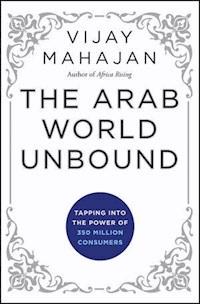
An expert's guide to exploring business opportunities in the burgeoning Arab marketplace This groundbreaking book reveals the myriad opportunities presented by the Arab World's market of 350 million consumers, who collectively wield the ninth-largest economy in the world. Based on the author's firsthand research, including hundreds of market visits and more than 600 interviews at companies doing business throughout the region, this book shows how globally interconnected and vibrant the Arab markets are. Through a rich blend of data and anecdotal observations, it chronicles how, by respecting the region's culture and religious norms, hundreds of local and multinational companies and entrepreneurs are creating successful businesses in this large and growing marketplace. * Hundreds of interviews and illustrative examples peel away stereotypes about Arab consumers to reveal diverse, vibrant and entrepreneurial consumer markets * Explains how multinational companies, such as Coca-Cola, Unilever, and Proctor & Gamble, and leading regional companies are working successfully in the Arab nations * Shows how Arab entrepreneurs, both men and women, are shaping the regional and global marketplaces * Vijay Mahajan, author of two previous award-winning books on emerging markets, is one of the world's most-cited researchers in the business and economics sector As the global marketplace continues to expand, this book offers anyone interested in investing in the Arab world an expert perspective on the boundless business opportunities.
Sie lesen das E-Book in den Legimi-Apps auf:
Seitenzahl: 558
Veröffentlichungsjahr: 2012
Ähnliche



















Table of Contents
Title Page
Copyright
Dedication
Preface: A Consumer Rihla
Introduction
Part 1: Discovering the Arab World
Chapter 1: Drinking Red Bull in Dahiyeh
The Arab Market Is Vibrant and Globally Interconnected
Arab Consumers Control More Spending Power Than You Think
The Shadow Economy
Shades of India and China
Opportunities Beyond Crude Oil and Abaya
Household Spending in the Arab World
Beyond Boycotts and Barriers
Chicken Fights: Local Competition in the Arab Market
The Global Emergence of Arab Brands
A Worldwide Hub: The Globally Connected Arab World
The Arab World Is Neither CNN's nor Al Jazeera's
Chapter 2: The Diversity of the Arab World
No Harm in Haram
Not All the Consumers in Arab Countries Are Arab
The Diversity of Arab Consumers
Segmenting the Arab Consumer Markets
Embracing the Diverse Habits of Arab Consumers
Language Differences
The Market Dominance of Saudi Arabia and the GCC
Saudi Arabia's Influence Within Other Markets
Think Regional, Act Local
Chapter 3: Islam Matters: The Impact of the Five Pillars of Islam on Consumers in the Arab World
The Difference Between Culture and Religion
Why Shahada Matters
Why Salah Matters
Why Sawm Matters
Why Zakat Matters
Why Hajj and Umrah Matter
Islam in the Everyday
Part 2: Tapping into the Well of Arab Consumers
Chapter 4: The Shabab: Tapping into the Arab Youth Market
The Shabab Demographic Dividend
The Shabab Crave the Best Brands, Wherever They Come From
The Shabab Generation Is Molding the Consumer Market
The Shabab Generation Is Changing the Arab Workforce
The Shabab Are Transforming the Private Sector
The Shabab and Education
The Shabab and Marriage
Chapter 5: Arabia Two: Tapping into the Arab Middle Class
The Rise of the Middle Class Is Changing Arab Consumer Markets
Identifying the Arab Middle Class
Tapping into Arabia Two
Tapping into Arab Consumer Power at All Levels
Urbanization, Modern Trade, and Arabia Two
Arabia Two and the Balance Between Tradition and Modernity
Chapter 6: Tapping into the Market of Arab Women
Arab Women Have Money to Spend
Educated Women Are Reshaping the Arab Market
The Arab Woman as a Consumer
Inside and Outside: The Dual Identities of Arab Women
Tapping into the Arab Beauty Market
The Arab Woman as Wife and Mother
Arab Women as Head of the Household
The Veil Doesn't Hide the Arab Woman's Mind
Arab Women as Business Leaders
Arab Women Are Reshaping the Region on Their Own Terms
Chapter 7: Tapping into the Arab Technology Market
The Spread of Internet Use Opens Up New Paths to Consumers
The Rise of Social Media
Tapping into Arab E-Commerce
Using Technology to Recapture the Golden Age
On the Go: The Market for Mobile Phones
Building the High-Tech Industry in Jordan
The Technological Arab Spring
Chapter 8: Tapping into the Arab Media and Entertainment Market
Television Advertising in the Arab World
Arab Cinema and Film
Dancing in the Desert: Music in the Arab World
Art in the Arab World
Books and Bookstores
The Birth of an Arab Superhero
Chapter 9: Tapping into the Arab Diaspora
Linking the Diaspora to the Arab World
Remittances Constitute a Critical Piece of Many Arab Economies
Tapping into the Arab Diaspora
The Arab Diaspora Has Made a Name for Itself
Tapping into Opportunities Around the World
You Can Go Home Again
The Diaspora Is Bringing Different Worlds Together
Part 3: Conclusion
Chapter 10: Rebranding the Arab World
Yalla Arabia!
Capturing the Region's Yalla Energy with a New Arab Brand
Sustaining the Yalla Energy of Family Businesses
Harvesting the Yalla Energy of Arab Youth
Fueling the Yalla Energy of Arab Entrepreneurs
Enabling a New Yalla Energy Among Disadvantaged Arabs
A Call to Action
The Richness of the Past and the Promise of the Future
Acknowledgments
The Author
Index
Photo Insert
Copyright © 2012 by John Wiley & Sons, Inc. All rights reserved.
Published by Jossey-Bass
A Wiley Imprint
One Montgomery Street, Suite 1200, San Francisco, CA 94104-4594
www.josseybass.com
Author photo by Korey Howell; cover image by Thinkstock
No part of this publication may be reproduced, stored in a retrieval system, or transmitted in any form or by any means, electronic, mechanical, photocopying, recording, scanning, or otherwise, except as permitted under Section 107 or 108 of the 1976 United States Copyright Act, without either the prior written permission of the publisher, or authorization through payment of the appropriate per-copy fee to the Copyright Clearance Center, Inc., 222 Rosewood Drive, Danvers, MA 01923, 978-750-8400, fax 978-646-8600, or on the Web at www.copyright.com. Requests to the publisher for permission should be addressed to the Permissions Department, John Wiley & Sons, Inc., 111 River Street, Hoboken, NJ 07030, 201-748-6011, fax 201-748-6008, or online at www.wiley.com/go/permissions.
Limit of Liability/Disclaimer of Warranty: While the publisher and author have used their best efforts in preparing this book, they make no representations or warranties with respect to the accuracy or completeness of the contents of this book and specifically disclaim any implied warranties of merchantability or fitness for a particular purpose. No warranty may be created or extended by sales representatives or written sales materials. The advice and strategies contained herein may not be suitable for your situation. You should consult with a professional where appropriate. Neither the publisher nor author shall be liable for any loss of profit or any other commercial damages, including but not limited to special, incidental, consequential, or other damages. Readers should be aware that Internet Web sites offered as citations and/or sources for further information may have changed or disappeared between the time this was written and when it is read.
Jossey-Bass books and products are available through most bookstores. To contact Jossey-Bass directly call our Customer Care Department within the U.S. at 800-956-7739, outside the U.S. at 317-572-3986, or fax 317-572-4002.
Wiley publishes in a variety of print and electronic formats and by print-on-demand. Some material included with standard print versions of this book may not be included in e-books or in print-on-demand. If this book refers to media such as a CD or DVD that is not included in the version you purchased, you may download this material at http://booksupport.wiley.com. For more information about Wiley products, visit www.wiley.com.
Library of Congress Cataloging-in-Publication Data
Mahajan, Vijay.
The Arab world unbound : tapping into the power of 350 million consumers / Vijay Mahajan
p. cm.
Includes index.
ISBN 978-1-118-07451-0 (hardback); ISBN 978-1-118-22251-5 (ebk); ISBN 978-1-118-23642-0 (ebk); ISBN 978-1-118-26111-8 (ebk)
1. Marketing—Arab countries. 2. International business enterprises—Arab countries. I. Title.
HF5415.12.A65M34 2012
330.917′4927—dc23
2012005730
Preface: A Consumer Rihla
Before setting out on my journey to discover the Arab world, I didn't know much about the region and its consumers. Most of what I knew I'd picked up from U.S. news reports about political turmoil, armed conflicts, honor killings, and religious oppression. The consumers I read about were religious zealots, oil-rich sheiks, Somali pirates, women in veils, and young girls and boys brought up to despise Western culture. Intellectually, I knew these images amounted to little more than stereotyped scenes of a richly diverse culture and society, but beyond that, I realized I didn't really know the real Arab consumer at all. I decided it was time to find out.
Inspired by the great Moroccan explorer Ibn Battuta, I set out on my own rihla, a journey, to learn more about the Arab world through the lens of its consumer markets. From the middle of 2008 to the end of 2010, I traveled through all but four of the Arab League's twenty-two countries, conducted dozens of market visits, and met or spoke with hundreds of people—from meetings with top executives and entrepreneurs in their corporate offices, to casual conversations with everyday shoppers in the aisles of mom-and-pop grocery stores. Everything I saw and everyone I met challenged me to move past the U.S. media's version of the Arab world and see it for what it really is. They obliterated the notion that Arab society was closed off to the rest of the global marketplace and proved that they acted on many of the same wants and desires as consumers anywhere else in the world. In short, they showed me firsthand how vibrant and globally interconnected the region and its consumer market really are.
A lot has happened in the three-plus years it took me to research and write this book. A withering drought returned to Somalia. The residents of South Sudan voted to become an independent country. And the Arab Spring took spark in Tunisia and sent revolution and protests blazing into Egypt, Libya, Syria, Yemen, and beyond. Throughout those countries, much remains unsettled. Even my new Arab friends can only guess at how the changes will play out or how the new political systems will influence the region and its consumer markets. And I make no attempt to answer those questions here. I'm a marketing professor, not an economist or political scholar. However, I couldn't help but be inspired by the energy and passion of the Arab world's youth generation standing up and taking a voice in its future, and I believe that bodes well for the region.
By the end of my research, I had come to realize that my journey could never really end. For every insight I learned, many more questions opened up. I tried to address some of the bigger questions here, but this book can't be considered the last word on Arab consumer markets. That word can come only from Arab consumers themselves, no matter how hard I worked to make this a book they could call their own. Like one young woman told me in Dubai, the region needs to take back ownership of its image from both CNN and Al Jazeera. I'm humbled by her willingness, and that of hundreds of other people, to let me tell part of their story. At this point in my life, I feel privileged to have had a chance to visit such an amazing array of people, and I'll always be grateful for their unwavering hospitality during my consumer rihla through the Arab world.
May 2012
Vijay Mahajan
University of Texas at Austin
Introduction
Sometimes it seems as if Arab world has more definitions than it does countries. When I chose to research the consumer markets of the Arab world, I realized almost any definition I picked would be arbitrary, at least to some degree. I finally settled on the twenty-two member countries of the Arab League (Figure I.1).
Figure I.1 Map of Arab League Countries
Note: The dashed line in Sudan separates North from South Sudan, which became an independent country in mid-2011. The Arab League includes Comoros, which is located approximately 950 miles (1,530 kilometers) south of Mogadishu and is not pictured here. Source: University of Texas, Perry-Castañeda Library Map Collection.
Clearly some of the Arab League countries play a larger role in the region's consumer markets than others. I only briefly mention some countries, such as Somalia, for example. In fact, some countries outside the region have a greater influence on the Arab world, including Turkey and Iran. But I had to draw the line somewhere, and the Arab League seemed as good a demarcation as any other. So with that as my definition of the Arab world, I set up this book to provide an introduction to the region, describe how local and international companies are reaching its consumers, and offer a call to action for the region's ongoing integration into the global marketplace.
Part One is a primer on the Arab world's economy and its consumers. Chapter One provides an overview of the region and an introductory look at its vibrancy and global connectedness. Chapter Two focuses more on consumers and the rich diversity I discovered throughout the Arab countries. And Chapter Three takes a close look at Islam's influence on the region's markets and people. Collectively these three chapters serve as a broad introduction to the Arab world and its consumers, and readers should consider it a platform for the rest of the book.
Like the tapping of the oil wells Westerners often picture when they hear the word Arab, companies are tapping into a wellspring of consumer opportunities throughout the region. Part Two begins to drill down into the significant opportunities to be found in the segments and sectors of the region's markets. Chapter Four focuses on Arab youth, a massive and growing segment of the population that's having an enormous impact on business and culture. Chapter Five looks at the way local and international companies are capitalizing on the market opportunities across the socioeconomic classes, especially the large, growing, and increasingly influential middle class. Chapter Six considers Arab women and their role in the marketplace as both consumers and contributors.
Technology has reshaped the way the Arab world works and communicates, and Chapter Seven considers the incredible impact these advancements are having on consumer and entrepreneurial activity in the region. Chapter Eight looks at the broad impact that media, entertainment, and the arts have on consumers and the ways companies try to reach them. And Chapter Nine looks around the world to the millions of people who form the Arab diaspora, discussing the impact they have on markets in their adopted countries as well as the Arab world itself.
I conclude the book with Part Three, a one-chapter consideration of some key challenges that face the Arab world. Like every other emerging market I've visited throughout my career, the Arab countries must address some of the issues that keep its economies from running at full capacity. I hope this chapter will spark some honest and fruitful discussion among the private and public sectors in the Arab world, as well as the outside countries and companies that have found it to be such a vital piece of the global consumer marketplace.
A note on South Sudan: Virtually everyone who picked up a newspaper or turned on the news in 2011 saw reports about the remarkable changes sweeping through the Arab world. While the Arab Spring revolutions in Tunisia, Egypt, Libya, Yemen, and Syria generated the biggest headlines, Sudan also went through a major transformation in 2011, with South Sudan splitting off as an independent country. As I wrote this in December 2011, the Republic of South Sudan had a population of roughly 8 million people and an estimated economy of $13.2 billion, according to government figures.
Throughout this book, I chose to list data and information for a single Sudan before the vote for independence. I did this for several reasons. First, the vote for independence occurred after I had concluded most of my research. Second, the split occurred in 2011, so very little information was available for Sudan and South Sudan as separate nations. Third, pulling out the data that were available for South Sudan, such as gross domestic product and population figures, would not have appreciably changed the figures for the Arab world as a whole (the region's GDP would change less than 1 percent, for example).
Clearly the future of South Sudan bears attention as both a new nation and an emerging economy in northeastern Africa. I look forward to watching its development. Unfortunately, however, I could not include the impact of its transformation in this book.
A note on spelling: Nuance often gets lost in translation, and any such shortcomings in this book come from my end, not that of the hundreds of sources who participated in this project. Translation from Arabic to English also loses a certain level of accuracy, given the different alphabets and grammar at the foundation of each language. (One of the best examples of this came in Cairo, where a street named after the famous singer Oum Kalthoum had street signs with three different English spellings of her name.) As much as possible, I copied names directly from business cards. When that wasn't possible, I used the spellings provided by my sources themselves.
Part 1
Discovering the Arab World
Chapter 1
Drinking Red Bull in Dahiyeh
The Arab world is home to more than 350 million consumers. Despite the outside stereotypes that paint the region in a negative light, they want the same kinds of quality products as consumers anywhere else. Businesses, both local and from around the world, are seizing these boundless opportunities and building markets throughout the Arab world.
I didn't realize how vibrant and globally connected the Arab world really is until one afternoon at a small shop in the middle of a Hezbollah-controlled section of South Beirut. I looked across the counter of the small convenience store and saw it there, slim and shiny, sitting on the shelf: They sell that here?
Our two-car caravan had taken a right turn at the corner of a massive walled compound, skirting the side of a mosque and driving down toward the multistory residential buildings rising a few blocks down the road. The wide street looked almost festive—the sort of promenade that typifies the French influence on Beirut. The dozens of banners, one or two hanging on each light pole along the center berm, gave the street a celebratory air. But to those of us inside the car, they served as a chilling reminder of the political divisions that run throughout this seaside city and the Arab world at large. The banners, my host explained, featured photos of Hezbollah martyrs, some of them killed in combat and others who died as suicide bombers. All of them were canonized as heroes in Dahiyeh, this neighborhood in the heart of Hezbollah territory in South Beirut. The scene suddenly felt reminiscent of the images I'd seen hundreds of times on U.S. newscasts.
In a city where at least seventeen religious sects try to maintain a tenuous balance, my hosts took me through various Muslim and Christian neighborhoods, showing me how they and their products were making inroads throughout the city. They urged me to avoid Dahiyeh, and I could sense their rising tension when we pulled off the main boulevard into the narrow side streets. This was not an area that welcomed Westerners gladly, and my editor, a six-foot, six-inch white American, wouldn't exactly blend in with the crowd here. Bringing my tall editor along made one of my hosts, who managed distribution and marketing in this neighborhood, especially nervous. He refused to let him out of the car.
I didn't pay it too much attention at the time. We'd parked on a narrow side street lined with local storefronts. A few street vendors pushed by with their carts, one covered with fruit, another with cases of bottled water. In a shop window across the street, several goat or sheep carcasses hung from large, three-pronged hooks. One of the shop's butchers plunged a gloved hand into a tub and pulled out some hairless skins, which dripped a thick liquid as he carried them off to a back room. A few passersby glanced over as I got out of the car, but no one paid much attention as three of my hosts and I walked into a (a small retail shop) about halfway down the block.
Lesen Sie weiter in der vollständigen Ausgabe!
Lesen Sie weiter in der vollständigen Ausgabe!
Lesen Sie weiter in der vollständigen Ausgabe!
Lesen Sie weiter in der vollständigen Ausgabe!
Lesen Sie weiter in der vollständigen Ausgabe!
Lesen Sie weiter in der vollständigen Ausgabe!
Lesen Sie weiter in der vollständigen Ausgabe!
Lesen Sie weiter in der vollständigen Ausgabe!
Lesen Sie weiter in der vollständigen Ausgabe!
Lesen Sie weiter in der vollständigen Ausgabe!
Lesen Sie weiter in der vollständigen Ausgabe!
Lesen Sie weiter in der vollständigen Ausgabe!
Lesen Sie weiter in der vollständigen Ausgabe!
Lesen Sie weiter in der vollständigen Ausgabe!
Lesen Sie weiter in der vollständigen Ausgabe!




