


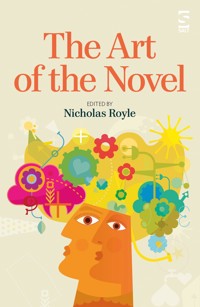
The Art of the Novel E-Book
8,39 €
Mehr erfahren.
- Herausgeber: Salt
- Kategorie: Geisteswissenschaft
- Sprache: Englisch
How do you write a novel? Practising novelists and teachers of creative writing reveal their working methods and offer practical advice. Subjects covered range from magic realism to characterisation, surrealism to historical fiction, via perspective, plot twists and avoiding being boring, among many others. This book is for creative writing students writers and readers of novels teachers of creative writing With contributions from Leone Ross, Tom Bromley, Jenn Ashworth, AJ Dalton, Nikesh Shukla, Stella Duffy, Mark Morris, Alison Moore, Nicholas Royle, Alice Thompson, Kerry Hudson, Toby Litt, Livi Michael, Joe Stretch, James Miller, Sarah Butler, Will Wiles, Graeme Shimmin Featuring Eighteen specially commissioned essays Creative writing exercises Top tips Lists of recommended novels
Das E-Book können Sie in Legimi-Apps oder einer beliebigen App lesen, die das folgende Format unterstützen:
Veröffentlichungsjahr: 2015
Ähnliche




















The Art of the Novel
How do you write a novel?
Practising novelists and teachers of creative writing reveal their working methods and offer practical advice. Subjects covered range from magic realism to characterisation, surrealism to historical fiction, via perspective, plot twists and avoiding being boring, among many others.
This book is for
• creative writing students
• writers and readers of novels
• teachers of creative writing
With contributions from Leone Ross, Tom Bromley, Jenn Ashworth, AJ Dalton, Nikesh Shukla, Stella Duffy, Mark Morris, Alison Moore, Nicholas Royle, Alice Thompson, Kerry Hudson, Toby Litt, Livi Michael, Joe Stretch, James Miller, Sarah Butler, Will Wiles, Graeme Shimmin
Featuring
• Eighteen specially commissioned essays
• Creative writing exercises
• Top tips
• Lists of recommended novels
Nicholas Royleis the author of more than 100 short stories, two novellas and seven novels, most recentlyFirst Novel(Vintage). His short story collection,Mortality(Serpent’s Tail), was shortlisted for the inaugural Edge Hill Prize. He has edited seventeen anthologies of short stories, includingThe Time Out Book of New York Short Stories(Penguin),Murmurations: An Anthology of Uncanny Stories About Birds(Two Ravens Press) and five volumes ofBest British Short Stories(Salt). A senior lecturer in creative writing at the Manchester Writing School at MMU and head judge of the Manchester Fiction Prize, he also runs Nightjar Press, publishing original short stories as signed, limited-edition chapbooks.
Also by Nicholas Royle:
NOVELS
Counterparts
Saxophone Dreams
The Matter of the Heart
The Director’s Cut
Antwerp
Regicide
First Novel
NOVELLAS
The Appetite
The Enigma of Departure
SHORT STORIES
Mortality
ANTHOLOGIES (AS EDITOR)
Darklands
Darklands 2
A Book of Two Halves
The Tiger Garden: A Book of Writers’ Dreams
The Time Out Book of New York Short Stories
The Ex Files: New Stories About Old Flames
The Agony & the Ecstasy: New Writing for the World Cup
Neonlit: Time Out Book of New Writing
The Time Out Book of Paris Short Stories
Neonlit: Time Out Book of New Writing Volume 2
The Time Out Book of London Short Stories Volume 2
Dreams Never End
’68: New Stories From Children of the Revolution
The Best British Short Stories 2011
Murmurations: An Anthology of Uncanny Stories About Birds
The Best British Short Stories2012
The Best British Short Stories 2013
The Best British Short Stories 2014
Best British Short Stories 2015
Published by Salt Publishing Ltd
12 Norwich Road, Cromer, Norfolk NR27 0AX
All rights reserved
Selection and introduction © Nicholas Royle,2015
Individual contributions©the contributors,2015
The right ofNicholas Royleto be identified as the editor of this work has been asserted by him in accordance with Section 77 of the Copyright, Designs and Patents Act 1988.
This book is in copyright. Subject to statutory exception and to provisions of relevant collective licensing agreements, no reproduction of any part may take place without the written permission of Salt Publishing.
Salt Publishing 2015
Created by Salt Publishing Ltd
This book is sold subject to the conditions that it shall not, by way of trade or otherwise, be lent, re-sold, hired out,or otherwise circulated without the publisher’s prior consent in any form of binding or cover other than that in which it is published and without a similar condition including this condition being imposed on the subsequent purchaser.
ISBN 978-1-84471-883-2 electronic
Contents
Introduction
How to Write Magic Realism
On Comic Fiction
Life Writing / Writing Life
Narrative Perspective
Go Do It
What Sort of a Book Is It?
How Important is Characterisation
Living in a Real World
The Death of the Author
Surrealism and the Novel
Details, Details . . .
How to Make Things Difficult for Yourself:
Approaches to the Historical Novel
Coming of Age
The Importance of Place and Setting in the Novel
Playing the Long Game
Plot Twists
On Being Boring
Contributor Biographies
NICHOLAS ROYLE
Introduction
FOR A NUMBERof years, teachers of creative writing have been growing steadily more aware of a baffling contradiction at the heart of British culture. We have enjoyed this privileged view precisely because we are also, by requirement, practising writers and published authors. As reading – or reading anything other than sub-Penthouseletters page fantasy dressed up as erotica – continues to acquire the cachet of a marginalised activity, writing, on the other hand, is all the rage. To put it another way, as print and ebook sales decline – with the regrettable exception of sub-Penthouseletters page fantasy dressed up as erotica – the numbers of people wanting to write books continue to rise.
Aspiring writers have been able to apply to study for an MA in creative writing in the UK since Malcolm Bradbury and Angus Wilson opened the door at the University of East Anglia in 1970. Many universities eventually followed suit, setting up creative writing departments, offering MAs and undergraduate degrees, and now some of the MAs are even turning into MFAs, not forgetting creative/critical PhDs, while writing courses are also being offered by publishers, newspapers, literary agencies and, quite likely by the time this book is printed, breweries, supermarket chains and global internet giants. Predating even UEA, of course, though not offering academic qualifications, were John Fairfax and John Moat, founders of Arvon, who started running residential courses for wannabe writers in 1968, long before the word ‘wannabe’ was first uttered.
But this book is not just for students of creative writing. It’s for readers, for readers of novels, for readers curious about novels and maybe curious about writers, for other writers, maybe short story writers or poets or scriptwriters who want to write novels, for other novelists who might feel a need to hit the refresh button, to pick up some tips, for novelists who are also teachers of creative writing. We never stop learning how to write better or how to improve our teaching.
All the contributors are practising novelists; more than half of them are also, or have been, teachers of creative writing. Each contributor writes about a different aspect of writing novels; some are extremely practical, while others tend more towards the inspirational. Some do both. A typical chapter consists of an original article or essay followed by a favourite creative writing exercise, three top tips and a list of ten novels that may or may not reflect the subject of the essay. I have edited, for the most part, with a light hand, which is not to say I’ve tolerated missing commas or incorrectly used semi-colons, but within the general structure described above I have allowed a degree of latitude. For instance, the lists of novels look different. Some contributors have taken me at my word and provided a simple list, while others have annotated them, and rather than strip out their annotations or demand commentary from those who didn’t add any, I decided to allow variety to prevail, as it does in these writers’ novels.
One writer calmly discusses a novel I have implicitly attacked in this introduction; another contributes an exercise that seems at odds with what I regard as the only way to write fiction, long or short, which is forever to be withholding information. But I have resisted the temptation to interfere in such cases, since it’s quite possible they’re right and I’m wrong, or that there is no right and wrong. The tone, generally, is informal, even chatty, not that of the academic essay with complicated referencing and endnotes, although there is, as there should always be, one notable exception.
We have not tried to cover everything. We haven’t devoted chapters to every genre or every skill, to every technique or element of the novel. There’s a chapter that dwells on matters mostly away from the writing desk and there’s a chapter that focuses with intense concentration on a single sentence. The fact is it’s good to hear a multiplicity of voices, to consider different approaches; that’s what this book is all about. Actually, what it’s really all about is me getting hold of a bunch of fresh exercises to use next time I’m at tutoring at Arvon’s Lumb Bank or Scotland’s equally wonderful creative writing centre, Moniack Mhor.
In the spirit of giving something back, here is my favourite creative writing exercise. I have only done it once, with a group of MA students from MMU on a residential week at Moniack Mhor.
Ask your group to come to the workshop with a good pair of shoes and a problem – a problem in their work in progress, rather than in their life more generally. Go around the table and ask everyone to talk a little bit about their problem. Then ask them all to go outside, to split up and to walk for an hour and talk to themselves, out loud, about the problem. By the time they return and sit around the table again, most if not all of them will have resolved their problem.
Out of my group, one stayed behind, possibly unconvinced by what he might have perceived as my maverick approach. Out of the others, all bar one resolved their problem and the one who didn’t came up with a workaround that meant it wasn’t a problem any more. Later, the student who hadn’t gone said he wished he had. He is now a published novelist and one of the contributors to this book.
Would you like to know my top tips? I’ll tell you anyway.
• The hardest thing to get right, assuming you know how to punctuate a sentence, is the balance between saying too much and not saying enough. I would always advise erring on the side of not saying enough.
• Always read your work out loud before you consider it finished.
• Agents and editors are constantly on the lookout for two things – a reason to carry on reading and a reason to stop reading. It’s important you give them lots of one and none of the other.
It’s also important, though, not to become too anxious around these possible reasons-to-stop-reading, in case this anxiety discourages the taking of risks, and the risks that you do take may very well end up being your reasons-to-carry-on-reading.
You might argue that all novels take risks, and you might be right. But I suppose there are risks and risks.
A final self-indulgence, then (it seems only fair on my contributors, of whom I have demanded in each case a list of ten, and I know that some of them, probably all of them, have sweated over these lists): ten novels that I have read more than once (and not for professional reasons). (To spare my contributors’ blushes, I am excluding their own work.)
The Blindfold by Siri Hustvedt
Days Between Stations by Steve Erickson
The Glamour by Christopher Priest
Ice by Anna Kavan
Blind Needle by Trevor Hoyle
The Driver’s Seat by Muriel Spark
Jealousy by Alain Robbe-Grillet
Fermentation by Angelica Jacob
Nightshade by Derek Marlowe
A Matter of Life and Sex by Oscar Moore
LEONE ROSS
How to Write Magic Realism
Or
How to Write Weird Shit
IWILL ALWAYS REMEMBER the first time I read Roald Dahl’s James and the Giant Peach. There was über-orphan James, destined to chop logs for the evil Aunties Sponge and Spiker for all eternity, until one trip and a fall, and hey presto: a gargantuan peach in the back yard. It’s the same tension in Alice’s Adventures in Wonderland – getting on with normal life she was, until a rabbit with a watch came hurrying along and things were never the same again.
When I was a kid, it was that ‘trip and fall into weird shit’ moment that most delighted me: that gleeful gearshift from everything being pretty darn normal into a world of life-sized insects or chocolate waterfalls. There were other books, but I reserved a very special place in my heart for the particularity of the weird invading the normal. Established worlds of fairies and monsters didn’t give me the same pleasurable jolt. Science fiction always seemed a bit cold and organised. It was when the weird got plumped down into the middle of everyday life that I was happiest. It seemed the most delicious kind of joke.
As a kid, I didn’t know that what I loved was magic realism.
As adolescence beckoned, my relationship with the weird was stalled, in part by a post-colonial, Jamaican education. Wuthering Heights and Great Expectations offered their own kind of grotesque pleasure, alongside Caribbean masterworks of realism like Naipaul’s A House For Mr Biswas and Claude McKay’s Banana Bottom. Outside of school, I dabbled in my mother’s well-worn Dune series, became a Trekkie, read and re-read Conan the Barbarian comics, The Communist Manifesto and Asterix. None of these provided that fall-down-the-rabbit-hole jolt, but I’d decided that was something you only got from kids’ books. I was older now, and Stephen King’s gore would have to suffice. Until my first week at the University of the West Indies. Until the moment I picked a random book out of the pile I’d bought for my lit/social science degree and opened it.
‘The North Carolina Mutual Life Insurance agent,’ I read aloud, ‘promised to fly from Mercy to the other side of Lake Superior at three o’clock.’ I sat upright. Yes, heart thumping.‘“. . . I will take off from Mercy and fly away on my own wings,”’ I read on. ‘“Please forgive me. I loved you all.”’
It was the first paragraph of Song of Solomon by Toni Morrison. I had never heard of her before. A woman? A black woman writing weird shit? And hidden in that same tower of books was another revelation: Gabriel Garcia Marquez’s One Hundred Years of Solitude. Suddenly I was back in the belly of the odd, but the weird shit I’d almost forgotten was adult-flavoured this time. I was eighteen years old and I didn’t know you could do that. It would be the twin brilliance and mischief of Morrison and Marquez that would give me permission to begin to write and publish my own weird shit.
So how do you do it, especially if you’re not a Nobel prizewinner?
The first thing to remember about ‘magic realism’ is that it works by mixing the magical or fantastical with reality – as if it’s no biggie. In these kinds of books, magical bits are included in a straightforward, matter-of-fact manner, often drawing on folk tales and myth. In Erin Morgenstern’s 2011 The Night Circus, the world seems normal enough until page nine, when a young girl’s distress causes a hot cup of tea to break and then re-form. In the novel I’m finishing now, This One Sky Day, my protagonist seems to be in a perfectly ordinary world until he wakes up with an erection – and a ghost sitting on his chest, foraging up his left nostril. But neither of these novels is horror, or a ghost story. The skill – and the difference – is not to freak out when the magic comes – or to let your characters freak out either. The father of the kinetic girl inThe Night Circusdoesn’t run shrieking to the government. He shrugs and thinks she might be interesting. My character is merely irritated by the ghost; it is the season for them and what he needs is an exterminator.
In magic realism, odd events need not have an explanation, and even if they do, the oddness is fast accepted and adjusted to. There’s an important reason for that: in this genre, the extraordinary is tangible and accessible – even marginal. The extraordinary is ordinary. Marquez said he couldn’t find his own writing voice until he began to tell strange tales the way his grandmother told them: ‘brick-faced’, as if they’d really happened. No one thought her mad. Nigerian writer Ben Okri rejects the term magic realism to describe his own work, arguing that the phrase imbues the literature with a kind of ‘otherness’, a self-consciousness that suggests secularism is the superior ‘norm’. I agree. Critic Matthew C Strecher’s definition of magic realism as a genre that ‘invades’ a ‘realistic’ setting with ‘something too strange to believe’ is pretty hilarious. Like Okri, I grew up in a country where weird shit isn’t so strange at all. The arrival of large black moths are messengers from the dead and everybody mutters that truth under the veranda lamp; widows still wear red underwear in some rural areas to prevent horny, dead exes from taking advantage at night. Oh, and if you dream fish, somebody’s bound to be pregnant.
Many human communities experience the magical or supernatural as an important part of reality, a way to understand the world. Which is why I tell my students that to write like this, they needn’t look further than the myths and legends of their own communities. Thus encouraged, an Irish student immediately recalled his grandfather, an agnostic in every other context, who nevertheless insisted that as a boy, he’d watched a hare get up out of his mother’s soup pot, slip back into the bloody pelt discarded on the kitchen table, and jump through the window to freedom.
‘We like to think that the world is rational and precise and exactly how we see it,’ argues Okri, ‘but something erupts in our reality which makes us sense that there’s more to the fabric of life . . . Nobody has an absolute reality.’
Given all this, I suggest new writers of magic realism resist the urge to explain everything. Sci-fi and fantasy love to explain, but there is supposed to be an enigmatic element to magic realism, a something that cannot be explained by logic. Writer and editor David Young suggests readers treat magic realism as a kind of ‘pleasant joke’ on realism. I like to think of the genre as a return to child-mind, to mischief, play, awe and wonder.
There are lots of worthy and interesting academic squabbles about the differences between magic realism and other sub-genres, but frankly, I advise writers to ignore them – for now. The most important thing is to get in the habit of establishing the world of your story as a normal place we all recognise – and then to introduce the strange or fantastical, all casual like. Don’t try to explain the weird shit to your readers with science or history or psychology; don’t make your characters mad to excuse their ‘odd’ experiences. This takes a little practice, so you’re going to have to read a lot. Start with short stories, even if your ambition is novel writing. Accept it when Italo Calvino describes a boat of men and women attaching a ladder to the moon to gather moon cheese; accept that in Virgilio Piñera’s Meat, men eat their own mouths, then walk around with the bloody holes gaping. These details are not random or merely amusing: magic is used in this kind of writing to punctuate emotional moments or emphasise an important thematic or plotting point. The work is metaphorical and symbolic.
On the other side of the equation, magic realism harnesses what Russian critic Viktor Shklovsky called ‘defamiliarisation’. In his famous essay, ‘Art as Technique’ Shklovsky urged the artist to find ways to express everyday objects and experiences as new (‘estrangement’). We get used to seeing things a certain way: a loaf of bread, a carpet, a dog, a tree. Our perception becomes automatic. Shklovsky said the purpose of art was to remind us to look again. Many works of magic realism specialise in making the everyday even better than the magic. InOne Hundred Years of Solitude, Macondo villagers are entranced by ice brought by travelling ‘gypsies’ because they have never seen it before; as readers, we are reminded that frozen water is truly amazing.




