


2,39 €
Mehr erfahren.
- Herausgeber: Grosvenor House Publishing
- Kategorie: Religion und Spiritualität
- Sprache: Englisch
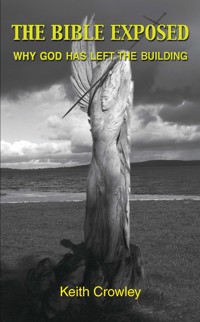
In 'The Bible Exposed -Why God has left the building' the author deconstructs many of Christianity's most cherished illusions. He lifts the lid off the Christian Bible's collection of scientific errors, ancient myths, legends and constant contradictions, and demonstrates that the Bible can only be a man-made artefact untouched by divine involvement or inspiration. The difference between what the Bible actually says and what Christianity teaches will astonish you. For instance, who killed Goliath? Everyone thinks that they know the answer. Everyone is amazed when they read what the Bible actually says.
Das E-Book können Sie in Legimi-Apps oder einer beliebigen App lesen, die das folgende Format unterstützen:
Seitenzahl: 573
Veröffentlichungsjahr: 2012
Ähnliche


















Content
About the Author
Introduction
The Christian Illusion
The Nature and Character of the Christian God – Part 1
The Nature and Character of the Christian God - Part 2
The Nature of the Christian Bible
The historic (and hidden) nature of Christianity
Is the New Religion of Christianity really New?
The God Problem
Is God Evil?
Faith
Absent Friends
Questions
Finale – Part 1
Finale – Part 2
Appendix
AbouttheAuthor
Keith Crowley began his working life as a pilot in the Royal Air Force and finished it as the Marketing Director of an investment management company in London. Along the way he developed an enduring interest in history and in what the Bible actually says, as opposed to what people believe, or have been told, that it says. These interests eventually led to this book.
Introduction
“The trouble with the world is not that people know too little, but that they know so many things that ain’t so.”
Samuel Langhorne Clemens, better known as Mark Twain (1835 – 1910)
You may be impressed by the fact that a large majority of the world’s population (c. 7.0 billion in 2012) professes belief in some kind of god or ancient spiritual tradition and that over two billion people claim to believe in the Christian God, as delineated in the Bible.
But, until they learnt better, everyone on Earth believed that it was flat and that the Sun orbited the Earth, which was the centre of the universe. Many were also convinced that demons swirled around in the air like some pernicious, invisible dust and that disease and thunder and lightning were God’s way of showing his displeasure. But all of this was later shown to be absolute nonsense and I believe that we are at the point in history where it is anywhere from most unwise to downright disastrous to continue to believe in the myths and superstitions of our ancient ancestors. They, however, constructed a pretend world and peopled it with ‘gods’ because it was the only way that they could begin to produce answers to many of their questions and make some kind of sense of their world. Thanks to science, we now have a much better idea of how the world really works; we don’t need to perpetuate the pretence of our ancestors and the many religious based explanations that they produced.
Our modern, technological, world has largely embraced an evidence based way of life which in my view serves mankind much better than the errors, contradictions, myths and unproven beliefs of the Bible, and hence Christianity. We are now able to contemplate a world where the boundaries of death, arguably Christianity’s main reason for being, are pushed further and further away, thanks to the incredible potential of bio-engineering and nanotechnology. It is even possible that the old saying about death (but not taxes) may have to be revised. The scientific and technological achievements of the past decade indicate that we are on the cusp of major advances that will revolutionise mankind’s lifespan, his view of himself and his place in this world. I appreciate that this sounds fantastic and perhaps even unbelievable. However, if, as I confidently expect, we achieve much, much more for mankind in the next two hundred years than Christianity has managed in the past two thousand, then hopefully we can at least begin to put the mythical past behind us and concentrate on our amazing future, which lies much more with supercomputers than the supernatural.
In this book I examine whether the Bible bears the hallmark of divine inspiration or the imprint of a purely human endeavour. There are still many people around who, whilst inclining towards not believing in supernatural gods without the provision of suitable evidence, are still not quite sure of their objective; theist or atheist. As the names imply, both have a lot in common. Both do not believe that any of the numerous pre-Christian pagan saviour gods were real, physical entities. Both believe that these gods were created by men for their own purposes. Both believe that while the pagan gods may have had stories to tell and truths to reveal, they were simply mystical, symbolic and allegorical beings. Both believe that the plethora of gods that the world has known is a man-made invention.
An atheist believes all of the above, all of the time, whilst a theist believes it about all gods but one. What is one amongst many, you may ask? But, as history shows us, that single difference is crucial to how you may think about life and love; how you act and treat others and what you believe is important in life. Having read and thought about the Bible and Christianity’s beliefs for many years, I eventually reached the conclusion that both are ridiculous. I was greatly helped to this view by the astonishing, and unbelievable, contents of much of the Bible, plus two discoveries. The first is that the Christian god is the same entity that is worshipped by both the Jews and the Muslims (there is only one God, or so it is claimed, but see the chapter headed ‘The God Problem’ for a different view). The second is Christianity’s fascinating statement about its doctrine of the Trinity, to the effect that, “We are a monotheistic religion and here are the three versions of our god that prove it.”
The history and religious philosophy of the past four to five thousand years make it clear that far from being the new and unique experience that it claims to be, Christianity is just the last gasp of the saviour god religions which preceded it by anywhere from hundreds to thousands of years. Once you realise that Christianity’s attempt to turn its spiritual Son of God intermediary figure (Jesus) into a real person who communicated directly with humans has anthropomorphic origins and is far removed from reality, it becomes easier to unpick the rest of the crudely stitched together stories of the New Testament.
At the heart of Christianity’s founding was the desire to make its message easily understood by the masses. The early Church fathers determined that Christianity’s basic idea had to be simple and its main character made easy to relate to and understand. Turning Jesus into a ‘real’, historical person enabled them to achieve this goal. The illiterate and superstitious masses were presented with a simple idea that was easy to grasp but which did not lose contact with the basic elements of their familiar pagan myths.
One of the most surprising realisations to come out of the ancient pagan religions is that long before Jesus appeared many people already believed in the coming of a powerful messiah, or god, with all the trappings that were supposedly unknown before the Bible introduced us to the life and times of Jesus. These include a virgin birth, a massacre of innocent children, the philosophy of serving mankind and not mammon; the incarnation of the spirit as flesh; an afterlife; the death of the special one and his resurrection after three days, his ascension and subsequent immortal status. For details, see the stories of Tammuz, Osiris, Horus, Dionysus, Apollo, Krishna and Zoroaster, amongst many others. They are just a few of the many pagan saviour gods that people worshipped long before the Jesus story was unveiled.
Stories are part of the intellectual currency of every age and have always been used by mankind as a source of information, entertainment and propaganda. Since there was a low level of literacy and a distressing lack of newspapers, books, magazines and electronic media two thousand years ago, constant repetition was the only way to achieve widespread circulation in those far off and highly superstitious times. A few decades of telling and retelling were invariably enough to turn a well crafted myth into creative reality – thus demonstrating the life giving properties of mouth to mouth recitation. Some were then written down and turned into an eclectic collection of stories called the Bible.
Christianity’s greatest piece of good fortune was being able to hitch a ride on the shoulders of the Roman Empire which gave it access to much of the known world plus the vital political and military support needed to enforce acceptance of its doctrines and dogmas. When the Empire crumbled, Christianity’s authoritarian nature and centralised structure made it an excellent ally for the many repressive rulers of Europe. They valued its role in maintaining their own legitimacy, via the god model of the world and the contents of some of Paul’s letters, plus what later became the doctrine of the Divine Right of Kings. Equally important for maintaining peace and good order within their territory was Christianity’s role in communicating the approved version of the will of God directly to their subjects on a weekly basis.
The ancient supporters of Christianity would have been understandably aghast at the thought that it could ever be replaced but it is my contention that this process is already underway. Religion has clearly been overtaken by football/soccer as the universal interest and topic of conversation, and wars, whether containing just an underlying or even a more substantial element of religious ferment, have largely been replaced as national trials of strength by international football matches. Even here, however, the death toll can be alarmingly high, although it is usually confined to hopes and dreams (England’s laughable efforts at South Africa’s FIFA World Cup, 2010, for example). But note that 72,024 fans turned up for England’s first home game after their disastrous misadventures in South Africa. They still believed, in spite of a total lack of supporting evidence, that England were one of the best teams in the world and that one day both they and the team would reach the Promised Land of World Cup victory. England’s World Cup win in 1966 isn’t even a distant memory for most fans. The fans have established a large and enduring emotional (and financial) relationship with an institution that has consistently failed to heed their prayers or sustain their hopes, never mind fulfilling their dreams. The Church has a similar relationship with its supporters but to make up for its failures in this world it offers the opportunity for eternal life in the next – jam tomorrow.
In Europe, football draws larger and more passionate crowds than Christianity has ever done or could ever hope for, and there are similarities even beyond the oft discussed need to spread the gospel of the beautiful game to all corners of the world. In both arenas, the sacred and the profane (and in which category would you put *Anfield and Old Trafford, those cathedrals of secular worship?), true believers pour out their hopes and fears and spend much time and effort praying for either the unlikely or the downright impossible. Should a miracle occur it is difficult to decide whether the fans or the theists would be the more surprised and appreciative.
I perceive Christianity as being similar to the average English professional football team, ie, a badly managed (see the Anglican split over homosexual and female bishops), run down institution whose glory days are well behind it. Both institutions are constantly trying, and failing, to organise their finances properly and deal with their membership/attendance problems. A Church of England report in July, 2011 showed that the C of E’s adult attendance had declined by fifty per cent since 1971 and that the number of children regularly attending its religious services was down by eighty per cent.
Curiously, the message is precisely the same for both football fans and theists; “keep on keeping the faith – your day will come.” The one great advantage that football teams have, however, is that their particular messiah can always be sacked and replaced with yet another magnet for false hopes. Christianity has to lumber on regardless, playing the game under the same basic rules and using the same management team.
I have tried to be as fair and balanced in my observations as the authors of the Bible were and have made it a point of honour to show the same amount of respect for the views of Christianity as Christians showed for those who, over the past two thousand years, disagreed with Christianity’s unproven ideas, doctrines and dogmas. In various places I have attempted to place Christianity within its historical context to show that its evolution owed everything to changing human attitudes and actions, which themselves reflected the changing social, moral and political mores of the times.
The Bible is, allegedly, a direct link to God and Jesus. Beyond this source everything else that is claimed as knowledge about the thoughts, desires, actions and will of these supposedly divine beings is a mixture of interpretation and wishful thinking, and whether one should draw any distinction between the former and the latter is a moot point.
History shows us that the evolution of Christianity is a result of ordinary men taking the Bible as their starting point and then adding, deleting and altering bits to suit their particular theological, political or social agenda. A study of both the style and contents of the gospels graphically illustrates this point (see, ‘The Nature of the Christian Bible’). In this manner, many of the major dogmas and doctrines of the Church were established well after both the Jesus era and the later appearance of the gospels. To be fair, since neither God nor Jesus shows any desire in the Bible to start a new religion, the onus to establish the rules, regulations, beliefs and benefits of the religion that eventually became orthodox Christianity could only fall on its early leaders and their many successors.
One can easily demonstrate that what the Bible actually says (as opposed to what many theists either believe or are told that it says) is totally incompatible with what Christians claim are the divine characteristics of God and Jesus, and that the level of cosmic knowledge (or ignorance) displayed by God/Jesus in the Bible is precisely the same as that of the ordinary people alive two to three thousand years ago. Given the massive ignorance of our divine duo about the world that God allegedly created, it becomes clear that the basis upon which Christianity is predicated – the existence of a perfect, all-powerful, all-knowing God and the earthly life, death and resurrection of Jesus, can only be an allegorical fiction written by ordinary men. Further, that the man-made Bible is a product of existing sources and man’s hopes, fears and imagination. A human deed for a very human need – that of explaining, by conjuring up supernatural figures, what at the time was the inexplicable, ie, the origin of life and how the visible world works.
In the following material I aim to show, mainly by direct reference to the Bible and a few of the more popular theistic aberrations, that the Bible is not, indeed cannot be, the work or inspiration of an all-powerful, all-knowing and perfect being: that it is purely a manufactured product produced by people who were, of necessity, very superstitious, very scientifically ignorant and very fearful about how their world worked. They were people who constantly searched for answers to the many questions that they had about the world and their place in it. Finding almost none in the natural world they turned their minds to the supernatural and the realm of the ‘gods’. And the rest, as they say, is history.
*Liverpool Football Club plays at Anfield, Liverpool; Manchester United at Old Trafford, Manchester.
The Bible quotations that I have used are from the King James Version (KJV) unless otherwise stated.
In this book I use the word Church, with a capital C, to refer to the evolving entity that became the Christian religion and later split into Catholicism and Protestantism. I use the word theist to mean a person who believes specifically in the existence of the Christian God.
TheChristianIllusion
“If, then, there are mistakes, misconceptions, false theories, ignorant myths and blunders in the Bible, it must have been written by finite beings; that is to say, by ignorant and mistaken men.”
Robert Green Ingersoll (1833-1899)
Ingersoll was an American writer, thinker and orator (see Finale – Part 2)
It is my contention that Christianity is an illusion (a false or misleading perception or belief), one that is based on the massive collection of myths, legends, complications, contradictions, errors and absurdities that we call the Christian Bible.
Here’s a question for believers. Bearing in mind that Proverbs 30:5 says that, “Every word of God is pure,” that is to say, ‘true’, is the Bible the word of God (directly or indirectly), as is commonly, indeed constantly, claimed by theists, or is it a totally man-made production? It cannot logically be a mixture and if it is the former then it does not need, indeed cannot have, any subsequent alterations or interpretations because God is perfect and fallible humans are incapable of improving on perfection. In which case, the Bible must be literally true. But if it is the latter then it loses all claim to being divinely inspired and becomes just another ancient book whose truth is on a par with the scripture produced by the originators of the many pagan religions that preceded Christianity.
As an alternative, some conservative Christians now claim that while, of course, what the Bible serves up these days has been terribly corrupted by man, the original manuscripts were quite definitely the inerrant word of God (standard definition: all-powerful, all-knowing and all-loving; hereinafter referred to as a triple ‘a’ god).
It is true that there are no original documents available, just copies of copies of copies, and that most of what we have are simply fragments; but how do these self-appointed guardians of biblical purity know what the originals looked like in the first place? (Theydon’t,ofcourse.) Since everything was hand copied in ancient times, it’s hardly surprising that the originals became corrupted so quickly and easily. Every new copy of the Bible was an opportunity for additions, deletions and errors by people who, initially at least, were not as skilled, educated and dedicated as those who later filled the Church’s scriptoria.
However, from the moment that it achieved a degree of theological and political power (in 381 CE when it became the sole official religion within the Roman Empire), the Church made it quite clear that whatever version of the Bible it was using at the time was, by definition, the word of God and was to be obeyed to the letter of God’s law. We have no explanation why God would be happy to provide the originals but not to replace them (or keep them safe from all harm and interference in the first place). For a triple ‘a’ god this would have been an easy task and, as a perfect and all-loving being, he would surely have wanted to do one or the other. But it seems that either God cannot, or will not, provide fresh originals. Either way is a limitation on his all-everything status. WhatbestfitstheavailablefactsisthattheBibleis,andalwayshasbeen,aman-madeartefactandthatitisman’sinnatedesiretomeddle,changeorimprovethingsthathaslead,overthecenturies,tothemanyerrorsandcontradictionsfoundintheBible.
Everything that God says in Genesis I about the order in which he created and then populated the world is promptly contradicted in Genesis II. Actually, as scholars have discovered, the material in the two chapters was written by different people at different times. TherearetwoversionsofthefloodstoryandofthenumberofeachanimalthatGodorderedNoahtotakeonboardtheArk.ElsewhereintheBiblethereareconflictingaccountsofwhetherJesusisthepreciseequalofGodorisonerungdowntheladder;whetherthesinsofthefathersshould,orshouldnot,bevisitedonthesons;Jesus’lastwordsonthecross;hisfamilytree(assetoutinthegospels);howJudasdied;whetheryouneedtohavedonegooddeedsaswellashavingfaithinJesustoobtainsalvation;andsoon. The list is very long, almost as long as the ‘interpretations’ that theists come up with to try and explain away the difficulties.
But interpretation is what theists are forced to do to get around the awkward bits (ie, the errors, contradictions and absurdities) in the Bible and to maintain the illusion that it came directly from God. ItneverseemstooccurtothemthatifitcamefromaperfectGodinthefirstplacethenitcouldnotcontainanyerrors,contradictionsorabsurdities and thus there would not only be no need for them to do any re-writes but it would also be rather presumptuous, not to mention potentially life threatening, to arbitrarily change the words of such a jealous and unforgiving being as the God of the Old Testament. For confirmation of God’s irascible behaviour check out the Old Testament or, if you’re pushed for time, just the Pentateuch. But if it’s a dire emergency go straight to Joshua 24:19.
What makes me confident that God/Jesus did not have a hand in writing the Bible and that it is the product of fallible men who were, understandably, completely ignorant of how the world really works?
AmajorpointerinthisdirectionisthelevelofscientificknowledgeshownbyGodandJesus.Neitherhasaclueabouthowtheworldactuallyworks. Their knowledge of science, and especially the cosmos, is just about zero and certainly way less than a sixteen year old would expect to have under his or her belt today. Ifyouhavejustcreatedtheworldandareall-knowing,shouldn’tyouhavedetailedknowledgeofhowitallworks?Youshould;butthebiblicalGoddoesn’t. His Earth is stationary and his universe remains unaltered throughout time. Because he is unaware that the Earth spins on its axis he, like the ordinary humans of the time, thinks that the Sun revolves around the Earth. Joshua 10:12-13 tells us that the eponymous hero successfully entreats God to stop the Sun travelling across the sky so that he can win his battle in daylight. God is blissfully unaware that only by stopping the rotation of the Earth, with horrific and disastrous results, not least for Joshua and his army, can the Sun be made to look as if it is stationary. For both God and Jesus the stars are just tiny lights that have been placed in the sky. Neither is aware of how massive they are, how far away from us they are and what a catatastrophe it would be if, as per Revelation 6: 13, “…the stars of heaven fell unto the earth.”
The life and death of stars is what makes the universe function and its cosmic radiation and constant explosions can be deadly to mankind. So much for God making mankind a special place that was specifically tuned to its needs. That’s just another man-made illusion. Life on Earth has always been fraught with danger thanks, in particular, to the many ‘extinction’ events that have occurred and especially the daddy of them all, the Permian extinction. This life obliterating experience happened around two hundred and fifty million years ago killing nearly all life in the oceans and around seventy five per cent of life on land. Further, we know from even our modest attempts at manned space travel that such excursions are difficult and dangerous. For humans, the universe, whether here on Earth or out in space, is a highly lethal playground.
Our Sun is not a particularly large star but it could swallow over a million Earths. The hyper-giant star VY Canis Majoris is a billion times larger than the Sun. When the stars have used up all their fuel (not something that is likely to happen any time soon) they will wink out and the universe will become cold and dark. Life as we know it will become impossible; but God knows nothing of this. The Bible shows that he thinks that Earth could survive a collision with a star and carry on as normal (Revelation 6). Itcouldnot:everythingandeveryoneonEarthwouldbewipedout.OnlyordinaryhumanslackingallknowledgeofthecosmoscouldpossiblyhavewrittenthebookofRevelation.Anall-knowing,all-powerfulandperfectsuperbeingwouldbefullyawareofhowtheworldthatheallegedlycreatedactuallyworked,butthebiblicalGodisn’tandwhatweareleftwithisthethoughtsandflawedknowledgeoftheordinaryhumanswhoactuallywrotetheBible. Here is a major ‘smoking gun’ where the true origin of the Bible is concerned.
The scientific knowledge possessed by God and Jesus (next to nothing) is on the same level as that of the many scribes who wrote what later, much later, was brought together, edited and finally unveiled as the Bible (now there’s a coincidence). Scholars think that the earliest parts of the Bible were begun around 1100 BCE and that it took at least twelve hundred years to complete both parts. God is revealed as a highly ignorant and superstitious being who believes in the existence of witches (Exodus 22:18). He wants mankind to kill them all (whatwasthatabout“Thoushaltnotkill?”). Jesus is so medically inept that he thinks that the only way to cure epilepsy is to drive out the devils that caused it from the body of the patient (Mark 9:17-29). He has no idea that it is a treatable nervous disorder. But this sort of superstitious nonsense is still with us today although, to be fair, the people involved (most of us) are invariably completely unaware of the connection. When you sneeze and someone says ‘God bless you’, this goes back to medieval times when rampant little devils were thought to be everywhere, swirling around in the air and waiting their chance to enter your body and cause havoc. So, if somebody didn’t ‘God bless you’ when you sneezed, the devils could enter your body through your nose or mouth (the jury is still out regarding other orifices), but one mention of God’s name was enough to see them off. In some versions of the story sneezing ejects part of your ‘soul’, leaving you vulnerable to any incoming devils if God’s protection isn’t called upon.
Another factor that helped to persuade me that the Bible is a man-made artefact is that neither the all-knowing God nor the all-knowing Jesus can prophesise their way out of a paper bag (a sure sign of human involvement). Both of them, plus the prophets (a singularly inappropriate name), are way off with their predictions (just like humans have always been). And when you examine the gospels carefully, key aspects of Christian belief such as the crucifixion and resurrection get so horribly mangled and distorted by the gospel writers that there is no consistency anywhere and each writer massively contradicts the other three at every turn. It is quite astonishing and very revealing (see, ‘The Nature of the Christian Bible’).
One of the core elements of the Christian illusion is the belief by theists that their God and his words and actions are uniquely Christian. So, hands up all those who remember learning at church that the Christian God is the same entity as the Jewish and Muslim gods. What; none of you!! Historically, what Christians refer to as God started out in the Old Testament as Yahweh (or YHWH) and is the exclusive god of the Israelites/Jews. But later on, in the New Testament, he mysteriously became the Christian God as well. So, when, where and why did this happen and how come, as Allah, he later became the god of the Muslims as well? And if it’s the same god regardless of the different names that are used (anditis), and he’s given his unique wisdom and teaching to three different religions but the information is not exactly the same (andit’snot); what does this tell us? Apart from the fact that God’s definition of unique needs a little working on. Nevermind,sinceChristiansclaimtofollowtheonetrueGodtheynaturallydismisstheclaimsoftheJewsandtheMuslimsoutofhand.
The history of the biblical period shows us that the many laws and commandments of the Bible were produced purely for their own time and reflect the customs and morality of just one part of the world (as one would expect for any man-made collection of rules/laws produced at any time in history). They were not written as history and were man’s answers to the perceived legal and social needs of the time. This is what ordinary men would do, lacking the knowledge and wisdom of a triple ‘a’ god. The said god, however, would be in a much different, much better, position. He would know how life would change over the centuries and would frame his laws and moral codes accordingly. Well, he’d have to otherwise much of what he said initially would look ridiculous a couple of millennia down the road. For instance, bits about killing witches (Exodus 22:18), and those who commit perjury (Deuteronomy 19:18-19) or kidnapping (Exodus 21:16) and who engage in pre or extra-marital sex (Deuteronomy 22:22-30). Some of it might be ok-ish, however, such as the general prohibitions on killing and stealing, but even here he would know (because he is an all-knowing god) that as life got more complex the world would move away from simple black or white solutions and start to deal extensively in multiple shades of grey. So he would want to update the original message from time to time to keep things workable.
“And is that what he’s done?” said a voice down my celestial telephone.
“Actually, no,” I responded. “As far as I can see the original biblical laws and codes have remained virtually unchanged. By the way, how did you know what I was thinking?”
“Oh that. It’s just a trick of the trade.”
“What seems to have happened,” I continued, “is that over the centuries mankind has tried to get around the difficulties posed by the original biblical verses by interpreting them. Interpretation in this context generally means that the views expressed in the Bible have been amended until they come into line with the interpreter’s personal views.”
“So are you claiming that there’s absolutely no sign of divine intervention or inspiration in the Bible? That it’s all down to those pitiful creatures you call ordinary men.”
“And possibly women,” I said, “God was never much of a ladies man; he seems to regard them as some form of inferior species whereas we couldn’t manage without them. But, to answer your question; yes. Although that’s not the story that earthbound theists tell today. They are totally sold on the divine inspiration story and so when they go looking for it, surprise, surprise, they jolly well find it. Apparently, it was God who passed all the new bits, or updates as we call them now, to those awfully clever interpreter chappies. He just didn’t want to take all the credit himself and so he let them have what he calls their twenty minutes of fame. So that must mean that it was our all-knowing God who told certain key players to split Christianity up into Catholicism and Protestantism. What a major celestial bum steer that was. Hundreds of thousands, probably millions, of innocent people killed; and for what? There are one or two nasty hotspots left but Catholics and Protestants seem to co-exist quite peaceably now.”
“No it wasn’t,” said a testy celestial voice, “You don’t seem to have been paying attention to the right sort of Bible, let alone reading between its lines. As every theist will tell you, again and again if necessary, God is not in the business of taking the rap for those occasions when things go pear-shaped and the equivalent of eighty to a hundred hospitals worth of innocent people get killed. That sort of thing is all down to mankind not doing God’s will thanks to its miss-application of God’s free will perk. And God wants to make it abundantly clear that earthquakes, tsunamis, volcanic eruptions, mud slides and the like should always be referred to as natural disasters. Apparently, some people still call them acts of God.”
“But,” I said, rather surprised, “If God created the world, and he is adamant that he did, then because he is all-knowing he would have known about all the death and destruction that earthquakes, volcanoes, etc, would inevitably cause, wouldn’t he?”
“Perhaps, but we are still checking that out with our heavenly lawyers.”
“That’s a terrible cop-out,” I responded, “After all, this is the same God who, at Isaiah 45:7 says, ‘Iformthelightandcreatedarkness;Imakepeaceandcreateevil;ItheLorddoallthesethings’.”
At this point a coughing and spluttering noise came down the line, which then went silent.
If we examine how, when and why the Jewish God of the Old Testament seemingly came to play a central part in a new religion called Christianity, we find that, in the Old Testament, God is the fierce and fiery god of the Hebrews/Israelites/Jews (no other religions or their followers are involved) and actively intercedes to ensure that his chosen people can overcome (a polite word for mindlesslyslaughter–seeDeuteronomy20:17) the despised gentiles. Although, for an all-powerful, all-knowing and perfect god to choose the Jewish people as his special protégés and promise them power and glory ad infinitum if they worship him and follow his commandments, shows a disturbing lack of knowledge of the future direction of Jewish history (impossibleforatrulyall-knowingentity). It rather undermines your belief in this alleged, all-everything, super being. At the very least you have to question his timing and judgement, whichmakesamockeryofGodasaperfectbeing.
During the time that the Old Testament was written, roughly the thousand years before the advent of Jesus, the Hebrews/Israelites/Jews were conquered, and often subjugated, by the Assyrians, Babylonians, Persians, Greeks, Egyptians, Syrians and Romans. In 66-70 CE and 132-135 CE, two Jewish uprisings were ruthlessly crushed by the Romans who, after the second uprising, completely destroyed Jerusalem and forced the Jews to flee to all parts of the Roman Empire – thereby initiating the Jewish Diaspora. And the last two thousand years haven’t exactly been a picnic for the Jews either, what with their endless, and often brutal, persecution by some of Europe’s allegedly Christian nations, culminating in the abominable hell of the Holocaust. WherewasGod,thechampionofhischosenpeople,allthistime?Asthenexttwochaptersreveal,hewasstuckwithinthepagesoftheBibleandcouldn’tgetout.
When Christianity was invented it welcomed gentiles, those who were permanently under attack from the Old Testament God because they were not Israelites/Jews, and I’m sure that this development was a bit of a surprise for the fire breathing dragon of the Old Testament. Christians quickly developed a distaste for the Jews which became hatred when they characterised the Jews as Christ killers, although the question of whether they killed Jesus is rather a moot point. (Aggravatedassaultleadingtotemporarymanslaughterperhaps,butkilling?Justhowdoyoukillanimmortalgod?) The Christian God comes with an intermediary man-god who is allegedly born on Earth, is seen by multitudes, is arrested, tried, crucified and resurrected, and is further seen by many before he ascends to heaven (atleastheisinActs,althoughinthegospelstheascensionofJesusisacompletelydifferentstory–why?Probablybecauseofthedifferentwritersinvolvedandtheirdifferentagendas). The Jewish God knows nothing of any of this but we are assured by the guardians of Christianity that the two beings really are the same God; soitmustbetrue!!
As detailed later, the God of the Old Testament is a jealous, ill-tempered, immoral, homicidal maniac and can’t just quietly morph into a kinder, gentler Christian form of God, albeit one who has acquired an anti-Jewish streak, initially via the gospel of John. TheswitchfromOldTestamenttoNewproduces,fromanallegedlyimmutableGod,abeingwhobreakshispromisetohischosenpeopleandcompletelyaltershisviewsonsuchtopicsasgentiles,circumcision,eternallife,thepreferreddayoftheSabbathandwhetheronecandoanyworkonthisday,plusotherquiteimportanttopics.Hecannotbereal.Heiscertainlynottheimmutable,all-powerfulandperfectbeingthattheistsclaimthatheis.
The Jews discount the entire New Testament story of Jesus; there is no place for him as the Son of God in their culture. But if he had performed all the miracles that are claimed for him, miracles which were supposedly witnessed by thousands of Jews, then he would have been a leading character in Jewish history as opposed to a simple prophet in Jewish mythology, and could not have been ignored even if his presence caused theological difficulties for the staunchly monotheistic Jews. If he really had preached to thousands, perhaps tens of thousands, of Jews; had healed the sick as the Bible tells it and performed all those miracles, there is no way that Jewish history and culture, especially as depicted by Josephus (37— c100 CE), the leading Jewish historian of the time, couldhaveavoideddealingwithhislifeinsomeformoranother.ButthetravelsandtravailsofJesusareaclosedbooktoJosephusandhisfellowJewishhistorians,whoknownothingaboutthem.
One of the most persistent illusions that theists like to cling to is that the gospels were written by eye-witnesses, perhaps even disciples, who were with Jesus at all the crucial times in his life (eventhoughthediscipleswereonlyrecruitedbyJesuswhenhewasaroundtheageofthirty)andwhofaithfullyrecordedhiswordsandworks. How do we know that this isn’t true? Because the Bible tells us so (see, ‘The Nature of the Christian Bible’ for details). It doesn’t set out to do this but eventually, via its erratic and conflicting stories, its errors, scientific howlers and massive contradictions, it leaves no other reasonable possibility.
Nobody actually knows precisely when the gospels were written and who wrote them but the consensus amongst biblical scholars is that Mark was the first gospel completed and that this occurred ‘not before’ 70 CE. Of course, it could have been later, much later, but even accepting this base date means that all the gospels were written many decades after the events that they purport to show took place (aminimumoffortyyears). And that provides a problem for those theists who would like us all to believe that the gospels were written and circulated shortly after Jesus’ resurrection and ascension (asyouwouldexpectforsomethingthatwasallegedlyinspiredbyanall-powerfulanddivineentity). It’s not that you can’t recall the generality of some major events long after they happened, it’s that accurately recalling all the details varies from very difficult to impossible, and accurately recalling the precise words that were used in conversations is totally impossible (see, ‘The Nature of the Christian Bible’). The human brain just doesn’t work as a voice activated digital recorder; and then there are the ravages of time to overcome. So,whattodo?Easy;useasource.Borrowbitsfromexistingdocuments. You have to remember that when the gospels were written no one had the faintest idea what their particular piece of work would later be used for. Nobody came along and said, “Look, we’re writing the New Testament part of the Christian Bible now, can we count on you for a gospel or two? The money’s not great but our top man says that it’s going to be a smash hit and so the royalties will be terrific.”
And importing a large amount of source material was easier then because there were no copyright problems and borrowing, or even wholesale plagiarism, was not uncommon since all books were hand copied. The problems that this later produced might have remained little known but for the great expansion of Christianity and the arrival of the printing press in Europe. However, with the sharp decline in the Church’s political power in Europe by the end of the second millennium and the rapid rise, in the last century, of modern critical thinking by a mass of well educated biblical scholars, we finally reached a time when the Bible could be dissected and laid bare for everyone to see, warts and all.
AnothermuchlovedChristianillusionisthatthelifeandtimesofJesusareuniqueintheannalsofhistory.ButwhenyoucomparethelifeofJesuswiththatoftheearlierpagansaviourgodsyoucannothelpbeingsurprisedbytheastonishingsimilaritiesbetweenthem(seethechapterheaded,‘IstheNewReligionofChristianityreallyNew?’). The major events in Jesus’ life are very accurately foreshadowed by the lives of Tammuz, Apollo, Krishna, Osiris, Dionysus, Zoroaster, Mithras and many other pagan saviour gods. Unlike Jesus, however, these gods are all acknowledged as mythical and symbolic entities. They were never portrayed as real people. But a vital part of the Christian illusion emerged when Jesus was changed from a spiritual being, as envisaged by Paul in the ten to twenty years after the alleged resurrection, to a real, historical person in the gospels (produced many decades later), as Jesus of Nazareth.
Why did the early Christian fathers make this change? Who knows? But here are two candidates for consideration.
First, having allowed gentiles to participate (thosesamegentilesthatGodhates;seeDeuteronomy20:17), many of whom had previously worshiped pagan gods, it almost certainly made it easier for people to become Christians if parts of their old religion were incorporated into their new one. Second, two thousand years ago there was a lot of competition for converts and having a god who had apparently walked and talked with humans would have been a major coup for Christianity and its fledgling reputation. In our modern advertising industry it is known as having a USP (Unique Selling Point).
Whatever you call it, it is part of the great Christian illusion; getting people to believe in the unbelievable simply because an ancient, hand written book begun thousands of years ago by unknown authors and altered time and again during its development, has acquired an undeserved and unproven reputation for being the divinely inspired word of God. But no all-powerful and perfect super being could be responsible for the Bible. It would just be too embarrassing for him what with its massive scientific ignorance of how the world actually works and its many errors and contradictions. And such a being would know that the Bible’s severe limitations would be exposed within a relatively short period of time (a few thousand years to us is but a micro-second to an immortal god). The Bible could only have been written by humans whose image of the world was based entirely on what they could see, read or imagine.
But does it matter that Christianity exhibits all the signs of being something other than what it claims to be? In life the impact of the illusion, or the myth, can often be greater than the simple but unexciting truth. Newspaper fortunes have been made on this basis. We all like illusions and people have flocked to magic shows throughout the ages. Modern illusionists, with their apparent ability to control space and time, are some of the leading lights of the international entertainment industry.
Conversely, although we long to know ‘how it’s done’, if we ever find out we are usually disappointed. “Oh, is that all.” We seem to prefer the comforting illusion to the everyday reality. TheillusioniswhatsustainsanddelightsusandChristianity’sbiggestillusionistheprovisionofeternallife. People desperately want to believe in it because, if it were true, it would maintain the link with their loved ones whereas conventional death destroys it. For humans, eternal life in heaven is a very natural desire if life has been good and a very understandable hope if life has been harsh. Fantasy — along the lines of ‘next week I’ll win the lottery’, and illusion – ‘there is a glorious afterlife waiting for me’ – may well have sustained millions for thousands of years. It has probably provided comfort. And what’s wrong with that you may ask? Depending on the circumstances, maybe not a lot. And perhaps nothing at all if feeling comfortable with your religion is all there is to it. But it’s often not as simple as that.
Ifyoubelievewithoutevidenceyoucanbepersuadedtobelieveinalmostanythingandapersonwhobelieveswithoutreasonableevidenceisnomatchfortheconmanandswindleraspsychics,astrologers,mediumsandreligiousfraudshavebeenprovingforcenturies. In extreme cases the supposed attractions of the afterlife can turn people from thinking about life to planning for death, and unreasoning faith plays a major part in turning some believers into dangerous fanatics. Butsometimesthehighpricepaidforunreasoningfaithisnotimmediatelyobvious
Many people are familiar with the religious beliefs of George W Bush, America’s forty-third president. (Actually, he was only the forty-second person to be president but that’s another story.) Some of his political colleagues were fundamentalist Christians who believe to this day that every word of the Bible is true and was written by God. For them it is the only suitable blueprint for how to live your life although, being gold plated hypocrites, living according to the dictates of the Bible was the last thing that they ever considered doing. Give up all that power, wealth and privilege – you must be joking. They declare the Bible to be inerrant and the errors, absurdities and contradictions that are clearly visible to others simply do not exist for them. All the evidence that conflicts with biblical inerrancy is either ignored, rejected or repackaged. Whichever method is used, “The Bible is reliable” remains their mantra of choice.
Such beliefs inevitably intruded into political decisions. Research has shown the amazing potential of stem cells to enhance or preserve human life. But initially the cells came from a human embryo and their use was deemed by the Bush administration to be contrary to the teachings of the Bible. Wherever it could, it used its considerable power to ban or otherwise discourage all stem cell research. The words of an ancient, confused, contradictory, error strewn, totally unverified and much altered document were used to prevent potentially life saving medical research from being carried out. And every few years in America a biblically inspired whack-job takes a gun into an abortion clinic and kills a doctor. His (it’s always a he) defence is the same every time; he was just carrying out God’s will as set out in the Bible. His concern is always for the sanctity of human life so by killing the doctor he was saving the lives of what would otherwise be countless unborn children. (And I thought that Americans didn’t do irony.)
In Africa AIDS is a plague. The use of contraceptives can help to limit its spread but, driven by their biblical beliefs, American fundamentalist priests and politicians urged the US government not to provide aid in the form of contraceptives because they feared that that might encourage Africans to indulge in recreational sex (ooh, naughty), a situation they (and by extension, God) disapprove of, rather than the strictly procreational variety which apparently does come with God’s seal of approval. And this was perfectly workable politically because Africans don’t get to vote in the US and thus no American political careers were at stake; justAfricanlives.
But AIDS is not Africa’s only Bible influenced problem. Western missionaries often find that they get a much better response to their ministrations from the poor and illiterate of the under-developed nations than they do from within their own countries where knowledge, education and wealth can be at much higher levels. This makes Africa a prime target and sometimes the behaviour of some converts leads to the death of innocent people. But hey,werarelygettohearaboutitandoutofsightisoutofmind,isn’tit?
In Kenya, in May 2008, a large and religiously inspired mob of people, perhaps around a hundred, killed eleven people who they considered were witches. Theywereallburnedtodeathalthough,tobefair,mosthadbeensosavagelybeatenbeforehandthatwereneardeathanyway. God is very helpful in this situation because at Exodus 22:18 he says, “Thou shalt not suffer a witch to live.” Of course, this is the same God of love, mercy and forgiveness who memorably coined the famous prohibition (Exodus 20:13 and Deuteronomy 5:17) which is absolutely specific about mankind not getting involved in any such lethal activity.
John 15:6, below, has been the favourite text of all heretic and witch burners for centuries, and you can see why. While it no longer works in the western world, thank goodness, it still seems to be alive and well (if you’ll pardon the expression) in parts of Africa.
“If a man abides not in me, he is cast forth as a branch, and is withered; and men gather them, and cast them into the fire, and they are burned.”
In January, 2010 the government of Tanzania proposed making homosexuality, both male and female, a capital crime. Why? The Bible again; Leviticus 20:13 says that if two men indulge in homosexual behaviour they have committed an abomination and should be put to death. Clearly it was more important for this government to carry out the instructions of a two-thousand year old book of unknown origin and dubious moral concepts than to treat its citizens with compassion, love and forgiveness (although you’ll find that all three come highly recommended in the New Testament). Actually, Leviticus only deals with men, not women (maybe God didn’t know that such things went on amongst the distaff side), so the politicians went even further than God decreed. And this is the God who allegedly loves everyone equally and unconditionally. (Really?NotaccordingtotheBiblehedoesn’t.Hewantsmalehomosexualsputtodeathinspiteofhisbestknowncommandmentbeing,“Thoushaltnotkill.”)
AnotherinstanceofthepoweroftheChurch(andhenceChristianity)beingusedforevilpurposesisthelong-runningsexabusescandalamongstpaedophilepriests. Whilst the Catholic Church gets almost all the flak when this sort of thing surfaces, it defies reasonable belief that Protestants don’t have their perpetrators as well. Without the power and influence of the Church, and the respect that it demands for itself and has traded on for centuries, it is most unlikely that this obscenity would still be with us.
At least it was a positive step for the Vatican when, in the summer of 2009, the Pope finally booted out the Bosnian priest at the centre of the Virgin Mary visitation scam at Medjugorje. It is estimated that tens of millions of pilgrims have visited the unofficial shrine since the early 1980s. Goodness knows how much money they contributed to both the local church and the local economy over the years.
In Israel, a number of citizens, but especially the ultra-orthodox Jews, base their territorial claims, what they consider to be ‘their’ lands by historic right, on the stories in what Christians call the Old Testament. The politics of the Middle-East are fraught with danger both for that area and the wider world. Would this situation have reached its current impasse without the influence of deeply held religious convictions that cannot be shown to have any basis in fact? I doubt it.
God’s influence, whether acting as Christian or Jew, on everyday matters of concern in Israel seems to crop up regularly. In December 2010, the Israeli press reported that a Government minister refused to accept a shipment of fire trucks because the money to buy them came from the International Fellowship of Christians. The Israeli Fire and Rescue Service was thus denied additional equipment at a time when fires raging on Mt. Carmel killed forty one people and rendered thousands more homeless. The rejection was apparently on religious grounds as the Shas, to which the minister belongs, are part of the ultra orthodox movement in Israel which considers that the Tanakh (known to Christians as the Old Testament) is a set of God-given instructions. The Shas also fear that any involvement in their affairs by Christians, however tenuous, might be part of a conspiracy to undermine or eliminate their particular brand of religion. I’m not sure where in the Bible God tells the Jews not to accept fire trucks from goyim, but it must be there somewhere! I would guess that at a time of major crisis most people would put human welfare above all other considerations, especially when lives are at risk.
So,comfortforwesternised,relativelyrich,Christians(andJews)cancomeataterribleprice,andonethatisoftenpaidbypeopleinfaroffcountries. But if the Christian illusion could be exposed for all to see then hopefully the practices that currently threaten people’s lives in Africa and elsewhere could be stopped and sanity could replace superstition. Although, judging from the following, we might be in for a bit of a wait.
I found this advertisement on the web.
‘Africa’s top spell caster — to solve serious problems’
www.nativehealer.co.za
The site shows a degree of superstition and implied readiness to believe in the unknown, the ridiculous and the supernatural which almost certainly obtained two or three thousand years ago in the Middle East. It has sections dealing with Spells, Curse Removal and Warlocks, as well as the usual FAQs and Testimonials. It would be interesting to know how many people take it seriously and how much a really good spell costs.
Christian illusions take many forms; the physical appearance of Jesus, for instance, which varies enormously around the world. European and American Christians are sometimes surprised to find that in some areas of the world Jesus is portrayed with a dark skin. And it is said that in places where red hair is prevalent, Jesus is shown as a redhead. But, in spite of the thousands, probably tens of thousands, of people who reportedly saw him, many from close to, there is no description of him in the gospels or any of our historical records (height, build, complexion, colour of skin, hair and eyes, etc). It’samazing,andquiteunbelievable,thatnoauthoritativeandcontemporaryimageordescriptionofJesusexists.
Anyway, if a bloke whose appearance is a complete mystery to everyone currently alive turned up today claiming to be God or Jesus, the odds are that he would quickly be arrested, not feted and worshiped. Most people would surely demand a large amount of convincing evidence before accepting that he was who and what he claimed to be. But, give people an ancient book of dubious origin which has been hand copied, revised, altered and translated for most of its life, and millions of them can’t wait to sign up. However, if the person concerned could reach up and write on the sky in Latin, Greek, English and Spanish at the same time and include the cure for at least a dozen chronic diseases, then I would have to rethink my position. Even better if he could actually make politicians tell the truth — now that would be a miracle.
Unlike what you may have thought, or been taught, Christianity did not suddenly emerge as a new religion after the alleged resurrection of Jesus, nor did it flow naturally and easily from his biblical teachings (he was a Jew and, according to the Gospel of Matthew, always remained so). SuchsuggestionsarepartofthegreatChristianillusionthattheistswantyoutobelieve. However, theChristianitythatweknowtodayemergedslowlyoverthecenturies(firsttofourthCE)followingtheJesusstory;seethechapterheaded,‘’Thehistoric(andhidden)natureofChristianity’. It took hundreds of years of debate and argument about its doctrines and beliefs before the books and documents that finally formed the Christian canon emerged. Like all religions, it was a human invention but one that was destined to have massive historical and cultural significance for the western world in general and Europe in particular.
Another myth is that Christianity arrived on a world that was desperate for a great teacher to enlighten it about morals and ethics. Not true and, as detailed later, God’s moral standards were frequently diabolical and totally unacceptable within our modern world.
The Greeks had many flourishing schools of philosophy in place hundreds of years before Jesus arrived. Zeno and the Stoics (I know they sound like an ancient pop group but, trust me, they were nothing like the Rolling Stones) were one such group. For them virtue was mankind’s greatest achievement and they eschewed all earthly pursuits for personal gain. They believed in the equality of the sexes, which put them way ahead of Paul since a number of his letters exhibit the full misogynist attitude that permeates much of the Bible.
The Epicureans were great believers in reason and logic which immediately puts them at odds with the writers of the Bible. But the following quotes from Epicurus (c. 341 BCE – 270 BCE) show a good understanding of human nature and foreshadow some of the teachings of Jesus.
“To make a man happy, do not add to his wealth but take away from his desires.”
“It is not what we have but what we enjoy that constitutes our abundance.”
“Of all things that wisdom provides to make us entirely happy, much the greatest is the possession of friendship.”
These and other groups provided significant early philosophical bricks in the wall for what eventually became Christianity. Although Christianity has always claimed that its arrival represented a new and unique approach to life and how it should be lived, history shows us that it was really just the latest in a long line of religious philosophies which had all debated life’s mysteries long before the new boy on the block arrived.
AsIhopewillbecomeevident,theBibledisplaysimpressiveevidenceofbeingtheproductofsuperstitious,scientificallyignorant,errorpronehumans,farremovedfromanydivineinfluence. It presents a picture of plurality with its multiple contradictions and errors, not a united front based on a single, cohesive and unique story. Given its flaws, it would be stretching probability well beyond breaking point to suggest that it was even influenced by a perfect being incapable of error, let alone that any of it was written via the good offices of the biblical God.
God’s unfortunate silence over the past two thousand years (convenient for some humans but very odd for a previously active and hands on kind of guy – see the Pentateuch), has allowed others to claim intimate knowledge of him and his desires; to claim that they know what the will of God really is and to justify any action, no matter how shocking, by reference to some part of the Bible. It is a great tragedy for the Bible (and mankind) that its errors, confusion and contradictions permit, indeed encourage, people to produce multiple interpretations of God’s will. This, in turn, allows the Bible to be used to manipulate the human religious impulse in a way that no all-powerful, all-knowing, all-loving and perfect God could possibly condone. Christianity may well have inspired great deeds and great beauty in its time but it has also caused a huge number of innocent people great suffering throughout its long and blood soaked history. Looking back, it is impossible to reconcile what has happened over the past three thousand years with the attributes that theists insist are possessed by the Christian God. The only thing that makes sense is that there is no evidence whatsoever, at any time in history, of gods interacting with humans; that any such stories are just convenient illusions and that life is what we make of it in this hostile, but natural, world.




