


1,99 €
Niedrigster Preis in 30 Tagen: 1,99 €
Niedrigster Preis in 30 Tagen: 1,99 €
Mehr erfahren.
- Herausgeber: DigiCat
- Kategorie: Lebensstil
- Sprache: Englisch
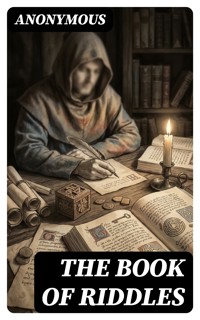
The Book of Riddles presents a captivating collection of enigmatic questions and puzzles that reflect the rich tradition of oral storytelling and intellectual challenge prevalent in medieval literature. Anonymous in authorship, this work is steeped in the stylistic playfulness typical of riddle literature, employing clever wordplay, metaphor, and layered meanings that invite readers to engage in both contemplation and amusement. Its pages resonate with echoes of past cultures where riddles served as both entertainment and a pedagogical tool, encouraging wit and wisdom alike. The anonymity of the author adds an intriguing dimension to the text, inviting speculation about the origins and motivations behind its creation. This book can be contextualized within the broader framework of medieval discourse, highlighting a communal knowledge that fosters curiosity and cleverness. As a reflection of societal values, it encourages exploration of language, logic, and culture—all elements crucial to the intellectual fabric of its time. Readers seeking mental stimulation and a deeper appreciation for linguistic artistry will find The Book of Riddles an invaluable addition to their literary repertoire. Its playful complexity challenges both novice and seasoned puzzle enthusiasts, making it a delightful exploration of the human capacity for inquiry and creativity. In this enriched edition, we have carefully created added value for your reading experience: - An Introduction draws the threads together, discussing why these diverse authors and texts belong in one collection. - Historical Context explores the cultural and intellectual currents that shaped these works, offering insight into the shared (or contrasting) eras that influenced each writer. - A combined Synopsis (Selection) briefly outlines the key plots or arguments of the included pieces, helping readers grasp the anthology's overall scope without giving away essential twists. - A collective Analysis highlights common themes, stylistic variations, and significant crossovers in tone and technique, tying together writers from different backgrounds. - Reflection questions encourage readers to compare the different voices and perspectives within the collection, fostering a richer understanding of the overarching conversation.
Das E-Book können Sie in Legimi-Apps oder einer beliebigen App lesen, die das folgende Format unterstützen:
Veröffentlichungsjahr: 2022
Ähnliche






The Book of Riddles
Table of Contents
Introduction
This collection, The Book of Riddles by Anonymous, presents Text as a focused encounter with puzzles of language and perception. The unifying thread is the riddle, a form that turns understanding into an event rather than a possession. Each challenge presses meaning to the edge of what words can reveal while refusing to abandon clarity altogether. The title of the collection signals a shared commitment to concealment that clarifies, to play that disciplines attention. In bringing Text into this orbit, the volume highlights continuity between linguistic texture and enigmas that solicit insight, suggesting that the act of reading itself becomes the subject.
Within The Book of Riddles, the pieces speak across boundaries through recurring gestures of indirection, definition, and reversal. Statements tip into questions, and descriptions fold back on themselves, testing how far a clue can travel before it ceases to guide. Text participates in this dialogue by treating language as both path and obstacle, allowing resonance to accumulate across separate moments. Patterns of framing and reframing return with variations, while shifts of scale—minute to vast, intimate to impersonal—produce productive friction. The shared dilemma is how to say enough to kindle recognition without exhausting possibility, a balance pursued through compression and surprise.
Authorship marked as Anonymous inflects the encounter with a deliberate openness of voice. Without a named persona to anchor intention, attention turns to the operations of the riddle itself: the choreography of hints, the economy of silence, the staging of perspective. This anonymity also invites a collective horizon for interpretation in which authority resides in inference rather than signature. In that frame, Text functions less as declaration than as invitation, modeling how to inhabit uncertainty with rigor. The absence of biographical cues frees formal elements to carry meaning, emphasizing that the riddle’s force depends on structure, timing, and the ethics of restraint.
Contrasts proliferate across the collection, sharpening perception rather than fragmenting it. Some moments court levity through wit, others cultivate sobriety through austerity; both trajectories serve the same demand for meticulous attention. Voice oscillates between apparent confidence and studied hesitation, allowing Text and The Book of Riddles to stage knowledge as provisional. The genre boundary between poem, puzzle, and aphorism is not policed but explored, yielding forms that can be read as miniature arguments or as games with serious stakes. Such variability sustains momentum, ensuring that the act of solving remains inseparable from the act of discerning what is worth asking.
The contemporary resonance of this collection lies in its discipline of attention and its calibration of ambiguity. In a culture saturated with signals, the riddle’s measured opacity trains perception without capitulating to obscurity. The demands posed here align with habits vital to everyday reasoning: pattern recognition, tolerance for uncertainty, and the willingness to revise a first impression. Text, situated within The Book of Riddles, foregrounds how play can sustain seriousness, balancing delight with discernment. Such practice informs creative work, technical problem‑solving, and civic conversation, where haste often outruns understanding. The riddling stance recovers duration, asking for time as the medium of insight.
Artistically, the collection demonstrates how minimal means can yield maximal effect. Compression heightens rhythm and image, while silence becomes an active element in meaning-making. The infrastructures of metaphor, comparison, and reversal are exposed, allowing Text to function as a study in craft as much as a repository of enigmas. This dynamic clarifies the kinship between riddles and other concise forms, without collapsing distinctions that sustain their particular energy. Because solutions remain earned rather than given, attention migrates from outcome to process; sound, pacing, and angle of approach assume centrality. The result is pedagogy by example, an art of rigorous play.
Intellectually, the collection frames knowledge as iterative and dialogic. A proposal emerges, is tested, and is refined by further clues, with certainty arriving as a threshold rather than an absolute. In that sense, The Book of Riddles and Text model an ethics of inquiry grounded in curiosity, patience, and humility. The invitation is to cultivate habits that carry beyond literature, informing scientific imagination, legal reasoning, and everyday judgment without directly resembling them. By assembling challenges that reward attentiveness, the volume affirms that difficulty can be generous. It offers a durable practice of thinking with care, where meaning grows through relation.
Historical Context
Socio-Political Landscape
The riddles gathered in this anthology emerge from settings where authority, patronage, and pedagogy intersect. Their speakers—often objects, creatures, or abstractions—mediate between rulers and learned communities, reflecting how knowledge conferred status within courts, schools, and religious houses. Performative exchanges implied by the texts suggest competitive environments in which wit affirmed hierarchy while giving space for social mobility through intellectual display. The anonymity of many compositions aligns with institutional cultures that prized collective authorship yet tolerated veiled dissent. Across the collection, the interplay of secrecy and revelation mirrors political cultures that valued discretion, encoded counsel, and the safe testing of boundaries through sanctioned play.
Several riddles register disputes over orthodoxy, custom, and law by dramatizing interpretive struggle. Ambiguous images and double registers let writers entertain competing claims—clerical and lay, official and vernacular—without overt confrontation. Imagery of navigation, walls, and instruments evokes the infrastructures of power: taxation, record-keeping, and warfare appear transmuted into playful challenges. The staged misrecognition of everyday tools acknowledges labor as a political fact, while protecting commentary behind enigma. The collection’s preference for indirection reflects censorship regimes and reputational risk, but it also underscores a civic ethic: wisdom must be tested communally, with answers negotiated, verified, and remembered in shared performance.




