


Erhalten Sie Zugang zu diesem und mehr als 300000 Büchern ab EUR 5,99 monatlich.
- Herausgeber: Aniara
- Kategorie: Gesellschafts- und Liebesromane
- Sprache: Englisch
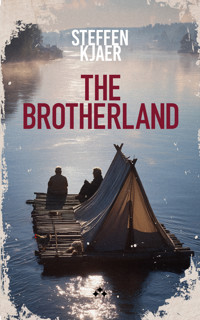
When retired harbor worker Karl meets magazine editor Bengta, neither expects to end up building a timber raft and floating down Sweden's legendary Klarälven River. But together, they embark on an extraordinary adventure into the heart of Sweden's wilderness. What begins as a cultural study trip becomes a journey of rediscovery. Karl finds himself navigating not just Sweden's longest river but his own capacity for joy and friendship, while Bengta finds comfort in the local poetry and harbors secrets about why she can never return to Denmark. As their timber raft carries them past Värmland's misty forests and rolling landscapes, Karl and Bengta become unlikely heroes when they suddenly find themselves in the middle of the veterans' festival, celebrating the bygone cultural history and ancient tradition of floating timber down the river. The Brotherland is a heartwarming adventure about finding home in unexpected places, the courage it takes to start over, and why the best journeys are the ones that change you from the inside out. Sometimes the most extraordinary adventures happen at exactly the right time in life.
Sie lesen das E-Book in den Legimi-Apps auf:
Seitenzahl: 380
Veröffentlichungsjahr: 2025
Das E-Book (TTS) können Sie hören im Abo „Legimi Premium” in Legimi-Apps auf:
Ähnliche




















The Brotherland
A Novel
Steffen Kjaer
Contents
I. BEFORE THE BROTHERLAND
1. CHAPTER 1
2. TWO MONTHS BEFORE THE BROTHERLAND
3. CHAPTER 2
4. SIX WEEKS BEFORE THE BROTHERLAND
5. CHAPTER 3
6. FIVE WEEKS BEFORE THE BROTHERLAND
7. CHAPTER 4
8. THREE WEEKS BEFORE THE BROTHERLAND
9. CHAPTER 5
10. TWO WEEKS BEFORE THE BROTHERLAND
11. CHAPTER 6
12. TEN DAYS BEFORE THE BROTHERLAND
13. CHAPTER 7
14. FIVE DAYS BEFORE THE BROTHERLAND
15. CHAPTER 8
16. TWO DAYS BEFORE THE BROTHERLAND
17. CHAPTER 9
18. THE DAY BEFORE THE BROTHERLAND
19. CHAPTER 10
II. AFTER A LONG TIME IN AN OLD MAZDA
20. CHAPTER 11
21. 55 YEARS BEFORE THE RAFT
22. CHAPTER 12
23. CHAPTER 13
24. CHAPTER 14
25. CHAPTER 15
26. CHAPTER 16
JOB POSTING
1. CHAPTER 17
2. CHAPTER 18
3. CHAPTER 19
4. CHAPTER 20
5. CHAPTER 21
6. CHAPTER 22
7. CHAPTER 23
8. CHAPTER 24
9. CHAPTER 25
10. CHAPTER 26
11. CHAPTER 27
12. CHAPTER 28
III. 23 KILOMETERS FROM THE TIMBER RAFT WILMA
27. CHAPTER 29
28. CHAPTER 30
29. CHAPTER 31
30. CHAPTER 32
31. CHAPTER 33
32. CHAPTER 34
33. A NEW DAY AT KLARA FARM
34. CHAPTER 35
35. 70 DAYS AFTER THE RAFT WILMA
36. CHAPTER 36
Aniara, 2025
www.aniara.one
© Steffen Kjaer
Original title: Broderlandet
Translation by Aniara
No portion of this book may be reproduced in any form without written permission from the publisher or author, except as permitted by EU copyright law.
ISBN Print: 978-9-190-002043-2
ISBN: E-book: 978-9-190-002042-5
BEFORE THE BROTHERLAND
CHAPTER 1
The Elder's Cause had its office at the end of the pedestrian street. The location was practical for an organization that didn't want to miss out on anything, and which had not yet experienced the collective longing for the wilderness.
Bengta's arms were full of flag garlands, pastries from the bakery, and fresh branches from her courtyard garden. She parked her rust-speckled moped against the office’s walker ramp.
She kicked a wedge under the door, letting the breeze from the fjord fill the office. Then she turned on the box of Carmen Curlers and hung small flag garlands on Inga's desk lamp.
Three placemats, cups, dessert plates, coffee, and a cinnamon braid. The small arrangement was illuminated by spring rays on the window and flickering streaks of light in the branches on the table.
From Bengta's desk wafted the characteristic scent of burned plastic, revealing that the Carmen Curlers were now ready for use. The small, spiky rollers had been developed for an entire generation of refined ladies with curl-deficient hairstyles. It was for the same reason that Bengta had received the box from her first husband, who for four years had strived to push her into the arms of the ideals of the time. Then they got divorced. And only decades later had Bengta begun to experiment with the curlers' intricacies and the clever idea of curling on the go.
Bengta and Camilla sang a birthday song for Inga. There was something special about Inga turning 62 half a year before Bengta, as she could share her experiences.
Inga began to sniffle when she opened the card and read the little poem. Camilla glanced at Inga and took another piece of the cinnamon braid from the Town Hall Bakery.
'Would you like me to read the poem aloud?' Bengta asked.
Inga nodded and wiped her eyes with the paper napkin.
Through rain and sleet and other showers
You're steadfast at your post
Managing calls and important things
and doesn't flee when the accounting flurry,
or when advertisers grumble,
for that matter.
Bengta looked up from the poem and smiled at Inga.
You speak with members and the authorities,
make phone calls about binders and other things
on all the yellow notes you write,
many years to come, you smile
behind your adjustable desk you hurry,
also for the Cause's sake.
Camilla stared at Bengta, dumbfounded.
‘Thank you so much,’ said Inga, her eyes fluttering.
‘It's also from Camilla and the administrative chief,’ said Bengta.
‘What?’ said Camilla.
‘Happy birthday, Inga.’ Bengta smiled.
Inga sniffled and wiped a tear from her cheek. 'Such a lyrical gift you have.'
She smiled at Bengta, who sat with her 11 Carmen Curlers in her hair and cinnamon braid crumbs on the wide collar of her sweater.
An hour later, the editorial group for Full Vigor were having a meeting. The editorial team consisted of Bengta, Inga, and Camilla.
The local magazine for The Elder's Cause in Struer was the most important line of communication to the organization's members. It was through Full Vigor that The Elder's Cause had its mouthpiece, where the organization's many departments could mobilize, inspire, recruit, and discuss.
'I wonder if the high and mighty gentleman intends to participate?' Camilla sneered.
'I'm sure he does,' said Inga.
Inga blushed, gathered her scarf over her chest, and fiddled with the wooden buttons of her cardigan.
The new administrative chief from the headquarters had announced his arrival and noted that he would like to attend an editorial meeting.
'I think we should get started,' said Bengta, pouring coffee into her mug.
'Without the administrative chief?' Inga looked at Bengta.
'Then he should be here on time,' Camilla stated matter-of-factly.
There were two topics on the agenda: content for next week's issue of Full Vigor and the upcoming spring meeting for the Cause's members.
'Shall we start by discussing the new, exciting initiatives?' Inga looked at Bengta and Camilla.
'Of course,' said Bengta.
'The new initiatives have really created a lovely atmosphere in Full Vigor,' Inga began. 'Perhaps we could have even more of that?'
'You'll need to be more specific,' Camilla mumbled, opening a can of coke.
'I'm thinking of “The Voice of the Fjord”,' Inga replied. 'It's such a wonderful start to the week when you turn to page 11 and are struck by the poetry. You sense the hope and feel the joy of life's little moments. We're living in a time where there's a need for powerful poetry,' she explained.
‘Yes, but the question is, should these kinds of fantasies take space away from the Cause's other messages?’ Camilla replied.
Since February, “The Voice of the Fjord” had been the members' own page in Full Vigor, and so far, four members had submitted their poems. Half of them had been published, and the rest of “The Voice of the Fjord” had been identical to Bengta's literary voice.
‘New, exciting initiatives often need a little time,’ said Bengta. She rose from the table and began writing the editorial team's ideas on the board: How to prepare your garden for spring. How to replace your old mailbox. Kill two birds with one stone when walking the dog and the grandchildren. It was as if the ideas came all by themselves. Self-service at the library. Seasonal preparations at the marina. Hop and Jump with The Experienced Gymnastic Pirates.
'It's the usual stuff,' said Camilla.
'What do you mean?' said Bengta.
'The ideas are fine,' Camilla explained. 'But most of it is the same as what Full Vigor wrote last year and the year before.'
'But that's what the members want to know about,' Bengta tried.
'I think our members want something new,' said Camilla.
'Something more youthful,' she elaborated. 'In a senior-friendly way, of course.'
'You think so?' said Inga.
'Yes, I do.' Camilla nodded confidently.
'Now you sound just like the former administrative chief from headquarters,' Inga said cheerfully.
'Oops,' said Camilla. 'I'm sorry about that.'
'You don't need to apologize,' said Bengta. 'We like you just the way you are.'
'We certainly do,' said Inga. 'You can bet on that.'
Camilla looked down into her can of coke, Inga poured coffee, and Bengta rummaged through the papers on the table.
'But what did you mean?' asked Bengta.
'About what?' said Camilla.
'Well, about trying something new?'
'Oh,' said Camilla. 'Why don't we give the members an A-list name?'
'An A-list name?' Inga looked at her young colleague in surprise.
'Yes.' Camilla nodded. 'We'll find a crowd-pleaser.'
'Crowd-pleaser?' Bengta stared intently at Camilla. 'This is The Elder's Cause.'
'Exactly.' Camilla nodded with self-satisfaction. 'So we give them Søren Ryge.'
'Søren Ryge?' Bengta and Inga responded in unison.
Inga looked at Camilla in surprise, while Bengta wrote Søren Ryge on the ideas board.
'They're crazy about him,' Camilla nodded. 'Søren Ryge is a crowd-pleaser.'
'Perhaps,' said Bengta. 'He has certainly entertained with his gardening shows on TV for a lifetime.' Bengta looked at Inga.
'What do you think?'
'Well,' Inga hesitated. 'There might be members who haven't seen all the episodes,' she ventured. 'Some might have been prevented?'
'And that's why they're getting him in Full Vigor now,' Camilla decided. 'I'll offer him a regular column on page 10.'
'Søren Ryge,' Bengta muttered. 'As a crowd-pleaser.'
'We've got to do something to liven this old rag up a bit,' said Camilla.
'Do you have more new initiatives in mind?' Inga asked cautiously.
'We're stuck in the past,' Camilla stated. 'Why not copy popular elements from others in the industry? For instance, the weekly magazines. Everyone loves them.'
'The weekly magazines write about many exciting things,' said Inga. 'Take that advice column about how to get along well in the family. I always read that one.'
'Have you seen the one about tips for traditional crafts?' said Bengta. 'Those columns are popular.'
'And the one with advice from celebrities,' said Camilla.
'There are many good ones,' said Inga.
'What do you suggest, Camilla?' asked Bengta.
'I'm thinking that what works elsewhere might also work in Full Vigor.'
'That might be right,' said Inga.
'It really is,' said Bengta. 'But what if no one sends any questions to the advice column?'
'Then we'll do what everyone else in the industry does and take care of both parts ourselves,' said Camilla. 'We ask, we answer, and the members get an exciting advice column.'
'We can at least give it a try,' said Bengta.
'Yes,' said Inga, looking perplexed into her coffee cup. 'But are we sure that's how the advice column business works?'
Not until later that morning, an hour after Bengta, Inga, and Camilla had planned next week's issue of Full Vigor and arranged the program for the upcoming spring meeting, the new administrative chief arrived at the office.
The administrative chief was 28 years old, with a business degree from Copenhagen and an additional degree in organizational science from England. His shirt was crisp and white. The sleeves were rolled up above his elbows in ten-centimeter-wide folds. His tie was black and narrow, tied fashionably and loose under the collar.
The administrative chief greeted them and sat down on a chair by Bengta's desk.
'Welcome to spring,' said Bengta, pouring coffee. 'You missed the editorial meeting, but you can still wish Inga a happy birthday.'
'Yes,' said the administrative chief. 'How are things otherwise?'
'Did you have something specific in mind?' Bengta focused her gaze kindly on the young chief.
'Well,' said the administrative chief. 'Regarding the organization's strategic priorities...'
'What about them?' Bengta interrupted.
'Well, we need to establish an analytical foundation to assess the administrative activity level.'
'Oh, for heaven's sake.' Bengta shook her head. 'I'm afraid I'm not quite following you.'
'I doubt that within our current budget framework we can continue to allocate resources for external competency assessments,' the administrative chief said to Bengta. 'In light of the organization's strategic priorities, we need to reassess our activities.'
'I see,' said Bengta, eyeing the headquarters' envoy.
'You've been in the game for many years, so you're well aware that new times call for new visions,' the administrative chief said.
'We run an office and publish a magazine,' said Bengta.
'Yes, and that's fine,' said the administrative chief. 'The advertisers have realistic market expectations, and the numbers for next quarter look promising too. Nevertheless, we need to focus on our core services.'
'What exactly are you trying to tell me?' Bengta said angrily.
'Well, I'm saying that the organization's objectives should also be measurable and implemented in its decentralized units.'
'Are you saying we need to make cuts again? Then for God's sake, man up and tell us where,' Bengta shouted, pointing around the room. 'Is it me this time, or is it Inga or Camilla?'
'How long has Camilla been with you?'
'Are you saying we can't keep Camilla?'
'She's here as part of a program to support her readiness for further education and identify her vocational skills,' said the administrative chief. 'Surely you must be able to conclude that soon.'
'Now, let me tell you a bit about this office,’ said Bengta, looking the young administrative chief directly in the eyes. 'Every week, we publish 48 pages of Full Vigor for the members of The Elder's Cause. We provide them with good stories, useful knowledge, and encourage them to lead an active senior life in community with others who are at the same stage in life. Four years ago, there were five of us in the office; now it's Inga, Camilla, and me. Is that too many?'
'We'll look into it,' said the administrative chief and bid them goodbye for the day.
In the afternoon, Bengta called for an extraordinary editorial meeting. Inga had recorded a message on the answering machine, informing members that the office unfortunately couldn't take their calls, and Camilla had placed a sign on the door, notifying the rest of the local community that the editorial team was not to be disturbed.
The first topic on the agenda was the administrative chief's visit. The second concerned which editorial mentions they could give to advertisers in next week's Full Vigor.
Camilla suggested they could combine the topics and place their own ad in Full Vigor, stating that the administrative chief wasn't quite in his right mind. At the same time, they could warn everyone else not to be fooled by his city slicker ways and magazine-style appearance with his bowl cut hair, lame tie, and excessively tight shirt. The words flew from Camilla like bullets from the shooting gallery at the harbor festival.
Bengta said that Camilla's suggestion actually deserved a prize, but for strategic reasons, they'd have to hold off on taking any action. And then they all laughed because Bengta had said 'strategic' in the same way as the young administrative chief.
Inga said that it probably wouldn't be so bad, and that maybe they should wait and see how things unfolded.
Inga's suggestion was therefore adopted, and they decided to wait and see.
'What's in the mail?’ asked Bengta.
'The usual proposals from the advertisers,' said Camilla, leafing through the stack of papers, letters, and envelopes.
The advertisers' requests were as predictable as they were numerous: Hansen's Shoes inquired whether they shouldn't focus on the new senior collection at Hansen's Shoes. Things and Flowers on the main street asked if they would preview the inspiring summer exhibition at Things and Flowers on the main street. And the gas station wrote to Full Vigor asking if they would publish pictures of the new illuminated sign at the gas station. And there was much more of the same: new prices on sausages from Butcher Friis. How to get a lawn without moss from the Garden Center. Come as you are, and we'll find your style from Men's and Women's Wear on the Square.
In the pile of mail, there was also membership information from the departments of The Elder's Cause, a poem for “The Voice of the Fjord”, and letters to the editor from a couple of the regular complainers.
'I think this is for you.' Camilla handed a postcard to Bengta. 'It's sent from Sweden.'
TWO MONTHS BEFORE THE BROTHERLAND
CHAPTER 2
On the small island in the Limfjord, the inhabitants were nursing their wounds after yesterday's community meeting at the Harbor House.
Here, the residents had flocked to discuss the summer's tourism efforts and how to respond to the descriptions of their island in the latest issue of The Elder's Cause's membership magazine. While the islanders were indeed proud of their community, the assembly struggled somewhat to recognize the writer's portrayal of rustic romantic idylls, frugal self-sufficiency, a maritime eco-paradise, couples in love amid heather-clad landscapes, lush midsummer days, fiddlers with violins, communal singing on the quay, and various other tourism-magnetic fripperies that had been poured across the columns.
The crux of the matter was four pages in Full Vigor's feature on the small island community. Here, the writer had painted a picturesque description of how the people of Venø prepared for the tourist season, and how everyone lent a hand where sheep needed shearing and wool needed carding, where fishermen were busy hauling oysters from the fjord and tucking them into fine wooden crates, and about houses being painted, ropes being tarred, and grass being scythed, gathered into stacks with pitchforks, and harvested with horse and wagon.
Now the problem was simply that none of this had actually happened in reality. No one had yet systematized the seasonal preparations, and consequently, the island's many associations had neither mobilized their members nor held their usual work days. Fundamentally, there was a greater discrepancy between the article and reality than the joint board believed they could conceal from the tourists.
Venø's sheep wandered about with their thick winter coats, and for the same reason, those who were supposed to card had not received wool for sweaters and potholders. The fishermen's boats stood idle on the harbor quay, and thus the Limfjord's oysters had yet to be harvested from the fjord, let alone packed in fine wooden crates. Houses that were meant to be painted stood weather-beaten and bone-dry. No one had tarred the ropes. And the only grass that was punctually mowed was that which made up the backyard of Karl's house across from the island's church.
The discussion at the Harbor House had ebbed and flowed between two factions. Should they hurry to set things in order, ensuring reality matched the descriptions in Full Vigor, or should they, in protest—as the joint board's chairman recommended—let it all go to hell, so the island's tourists could see just how deceitful the Danish press had become?
The day after, in Karl's courtyard garden, it was time to bring in the season's stockfish. After more than two weeks of weather that had offered mostly sun and a steady westerly wind, their two crates of fish—160 flatfish in total—were now cleaned, salted, and completely dried.
'What a catch,' said Orla.
'It's been a fine spring,' said Karl.
Once, salting and drying were the only possible ways to preserve the catch. Now, stockfish had instead become a delicacy, eaten raw and washed down with beer.
'I suppose we ought to sample the catch?' said Orla.
'Now?' said Karl, gathering a bundle of fish which he placed in a plastic bag for the freezer.
'Let's call it quality control,' said Orla.
Karl looked around. There were still at least 100 stockfish on the lines to bundle and pack for the chest freezer in the shed.
'I don't think there's any reason to postpone life's pleasures,' said Orla. 'Especially not in times when it's the trials that come in waves.'
Karl agreed and sat down on the stool. Right between the lines of stockfish and on a day when the sun's rays momentarily pierced through the April-cold wind that pushed in from the northwest.
Orla rapped his knuckles against one side of a stockfish. He nodded with satisfaction at the hard, solid sound that his knuckles produced against the fish skin. Then he took his knife and cut, first the tail and then the fins. Finally, he inserted the tip of the knife under the skin and pulled it off in one piece. The other side received the same treatment.
Karl opened two bottles of beer.
They sat on the stools, slightly hunched forward with elbows resting on their knees, absorbed in working loose the strands of meat with their pocket knives.
'Cheers,' said Orla, nodding to Karl.
'Cheers,' said Karl, nodding to Orla. 'These are good fish.'
'Perhaps the best ever?'
'You say that every year,' Karl grunted.
'Well, then we're heading in the right direction.'
The two men sat in silence, gazing at the clotheslines with the season's stockfish swaying in the wind, casting a mosaic of patterns and fish silhouettes on the tiles in Karl's courtyard garden.
'Have you recovered?' Orla asked.
'From the bell tower incident?' Karl looked up from his pocketknife and stockfish.
'I was actually thinking about your birthday,' said Orla, pulling another strand of meat off the fish's bone. 'It was a fine day to turn 70.'
'It's a shame the stockfish weren't ready.'
'But they've proven worth the wait,' Orla mumbled, nodding to himself.
'It's been hell ever since,' said Karl. 'Pardon my French.'
'Sometimes it's necessary to let off some steam,' said Orla.
'You'll have to square that with the Almighty yourself,' said Karl.
'We'll take our chances,' said Orla. 'Even with the Lord above.'
Karl and Orla had known each other all their lives and had both grown up on Venø. As young lads, they'd set off to sea and signed on with the same cutter.
'How old were we?' Karl asked rhetorically.
'Must've been about 15,' Orla replied.
'And then we fished.'
'I loved it,' said Orla. 'Right up until the day that damned trawl knocked me down.'
'But then we came ashore,' said Karl, pausing for a moment. 'And since then, you've probably been the only fisherman-turned-preacher in Denmark.'
'Sure,' Orla chuckled. 'But it's almost over now.'
'You're being forced into retirement?'
'It's society,' Orla said. 'Society has no use for a priest who's turned 70. But they're stuck with me for a few more months.'
'You could run for the parish council when you're retired.'
'No, Karl. That's a battle you'll have to fight on your own,' Orla laughed, his chest bouncing under his knitted woolen sweater.
Karl's membership in the parish council hadn't been of his own free will. But then again, there had been no way around it.
For 51 years, he had lived in his little house without coming into conflict with the church and without reigniting an old quarrel with the Almighty. Fifty-one years was a long time to keep up appearances with a neighbor. There had been tensions, but each time they were resolved through Orla's intervention.
Until that damned bell tower became an obsession for the parish council, and delusions of grandeur took hold of all its disciples. Until then, Karl had been able to turn the other cheek.
The problem was that Venø's church was the smallest in Denmark. That was an attraction in itself, something to be proud of. A side effect, however, was that the church didn't appear as impressive in its scale as other churches. It was a sore point. And the situation wasn't easily resolved by building additions without becoming too big to be the smallest.
The parish council had therefore been working with architects, foundations, and representatives from the National Museum on an exciting new project. Instead of an extension, they planned to erect a bell tower of significant scale in front of the church. This initiative would usher the church into the new era, where there was a greater need than ever for faith to stand strong and visible. A taller bell tower could house larger bells, which would also allow more islanders to hear the call to religious services. All of this without Denmark's smallest church becoming too large to be the smallest.
That same year, Karl ran for the parish council and secured the last available seat with a campaign promise to fight against every new spectacle on the island.
Now Karl sat on the bench at the kitchen table. From the window, he could see the church, the stone wall, and the scenic archway of beech trees, their aspiring crowns framing the south-facing plateau of the churchyard.
The chair on the other side of Karl's kitchen table was empty, and it had been so since that day ten years ago when his wife had pumped up her bicycle tires and, with a few possessions in the basket and a suitcase on the luggage rack, had pedaled her way out of their driveway. That morning, she had announced she was moving out, and then she had done precisely that.
One could get used to many things. But the fact that his wife of 38 years had suddenly cycled out of his life, only to begin a new chapter as the chairwoman of The Ladies' Reading Circle that very same day, had taken time to comprehend.
Karl couldn't claim it was the municipal administration's fault that his wife had left. But if they had managed things better—the budgets and plans—over there on the mainland, he might still have her by his side.
The municipal administration had needed to cut costs, and so the politicians had closed the island's school, where Karl's wife had been a teacher ever since she had completed her education as a young woman and moved in with Karl in the small white house opposite the school, only a hymn's distance from the church, only a stone’s throw away for a seven-year-old rascal.
Every single morning, she had told Karl how much she looked forward to teaching Venø's children about nouns, verbs, and adjectives, and the Lord's word, and all sorts of other words which Karl, from the very beginning, had been clear were his wife's greatest joy. But if she could simultaneously knock some sense into the heads of the island's offspring, then her efforts were both purposeful and praiseworthy, he had decided.
Suddenly, ten years had passed since she had cycled out of the driveway. And now he would rather not have the trouble of her again. In recent years, he had even stopped hoping that she might one day drop by just to chat a little. He used to imagine that he could make coffee and prepare cheese sandwiches, so they could sit on the terrace where he could tell her about the new currant bushes, and where she could talk about the books and all the plans to read the great authors and discuss literature in ways that would make even more people want to read. It was a visit he would now decline.
Now Karl ate his cheese sandwiches and drank his morning coffee alone.
On the kitchen wall hung the picture he had received from Henning and Orla for his 70th birthday. Together, the two friends had ventured to the mainland to rummage through the archives at the Local Historical Society, where they had rediscovered an old photograph of Karl, which Henning had now framed in a beautiful sea-blue frame. The background of the image was slightly yellowed, but the subject was incredibly sharp, even though it must have been taken 66 years ago for the newspaper. With an oar in each hand, dressed in a shirt and short pants, a four-year-old boy sat in his father's rowing ferry, his attentive gaze fixed directly on the camera. Behind him sat a sun-tanned, broad-shouldered man wearing a navy-blue sweater with a pipe in the corner of his mouth.
Karl gazed out the window once more. What was one supposed to do as a pensioner? What was left to live for?
The past week's mail still lay on the oilcloth.
'Dear Karl, happy birthday. Remember, the fence needs painting this year, it honestly looks a bit pitiful,' read the terse birthday card from his wife, written in capital letters. The letter from the maritime authorities stated that his age now meant he could no longer serve as a volunteer helmsman on Venø's museum ferry. They noted that his helmsman's certificate was hereby invalid. The last letter was from The Elder's Cause, inviting him to the annual spring meeting. Registration was necessary for catering purposes.
Karl went outside and took a walk around the house. He stopped at the mailbox, reluctant to know its contents.
'Hello Karl,' called a bright voice from the house across the gravel road.
'Good day, Emil,' said Karl.
'Is your mailbox broken?' Emil asked.
'No,' said Karl.
'Then why don't you open it?'
'Shouldn't you be in school?' Karl muttered.
'Not until summer,' Emil replied.
'Hmm,' Karl mumbled. 'Well, we'll see if they can teach you anything.'
'We might move to Spain,' said Emil.
'Spain?' said Karl.
'Yes,' said Emil. 'When summer comes, I might move to Spain with mom.'
'Ah,' said Karl. 'Spain, you say?'
'But Karl,' said Emil, looking up at his neighbour. 'If we can't take Gilbert with us, would you look after him?'
'Gilbert?'
'That's my hen,' Emil explained.
'A hen?' said Karl. 'And its name is Gilbert?'
'Yes,' said Emil. 'He's two years old and loves blueberries.'
'Hmm,' Karl mumbled, scratching his beard.
'Would you like to look after him?'
'Hmm,' Karl mumbled again. 'That's probably not a good idea.'
'Okay,' said Emil and ran back across the gravel road. 'But you can think about it,' he shouted.
SIX WEEKS BEFORE THE BROTHERLAND
CHAPTER 3
The spring meeting of The Elder's Cause was a recurring major draw that no one in the association wanted to miss. It was here that members heard reports from the various departments and, not least, had the opportunity to share highlights from their own departments. Three years ago, Karl had vehemently resisted when Henning suggested that they, along with Orla, should join The Elder's Cause. They had spent most of that afternoon discussing the matter, and Karl had finally let himself be persuaded to go along. As an observer. Since then, they had attended the spring meetings and autumn salons, and last year Karl had joined The Green Thumbs after the department's chairman had delivered a passionate speech about apple trees and apple harvesting.
The chairman of The Elder's Cause welcomed everyone to the spring meeting, expressing delight at the large turnout. He assured them that an exciting program lay ahead. Like everyone else, he looked forward to the reports and, not least, to hearing an inspiring speech from this year's secret spring guest. Members looked around the hall curiously.
As was tradition, the spring meeting took place at the Community Center, Struer's best gathering place for a large group, where some arrived with rollators, and others needed to be connected to a hearing loop system to get the most out of the meeting. There was coffee on the tables, and after the break, they would be served open-faced sandwiches with cheese and ham, along with a beer or lemonade to wash it down.
The first department that the assembly was to hear was The Experienced Gymnastics Pirates, who had met every Tuesday throughout the winter and performed three shows over the past year, including their appearance at the Town Square for Midsummer's Eve. They had plans for a new, exciting event in the autumn, where The Experienced Gymnastics Pirates would do jumps over a pommel horse with their grandchildren. Everyone was welcome.
The chairman of The Green Thumbs reported that they had experienced a challenging year, particularly with stubborn currants and gooseberries, but through joint efforts, the members had managed to bring in the harvest. Karl nodded.
The Willow Weavers had combined their weaving interest with collecting marine flotsam. This had resulted in beautiful installations, which were to be varnished and exhibited at the library over the summer.
'Willow weaving,' Henning whispered. 'Could that be something for us?'
'No,' Karl said so loudly that the nearest members turned to look at him.
Then it was the Winter Bathers' turn, who noted that winter had never quite set in as it did in the old days, but despite this, more and more people were joining the communal bathing on Saturdays. Next year, a sauna would be built by the bathing pier. Everyone was looking forward to that. Not least because an association without its own premises had a tough time in the annual allocation of municipal facility grants.
The final department was the Ladies' Reading Circle.
'Now it's my wife,' Karl sighed as the chairwoman approached the podium.
Orla patted Karl's forearm good-naturedly.
'In the Ladies' Reading Circle, we've devoted our winter to Nordic authors,' Karl's wife began. 'And as an experiment, we've also read several male writers,' she confided to the assembly before listing the themes that could be seen as common denominators in Nordic literature. The portrayal of women was often outdated, especially in the slightly older works. Rural societies were depicted more idyllically than the reading circle found evidence for. And then there was an almost categorical absence of eroticism, the department had discovered through their winter reading. In fact, it was the ladies' experience that the Nordic classics portrayed far more darkness than light, far more longing than excitement, and far more suffering than sensuality. The chairwoman viewed this as counterproductive obstacles if the authors and their publishers had genuine desires to be read and understood by a wider audience. 'We call for epics and poetry that resonate with us,' she proclaimed to the gathering, adding that new members were welcome in the Ladies' Reading Circle.
Karl ducked down.
Then there was a break, and while the association's members stretched their legs and praised each other's departments for their exciting reports, Camilla and Inga slipped backstage to usher the secret guest speaker into the Community Center.
At the tables, the platters of cheese and ham were empty and now replaced with fresh supplies of coffee and small bowls of cookies. From the podium, the chairman called everyone to order for the next topic on the agenda and reminded them that there would be membership information from the office at the end.
Behind the stage, Inga peeked through a small hole in the curtain.
'Now,' she whispered, nodding to Camilla.
'Go on, give it your all,' said Camilla, pushing Søren Ryge in front of the podium.
The applause lasted a minute and a half, which Bengta noted was a new record for a welcome at the spring meeting. Two years ago, the chairman of the business community had been the secret spring guest and reaped a polite applause of 12 seconds.
'Thank you for having me,' Søren Ryge began.
The members nodded, some started clapping again, and two women closest to the podium waved at the spring guest.
'Actually, I wanted to say a few words about perennials,' said Søren Ryge.
'Lenten rose and violet bird's-eye, both among my favorites ...'
In the front row, a couple in their late 70s was taking notes. It was the husband who wrote, and the wife who dictated. Lenten rose. Violet bird's-eye.
'... but then I suddenly thought of the starling.' Søren Ryge had a firm grip on the sides of the podium. And of the audience. 'For just imagine. One day in January, while I was walking my dog, I saw a murmuration of several hundred starlings.'
Several of the listeners gasped.
'It wasn't a common sight,' Søren Ryge assured them. 'And one can only imagine that the flock must have been utterly confused.'
'It's climate change,' Henning whispered to Karl and Orla.
'The explanation,' said Søren Ryge, 'we must seek from the meteorologists and the fact that, at that time, the frost had not yet penetrated the ground.'
The assembly nodded in understanding.
'Excuse me,' Bengta interrupted. 'This is really very exciting. And fascinating,' she added. 'But I must ask, Mr. Søren Ryge. At the editorial office, we're planning a feature on the birch tree. Could Mr. Søren Ryge tell us a little about his own birch grove?'
Søren Ryge eagerly shared the magic of the birch tree. He recounted how he had planted his own grove, describing the enchanting and graphic patterns in the white bark, and the beautiful, green veil of birch twigs. He spoke of the tranquility he felt during his daily strolls along the small paths between his birch trunks.
'One also hears about the many positive properties of birch sap?' Bengta interjected once more. Had Mr. Søren Ryge himself ventured into tapping it?
The Spring Meeting had been a great success. The reports had given the departments identity and a foundation for internal recruitment campaigns. The refreshments were traditional and good. And Søren Ryge had received a final round of applause that even surpassed the enormous enthusiasm with which he had been greeted 45 minutes earlier, when Inga and Camilla had ushered him before the expectant assembly. All that remained was membership information from the office.
Bengta took the podium and looked at Søren Ryge, who had been seated with the couple in the front row.
'Thank you,' she said, smiling at the well-known gardening guru. 'What an introduction to nature, plants, flowers, and birds. We are very pleased to have you with us tonight. Grateful is the right word.'
The assembly applauded once more.
'And then we have agreed that we now can announce...' Bengta built the suspense and looked out over the gathering. 'That Mr. Søren Ryge will be joining Full Vigor as a regular columnist on page 10. Starting from the very first issue in June.'
Fresh applause erupted. And where it wasn't too cumbersome, a large portion of the Cause's members rose to their feet, sending standing ovations towards their guest speaker.
And there was more news from The Elder's Cause. Bengta reported on the office activities and the new, exciting initiatives in Full Vigor. She spoke about the poetry that since January had its own stage in the form of “The Voice of the Fjord” on page 11. How there was great support from advertisers for the editorial direction. About next week's issue, where Full Vigor would report on preparations at the marina, on willow weaving with the Willow Weavers, and from a visit to the Winter Bathers outside of their season.
'You can look forward to it,' Bengta assured them.
Inga and Camilla sat at the far end by the wall, nodding to each other.
'It was interesting to hear Mr. Søren Ryge's vivid account of the birch tree. You must agree with me on that,' Bengta continued. 'What strength that tree possesses. It almost makes you want to invite The Elder's Cause on a study trip, so we can all have an experience like Mr. Søren Ryge's.'
'Could you elaborate on your idea?' called the chairman of The Green Thumbs from the hall. 'The one about the study trip.'
'I'm glad you asked,' Bengta shouted into the microphone, nodding her head enthusiastically so that her Carmen-curled locks fluttered and stood like a glowing halo around her head. 'We can learn so much from those people who have lived in coexistence with the birch tree in our Nordic neighboring countries since time immemorial. In fact, we should establish a friendship association beyond our own borders, so we can absorb their vitality and wisdom. For who doesn't need a visit to the wilderness and to live in harmony with nature for a period of time?' Bengta looked around at the members of The Elder's Cause.
There was complete silence.
'Mr. Søren Ryge, as a nature enthusiast, surely you must agree that there comes a time in every nature-loving soul when that soul must spread its wings and soar over new wilderness. For instance, the vast plains with birch trees in Sweden?'
Søren Ryge looked at Bengta in surprise, and then down into his coffee cup.
Bengta scanned the room for Inga and Camilla, both of whom were signaling that it was now fine to conclude the spring meeting.
'I envision a study trip where we all set off to experience the birch tree in its Swedish habitat,' Bengta continued, her cheeks flushed. 'The wilderness isn't as frightening as the name might suggest,' she assured them.
'It's a bit difficult to take a stance on this,' interrupted the chairman of The Green Thumbs. 'Perhaps you could be more specific about the friendship association and the wilderness trip?'
'It will be liberating,' Bengta replied. 'We'll no longer be constrained by limitations. At last, we can dream out loud and step into the Sweden that I believe many of you have been fantasizing about. The fantastic experiences in authentic Nordic nature with local farming culture and farmstead cheeses and reindeer hides and rolling landscapes and mighty rivers and proud industrial traditions.'
Orla looked questioningly at Henning. And Henning looked at Karl.
'Please do catch up with me afterwards or visit us at the office if you'd like to hear more about the wilderness and perhaps help plan the study trip,' she concluded her presentation and signaled to the chairman that he could wrap up the spring meeting.
'Just a moment,' came a voice from the large round table in the middle of the hall. 'If one might ask a final question to our spring guest, before the office drags the association out into the wilderness, I'm sure it would interest not only the Ladies' Reading Circle, but everyone in The Elder's Cause, if Søren Ryge, as this year's spring guest and the cultured person we know him to be, would recommend a piece of literature for the bright summer evenings?'
The chairwoman of the Ladies' Reading Circle stood up, gesticulating eagerly. Karl ducked down. And Søren Ryge reached for his pipe in his jacket pocket.
'Something to cheer us up and put a spring in our step for a group of ladies who, weighed down by winter's Nordic prose, now need to read something that makes our old bones tingle,' the chairwoman continued, staring at Søren Ryge. 'Perhaps I should elaborate on my question while our spring guest considers his answer?'
FIVE WEEKS BEFORE THE BROTHERLAND
CHAPTER 4
On the road, Henning herded his flock of sheep towards Venø's southern pastures. Karl sat on the terrace, observing the spectacle. He waved, and Henning waved back. In the lead, the tractor trundled along with fresh, fragrant hay on its trailer, followed by nearly 100 woolly ruminants, and bringing up the rear were Henning and his sheepdog, constantly darting around the stragglers in the flock. Karl's simple defense against the road and the invasion of wayward sheep was a semi-open enclosure of pine trees, a rowan, an old oak, and in the farthest corner, a compost heap.
Facing the southern neighbor's house stood the white picket fence that he had faithfully painted every summer for the past 45 years.
It had been a long, warm summer when they had spent two weeks on the project, digging foundations for the row of concrete footings, setting posts plumb, nailing boards, and finally painting it all in precisely the chalk-white shade his wife desired. He had built her a fence, and she had remained by his side throughout the work, holding a plank when he asked, fetching a new box of nails, preparing potato sandwiches with chives from the garden, and reading aloud from her little poems while sitting on a blanket on the grass. There had always been a verse from a hymn that fit the moment, or a stanza that pressed itself upon them in rhythm with the ever-changing positions of the clouds above their little place in the fjord country. Now Karl would rather do without such fancies, and this summer he had decided to change the color of the fence. It could become black like the shelter wall around the terrace.
Another year, they had laid tiles in the courtyard garden. They had spent an entire weekend hauling sand, tamping, leveling, and crawling around on sore knees. The courtyard could have been smaller, but Karl's wife wanted many tiles, at least 25 for each child, to which Karl had asked how many children she wanted. And so he had laid 200 tiles.
But no children had ever come to climb on the fence or play hopscotch on the tiles.
Instead, she had become increasingly involved with the children across the street, where as a teacher at the school, she ensured that none of the island's little ones would lack knowledge of the words she herself held so dear. Once a year, she had brought all the schoolchildren home to the courtyard garden, where Karl had taught them to make campfire bread on a stick, and where she had taught them that 'snobrød' was the same in both singular and plural, and that they could eat as many as they could manage.
There were several reasons why children no longer came to Karl's garden for twist bread. The main one, of course, was that his wife had left him in favor of The Ladies' Reading Circle. Another reason was that Karl didn't really know any children. Except for little Emil. But he had never thought of him as a twist bread child.
Now the courtyard garden was fine as it was. Here, Karl sat to read the newspaper and have lunch, and in spring, he could enjoy a few hours with Orla, preparing stockfish and chatting about their childhood on the island.




