


1,99 €
Niedrigster Preis in 30 Tagen: 1,99 €
Niedrigster Preis in 30 Tagen: 1,99 €
Mehr erfahren.
- Herausgeber: DigiCat
- Kategorie: Religion und Spiritualität
- Sprache: Englisch
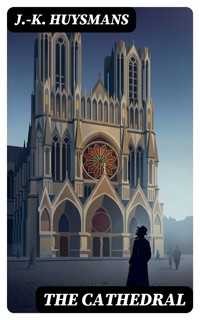
In "The Cathedral," J.-K. Huysmans masterfully explores the intersection of faith, art, and the human experience through the lens of a Parisian church. The novel is a profound meditation on the spiritual significance of Gothic architecture, with rich, sensory descriptions that evoke the majesty of cathedrals as both physical structures and symbols of divine aspiration. Huysmans employs a unique literary style that blends impressionistic detail with philosophical reflection, situating his narrative within the broader context of 19th-century French naturalism and emerging modernist thought, which sought to examine the complexities of modern life and the quest for meaning. J.-K. Huysmans, a central figure in the Decadent movement, was deeply influenced by his own journey of faith and skepticism. His engagement with art, religion, and the aesthetics of beauty is prominently reflected in this work, stemming from his personal struggles with spirituality as he oscillated between agnosticism and belief. Huysmans's own fascination with cathedrals was sparked by their ability to evoke both emotional and transcendental responses, leading him to articulate his thoughts through this richly layered narrative. "The Cathedral" is a compelling read for those interested in the relationship between religion and artistic expression, as well as the broader themes of existential inquiry. Huysmans invites readers to immerse themselves in the tranquil yet complex atmosphere of sacred spaces, ultimately challenging them to contemplate their own beliefs and the significance of beauty in a world often marked by disillusionment.
Das E-Book können Sie in Legimi-Apps oder einer beliebigen App lesen, die das folgende Format unterstützen:
Veröffentlichungsjahr: 2022
Ähnliche





The Cathedral
Table of Contents
Introduction
At once a pilgrimage and a reckoning, The Cathedral stages the drama of a modern mind seeking order and grace within a monument fashioned from stone, ritual, and light. J.-K. Huysmans writes with the authority of a convert who knows both the seductions of aesthetic luxury and the austerities of devotion, and he channels that doubleness into a narrative of looking, listening, and learning. The book turns the reader’s gaze toward a single building and its atmosphere, asking how a work of art can recalibrate a life when argument fails. This tension—between restless modernity and patient tradition—animates every description, conversation, and silent pause.
Published in 1898 and set chiefly in the city and cathedral of Chartres, this novel occupies the fin-de-siècle moment when European literature experimented with spiritual introspection as fervently as with decadence. It belongs to Huysmans’s sequence about Durtal, a writer whose inward life furnishes the plot, and it blends fiction with art history, theology, and travel writing. The result is neither a conventional realist story nor a simple guidebook, but a hybrid that measures a person against a place. Huysmans frames the Gothic church not as background scenery but as the medium through which character, culture, and belief can be examined.
At the novel’s outset, Durtal withdraws to Chartres to deepen a recent turn toward Catholic practice by studying the cathedral’s imagery and rhythms of worship. The story unfolds through visits, conversations, and painstaking observation rather than sudden revelations. Huysmans’s voice is patient and exacting, prone to long meditative passages that dwell on carvings, stained glass, and liturgical gestures, then pivot to questions of doubt, humility, and perseverance. The tone is contemplative, occasionally combative when modern taste or indifference comes under scrutiny. Readers encounter a guide who narrates his education in seeing, inviting them to join a training of attention.
Chartres itself becomes a character, its architecture functioning as a system of symbols that can be read, misread, and debated. Huysmans lingers on how a window’s color can discipline the senses, how a portal’s figures teach doctrine, and how walking the nave can reorder thought. These sequences are richly descriptive but never merely picturesque; they argue that beauty organizes the imagination toward meaning. The novel suggests that sacred art works slowly, through repetition and patience, and that its language is communal, created by artisans, patrons, and worshippers across centuries. The building’s endurance steadies Durtal’s uncertainties without erasing them.
The Cathedral probes conversion not as an event but as a discipline that touches aesthetics, ethics, and social life. It weighs the claims of tradition against the fragmenting energies of modernity, measuring what is lost when technique replaces symbol and speed displaces contemplation. A recurring theme is how sensory experience—light, scent, texture, sound—mediates belief, granting the body a role in understanding. Another is the relationship between private conscience and a communal language of prayer and art. Huysmans also explores the labor of interpretation, showing how the desire to decode images can enrich faith yet tempt toward pride or rigidity.
For contemporary readers, the novel offers a rigorous alternative to distraction: it models sustained attention as a spiritual and intellectual act. In an age of rapid consumption and heritage debates, its patient engagement with a historic building illustrates how culture is preserved not only by restoration but by careful looking. The book’s hybrid form anticipates later experiments that merge memoir, criticism, and fiction, while its inquiry into belonging and belief speaks beyond confessional boundaries. By insisting that beauty obliges responsibility—to places, pasts, and communities—it raises questions that resonate amid discussions of tourism, conservation, and the ethics of seeing.
Readers new to Huysmans may find The Cathedral most rewarding when approached as a slow walk rather than a race, allowing the patient cadences of description and debate to accumulate force. The novel’s drama lies in attention itself, in the way observation alters character without spectacle. Without revealing later developments in the sequence, it suffices to note that this installment consolidates an interior conversion by testing it against a particular place. Its lasting achievement is to show how a building can tutor the soul, making literature serve as a companion to looking, and looking as a school for hope.
Synopsis
Published in 1898, The Cathedral continues J.-K. Huysmans’s Durtal cycle, following the protagonist’s recent conversion and his search for steadier spiritual ground. Choosing the cathedral of Chartres as both setting and subject, the novel fuses narrative with an inquiry into sacred art. Durtal travels to the city to reflect, pray, and study, hoping that immersion in a great Marian shrine will clarify his unsettled desires. The opening movement establishes his withdrawal from Paris, his first impression of the vast basilica, and a method: to read the church as a complete text whose architecture, rites, and images might tutor an anxious, modern believer.
Upon arrival, the building’s exterior exerts a magnetic pull. The asymmetrical spires, deeply recessed portals, and weathered sculptures confront Durtal with a past both severe and tender. Entering for worship, he is struck by darkness gradually kindled by colored light, by the rhythm of offices, and by the disciplined bustle of a working sanctuary. The novel lingers over these first encounters to frame its central question: how can a person shaped by skepticism learn from a monument that embodies belief? Observation, not argument, becomes the guide, as benches, pavements, bells, and sightlines unfold into meanings patiently gathered across days.
He turns first to the stained glass, whose vast cycles form a catechism in color. Panels on prophets, patriarchs, craftsmen, and guilds transmit doctrine through parable and labor, linking salvation history to ordinary trades. The famed blue that suffuses many windows is registered as both material effect and spiritual sign, a medium for Marian contemplation. Through patient viewing and explanation, Durtal traces typological pairings, sees how light narrates, and senses how a city’s donors inscribed their presence into theology. Scenes do not merely illustrate; they pattern time, making the nave into an education that proceeds by repetition, contrast, and praise.
From glass he moves to stone. Portals summarizing doctrine, archivolts crowded with figures, and column statues elongated like flames offer another grammar. Zodiac signs and seasonal labors tie cosmology to ethics; allegories of virtues and vices pose moral questions without sermons. The labyrinth in the pavement becomes a riddle about pilgrimage and return, a figure for prayer’s circling persistence. The novel treats these carvings as arguments one can walk around, touch, and revisit, staging the cathedral as an encyclopedic theater where theology becomes sculpted attitude. Durtal’s reading grows steadier, and his earlier confusions meet an ordering intelligence embodied in form.
Conversations with clergy, custodians, and devoted townspeople punctuate the descriptions, grounding interpretation in practice. Durtal attends offices, notes the cadence of chant, the fragrance of incense, and the doctrinal weight assigned to vestments, vessels, and feast days. Through these exchanges, the Virgin’s primacy at Chartres emerges not as sentiment but as structure: a principle shaping art, prayer, and city life. Yet the appeal of ritual beauty also exposes a tension. Can aesthetic rapture coexist with the demands of penitence and obedience? The protagonist’s reflections hover between attraction to monastic quiet and acceptance of lay responsibilities, without collapsing into manifesto.
As days gather, the cathedral’s symbolism refracts broader fin-de-siècle debates. Against nervous modernity and intellectual weariness, Chartres proposes continuity, patience, and submission to inherited forms. Durtal measures his past curiosities and dissatisfactions against this alternative order, finding in Marian theology a corrective to occult fascinations and a tenderness firm enough to command. The city itself collaborates: streets, fields, and horizons stage transitions from scrutiny to reverie. The novel’s movement remains interior and reflective, preferring discernment to plot, while letting brief interruptions—a visitor’s story, a rumor, a local legend—test whether understanding forged in contemplation can withstand ordinary contingencies.
Without forcing a finale, the book closes on a poised uncertainty shaped by what Durtal has seen and prayed. The cathedral’s coherence has not dispelled every question, but it has furnished a measure and an orientation. As a work, The Cathedral stands as a rare synthesis of fiction, spiritual itinerary, and art history, demonstrating how a monument can tutor conscience and taste simultaneously. Its enduring resonance lies in modeling a way of reading sacred spaces that neither sentimentalizes nor debunks them, inviting readers to consider how form educates desire, and how a city’s greatest building might shelter the struggles of a single soul.
Historical Context
The Cathedral (La Cathédrale), published in 1898, is set primarily in Chartres during France’s fin-de-siècle Third Republic. Its focal institution is the Roman Catholic Church, still operating under the Napoleonic Concordat of 1801, and the Diocese of Chartres whose medieval cathedral dominates the Beauce plain. Huysmans situates his narrative within a town shaped by pilgrimage, parish life, and ecclesiastical scholarship, while Paris remains a cultural backdrop. The novel’s attention to liturgy, sacred art, and devotional practice reflects a world negotiating modernization and secular governance. By choosing Chartres, a historically Marian shrine, Huysmans anchors spiritual inquiry in a tangible, enduring monument of French religious heritage.
Huysmans wrote amid the political tensions of the 1890s Third Republic, marked by anticlerical legislation and a combative press. The Ferry laws of 1881–1882 had secularized public education, reducing clerical influence in schools, and measures against religious congregations continued through the decade. In 1898, the Dreyfus Affair reached a decisive phase with Émile Zola’s 'J’accuse…!', polarizing public life, including Catholic and republican camps. Although the novel avoids direct polemic, this background clarifies its preoccupation with spiritual authority and cultural continuity. Chartres, insulated by antiquity yet accessible to contemporary visitors, becomes a counterpoint to Parisian agitation and a symbol of stability during political volatility.
The 1890s also saw a Catholic intellectual and liturgical revival. Pope Leo XIII’s Aeterni Patris (1879) encouraged neo-Thomist philosophy, while Rerum Novarum (1891) addressed social questions, giving Catholics new frameworks for engagement. In France, Dom Prosper Guéranger’s restored Benedictine abbey at Solesmes had, since the mid-century, revitalized Gregorian chant and Roman liturgical unity, influencing parish worship and ecclesial scholarship. Pilgrimages, Marian devotion, and confraternities flourished despite official secularism. Huysmans’s emphasis on ritual precision, chant, and sacramental theology reflects this renewed confidence in tradition. The cathedral’s ceremonies, relics, and calendars offer a concrete texture of belief distinct from Parisian literary salons or political clubs.
Nineteenth-century France developed a robust heritage culture around medieval architecture. Prosper Mérimée, as Inspector-General of Historical Monuments from 1834, helped organize national protection; Chartres Cathedral was among the first monuments listed in 1840. After a devastating roof fire in 1836, extensive restorations safeguarded the structure, while theorists like Eugène Viollet-le-Duc and critics such as John Ruskin shaped public appreciation of Gothic craft. By the 1890s, scholarly iconography advanced rapidly; Émile Mâle’s landmark study of thirteenth-century religious art appeared in 1898. Huysmans’s detailed reading of portals, windows, and sculpture aligns with this research climate, presenting the cathedral as a legible, theological encyclopedia in stone and glass.
Huysmans’s career traces a passage from Naturalism toward Decadence and then Catholic mysticism. Early works aligned him with Émile Zola’s circle, but À rebours (1884) became a manifesto of fin-de-siècle aestheticism. In En route (1895), he narrated a conversion toward Catholicism through the figure of Durtal, who reappears in The Cathedral. This literary moment intersected with Symbolism, whose suggestive imagery and synesthetic ideals informed prose as well as poetry. Against positivist confidence in science and sociology, Huysmans adopted an erudite, sacramental poetics. The novel’s meditative descriptions and catalogues of iconography operate as a counter-literature to Naturalist documentation, while retaining careful observational detail.
Late nineteenth-century mobility and print culture shaped how monuments were experienced. Railways linked provincial towns to Paris, easing day trips and pilgrimages to Chartres. Illustrated guidebooks from firms such as Hachette’s Guides Joanne popularized architectural knowledge, while journals and parish bulletins disseminated liturgical commentary. Photography, increasingly used in art-historical surveys, fixed details of stained glass and sculpture for study and reproduction. In this environment, the cathedral could be approached both devotionally and analytically. Huysmans’s text mirrors a learned visitor’s itinerary, moving through chapels and portals with citations and comparisons, situating personal contemplation within a network of accessible scholarship and expanding cultural tourism.
Chartres Cathedral’s material history underpins Huysmans’s focus. After a catastrophic fire in 1194, the present Gothic church rose rapidly in the thirteenth century and was consecrated in 1260 under Louis IX. The shrine’s principal relic, the Sancta Camisa associated with the Virgin, had drawn pilgrims since the early Middle Ages. Its famed stained glass, including the deep hue often called the 'blue of Chartres', and the nave labyrinth exemplify a program marrying theology to craftsmanship. Donor panels record support from royalty, clergy, and trade guilds. These verifiable features allow the novel to move from contemplation to close description without departing from historical reality.
Published at a moment of accelerated modernization and cultural dispute, The Cathedral proposes a distinct response: sustained attention to premodern Christian art as a guide to meaning. Rather than advancing a political platform, Huysmans foregrounds ecclesial continuity, Marian symbolism, and liturgical order as antidotes to fin-de-siècle dislocation. His protagonist’s study of Chartres functions less as escapism than as critique, asserting that medieval craft and doctrine can orient modern lives. In 1898, when controversies tested institutions and loyalties, Huysmans offered a meticulously researched pilgrimage in prose, aligning Catholic tradition and emerging art history to challenge the era’s secular confidence with historical depth.




