


4,49 €
Mehr erfahren.
- Herausgeber: BQB Publishing
- Kategorie: Geisteswissenschaft
- Sprache: Englisch
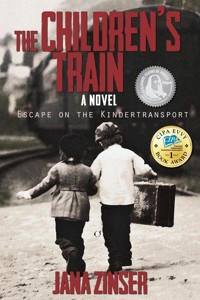
This compelling Holocaust action adventure story tells of bravery, sacrifice, and the survival of the human spirit against Hitler and the horrors of war.
"Gripping and impossible to put down. I cried several times throughout. Perfect ending, emotional but complete." - Goodreads review
It begins in November 1938 on The Night of the Broken Glass, when Jewish people of Germany are terrified as Hitler's men shatter their store windows, steal and destroy their belongings, and arrest many Jewish fathers and brothers.
Parents face unparalleled fear for their own lives but their focus is on protecting their beloved children.
When England arranges to take the children out of Germany by train, the Kindertransport is organized and parents scramble to get places on the trains for their young family members, worried about what the future will hold.
Soon, trains filled with Jewish children escaping the Nazis chug over the border into Holland, where they are ferried across the English Channel to England and to freedom. But for Peter, the shy violin player, his sister Becca, and his friends Stephen and Hans, life in England holds challenges as well. Peter's friend Eva, who did not get a seat on the Kindertransport, is left to the evil plans of Hitler.
Peter, working his musician's hands raw at a farm in Coventry, wonders if they should have stayed and fought back instead of escaping. When the Coventry farm is bombed as the Nazis reach England, Peter feels he has nothing left. He decides it's time to stand and fight Hitler.
Peter courageously returns to Germany to join the Jewish underground resistance, search desperately for his mother and sister he left behind in Berlin, and try to rescue his friend Eva.
"A beautifully written book. Sadly, the historical details are true and this makes the story all the more poignant. At times heartbreaking, at times hopeful and optimistic, this book will stay with the reader for a long time. The author is definitely one to watch" ~ Dorothy M Calderwood (Media Professional) for NetGalley
". . . Jana Zinser brilliantly expresses the horror, confusion and fear that not only Peter but the other children in the novel are feeling and thinking when witnessing the atrocities by the Nazis . . When I began this book I thought that I had quite a lot of knowledge about the Holocaust but I was surprised to learn about the Kindertransport children. Although this novel is fiction, the Kindertransport was not and I will never forget about the ones that made it on those trains and also the ones who did not . . ." - Amanda - NetGalley and Goodreads reviews
". . . The Children's Train by Jana Zinser absolutely blew me away! Heartbreaking, terrifying and traumatic it was also filled with hope and courage, determination and inspiration. Over six million Jews died at the hands of the Nazis and many of them were children. Though The Children's Train is fiction, the sad and tragic truth stands out and stays with you. I know this book will stay with me! The Children's Train is an absolute credit to this author and I have no hesitation in recommending it extremely highly. . . " - Brenda, Goodreads review
"I'm positive that I held my breath for most of this book. I wouldn't be surprised if I'd held my breath for the entire time I'd been reading this. This book was so unlike any other I've read. It's gripping, powerful, heartbreaking and intense --- so, so, so intense . . . I honestly have no words right now; this book was amazing and thrilling, and so sad." - Leah, Goodreads review
Das E-Book können Sie in Legimi-Apps oder einer beliebigen App lesen, die das folgende Format unterstützen:
Veröffentlichungsjahr: 2015
Ähnliche




















The Children’s Train
© 2015 Jana Zinser. All rights reserved.
No part of this book may be reproduced in any form or by any means, electronic, mechanical, digital, photocopying, or recording, except for the inclusion in a review, without permission in writing from the publisher.
This is a work of fiction. All of the characters, names, incidents, organizations, and dialogue in this novel are either the products of the author’s imagination or are used fictitiously.
Published in the United States by BQB Publishing
(Boutique of Quality Books Publishing Company)
www.bqbpublishing.com
Printed in the United States of America
978-1-939371-85-0 (p)
978-1-939371-86-7 (e)
Library of Congress Control Number: 2015940363
Book design by Robin Krauss, www.bookformatters.com
Cover design by Ellis Dixon
I could not put this book down. These children’s stories take an unbelievable journey through gut-wrenching sorrow and horrifying pain, yet explode with their raw courage and brute determination to survive and hang on to hope. This book is inspirational, informative, interesting, and should be read by all ages.
—Charles J. Weber,
Weber Communications, Los Angeles
The Children’s Train takes the reader on a wide-eyed, unflinching ride through hell. Like The Boy in the Striped Pajamas, the novel reenacts the atrocities suffered by innocent victims of Hitler’s Germany, through the eyes of its youngest casualties. You’ll weep, you’ll cheer, you’ll stay up all night reading. This book will give you a deeper understanding of the scope of one of history’s most egregious horrors.
—Suzy Vitello,
author of The Moment Before and The Empress Chronicles
CONTENTS
CHAPTER 1
His Music Will Save the Jews (November 1938)
CHAPTER 2
The Fuhrer Is Here (November 1938)
CHAPTER 3
Times Have Changed (November 1938)
CHAPTER 4
The World Turned Out Its Light (November 1938)
CHAPTER 5
Fearless German Hero (November 1938)
CHAPTER 6
A Nazi Is a Nazi (November 1938)
CHAPTER 7
The Night of Broken Glass (November 1938)
CHAPTER 8
They’re Hunting Jews Tonight (November 1938)
CHAPTER 9
Bruno the Dog (November 1938)
CHAPTER 10
A Plea for a Father (December 1938)
CHAPTER 11
The Packing of a Life (December 1938)
CHAPTER 12
The Betrayal (January 1939)
CHAPTER 13
Boarding the Train (January 1939)
CHAPTER 14
The Train Whistle Blew (January 1939)
CHAPTER 15
To the Holland Border (January 1939)
CHAPTER 16
Are We Allowed In? (January 1939)
CHAPTER 17
We Suffer for God (January 1939)
CHAPTER 18
Mutti Still Remembers You (January 1939)
CHAPTER 19
Do Something (January/February 1939)
CHAPTER 20
No Bread (March 1939)
CHAPTER 21
The First One to Kill Hitler Wins (April 1939)
CHAPTER 22
Far Away from Germany (June 1939)
CHAPTER 23
The Right to Be Different (August 1939)
CHAPTER 24
A Change of Plans (September 1939)
CHAPTER 25
War (September 1939)
CHAPTER 26
Doctors Save Lives (September 1939)
CHAPTER 27
Bamboo Stick (February 1940)
CHAPTER 28
Hitler’s a Madman (April/May 1940)
CHAPTER 29
A Tremendous Battle (May/June 1940)
CHAPTER 30
Head for Cover (September 1940)
CHAPTER 31
The World’s Attention (November 1940)
CHAPTER 32
The Weight of the Nazis (May 1941)
CHAPTER 33
Just Like Rabbit Hunting (December 1941)
CHAPTER 34
Sparks Flew (June 1942)
CHAPTER 35
Let the Boy Drive (August 1942)
CHAPTER 36
God Has Not Forsaken Us (October 1942)
CHAPTER 37
The End of the Line (October 1942)
CHAPTER 38
The Violin Wolf (October 1942)
CHAPTER 39
Don’t Think of Them as People (May 1943)
CHAPTER 40
Hate Is Hard to Kill (May 1943)
CHAPTER 41
The Final Showers (July 1943)
CHAPTER 42
The Dull Gray of Death (January 1944)
CHAPTER 43
Press Forward on All Fronts (June 1944)
CHAPTER 44
Be Bold (January 1945)
CHAPTER 45
A Heart’s Liberation (January 1945)
CHAPTER 46
Victory (May 1945)
CHAPTER 47
Lost and Found (June 1945)
Epilogue
DEDICATION
It is with great passion that I tell the story of these children who lived in a time of tremendous evil and had to be bold just to stay alive. Although the children in my story are fictional, they represent both the many children who rode the Kindertransport and those who were not lucky enough to get a seat on the train. Since the moment I heard their historic tale, they have not left my mind. The Kindertransport children came to live in my conscience and would not leave until I told their story.
The Nazis killed six million Jews. One-and-a-half million of those Jews were children. Peter and Becca represent two of the more than ten thousand children who safely escaped to England on the Kindertransport. Most of the Kindertransport children never saw their parents again. All of them survived in their own ways and found their own paths in the world. If their tragedy taught them anything, it was that as long as there is life, there is hope, and sometimes, if you’re lucky, love.
The children who survived these times are now in the twilight of their lives. But, in each, I imagine the heart of a child still lives and remembers what it was like to face the fear and sorrow that no child should ever know. They have shown us how valuable life is—and how hope can push us to survive beyond anything we thought we could bear. If we have learned anything from the struggles of their young lives, we will not be silent and stand by when evil comes calling. We will fight back.
AUTHOR’S NOTES
Although The Children’s Train: Escape on the Kindertransport is inspired by actual historical figures, events, and places, this is a work of fiction. Names, characters, businesses, places, events, and incidents are either the products of the author’s imagination or used in a fictitious manner. Any resemblance to actual persons, living or dead, or actual events is purely coincidental or incorporated in a fictitious way. The camps, ghettos, and many towns in the book are fictional, but are representative of real places.
For more information on the real events and children of the Kindertransport, contact The Kindertransport Association at www.kindertransport.org.
ACKNOWLEDGMENTS
It is with enormous gratitude that I acknowledge the support and encouragement that has allowed me to write this story. I want to thank Lisa Zinser, Lee Zinser, Jill Davidson, Celia Zinser, Branden Fox, Josh Fox, Conner Fox, Lanae Fox, Leslie Fox, Billie Evans, Christin and Buddy Lynn, Rabbi Aryeh Azriel, Dianna Gordon, Marc MacYoung, Amy Stephens Photography, Eric Woolson, and Robert Gosnell (author of The Blue Collar Screenwriter).
CHAPTER 1
HIS MUSIC WILL SAVE THE JEWS
(November 1938)
Peter Weinberg, with the gray, piercing eyes, was eleven when he had to face the truth that the world was filled with evil, and there was nothing he could do about it. The Nazi monster, Adolf Hitler, had risen to power in Germany, and he didn’t like Jews, not even the small ones.
That day in November, 1938, Peter pushed back his sun-streaked blondish-brown hair and swept the butcher shop floor, chasing down even the tiniest speck of dust. “A clean floor shows German pride,” his father Henry said. “If you work hard, you can make your own luck.”
“Yes, Father,” Peter said as he put the broom away. But Peter wasn’t sure luck could be made. Not in Germany anyway.
Peter lived with his father, mother, and two younger sisters in a small cozy apartment above their butcher shop in Berlin. Peter’s father, Henry Weinberg, a tall handsome man who walked with a cane, was a good butcher who only sold the best cuts of meat in his downstairs shop and cared for his customers like his family.
“Watch, Peter. It’s all in the motion and the sharpness of the blade,” his father said. He showed him how to wield the meat cleaver and make perfect cuts of meat, the sharp metal slicing through meat and bone in one swift, precise cut. “Set your mind and focus only on the cut.”
“And keep your fingers out of the way,” Peter teased.
His father smiled. “Yes, a butcher’s first lesson. You will be a fine butcher some day.”
Peter cringed inside but practiced his cleaver technique to please his father. He had become remarkably good. However, he preferred to line up the pieces of meat neatly in the display case to make a symmetrical design. Peter thought quality and presentation were a butcher’s focus.
Peter felt comforted by the order of the meat lined up in precise rows in the spotless glass case, waiting to be sold. He loved the consistency of routine, and although he would much rather be listening to music, he enjoyed being with his father in the butcher shop. He could name the cuts of meats before he was four, and he often quietly recited them to calm himself.
Although the Jewish way of slaughtering animals was banned in Germany back in 1933, Peter knew his father continued to use the shechita method. His father told him that he would rather have Hitler mad at him than God.
The door swung open. Frank Soleman, the balding policeman, walked into the shop. The bell on the shop door tinkled right before Bruno, Frank’s German Shepherd, trotted in behind him and barked at the small swinging bell, like he did every week.
“Good morning, Frank,” Henry called out from behind the counter.
“Hello, Henry,” Frank said, smiling.
Peter walked over to pet Bruno, whose bushy tail swung wildly with anticipation. The big dog nuzzled Peter, almost knocking him over. Bruno was tan, with a black face and a patch of black on his back that made him look like he was wearing a dog-size dinner jacket. “Guten Tag, Bruno,” Peter said and laughed, scratching behind the dog’s pointed ears. “Did you come for your bone today?”
Frank smiled at Peter. “Bruno comes to see you. The bone is just a bonus.”
Peter liked Bruno. The dog didn’t care that Peter was Jewish. To the dog, religion was irrelevant. Peter wasn’t allowed to have a dog in the small apartment with his mother’s oversized furniture, or in his father’s shop filled with meat. So he loved it when Frank brought Bruno with him each week. Peter would play with the good-natured, big dog and pretend Bruno was his pet.
Sylvia Weinberg, Peter’s mother, tucked a loose strand of hair into her swept-up do and hurried over to the meat counter. “Frank, Henry saved you a nice beef loin roast. I’ll get it,” she said, smiling and nodding. It was hard not to be happy around Sylvia. Although Henry was the butcher, the customers were really Sylvia’s.
“Danke, Sylvia. I was hoping you’d say that,” Frank said.
“Of course. We’re only the best butcher shop in Berlin,” Henry said.
“That’s why I come here, and also because I live close by.” Frank laughed.
Peter got a big meaty bone for Bruno, threw in some scraps of meat and fat, and wrapped it in shiny white butcher paper he ripped from the huge roll. He tied it closed with a string and handed the package to Frank. “Here is Bruno’s bone, and a little something extra.”
“Thank you, Peter, and Bruno thanks you,” Frank said. “So, how about a song today?”
Six-year-old Becca, Peter’s sister, skipped around the meat counter, carrying Gina, her doll. A dark-haired girl, Becca had defiant eyes and a sassy walk. As much as Peter sought refuge inside himself, Becca was outgoing, spirited, and unbridled. She rolled her eyes. “All he cares about is his stupid violin, and Bruno.”
“Well, all you care about is your stupid doll,” Peter shot back.
“Violins are stupider.” Becca flipped back her curly hair.
“Play him a song, Peter,” Sylvia coaxed. Baby Lilly, Peter’s rosy-cheeked one-year-old sister, sat in a play area in the corner. The butcher shop was truly a family business.
Peter went into the back of the shop and came back with his beloved violin. Once he placed it under his chin, he felt transformed into another person, a bold person of great confidence and emotion. He could imagine doing great and daring things when he played the violin. His small hands orchestrated the melodies that were born from wood, string, and the depths of his soul. The music gave him a feeling of unfettered freedom and unsurpassed bravery, neither of which he felt like he had in real life.
He played a tune called “You Are Not Alone.” It was a song his mother sang to him at night. It helped him go to sleep, kept away his nightmares of the monsters hiding in the corners, and banished that terrifying feeling of hurtling through darkness with no direction and the fear of what would happen when it stopped.
Sylvia smiled and nodded. “That’s my Peter. His music will change the world someday,” she bragged to Frank.
Peter turned away, hiding his face as he continued to play. His face flushed with embarrassment, but he couldn’t hide his smile or the dance of his nimble fingers over the strings.
Frank nodded at the small maestro. Bruno, entranced, thumped down on his hind legs, with his huge tongue hanging out, and watched Peter’s bow seesaw across the violin. The dog’s ears, which always looked like they were saluting, twitched. He was a dog in a dinner jacket that appreciated good music and meaty bones.
Henry, in his white butcher’s apron, leaned on his meat counter. “Maybe your music will save the Jews from Hitler,” he said, smiling at Peter.
A shadow crossed the storefront window where the weekly meat specials were advertised. Frank looked over.
Policeman Karl Radley stood looming in the store window, blocking the sun as he glared at them. Radley, a tall man, about the same age as Henry and Frank, had short blond hair and a very small, thin, turned-up nose that always made him look like he smelled something foul.
As Radley stared through the window, he pointed at Henry and made a slashing gesture across his throat. He turned abruptly and stomped away.
Frank stiffened. He quickly paid for his meat and hustled Bruno out, without waiting for the song to end. Peter, who swayed with the music seeping from his pores, didn’t even notice their abrupt departure. The door bounced shut from Frank’s hasty retreat, and the bell tinkled. Peter kept on playing, locked in his own world where he was in control.
“You shouldn’t have mentioned Hitler,” Sylvia scolded Henry.
Henry waved his hand at her. “Ah, I’ve known Frank for years.”
“I know, but Hitler doesn’t care if you served in the Great War together,” Sylvia pointed out.
Peter’s father was a veteran of the Great War, when the Central Powers of Germany, Austria-Hungary, Turkey, and Bulgaria had fought the Allies of France, Russia, Italy, the British Empire, Belgium, Japan, and the United States, ending in 1918. Shrapnel from a land mine during the war had left Henry’s strong athletic legs scarred and weak. He had told Peter that wars were started by people in offices and ended by soldiers on the front lines.
Henry was a German hero, but his wobbly legs had drained his spirit. Peter could sense his father’s growing fear of the bold, abusive German soldiers, the same ones he had fought beside as patriots for Germany.
Peter had often heard his parents and their friends discussing the dark and devious tales of Adolf Hitler and the Nazi regime. Adolf Hitler, Chancellor of Germany, had appointed himself Fuhrer. All the armed forces now answered to him. As a dictator, his power had grown, along with his hatred of Jews. His laws had taken rights away from the Jewish people. Hitler was a name whispered when the lights went out, like stories of the Bogeyman: something dark and scary, yet so enormously cruel it could not be real. But Policeman Karl Radley was part of Hitler’s force and Peter could not ignore that Radley was real, and to Peter, much scarier.
Radley was a man of high ambition, but from a loving family of low means. His career options had always been limited, because he wanted power without having to work for it. Although he was strong and determined, he had been refused admittance to the military because one of his legs was a tiny bit longer than the other, and he walked with a slight limp. He had the cobbler make special shoes to hide his imperfection.
Radley’s father had finally helped him secure a job in a bank where his father’s childhood friend was the president, and Jewish. Radley swept, mopped, and emptied the trash. To the arrogant Radley, this was a humiliation he had not been able to accept. In order to compensate for the insult, Radley had done as little work as possible, just to even things out.
One day, before the war had made his legs not work, Henry had entered the bank in his military uniform. The bank president had been confronting Radley, who had been leaning on his mop and bucket instead of cleaning up the snow melted from customers’ shoes. “You do not seem to want to give the effort this job requires. Perhaps you would be happier at another job,” the president had quietly suggested to Radley.
Radley’s slightly trembling hands had balled up in fists. With all the fury and power he had held in for so long, he had attacked the bank president. Henry had defended the bank president, taking a few blows from Radley, but eventually knocking a bloodied Radley to the floor. “Go, before you are arrested,” Henry had ordered.
Radley had wiped the blood from his mouth, and looked at all the customers staring at him. He had kicked the bucket of water and thrown the mop, then stomped out of the bank, promising himself that a Jewish man would never again determine his fate.
A few months later he had taken a job as a messenger for the police, who did not know about the slight difference in his legs because of his special shoes. It had paid less money than the bank job, but Radley had seen an opportunity for advancement and power, something he strongly desired. Radley had been willing to sacrifice anything to move up the ranks.
He had found his first opportunity when he had discovered two high-ranking on-duty officers smoking cigarettes and drinking with women who were not their wives late at night in the police station basement, where the important records were kept. Soon after, those same officers had gladly helped him gain a position as an officer, in exchange for his silence. His special shoes thudded heavily as he walked, and he used it to intimidate. In this manner, he had stomped his way to the top over many years. His proclivity to hatred was primed for the rise of Hitler, and he had eagerly become a Nazi as soon as the opportunity had presented itself.
Peter’s father had known Karl Radley would never be his customer, but he had never imagined that Radley’s grudge against him would last a long time and cause so much trouble.
In the butcher shop that day, Peter put Radley out of his mind, and concentrated on making the music flow from his violin. The violin was his best friend, his escape. When he played the violin, he was happy, and the world was safe. When the music burst into the air, he felt his worries about this man named Hitler, and about Radley, his father’s enemy, melt away, as the melody surrounded him, soothing his fears. He was lost in the songs of his Germany, his home.
CHAPTER 2
THE FUHRER IS HERE
(November 1938)
The trees in nearby Edelweiss Park were ablaze with the red and gold of fall. The birds, as always, were squawking and singing. German weather was unpredictable, but this was one of the last warm days of the year, “altweibersommer” or “old woman summer,” as they called it.
Peter’s school was a large brick building near the center of Berlin by the business district, not too far from his father’s butcher shop and their apartment. Peter and most of the neighborhood children walked to school.
Inside the school, Peter hurried down the hall, swinging his violin. He had come from the music room. As always, he had been reluctant to stop playing, and now he was late for his homeroom check-in before school ended.
Wolfgang, a brutish boy with thick eyebrows and cruel eyes that a cunning smile couldn’t hide, stepped out of the hall bathroom. He snatched Peter’s violin and tossed it to Kurt, the tall, sweaty boy who was his unquestioning sidekick. The boys were older and much taller than Peter and easily played catch with his precious violin, as he repeatedly jumped for it. Wolfgang dangled it, and then threw it over Peter’s head to Kurt.
The bell suddenly shrilled, announcing the end of school. Done with their keep-away game, Wolfgang tossed the violin above Peter’s head. It twisted in the air, beyond Peter’s frantic grasp. Wolfgang and Kurt laughed at Peter’s clumsy attempts to grab his somersaulting instrument.
Wolfgang swept his leg out and hit Peter’s legs, knocking him off his feet. As Peter fell, his long delicate hands reached for his falling violin. Wolfgang and Kurt laughed and pointed as Peter hit the ground.
When Peter’s uncoordinated, flying body came to rest, he held the violin safely above him, a prized trophy. Peter was as surprised as Wolfgang that he had rescued the treasured violin from the taunting assault. As Peter realized he’d won, his mouth couldn’t help but curl into a smile of triumph and that made Wolfgang mad.
Wolfgang snarled as he quickly advanced toward Peter, kicked him with a black leather boot, and turned away. “Jew rat!”
Peter couldn’t hear what he said. All he heard was the loud beating of his own frightened heart and his pounding thoughts. At least his violin was safe.
Then Wolfgang gave a Nazi salute, his arm extended.
“Heil Hitler!” Kurt said in response.
Then Peter understood. They hated him, not his violin, which, oddly, was a relief. He was used to people hating Jews and had come to expect it, but there was little hope of redemption for anyone who hated music.
Wolfgang sauntered down the hall with his self-satisfied swagger, never looking back. Kurt, his ruffian shadow, ran after him.
Peter knew that Wolfgang had been born into a family of hate. Wolfgang’s father, Wilbur, had been fired from his button factory job for stealing tools. He had blamed his years of making small buttons with the machines for his arthritic hands and had felt entitled to supplement his income with the factory’s tools. His family had lost their home and had to move in with Wolfgang’s grandparents. Wolfgang’s father hadn’t been able to find another job, because nobody wanted to hire a tool thief with gnarled hands. He had started drinking, and soon he had no hope left. The factory owner who had fired him had been Jewish. Wolfgang’s father’s hatred of Jews had grown from his own thievery, misplaced blame, and painful arthritis. He had eagerly passed that hate on to his son.
In the school hall, Peter pulled his violin to him in a protective hug, breathing heavily, still curled up on the floor.
The classroom doors flew open, and children stampeded down the hall, somehow avoiding the small boy curled around his violin like a musical cocoon.
“Peter, what are you doing down there? You’re going to get trampled.” Peter looked up. Eva Rosenberg, eleven, with black hair, towered over him. Her friend, Olga Schmidt, was standing beside her. Olga tossed back her long blonde hair. She was pretty, and she knew it.
Eva reached down and grabbed Peter’s skinny arm, which was still locked tightly around the violin. She unexpectedly pulled him up off the floor, like a ribbon of horsehair snapped from the violin’s bow.
Peter shot to his feet. He nodded, still clutching his violin. “Danke. Thank you.”
He didn’t move, because he did not want Eva to release her touch. He knew everyone thought Olga was the prettiest girl in the school, but all Peter could see were her cold empty eyes and her bad attitude, and he was not impressed. Eva was obviously the most beautiful girl in the world, and one day he wished she would be his girlfriend. Who was he kidding? That was never going to happen. She was already taller and braver than him. Peter didn’t stand a chance.
Olga sneered at the disheveled Peter. “You look like you almost got run over by a train. No one is going to take your violin.”
Eva let go of Peter’s arm. He looked down the hall where Wolfgang and Kurt strutted, and he nodded. “Not today.”
“Is your mother meeting you?” Eva asked him.
Peter shook his head. Eva was so pretty that it was hard for him to respond when she talked to him. “No, she had to take Becca to see Dr. Levy.” Peter looked down and straightened his clothes.
“What’s wrong with my favorite little spitfire?” Eva asked, smiling.
“She talks too much, but the doctor can’t fix that.”
Eva laughed.
“She got a blister from roller skating, and it’s infected,” Peter explained.
“Come on then, you can walk with us.” Eva smiled at him again.
“Okay.”
“Behind us. You can walk behind us,” Olga corrected. Peter shrugged, but Eva reached over and pulled Peter beside her.
Outside the school, the German children poured out the front door. Charlie Beckman, a slight seven-year-old, ran to his father Arnold, who waited for him at the corner like he did every day. Charlie ran into his arms, and Arnold picked him up and swung him around. Charlie threw his head back and laughed at something his father said. Peter wondered if his father would have done that, if he hadn’t been in the way of a land mine in the war.
Gripping his violin, Peter walked with Olga and Eva as they hurried down the steps. Olga was not as well dressed as Eva, but she had a confident, almost flippant, attitude that made her stand out in an attention-getting, superior way. However, Peter’s eyes were on Eva.
Hans Vogner and Stephen Levy came up to the girls and Peter. “Hey, Peter, are you ready to play football?” Hans asked.
Peter shook his head. He was terrified when the ball came hurtling toward him, and all he wanted to do was avoid it. To him, the game of football seemed to be pointless and extremely injury-prone.
“Real heroes of Germany play football,” Stephen said, smiling.
Peter shrugged. “I don’t want to be a hero.” His father was a hero. What good had it done him?
Hans and Stephen laughed. “Are you going to the park today?” Hans asked.
Eva nodded. Olga flipped her long blonde hair back and scoffed, “You’re not allowed there.”
“They haven’t caught us yet!” Stephen said, sending out the weekly challenge before their race to the park.
“What about you, Peter? Are you coming?” Hans asked.
“No, I have violin lessons.”
“Too bad,” Stephen replied.
“Not really.” Peter knew he would much rather play the violin than have a ball kicked at him by Stephen and Hans, embarrassing him in front of Eva.
“Last one there loves Hitler!” Hans teased. Stephen and Hans laughed and jogged away, disappearing into the crowd of students.
Olga and Eva left the schoolyard and hurried through the crowded downtown streets, with their school knapsacks over their shoulders. They could barely move through the surging crowd that was shifting and murmuring in anticipation. Peter followed the girls, swept up in the frantic motion of the nervous people.
“Oh no, we’re going to be late. The boys will get there first,” Eva said.
Olga pointed as the crowd’s excitement rose. “What is this? What’s going on?”
The girls stood on their tiptoes, straining to see through the sidewalk crowd. Peter pulled his violin in closely and bent down to peer through the moving throng of people. The crowd squished him as he looked for Eva. He saw her right in front of him, as she bounced up to see over a hulking man with gnarled arthritic hands and a frazzled, fair-haired woman. Peter tried to squeeze in closer to the girls.
“What is it? What’s everyone looking at?” Eva asked.
Olga shrugged. “I don’t know.”
The woman in front of them turned around. She smiled, her face flushed. “It’s the Fuhrer! Herr Hitler is coming!”
Peter’s eyes grew big with fright. The Bogeyman was coming here, right in front of him. Peter’s heart pounded, his hands shook, and he was ready to run.
As the woman turned back around, the crowd lurched forward, surrounding them. There was no escape.
Olga bumped into the man with crooked fingers in front of her. He turned around and glared at her. It was Wilbur, Wolfgang’s father, the tool thief, come to pay his respects to his hero.
Peter didn’t even notice the sweat beading on his forehead, as he watched the motorcade of dark cars draped with swastika banners approach. Following the escort, Adolf Hitler stood up in his open car, his face drawn in seriousness, as if smiling was undignified. His eyes were pinched into slits of dull arrogance. Peter thought he looked like the hungry rats on their hunt for prey in Vogner’s nearby fastener factory. The crowd cheered, beside itself with awe and excitement. Peter shivered.
Hitler raised his right arm, holding his hand straight. “Sieg heil!” he shouted.
The people in the crowd responded by raising their arms in the Nazi salute. “Sieg heil! Sieg heil!” they yelled in unison. “Hail to victory!”
Eva and Olga stared, but they did not raise their arms. Peter gripped his violin, as his eyes darted around the crowd. He wished he could get out his violin and disappear into his music, so all this would vanish. This was too real for the magic of his violin, and he was worried about Eva.
Wilbur whipped around and glared at them. “Salute! Show your respect,” he ordered, as he pointed his crooked fingers at them. He spied Peter. “You too, you little worm!”
Peter could smell Wilbur’s alcohol-soaked breath. He turned away, hiding behind Olga.
Olga looked at Wilbur’s snarling face, then at the agitated crowd around her. She glanced at Eva. Then she quickly looked down, unable to look her friend in the eyes, as she slowly raised her arm in a salute.
Peter’s eyes widened as he watched Olga’s arm creep upward. He peeked out at Eva, who clenched her arms at her side, her face contorted into defiant lines of anger. Peter’s knuckles turned white, as he gripped the violin as if it were the only thing that could save him.
“Heil Hitler!” the crowd shouted in impassioned unison.
Wilbur stepped in front of Eva. His breath hissed out; Peter could smell the foul odors of alcohol. He cringed and hid back behind the temporary protection of Olga.
“Raise your arm! You must be a dirty Jew,” Wilbur shouted at Eva. She looked at Olga, who was frozen with fear. There would be no help there. Peter stayed hidden behind Olga with only the end of his violin visible.
Eva turned and faced the ugly Wilbur, with her hands balled into fists, unable to move.
Peter carefully released one side of the violin and reached out to Eva from behind Olga. He wanted to save her, but he wasn’t brave or fast enough.
Wilbur swung his huge gnarled hand at Eva with great force. Peter pulled his outstretched hand back, as the man hit Eva on the side of her head. She fell down, slamming her head on the sidewalk.
Wilbur kicked her and turned back around, as if he assaulted young girls every day.
Wolfgang’s mother looked back with concern at Eva sprawled on the sidewalk, but Wilbur jerked her back around. “Pay attention! The Fuhrer is here!” he ordered.
“Heil Hitler!” the crowd shouted in political unison.
The motorcade passed by Peter, who saw the Fuhrer from between the surging bodies. Adolf Hitler, the great leader of Germany, was not a cartoon after all; he was real. Peter pulled back his violin to protect it, then vomited on the ground. No one noticed.
After Hitler passed, the crowd dispersed, stepping around Eva lying dazed on the sidewalk. She reached up, touched her head, and groaned. Her school knapsack lay beside her.
Peter wiped his mouth on his sleeve and watched, as Olga knelt beside Eva and looked up at the hurriedly passing people. Tears ran down her face. Then she stood up and ran into the crowd, leaving Eva on the ground.
Peter crept up cautiously to Eva, reached out his hand, and pulled her up. He had missed his chance to save her, and he saw in her eyes that she knew it.
CHAPTER 3
TIMES HAVE CHANGED
(November 1938)
Eva lived several blocks from Peter in a well-kept house with a manicured yard. Olga’s family rented the tiny house next door. Later that day, Olga peeked out of her modest bedroom. Her breath misted the window as she watched the white lace curtains being closed in Eva’s bedroom across the yard. She absently dragged her finger against the pane of glass, bowed her head, and disappeared from the window, leaving the outline of an X over Eva’s house on the windowpane.
Dr. Jacob Levy stood beside Eva’s lacy bed. Though her head was bandaged with gauze, she was awake.
Eva’s mother Helga wore a dark drab dress despite the fact that she was a seamstress. With her hair severely pulled back in a bun, she watched them from across the room, her arms crossed against her heavy chest. Eva’s father Bert, a well-dressed, slightly pudgy man, sat on the bed and patted Eva’s hand.
Peter stood in the doorway and peered in tentatively. Bert motioned to him. “Peter, come in.”
“I’m late for music lessons.” Peter hesitated. “I just wanted to make sure she was okay.”
Bert nodded and smiled. “Thank you, Peter.”
Dr. Levy looked at Peter. “I was just with your mother and sister.” He turned to Bert. “Two patients in one day is unusual, since Hitler won’t let me practice on non-Jews.”
“I know. Hitler’s boys still sneak in the back door of my shop to get their clothes, but soon they’ll be too scared to do even that,” Bert said.
The doctor patted Eva’s shoulder. “Don’t worry, Eva. You’re going to be fine.”
“What about next time?” Bert frowned. “No one’s safe anymore. Thirty-two countries met in France to discuss Jewish refugee policies, and almost all of them just gave excuses why they can’t take any Jews.”
“There’s no place for us anymore,” Jacob said.
Bert patted Eva. “And now our children. Is there nothing left for us? Will no one stand up for a young girl?”
Peter hung his head and slipped out of the room.
He walked slowly down the sidewalk, carrying his violin by its handle. His feet dragged, as if he struggled against extraordinarily heavy shoes.
As he approached the entrance to Edelweiss Park, he spotted Hans and Stephen near the indoor pool building next door, chasing each other around. “Do you think the girls are there yet?” he heard Hans ask Stephen.
“Yes, they will be waiting for us, the true German heroes,” Stephen said. He flexed his muscles, dancing backward.
Hans stopped chasing him and stared at the door to the pool.
“What?” Stephen asked.
Hans pointed. Stephen turned around to see a sign on the door to the indoor pool reading: “JEWS NOT WANTED IN THIS PLACE.”
“I don’t understand how we would hurt the water,” Hans said, sighing.
“We would just show them up anyway,” Stephen said.
“But I like to swim.”
Peter walked up to them. “The girls won’t be coming today. Something . . . came up.”
Before Hans and Stephen could say anything, Peter turned away. Clutching his violin, he ran up the impressive flight of stairs of the large stone building across the street, at the German Music Academy.
Adeline, a slender woman with braided blonde hair, quickly ushered Peter into her music room. He set his violin case down gently and opened it.
Adeline reached out and slowly closed the lid. As it snapped shut, she sighed and smiled, the kind of smile that is forced and fades quickly. “Not now, Peter.” She pointed to a chair. “Sit down. I have something to tell you.”
Peter picked up his violin and held it to his small, heaving chest, but didn’t sit. He stared at her.
Adeline took a deep breath, looking down at the floor as she did. When she looked up at Peter, her eyes brimmed with tears. Peter had never seen an adult cry before. Seeing her so distraught was frightening.
“I’m afraid your lessons here must end. I’m very sorry, Peter.”
Peter stepped back, feeling cold with shock. “I’ll practice harder. I really will. Please, Frau Adeline, don’t—”
Adeline placed her hand on his shaking shoulder. “Peter, it’s not your practicing. You’re very good, really quite extraordinary, but times have changed.” She cleared her throat. “Someone has reported that I was teaching Jews.”
“Why? Music can’t hurt anyone.”
“You’re right. Many of us wish we could change things, but—”
“Then, why can’t you?” Peter asked.
“I’m sorry, Peter. I could lose my job.” Adeline sighed. “This is Hitler’s Germany. There’s nothing I can do.”
Peter carefully snapped the latch on his violin case. “Yes, I understand.”
But he didn’t.
CHAPTER 4
THE WORLD TURNED OUT ITS LIGHT
(November 1938)
A few days later, Eva played checkers with Olga on the floor of her room. Her bandage was gone, the wound was healing, but the damage to her soul felt unfixable. Eva’s fluffy white cat, Snowflake, watched them, rubbing against Eva.
The cat meowed. Eva laughed. “Snowflake wants to play checkers.”
Olga laughed. She looked around Eva’s beautiful room with the big lacy bed. “I wish I had a room like this.”
Eva’s brother William burst into her room. He was eighteen, a handsome boy with a confident swagger and the twinkle of a daredevil in his eyes.
“Hey, ugly sister, I need money.” He ran his hand through his hair.
“No, you never paid me back last time,” Eva said. “Get a job.”
“I don’t have time to work.” He tossed his head, jerked open the drawer to her bedside table, and grabbed a few reichsmarks. “This is all you have?”
Eva nodded.
“It’s not enough. I need more,” William said, as he tucked the stolen money into his pocket. As he walked by the girls, he kicked their checkerboard. The checkers flew, and Olga glared at him.
“Get out of here, William!” Eva threw her shoe at him, hitting him in the back before he slammed the door.
“I wish I had a bigger shoe.” Eva shrugged at Olga. Then she put her finger to her mouth and motioned Olga over to her dresser drawer. She pulled out a fat sock, reached into it, and pulled out a small roll of reichsmarks. She smiled slyly. “He’s not as smart as he thinks. Hey, let’s go to the candy store.”
Olga nodded and followed Eva out of the house. They skipped, linking arms, as they approached the candy store. They sang a children’s chant:
Best friends, best friends
The best days are when we’re together.
Best friends, best friends
Best friends forever and ever.
Peter walked back from delivering a beef loin roast to Herr Frank, who hadn’t been back to the shop since he had left in such a hurry during Peter’s last serenade. Instead, he had called to have his meat delivered to 435 Edelweiss Street, a few blocks away. Peter didn’t mind. Herr Frank usually let him take Bruno for a walk after he delivered the meat. Bruno loved to scamper up the steps to the bandstand at the edge of the park, as Peter pretended he was playing his violin to a crowd, waiting anxiously to hear him. He dreamed that he would be the talk of Berlin someday: Peter Weinberg, the famous musician.
That day, Herr Frank had said both he and Bruno were sick, and asked Peter to leave the meat on the table. Peter had done what he was asked, but neither one had looked sick to him.
Outside, Peter walked slowly with his head down until he was almost in front of the candy store. He heard Eva and Olga’s voices and looked up.
“Let’s get chocolate-covered cherries,” Eva was saying to Olga.
“Yes, lots,” Olga said.
Then Eva and Olga stopped suddenly. Painted in yellow and black across the candy store window were six-pointed stars of David and the words: “DON’T SELL TO JEWS. THE JEWS ARE OUR MISFORTUNE.”
A Nazi officer stood outside with his arms crossed. He looked at Olga, and then nodded sideways at Eva. “What are you doing with that girl?” he asked.
“She’s my friend,” Olga said, but she let go of Eva and backed up.
The officer shook his head. “Is she a Jew? Didn’t you see the sign? The Jews are our misfortune. Jews cannot be our friends.”
Peter peered out from behind a tree. His heart pounded. His feet felt like they were made of lead, and he couldn’t run away. He was too scared to do anything but watch.
Another Nazi officer down the street whistled loudly and motioned. “Come on, Boris.”
“All right, Thomas.” Boris waved his hand. “Be a good German girl and leave the Jews alone.” He turned away from the girls and headed toward the other officer.
As the Nazis headed off down the street, Eva hesitated, and then ran to the candy store steps. She motioned for Olga to come with her.
Olga shook her head. “I don’t think they’ll let you in.”
“Come on. They won’t know I’m Jewish.”
Eva paused on the candy store steps as movement and raised voices from down the sidewalk reached her ears. The girls turned to see Boris and Thomas harassing Rabbi Mosel, who nervously stroked his gray-streaked beard.
“Step off the sidewalk when you see us coming!” Thomas shouted at the old man.
Peter watched the confrontation unfold from behind his tree bunker.
Boris pushed Mosel’s shoulder. “Show respect, old man.” He pulled a standard issue Nazi dagger from his belt with one hand, and knocked Mosel’s kippah off his head.
Mosel looked down at the ground. The children could hear him praying in Yiddish: “God, look down on me now.”
“Shut up, old Jew man!” Boris swung the dagger close to Mosel’s neck, then roughly grabbed Mosel’s beard and cut it off. Blood oozed from the old man’s injured face. As the whiskers fell to the ground, Boris and Thomas laughed and pushed the rabbi.
Peter’s eyes grew big and his mouth hung open. Rabbi Mosel was a powerful man of God, but the soldiers were controlling him.
“Next time, step off the sidewalk when you see a German officer coming, or you’ll end up like your beard,” Boris said. The two Nazis turned on their heels and continued down the street.
Peter looked over to where Olga had been standing, but she was no longer there. He could see her running down the street toward her home. Eva stood still, as if frozen, on the candy store steps.
Mosel picked up his kippah and walked away. Eva shook herself a little, and then ran after him. “Rabbi Mosel! Are you all right?”
“They’re robbing our souls, and the world has turned out its light and gone to sleep,” Mosel said sadly.
Eva looked up at the wise man. “The world can’t sleep forever.”
“This I hope and this I pray. Go home where it is safe, Eva.” Mosel hobbled down the sidewalk, cloaked in humiliation, his beard cut, and his spirit crushed but not broken.
Peter warbled his usual three shrill whistles to get Eva’s attention, then stepped out from behind the tree and ran to her. “Are you okay?” he asked.
Eva ran over to him. “They cut Rabbi Mosel’s beard,” she said, still in shock.
“I know. Come with me, I want to show you something.” Peter thought that maybe he could distract her from the rabbi’s attack.
Eva followed more from numbing shock than really wanting to go.
Peter led her down the block to a fleet of red-and-green garbage trucks parked in neat rows, waiting their turn to negotiate the city streets and pick up the remnants of trash no one wanted.
“This? This is it?” Eva asked, when she saw the tidy line of garbage trucks.
Peter nodded, as he climbed into the cab of a truck and motioned Eva to follow. He reached out his hand and helped her up. Her hand was smooth, soft, and warm.
She sat beside him, as he pretended to drive the powerful truck. Then she pointed to the ignition. “There’s no key.”
“I wasn’t really going to—”
“It’s no good without the key,” Eva said seriously, suddenly very interested.
“I know where the keys are.” Peter smiled. “Wait here.”
Peter jumped down from the cab and walked over to the tiny building that served as the office. He knew the schedule of the trucks and that no one would be in the office for a little while. He carefully pried open the office window and reached in to the board of hooks that held each truck’s key on its painted number. He counted down three from the front, matching the position of the truck in the parking lot, and pulled the key off the pegboard.
Peter smiled and warbled three short, shrill whistles as he walked back to the truck, holding his prized key aloft like a trophy for Eva to admire. He climbed back into the cab, reached down, and put the key in the ignition. He had often driven his father’s meat truck on their delivery route, while sitting on his father’s lap, substituting for his father’s legs.
He turned the key. As the garbage truck started up, he hollered like he had seen his father do at a football game. Eva clapped.
Peter felt powerful. “Look at this.” He leaned out the window and pretended to steer the wheel with his feet. “Don’t worry, I’m a good driver. I don’t even need my hands.” Someday, he would be a remarkable driver. People would stare as he drove by with a beautiful girl, hopefully Eva, he thought. “Someday, I’ll take you for a real ride in one of these,” he promised.
“Okay, but don’t drive with your feet,” she said. They both laughed, the constricting fear from watching the rabbi’s humiliation temporarily forgotten.
Peter knew the drivers would be arriving soon, so he turned off the motor. They both jumped down, before the fleet of trucks took off on their bold journeys across the city, seeking the perpetual rubbish. He put the key back on the pegboard. “I’d better get back to the shop. My father has some lamb chops and a roast for me to take to the Vogners.”
“Okay.”
Eva followed Peter back toward their block. Peter turned toward the shop to get the meat packages for his next delivery, and Eva headed toward home.
Eva turned back. “Peter?” she called.
Peter stopped and turned around.
“Someday, you will drive that truck.”
“And you will ride with me.” Peter smiled. “I’m a good driver.”
Eva laughed and waved. “Tell my favorite little spitfire ‘hello’!”
Peter ran down the street toward his father’s shop, jubilant that he had sat so close to Eva and that she thought him capable of driving the massive truck.
As he turned the corner, he saw William, Eva’s brother, opening up his father’s tailor shop that was closed for the day. Bert was a tailor, and Helga was a seamstress. William let a well-dressed man, with a scar across his eye, slip inside.
Curious, Peter detoured across the street to the shop. He reached up to the windowsill to peer in, but lost his grip and slid back down. He wedged the toe of his shoe into a crevice in the bricks and pulled himself up again to see into the window.
Inside the tailor shop, William held out his hand, wiggling his fingers. “Hurry up! Did you get all my documents?”
The man nodded and handed William an ink-smudged envelope.
William opened the envelope and looked inside. He nodded. Then he pulled a key from his pocket, opened the store’s money drawer, and handed the man some money. “You’ll have to find someone else to be your connection. With these papers, I’m out of here.”
William shoved the papers inside his shirt and turned quickly. Peter ducked down, his foot trapped in the crevice, and fell to the ground. His foot was freed by the fall. He jumped up as William opened the door.
“Peter? What are you doing here? Get out of my way when you see me coming.” William pushed Peter out of his way.
Peter limped down the sidewalk, hurrying away from William, who clutched his secret documents that would get him out of Germany inside his shirt.
CHAPTER 5
FEARLESS GERMAN HERO
(November 1938)
Later that day, Peter set off to deliver the lamb chops and roast to the Vogners. He approached the large house, which was fronted by an ornate iron gate. In the yard, Hans and Stephen played football against Otto, seventeen, a strong, friendly boy. Since he was so much older, they looked up to him and his superior football skills.




