


Erhalten Sie Zugang zu diesem und mehr als 300000 Büchern ab EUR 5,99 monatlich.
- Herausgeber: The History Press
- Kategorie: Geisteswissenschaft
- Sprache: Englisch
The Cold War dominated international relations in the second half of the 20th century in an all-embracing ideological and military conflict between communism and democracy. This survey shows the Cold War as the consequence of the breakdown of the existing international system during the two world wars and a new great power alignment which emerged to fill the vcuum created in both Europe and Asia as existing states and imperial powers lost their former predominance. The text draws on recent scholarship on the Cold War, based not only upon materials from US, British, Canadian, Australian and European sources, but also upon those from Soviet, Eastern European and Asian sources that only became available in the 1990s. The author aims to shed new light on familiar events such as the Berlin crisis, the Sino-Soviet split, detente, the Sino-American rapprochement of the 1970s and 80s, and the ultimate collapse of communism and the Soviet empire in Europe. The book also compares the Cold War's domestic impact on the various countries involved, and assesses the degree to which, even today, the Cold War's influence on the international scene remains pervasive.
Sie lesen das E-Book in den Legimi-Apps auf:
Seitenzahl: 138
Veröffentlichungsjahr: 2000
Das E-Book (TTS) können Sie hören im Abo „Legimi Premium” in Legimi-Apps auf:
Ähnliche




















Pocket Histories
THE COLD WAR
PRISCILLA ROBERTS
For my parents
The two bravest people I know
First published in 2000 by Sutton Publishing
The History Press
The Mill, Brimscombe Port
Stroud, Gloucestershire, GL5 2QG
www.thehistorypress.co.uk
This ebook edition first published in 2013
All rights reserved
© Priscilla Roberts, 2000, 2013
The right of Priscilla Roberts, to be identified as the Author of this work has been asserted in accordance with the Copyrights, Designs and Patents Act 1988.
This ebook is copyright material and must not be copied, reproduced, transferred, distributed, leased, licensed or publicly performed or used in any way except as specifically permitted in writing by the publishers, as allowed under the terms and conditions under which it was purchased or as strictly permitted by applicable copyright law. Any unauthorised distribution or use of this text may be a direct infringement of the author’s and publisher’s rights, and those responsible may be liable in law accordingly.
EPUB ISBN 978 0 7524 9478 4
Original typesetting by The History Press
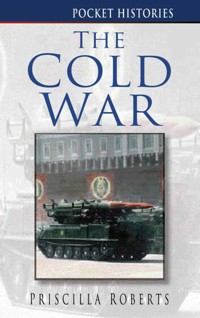
Cover picture:Military Parade on Red Square, Moscow, 1 May 1968 (N. Sitnikov/TASS, courtesy Jonathan Falconer)
Contents
List of Dates
Map 1 Postwar alliances: the Far East
Map 2 Postwar alliances: Europe, North Africa, the Middle East
Introduction
1. The European Dimension, 1945–1950
2. Korea to Vietnam, 1950–1975
3. The Quest for Superpower Understanding, 1953–1974
4. Resurgence to Ending, 1973–1991
Conclusion
Further Reading
List of Dates
November 1917
Successful Bolshevik revolution in Tsarist Russia
July 1918
Allied intervention in Russia, in which United States participates
November 1918
First World War ends in armistice
April 1920
United States withdraws last troops from Russia
April 1933
Franklin D. Roosevelt becomes US president
November 1933
United States recognizes Soviet Union
August 1939
Nazi–Soviet Non-Aggression Pact
September 1939
Germany and Soviet Union invade Poland; Britain and France declare war on Germany
May 1940
Katyn massacre
June 1941
Germany invades Soviet Union
August 1941
Atlantic Charter
December 1941
Japan attacks Pearl Harbor, and Germany and Japan declare war on United States
November 1943
Teheran conference
June 1944
D-Day: Anglo–American invasion of Europe
August–October 1944
Warsaw uprising
February 1945
Yalta conference
April 1945
Death of Franklin D. Roosevelt; successor as US president Harry S. Truman
May 1945
Surrender of Germany
June 1945
San Francisco conference approves United Nations Charter
July–August 1945
Potsdam conference
August 1945
Atomic bombs dropped on Hiroshima and Nagasaki; Japan surrenders; Ho Chi Minh declares Vietnamese independence
February 1946
George F. Kennan sends Long Telegram
March 1946
Churchill’s Iron Curtain speech
United States criticizes Soviet behaviour towards Iran and Turkey; Soviets withdraw forces from Iran
March 1947
Truman Doctrine speech
Treaty of Dunkirk between Britain and France
June 1947
Announcement of Marshall Plan
July 1947
Kennan article, ‘Sources of Soviet Conduct’
September 1947
Rio Treaty to defend Western Hemisphere
October 1947
Cominform established
February 1948
Communist coup in Czechoslovakia
March 1948
Brussels security pact of five West European powers
April 1948
Organization of American States established
May 1948
Creation of Israel; immediately recognized by Soviet Union and United States
June 1948
Berlin blockade begins
April 1949
North Atlantic Treaty signed
May 1949
Berlin blockade ends
August 1949
Soviet Union tests atomic bomb
September 1949
Federal Republic of Germany established
October 1949
Chinese Communist Party, led by Mao Zedong, proclaims People’s Republic of China on Chinese mainland
January 1950
Sino–Soviet Treaty of Alliance and Friendship Senator Joseph R. McCarthy makes Wheeling, Virginia, speech, beginning of McCarthyism
April 1950
NSC 68 recommends massive American rearmament
June 1950
North Korea invades South Korea; United States successfully urges United Nations intervention
November 1950
Chinese intervention in Korean War
April 1951
Formation of European Coal and Steel Community
September 1951
Signature of Japanese–American peace treaty and security treaty and ANZUS Pact
January 1953
Dwight D. Eisenhower becomes US president
March 1953
Death of Stalin
June 1953
Panmunjom armistice agreement effectively ends Korean war; United States concludes security treaty with South Korea
Workers uprising in East Berlin crushed with Soviet assistance
August 1953
CIA-backed coup overthrows Mohammed Mossadeq’s government in Iran and restores Shah Reza Mohammed Pahlavi II to power
September 1953
Nikita Khrushchev becomes general secretary of Soviet Communist Party
December 1953
Eisenhower’s ‘Atoms for Peace’ proposal
March 1954
Successful United States testing of hydrogen bomb
May 1954
Vietminh defeat French army at Dienbienphu; French decide to leave Indochina
June 1954
Successful CIA-backed coup against Guatemalan government
July 1954
Geneva accords end First Indochina War, partitioning Vietnam into North and South
September 1954
Creation of SEATO
December 1954
United States–Taiwan security treaty
January–April 1955
First Quemoy–Matsu [Qinmen–Mazu] Taiwan straits crisis
April 1955
Bandung conference of neutral nations
May 1955
West Germany joins NATO
Soviet Union establishes Warsaw Pact
June 1955
Creation of Baghdad Pact, later CENTO
July 1955
Eisenhower makes ‘Open Skies’ proposal at Geneva summit conference
November 1955
Successful Soviet testing of large hydrogen bomb
February 1956
Khrushchev denounces Stalin at Soviet Communist Party’s twentieth congress
October 1956
Soviet Union crushes Hungarian uprising
November 1956
Suez crisis
January 1957
Announcement of Eisenhower Doctrine for Middle East
March 1957
Treaty of Rome creates European Economic Community
October 1957
Soviet Union launches Sputnik Beginning of Second Indochina War
February–June 1958
US-assisted military rebellion in Indonesia
July 1958
United States intervention in Lebanon
August 1958
Second Quemoy–Matsu [Qinmen–Mazu] Taiwan straits crisis
November 1958
Khrushchev begins Berlin crisis
January 1959
Fidel Castro wins power in Cuba
May 1960
U-2 incident; Paris summit meeting collapses
January 1961
John F. Kennedy becomes US president
April 1961
Bay of Pigs landing
May 1961
Kennedy sends special forces to Vietnam
June 1961
Kennedy–Khrushchev summit meeting at Vienna
August 1961
Construction of Berlin Wall
Announcement of Alliance for Progress
October 1961
Sino–Soviet split made public
October 1962
Cuban missile crisis
Sino–Indian war
May 1963
Organization of African Unity established
August 1963
Nuclear Test Ban Treaty signed
November 1963
Kennedy assassinated; Lyndon B. Johnson becomes US president
August 1964
Tonkin Gulf Resolution gives Johnson wide latitude in handling Vietnam crisis
October 1964
Leonid Brezhnev replaces disgraced Khrushchev as Soviet Communist Party’s general secretary
February 1965
Heavy United States bombing of North Vietnam begins
March 1965
First American combat troops dispatched to Vietnam
April 1965
United States military intervention in Dominican Republic
November 1965
Beginning of Great Proletarian Cultural Revolution in China
June 1967
Six-Day War in Middle East
January 1968
Tet offensive in South Vietnam
March 1968
Johnson announces United States decision to seek peace in Vietnam and withdraw
August 1968
Soviet military intervention in Czechoslovakia; Brezhnev announces Brezhnev Doctrine
January 1969
Richard M. Nixon becomes US president
March 1969
Sino–Soviet border clashes on Ussuri River
July 1969
Nixon announces Nixon Doctrine and begins reduction of American troops in Vietnam
October 1969
Willi Brandt becomes West German chancellor, pursues Ostpolitik
November 1969
Strategic Arms Limitation talks begin in Helsinki
August 1970
Brandt and Brezhnev sign Soviet–West German Treaty of Non-Aggression in Moscow
July 1971
Kissinger’s secret visit to Beijing
September 1971
Quadripartite Pact on Berlin signed
October 1971
United Nations votes to admit People’s Republic of China
December 1971
Indo–Pakistani War leads to independence for Bangladesh
February 1972
Nixon visits China, meets Mao Zedong
May 1972
Nixon–Brezhnev meeting in Moscow, where they sign the ABM Treaty and SALT-I
December 1972
West and East Germany sign Basic Treaty
January 1973
United States, South Vietnam and North Vietnam reach peace accord at Paris
March 1973
United States and PRC agree to open liaison offices in each other’s capitals
September 1973
President Salvador Allende of Chile overthrown by military coup
October 1973
Yom Kippur War, and beginning of oil crisis
August 1974
Nixon’s resignation due to Watergate scandal; Gerald R. Ford becomes US president
September 1974
Emperor Haile Selassie overthrown in Ethiopia
November 1974
Brezhnev–Ford summit meeting at Vladivostock
April 1975
North Vietnam takes over South Vietnam
August 1975
Signature of Helsinki accords
November 1975
Civil war begins in Angola
September 1976
Death of Mao Zedong
January 1977
Jimmy Carter becomes US president
July 1977
War between Ethiopia and Somalia over Ogaden
January 1979
United States and China re-establish full diplomatic relations
February 1979
Overthrow of Shah of Iran
June 1979
Brezhnev and Carter sign SALT-II Treaty at Vienna summit
July 1979
Sandinistas seize power in Nicaragua
November 1979
Beginning of Iranian hostage crisis
December 1979
Soviet invasion of Afghanistan
January 1980
Announcement of Carter Doctrine to protect Persian Gulf region
August 1980
Beginning of Polish Solidarity movement
January 1981
Ronald Reagan becomes US president; American hostages released
December 1981
Martial law declared in Poland; crackdown on Solidarity
June 1982
Strategic Arms Reduction Talks (START) begin in Geneva
November 1982
Death of Brezhnev; succeeded by Yuri Andropov as Soviet Communist Party general secretary
March 1983
Reagan announces Strategic Defense Initiative (‘Star Wars’)
October 1983
Military intervention in Grenada
Bomb attack on Beirut barracks of United States troops
February 1984
Death of Andropov; succeeded by Constantin Chernenko as Soviet Communist Party general secretary
March 1985
Death of Chernenko; succeeded by Mikhail Gorbachev as Soviet Communist Party general secretary
November 1985
Reagan–Gorbachev Geneva summit meeting
October 1986
Reagan–Gorbachev Reykjavik summit meeting
November 1986
Exposure of Iran–Contra scandal
December 1987
Reagan–Gorbachev Washington summit meeting; signature of Intermediate-Range and Shorter-Range Missile Treaty
May–June 1988
Reagan visit to Moscow
January 1989
George Bush becomes US president
February 1989
Soviet troops withdrawn from Afghanistan
June 1989
Solidarity wins Polish parliamentary election Student demonstrations in Beijing provoke June 4th repression
August 1989
Non-Communist government assumes power in Poland
September 1989
Hungary reopens borders to West
November 1989
Opening and overthrow of Berlin Wall
December 1989
Non-Communist government assumes power in Czechoslovakia
Overthrow of Nicolae Ceausescu in Rumania
Bush–Gorbachev Moscow summit meeting
March 1990
Gorbachev elected president of Soviet Union
August 1990
Iraqi invasion of Kuwait
October 1990
East and West Germany reunified
November 1990
CSCE conference proclaims Cold War’s end
January 1991
Persian Gulf War begins
July 1991
Dissolution of Warsaw Pact
Bush and Gorbachev sign START-I Treaty
August 1991
Military coup against Gorbachev foiled by Boris Yeltsin
Gorbachev resigns as general secretary
December 1991
Soviet Union disbands to become Commonwealth of Independent States
Map 1 Postwar alliances: the Far East
(From America: A Narrative History by George Brown Tindall. Copyright © 1984 by W.W. Norton & Company, Inc. Used by permission of W.W. Norton & Company, Inc.)
Map 2 Postwar alliances: Europe, North Africa, the Middle East
(From America: A Narrative History by George Brown Tindall. Copyright © 1984 by W.W. Norton & Company, Inc. Used by permission of W.W. Norton & Company, Inc.)
Introduction
The term Cold War generally refers to the ideological, geopolitical, and economic international rivalry between the United States and the Soviet Union that characterized the period from approximately 1945 to 1991. These two states, respectively the world’s leading capitalist democracy and its most prominent Communist nation, were allies during the Second World War, but within a few years perceived and depicted themselves as locked in desperate competition, a conflict in which each antagonist sought not simply to prevail, but also to win the adherence of as many other countries as possible. The heritage of the Cold War continues to haunt the world today, symbolized by the fact that the current international system has as yet acquired no better descriptive label than ‘post-Cold War world order’.
The Cold War began when the successive impact of the First and Second World Wars had destroyed the prevailing international order of the early twentieth century. In 1900 several great European powers, pre-eminent among them the British empire, Germany, and France, together with Russia and a rising power, Japan, dominated the world. The United States had the economic potential to join this exclusive club but had not yet done so. All the great powers were monarchies and most had extensive colonial possessions, which in many cases they sought to augment. Western empires ruled the Middle East, Africa, and much of Asia. A rough balance of power existed among them.
By 1945 two major wars, conflicts that the American secretary of state Dean Acheson among others characterized as a two-part ‘European civil war’ in which the interwar years constituted only a truce, had altered this international system beyond recognition or possibility of restoration. The impact of the First World War helped to facilitate the emergence of totalitarian regimes of left and right, officially dedicated to enhancing the lives and self-respect of the general populace even as they imposed authoritarian controls over political, economic, and intellectual matters. In Russia the First World War brought the overthrow in 1917 of Tsar Nicholas I and the creation of the world’s first Communist state, the Soviet Union. In Italy in 1923 and Germany in 1933 the war experience and consequent economic and political dislocations contributed substantially to the emergence of Fascist regimes, respectively led by Benito Mussolini and Adolf Hitler, their stated objectives to restore their nations’ international standing and win them a place in the sun.
The Second World War, in many respects the result of German and Italian efforts to accomplish these objectives, reduced all European states to the rank of second-class powers, close to bankruptcy and suffering from severe physical war damage, while greatly enhancing the relative standing of both the United States and the Soviet Union. The United States emerged as incomparably the greatest economic power in the world, its industrial plant and superiority decisively enhanced from serving as the ‘arsenal of democracy’ which provided the matériel for the Allied war effort. Although German invasion initially inflicted severe damage on the Soviet Union, Russian economic potential and the sheer size of the Soviet military intimidated its smaller, war-crippled European neighbours. In Asia the war left Japan devastated and defeated and China gravely weakened and wracked by internal revolt and economic difficulties. In most Asian colonies forceful nationalist movements, of varying political complexions, emerged or waxed stronger during the war. These had discredited the European colonial overlords, depriving them of the financial, military, and ideological resources to maintain their grip on their imperial possessions, whose future governmental systems and international alignments generally still remained undetermined.
Historians have disagreed, sometimes bitterly, as to whether considerations of ideology, national security, or economic advantage predominated in causing the Cold War; over which nation, the United States or the Soviet Union, bore the greater responsibility for its development; and on the relative moral merits of the two major protagonists. The Cold War is perhaps best understood as the product of an international power vacuum in both Europe and Asia and of the tensions engendered by the gradual definition, demarcation, and delineation of a new balance of power. Much of the world was in flux as a new system, greatly affected by the developing bipolar Soviet–American antagonism which was both a cause and, increasingly, a self-generating consequence of the Cold War, emerged incrementally. This process took place at varying speeds in different regions, and throughout the Cold War local revisions were nearly always in progress.
In Europe a stable modus vivendi,




