


9,99 €
Mehr erfahren.
- Herausgeber: 50Minutes.com
- Kategorie: Fachliteratur
- Serie: Management & Marketing
- Sprache: Englisch
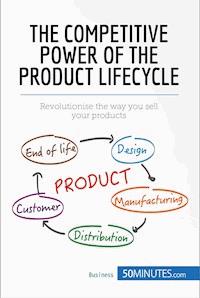
The fundamental stages behind every product
This book is a practical and accessible guide to understanding and applying the concept of product lifecycle, providing you with the essential information and saving time.
In 50 minutes you will be able to:
• Understand the theory of the product lifecycle and the features of each of the four phases: launch, growth, maturity and decline
• Learn how to make the right decisions according to the lifecycle phases of your product and how to react during the decline phase
• Identify how you can use the product lifecycle to tailor your marketing strategies and constantly innovate and improve your product in order to prolong its growth phase
ABOUT 50MINUTES.COM | Management & Marketing
50MINUTES.COM provides the tools to quickly understand the main theories and concepts that shape the economic world of today. Our publications are easy to use and they will save you time. They provide elements of theory and case studies, making them excellent guides to understand key concepts in just a few minutes. In fact, they are the starting point to take action and push your business to the next level.
Das E-Book können Sie in Legimi-Apps oder einer beliebigen App lesen, die das folgende Format unterstützen:
Seitenzahl: 22
Veröffentlichungsjahr: 2015
Ähnliche
















The competitive power of the product lifecycle
Key information
Names: product lifecycle.Uses: by conceptualising the different life stages of a product or service, the decision-maker can purposely and strategically focus their efforts on optimising the development and implementation of their products in the market. This model is most frequently used by the marketing and international commerce sectors.Why is it successful? The universality and simplicity of the model.Key words:Economies of scale (or returns to scale): a company achieves economies of scale when the increase of units produced coincides with a reduction in production costs per unit. The returns to scale are constant if output grows proportionally to financial inputs.Foreign direct investment (FDI): international capital transfers by a company wishing to expand, develop and/or install its activities abroad. This type of investment is often motivated by a promise of reducing production costs, thanks to favourable conditions in associated countries: quality raw materials, cheaper labour, new markets to penetrate, etc.Market: in economics, the market is the place where supply and demand come together.Market saturation: if a market has reached a stage where consumers are no longer willing to purchase the good or service, it has reached saturation. A market is also considered to be ‘saturated’ when there are no potential new customers.Penetration rate: expressed as a percentage, the penetration rate is the number of households out of the total population that own a defined product.Principle of comparative advantage: to increase its wealth, each country specialises in the production of goods for which it is most productive and, therefore, the most profitable. This principle was formalised in the well-known book On the Principles of Political Economy and Taxation by the British economist David Ricardo (1772-1823), published in 1817.Product: in economics, ‘product’ means any good or service that has undergone a mechanism of production.Standardisation: the production of a good that takes into account reference standards and provides production that conforms to production standards.Introduction
Since it is important for a company to strategically allocate its resources, particularly in terms of marketing, it must constantly analyse its customers’ behaviour in order to understand their perception of the products offered. While some products or services appear to increase the overall sales figure, this situation is unlikely to last as, without warning, they may experience a sudden and rapid depreciation that should be considered in order to ensure financial balance within the company’s activities.




