


Erhalten Sie Zugang zu diesem und mehr als 300000 Büchern ab EUR 5,99 monatlich.
- Herausgeber: Pocket Essentials
- Kategorie: Geisteswissenschaft
- Sprache: Englisch
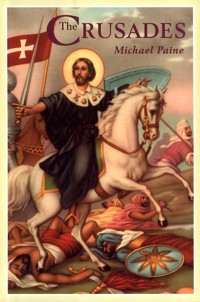
The first crusade was set in motion by Pope Urban II in 1095 and culminated in the capture of Jerusalem from the Muslims four years later. In 1291 the fall of Acre marked the loss of the last Christian enclave in the Holy Land. This Pocket Essential traces the chronology of the Crusades between these two dates and highlights the most important figures on all sides of the conflict. It covers the creation of the kingdom of Jerusalem and the other crusader states and their struggle to survive. It looks at the successes and failures of the Third Crusade and at the legendary figures of Richard the Lionheart and Saladin, explores the truth and the myths behind the orders of military monks like the Hospitallers and examines such strange historical events as the Children's Crusade and the crusader sacking of Byzantium in 1204. It also looks at the struggles of the Teutonic Knights against paganism in the Baltic. The book provides the essential information about one of the great unifying, and disunifying, forces of medieval Christendom.
Sie lesen das E-Book in den Legimi-Apps auf:
Seitenzahl: 138
Veröffentlichungsjahr: 2012
Das E-Book (TTS) können Sie hören im Abo „Legimi Premium” in Legimi-Apps auf:
Ähnliche



















The first crusade was set in motion by Pope Urban II in 1095 and culminated in the capture of Jerusalem from the Muslims four years later. In 1291 the fall of Acre marked the loss of the last Christian enclave in the Holy Land.
This Pocket Essential traces the chronology of the Crusades between these two dates and highlights the most important figures on all sides of the conflict. It covers the creation of the kingdom of Jerusalem and the other crusader states and their struggle to survive. It looks at the successes and failures of the Third Crusade and at the legendary figures of Richard the Lionheart and Saladin, explores the truth and the myths behind the orders of military monks like the Hospitallers and examines such strange historical events as the Children's Crusade and the crusader sacking of Byzantium in 1204. It also looks at the struggles of the Teutonic Knights against paganism in the Baltic.
The book provides the essential information about one of the great unifying, and disunifying, forces of medieval Christendom.
THE CRUSADES
Mike Paine
POCKET ESSENTIALS
ACKNOWLEDGEMENTS
This book would have been impossible without the entirely superior work of Sir Steven Runciman, to whose magisterial history this slight thing is vastly indebted.
On a personal and professional level, thanks are due to the immeasurable support given by my family (particularly Joshua and Caspar); Francis Cleverdon; John Shire; my editor, Nick Rennison; and fellow-traveller and greyhound-enthusiast, Sean Martin. Belated thanks also go to John Parish for his help in a previous work to the Crusades, one no less bloody and ultimately as unsuccessful, but one that would have been far less enjoyable without his contribution.
For the second edition, I would like to - in addition - thank the following: Parveen Adams, Paul Baggaley, Ian Brereton, Suparna Choudhury, Mark Cousins, Paul Gibson, Dale Grundle, Terumi Kawasaki, Vicky Lebeau, David Marriott, Martine Roberts, and Andrea Ughetto.
All errors are, needless to say, entirely my own – Deus lo volt.
CONTENTS
PROLOGUE: THE LAST CRUSADE
PART ONE: THE ISLAMIC WORLD AND THE EAST
PART TWO: THE FIRST AND SECOND CRUSADES
The Background to the First Crusade. The First Crusade. After the First Crusade: The Latin Kingdoms of the East. The Second Crusade.
PART THREE: THE THIRD AND FOURTH CRUSADES
The Background to the Third Crusade. The Third Crusade. The Children's Crusade. The Fourth Crusade.
PART FOUR: LATER CRUSADES
The Fifth Crusade. The Sixth Crusade. The Seventh Crusade.
PART FIVE: THE FALL OF ACRE AND AFTERWARDS
The Destruction of Outremer and the Fall of Acre. Afterwards.
CHRONOLOGY
RECOMMENDED READING
PROLOGUE: THE LAST CRUSADE
WASHINGTON (Reuters) - Years after President Bush set off alarm bells in the Muslim world by referring to his war against terrorism as a 'crusade', the word that Arabs equate with Christian brutality has resurfaced in a Bush campaign fund-raising letter, officials acknowledged on Sunday...
The March 3 letter, which Bush-Cheney Campaign Chairman Marc Racicot sent to new campaign charter members in Florida, lauded the Republican president for 'leading a global crusade against terrorism' while citing evidence of Bush's 'strong, steady leadership during difficult times'.
However, the word 'crusade' recalls a historical trauma for the Muslim world, which was besieged by Christian crusaders from Europe during the Middle Ages.
In the weeks following the Sept. 11, 2001, attacks on New York and Washington, Bush caused an uproar by telling reporters: 'This crusade, this war on terrorism, is going to take awhile.' Faced with worldwide consternation over the remark, the White House later said Bush regretted his use of the term.
On Sunday, Racicot said…'That letter was focused upon the single-minded efforts of the president, in coalition with other members of the international community, to undertake a mission to liberate people and protect the cause of freedom -- not just for a moment, not for a day, not for 10 years but for 100 years,' the former Montana governor said in a conference call with reporters…
Some words, some images, like wars, won’t be easily forgotten. The football terrace chant of Two World Wars and One World Cup, Basil Fawlty goose-stepping in an episode of Fawlty Towers, Spielberg’s Saving Private Ryan – the conflicts of the past refuse to slip away quietly. Turning on the radio the listener finds a discussion between academics on the question of holding present-day Germany responsible for the crimes of previous wars. In the build-up to an England-Germany football match a tabloid newspaper paints the event in military colours. Sometimes in the public arena, when the subject of Germany comes up, nagging voices urge us to remember the past. Whatever today’s Germans are like, they seem to be saying, we must always remember the crimes of their forefathers. Germany is somehow stained indelibly by these crimes. Unremarkable acts on Germany's part in the European Union are likely to be viewed by these same commentators as likewise stained by these crimes. It is assumed that unspeakable motivations lie beneath the surface. Any act of German self-interest might be a resurgence of old desires for control of Europe.
Britain, too, is not immune to these kind of accusations: some people responded to recent criticisms of the current regime in Zimbabwe as if a concern for human rights was merely a cover for old imperialist urges. Perhaps a few old men in both Germany and Britain quietly long for an imperial past – but certainly each year that passes buries more and more of these dreams.
Curiously the nightmares of old enemies outlast the memories of old allies. France may have faced Germany in the Second World War; there might be much talk of the entente cordiale. Yet a similar although milder distrust hangs over the French. Remember Napoleon!
But what has this to do with the Crusades? After so many centuries, who can really care about them besides historians, or those who enjoy a good military tale? Britain, after all, has put both the Roman and Viking invasions behind it. We appear to have forgiven Scandinavia and Italy a long time ago. What is it then about the word crusade that can cause such anxiety? Isn’t it just, as the dictionary describes it, 'an energetic and organised campaign motivated by a fervent desire for change'.
Perhaps this was George Bush’s (or at least his advisors’) understanding of the word when he famously called for one against terrorism. Yet we must reflect that the choice of the word was particularly apposite on this occasion, despite Bush’s attempts to retract it. After all, both George Bush and Tony Blair are characterised by their Christian faith, and their opponents in this case are followers of Islam? And haven’t we witnessed an invasion of parts of the Middle East by a force that is comprised of countries that are either European (Spain and Britain for example) or inheritors of a European cultural and political tradition (the United States and Australia). And weren’t both enterprises supported by the best of motivations in their times and contexts: freedom on the one hand, Christianity on the other? And surely someone in the White House must have been aware of the parallels between the leader of the most powerful country in the world calling for a crusade in 2001, and the head of the Christian church calling for a crusade nearly a thousand years before?
So one can understand why the word was used. Indeed if any activity has the right to be called a crusade in the modern age, perhaps this one is it. The problem was less the White House’s understanding of the word and more their understanding of what it meant for others.
The historical crusades mark an interesting and important period in the development of Europe. It is an early stage in the development of the European nation-state, and an early stage of the development of the involvement of Europe in the affairs of the rest of the world. In later centuries many of the states of Europe became heads of rich and powerful empires, and this wealth and power was due in a large part to their exploitation of much of the rest of the world. So we can perhaps see the Crusades as the first, tentative steps towards empire. Crusaders saw themselves as doing God’s work. In a similar fashion those who followed much later saw themselves bringing civilisation to the savages. Economic benefits accompanied both. Despite the cost in men and goods some historians have argued that the wealth coming into the Italian city-states during the crusades, through both easier trade and through conquest, helped kick-start the Italian Renaissance.
So despite the enormous passage of time, a distance that might dull the memory of the human cost to the Middle East of the Crusades, or that might reduce the anger at the memory of the invasions, the image of the Crusades as the start of a long process of exploitation, of rule by the West of the rest of the world, brings them closer to the modern era.
In another way, too, some conquests, some wars, are more easily forgiven than others. The invasions of England by the Romans, by the Vikings, by the Normans, all ended with assimilation. Indeed the great success of the Roman Empire can be attributed to the manner in which the Romans consciously sought to merge their own culture with the cultures of those they had conquered. But the Crusades were based, just as later imperialist conquests were, on ideas of segregation. The Crusaders, of different races and languages, were unified by one thing – their Christian faith. And there was no possibility of a compromise here. One was either a Christian or one was not. This was a defining moment in the historical development of the relationship between Europe and the rest of the world. On one side are the Europeans, who are Christians, and, on the other, the natives who are inferior because of the very thing that most identifies them – their religious belief.
A third development has helped the word retain its potency. The establishment of the state of Israel in 1948, whilst bearing no relationship to the acts and intents of the Crusaders, is still, in the eyes of some, the symbol of a loss which resonates with the crusading period. Israel was formed subsequent to the brief British rule of Palestine (it came under British control after the First World War following centuries of rule by the Ottoman Empire) and the main foreign source of financial support for Israel in the present day is the United States. To some Muslims these facts again echo and recall the involvement of the West in the Crusades. Such determined misreadings, as we earlier saw, are not exclusive to the Middle East.
So the word crusade remains extraordinarily potent - in some parts of the world at least. Indeed it is in the nature of history itself to support such associations between periods. Every war has its reasons, and its legacies; and one can never disentangle the past from the present with ease. Any book that brings an historical period to life does so in part by linking it to the present. Long-dead figures come alive to us when we see their similarities to us; their motivations are ones we understand. Our understanding of the terror of the Assassins felt by the inhabitants of the Crusader states - the fear that at any moment, in a public place, careless of their own survival, a terrorist might strike - is grimly brought to life by today’s terrorist attacks. On the other hand we sometimes struggle to see the similarities between the period we are living in and the past. In a few hundred years historians will look back and judge whether we are living today in crusading times. Let us at least hope that if we are, they are brought to a conclusion with greater alacrity than was the case with the original enterprise. Marc Racicot’s state of freedom that lasts for a hundred years has less comforting associations than he realises. And what will happen then?
But let us now go to the source of all this confusion.
PART ONE: THE ISLAMIC WORLD & THE EAST
THE ISLAMIC WORLD & THE EAST
Centuries of dust covered the fabulous gardens of Haroun al-Rashid, Caliph of Baghdad, Commander of the Faithful. The splendour of the barges that conveyed him down the Tigris at night with his faithful wazir, Jafar; the anonymous walks with his sword-bearer, Masrur, among his subjects in the morning market place – these tales were told by storytellers on the streets of medieval Damascus and Cairo, and in the souks of Baghdad itself. Haroun, like his Frankish contemporary Charlemagne, was a figure who slipped out from between the covers of history and passed into myth. In these stories, eventually to make their way into the Alf Layla wa-Layla (frequently translated into English as the Arabian Nights, although a more literal translation would be TheThousand Nights and One Night), the political security of al-Rashid’s reign appears in the opulent settings of palaces and merchant caravans and endless, lush detail. Whatever the realities of life at the end of the 8th century under Abbasid rule, it was, in retrospect, a golden age. To an audience in the schismatic and politically-divided Middle East of the 11th century it would not have been difficult to accept the wealth of these tales as the fruit of a Muslim world unified under one leader sanctioned by God: the Dar al-Islam.
For the divided state of Islam is at the heart of the early successes of the Crusades. The first three centuries after its irruption among the Arabs and Bedouin of the Arabian peninsula had seen Islam spread rapidly across a major part of the ancient world. Most of Arabia had converted by the death of Mohammed in AD 632. Those old Empires, Byzantine and Sassanian, which had spent so long quarrelling over their shared Near East hinterlands, were in turn driven back by these converts. Jerusalem was to surrender in 638. By 640 the Romans had lost Syria. Egypt had fallen by 646. By 651 the last Sassanian Emperor – Yazdegerd III – and the four-hundred-year-old empire he had ruled had passed into history. So territories fell in turn, as North Africa – the Maghrib – was overrun up to the very gateway to Western Europe. By the middle of the 8th century, even Iberia (modern Spain and Portugal) was occupied by an army comprised of Arabs and the Muslim converts of the Maghrib, the Berbers. There were occasional raiding parties that came over the Pyrenees. The significance of the defeat of one such party by Charles Martel (Charles the Hammer) in 732 grew with the telling until it became known as the epic battle that saved Europe from a final and complete conquest by the Infidel. But apart from these raids, this was the Islamic world, the Dar al-Islam, unrolled across the map as far as it would go.
The conquest of the Maghrib had involved the annexation of Byzantine cities such as Carthage. Beginning with the conquest of Syria, Muslim forces worried away at the eastern half of the Byzantine Empire for the next eighty years, inevitably ending up by laying siege to the capital, Byzantium, in 674 and again in 717. The earlier siege was finally repelled after four years, partly due to the Byzantines' unique weapon, Greek fire (a liquid whose recipe has been lost but can perhaps best be described as medieval napalm). The Byzantine Empire, which had thrived and spread across the coastal areas of the Mediterranean as a consequence of their uncontested command of that sea, now found itself increasingly challenged by both Islamic navies and Islamic pirates. It was, in part, the contest between these two great cultures that was to lead eventually to the First Crusade.
Who were the Byzantines? The name itself is slightly deceptive. Their origin was Roman, and their story is in part the answer to the question of what happened to the Roman Empire. The origin of Byzantium itself was as a Greek colony founded in the 8th




