


21,99 €
Mehr erfahren.
- Herausgeber: John Wiley & Sons
- Kategorie: Fachliteratur
- Sprache: Englisch
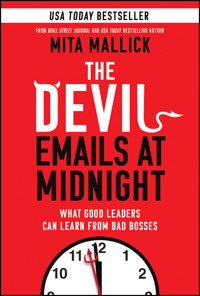
Must read exposé of the 13 types of bad bosses to help you become a better leader
In The Devil Emails at Midnight: What Good Leaders Can Learn From Bad Bosses, Mita Mallick shares how bad bosses aren't born. Bad bosses are made. They are a product of their circumstances. She shares hilarious and heartbreaking stories of the 13 bad bosses she once endured and survived, even including when she was a bad boss in her career. She challenges us both current and aspiring leaders to avoid the pitfalls of bad boss behavior.
With powerful storytelling and practical advice, she covers bad behaviors like:
- Never having time for our teams (except at midnight)
- Micromanaging and re-doing all of the team’s work
- Being completely disengaged, and disinterested in leading
- Ruling with fear in hopes of driving business results
- Loving the spotlight and taking credit for all of the work and much, much more
Sie lesen das E-Book in den Legimi-Apps auf:
Seitenzahl: 305
Veröffentlichungsjahr: 2025
Ähnliche
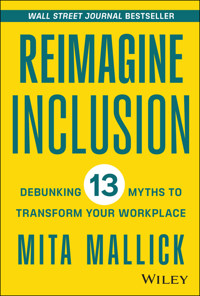


















Table of Contents
Cover
Table of Contents
Title Page
Copyright
Dedication
Introduction
Notes
1 The Boss Who Never Had Any Time for Me … Except at Midnight
Free Up Time
Focus on How to Connect
Fend Off and Stay Firm
2 The Boss Who Didn't Want to Call Me by My Name … So He Renamed Me Mohammed
Be Open to Learning
Determine When to Intervene
Hold Individuals Accountable
Notes
3 The Boss Who Fell Asleep in Almost Every Meeting
Be a Mirror
Allow Space for Them to Reveal What's Going On
Ask Them What Has to Change
Spark Their Interest in Learning Again
Create a Plan and Stick to It
Notes
4 The Boss Who Hovered Like a Helicopter and Enjoyed Redoing All of Our Work
How Do I Know If I Am Micromanaging?
How Do I Understand Why I Might Be Micromanaging?
The Biggest Mistake I Made as a First‐time Manager: Micromanaging
How Does One Stop Micromanaging?
Notes
5 The Boss Who Cried Wolf, Because Everything Was Urgent
Start by Defining What Is Urgent
Help Your Team Prioritize and Reprioritize
Protect Your Team from Fake Fire Drills
Notes
6 The Boss Who Ruled with Fear, Perched on Her Throne, Clutching Tightly to Her Crown
Why Are We Suddenly Labeling Team Members as Detractors?
How Can I Spot Signs of Burnout?
How Can I Hold Myself Accountable as a Leader?
Notes
7 The Boss Who Punished Me for Being Pregnant
Interrupt Your Own Bias Toward Pregnant Women and Mothers in the Workplace
Ask Pregnant Women and Mothers How You Can Help Support Them
Interrupt Bias to Educate Team Members
Notes
8 The Boss Who Was Incredibly Kind and Completely Incompetent at His Job
Who Do We Think Looks Like a Leader?
Are We Setting Our Leaders Up for Success?
Are They Fit to Do the Job?
Notes
9 The Boss Who Was Filled with Toxic Positivity
Bosses Who Surround Themselves with Yes People and Won't Take No for an Answer
Bosses Who Provide Excessive Compliments or Praise
Bosses Who Expect People to Always Be Happy No Matter What the Circumstances
Notes
10 The Boss Who Loved Gossiping … About Everyone
Stop and Pause Before Gossiping
Don't Engage in Gossip
Set a Culture of Transparent Communication
Notes
11 The Boss Who Loved the Spotlight and Took Credit for
All
of the Work
Do You Know What Every Team Member Is Specifically Working On?
Do You Give Team Members Opportunities to Step into the Spotlight?
Do You Create a Culture Where You Recognize Team Members' Contributions?
Notes
12 The Boss Who Questioned My Loyalty and Called Me a Rat
Stop Hoarding Talent
Be Honest and Upfront About Career Opportunities
When You Care About Someone's Career, Let Them Go
Notes
13 The Boss Who Was Grieving and Couldn't Show Up for Her Team
Give More Time Off
Expand the Definition of Family
Don't Ask for Proof of Death
Offer Grief Counseling
Take the Individual's Lead
Notes
Conclusion
Acknowledgments
About the Author
Index
End User License Agreement
Guide
Cover
Table of Contents
Title Page
Copyright
Dedication
Introduction
Begin Reading
Conclusion
Acknowledgments
About the Author
Index
End User License Agreement
Pages
iii
iv
v
1
2
3
4
5
6
7
8
9
11
12
13
14
15
16
17
18
19
20
21
22
23
24
25
26
27
28
29
30
31
32
33
34
35
36
37
38
39
41
42
43
44
45
46
47
48
49
50
51
52
53
54
55
57
58
59
60
61
62
63
64
65
66
67
68
69
70
71
73
74
75
76
77
78
79
80
81
82
83
84
85
86
87
89
90
91
92
93
94
95
96
97
98
99
100
101
102
103
105
106
107
108
109
110
111
112
113
114
115
116
117
118
119
121
122
123
124
125
126
127
128
129
130
131
132
133
134
135
136
137
138
139
140
141
142
143
144
145
146
147
149
150
151
152
153
154
155
156
157
158
159
160
161
162
163
164
165
166
167
168
169
170
171
172
173
174
175
176
177
178
179
180
181
182
183
184
185
186
187
188
189
190
191
192
193
194
195
196
197
198
199
200
201
202
203
204
205
206
217
218
219
221
222
223
224
225
226
227
FROM WALL STREET JOURNAL AND USA TODAY BEST-SELLING AUTHOR
MITA MALLICK
_____________________________________________________
THE DEVIL EMAILS AT MIDNIGHT
WHAT GOOD LEADERS CAN LEARN FROM BAD BOSSES
Copyright © 2026 by John Wiley & Sons, Inc. All rights reserved, including rights for text and data mining and training of artificial intelligence technologies or similar technologies.
Published by John Wiley & Sons, Inc., Hoboken, New Jersey.Published simultaneously in Canada.
No part of this publication may be reproduced, stored in a retrieval system, or transmitted in any form or by any means, electronic, mechanical, photocopying, recording, scanning, or otherwise, except as permitted under Section 107 or 108 of the 1976 United States Copyright Act, without either the prior written permission of the Publisher, or authorization through payment of the appropriate per‐copy fee to the Copyright Clearance Center, Inc., 222 Rosewood Drive, Danvers, MA 01923, (978) 750‐8400, fax (978) 750‐4470, or on the web at www.copyright.com. Requests to the Publisher for permission should be addressed to the Permissions Department, John Wiley & Sons, Inc., 111 River Street, Hoboken, NJ 07030, (201) 748‐6011, fax (201) 748‐6008, or online at http://www.wiley.com/go/permission.
The manufacturer's authorized representative according to the EU General Product Safety Regulation is Wiley‐VCH GmbH, Boschstr. 12, 69469 Weinheim, Germany, e‐mail: [email protected].
Trademarks: Wiley and the Wiley logo are trademarks or registered trademarks of John Wiley & Sons, Inc. and/or its affiliates in the United States and other countries and may not be used without written permission. All other trademarks are the property of their respective owners. John Wiley & Sons, Inc. is not associated with any product or vendor mentioned in this book.
Limit of Liability/Disclaimer of Warranty: While the publisher and author have used their best efforts in preparing this book, they make no representations or warranties with respect to the accuracy or completeness of the contents of this book and specifically disclaim any implied warranties of merchantability or fitness for a particular purpose. No warranty may be created or extended by sales representatives or written sales materials. The advice and strategies contained herein may not be suitable for your situation. You should consult with a professional where appropriate. Further, readers should be aware that websites listed in this work may have changed or disappeared between when this work was written and when it is read. Neither the publisher nor authors shall be liable for any loss of profit or any other commercial damages, including but not limited to special, incidental, consequential, or other damages.
For general information on our other products and services or for technical support, please contact our Customer Care Department within the United States at (800) 762‐2974, outside the United States at (317) 572‐3993 or fax (317) 572‐4002.
Wiley also publishes its books in a variety of electronic formats. Some content that appears in print may not be available in electronic formats. For more information about Wiley products, visit our web site at www.wiley.com.
Library of Congress Cataloging‐in‐Publication Data is Available:
ISBN 9781394316489 (Cloth)ISBN 9781394316496 (ePub)ISBN 9781394316502 (ePDF)
Cover Design: WileyCover Images: © coolvectormaker/Getty Images and WileyAuthor Photo: © JWJ Photography
For Jay and Priya:
Even though I am a writer, I can't quite find the words to express how much I love you both.
And someday, when you come to me and your father to complain about your bad boss, I will hand you this book.
Introduction
I have been a bad boss.
And chances are, so have you.
Over the years, I have thought about my bad boss phases. Do my colleagues still remember me as a bad boss? Did they have clever nicknames they still use for me if ever they think of me?
Was I known as Maleficent?
Perhaps I was a bit cold and aloof when I first started managing teams because you aren't supposed to be friends with your direct reports. And right, I also went through my wearing only black phase to project that I was a boss to be taken very seriously. Especially in the beauty industry.
Or micromanaging Mita?
In all fairness, I was only particular about the important details. The images on slides, the title of the slides, the content on the slides, the back‐up/appendix/cover‐our‐a$$ slides, and of course the talk track for the actual presentation. And then the dress rehearsal for the presentation before the actual presentation.
How about Medusa?
That seems a bit harsh, doesn't it? People weren't ever scared to present to me and look me directly in the eyes, were they? How could I have the power to frighten someone so badly they would be unable to speak or interact with me or others?
Over the course of my own career, I have always been quick to cleverly name some of my bad bosses. I would paint them as a Disney villain or an evil Marvel character or a scary witch from a childhood fairytale or other mythical, magical characters or powerful objects. Even my mother would know their nicknames, asking me over FaceTime “How's the Dragon Lady doing today?” after I had endured another long and torturous day of work.
My having nicknames for my bad bosses maybe was a way to cope with my attempts—and sometimes very long journey—to survive that bad boss. And, maybe as a way to separate myself from them and create some much‐needed emotional distance. Because I could never be as bad of a boss as they were.
Could I?
Because I had worked for some of the “baddest” of the bad bosses. The bad boss who fell asleep in meetings. The bad boss who took credit for all my work, and I mean all of it. The bad boss who once threw her designer shoe at my colleague. (I was able to dodge that Chanel heel and it thankfully missed my colleague's head, too.) The bad boss who told me I was a rat and demanded loyalty. The bad boss who told me I was overconfident and needed to stay in my lane. The bad boss who gossiped about me to others and told my peers I didn't really know what I was doing. The bad boss who was so nice and so profoundly incompetent, that as much as I wanted to, it was really hard to hate him.
And here's the thing I have come to discover about bad bosses. Bad bosses aren't born bad. Bad bosses are made. They are a product of their circumstances.
Some bad bosses have never been trained to lead. They are just promoted and promoted and promoted because they are great individual contributors. They have great expertise. And no one ever told them that they were now in charge of other people's careers.
Some bad bosses are deeply wounded. They say hurt people hurt people. They enjoy lashing out at others, taunting and teasing, shouting in private and in public, humiliating their team members. It can provide them a sense of temporary relief while at the same time solidifying their power.
Some bad bosses only ever worked for other bad bosses. They just model the bad behavior they witnessed and think that's the way to lead. They pick up terrible habits and never unlearn the things they aren't supposed to do at work. (Or at home, for that matter.)
Some bad bosses don't have the expertise to do their jobs. They managed to successfully keep failing up. They don't know how to set strategy, give direction, when to start, stop, or continue the work. Sometimes they are incompetent and mean, which makes them easier to detest. When they are incompetent and nice, well, that makes things a bit more complicated.
Some bad bosses can't operate without micromanaging every single little detail. Sometimes they don't know what they are supposed to be doing, so they do your job for you. Sometimes they don't trust you to do your job, so they do your job for you. Sometimes they control all of the details at work and do your job because they are feeling a loss of control of their lives outside of their work.
Some bad bosses are temporarily bad. They have been passed up for a promotion, again. Or they are being horribly bullied by their own bad boss. Or they don't have much power or influence or respect of their peers at work. Or their entire identity and sense of self‐worth is tied to this one job. Or they are overworked and under‐resourced. Or they have no idea what to do next because their own boss can't make any decisions. Or they have lost someone they love, and they are struggling with grief.
I have experienced each and every one of those situations as the boss, and I know I am not alone. Once upon a time, I too was that bad boss. And since those bad boss moments, I have been on a journey to avoid being the bad boss. To truly understand and accept that my behavior can negatively or positively affect someone else's experience at work and affect their overall lives and well‐being.
I once read on LinkedIn that your boss can have the most significant impact on your mental health. More than your spouse or partner. More than your parents. More than your children. More than your best friend. So, imagine the difference between a bad boss and a good leader. Imagine the difference a bad boss versus a good leader can have on our workplaces. Some of you don't have to imagine it; you have lived it. You have survived the bad boss to get to the other side of what it feels like to be appreciated, valued, recognized, and seen in our workplaces. To work with people who don't just tolerate you (or worse, harm you) but they celebrate you. They elevate you. They lift you up. They cheer you on. They coach you through mistakes. Because that's what good bosses do. And that's when bosses no longer are bosses. They become good leaders. Some even go on to be great.
In my first book, Reimagine Inclusion: Debunking 13 Myths to Transform Your Workplace, I talked about why inclusion matters so much in our workplaces. Many of us go to work to collect our paychecks and pay our bills. Some of us also enjoy what we do and are building our careers on our expertise, and helping others build their careers, too. And we spend more time at work than in our homes and in our communities. In fact, the average person will spend one‐third of their life at work, about 90,000 hours.1 We spend too much time at work not to be included.
And what does inclusion in the workplace even mean?
When I am included at work, I know my work is valued. My voice, my contributions, my expertise—all of it matters. I am recognized for what I do on my team and in my organization, and people see me. I have the ability to reach my potential and my company can then reach its potential. Because I feel included, I will go above and beyond without being asked to do so.
And the individual who can have the biggest impact on whether or not we feel included in our workplaces?
Our boss.
Simply put, because the boss holds enormous power in our organizations, whether we like it or not, whether or not they have earned it or deserve it. And our bosses aren't the only ones with authority in our lives who can make us feel excluded, like we don't belong, like we don't matter.
Consider the following scenarios. Have you ever experienced these particular situations, or can you imagine experiencing them with individuals with some type of authority? How would it make you feel?
When the teacher never calls on you when you raise your hand
When the police officer doesn't believe you were robbed
When the coach keeps you benched despite your talent
When the host of the party who invited you ignores you
When the doctor dismisses your symptoms
Just like these scenarios, bad bosses can also illicit very similar feelings for us. Because this is what most bad bosses have in common:
They don't see us.
They invalidate our experiences.
They dismiss, minimize, or worse, try to chip away at us.
They don't see our value or our worth.
They can make us feel like what we do at work doesn't matter.
And that ultimately makes us feel that we don't matter to them or the organization.
A bad boss can break inclusion. A bad boss can break trust. A bad boss can break productivity. A bad boss can break creativity and innovation. A bad boss can break confidence, morale, and any kind of joy we find at work.
Ultimately, a bad boss can break our spirits.
Let me be clear: this book isn't for the horrible, despised, worst of the worst of the bad bosses. It's not for the ones who have caused so much hurt and harm and wreaked absolute havoc on their organizations. It's not for the ones who have made headlines and contributed to destroying their companies' reputations as well as their own. It's not for the ones who know they are bad bosses and don't care. It's not for the ones who believe “bad bosses” are a necessary evil to growing a company's bottom line.
Those individuals will likely never read this book.
This book is for the rest of us. Because truth be told, we all have the capability, the potential, the possibility of becoming a bad boss. Whether we are just starting early in our career, or we are entering the C‐suite, the environment we operate in, the circumstances we find ourselves in, and whom we work with every single day can tip the scales from “good boss” to “bad boss.” And, what's happening in our homes can seep into our workplaces, as the line between home and work continues to get blurred. And in some cases, that line disappears all together.
I have worked in large public companies. I have worked in smaller, privately held companies. I have coached hundreds upon hundreds of leaders. I have been the confidant to many a CEO, founder, and board member. I have worked across functions, including product development and marketing and human resources, in global functions and in smaller, regional markets. I have worked across many different industries, including beauty, food and beverage, software as a service, and more. I have spent time in the public sector, private sector, and also with nonprofit organizations. And what I have discovered is this: bad bosses can exist anywhere. While some industries may have a reputation for creating exceptionally bad bosses, the truth is that they can be working and failing at leading anywhere, at any time.
I'll share 13 examples of bad bosses many of us have had to survive firsthand. Each chapter will open with a powerful bad boss story that I have experienced during my career in Corporate America. We'll go through a number of bad boss behaviors including micromanaging, ruling with fear, being completely disengaged, gossiping, stealing credit for work, creating constant fire drills, spreading toxic positivity, and much more.
Then we'll analyze each of these scenarios, asking ourselves what makes them so bad. We'll do self‐reflective exercises to get to the root of why bad bosses may behave this way and review practical tips on how we can show up as good, and maybe even great, leaders for our teams and our organizations.
As you read these stories, I hope it helps you reflect on how you are developing your own leadership style and how you want to show up for your teams. I hope what you learn here also helps you watch for what's happening on your own teams, and how you can coach and develop the next generation of good leaders in our organizations. Ultimately, this book is a resource guide for aspiring people leaders, current people leaders, and anyone committed to building inclusive, healthy, and positive workplaces where we can all contribute and thrive.
I have changed the details, names, and places to protect the identities of these bad bosses. I genuinely hope that many of these bad bosses are no longer bad and that it was a temporary phase for them, like it was for me. My intent is not to shame, name, blame, or demonize any of them. My intent is to share these examples so the rest of us don't repeat the mistakes bad bosses make. And that we become good leaders, and even go on to be great ones.
Throughout this book, I will also share my lived experience as a woman of color. I have had dozens on dozens on dozens of bosses in my career, and, quite frankly, I have lost count (particularly in those years when my boss left the organization, and I got another new boss, and in some cases, another new boss after that, too). Here's the thing: anyone can be a bad boss. And I also acknowledge we can be quick to label an individual a bad boss given certain biases we may have about that individual and the community they belong to. I am sure people have also been quick to label me as a bad boss, even in moments when the label may not have been earned. As we go through stories and examples, I will focus on the behaviors of bad bosses, and help you challenge your biases.
Bosses have so much power over us. Over our teams. And in our workplaces. And we, as bosses, have so much power over others. And ultimately, whether we realize this or not, we can often single‐handedly determine the experience those around us have.
Bosses can make or break inclusion. It's not the policies, procedures, or employee handbooks ultimately that dictate and define our workplace culture. Our culture becomes defined by what each and every one of us are doing when no one is looking over our shoulders. And this is particularly true for the boss who can have so much power in our organizations, hopefully yielding that power for good.
Bad bosses aren't born bad. Bad bosses are made. We become a product of our circumstances. Some of these bad boss behaviors don't just magically happen or appear. Some of these bad boss behaviors are in reaction to experiences from our childhood. Some of these bad boss behaviors are learned from bad bosses we once upon time reported to. And some of these bad boss behaviors are a reaction to the current environment we are operating in. We can become so desperate to survive our circumstances we slowly become that bad boss we had once vowed we would never be.
So, let's remember that the devil emails at midnight.
Let's make sure that devil doesn't become you.
Notes
1.
Andrew Naber, “One Third of Your Life Is Spent at Work,” n.d.,
https://www.gettysburg.edu/news/stories?id=79db7b34-630c-4f49-ad32-4ab9ea48e72b
.
1The Boss Who Never Had Any Time for Me … Except at Midnight
I was so excited to meet my new boss.
Apparently, the feeling wasn't mutual.
I had landed a summer internship at one of the most coveted Fortune 500 employers. Hundreds of business school students from around the world were vying to have this big‐name employer on their résumé. I knew being at this company would be a career game changer, so I was determined to get a spot in that intern class.
I missed my MBA classes at Duke University to participate in a week‐long interview process at the company's campus, which mirrored a small town (including artificial ponds, a dry cleaner, an on‐site childcare center, and more). I participated in marketing case study presentations, workshops on networking and crafting résumés, and career coffee chats with managers and division presidents. I was assigned to a team with four other students from other schools, whom I had never met. We were given a project to complete in less than 48 hours, culminating in a final presentation to a panel of leaders, who served as judges. We then had a final day of seven one‐on‐one interviews before we were transported back in large white vans to the airport.
I landed and marched back into my apartment in Durham, inhaled a stale bag of Cheetos, collapsed onto the bed, and slept for a solid 11 hours.
That following week, when I was back in classes, rushing from statistics to corporate strategy, I received a voicemail from a recruiter letting me know that I was in. I was officially a summer intern! I couldn't wait to get started and to meet my boss for the summer.
Our internship program kicked off on a sunny Monday in June. After a long day of onboarding sessions, we all piled into the cafeteria. We were greeted by bouncy balloons, lots of strangers smiling and waving, and a make‐your‐own sundae bar. I anxiously swirled around some rainbow sprinkles with the melted vanilla ice cream as I peered around for my new boss. I felt a tap on my shoulder.
“Hi, Mita. Welcome to campus. I'm Jeff, here to bring you up to the third floor.”
“Hi,” I said smiling. “Are you …”
“No,” he laughed. “I'm not your boss for the summer. She didn't have time to come welcome you today, so you are stuck with me. Come on,” he said, waving me on and instructing me to dump my melted sundae in the trash along the way. While everyone else's boss came to the intern welcome reception, my boss was apparently just too busy to come and greet me.
Back at his desk, he handed me an onboarding binder that included my summer internship project. “I'm sorry you got stuck with the Devil as your manager. At least it's only for this summer.”
“The … Devil … ?” I asked confused.
“Her last name rhymes with the Devil, so that's why we call her that. She might be one of the worst bosses I have ever had.”
I stared at the words Welcome Mita on my onboarding binder. My stomach sank. I wished I had finished that ice cream.
Jeff was one of three marketing managers on the Devil's team. Jeff resigned a week later. The second marketing manager, Tessa, left two weeks after Jeff. And then Tate, the third marketing manager, was rotated to another division the same week Tessa left. I was the only one left on the Devil's team. The summer intern.
Jeff's parting words to me were this: “She will never have time for you. She doesn't have time for anyone. The Devil will only make time for you at midnight. So, whatever you do, don't fall into the trap of emailing her back at night. Good luck.”
Jeff's words came back to haunt me approximately 10 days later. With her entire team of marketing managers gone, the Devil started emailing me. At midnight. It was apparently the only time she had for me given her very busy schedule.
At first it was one or two or three emails. They would come in a flurry, one right after another, between the hours of 10 p.m. and 12 a.m. and sometimes later, when she appeared to be frantically clearing out her inbox. I tried to stay firm and not respond when the emails did pop up on my phone. The first few nights, I ignored them and went back to sleep. But my anxiety grew that I wouldn't get a full‐time offer with the clock counting down my limited time as an intern. I started responding to her emails in the late evening hours.
With the Devil's entire team now gone, I was the only one left standing. I arrived at 7:30 a.m. sharp in the office, pulling into the campus parking lot and pretty much the same spot day after day. I would grab my Earl Gray tea from the cafeteria and head straight to my desk. During the hours of 8 a.m. to 5 p.m., I was the team's only marketing manager. I was doing all the full‐time work of the three team members who had escaped her. Writing creative briefs, working with supply chain on cost savings initiatives, collaborating with other brands on promotions across category, signing off on product samples, working with finance on price increases and more. I zipped back and forth to and from meetings, raced to grab my lunch before the cafeteria closed or be stuck with a dreaded Kashi bar, crossed my legs tight and held my pee during meetings while feverishly taking notes, pecked away at the keyboard to send follow‐up emails, and ran back to my desk to get samples. All the while, I waited to bump into her. To see her. To get a smile, a wave, a hello, a thank‐you, anything to make me feel like she saw me, and I was appreciated.
I was like a golden retriever, pacing around the Devil's office, waiting for her to arrive in the mornings. I would eventually have to leave for a meeting, and then circle back to her office again in search of her. I would see her office door closed and her assistant would tell me to come back in 15 minutes. Only to return and find she was gone again. I would watch her race by my desk in a flurry and I would try to chase after her. I even tried to chase her out of the building one evening and she was just too quick for me, driving off in her car before I could say hello. I would wave at her in the cafeteria, try to follow her as she headed to a meeting, and try to go by her office to see if she was back in there. I was loyal and desperate for time with her in the office.
Most evenings, I would head to a summer intern event sponsored by the company, where I heard others talk about their incredible summers and their supportive managers. I would chug a cheap glass of Chardonnay and head back home. I would work on my summer internship project from 8 p.m. onwards. The final project presentation in front of the intern judging committee would determine if I would get an offer or not. As I worked late into the evening hours on my project, the pings would begin in my inbox. One by one emails from the Devil, sometimes a dozen or more at a time.
“Can you reach out to Ariel?”
“This invoice needs to be paid.”
“Samples need to be sent out to buyers no later than Friday.”
“The share report is now due on Wednesdays. See attached for format changes.”
“See email chain below. Deck inputs due on Tuesday by noon.”
Sometimes it was a direct request. Sometimes there was an FYI. Sometimes there was no detail. Just emails forwarded along, and I had to play detective to figure out what to do.
There was never a Hi, hello, how are you doing, are you enjoying your summer internship? or How can I be helping you?
I worked at that company, working for the Devil, for 11 weeks for that summer internship.
In that time, I had two 15‐minute meetings with my boss.
In the first meeting, she finally met with me five weeks into my internship. She didn't ask me how I was doing, or how the internship was going. She rattled off about 10 items she needed me to complete by the end of the week, with no direction or explanation. I scrambled to type as fast as I could all the requests. She then got a phone call and her assistant escorted me out of her office.
In the second meeting, which was the second to last week of my internship, she got up and left after seven minutes of me asking for feedback on my final internship presentation. She provided input on two slides. And then she said she had something more important to attend to. More important than helping to review my materials, which would decide whether or not I would get a full‐time offer to join the company.
She then attended my final intern presentation and spent most of the time scrolling on her phone.
And finally, she had a 30 minute lunch with me at the company cafeteria during my last week and didn't offer to pay for my $5.25 turkey and Swiss cheese wrap. Other summer interns had their bosses take them out for lunch at a fancy Italian restaurant off campus.
At that lunch, she asked me to stay on full‐time. “You don't even have to finish your MBA program,” she laughed. “You can just join my team right now and dive into your marketing career.”
I stared at her incredulously. I took a big bite of my wrap as she chattered on and on. This was the most time I ever spent with the Devil, and I witnessed the charm ooze right out of her. She was animated, telling me all the reasons to join her full‐time right now and leave my MBA program.
“Thank you for the opportunity,” I said wiping the mayonnaise off my mouth after she finally finished talking. “I'll be headed back next week to school.”
Those 11 weeks of surviving the Devil paid off. I ended up getting a full‐time offer to return to the company. My obsession with getting that company name on my résumé was closer to becoming a reality. And in a small silver lining, I received a text from Jeff several months later that said: “She's gone.”
By the time I returned, the Devil was no longer working there.
********
Years later, the question I continue to ponder is this: Why didn't she have time for me?
Time is the most precious commodity we have. It's the one thing we never seem to have enough of. We are bombarded with productivity hacks, systems, techniques, and advice from self‐help gurus on how to squeeze more time out of our days. It's the one thing we complain quietly or loudly about in our relationships: “You never have time for me.” It's the one thing we know is finite and yet we often stay in denial that for each and every one of us, time will run out.




