


74,99 €
Mehr erfahren.
- Herausgeber: John Wiley & Sons
- Kategorie: Geisteswissenschaft
- Sprache: Englisch
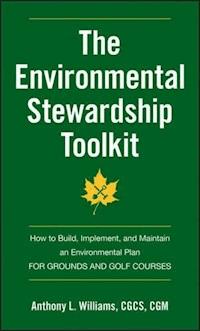
A comprehensive, one-stop guide to environmental stewardship for golf courses and grounds This highly practical guide covers the full complement of tools green industry professionals need to create a successful environmental program on golf courses and grounds. Written by a leading golf course superintendent and grounds manager, The Environmental Stewardship Toolkit offers a comprehensive analysis of all relevant issues, including environmental management, resource management, community engagement, and document management. The emphasis throughout is on the development of programs that are both sustainable and practical, combining the protection and renewal of environmental systems with a workable business plan. Regulatory issues as well as concerns of owners, customers, and the community at large are also addressed. Clear, pragmatic, up-to-the-minute coverage includes: * Numerous illustrations, photos, and customizable templates and checklists that readers can use in their own projects * A system for sorting projects into green, greener, and greenest in order to tailor implementation for different budgets and project complexity * An in-depth look at site assessment, water quality and conservation, integrated pest management, and wildlife habitat management * Guidance for developing green public relations and communications skills to promote the project in the community * Field-tested procedures for building a state-of-the art documentation system for capturing, organizing, and disseminating information A must-read for golf course superintendents, irrigation specialists, turfgrass specialists, and grounds managers, The Environmental Stewardship Toolkit is also useful for landscape architects and designers, grounds owners, developers, builders, contractors, and anyone wishing to be on the cutting edge of sustainability in the green industry.
Sie lesen das E-Book in den Legimi-Apps auf:
Seitenzahl: 408
Veröffentlichungsjahr: 2012
Ähnliche




















Contents
Foreword
Acknowledgments
Section 1: Environmental Management
Chapter 1: Building a Green Team
How to Establish an Environmental Committee
Where Do You Look to Begin Filling Positions in Your Committee?
How Many People Should Be on Your Environmental Committee?
Summary
Chapter 2: The Environmental Plan: Site Assessment
The Site Assessment
Site Assessment Features for Golf Courses
Summary
Chapter 3: The Environmental Plan: Agronomic Programs
Soil Structure and Edaphology
Essential Elements to “All” Plant Growth
Soil Samples and Soil Testing
Tissue Samples
Cultural Practices for Turf
What Is a Carbon Footprint and Why Is It Mentioned Here?
Summary
Chapter 4: The Environmental Plan: Water Quality and Conservation
Water Basics
Water Quality Programs and Strategies
Summary
Chapter 5: The Environmental Plan: Wildlife and Habitat Management
Developing a Wildlife Inventory
Guidelines for Enhancing and Maintaining Wildlife Habitat
Summary
Chapter 6: The Environmental Plan: Integrated Pest Management
Protecting Agronomic Assets through IPM
Summary
Section One: Environmental Management Conclusions
Action Steps: Green, Greener, Greenest
Section 2: Resource Management
Chapter 7: Accounting and Financial Processes
The Accounting Equation
Specific Financial Documents
Using Comparative Reports
Summary
Chapter 8: Budget Reduction and Contingency Strategies
Environmental Programs That Cut Expenses and Protect Assets
Partnerships Increase the Effectiveness of Recycling Programs
Summary
Chapter 9: Human Resources Management
Employee Recruitment and Hiring Practices
Achieving More with Less
Safety Programs and Resource Management
Summary
Section Two: Resource Management Conclusions
Action Steps: Green, Greener, Greenest
Section 3: Environomic Community Engagement and Green Public Relations
Chapter 10: Environomic Community Engagement
The Role of the Green Industry Professional in an Environomic Community Engagement Program
Simple Steps for Starting an Environomic Community Engagement Program
Summary
Chapter 11: Public Relations and the Green Industry Professional
Communicating to and with Target Audiences
Public Relations and the Green Industry Professional
Creating a “Beyond the Property” Program
Crafting Your Story
Ten Steps to Creating and Sustaining a Successful Beyond the Property Public Relations Program
Summary
Chapter 12: Photography’s Role in Green Public Relations
Digital Camera Facts for the Green Industry Professional
Learning Another Language (or Two)
The Future of Community Engagement
Summary
Section Three: Environomic Community Engagement and Green Public Relations Conclusions
Action Steps: Green, Greener, Greenest
Section 4: Documentation Management
Chapter 13: Essential Green Industry Documentation
How Do I Begin to Create a Personal Documentation List?
Transforming Your Personal Documentation List into a Personal Documentation Program
Documentation: Tools of the Trade
The Daily Work Log
Weather Reports
Agronomic Reports and Documentation
Water Quality Tests
Disease and Nematode Sampling
Chemical Application Records
The Right to Know Center and Safety Training Documents
Licenses and Miscellaneous Documents
Summary
Chapter 14: Case Study Documentation and Uses
What Exactly Does a Case Study Look Like?
Environmentally Focused Documentation: the Building Blocks of Case Studies
Water Use and Irrigation Documents
Summary
Section Four: Documentation Management Conclusions
Action Steps: Green, Greener, Greenest
Section 5: Putting It All Together: Synergy and the Green Industry Professional
Chapter 15: Career Focus and Professional Image
Time Horizons, Career Focus, and the Green Industry Professional
Stretch Goals and Link Goals
Summary
Chapter 16: Professional Associations and Networking
American Nursery and Landscape Association
American Society of Golf Course Architects
American Society of Landscape Architects
Golf Course Builders Association of America
Golf Course Superintendents Association of America
Irrigation Association
International Society of Arboriculture
Professional Grounds Management Society
Professional Landcare Network (PLANET)
Sports Turf Managers Association
The Green Industry Ambassador
Summary
Chapter 17: Roadmaps for Success—Personal Success Stories from the Green Industry
Delany, Tom
Dinelli, F. Dan
Farren, Bob
Finney, Shelia
Hiers, Tim
Higgins, Monica
Jackson, Joseph B
Maples, Palmer Jr.
Mangum, Ken
Mongeon, Roger
Newell, Ellen
O’Donnell, Kevin
Phipps, David
Pinson, Bob
Scott, Bob
Toma, George P.
Van Etten, John
Van Haasteren, George
Williams, Bruce R.
Summary
Section Five: Synergy and The Green Industry Professional Conclusions
Action Steps: Green, Greener, Greenest
Index
Copyright © 2012 by John Wiley & Sons, Inc. All rights reserved.
Published by John Wiley & Sons, Inc., Hoboken, New Jersey.
Published simultaneously in Canada.
No part of this publication may be reproduced, stored in a retrieval system, or transmitted in any form or by any means, electronic, mechanical, photocopying, recording, scanning, or otherwise, except as permitted under Section 107 or 108 of the 1976 United States Copyright Act, without either the prior written permission of the Publisher, or authorization through payment of the appropriate per-copy fee to the Copyright Clearance Center, Inc., 222 Rosewood Drive, Danvers, MA 01923, 978-750-8400, fax 978-646-8600, or on the web at www.copyright.com. Requests to the Publisher for permission should be addressed to the Permissions Department, John Wiley & Sons, Inc., 111 River Street, Hoboken, NJ 07030, 201-748-6011, fax 201-748-6008, or online at http://www.wiley.com/go/permissions.
Limit of Liability/Disclaimer of Warranty: While the publisher and author have used their best efforts in preparing this book, they make no representations or warranties with respect to the accuracy or completeness of the contents of this book and specifically disclaim any implied warranties of merchantability or fitness for a particular purpose. No warranty may be created or extended by sales representatives or written sales materials. The advice and strategies contained herein may not be suitable for your situation. You should consult with a professional where appropriate. Neither the publisher nor the author shall be liable for damages arising herefrom.
For general information on our other products and services, or technical support, please contact our Customer Care Department within the United States at 800-762-2974, outside the United States at 317-572-3993 or fax 317-572-4002.
Wiley publishes in a variety of print and electronic formats and by print-on-demand. Some material included with standard print versions of this book may not be included in e-books or in print-on-demand. If this book refers to media such as a CD or DVD that is not included in the version you purchased, you may download this material at http://booksupport.wiley.com. For more information about Wiley products, visit www.wiley.com.
Library of Congress Cataloging-in-Publication Data:
Williams, Anthony, 1964 April 4-
The environmental stewardship toolkit : how to build, implement, and maintain an environmental plan for grounds and golf courses / Anthony Williams.
p. cm.
Includes index.
ISBN 978-0-470-63516-2 (pbk.); ISBN 978-1-118-19782-0 (ebk); ISBN 978-1-118-19783-7 (ebk); ISBN 978-1-118-20856-4 (ebk); ISBN 978-1-118-20859-5 (ebk); ISBN 978-1-118-20860-1 (ebk)
1. Golf courses—Environmental aspects. 2. Golf courses—Maintenance. I. Title.
GV975.W55 2012
796.352069—dc23
2011037550
This book is dedicated to everyone who is striving to become a better environmental steward; from novice to master, we are all connected.
Foreword
DON’T YOU JUST LOVE WHEN YOU meet someone who is living their life’s purpose to the fullest? They exude energy. They work to master a subject or skill on a seemingly daily basis, but do so with ease. Their curiosity is insatiable. And they commit to educating and sharing their experience with others, so their work can have greater, lasting impact. Turn the page, then, and you will meet Anthony Williams, who is living his life’s purpose. He invites you to accompany him in the pursuit of sustainability.
We at Marriott International—in order to serve our guests, communities, business partners, and employees whom we call associates—are united in our purpose and core values, one of which is “serve our world.” Through the Environmental Stewardship Toolkit, author Anthony Williams, who has a career spanning more than 25 years with Marriott, shows how he “serves our world” through our company’s quest to conserve precious natural resources and achieve greater environmental sustainability.
Anthony has served as Director of Grounds at two Marriott hotel resorts. His stewardship and service have earned many accolades; Anthony was twice named Marriott Golf Grounds Manager of the Year, National Public Course and Overall winner of the Environmental Leaders in Golf Contest. In 2010, he was honored with the Golf Course Superintendents Association of America’s highest environmental honor, the President’s Award for Environmental Stewardship. He was also selected as the 2011 Environmental Communicator of the Year for the Turf and Ornamental Communicators Association.
Anthony treasures the J.W. Marriott Award of Excellence he earned in 2008; it is Marriott’s highest honor, and it is presented by our Chairman and CEO, J.W. “Bill” Marriott, Jr. I was in the audience the night of that event, when Anthony received his Award of Excellence and quoted a Native American proverb, “we do not inherit the Earth from our parents, we borrow it from our children.”
Anthony has been a life-long environmental advocate and teacher. His intention is that he, through this book, will accompany you throughout your journey of environmental stewardship – whether you are a novice or a seasoned practitioner. The novice will gather a strong foundation of concepts and skills that will provide the insights that will launch their careers in the green industry. Critical core skills examined include Water Conservation, Integrated Pest Management, Documentation Management and Career Planning. The seasoned practitioner will find career-boosting tools ranging from Environmental Planning, Advanced-Environomic Theory, Green Public Relations, Goal Setting and Time Management presented in an easy to implement style to guide them from practitioner to innovator. The book also features Green, Greener and Greenest action steps in each section to allow the reader at any level of stewardship to immediately have a positive impact their world.
And now, I welcome you to join Anthony, a true energy source, on his path toward greater sustainability. May you enjoy all your travels to wonderful destinations.
Mari L. Snyder
Vice President, Corporate Social Responsibility & Member, Marriott’s Global Green Council
Marriott International, Inc.
Acknowledgments
I WOULD LIKE TO THANK MY DAD (Byron) and my Granddad (Ira) for teaching me the core values that have guided my life. To live a strong Christian faith and cultivate a deep understanding that, if you take care of the land, then the land will take care of you. Environmental Stewardship has been an heirloom in our family for generations.
My heartfelt thanks go to my many mentors for their support and guidance in this and so many projects. Thank you all for showing me the way, Hanshi Lou Angel, the associates of Marriott International, Marriott Golf and, of course, our leader J. W. Marriott Jr., the staff at Audubon International, Greg Lyman, Mark Johnson and the visionaries at the Environmental Institute for Golf, everyone at the Golf Course Superintendents Association of America and the Professional Grounds Management Society, my “green” family at the Georgia GCSA, Seth Jones for carving a writer from a pair of weathered boots, and Dr. Eddie Seagle and Abraham Baldwin Agricultural College for supporting my lifelong education.
I also owe a debt of gratitude to the staff at Evergreen Marriott Conference Resort, Stone Mountain Golf Club by Marriott, Stone Mountain Inn, Stone Mountain Park, and the Stouffer/Renaissance PineIsle Resort. Together we have helped shape the green industry.
I must extend a heartfelt thank you to my family especially my wife, Phyllis, and my son, Luke, who continue to inspire me to undertake epic causes through everyday actions. To my friends Max and Miko, who never got tired of watching the book take shape, thank you.
Finally, I extend an epic thank you to the “Dream Team” at Wiley. Margaret, Mike, and company; you are simply the best. Your time, talents, and vision made the dream of this book a reality.
Anthony L. Williams
SECTION 1
Environmental Management
ONE OF THE MOST PROMINENT ROLES OF A GREEN INDUSTRY PROFESSIONAL is to be an environmental steward. This role by definition requires the green industry professional to identify, quantify, protect, and oversee a variety of interconnected living organisms and physical assets. Environmental management refers to the skills and programs that make up the core activities used by environmental stewards in the course of managing their respective green space(s). This section will introduce many concepts, but there are three terms that collectively will affect the green industry professional’s ability to apply the information successfully. They are sustainability, environomics, and transparency.
Environmental programs must be sustainable and practical in order to be successful. Sustainability is a key term within the environmental movement and has become complex in the many ways different organizations use this term. In this chapter, we will define sustainability simply as the ability to renew, perpetuate, and replicate environmental processes such as shoreline buffers to protect water quality, nest boxes, feeders and bird baths to enhance wildlife habitat, and Integrated pest management programs to reduce chemical use. Now, let’s move into the most asked question when it comes to environmental management programs.
One of the core concepts of this book is environomics. Environomics is the synergy created by blending cutting-edge environmental stewardship within a progressive business plan. The environomic management philosophy is a powerful business model within the green industry because it protects the environment and agronomic assets, creates a series of detailed documents that can guide business decisions, and builds relationships that focus on win-win outcomes. In simple terms, environomics refers to the combination of strong economics and environmental stewardship that allows the sum of the parts to be greater than their individual value, 1 + 1 = 3.
Transparency, as it relates to environmental management, is the open communication of your environomic programs. This often entails the use of various media or third party validation. The old saying, “we have nothing to hide” applies here. The role transparency plays in environmental management is one of full disclosure, making every reasonable attempt to provide proof of the value of your programs to a variety of interested parties and stakeholders such as regulatory agencies, corporate management, owners/shareholders, local residents, industry associations, and environmental organizations.
This section marks the process of establishment of an environmental management program. It is organized to flow in sequence from the first small steps of organized stewardship to the more complex blending of science and art that often result from a comprehensive environomic plan. The end of this section features a detailed list of projects and programs that are separated into three categories: green, greener, and greenest. The green lists represent basic environomic projects that are generally less expensive and relatively easy to initiate. The greener lists include intermediate-level environomic projects. The greenest lists comprise more complex environomic programs that reflect a deeper ongoing set of goals and objectives.
Chapter 1
Building a Green Team
The most important thing to do when developing or evaluating an environmental management program is to embrace learning and organize the order of action early and often by involving experts and local stakeholders as early as possible in the process. This is best accomplished by establishing an environmental committee or “green team” for your operation as your first priority. This first step will allow you to maximize the collaboration aspect of your environmental program. Through collaboration you will generate ideas and synergy that you could never accomplish on your own. The flow of the environmental management planning process should start with you and then go to your green team, then to your staff and other stakeholders to identify programs that will in turn lead to projects. This process is often referred to as the four P’s of environmental stewardship. They are People, Planning, Programs, and Projects in that order. Using the four P’s can keep you focused during the early stages of developing your environmental management program and help you gather valuable resources from each area.
How to Establish an Environmental Committee
The first order of business when establishing your environmental committee is to choose a chairman. If you are the senior green industry professional or driving force for environomic excellence at your operation, congratulations; you have just selected yourself as chairman! After all, you are the best and most logical choice to be chairman. You are the local expert, and as the person of contact, you will be the center of this group. Do not let any lack of title, credentials, or accolades be a deterrent to assuming the role as chairman and recruiter for your environmental committee.
At this moment you are a committee of one, and some important questions will naturally arise. Some of these questions include the following. How many people will serve on your environmental committee? What skills and experience should they have? Are there any political issues that will affect the committee and its work? How often will the committee meet? Where will the committee meet? Who will track the committee’s progress? What are the committee goals and expectations? These questions and many others must be clarified and answered, and it takes time and effort to do this well. Perhaps it is the time required for this step that causes many green industry professionals to leap ahead impatiently and start implementing projects before they have adequately developed any comprehensive information or program guidelines. Do not make this mistake. Refer to the four P’s of environmental stewardship and be a courageous chairman. Let’s take a look at the processes involved in selecting and developing members of an environmental committee.
Where Do You Look to Begin Filling Positions in Your Committee?
As chairman of the environmental committee, you are responsible for identifying and recruiting all of the members of the environmental committee. You must find committee members who can bring a variety of skills to your environmental efforts now and in the future. These people are out there, but where? First, look inside your operation for committee members. These people will bring property and operational knowledge and require very little orientation or additional training. Often, to gather specialized environmental skills for your environmental committee, you will need to expand your search to include community and industry leaders. There are two types of environmental committee members, categorized according to their affiliation to the property(s). The first type is staff members or internal environmental committee members. These people will be from within your operation and will likely all be paid for their time and talents utilized by the environmental committee. The second type of environmental committee members will be external environmental committee members. These people will come from a variety of backgrounds outside your business operation and will likely be volunteers. There are no strict rules in this situation, so it will fall to you, taking into consideration any budget guidelines, to establish the ratio between internal and external committee members. It is also a good time to point out that you may need to reciprocate with other green industry professionals in your area by agreeing to serve on their green team or similar group in return for their service on yours. This is a great form of environmental collaboration and creates a win-win situation for all involved.
Selecting Internal Environmental Committee Members
It is a good idea to send out a call for service or post a formal sign-up sheet to gauge interest in serving on the committee prior to forming any preconceived notions on your part. These two documents work well together, with one posted in the office and the other sent by e-mail. This is a very comprehensive way to identify all interested parties without any guesswork. When you have the lists of potential committee members, you will need to evaluate each person’s qualifications. Try to identify key staff members with versatile skill sets and a strong commitment to the property and the environment.
Perhaps the hardest choice when forming your environmental committee is reviewing your operation’s staff and deciding who should be included on your environmental committee. There is no doubt that there are no easy choices here. You should definitely focus on qualifications but there may also be some office politics that may have an impact. For example, leaving your controller off of your environmental committee and then asking him for additional funding later in the year can be problematic, as can assuming that the general manager is too busy to serve on the committee and then finding out that he or she took it personally not being included as part of an award-winning environmental program. Be mindful of friendships and work ethic because this will be a working committee and sometimes more can actually be less. You cannot always be sure that adding another member to your environmental committee will result in accomplishing more work. Here is a list of potentially good choices to serve as internal committee members.
Possible internal environmental committee members
General managerAdministrative assistantMechanic (lead)Controller/accounting managerBuilding maintenance manager/supervisorDirector of golfLandscape manager/supervisorArchitect/designerAssistant managersHuman resources manager/specialistCorporate/division manager (if part of a larger company or corporation)HorticulturalistArboristGreenskeeper/groundskeeperThe importance of using all of the resources within your operation cannot be overstated. These individuals understand many intangibles that range from company culture to property expectations and will require very little orientation to you or your property. While these traits are very useful and positive it is sometimes necessary to reach outside your operation to access a certain skills set or perhaps simply to gain a different perspective. This is a necessity for smaller operations that have a limited number of staff. To accomplish this, you will need to select external environmental committee members.
Selecting External Environmental Committee Members
It is sometimes difficult for a green industry professional to admit that he or she needs help. The industry is famous for independent problem solvers. However, there are many examples of green industry professionals that are not willing to accept help or involve external experts in critical programs. This is often the case when an environmental management program stalls or fails to meet its intended goals. Always seek excellence and try to fill your external committee with members who have different skill sets than you have. This will ensure synergy and an atmosphere of edification within your environmental committee.
There many great sources available to choose from when you are looking for external environmental committee members. Try to focus on filling these selections with people that add strengths and experiences that are not represented within your internal committee selections. Here is a list of great sources to serve on your green team.
Possible External Environmental Committee Members
Local green industry professionalsCounty extension agentsUniversity professors/researchersLocal school teachers/administratorsLocal/state officials (EPA inspectors, agriculture commissioner or representative, water shed official)Community membersGarden clubsEnvironmental groupsBird-watching clubsGreen industry association leaders (local, regional, or national)Water authoritiesRegulatory authorities/inspectorsLocal business owners/mangersHomeowner association representativeThe role of the external environmental committee member is to add certain skill sets or offer a unique view that perhaps does not exist in the internal environmental committee. For example, you may ask the president of the local bird watching club to serve on your green team to bring his expertise on nest boxes and bird habitat. You may also consider asking a local arborist to serve on the committee if you have large arboricultural assets within your green space. Local universities are also full of great minds and hands that can add a lift to the quality of your green team. You may also consider joining an organization such as Audubon International. Audubon International offers a series of certifications and environmental support for a set fee. Memberships are usually very affordable and can gain you access to the latest environmental innovations.
The chemistry of your green team is very important. Your goal is to encourage collaboration and synergy, so you want to ensure that the internal and external environmental committee members all can work well together and will follow your leadership. You can make the environmental committee selection and service process very formal. You can require letters of acceptance and establish officers and enforce detailed parliamentary procedures. This certainly has worked in some situations. This approach may even be mandated under certain highly sensitive environmental situations that deal with endangered species, protected waterways or other sensitive environmental issues. However, I have found that a less formal, but still organized, approach works best. Creating forms to document some basic information about your committee members can be very helpful. See Table 1.1 for a checklist of the basics requirements for members of your environmental committee.
Table 1.1 Checklist for Environmental Committee Service
Name: _______________________________________________Title: _______________________________________________Contact Information: _____________________________________________________________________________________________________________________________________________________________________________________________ Internal Candidate External Candidate Primary Skill Set Financial/Business Management/Operations Environmental/Specific Discipline: Water, Habitat, Resource Management, etc. Equipment/Technical Documentation/Research Public Relations Agronomic Horticulture/Arboriculture/Forestry/Green Industry Teaching/Presentations Safety Other Length of Committee Service (From xx/xx to xx/xx) One Year (most common) Two Year (alternating so that the committee rotates every two years) Three Years (may coincide with environmental certification cycles) Other Previous Environmental Committee Service Affiliations Audubon International Master Gardeners Association Golf Course Superintendents Association of America Metro Landscape Contractors Association Professional Grounds Management Association Michigan State University Environmental Protection Agency Upper Chattahoochee River Keepers Newton County High School Environmental Educators Association Other Notes of Interest____________________________________________________________________________________________________________________________________________________________________________________________________Acceptance/ date of committee service_________________________________________________________________________How Many People Should Be on Your Environmental Committee?
The size of your environmental committee is a matter of personal preference and experience. See Figure 1.1 for an actual environmental committee meeting in progress. Environmental committees will usually range from three members for small sites and up to fifteen (or more) for larger very complex green spaces. I believe that a smaller group can often be very effective and be more flexible in relation to meetings and establishing program goals. However, a larger group will have an advantage when it comes to dividing projects and workload. The important thing to focus on is the effectiveness of the committee and each individual’s role within the committee. Do not be afraid to replace or eliminate a committee member if necessary. You can expect the size and of your green team and the involvement of the members to ebb and flow as major environmental milestones come and go. This is natural just like the changing of the seasons. Your role as chairman is to keep the program alive and sustainable. Here is a list of your duties as chairman of the environmental committee.
Figure 1.1 An environmental committee meeting is being conducted with the four members of the committee. Note that the committee is using a flip chart, periodicals, and notebooks/pads and that the location of the meeting is comfortable and private to facilitate an efficient meeting.
Environmental Committee Chairman’s Checklist
Select the members of the committee
Determine length of service for committee members
Establish meeting schedules and locations
Lead discussions
Establish goals with and for the committee
Record minutes of meetings/recommendations
Evaluate committee effectiveness
Provide resources as needed
Develop documentation/dissemination processes
Record evidence of sustainability
Summary
The environmental committee will be involved in much of the planning and program establishment within your environmental program. The entire environmental committee will look to you to lead the effort but will offer you their help and support. Utilize your committee wisely and delegate many things to these highly skilled stakeholders. They will assist you in identifying worthy projects and case studies. They will gather statistics, measurements, and photos. They will provide ideas and best management practices all aimed at a greener operation. They will offer feedback on what is working and what is not, and they will keep you grounded as you lead the environmental efforts as committee chairman. The collaboration within the committee itself will be a great asset, but perhaps the biggest advantage to forming your environmental committee as your first step of your environmental management program is the accountability between the environmental committee chairman and the committee members. This accountability will be tested as you develop more detailed programs, and you will quickly learn the value of each member of your committee and why it takes teamwork to achieve sustainability, environomic excellence, and transparency.
Chapter 2
The Environmental Plan: Site Assessment
The environmental committee has been established. You are comfortable in your role as chairman of the committee. You are ready to move your focus from people to planning and really make some progress toward building a world-class environomic program. Now it’s time to create your environmental plan. The environmental plan will document a variety of assets and provide a blueprint that will allow you to move from planning into programs and projects. The environmental plan consists of detailed information from the following areas:
Lesen Sie weiter in der vollständigen Ausgabe!
Lesen Sie weiter in der vollständigen Ausgabe!
Lesen Sie weiter in der vollständigen Ausgabe!
Lesen Sie weiter in der vollständigen Ausgabe!
Lesen Sie weiter in der vollständigen Ausgabe!
Lesen Sie weiter in der vollständigen Ausgabe!
Lesen Sie weiter in der vollständigen Ausgabe!
Lesen Sie weiter in der vollständigen Ausgabe!
Lesen Sie weiter in der vollständigen Ausgabe!
Lesen Sie weiter in der vollständigen Ausgabe!
Lesen Sie weiter in der vollständigen Ausgabe!
Lesen Sie weiter in der vollständigen Ausgabe!
Lesen Sie weiter in der vollständigen Ausgabe!
Lesen Sie weiter in der vollständigen Ausgabe!
Lesen Sie weiter in der vollständigen Ausgabe!
Lesen Sie weiter in der vollständigen Ausgabe!
Lesen Sie weiter in der vollständigen Ausgabe!
Lesen Sie weiter in der vollständigen Ausgabe!
Lesen Sie weiter in der vollständigen Ausgabe!
Lesen Sie weiter in der vollständigen Ausgabe!




