


15,99 €
Mehr erfahren.
- Herausgeber: John Wiley & Sons
- Kategorie: Geisteswissenschaft
- Sprache: Englisch
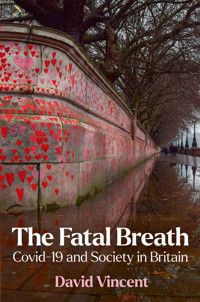
The Fatal Breath is the first full-scale history of the Covid-19 pandemic in Britain. Deploying a rich archive of personal testimonies together with a wide range of research reports and official data, it presents a moving and challenging account of the crisis that enveloped Britain (and the world) in the spring of 2020.
With sensitivity, care, and an historian’s critical eye, David Vincent places the pandemic in context. While much contemporary commentary has assumed people were forced to develop entirely new ways of living and working during lockdown, Vincent reveals how the population was able to draw upon a wealth of resources and coping strategies already seen over the centuries, often reacting far more quickly and effectively than slow-moving authorities. He tells the stories of doctors’ and nurses’ time on the frontlines, reveals the true extent of supply shortages, conspiracy theories, and vaccine resistance, and explores individuals’ newfound appreciation of nature and community in lockdown.
The Fatal Breath will appeal to anyone seeking to reflect on the past few years and how the pandemic has changed Britain – for better and for worse.
Sie lesen das E-Book in den Legimi-Apps auf:
Seitenzahl: 648
Veröffentlichungsjahr: 2023
Ähnliche



















CONTENTS
Cover
Dedication
Title Page
Copyright
Preface
1. Writing the Pandemic
The Wall
The Fatal Breath
The Pandemic as History
Notes
2. Illness, Death, Bereavement
‘So this is hapimji@g In fuve mumutre they piu nr yo sleeo fky tn gayd’
The Phone
Letting Go
Notes
3. States of Mind
Knitting Teddy Bears
Peaks and Plateaus
Getting By
Pathologies
PTSD
Notes
4. Connections
Clapping
Helping
Snitching
Tracing
Knowing
Notes
5. Getting and Spending
The Marmot Reviews
Getting
Spending
Savings and Debt
Notes
6. Nature
‘We can go on one walk a day’
Exercise
Gardening
The Blip
Notes
7. Communication
The Thursday Murder Club
Multi-media
Anti-Vax
Notes
8. Home
Lockdown
Time
Personal Relations
Solitude
Notes
9. Aftermath
The Normal
Change
Notes
Index
End User License Agreement
Guide
Cover
Table of Contents
Dedication
Title Page
Copyright
Preface
Begin Reading
Index
End User License Agreement
Pages
ii
iii
iv
vi
vii
viii
1
2
3
4
5
6
7
8
9
10
11
12
13
14
15
16
17
18
19
20
21
22
23
24
25
26
27
28
29
30
31
32
33
34
35
36
37
38
39
40
41
42
43
44
45
46
47
48
49
50
51
52
53
54
55
56
57
58
59
60
61
62
63
64
65
66
67
68
69
70
71
72
73
74
75
76
77
78
79
80
81
82
83
84
85
86
87
88
89
90
91
92
93
94
95
96
97
98
99
100
101
102
103
104
105
106
107
108
109
110
111
112
113
114
115
116
117
118
119
120
121
122
123
124
125
126
127
128
129
130
131
132
133
134
135
136
137
138
139
140
141
142
143
144
145
146
147
148
149
150
151
152
153
154
155
156
157
158
159
160
161
162
163
164
165
166
167
168
169
170
171
172
173
174
175
176
177
178
179
180
181
182
183
184
185
186
187
188
189
190
191
192
193
194
195
196
197
198
199
200
201
202
203
204
205
206
207
208
209
210
211
212
213
214
215
216
217
218
219
220
221
222
223
224
225
226
227
228
229
230
231
232
233
234
235
236
237
238
239
240
241
242
243
244
245
246
247
248
249
250
251
252
312
313
314
315
316
317
318
Dedication
For Romy and Francesca
THE FATAL BREATH
Covid-19 and Society in Britain
David Vincent
polity
Copyright © David Vincent 2023
The right of David Vincent to be identified as Author of this Work has been asserted in accordance with the UK Copyright, Designs and Patents Act 1988.
Material from the Mass Observation Archive reproduced with permission of Curtis Brown, London on behalf of the Trustees of the Mass Observation Archive © The Trustees of the Mass Observation Archive
First published in 2023 by Polity Press
Polity Press65 Bridge StreetCambridge CB2 1UR, UK
Polity Press111 River StreetHoboken, NJ 07030, USA
All rights reserved. Except for the quotation of short passages for the purpose of criticism and review, no part of this publication may be reproduced, stored in a retrieval system or transmitted, in any form or by any means, electronic, mechanical, photocopying, recording or otherwise, without the prior permission of the publisher.
ISBN-13: 978-1-5095-5168-2
A catalogue record for this book is available from the British Library.
Library of Congress Control Number: 2023931012
The publisher has used its best endeavours to ensure that the URLs for external websites referred to in this book are correct and active at the time of going to press. However, the publisher has no responsibility for the websites and can make no guarantee that a site will remain live or that the content is or will remain appropriate.
Every effort has been made to trace all copyright holders, but if any have been overlooked the publisher will be pleased to include any necessary credits in any subsequent reprint or edition.
For further information on Polity, visit our website: politybooks.com
Preface
Anyone setting down an account of a lethal pandemic through which they have just lived should begin by giving thanks for their survival. So far, mine has been a lucky Covid-19. Locked down and shielded in a small Shropshire village, needing to make no journeys for work or almost any other purpose over a two-year period, I am one of the diminishing minority in Britain who have escaped infection altogether, as has my wife, who shared my isolation. No fewer than six vaccinations over eighteen months have proved their worth. Children, grandchildren, and other relatives and friends have succumbed, but none seriously. The deaths I have mourned through virtual funerals have been caused by conventional illnesses, their impact intensified by the prohibition of association with the dying and the bereaved. Whilst there has been loss in the very limited physical contact I have been able to make with my extended family during the pandemic, including the two youngest grandchildren to whom this book is dedicated, there has been no deep suffering or lasting damage. I have lived to write, and through writing, living in lockdown has been made safer and more bearable.
Daniel Defoe and later Albert Camus in their different ways wrote accounts of plagues in order to prevent history repeating itself. This social history has a more modest ambition. It is part of the process by which the pandemic has enabled us to understand ourselves better, in our vulnerabilities but also in our strengths and resources. Such knowledge has to be both clarified and recorded if it is to have value for the future. As the chapters argue in a range of contexts, the mass of the British population reacted to Covid-19 with a speed and an effectiveness that put to shame the largely ill-prepared, indecisive, and ill-judged performance of their political masters. The account is a short-run history of twenty-four months but one which requires for its narrative and conclusions a perspective of British society over the previous centuries.
For myself, retired from university teaching and administration, the daily routine of walking from the house to my office to read and write all day was largely uninterrupted by lockdown. Visits to archives were suspended, but the internet has become a cornucopia of sources, particularly where the focus of inquiry is the most recent past. Thanks normally given to librarians and libraries are due this time to the Open University’s digital collection, to the digital versions of The Times, the Financial Times, the Guardian, the New York Times, and other newspapers and journals, to researchers across the humanities, social sciences, and sciences who have undertaken and published online a remarkable range of reports and inquiries in a very short space of time. In the case of more formal sources, many books have been dispatched along country lanes by distant booksellers. I am grateful to Mass Observation, and in particular Jessica Scantlebury, for allowing me early electronic access to Covid-19 diaries, and for organizing a series of seminars on their use. Finally, I must acknowledge the efforts of British Telecom, which connected my village, recorded in the Domesday Book, to fibre broadband just as it was severed from every other physical means of communication.
When Covid-19 began, I was engaged in a more conventional history project. I was, however, invited to join an international blog, Covid2020diary, by my friend and former vice chancellor Brenda Gourley, and her Australian colleague Anne Chappel. Writing around 150 daily commentaries in the company of a diverse range of talented contributors awakened in me the ambition of constructing a full-length history. I am particularly grateful to Brenda and Anne for setting The Fatal Breath in motion, and for being there at the end to review the final text. The enterprise has benefited from what became the online meetings and output of the Wellcome-funded Pathologies of Solitude project led by Barbara Taylor at Queen Mary University. Thanks also for their advice to my wise and useful brother Rob Vincent, who, inter alia, led the effort to make Test and Trace work in Yorkshire and Humberside, and my caring and useful niece Becci Crook, a newly qualified hospital doctor who laboured at risk to herself with Covid-19 patients in intensive care. For improving the manuscript, I thank Ros Crone, Caroline Millington, John Naughton, and Polity’s rigorous referees. Charlotte Vincent, as much an expert in living through Covid-19 as I am, has, as always, sustained the labour of writing this book in every way possible.
Shrawardine, February 2023
The Infection generally came into the Houses of the Citizens, by the Means of their Servants, who, they were obliged to send up and down the Streets for Necessaries, that is to say, for Food, or Physick, to Bakehouses, Brewhouses, Shops, &c. and who going necessarily thro’ the Streets into Shops, Markets, and the like, it was impossible, but they should one way or other, meet with distempered people, who conveyed the fatal Breath into them, and they brought it Home to the Families, to which they belonged.
Daniel Defoe, A Journal of the Plague Year (1722)
1Writing the Pandemic
The Wall
Along the south embankment of the Thames at Westminster is a high stone wall. In front of it runs a pavement overlooking the river, crowded with pedestrians. For a stretch of five hundred yards the wall is now covered in more than two hundred thousand red hearts.
A plaque announces that this is the ‘National Covid Memorial Wall’. It was established by Covid-19 Bereaved Families for Justice, supported by the political campaign group Led By Donkeys, in the week following the first anniversary of the imposition of a national lockdown. The hearts represent the victims of Covid-19. Each has been drawn by a volunteer using a simple template, giving the sense of a host of distinct individuals.
As with other national memorials, the wall serves several interlocking functions. Its sheer scale reflects the extent of suffering in the pandemic. Every heart is a life cut short, a level of excess deaths not seen in peacetime since the 1918–20 Spanish Flu epidemic. Together they bear witness to the volume of bereavement. The conventional calculation amongst care professionals of seriously affected relatives or friends is around five for any fatality, although a recent American study suggests the ratio may be as high as nine to one.1 The wall is an extended public sculpture, freely accessible in a central location in the nation’s capital city. Those directly affected by the pandemic and those wishing to bear witness to the scale of the suffering can bring to the monument their thoughts and emotions. There is plenty of room along the riverside: no limitation on entry, no pressure to move along.
The wall is interactive. The blank red hearts can be inscribed by anyone wishing to honour the departed and personalize their sense of loss. There is insufficient space for extended narratives. Instead, there are abbreviated messages to the departed, the briefest summaries of the pain felt by the living: ‘Seamus Craig All Love Forever’, ‘RIP Nurse Estrella Catalan’, ‘Forever in our hearts Tasmir Kaur 1956’. Some of the inscriptions are in other languages, including Arabic. Most, but not all, reflect the impact of the pandemic on older cohorts: ‘Tony Taylor 1951–2020’, ‘Anne Evans 1943–2020’, ‘1950–2021 In Memory of Michael John Allen “Mick” XX’. It is just possible to indicate the grief of close families: ‘In Loving Memory of our Mother 1948–2020 In Our Hearts Forever. We Miss You So Much XXX’, ‘21 12 45 – 9 02 21 Nan Chrissy. We All Miss You So Much. Love All of Us’, ‘My Wife Chrissy. Always on My Mind’. There is meaning in the sheer limitation of language. In many cases, the texts recorded a death that occurred in intensive care units closed to family members, followed by a severely restricted funeral service. Dying of Covid-19 was a compressed experience for all concerned.
The multiple red images reflect a common trope of public memorials in Britain. The centenary commemoration of the First World War seven years earlier featured a display of 888,246 scarlet poppies on the grass slopes surrounding the Tower of London. With its home-made hearts, the Covid Memorial is a more effective response to the scale of individual deaths than the mass-produced ceramic flowers.
The wall was immediately recognized as a national event. It was endorsed by the Mayor of London, Sadiq Khan. The Leader of the Opposition, Keir Starmer, made a public visit. The Archbishop of Canterbury, Justin Welby, walked along from the neighbouring Lambeth Palace and was photographed chatting to the volunteers painting the hearts. The memorial became the most powerful visual representation of Covid-19 in Britain, used as a standard backdrop for television and newspaper reports throughout the remainder of the pandemic.
The location was perfectly chosen. Behind the wall is St Thomas’s Hospital, where Boris Johnson was treated a fortnight after the lock-down was declared. That event, the looming realization that Covid-19 might cost the life of the prime minister, did more than anything else to entrench the reality of the accelerating pandemic.2 The intense public attention paid to the sequence of minor symptoms suddenly worsening, leading to a hospital admission and then an intensive care unit and the prospect of treatment on a ventilator with a slim chance of survival, brought home the choreography of the disease. Directly across the Thames is the Palace of Westminster. Once the wall was painted, Members of Parliament could at any moment look out across the water and see the long red line, a constant reminder of their task and the consequence of failing in it.
In its conception, however, the wall was anything but a consensual event. It was a crowd-funded by-product of a campaign being waged by a group of angry relatives of early victims. Covid-19 Bereaved Families for Justice believed that many deaths had been caused by government mismanagement in the crucial first weeks of the crisis. They launched a petition for a public inquiry, claiming that,
as more and more information comes to light, it has become clear that the UK hasn’t ended up with one of the highest death tolls in the world by coincidence. Gaps in the country’s pandemic preparedness, delays to locking down, inadequate supplies of PPE [personal protective equipment] and the policy of discharging into care homes among other issues have all been identified as having contributed to the level of the death toll.3
Boris Johnson resisted for a year, arguing that his administration should not be distracted from the battle against the pandemic. He faced a dilemma once the wall became a success, not wanting either to endorse the campaign or to disrespect the lives that were mourned and celebrated. His solution was to pay a visit to the wall on a dark evening accompanied only by a single security officer. He was spotted by a passing MP and much mocked in the next day’s newspapers.
The government finally agreed to the demand for a full-scale inquiry a few weeks after the wall was finished. The team of twelve QCs led by Lady Hallett began work in July 2022, with a report not expected for at least another year. Covid-19 Bereaved Families for Justice only gained permission for their installation on the basis that it would be temporary. Were it to become permanent, the hearts would need to be properly protected with lacquer. It was intended to be a means of publicizing the alleged scale of public maladministration and consequent loss of life. At the press conference on the first anniversary of the lockdown, Johnson promised a ‘fitting and permanent’ memorial that would be constructed ‘at the right moment’.4 In July 2022, the ‘UK Commission on Covid Commemoration’ was established, with a brief to ‘build a consensus around the measures which will be put in place to tell the story of this period in our history and remembering into the future those we lost’.5 Whose monument prevails, which narrative comes to represent the national memory, will depend on the unfinished debate about the course of the pandemic.
The Fatal Breath
The title for this book, and its epigraph, are taken from Daniel Defoe’s A Journal of the Plague Year, published fifty-seven years after the events it described. The account of the outbreak of bubonic plague in London in 1665 embedded carefully assembled factual information in the format of a fictional diary. The first-person witness was invented as a means of giving urgency and authenticity to the narrative. Defoe, who was about five years old at the time of the outbreak, grew up in a city full of memories of the event, and collected documentary material on the progress of the disease through the parishes of the capital.6 He was no more certain than any contemporary medical authority about the aetiology of the infection. As a doctor wrote in a treatise published in the same year as the Journal, ‘[T]he Cause of the Plague is most mysterious, and not yet hitherto plainly discovered’.7 Amongst the prevailing theories, argued the doctor, it was unlikely that ‘ours was caused by the like Production of Worms or Insects, as some have rather fancied than demonstrated’.8 It was not until 1894 that the responsible bacterium, Yersinia pestis, was isolated, and a further four years before the mode of transmission, fleas carried by black rats, was identified.9
Defoe followed the conventional diagnosis of preceding outbreaks that the plague was spread by contagion, in some way involving contact between humans. If there was no medical proof of this mechanism, there was ample experiential evidence stretching back at least as far as the sixth-century Plague of Justinian that preventing association between the healthy and the infected was the most effective means of controlling an epidemic. Exactly what passed between individuals was not clear. It was at once invisible and pervasive. In his parallel treatise, Due Preparations for the Plague, on the need for public preparations against a return of the plague published just before the Journal, Defoe summarized the capacious process and the ideal counter-measure.
Nothing is more certain than that the contagion strengthens, and the infectious particles in the air, if any such there are, increase in quantity, as the greater number of sick bodies are kept together. The effluvia emitted from the bodies infected are more rank and more contagious, and are carried farther in the air the more bodies are infected, and are therefore more apt to be received from house to house; and were it possible for all the people in the populous cities and towns in England to separate on such an occasion as this, and spread themselves over the whole kingdom in smaller numbers, and at proper distances from one another ’tis evident even to demonstration, that the plague would have but very little power, and the effects of it be very little felt.10
The infectious particles could survive in the folds of clothing or on hard surfaces.11 Defoe’s Due Preparations contained a vivid account of the steps taken by a wealthy London grocer to avoid contamination by his extensive correspondence:
His letters were brought by the postman, or letter-carrier, to his porter, when he caused the porter to smoke them with brimstone and with gunpowder, then open them, and to sprinkle them with vinegar; then he had them drawn up by the pulley, then smoked again with strong perfumes, and, taking them with a pair of hair gloves, the hair outermost, he read them with a large reading-glass which read at a great distance, and, as soon as they were read, burned them in the fire; and at last, the distemper raging more and more, he forbid his friends writing to him at all.12
That the grocer survived and the porter eventually died of the plague merely proved the point. The particles might somehow be inherent in miasma arising from cess pits, bad food, rotting refuse, or corpses. Moreover, it had been accepted at least since the fourteenth-century Black Death that they were passed through the air from mouth to mouth.13 Recent medical research has established that in addition to the intermediary role of rats and fleas, it is possible for the pneumonic plague, a lethal version of the bacteria, to infect the lungs and be transferred directly through coughing or sneezing from one respiratory system to another.14 Defoe was at least partly right in his lamentation of the effect of so natural an action as breathing.
The ill-defined but insistent emphasis on contagion made the treatment of the Covid-19 pandemic seem very conventional. By the beginning of the seventeenth century, the long battle against the bubonic plague had established structures of control and surveillance that were far ahead of any other area of public intervention in non-criminal private behaviour. In Britain, a series of initiatives were consolidated into an Act of Parliament in 1604, which, amongst much else, specified that anyone infected with the plague and found in the company of others could be hanged for a felony.15 When the disease returned half a century later, the authorities drew upon their reserve powers to specify restrictions on social activities which, given subsequent developments in popular recreations, were much the same as those imposed in the lockdowns of 2020 and 2021:
THAT all Plays, Bear-Baitings, Games, singing of Ballads, Buckler-play, or such like Causes of Assemblies of People, be utterly prohibited, and the Parties offending severely punished by every Alderman in his Ward. THAT all publick Feasting, and particularly by the Companies of this City, and Dinners at Taverns, Alehouses, and other Places of common Entertainment be forborn till further Order and Allowance…. THAT disorderly Tipling in Taverns, Alehouses, Coffee-houses, and Cellars be severely looked unto, as the common Sin of this Time, and the greatest occasion of dispersing the Plague.16
The response to the Spanish Flu epidemic was hampered by the failure correctly to identify the microbial cause, and as a result the authorities fell back on established techniques of social distancing. As well as traditional venues like public houses and churches, prohibitions were now applied to transport systems and schooling.17
Covid-19 was the first global pandemic where the pathogen was fully understood almost from the outset. After an initial attempt to conceal the outbreak in Wuhan, the virus was identified and its genetic sequence was posted on the internet on 11 January 2020. However, for all the progress in medical science, there remained room for error. Global public health policy in 2020 was compromised by a misleading emphasis on fomite transmission.18 Working within the framework of earlier research into infectious diseases, the World Health Organization (WHO) and other official bodies at first assumed that the principal mode of spreading Covid-19 was through droplets expelled from the mouth or nostrils and falling onto surfaces where they infected those who touched them and then their faces. ‘The best thing people can do to prevent the spread of coronavirus is wash your hands,’ advised the prime minister on 28 February 2020.19
It was not until later in 2020, following a range of studies, including those on the course of outbreaks on cruise ships, that greater emphasis began to be placed on aerosol infection: microdroplets suspended in the air and breathed in by those occupying the same space.20 A year and a half after the virus was identified, the issue was still being debated in the columns of The Lancet. An article in May 2021 concluded that
it is a scientific error to use lack of direct evidence of SARS-CoV-2 in some air samples to cast doubt on airborne transmission while overlooking the quality and strength of the overall evidence base. There is consistent, strong evidence that SARS-CoV-2 spreads by airborne transmission. Although other routes can contribute, we believe that the airborne route is likely to be dominant. The public health community should act accordingly and without further delay.21
The misconstrued emphasis on surfaces connected the early response to Covid-19 with the obsessive grocer smoking his mail in mid-seventeenth-century London. Not only correspondence but also the mounting flow of packages and parcels containing online orders were carefully wiped down or left untouched for a few days until it was assumed that they no longer carried a threat. The public was advised that whilst paper or card covers ceased to present a risk of viral transmission after twenty-four hours, seventy-two hours would be necessary to decontaminate plastic-backed books.22 Door handles, shop counters, and bars in public houses were cleaned after every customer. Hard currency was shunned. There was a substantial diversion of effort and resources as cloths, sprays, and disinfectants were purchased and the drama of surface sterilization was conducted. The upside was a general improvement in public and personal hygiene and a corresponding fall in associated infectious diseases. But lives were lost as a consequence. The importance of masks to impede the expulsion or ingestion of aerosols was not fully and immediately recognized, nor was the need to ventilate indoor spaces adequately.23 A clear distinction was slow to be drawn between crowded interiors, where microdroplets could hang in the air and infect everyone in the room, and outdoor encounters, where the danger was far less, irrespective of the physical distance between one individual and another.
The long debate over the causes of pandemics led finally to Defoe’s ‘fatal Breath’, in the epigraph. The normal and necessary act of taking in and expelling air ceased to be one amongst many routes of transmission and came to be seen as the principal mechanism for spreading the disease. Further, the main location of infection moved from the streets to the interior of buildings. These might include public spaces such as restaurants and bars, and crowded public transport, but the critical, inescapable setting was the home. The only walled environments consistently more dangerous than the domestic arena were hospital wards and the institutions in which the frail and elderly lived out the remainder of their lives.
The public health controls adopted in pandemics since records began ensured that central to the experience were the most intimate personal relationships. Whether the front door was nailed shut with a watchman stationed outside to prevent escape, as in the case of suspected households in Defoe’s London, or whether in Covid-19 societies adults and children were sent home from work and school to spend all hours of the day and night in close proximity, each family member was both the crucial support and principal threat to the life and wellbeing of every other. As Defoe emphasized, the presence of asymptomatic illness, a reality with both the bubonic plague and Covid-19, served only to heighten the drama. He observed in the Journal that the combined circumstances struck at the very heart of love and grief:
It was very sad to reflect, how such a Person … had been a walking Destroyer, perhaps for a Week or Fortnight before that; how he had ruin’d those, that he would have hazarded his Life to save, and had been breathing Death upon them, even perhaps in his tender Kissing and Embracings of his own Children.24
The Pandemic as History
The attempt on the Thames Embankment to appropriate the historical meaning of the Covid-19 pandemic reflected a wider turmoil of debate in societies overtaken by the global event. As early as mid-March 2020, the Pulitzer Prize-winning writer Thomas Friedman identified a ‘new historical divide’: ‘There is the world B.C. – Before Corona – and the world A. C. – After Corona.’25 Writing in an updated account of pandemics from the Spanish Flu onwards, just three months after the outbreak began, Mark Honigsbaum observed what had already become an industry of competing accounts.26 Full-length histories began to appear well before the end of Covid-19 was in sight, and renewed attention was paid to past plagues stretching back to biblical times, and to more recent pandemics, including the hitherto largely neglected Spanish Flu and the sequence of viral outbreaks earlier in this century which presaged the coronavirus.27
The British response to the crisis was subject to sustained interrogation in the print and electronic media almost as soon as the first lockdown was declared. The Sunday Times Insight team published a powerful, widely read, exposé of the first thirty-eight days of the government record on 19 April 2020, which then became a four-hundred-page book, Failures of State.28 Highly critical assessments of errors in the early months were written by the editor of the leading medical journal, The Lancet, and by the director of the largest medical research charity, the Wellcome Trust.29 By 2022, full-length studies were appearing, drawing lessons from the event that could be applied to the widely expected next pandemic.30 Parliamentary Select Committees and official agencies working at arm’s length from government conducted a series of critical examinations of the sequence of decision-making from the first announcement of a new infection at the end of 2019. The failings in preparedness were meticulously examined by the National Audit Office in May 2021.31 Whenever it is published, the official inquiry that began work in the summer of 2022 will add to what by then will be a mountain of articles, reports, and books, whether or not it alters the verdicts that they contain.
Covid-19 turned everyone into historians. The urgent need to write about a new epoch was not confined to professional commentators and analysts. The last occasion on which British society endured widespread controls in response to a national emergency was the Second World War. Ordinary men and women became recorders of passing time. Mass Observation, founded in 1937, was employed by a government for the first time anxious about the most private beliefs and behaviours of the general public. Narrative accounts were commissioned either as freeform diaries or as responses to particular topics. The organization gained renewed momentum in the 1980s, and began once more to collect material from witnesses of social change.32 In 2010, it revived the project of commissioning accounts of a single day in the year, 12 May. The tenth anniversary of this exercise occurred, as it happened, on the last day of the first 2020 lockdown.33 Whereas in previous years only a few hundred people responded to the annual invitation, the organization was inundated by more than five thousand contributions.34
All the writers were conscious that their experiences, however mundane, reflected an era of change which could only fully be captured in the daily lives of men and women who were now largely confined to their homes. ‘I want this diary to matter to future historians of our times,’ stated one of the contributors. ‘I feel I speak as a mother and a world citizen.’35 Writing diaries was a means of anchoring experience in the flux of change and shaping the perspective of posterity. ‘I shall miss writing this diary somehow,’ wrote another diarist. ‘It’s been something to “hold” onto in these strange and unusual times. I’ve really enjoyed recording events on a day-to-day basis and hope it will be useful for people when they come to research the coronavirus pandemic.’36
The observers traditionally tended to be older, more middle class, and more likely to be women than the population as a whole. A diarist reflected on her relative privilege:
I’ve been giving more thought to the lock down. I don’t have a crying baby, children that need educating at home, or an abusive husband. I‘m not waiting for my 80% salary payment or my benefit to arrive (neither adequate if I were struggling before). I have a regular income, a garden, space, attentive sons, friends and neighbours who care for my welfare and no difficulty in shopping. As far as an easy life is concerned, I must be in the top few percentages.37
However, the new writers now embraced an age-range from a five-year-old (see chapter 6) to those at the other end of their lives. Contrasting perspectives were provided by other collections focusing on specific categories of experience. The valuable Covid Realities, a research project based at the Universities of York and Birmingham, working in partnership with the Child Poverty Action Group, collected accounts of day-to-day life by parents and carers living on low incomes, and organized social activities to support them. The material records the strategies and emotions of those struggling with over-pressed domestic budgets. There was the hope that amidst the suffering, the diary collections might constitute a new basis for attacking deprivation. A contributor explained:
Covid Realities has meant a lot over the pandemic. Our voices have been heard where we’ve felt previously ignored. We will have hopefully made a valuable contribution to effect changes for the future of our children, to not feel so alone in what are and were challenging times. It is important we are heard. We are not alone and we must speak up about the unfairness in society.38
A host of organizations recognized the need to give voice to those living through the pandemic. Newspapers and magazines, ranging from the Financial Times to the Daily Mirror and Marie Claire, invited accounts from their readers.39 Enterprising radio producers commissioned material, particularly the BBC PM programme, which broadcast a series of recordings under the heading of Covid Chronicles, later published in book form as Letters from Lockdown.40 Social research bodies and networks including the Young Foundation, the Joseph Rowntree Foundation, and The Conversation set out to establish resources of Covid-19 reminiscence with a particular concern for marginal voices.41 Towns and cities from Aberdeen to Plymouth, recognizing that their communities had been profoundly changed by the pandemic, invited citizens to send in personal narratives.42
The long-established tradition of written autobiographies by ordinary men and women was extended by firms offering ghost-writing services.43 Out on the web, bloggers turned their attention to the altered times. One of the most thoughtful and best-informed of these, John Naughton of Cambridge University and the Observer, subsequently published an online volume of his writings as 100 Not Out: A Lockdown Diary, March–June 2020.44 The author of this study contributed around eighty thousand words in blogs in 2020 and early 2021 as part of an international project, Covid2020diary.45
One motivation of these collections was archival. There was a sense that future historians would need evidence beyond the documentary records of public bodies. An accurate account would be of necessity polyphonic, embracing as many different voices as possible. It was important to shape competing accounts of the pandemic. The ‘NHS at 72’ campaign collected over two hundred ‘NHS Voices of Covid-19’ designed not just to record experiences on the frontline but also to re-centre the debate about public funding of such services. A junior doctor wrote:
The narrative that’s been created about NHS staff being heroes kind of just creates a narrative where it’s okay for NHS staff to die. In hero films, it’s okay for the hero to die as part of the greater good. I don’t think that’s fair. It’s not a narrative I want to be part of. I think the NHS should be properly funded, properly stocked with protective gear, and just because we work in health care does not mean it’s ok to die because of this.46
The diary entries enfolded the present with the past and the future. The writers everywhere contrasted the sudden alteration in their circumstances with ways of living they had previously taken for granted. At the same time, they contemplated what a restored normal would look like. They were at once longing for the return of familiar pleasures but aware of the need for a better world. Central to that transformation had to be a collective understanding of circumstances that the crisis had exposed and to which the diarists gave witness.
The accounts of Covid-19 were framed as an historical plot, with a beginning, a time-limited duration, and an assumed ending, however much that had to be extended. Epidemics – in their global form pandemics – are by their nature transient events in contrast to endemic diseases such as malaria or tuberculosis. In an influential article written in the midst of the AIDS crisis, the historian Charles Rosenberg wrote that there is a
defining component of epidemics that needs emphasis, and this is their episodic quality. A true epidemic is an event, not a trend…. Thus, as a social phenomenon, an epidemic has a dramaturgic form. Epidemics start at a moment in time, proceed on a stage limited in space and duration, following a plot line of increasing and revelatory tension, move to a crisis of individual and collective character, then drift toward closure.47
The bubonic plagues broke out, devastated societies for a year or two, and then, at least for a while, disappeared. The Spanish Flu in this sense mirrored the Great War that preceded it. However complex the causes and however prolonged the consequences, there was a point at which the first infections occurred, and another when the disease lost its potency and became a low-level endemic illness. The corona outbreaks at the beginning of the twenty-first century, SARS from 2002 to 2003, MERS in 2012, together with the lethal eruption of West African Ebola between 2013 and 2016, each had their own arcs of diagnosis, death, and retreat. Covid-19 was thus unlike the two forces implicated in the experience of the pandemic: structural inequality and climate change, whose origins must be traced back at least to the industrial revolution, if not to the emergence of civilization itself. Equally there is no end in sight for either misfortune, despite increasingly urgent attempts to put dates on the reduction of global warming.
The arguments about the decision-making of national governments and international agencies in late 2019 and early 2020 were essentially about dates of origin. Either action was taken as soon as the virus was discovered, or, as critics claimed in Britain, the starting gun was fired at least a fortnight late, which cost many thousands of lives. As soon as lockdown was imposed, a narrative of unlocking was promulgated, as was the case with further lockdowns in November 2020 and January 2021. Each intervention immediately stimulated an exit strategy.48 Instead of ‘plan’, the metaphor of a ‘roadmap’ was constantly used, implying a destination which could be envisaged, navigated, and reached by a given time.49 Those contributing to the Mass Observation 12 May 2020 project frequently assumed, wrongly as it transpired, that the worst was already over, and they could spend their time claiming compensation for cancelled holidays and re-booking them for the following year. Infection reached a new peak in January and February 2021, but alongside the new controls, the government laid out a timetable of relaxation during the spring and early summer with the expectation that they would not need to be reimposed. The further peak of the Omicron variants in the early spring of 2022 was accompanied by a formal declaration by the government that society was free of regulation, and central testing was no longer required.
The notion of an ending was founded on medical, political, and social realities. The first of these is the most obvious, but, in the Covid-19 pandemic, far from secure. Unlike the Spanish Flu, when record-keeping around the world was so poor that a century later there remain variations of more than fifty million in the estimation of mortality, a close score has been kept of deaths, infections, and hospitalization globally by a unit at Johns Hopkins University in the United States, informed by national agencies of varying degrees of competence.50 In Britain, as this account is written, the Omicron variants continue to evolve. There are well-founded doubts about whether the ending will be as decisive as was the case with the last major global pandemic a century ago.51 In bubonic plagues, the disease did not disappear everywhere at once but in stages around the world. During months and years, it was carried from port to port by cargo ships, or from country to country by invading armies or travelling merchants.52 In an era of mass movement of people, societies celebrating victory may well be thrust back into the inferno by those where the virus is still rampant and changing its identity. Setting aside the uncharted effects of ‘long Covid’ in people recovering from the disease, and the prolonged damage caused to health systems dealing with a backlog of conventional illnesses, it is evident that the dance between infection and immunity is not yet over. The conflict still continues between the body’s defences, reinforced by vaccination, and the virus developing further mutations.53 Nevertheless, there will come a point, at least in countries with adequate medical services, when the curtain falls on this drama, and we wait for the next zoonotic pandemic.
It is critical to the political process that such a moment can be formally declared. Since early 2020, governments have seized powers over everyday life without precedent in peacetime. To be told who may enter your house and whether and why you may leave it, where you may travel and for what purpose, what economic activity you may and may not engage in, whom you may touch and whom not, would have seemed inconceivable in any democracy at the end of 2019. It was no surprise that Johnson’s government fatally hesitated when faced with this prospect. Reacting to the reimposition of controls in the autumn of 2020, Lord Sumption, the recently retired Supreme Court judge, Reith Lecturer in the year that Covid-19 was identified, and distinguished historian of the Hundred Years War, denounced the entire political response to the pandemic, which he described as ‘the most significant interference with personal freedom in the history of our country’.54
The most influential definition of the freedom of the citizen in the modern world was set out by John Stuart Mill in On Liberty in 1859: ‘The only purpose for which power can be rightfully exercised over any member of a civilized community, against his will, is to prevent harm to others.’55 The notion of ‘harm to others’ has since been much debated, but in the midst of Covid-19, it had an incontrovertible meaning: the transmission of an infectious disease that will cause the serious illness or death of large numbers of people. Although they lacked the language of political rights, that was why the fifteenth-century Venetian government put incoming travellers into quarantine, why the mid-seventeenth-century Mayor of London locked plague victims in their own houses. In the twenty-first century, such actions are not an attack on personal freedom, rather a necessary restriction on the harm caused by its unlicensed practice.
It is important to retain a sense of proportion in such an exceptional time. Lord Sumption claimed that the regime of controls meant that ‘in a crisis the police were entitled to do whatever they thought fit, without being unduly concerned about their legal powers. That is my definition of a police state.’56 A passing acquaintance with modern dictatorships would caution against such a parallel. Despite inconsistencies and confusion in the application of 118,978 fixed penalty notices over two years, the British police and courts have played a comparatively small role in the crisis (not least with regard to the incurious policeman stationed at the door of Number 10 whilst illegal parties took place inside). The regulations were not as tough as those across the Channel, where written permits were required to leave home. In Britain, observance has largely been a matter of consent. The acceptance of such controls depends on the information that can be communicated about the threat of the pandemic, on the trust that is invested in the competence of decision-makers, on the sense that everyone is being treated fairly, and on the understanding that the controls will be revoked as soon as the danger has passed.
After the Second World War, the last time when there was a widespread suspension of civil liberties in the interests of defeating a yet greater danger, most of the restrictions were lifted in 1945, although food rationing, accompanied by identity cards, remained in place for a further nine years. Conversely, a more recent threat to public safety, the 9/11 attacks, resulted in permanent extensions of the security state, some in plain sight, some not made public until the Snowden revelations in 2013. The language of a ‘war on terror’ imposed the concept of a time-fixed contest on a threat whose conclusion was nowhere defined. A pandemic, on the other hand, offers the prospect of an evidence-based termination. It was on the assurance that all restrictions would at that point be lifted that there was comparatively little protest at their imposition.
The final expectation of an ending was inherent in the social experience of the pandemic. The engagement with passing time varied widely. For those faced with a sudden, overwhelming collapse in their ability to breathe, every minute of every hour became critical. So too for their close family, desperately trying to maintain contact with an intensive care unit they were forbidden to visit. Conversely, retired and relatively fit households were thrust into an almost time-free existence. Then again, homeworking families with school-age children faced a day divided into unforgiving units as web-based lessons were overseen and online work meetings were conducted. For society at large, bus and train timetables, which controlled movements between home and office or school, ceased to exist for all but essential workers and their children. Television, radio, and cinema, whose schedules had in the twentieth century done so much to pattern the consumption of leisure, were supplanted by streamed films and archived programmes. Such changes in the temporal landscape were by turns terrifying and tedious, relaxing and laborious. They were all, nonetheless, assumed to be temporary. Everyone made plans for the post-pandemic future, if only in their minds. The disruption of time was never expected to be timeless, however long the lockdown days and weeks might appear. It was on this basis that the restrictions were for the most part endured without private collapse or public rebellion.
The question, then, is how best to capture the intensity and complexity of what Charles Rosenberg insisted was an event, not a trend. The short answer is that it requires and is receiving the attention of every kind of commentator and every intellectual discipline. This account has been written partly on the basis of digital cuttings from newspapers which day by day engaged with the drama, reporting a proliferating body of research conducted by government agencies, universities, think tanks, and interest groups. It was not just the genome sequencers and vaccine developers who responded to the crisis with unprecedented speed. Everywhere the arthritic processes of writing grant applications, gaining the approval of employing institutions and funding bodies, recruiting staff and where necessary survey panels, conducting analysis, writing up and publishing peer-reviewed articles and occasionally books were dramatically accelerated.
In Britain, the largest quantitative study, mounted at University College London (UCL) with support from the Nuffield Foundation, went from conception to product in a matter of weeks. The first set of results from a sample of fifty thousand respondents was published sixteen days after the declaration of a pandemic by the WHO and just four days after Johnson’s belated announcement of a lockdown.57 The survey also collected over thirty thousand written testimonials. Initially it covered various categories of stress and responses to the new regulations; a month later it was reporting on broader issues such as life satisfaction and loneliness.58 At the same time, the Office for National Statistics (ONS) led by Ian Diamond, the single most important government organization in the UK during the pandemic, outside those dealing directly with the medical threat, adapted its well-established Opinions and Lifestyle Survey to cover a widening range of topics, publishing regular, authoritative reports throughout the pandemic. Tim Spector’s Zoe Health Study massreporting app was launched on 24 March 2020, to track Covid-19 symptoms and was publishing data on the spread of the infection a month later. A host of disciplines across the humanities and the social and physical sciences turned their attention to what appeared to be a radical break with the past. It was calculated that 4 per cent of the world’s published research in 2020 was devoted to some aspect of the pandemic.59 The most effective, such as the social psychologist Stephen Reicher and his team at the University of St Andrews, bridged the gap between academic research and popular understanding throughout the crisis.
It may be that, in the long run, the novel is the most productive form. In terms of past epidemics, the best introductions to the experience of mass infection are both fictional. Defoe’s Journal was, as noted, told by an invented witness,60 and Albert Camus’s The Plague, first published in 1947, and taking its epigraph from Defoe, described an imaginary outbreak of the bubonic plague in the Algerian city of Oran.61 The novel form, which Defoe helped to bring into being, was particularly suited to the bounded plot that a pandemic creates.62 Both books begin with a discussion of sources, with proper respect paid to the officials who compiled them. The only acknowledged hero in The Plague is the unassuming bureaucrat Joseph Grand, patiently maintaining the statistical record of the outbreak in Oran, whilst attempting to complete the first sentence of his own novel.63 Both accounts explore the tension between the evidential record and the imaginative challenge of describing the intensity of human suffering.
At one point, Defoe’s witness encounters burials in a mass grave and finds himself unable fully to describe the horror. ‘This may serve a little to describe the dreadful Condition of that Day,’ he writes, ‘tho’ it is impossible to say any Thing that is able to give a true Idea of it to those who did not see it, other than this; that it was indeed very, very, very dreadful, and such as no Tongue can express.’64 The stories gave free rein to their authors’ creative powers and come closer to moving the reader than even the angriest of the non-fiction accounts. In the time of Covid-19, novelists have begun to enter the fray, including Orhan Pamuk, who, following Camus, has created a fictional outbreak of the bubonic plague on the eastern Mediterranean island of ‘Mingheria’, as an allegory of the decline of the Ottoman empire at the beginning of the twentieth century.65
At this juncture, there is a particular role for novels with footnotes, which comprise the output of social historians. There are a number of reasons why their discipline has a contribution to make to understanding the crisis through which we have lived. In the first instance, the pandemic forced attention on the boundaries between personal choice and collective responsibility. In Britain, as in other developed countries, the leading causes of death in the years before Covid-19 were non-communicable. Dementia, heart disease, strokes, and cancer had complex and painful implications for those caring for the sufferers and coping with bereavement, but they were not in themselves caused by interactions with other people. Once the pandemic began, individuals adopted strategies that seemed most likely to protect their personal health, and at the same time recognized that how they behaved would directly impact on the well-being of those with whom they shared their lives. More broadly, it was immediately apparent that the time-honoured devices of quarantine and isolation, now renamed lockdown, required the subordination of private interest to a collective conception of public good.
Nothing was easy. There were a range of devices to enable withdrawal from the oppressive presence of those with whom lives were shared, and to resist severe loneliness when relationships proved no longer possible to sustain. The announcement of a national lockdown on 23 March 2020, and its subsequent reimposition later in the autumn and again early in 2021, challenged every calculation about what was possible, desirable, and ethically justifiable in the conduct of the deepest social relations. The notion of a private space within which intimate emotions might flourish was compromised by the enforced confinement and the constant presence of others. Whilst sanity might depend on the ability to escape the confines of the home, the consequent exposure to the infected breath of outsiders could threaten the health of every other occupant, particularly if they were elderly or suffering from an underlying condition. The capacity to adjust to imperfections in marital or parental relations was undermined by the obstacles to finding support or relief outside the home. Child or partner abuse was not invented by the lockdown, but the means of resistance or escape were often critically limited.
At the same time, opportunities were presented for strengthening or revaluing relationships. There was a sense of shared sacrifice for the good of the social unit, as each member restricted their activities for the benefit of others, however much they might chafe at the regulations and look forward to their removal. Interactions between partners, and between parents and children, which had for generations been attenuated by the enforced absence from the home for education or employment, could now be enhanced by the extended time in each other’s company. Commuting in the company of strangers or in lonely cars was replaced by domestic time together at the beginning and end of working days. If mothers, unsurprisingly, found they acquired more responsibilities than they lost, there was a direct gain in the involvement of homeworking fathers in the learning and entertainment of their children. Those in later life, whose physical contact with children and grandchildren was now reduced to video conferences, discovered new areas of mutual support and dependency, not least in the IT services provided by younger generations. Gardens, a source of both shared and individual pleasure, had never been better looked after or used, particularly during the long, sunny weeks of the first lockdown.
Social history is founded on an engagement with time. Coping with the ‘fatal Breath’ involved inheritance and improvisation. Too much of the commentary on an event that contains great tragedy and widespread disruption to established routines assumes that those affected were encountering challenges for the first time or were being forced to develop entirely novel responses for dealing with them.66 This was perhaps true of the government, which had allowed its emergency systems to atrophy and was forced to invent policy and procedures on a day-by-day basis. For those they were seeking to protect, however, the experience was suffused in history. Whilst most families found themselves, in Shakespeare’s words, ‘cabin’d, cribb’d, confined’, by the lockdowns, they had access to ways of managing sociability and solitude that had emerged during the modern era. As Adam Tooze notes, for the population at large, ‘the resources for adapting [to the pandemic] were already on hand and were deployed’.67 Individuals and social units had developed over generations strategies and resources for coping with unexpected threats to their ways of living. These were deployed with remarkable speed before the first lockdown, and continually adapted throughout the remainder of the crisis.
The capacity to draw upon established practices was assisted by the limited scale of the pandemic. However much strain was placed on social structures, by and large they remained in place, at least in more developed countries. The major outbreaks of bubonic plague in the past had devastated entire societies. The sixth-century Plague of Justinian killed at least twenty-five million inhabitants of a much smaller world, destroying entire cities;68 the mid-fourteenth-century Black Death cut the European population by around a third; Defoe’s plague cost the lives of about a fifth of London’s residents. Adjusting for subsequent population growth, the upper estimate of the toll of the 1918–20 Spanish Flu is the equivalent of about three hundred and fifty million deaths today.69 By contrast, according to the Johns Hopkins dashboard, Covid-19 had killed six and a half million globally by September 2022.70 The subsequent revision of this figure to almost fifteen million by the WHO, based on an interrogation of poor record-keeping in many of the most affected countries, still left the event a pale reflection of earlier tragedies.71
Apart from sheer scale, the age-specific mortality is critical in distinguishing the current pandemic from its predecessor a century ago. The Spanish Flu took the lives of not just the vulnerable young and frail old, but also adults in their prime. The ‘W’-shaped mortality curve had a middle peak of those aged sixteen to forty, especially men, who accounted for over half the total influenza deaths.72 This meant that family units were everywhere threatened. Homes lost their breadwinners only just back from the war; children were deprived of one or both parents; the elderly were left alone without the younger generation to support them. The subsequent loss of life in the Second World War, which in Britain killed about a third as many civilians as Covid-19, similarly struck across the age groups.73 AIDS, which globally had killed forty million people by 2021, principally infected those in the prime of their lives.74
The British experience of mortality in the Covid-19 pandemic amounted to a small acceleration of trends since the beginning of the twentieth century. The doubling of life expectancy had been achieved less by people living longer and more by a continuing reduction of losses amongst younger cohorts and a corresponding concentration of mortality amongst the elderly. In 2019, of six hundred thousand deaths, 84.3 per cent were aged sixty-five and over. At the height of the first wave in the middle of April 2020, 87.8 per cent of Covid-19 deaths in England and Wales were in this age group.75 Two years later, the corresponding figure was 90.3 per cent.76 Conversely, the locked-down young were often less at risk than in a normal year, deprived of exposure to alcohol, violence, and road accidents. The Covid-19 deaths of the elderly were frequently explicable but never inevitable. Their lives had still been cut short, a cause of great suffering amongst the victims and their relatives. The basic population landscape, however, remained largely untouched.
The non-negotiable reality was the accumulation of years. In recent times, it had become commonplace for those enjoying the extension of active decades to convince themselves and those around them that whatever their birth certificate might say, their minds or their bodies were twenty or thirty years younger. Now the biological age ruled. Seventy really meant seventy, eighty was the new eighty. A sixty-year-old who caught Covid-19 in 2020 was a hundred times more likely to die than an infected twenty-year-old, and an eighty-year-old had a thousand times the chance of not surviving.77 At the furthest ends of the age range, the over-nineties had thirty-five thousand times the risk of dying as school-age children with Covid-19.78




