


0,49 €
Mehr erfahren.
- Herausgeber: DigiCat
- Kategorie: Poesie und Drama
- Sprache: Englisch
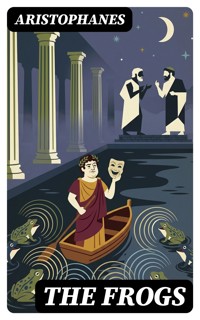
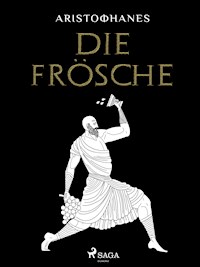
In "The Frogs," Aristophanes skillfully combines comedy and social critique to explore themes of art, politics, and the afterlife within the context of Athenian drama. This satirical play, structured as a journey to the underworld, showcases Aristophanes' hallmark use of clever wordplay, vivid characters, and biting humor. As the protagonist, Dionysus, embarks on a quest to retrieve the playwright Euripides, the narrative serves as both a reflection on the decline of Athenian drama and a critique of contemporaneous political landscapes. The interactions between the dead poets serve as a vehicle for Aristophanes to express his perspective on the state of tragedy and the cultural shifts in Athens, illustrating the fragility and vitality of artistic expression amidst societal change. Aristophanes, often referred to as the 'father of comedy,' lived during the tumultuous periods of the Peloponnesian War and reflected the zeitgeist of his times through his work. His sharp wit and keen observations of Athenian life illuminate the socio-political issues faced by citizens. Aristophanes had a profound interest in the theatre's role as a social commentator, which is central to "The Frogs," as it invites audiences to consider the value of both art and the artist within their society. "The Frogs" is an essential read for enthusiasts of classic literature and those interested in the interplay between comedy and tragedy. With its rich layers of meaning and cultural critique, this play not only entertains but also provokes thoughtful reflection on the role of the arts in society. Aristophanes' masterful blend of humor and philosophy offers valuable insights that resonate even in contemporary contexts, making this work a timeless exploration of the human condition.
Das E-Book können Sie in Legimi-Apps oder einer beliebigen App lesen, die das folgende Format unterstützen:
Veröffentlichungsjahr: 2022
Ähnliche









The Frogs
Table of Contents
Introduction
A comic god ventures below the earth to retrieve a salvific voice, wagering that the fate of a city can turn on the power of its poetry. That audacious premise animates The Frogs, a play whose laughter is sharpened by urgency. Aristophanes fashions a journey that is at once riotous and reflective, setting burlesque next to civic anxiety. The theatre, in his hands, becomes a debating chamber and a carnival at the same time. The result is a dazzling blend of slapstick, song, and scrutiny that asks what kind of art a wounded community needs to survive and to judge itself wisely.
The Frogs is by Aristophanes, the preeminent comic dramatist of Classical Athens, and was first performed at the Lenaia festival in 405 BCE, where it won first prize. The play belongs to what scholars call Old Comedy, a genre known for choruses, topical satire, and fearless directness. Its timing is crucial: the Peloponnesian War was nearing its end, and Athens faced material loss and moral uncertainty. In that setting, Aristophanes crafted a theatrical event that entertains while engaging pressing public concerns, staking comedy’s claim to speak about literature, leadership, and the health of the polis.
The play’s central premise is simple yet capacious: Dionysus, the god of theatre, resolves to travel to the underworld to bring back a great tragic poet capable of rejuvenating Athenian drama. He sets out with his servant, encountering obstacles, songs, and guardians of the dead along the way. A chorus of frogs provides a rhythmic, comic presence during the journey. In the underworld, a critical contest over tragedy’s merits comes to the fore, transforming the stage into a tribunal of taste and value. Without disclosing its outcomes, this setup frames a spirited inquiry into art’s standards and social function.
The Frogs holds classic status because it crystallizes Aristophanes’ unique alchemy: exuberant humor fused with serious argument. It dramatizes literary criticism as entertainment, making debates about tragic style and ethical purpose vivid and accessible. The play’s influence reaches well beyond its historical moment, shaping how later ages imagine criticism as a performance and how theatre can weigh public choices. Its daring is formal as well as thematic, exploiting the freedom of Old Comedy to address the audience directly and to turn aesthetic disputes into spectacle. This capaciousness has preserved its vitality across languages, classrooms, and stages.
Formally, the play exemplifies Old Comedy’s architecture—processional entrance, parabasis, and a central contest—yet it bends those parts toward a sustained analysis of poetry. The agon becomes a platform where lines, myths, and measures are tested for weight and worth. Aristophanes delights in parody and contrast, placing grand tragic diction beside earthy repartee, and energetic dance beside pointed argument. The effect is kaleidoscopic: spectators enjoy farce while absorbing criteria for judgment. By letting comedy referee tragedy, the play invents a durable mode of meta-theatre, in which the stage becomes a mirror that questions the artistry it reflects.
The historical context intensifies the drama’s charge. Late in the Peloponnesian War, Athenians were reckoning with defeats abroad and divisions at home. Festivals still convened citizens to watch plays that both diverted and deliberated. In that civic crucible, The Frogs asks whether poets can guide a city’s imagination when institutions falter. Its references, costumes, and comic business are grounded in Athenian life, yet the questions it poses—about cultural memory, leadership, and the uses of art—transcend the immediate moment. The play’s seriousness never eclipses its levity, but it lends the laughter ballast and direction.
Aristophanes’ language revels in invention. Musicality propels scenes forward, whether in choruses that punctuate the descent or in quick-fire exchanges that caper across registers. Stagecraft carries equal weight: processions, disguises, and ritual motifs create a rich visual grammar. The frogs’ chorus contributes rhythm and texture, turning sound into character and theme without requiring prior knowledge. Parody, puns, and mythic allusions invite audiences to relish recognition while rethinking what they know. In this interplay of noise and nuance, the play demonstrates how form—meter, melody, and movement—can argue as persuasively as speech about what counts as good art.
Characters anchor the wit. Dionysus, patron of the theatre, appears not as a distant deity but as a fallible seeker, his comic missteps underscoring his earnest goal. His servant’s quick-thinking retorts and the underworld’s officials, ferrymen, and gatekeepers add texture and pace. Most provocatively, tragic poets themselves step into the spotlight, their reputations and methods subjected to scrutiny within the fiction. This gallery of figures allows Aristophanes to dramatize competing ideals—grandeur and subtlety, tradition and innovation—without reducing any to caricature. The comedy thrives on exaggeration while giving each position recognizable force.
The Frogs influenced later readers and theatre-makers by modeling criticism as drama and drama as criticism. In antiquity, it informed scholastic commentary on tragedy and provided a template for thinking comparatively about poets. Through manuscript traditions and education, it entered curricula that shaped literary taste for centuries. Modern directors have used its contest and chorus to explore their own eras’ disputes over art and public life. Writers who stage debates about aesthetics, or who make a character embody judgment, inherit something of its design: the notion that ideas become sharper, and more humane, when they are enacted before an audience.
Its themes endure because they target perennial dilemmas. How should communities evaluate the art they fund, celebrate, and teach? What responsibilities accompany creative power in times of crisis? The Frogs proposes that criteria for judgment are never abstract; they are entangled with civic needs, moral imagination, and shared stories. By sending a god to fetch a poet, the play elevates craft without mystifying it, insisting that style and substance must be weighed together. Its humor clears a space where partisanship can relax and listening can begin, even as the stakes—cultural survival and renewal—remain palpable.
The play’s literary vitality is matched by its accessibility. Its comic business, musical interludes, and vivid scenography reward performance as much as close reading. Translators have repeatedly refreshed its voice, and productions across languages and traditions discover new emphases without erasing its core concerns. For students, it offers a rare window onto Greek theatrical practice and ancient debates about poetry; for general audiences, it provides exuberant comedy wrapped around urgent inquiry. That dual appeal—festive and reflective—helps explain its continuous presence in repertories, seminars, and the broader imagination of what theatre can do.
Today, The Frogs speaks to anxieties about cultural leadership, canon formation, and the public purpose of art. When societies feel besieged—by war, polarization, or scarcity—they often revisit their storytellers, asking who can articulate a path forward. Aristophanes’ answer is not a single doctrine but a procedure: test poets, test values, test yourself, and do so with laughter that keeps pride in check. The play’s lasting appeal lies in this equilibrium. It celebrates theatrical joy while demanding discernment, reminding readers and spectators that choosing what to elevate is itself a civic act, worthy of care and delight.
Synopsis
The Frogs, a comic play by Aristophanes first performed at the Lenaia festival in 405 BCE, addresses Athens’ cultural and political crisis late in the Peloponnesian War. Combining slapstick, satire, and literary criticism, it follows the god Dionysus as he seeks to restore the city’s fortunes by bringing back a master tragedian from the underworld. The play blends mythic journey motifs with pointed commentary on drama’s civic role. Its comic energy is grounded in Old Comedy’s conventions: a resourceful slave, a meddling deity, a robust chorus, and direct reflections on policy and taste, all woven into a quest that turns criticism of poetry into a public concern.
The action opens with Dionysus, dissatisfied with contemporary tragedy and longing for the authority of earlier poets, resolving to descend to Hades to retrieve one who can help Athens. He appears in the costume of Heracles, believing the disguise will ease his passage, and is accompanied by his slave Xanthias, whose earthy wit anchors much of the humor. They seek directions from the real Heracles, whose past exploits in the underworld become a practical guidebook. From the outset, the play frames art as a civic instrument and the gods as fallible, inviting laughter at inflated reputations while posing serious questions about leadership through culture.
Their journey quickly turns into a sequence of trials that test courage and comic adaptability. At the infernal lake, Dionysus confronts the ferryman Charon and is famously serenaded—and heckled—by a chorus of frogs whose repetitive croaking becomes a musical joke and a playful measure of endurance. Costumes are swapped, nerves fray, and the god’s bravado ebbs and returns in bursts. The travel episodes showcase Old Comedy’s exuberant stagecraft and musicality, balancing parody with vivid stage business, while strengthening the premise that even a god must wrestle with fear and confusion when descending into the murky realm where true judgment is promised.
Upon reaching the underworld, Dionysus and Xanthias encounter a chorus of initiates associated with the Eleusinian Mysteries, celebrating rites of renewal and communal order. Their songs and dances contrast with the earlier cacophony, projecting an ideal of civic harmony and ethical moderation. The chorus’s presence broadens the play’s scope beyond individual adventure to encompass ritual, tradition, and the social fabric linking citizens and gods. The atmosphere suggests that proper art aligns with shared moral foundations. Yet the revelry is edged with satire, as the initiates’ serene ideals are set against Athens’ turmoil, underscoring the gap between aspiration and reality.
Mistaken identities proliferate as Dionysus, still in Heracles’ lion skin, inadvertently enrages underworld officials and hosts who remember how Heracles once disrupted their domain. He and Xanthias are drawn into bouts of comic intimidation, reversals of status, and a ritualized beating game that teases out questions about power, pain, and privilege. These slapstick interludes keep the momentum lively while hinting that authority—divine or mortal—rests on performance as much as substance. The scenes emphasize the play’s equal commitment to rowdy humor and probing themes, preparing the audience for the more explicit critical contest that will soon define the stakes of Dionysus’s mission.
At the center of the drama lies a formal debate between two deceased tragedians, Aeschylus and Euripides, each claiming supremacy and the right to be returned to the living. Dionysus, now a self-appointed judge, convenes the contest with criteria that oscillate between technical skill and public benefit. The setup ensures that the play’s inquiry into poetry’s purpose becomes a staged argument, not a lecture. The rivals’ opposing methods—one invoking grandeur and civic gravity, the other ingenuity and psychological nuance—are examined through parody and pointed critique. The underworld court turns into a theater within the theater, where aesthetic choices carry political consequence.
The contest unfolds through intricate tests. Prologues are dissected for clarity and strength, metaphor is weighed for precision versus extravagance, and lyrical passages are sampled for discipline and effect. In a famous device, verses are literally weighed on scales to dramatize the notion of poetic heft and substance. Each poet’s strengths are highlighted while weaknesses are exposed, letting the audience assess competing visions of what tragedy should do: instruct, console, rally the polis, or provoke scrutiny of its assumptions. The chorus comments throughout, anchoring the proceedings in communal judgment rather than private taste.
As the debate intensifies, the frame widens from technique to civic responsibility. The rivals are asked how their poetry can guide a troubled city, prompting reflections on leadership, education, and the ethical influence of the stage. Dionysus must reconcile personal preference with public need, a choice that forces him to weigh entertainment against instruction, innovation against continuity. The decision is presented as consequential for Athens’ future, not merely for literary honor. By bringing high artistic questions into the realm of policy, the play makes criticism a form of civic participation, inviting the audience to contemplate what kind of art best sustains common life.
The Frogs closes by affirming that dramatic art is not ornamental but instrumental to the health of the community, even as the play preserves its buoyant humor and carnival spirit. Without disclosing the final selection, the work’s broader message endures: societies in crisis must examine their cultural foundations and choose models that balance eloquence with integrity. Aristophanes fuses vigorous comedy with serious counsel, mapping a pathway from laughter to judgment. The play remains significant for its bold conflation of aesthetics and politics, its inventive theatricality, and its enduring question about how the stage might help a city rethink itself in difficult times.
Historical Context
Aristophanes set The Frogs in late fifth‑century BCE Athens, a democratic city at war and steeped in civic ritual. The play premiered at the Lenaia in 405 BCE, a winter festival of Dionysus held within the city, and won first prize. Athens’s dominant institutions—the Assembly, the Council, large citizen juries, and boards of generals—shaped public life and policy. Drama formed part of state religion: comedies and tragedies were mounted as offerings to Dionysus and as civic spectacles. In this environment, comic poets could speak forcefully to fellow citizens about the city’s crises, using stage laughter to probe urgent political questions.
The Lenaia’s audience was primarily Athenians, unlike the springtime City Dionysia that attracted many visitors. Productions were financed through liturgies, with a wealthy choregos funding chorus and costumes, and the state appointing officials and judges by lot. Old Comedy’s conventions—choral song, direct address to the audience (the parabasis), and fearless satire of living figures—gave poets a platform to comment on policy. Aristophanes exploits these tools in The Frogs, combining festival piety with civic counsel. The theater thus functioned as a semi‑public forum, where laughter and argument mingled amid ritual, and where the poet’s voice could be heard as a citizen’s critique.
The war that frames the play is the Peloponnesian War (431–404 BCE), pitting Athens and its allies against Sparta and theirs. Two disasters haunt the background: the great plague (beginning 430 BCE), which killed many citizens including Pericles, and the catastrophic Sicilian Expedition (415–413 BCE), which destroyed a huge Athenian fleet and army. These losses strained manpower, finances, and morale. Aristophanes had addressed wartime weariness and leadership failures in earlier comedies; in The Frogs he returns to the theme by asking what sort of cultural guidance—embodied by poets—might help rescue the troubled polis.
After 413 BCE the conflict entered the “Decelean War.” Sparta permanently occupied Decelea in Attica, keeping Athens under constant pressure. Thucydides reports that some 20,000 slaves, many from the Laurion silver mines, fled to the enemy, crippling a key revenue source. Farms were ravaged, and supply lines were threatened. The city’s economy and morale deteriorated. The Frogs’ underworld journey and refrain of seeking a savior from decline resonate with this stark situation: Aristophanes reflects a community asking how to recover strength when resources, population, and confidence have been eroded by prolonged war.
Naval power remained Athens’s lifeline. Triremes required thousands of skilled rowers, drawing heavily on the poorer citizen class and resident noncitizens. In 406 BCE, Athens achieved a major victory at Arginusae through emergency mobilization, but political fallout followed. Several generals were tried together and executed for failing to rescue shipwrecked sailors amid a storm. The affair intensified debates over legality, leadership, and mass decision‑making. The Frogs does not dramatize that trial, yet its insistence on wise judgment, tested character, and the city’s need for responsible guidance reflects anxieties sharpened by Arginusae and its aftermath.
Athens also reeled from factional strife. An oligarchic coup in 411 BCE installed the Four Hundred; within months, broader citizen forces restored a more democratic regime. The scars, however, remained, and deep mistrust persisted between democratic and oligarchic sympathizers. Shortly after The Frogs, the war’s end brought the Thirty Tyrants (404 BCE), but those events lay ahead of the play’s first performance. In The Frogs’ choral counsel, Aristophanes urges the city to elevate proven, competent men over factional labels, a plea for civic pragmatism and reintegration rather than vengeance—an argument already pressing in 405 BCE.
External pressures compounded internal divisions. Persian satraps in western Anatolia—first Tissaphernes and Pharnabazus, then notably Cyrus the Younger from 407 BCE—provided funds that enabled Sparta to pay rowers and sustain a fleet. Spartan commander Lysander cultivated these resources and alliances, tipping naval parity. Athens faced rising costs to keep ships manned and seaworthy. Against this geopolitical backdrop, The Frogs imagines cultural capital—poetry, wisdom, and moral suasion—as a different kind of strategic resource the city might mobilize when money, mines, and manpower prove precarious.
The play is inseparable from a moment of literary transition. Euripides died in Macedonia in late 406 or early 405 BCE; Sophocles died soon after, around 406/405 BCE. Athens had recently lost two towering tragedians. The Frogs stages a descent to the underworld to evaluate the deceased Euripides against the earlier Aeschylus, dramatizing a civic choice about poetic leadership. This is not mere literary sport: by deciding which poet’s voice should guide the city, Aristophanes frames cultural judgment as an instrument of public policy in a time of crisis.




