


Erhalten Sie Zugang zu diesem und mehr als 300000 Büchern ab EUR 5,99 monatlich.
- Herausgeber: IVP Academic
- Kategorie: Religion und Spiritualität
- Sprache: Englisch
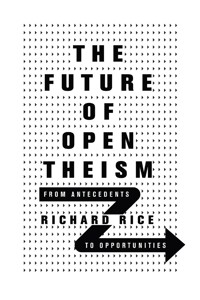
Open theism has reached its adolescence. How did it get here? And where does it go from here? Since IVP's publication of The Openness of God in 1994, evangelical theology has grappled with the alternative vision of the doctrine of God that open theism offers. Responding to critics who claim that it proposes a truncated version of God that fails to account for Scripture and denies many of the traditional attributes of God, open theism's proponents contend that its view of God is not only biblically warranted but also more accurate—with a portrayal of God that emphasizes divine love for humanity and responsiveness to human free will. No matter what one's assessment, open theism inarguably has made a significant impact on recent theological discourse. Now, twenty-five years later, Richard Rice recounts in this volume the history of open theism from its antecedents and early developments to its more recent and varied expressions. He then considers different directions that open theism might continue to develop in relation to several primary doctrines of the Christian faith.
Sie lesen das E-Book in den Legimi-Apps auf:
Seitenzahl: 489
Veröffentlichungsjahr: 2020
Das E-Book (TTS) können Sie hören im Abo „Legimi Premium” in Legimi-Apps auf:
Ähnliche










For Gail
The Companion of My Life
AFTER COMPLETING GRADUATE SCHOOL, I joined the faculty of Loma Linda University in the mid-1970s, so it could take a book nearly as long as this one to list all the people I am indebted to in one way or another—teachers, colleagues, students, and friends. The following is therefore a severely abbreviated list.
I enjoyed the academic life from college through graduate school and recall with appreciation my teachers along the way, including professors Roy Branson, Dan Cotton, James Cox, Raoul Dederen, Fritz Guy, Earle Hilgert, Gottfried Oosterwal, Royal Sage, Walter Specht, and Herold Weiss. At the University of Chicago Divinity School, I was enriched by the instruction of professors Brian Gerrish, Langdon Gilkey, James Gustafson, Bernard McGinn, Schubert M. Ogden, Norman Perrin, and David Tracy, my dissertation advisor.
I have appreciated the academic expertise and personal friendship of numerous colleagues on the religion faculties of both Loma Linda University Health and La Sierra University, as well as the leadership provided by deans John Jones, Gerald Winslow, and Jon Paulien.
To paraphrase Reinhold Niebuhr, nothing worth doing can be accomplished alone, and I feel a special connection to a number who have found the open view of God helpful and have given careful thought to the issues it raises. These include David Basinger, Gregory Boyd, William Hasker, Thomas Oord, Clark Pinnock, and John Sanders, as well as other theologians and philosophers whose works I have cited in the following pages.
I am grateful to the numerous people at IVP Academic who have undertaken the many tasks involved in the production of this book. I especially want to thank two editors, David Congdon, who encouraged the book’s initial development, and David McNutt, who has provided valuable guidance in bringing it to publication. I would also like to thank John Sanders for his helpful suggestions for improving the manuscript and two anonymous readers for theirs. My editorial assistant, Gayle Foster, also contributed by carefully reading the manuscript and preparing the bibliography.
Finally, nothing would be possible without the love and support of family, the ones who ultimately make our lives worth living. Watching our daughter Alison and son Jonathan grow to adulthood, achieve professional success, and become loving parents themselves has been a constant source of joy. My wife, a faculty colleague who interrupted her own education years ago so I could complete mine, is the object of my lasting gratitude and ever growing affection. I dedicated my first book to her and I’ve done the same with this one.
HOW DID OPEN THEISM GET STARTED?
Open theism first attracted the attention of Christian theologians some twenty-five years ago when IVP published a symposium volume by five conservative scholars under the title, The Openness of God: A Biblical Challenge to the Traditional Understanding of God.1 Their contributions explored the topic of God’s relation to the world from a distinct vantage point with five specific concerns in mind—its biblical, historical, theological, philosophical and practical aspects.2 Within a short time, the ideas presented in the book generated vigorous discussion.
According to the openness of God, God’s essential nature is love, and out of love God chose to bring into existence a world containing creatures endowed with the capacity to love him in return. As a personal being, God seeks a personal relationship with the creatures, so God is intensely interested in, and genuinely affected by, their actions and decisions. God is open to the world, and the world is open to God. Both Creator and creatures contribute to the ongoing course of events, and God experiences these events as they happen. In giving those who bear his image the freedom to return his love, God ran the risk that they might pursue their own goals rather than God’s. But despite the pain their rebellion brought him, God’s commitment to their welfare remains unconditional, and he continues to pursue his goals for creation. The dramatic interchange, the give-and-take, between God and humans that we find in the Bible strongly suggests that God experiences events as they happen. From God’s perspective, therefore, past and future are not the same. In other words, time is real for God.
A lot has happened in the years since the publication of The Openness of God. My purpose in this discussion is to recount some of the notable steps in the development of open theism so far and then to explore some of the ways in which it may continue.
In chapters one and two we’ll look at the arrival of open theism, beginning with the work of several thinkers who anticipated its concerns, largely from their individual study of the Bible. Then we’ll review the contents of the 1994 publication, as well as additional expressions of open theism by some of its early proponents.
Whether it comes up in formal discussion or casual conversation, the topic of God easily gives rise to a host of philosophical and theological issues. So it is no surprise that proposals that deal with God from a novel perspective should generate questions and criticisms. After all, the concept of God is central to Christian theology—so important that it affects the entire range of Christian beliefs. To quote Paul Tillich, “The doctrine of God . . . is the beginning and end of all theological thought.”3
Those of us who contributed to The Openness of God, along with others who supported its ideas, knew that we were describing a concept of God that differed from more widely accepted views. But we were taken aback at the intensity of the criticism and the price certain open theists were forced to pay. In chapter three we will review some of the back and forth between open theists and their critics that occurred within roughly the first decade after the 1994 publication.
Once the first waves of criticism subsided, and it appeared that the open view of God would survive the rather harsh responses that greeted its earlier expressions, a number of more extended and substantive engagements began. As the tone softened, the depth of discussion increased, and soon rather complex arguments arose concerning various features of open theism, along with their scientific and philosophical implications.
As the range of issues that captured their attention expanded, variations in the views of open theists themselves emerged. Chapter four considers a few examples of the exchanges open theism has generated concerning philosophical issues such as the nature of time, the nature of the future, and the fulfillment of divine purposes. In chapter five, we will bring the first phase of our discussion to a close by reviewing some of the different approaches open theists have taken to issues such as the origin of evil, the necessity of creation, and the nature of divine activity.
WHAT DOES OPEN THEISM REPRESENT?
One of the questions that hovers over the openness of God is just what this particular development represents. For a number of people who embrace the more familiar view of God, open theism not only varies from the traditional view, it denies God’s most fundamental qualities. In an early review of The Openness of God in Faith and Philosophy, Edward Wierenga focused on the ways open theism differs from traditional theism and found all the arguments for doing so unpersuasive. This is how he described “the complex web of theological and philosophical claims” behind open theism: “First, the authors deny that God has the traditional attributes of simplicity, impassibility, immutability, and eternality. Second, they hold that God is omniscient, but only in an attenuated sense.”4 The use of words like “deny” and “attenuated” is typical of the way open theism was often characterized. People viewed it as detracting from, rather than affirming, certain divine qualities, suggesting that the primary task open theists faced was to overcome the objections their position raised.
Paradoxically, however, those who opposed open theism early on may have perceived its revolutionary potential more clearly than those of us who proposed it. What open theists themselves viewed as a modest revision in the traditional view of God—one more in keeping with the biblical portrayal of God’s relation to the world—others perceived as a radical departure from orthodoxy. Admittedly, the subtitle of the 1994 work, A Biblical Challenge to the Traditional Understanding of God, may have been provocative. It underscores the fact that open theism varies from the traditional view of God and suggests that the latter is less than truly “biblical.”
At any rate, there seems to be no smooth transition from the “traditional” view of God to the open view. The contrasts between them are too stark. In fact, their differences are reminiscent of the contrast between scientific paradigms that Thomas Kuhn describes in The Structure of Scientific Revolutions. On Kuhn’s account, the most noteworthy advances in science occur when “normal science,” the steady acquisition of data within a well-established, widely accepted perspective, accumulates enough “anomalies” to challenge its plausibility, and someone comes up with a significantly different approach. The result is a revolution, a radical large-scale transformation in the way people look at things. What is distinctive about such a transition is the incommensurability between the old and new paradigms. There is no clear path from one to the other. Within the new paradigm, everything looks different. In Kuhn’s words, “After a revolution scientists work in a different world.”5 Not surprisingly, it takes time for a new paradigm to catch on. There may be considerable resistance from those who have operated within the old, and then it can take a while before the value of the new paradigm becomes evident.6
In many of the interactions between open theists and theologians who embrace the more traditional view of God, one has the sense that they are operating from different paradigms. What open theists see as essential to the Christian view of God, classical theists view as problems that can be effectively solved within the classical paradigm. For example, there are biblical texts that assert that God does not change and others that assert that God does. Which are considered central to a biblically based concept of God, and which are considered peripheral and subject to qualification, will vary depending on one’s theistic paradigm. For divine determinists, biblical descriptions of God changing his mind are figures of speech that are incidental to the basic portrait of God as the glorious all-determining sovereign who controls the world in all its detail. For open theists, such descriptions are powerful indications of God’s responsiveness to human actions and decisions, and of the temporal, or successive, nature of divine experience.7 Both groups look at the same landscape, but see it in a different light. A puzzling detail or an apparent paradox that is incidental from one perspective may represent a profound insight, indeed, an indispensable truth, from another.
When presented with a novel picture of God, many, like Wierenga, are inclined to note the things that it implicitly or explicitly denies. But for open theists, their position is noteworthy for the range of values it attributes to God, including the distinctive experiences of momentary sensitivity and responsiveness to others—seeking their cooperation, taking delight in their creativity, rejoicing when they return his love, and experiencing disappointment with their failures, suffering their sorrows. For open theists, it is the view of God as utterly impassible and immutable that denies important things to God, in particular, the elements of genuine personal interaction, such as momentary responsiveness and sensitivity to the experiences of others in all their complexity.
It is true that open theism was from the beginning envisioned as an alternative to views of God that had widespread acceptance in the Christian world, whether we call it classical theism, traditional theism, or use some other designation, and that its elements were often as not developed in contrast to corresponding themes in the rejected position. But here I would like to take a different path and articulate open theism “from the inside,” as it were. For its proponents, open theism is not merely a corrective to a few well-known theological conundrums, but a sweeping vision that places everything we might say about God in a new light. If there is one thing that supporters and critics of open theism seem to agree on, it’s that a great deal about God and God’s relation to the world looks different from the openness perspective.
Kuhn, of course, invoked the notion of a paradigm shift to describe dramatic changes in scientific perspective, and there are significant differences between theology and science, both in the sort of evidence to which they appeal and in the communities to which they belong. The evidence to which Christian theologians appeal, at least conservative Christians, is not subject to new empirical discoveries or the invention of new instruments. And when the convictions of a theologian change, it raises questions of a personal sort that scientists typically do not face. As one of the characters in an Iain Pears novel asks, “How is that when a man of God shifts his opinion it proves the weakness of his views, and when a man of science does so it demonstrates the value of his method?”8 So, while paradigm shifts in either are not always welcome, they are far less welcome in religion than in science. Since theology is concerned with the essentials of eternal salvation, theological investigation bears a burden from which scientific inquiry is exempt. For many, like Kuhn, science is better described as an account of “the community’s state of knowledge at a given time,” rather than “some one full, objective, true account of nature.”9 But the claims made for theology are never that modest.
The challenge to debate such matters has occupied a good deal of the energy of open theists. But the attractions of open theism are not likely to emerge if we wait until the various objections to it are overcome. What I suggest here is that we treat the openness of God as a paradigm in the sense that Kuhn describes it—as a new way of looking at things, one that changes many previously accepted explanations. So, once we have considered aspects of the development of open theism in chapters one through five, we’ll inquire as to its transformative possibilities. Accordingly, our guiding question in chapters six through eleven is this: What do the elements of Christian faith look like from the perspective that open theism provides?
As an introduction to part two, I suggest in chapter six that we dispense with the popular description of open theism as proposing a “limited” view of God. The connotations of that way of describing open theism are inherently negative, even when used by its supporters. Those who embrace the open view of God do so because they believe that it enhances and enriches our concept of God rather than limiting it.
The discussions in chapters seven through eleven deal with a selection of specific questions that some of the ideas basic to open theism raise. For open theists, the future is open, or indefinite, and God’s experience of the world is therefore temporal or sequential.
Does the concept of temporality apply to God’s inner life as well as God’s experience of the world? Chapter seven argues that it does and connects the idea of divine temporality with a trinitarian concept of God.
Another idea basic to open theism is the reality of human freedom, understood as libertarian freedom, or “freedom to do otherwise,” as it is often defined. But the more we learn about the physical basis of our experience, the more people wonder about the extent or even the existence of human freedom. Chapter eight examines some of the current arguments related to human freedom and argues that there is important evidence that we are, indeed, significantly free.
The doctrine of incarnation is basic to the Christian understanding of salvation, and it raises questions about the nature of Jesus’ earthly life, especially his moral experience. Chapter nine explores the central issues involved in Jesus’ temptations and the question of whether or not his victory was inevitable.
The conviction that nothing is more important than a personal relationship with God, and that it depends on our individual decisions, raises questions in the minds of many people about the importance or even the value of Christian community. Chapter ten argues that participating in the community that Jesus established is not merely a consequence of the experience of salvation, it is essential to it.
Finally, there are divergent views among Christians about the nature of the life to come. Chapter eleven presents reasons to believe that everlasting life is an important aspect of the Christian view of human destiny and is best conceived as an everlasting series of experiences.
A final word. Since I was one of the contributors to the 1994 volume, my own commitment to the open view of God is obvious. So this discussion will inevitably reflect my own attraction to open theism. At the same time, I’ll be speaking as an open theist, but not necessarily for open theists. As we shall see, there is considerable diversity in the views of those who accept the central ideas of open theism, but open theists have generally avoided attempts to define boundaries in ways that would generate unfruitful exchanges. I appreciate this reluctance, and I hope our openness to one another’s views will continue.
PEOPLE SOMETIMES SAY NOTHING ever happens for the first time. And though The Openness of God attracted the attention of a new arrival when it appeared in 1994, people had been discussing many of its central ideas for a long time—for centuries as a matter of fact. In the “Open Theism Timeline” he prepared in 2013, Thomas Lukashow traces the antecedents for open theism back to the seventeenth century (and even beyond), citing numerous works on divine knowledge of the future, human freedom, and closely related topics. There are a number of more recent precedents for open theism as well.
In this chapter, we will review the work of several Christian thinkers who explored these themes, often at considerable length, not that long ago. Their efforts show that the central issues that concern open theists have occupied thoughtful people for quite some time, a number of whom, though lacking formal theological training, developed impressive arguments for their convictions.
JACOBUS ARMINIUS
For many people, Jacobus Arminius (1560–1609) was an essential figure, perhaps the essential figure in the history of “free will theism.” In reaction to Calvin’s doctrine of predestination, Arminius maintained that one’s salvation requires a positive personal response to God’s gracious invitation. Since we are free to accept or reject God’s invitation, God’s will is not all-determining. God allows the creatures to make decisions and contribute to the ongoing course of events.
Like many free will theists, Arminius accepted God’s absolute foreknowledge, but he admitted that he did not have a good explanation for it. “The knowledge of God,” he states, “is eternal, immutable and infinite, and . . . extends to all things, both necessary and contingent. . . . But I do not understand the mode in which He knows future contingencies and especially those which belong to the free-will of creatures.”1
Arminius had his own suggestions for resolving this dilemma, and other free will theists have theirs as well, from middle knowledge to simple foreknowledge. Those who espouse “open theism” dissolve the dilemma by maintaining that future free decisions are logically unknowable, or “not there to be known.” So the fact that God’s (fore)knowledge does not include them does not, in any way, detract from divine omniscience. God still knows all there is to know. But this is getting ahead of our story. Our purpose in this chapter is to look at some of the figures whose ideas anticipated open theism and preceded its emergence as a distinct theological development.
ADAM CLARKE
There are precedents for open theism in the writings of several nineteenth-century figures. One was Adam Clarke (1760–1832), an English Methodist theologian, whose six-volume commentary on the New Testament exerted a significant influence on Bible students for two centuries.
Clarke appends some thoughts on “that awful subject, the foreknowledge of God” to his comments on Acts 2. To summarize Clarke’s argument, God ordains that certain creatures have freedom, their free actions and decisions are therefore contingent, and God’s knowledge of these contingencies is itself contingent. If creatures are not genuinely free, “then God is the only operator” and “all created beings are only instruments.” “By contingent,” Clarke asserts, “I mean such things as the infinite wisdom of God has thought proper to poise in the possibility of being or not being. . . . [They] are such possibilities, amid the succession of events, as the infinite wisdom of God has left to the creatures to determine.”2
Without contingency, there would be no free agency, and that would leave God as the sole actor, making him “the author of all the evil and sin that are in the world.” If God predetermines everything, and his determinations are all necessarily right, then nothing the creatures do is wrong. This would mean that “sin is no more sin” and distinctions such as “vice and virtue, praise and blame, merit and demerit, guilt and innocence, are at once confounded, and all distinctions of this kind confounded with them.” The contingency that creaturely freedom involves provides a basis for moral responsibility. There is a distinction, then, within God’s decisions regarding creation. God “has ordained some things as absolutely certain; these he knows as absolutely certain. He has ordained other things as contingent; these he knows as contingent.”
The contingency that creaturely freedom and moral responsibility necessarily require has important implications for divine foreknowledge. God’s knowledge of contingencies must itself be contingent. “It would be absurd to say that he foreknows a thing as only contingent which he has made absolutely certain. And it would be as absurd to say the he foreknows a thing to be absolutely certain which in his own eternal counsel he has made contingent.”
Though Clarke insists that there is a difference between God’s knowledge of necessities and his knowledge of contingencies, he seems to collapse the two with his view of divine eternity. Strictly speaking, he argues, God does not have foreknowledge, because nothing is either past or future to God. Since God exists in eternity, “he is equally everywhere,” in both the past and the future. Indeed, he “exists in one infinite, indivisible, and eternal NOW.” As a result, God sees the future as clearly as he sees the past. God may not decide everything that happens, but God knows everything that happens. So, from God’s perspective, there is nothing indefinite about the future. As William M. King observed, Clarke “flirted with a denial of absolute prescience in his Commentary on Acts,” but ultimately shied away from it.3
LORENZO McCABE
Another nineteenth-century Methodist who addressed the topic of divine foreknowledge—and was not reluctant to deny it—was Lorenzo Dow McCabe (1817–1897), author of two books on the subject.4 In Divine Nescience of Future Contingencies a Necessity, McCabe, for years a professor at Ohio Wesleyan University, discusses no fewer than fifteen reasons for this thesis, ranging from “the necessity of things,” through “the divine perfection,” “the utility of prayer,” “a satisfactory theodicy,” and “a universal atonement,” among other things, to “the reality of time.”
Not surprisingly, McCabe focused on the issue of divine foreknowledge, the topic that gives rise to the most persistent challenges to open theism. Like open theists a century later, he drew on the resources of philosophy, scriptural exegesis, and religious experience to support his concept of divine nescience.5 As a Methodist, McCabe affirmed the reality of human freedom, and he insisted that free actions are of necessity contingent. But it is precisely on this point that freedom and the traditional view of divine foreknowledge come into conflict. How could contingent events be known before they occur? Absolute divine foreknowledge excludes all contingency. It “makes every event of the future just as absolutely certain as does the doctrine of unconditional predestination which declares there is a causal necessity.”6 Indeed, “if God proposes to deal with us on the principle of contingency, our future choices ought to be as truly contingent in his mind as they are contingent in ours.”7
It was not just that absolute foreknowledge conflicts with human freedom that bothered McCabe. Even more upsetting was the picture of God as a timelessly omniscient being. Remove all notion of contingency from God, and we are left with a God who is “immovably fixed,” locked in “the iceberg of indifference,” in short, a God who is not, in any meaningful sense, a personal, or “personic,” being.8
What makes the concept of absolute foreknowledge so objectionable, then, is what it takes away from God. It robs God of an entire range of positive experiences, including delight, enjoyment, curiosity, love, novelty, surprise and wonder, the thrill of “new thoughts, new desires, purposes and plans.”9 And it prevents God from sharing and suffering in the moral struggles of humanity.10
Unlike the immutable deity of Christian tradition, a truly personal being is one who can deliberate and make decisions, one whose actions are necessarily “successive and hence separable and distinguishable in duration.”11 In other words, a truly personal God is one whose experience involves temporality. God’s relation to creation is a changing process, and since God’s activity is a temporal one, God himself is “in time.”12 Unless God undergoes actual development in his relation to the contingent world, we cannot describe him as having free will and as a center of personal consciousness. So, the traditional defense of divine foreknowledge, resting as it does on notions of divine immutability and timelessness, is unacceptable.
Another problem with the traditional view is its failure to do justice to biblical accounts of God, in particular, descriptions of conditional prophecies, such as those of Jeremiah. It seems clear from such passages that God does not know what decisions human beings will make in the future and that God’s experience registers those decisions only when they occur. Indeed, they show that “the conduct of men perpetually changes God’s feelings and modifies his treatment of them.”13
Finally, absolute foreknowledge and the attendant notion of divine timelessness conflict with the value of prayer. If God is timeless, how could prayer make sense? How could it have the slightest influence on God’s “thoughts, feelings, purposes and volitions”?14
McCabe insisted that his revisionary ideas do not detract from God’s essential qualities. For one thing, he found a parallel between omnipotence and omniscience. Just as omnipotence is “circumscribed by the possible,” “omniscience must be limited to the knowable,” and this excludes future contingencies.15 For another, he described the interactive relationship between God and creation as a “voluntary self-limitation,” a choice for God, not a necessity.16 And perhaps most significantly, he distinguishes between God’s “subjective” and “objective” lives. In God’s objective life, that is, “his life, experience, interest, and enjoyment,” is necessarily contingent, while his subjective life is eternal and “may not be a process of becoming and of passing away.”17
When it comes to God’s relation to the world, this view of God brings with it an open-ended view of history and an interactive view of divine providence. For McCabe, creation was a “pure venture” on God’s part, a great and fair experiment. While God’s purposes must ultimately prevail, just how this will happen is “unfixed, undetermined, and therefore uncertain.”18 Moreover, the fulfillment of these purposes requires human cooperation; it is not something God can determine unilaterally. What God ultimately wants is a kingdom of “co-creators, co-causes, co-originators, and co-eternal with himself in the realm of the contingent.”19
In defending his view of God, McCabe exhibits the conviction of later open theists that it takes nothing away from God for us to reject absolute foreknowledge and embrace divine temporality. Instead, it significantly enriches and enlarges our picture of God. The view that God is actively engaged in the world, responding and reacting to the actions and decisions of humans, provides us a far more personal picture of God than the one that absolute foreknowledge requires.
Yet, however interesting McCabe’s views are in light of our concerns today, they had little influence on his contemporaries and went largely unnoticed. But even so, his formulations provide an interesting precedent for later reflections on the nature of God. As William King concluded, “With the limited theological and exegetical resources at his disposal, [McCabe] was still able to articulate a doctrine of God that was somewhat ahead of its time.”20
In another study, David Alstad Tiessen finds in McCabe’s work a nineteenth-century Wesleyan precedent for open theism. The two views share a commitment to the primacy of scriptural revelation, an emphasis on God’s concrete personality, a distinction between God’s unchanging nature and his experience and action, along with similar concepts of creation, divine will, knowledge, and perfection.21 There are differences, of course, such as the prominent role that the social Trinity plays in the openness model. But the similarities are strong enough to regard McCabe’s views as a “proto-openness model” of God.22 Tiessen draws another interesting conclusion from his study as well. The fact that McCabe operated in a “pre-process milieu,” he argues, shows that open theism cannot be dismissed as “a twentieth-century capitulation to process theology. . . . [It] is a model with deeper roots than might appear at first glance.”23
JULES LEQUYER
Another nineteenth-century figure whose ideas anticipated the concerns of open theism was Jules Lequyer (1814–1862), an obscure French genius, who published nothing during his lifetime, but whose writings attracted the attention of a wide range of thinkers, from French existentialists to the American pragmatist William James and the process philosopher Charles Hartshorne. According to an informative article by Donald Wayne Viney, Lequyer’s philosophy of freedom develops in detail the idea of the openness of God.24
Lequyer affirmed a compatibilist idea of human freedom and he equated freedom with creativity. In creating beings who were free, God created beings who were themselves creative, so their decisions bring into existence something for which God is not responsible. Not only are these decisions independent of God, they have an effect on God. And this requires a revision in the classical notion of God as pure act with “no admixture of potency”—the view that God is wholly simple, eternal, immutable, and impassible, complete in himself, independent of and utterly unaffected by anything other than God. Since God’s creatures have a genuine effect on God, there is a qualified sense in which the Creator himself is also created.
Another noteworthy element in Lequyer’s thinking is a denial of absolute foreknowledge. If the creatures have creative freedom, God cannot know ahead of time what their decisions will be. As a result, God’s experience of temporal reality must itself be temporal. Lequyer rejects the argument of Boethius that God experiences simultaneously events that occur successively. The fact that God knows future events as possibilities, not actualities, does not limit God’s knowledge.25
Thinkers who affirm libertarian freedom and take Christian tradition seriously inevitably face questions about prophecy and providence, and Viney explores Lequyer’s answers to both. Lequyer distinguishes between absolute and conditional prophecies. By acting, or not acting, in a certain way, God may guarantee the fulfillment of “absolute prophecy,” like Peter’s denial of Jesus. Knowing the state of Peter’s heart, God anticipated that he would deny Jesus and decided not to interfere. When it comes to conditional prophecy, what eventually does or doesn’t occur depends on how humans respond to God’s commands, with Jonah’s prediction of Nineveh’s destruction being the classic example. Such prophecies presuppose human freedom.26
As for divine providence, the same factors at work in prophecy account for the achievement of God’s purposes, namely, God’s extensive knowledge of the consequences of free decisions, and God’s active role in fulfilling absolute prophecies.27
Viney concludes with this assessment of Lequyer’s legacy. He “anticipated and expanded upon the idea of the openness of God.” With his solution to the ancient problem of divine foreknowledge and human freedom is born “not only a critique of traditional arguments but new ways of conceiving the divine life and its relation to the flux of time.”28
GORDON C. OLSON
Though McCabe’s views on divine foreknowledge did not attract a following during his lifetime, they were appreciated by others who wrote on the topic years later, such as Gordon C. Olson (1907–1989) and H. Roy Elseth. Olson, by trade a tractor design engineer and moral government teacher, wrote two noteworthy books on the nature of God, some thirty years apart, The Foreknowledge of God29 and The Omniscience of the Godhead.30 In one section of a later book that deals with a wider range of issues, The Truth Shall Make You Free, Olson summarizes his views on “the nature and character of God.”31
There are aspects of Olson’s account that will no doubt trouble theologically informed readers. His account of the trinity verges on tritheism,32and his argument that we can infer what God is like from our analysis of human experience because we are created in God’s image could lead to unwarranted anthropomorphism. But he offers impressive arguments that sequence, succession, duration—call it what you will—is intrinsic to the biblical portrayal of God, and the sheer number and variety of descriptions make it difficult to dismiss them as mere concessions to our finite minds. Since there is “a true chronology of divine succession in the Divine existence,”33 we cannot bring our thinking about God into line with the Bible unless we think of God’s experiences and actions as taking place over a duration of time.
As a result, the familiar idea that God is “above time,” and sees all of human history in one indivisible perception, is incompatible with what the Bible says. Indeed, “the theological dogma that God is an ‘eternal now,’” the belief that “time or succession is not an element in the Divine existence, is evidently a philosophical rather than a Biblical concept.”34 It represents nothing less than an intrusion of alien ideas into the thinking of the early church.
With these considerations in mind, Olson gives special attention to the attributes of omnipotence and omniscience. The idea of omnipotence means that God has power or energy without limit as far as sheer force is concerned. But it does not mean that God’s power has no limits, or is all-determining. For example, God cannot abolish the laws of mathematics, make something be and not be at the same time. Nor can God do things “contrary to himself,” things that violate his moral nature. More significant, however, God has choices. He can choose to live with “a restrained sovereignty.” That is, he can choose the specific ways in which he wants to exercise his power. If God exercised absolute control, in particular, if God compelled moral beings to act in certain ways, it would “eliminate the reason for their creation.” Because he placed the value of a moral world above “an unlimited display of omnipotence,”35God grants them the power of self-determination. In creating moral beings, then, beings who have “the power of contrary choice,” God rendered himself vulnerable to human obstinacy and disobedience.
When it comes to omniscience, Olson concludes from “a painstaking reading of the Bible”36 that God’s knowledge cannot include “the future choices of moral beings,” when “acting in their moral agency,” because such events do not exist until they take place. Still, there is a great deal about the future that God does know in advance. God knows “many future choices, actions, and mass reactions of men” and makes his plans accordingly. And as the future acquires a definite shape, God’s plans similarly become more definite, moving from mere possibilities, through likelihoods, to future certainties. For example, God worked out the plan of atonement through Christ “as a possibility” before the foundation of the world, and the plan became a certainty in God’s mind from the moment humanity sinned.37
There are also events that God knows in advance because he decides to bring them about. Olson is a bit tentative here, saying first, they “appear to be associated with the idea of causation,” and later, “God can prophesy . . . many things because He has determined to bring them to pass by His direct causation.”38 These include the hardening of Pharaoh’s heart, the naming of Cyrus, king of Persia, the seventy-year captivity of the Jews, and remarkably, the insistence of the Jewish leaders of Christ’s time that he be executed by crucifixion rather than by stoning.39
Many other passages, in contrast, “when taken in their natural meaning,” seem to show that God does not have “absolute foreknowledge over all His future actions, nor over all those of His moral creatures.” The word repent and its derivatives describe God’s actions some thirty-three times in the Old Testament, from God’s regret over having created the world, which led to the flood, through his choice of Saul to be king, to the decision to destroy Nineveh. And based on his study of the New Testament, to mention three examples, Olson argues that Judah’s betrayal of Jesus was not a foregone conclusion, but a “tragic surprise,” that the return of Christ has not happened as soon as God anticipated, and that names can be blotted out from the book of life, which indicates that they must have been written there at some time.40
To sum up Olson’s conclusions, the biblical evidence requires us to regard God’s experiences of creation as an ongoing series of events, not as a timeless, comprehensive act of cognition. God is affected by human decisions and actions, and God takes them into account when making his own decisions. While God’s experience of and interaction with his creatures is variable, there are aspects of God that are utterly changeless, namely, the essential features that define God’s character. God’s goodness, holiness, righteousness, love and truthfulness are ever the same. In short, God is utterly faithful.41
HOWARD ROY ELSETH
Another Bible student who devoted detailed attention to specific themes and passages is Howard Roy Elseth, who graduated from a Bible college in Canada and later attended Seattle Pacific College (now Seattle Pacific University). His book, Did God Know? A Study of the Nature of God,42 contains the results of his meticulous Bible study. One of its appendixes, for example, lists “over 11,000 verses that reveal God changes his mind.” Another identifies a number of prophecies made to Israel that were not fulfilled. And the final two sections address “explicit verses which show God did not know man’s future free choices,” along with various occasions on which God changed his mind.
Elseth acknowledges an indebtedness to both McCabe and Olson—he describes McCabe as “a great, yet unrecognized theologian”43—and enthusiastically reiterates a number of their conclusions, often dismissing rejected alternatives with fervent indignation. He is particularly critical of Augustine and Calvin, as well as C. S. Lewis, three figures whose views of divine foreknowledge and predestination make God responsible for all that goes wrong in the world, human sin and suffering included. Elseth bemoans the fact that people who blame God for the tragedies in their lives often wind up hating him as a result. Although he finds extensive evidence in the Bible to support the idea that God’s relation to the world is dynamic and interactive, it is the question of divine knowledge, as the title indicates, specifically divine foreknowledge, that particularly concerns him.
To set the stage, Elseth insists on the reality of libertarian freedom. If God created humans with moral action, they must have freedom. And “freedom cannot exist without contingencies.”44 This creates a tremendous problem for the traditional concept of divine foreknowledge, because foreknowledge and freedom are utterly incompatible. The popular notion that God’s foreknowledge does not affect humanity’s freedom leaves one “glaring problem” unanswered. “How is it possible to have ‘foreknowledge’ without ‘predestination’?” If God has absolute knowledge of future events, those events must have been planned by him, and that makes him responsible for everything that happens.45 In contrast to the futile efforts of theologians to harmonize freedom and foreknowledge, Elseth finds in the Bible “a clear and consistent view of God’s knowledge,” and with it, a distinct alternative to the view that all reality is present to God at once.46 To the contrary, as the title of chapter seven puts it, “God lives in time.”
Time is not something created by God, it is an integral aspect of the divine experience.47 And this means that there is a real difference between past and future, not just from our perspective, but from God’s perspective too. Because God created beings who are free, God doesn’t know everything they’re going to do—not because there is something God doesn’t know, but because their decisions do not exist until they make them.48 Consequently, the divine life consists, not in a single timeless moment, but in an eternal duration of successive moments.
Far from diminishing God, Elseth argues, this concept of divine knowledge enhances our view of God. “It doesn’t take any power at all for God to deal with what is certain. All He has to do is sit back and watch what is happening, which He always knew would happen.” In contrast, “it takes a far superior God to deal with the challenge of that which is not yet known. . . . It takes a far greater being to run a universe that involves changes not known in advance than one that has no unexpected occurrences.”49
Although Elseth makes a number of logical points, the most notable feature of his project is the careful attention he gives to various biblical passages. For example, he argues that the Greek word for “foreknowledge” means something closer to the English word prognosis than “knowledge of something before it happens.” In other words, it means to predict, rather than to know. Accordingly, we should not read the texts where it occurs, such as Romans 8:29 (“For those whom he foreknew he also predestined”), as conveying the idea that God knows the exact choices of free agents.50
Elseth also has interesting things to say about the “sand trap” of biblical prophecy. The purpose of all prophecy, he argues, is “to call men to righteousness.”51 Only a small portion of prophecies involve foretelling the future, and these fall into two basic categories: “telic prophecies,” which become true “because of God’s causation or providential government,” and conditional prophecies, whose fulfillment depends on human response, such as Jonah’s prophecy of Nineveh’s destruction.52
A third prophetic category, which Elseth calls “ecbatic” prophecies, includes Old Testament passages New Testament writers apply to certain events with the expression “that the Scriptures might be fulfilled.” This phrase should not be understood to say that a particular event had to occur in order for a prediction to be fulfilled. Instead, it simply points to a similar situation, an application or illustration of something that happened before.53
Elseth devotes two chapters to verses that pose problems for his view of God, such as Jesus’ prediction that Peter would deny him—“The Briars and Thorns,” he calls them—and finds ways to harmonize them with his dynamic view of God. Approaching the end of the last chapter, he exclaims, “God knows all that is knowable and is capable of doing all that is possible. God is free! He can change his mind! . . . God is an all-loving God who loves, thinks, creates and who is real and genuine.”54
Though Elseth’s book lacks the trappings of a technical treatise—it abounds in personal appeals and rhetorical questions—it contains a vigorous argument and offers some serious exegetical work. And its underlying motive is evident throughout, namely, a desire to do justice to the full range of biblical descriptions of God.
CONCLUSION
With the exception of Adam Clark, none of the figures discussed above were recognized religious authorities. To my knowledge none of them acquired advanced degrees in philosophy, theology, or biblical studies. They seldom appealed to the work of previous scholars. Their views were not widely known and seem to have attracted little if any serious scholarly attention.
Given their location outside the theological mainstream, one can’t help wondering if the “avocational” nature of their interest in these issues freed them to look at God from a perspective unencumbered by the traditional vision of God’s essential attributes—eternity, immutability, impassibility, and so on. In contrast, the concerns that preoccupied these figures were the freedom, foreknowledge and providence of God. They viewed these topics as a network of related issues, each one of which leads inexorably to the others. And they all insisted on the importance of creaturely contingency and its effects on God’s knowledge and experience. Unfettered by the terms and concepts of traditional views of God, they were able to read the Bible in ways that allowed the features of the God-world relation to emerge more clearly.
There’s not much evidence that the work of contemporary open theists has been directly influenced by the work of these thinkers. But the positions they propose offer evidence that the picture of God later identified with “open theism”—or certainly some of its features—is one that thoughtful people have found appealing for quite some time, not least because it so nicely comports with the biblical portrayal of God.
TWO BOOKS HAVE BEEN PUBLISHED under the title The Openness of God, and by coincidence I was involved in writing both of them.1 The first appeared in 1980; the second, the one that has generated considerable theological and philosophical discussion, appeared in 1994.
In the summer of 1979 I presented a paper on God’s relation to the world at a conference on history and religion held at the campus where I was teaching. Some who heard the paper said the ideas deserved a more extended discussion, so I spent the rest of the summer working up a longer version. I’m not sure just how I came upon the phrase the openness of God. I may have been unconsciously influenced by E. L. Mascall’s book The Openness of Being, which I had read several years before as a graduate student.
Richard Coffen, an editor at Southern Publishing Association, a Seventh-day Adventist operation in Nashville, learned of the project and asked me for a copy of the manuscript, and I soon heard that it had been accepted for publication. Shortly thereafter, however, “Southern Pub” merged operations with the Review and Herald Publishing Association in Washington, DC, not far from denominational headquarters, so The Openness of God appeared under the Review and Herald imprint in late 1980. Evidently a number of people in the Adventist church found the ideas in the book troubling, and in response to their objections the RHPA administrative committee voted to withdraw the book from circulation in July 1981.2 This decision upset a number of other Adventists, however, who felt that the church should be more open to new ideas. Soon the administrative committee reversed itself, and the book became available once again, and sold out rather quickly. When the first run of books was exhausted, the publishers elected not to reprint it.
I thought my first scholarly effort had quietly expired until I received a letter out of the blue one day in April, 1984. It was from Clark Pinnock, a well-known evangelical theologian, who taught at McMaster Divinity College in Hamilton, Ontario, Canada. I recognized his name, of course, from his many articles in Christianity Today, but I had no idea why he would be writing to me. His letter began, “This is a shot in the dark,” and went on to say that he had read The Openness of God, liked it, and wanted to establish contact. He mentioned his transition from Calvinism to Arminianism and indicated that we had work to do. Pinnock also said he had “a heck of a time” getting the book and wondered if the publishers had withdrawn it. When I wrote back and told him what had happened, he suggested contacting Bethany House Publishers in Minneapolis. I did, and the next year they reissued the book, with a couple of minor modifications, under the title God’s Foreknowledge and Man’s Free Will.3
The next book to bear the title The Openness of God had its beginnings with a conversation between John Sanders and Clark Pinnock at the Wheaton Theology Conference during the summer of 1992. Sanders told Pinnock about a book idea he had on the nature of God and providence. It would draw on the biblical material that Terence Fretheim had done, the philosophical work of William Hasker, and practical theological considerations that David Basinger had published.
When Sanders said he was several years away from getting all the research done, Pinnock suggested that Sanders should see if Hasker and Basinger would be game for coauthoring a book. Sanders had never thought of a collaborative project, so he worked up a chapter outline of the book, sent it to Pinnock, and he liked it. Sanders then contacted Fretheim, Hasker, and Basinger. Fretheim could not participate, so Pinnock contacted me since I had written on the topic several years before.
When it came time to pick a title for our project, Pinnock suggested the original title of my first book. He felt that the word openness had a positive ring to it, conveying the ideas that God is open to the creatures and the future is open with multiple possibilities. Moreover, the expression didn’t carry any traditional theological baggage. The other contributors agreed and that’s how the title of this book originated.
With the 1994 publication of The Openness of God, the general perspective that God enjoys a highly interactive relation to the world, that God’s creatures have significant freedom, and that the future is indefinite acquired a verbal handle that has become widely used. The expressions openness of God, open theism, and openness theology now frequently appear in theological and philosophical books and articles.
The basic ideas in this theological perspective have been summarized numerous times and can be identified rather easily. Open theism arises from the conviction that love defines the very nature of God. Love is not merely an attribute or an activity of God—something God has or does—it is what God is in his very essence. Love defines God’s inner reality, and love characterizes God’s relation to all that is not God. In sovereign freedom, God created the world as an expression of the love that God is, and love not only accounts for God’s decision to create a world distinct from himself, love also comes to expression in all of God’s relations to the world.
Out of love, therefore, God created beings who themselves have the capacity to love—to enjoy loving relationships with God and with each other. In order to make creaturely love possible, God endowed the creatures with the freedom, the ability to respond with love to God’s love for them. Since coercion has no place in love, their response to God’s love had to be a choice, not an inevitability. It was not something God could unilaterally determine, or decide for them. Having chosen to create beings with a capacity for self-determination, God is not responsible for everything that happens in the world. The decisions and actions of the creatures also contribute to the ongoing course of events.
There are two further features of open theism that its affirmation of divine love involves. One is the fact that God is genuinely related to the creaturely world. God is intimately involved in the affairs of the world, both acting within it and interacting with it. God affects the world, and the creaturely world affects God. Everything that happens has an effect on his experience. Consequently, God’s reactions to what happens in the world involve immense variety—from joy and delight through great concern to disappointment and dismay.
At the same time, what happens in the world, indeed, whatever happens and no matter what happens, God’s commitment to the world is unconditional. God’s love for the creatures is not contingent on their response to his love. God relentlessly pursues his purposes for the world, inviting the creatures to accept his love and join in fulfilling his dreams and achieving his hopes for them.
This interactive portrait of God’s relation to the world involves temporality. Open theists express God’s temporality in various ways. Although some say that God is “in time,” another way—preferable in my view—would be to say, “time is real for God.” In other words, God’s experience is sequential; “before” and “after” apply to God’s inner life.4 God is “with us” in the going course of events that constitute creaturely reality. And God’s decisions and actions make a real difference, not only to the creatures, but also to God.
The concept that God experiences events as they happen, rather than all at once, has important implications for divine knowledge. Since free choices don’t exist until they are made, God experiences them as they occur rather than ahead of time, or from all eternity. This concept of divine knowledge—“dynamic omniscience” as John Sanders calls it—enables us to make sense of a wide range of biblical passages, such as those that speak of God testing people; asking questions about the future; being surprised, delighted, and disappointed; experiencing regret and sorrow; and perhaps most important, changing his mind in response to human decisions and actions.
The open view of God thus provides a paradigm in which the world represents a work in progress, a source of ongoing divine experiences, rather than an object of a single, all-inclusive perception. So, it is better to think of the world as God’s adventure rather than God’s invention, or as God’s project rather than God’s product.5
With this general sketch in mind, let us look more closely at the version of The Openness of God that gave its name to this theological development. Then we’ll review three of the proposals from open theists that spell out their positions in more detail.
THE OPENNESS OF GOD, 1994
As the subtitle of this seminal volume makes clear, A Biblical Challenge to the Traditional Understanding of God, a primary objective of these essays was to describe the features of open theism that set it apart from the more familiar view of God, which is variously described as “classical,” “traditional,” and “conventional.” And it compares the two in light of historical, theological, philosophical, and practical, as well as biblical, concerns in mind.
As considered by open theists, the various biblical descriptions of God responding to human actions, occasionally reconsidering his decisions, variously expressing joy or regret, are to be taken just as seriously as affirmations of divine eternity, changelessness, and steadfastness. In contrast to traditional interpretations, these descriptions should not be regarded, or disregarded, as mere affectations or figures of speech, that is, as anthropomorphisms or anthropopathisms that characterize God as if his decisions, actions, and indeed, feelings, were affected by conditions in the creaturely world, but do not literally do so. Basic to open theism is the conviction that God genuinely, not merely figuratively, interacts with creaturely reality. God not only affects the world, the world has an effect on God.6
The discussion of biblical support for an interactive view of God reviews statements that describe God as responsive to things that happen in the world—as variously having certain emotions, changing his attitude, or modifying his plans—as well as statements that indicate creaturely freedom, such as divine warnings and promises.7 It also suggests that we can reconcile passages that describe God as changing with those that describe God as changeless if we apply them to different aspects of the divine reality. Thus, in his existence and character, God is absolutely immutable, through all eternity never other than he is. But in his experience, that is, in his concrete actuality, God is infinitely sensitive to the ongoing course of creaturely events and therefore constantly changing.8
In the historical chapter, John Sanders attributes the prominence of immutability, impassibility, timelessness, and simplicity in traditional doctrines of God to the pervasive influence of Greek philosophy on Christian theology. For all the benefits of this “biblical-classical synthesis”9—and they were not insignificant—it obscured the personal qualities of God that appear in the biblical portrait, leaving the broad stream of Christian thought, from the church fathers, through Augustine, Aquinas, and the Reformers, to most contemporary evangelicals, with a view of God that lacks the ability for genuine personal relationship.
In the chapter on systematic theology, Clark Pinnock applies the distinction between open and traditional views of God to the familiar list of divine attributes. He notes that the influential models of God as caring parent and aloof monarch both affirm divine sovereignty, but provide contrasting perspectives on the way God governs. Unlike the traditional portrait of God as immutable, all-powerful, and all-determining, the open view of God emphasizes God’s sensitivity, responsiveness, and vulnerability. It portrays God as intimately involved in history—rather than standing above or apart from it—and as variously delighted and saddened by human decisions and behavior.10
As Pinnock describes it, this perspective provides a helpful corrective, drawn from the Bible, to the tendency to emphasize divine transcendence over divine immanence.11 A social view of the Trinity provides a basis for affirming both God’s self-sufficient fullness and God’s openness to the world in overflowing love.12 The difference between them is not whether God is all-powerful, but the way in which God exercises power. Instead of unilaterally determining all that is, God’s love is nurturing and empowering. From Pinnock’s perspective, “total control is not a higher view of God’s power but a diminution of it.”13 God expresses his power by sharing it with some of the creatures.14




