


21,99 €
Mehr erfahren.
- Herausgeber: Klett-Cotta
- Kategorie: Geisteswissenschaft
- Sprache: Englisch
From cultural export to global network: Germany's cultural institute How have the challenges, role, and vision of one of Europe's most important cultural institutes changed over the past decades? Carola Lentz and Marie-Christin Gabriel offer a concise history of the Goethe-Institut from its beginnings in Cold-War West Germany to its mission in today's multipolar world. Historical documents combined with interviews with former and current staff members provide lively impressions of the institute's work in 98 countries. From cultural export to global network: this phrase aptly summarises the over seventy-year story of the Goethe-Institut, which is closely interwoven with Germany's post-war history and with global transformations. In the beginning, the institute's work was focused on promoting the German language abroad and exporting 'German culture'. But the understanding of culture soon became more diverse. The Goethe-Institut developed into the largest intermediary organisation in German foreign cultural and educational policy, and in the process eventually redefined its role. Today, the Goethe-Institut, with a total of 151 institutes in 98 countries, operates primarily as a global network of local and regional cultural initiatives. An up-to-date afterword reflects how the institute is responding to the recent multiple crises such as the Corona epidemic, the wars in Ukraine and the Middle East, and the increasing number of illiberal regimes.
Das E-Book können Sie in Legimi-Apps oder einer beliebigen App lesen, die das folgende Format unterstützen:
Seitenzahl: 396
Veröffentlichungsjahr: 2024
Ähnliche



















The Goethe-Institut
A History from 1951to the Present
by Carola Lentz and Marie-Christin Gabriel
Klett-Cotta
Impressum
Klett-Cotta
www.klett-cotta.de
J. G. Cotta’sche Buchhandlung Nachfolger GmbH
Rotebühlstr. 77, 70 178 Stuttgart
© 2024 by J. G. Cotta’sche Buchhandlung Nachfolger GmbH, gegr. 1659, Stuttgart
Alle Rechte inklusive der Nutzung des Werkes für Text und Data Mining i. S. v. § 44 b UrhG vorbehalten
Cover: Rothfos & Gabler, Hamburg unter Verwendung einer Abbildung von © Keren Kuenberg
Konvertierung: C.H.Beck.Media.Solutions, Nördlingen
Kartenerstellung: Katrin Soschinski Kartografie. Made with Natural Earth Anpassung der Karten: Rose Pistola GmbH, München
Übersetzt aus dem Deutschen von Carola Lentz, Marie-Christin Gabriel auf Grundlage einer KI-generierten Übersetzung durch tolingo GmbHDie Übersetzung basiert auf der deutschen Ausgabe des Buches “Das Goethe-Institut. Eine Geschichte von 1951 bis heute” © 2021 by J. G. Cotta’sche Buchhandlung Nachfolger GmbH, gegr. 1659, Stuttgart Alle Rechte vorbehalten. Die englische Ausgabe wurde um ein aktuelles Nachwort erweitert
E-Book ISBN 978-3-608-12455-2
Bibliografische Information der Deutschen Nationalbibliothek
Die Deutsche Nationalbibliothek verzeichnet diese Publikation in der
Deutschen Nationalbibliografie; detaillierte bibliografische Daten
sind im Internet über http://dnb.d-nb.de abrufbar.
Content
Goethe-Institut locations in 1958
Goethe-Institut locations in 2021
Introduction
1.
Weighing the anchor: The institute’s beginnings
2.
Setting sail: Building up a worldwide network
3.
Winds of change: Shifting course in German foreign cultural politics
4.
New horizons: Initiatives in a post-Soviet world
5.
Crises as opportunities: Upheavals at the turn of the millennium
6.
Making headway: Navigating in a multipolar world
Conclusion
Afterword
Acknowledgements
Notes
Introduction
1. Weighing the anchor: The institute’s beginnings
2. Setting sail: Building up a worldwide network
3. Winds of change: Shifting course in German foreign cultural politics
4. New horizons: Initiatives in a post-Soviet world
5. Crises as opportunities: Upheavals at the turn of the millennium
6. Making headway: Navigating in a multipolar world
Conclusion
Goethe-Institut locations in 1958
Goethe-Institut locations in 1958: Ankara, Arolsen, Athens, Bad Aibling, Bad Reichenhall, Barcelona, Beirut, Blaubeuren, Bogotá, Brilon, Colombo, Damascus, Ebersberg, Grafing, Izmir, Cairo, Calcutta, Karachi, Kochel, Lille, Madrid, Milan, Murnau, New Delhi, Rio de Janeiro, Rome, Rothenburg ob der Tauber, Santiago de Chile, Teheran, Thessaloniki, Trieste, Tunis, Turin.
Goethe-Institut locations in 2021
Goethe-Institut locations in 2021: Abu Dhabi, Accra, Addis Ababa, Alexandria, Algiers (liaison office), Almaty, Amman, Amsterdam, Ankara, Athens, Bandung, Bangalore, Bangkok, Barcelona, Beirut, Belgrade, Berlin, Bogotá, Bonn, Bordeaux, Boston, Bratislava, Bremen, Brussels, Budapest, Buenos Aires, Bucharest, Caracas, Casablanca, Chennai, Chicago, Colombo, Córdoba, Curitiba, Dakar, Damascus, Dar es Salaam, Dhaka, Dresden, Dublin, Düsseldorf, Erbil (liaison office), Frankfurt am Main, Freiburg, Genoa, Glasgow, Göttingen, Hamburg, Hanoi, Havana (liaison office), Helsinki, Ho Chi Minh City (liaison office), Hong Kong, Istanbul, Izmir, Jakarta, Jerusalem, Johannesburg, Kabul, Cairo, Calcutta, Karachi, Khartoum, Kiev, Kigali, Kinshasa (liaison office), Copenhagen, Krakow, Kuala Lumpur, Kyoto, La Paz, Lagos, Lille, Lima, Lisbon, Ljubljana, Lomé, London, Los Angeles, Luanda, Luxembourg, Lyon, Madrid, Milan, Manila, Mannheim, Marseille, Melbourne, Mexico City, Minsk, Montevideo, Montreal, Moscow, Mumbai, Munich, Nairobi, Nancy, Naples, New Delhi, New York, Nicosia, Novosibirsk, Osaka, Oslo, Ottawa, Ouagadougou (liaison office), Palermo, Paris, Beijing, Porto, Porto Alegre, Prague, Pune, Rabat, Ramallah, Rangoon, Riyadh, Riga, Rio de Janeiro, Rome, Rotterdam, Salvador-Bahia, San Francisco, Santiago de Chile, São Paulo, Sarajevo, Schwäbisch Hall, Seoul, Shanghai (liaison office), Singapore, Skopje, Sofia, St. Petersburg, Stockholm, Strasbourg, Sydney, Taipei, Tallinn, Tashkent, Tehran (liaison office), Tel Aviv, Thessaloniki, Tbilisi, Tokyo, Toronto, Toulouse, Trieste, Tunis, Turin, Ulan Bator, Vilnius, Warsaw, Washington, Wellington, Windhoek, Yaoundé, Zagreb.
Introduction
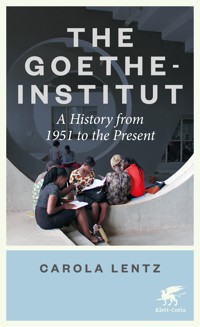
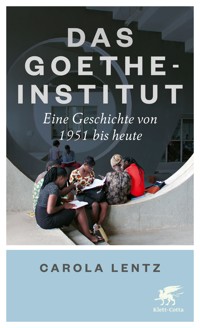
The book cover shows female students in a building at Obafemi Awolowo University in Ile-Ife, Nigeria, whose campus was designed in the 1960 s by Arieh Sharon, one of the Israeli architects of Tel Aviv’s ‘White City’. Sharon studied at the Dessau Bauhaus under Walter Gropius and Hannes Meyer, returned to Israel in the early 1930 s, and went on to design public buildings in various places around the world. With their open architecture, the buildings in Ile-Ife are perfectly adapted to the tropical climate and encourage communication. Sharon also incorporated local aesthetic elements and invited Yoruba artists to paint the concrete walls. The students and teachers are proud of the architecture, reports architectural historian Zvi Efrat, who made a film about the campus.[1] ‘Arieh Sharon is … not seen as a coloniser here’, says Bayo Amole, Professor of Architecture at the University of Ile-Ife. ’What we do have here is an Israeli who studied in Germany, who worked in Africa. That says something about the universality of the world – but it also says something about the university as a universal place.’[2]
The photo and interviews were taken in 2018 as part of the exhibition project ‘Bauhaus Imaginista’, organised by the Goethe-Institut in co-operation with the Bauhaus Kooperation Berlin Dessau Weimar and the House of World Cultures in Berlin to mark the centenary of the Bauhaus design movement. The project comprised research, exhibitions, and events in eleven countries on four different continents and explored ‘the international and transcultural networks of the Bauhaus in the world’.[3] For curator Marion von Osten, the Bauhaus was from the very beginning not a ‘German export item’, but a European and ‘global project’; it stands ‘symbolically for societies that oppose nationalism and colonialism’.[4] The exhibitions for the Bauhaus anniversary not only examined transnational interdependencies, but also expanded them through interconnected individual projects worldwide. This is typical of the cultural work of the Goethe-Institut since the turn of the millennium – work which aims to promote dialogue between artists, intellectuals, and civil society activists around the world. The emphasis is on promoting cultural co-production, presenting different perspectives on global issues, reflecting on colonialism and the politics of memory, focussing on the rights of women and Indigenous minorities, engaging with illiberal regimes as well as democratic movements, and much more. These concerns reflect Germany’s increasing interdependence with Europe and the world, and in particular with the Global South.
This book aims to retrace some of the landmarks on the Goethe-Institut’s path to this self-perception. While the institute’s work initially focussed on promoting the German language abroad and exporting ‘German’ culture, today it operates in 98 countries with a total of 158 institutes, not only as a worldwide provider of language courses, but also as a global network of local and regional cultural and civil society initiatives.
The history of the institute since its foundation in 1951 – as well as its previous history under the Deutsche Akademie in the Weimar Republic and under the Nazi regime – reflects Germany’s more recent history and foreign politics, developments in Europe, and global transformations throughout the world. At the same time, the Goethe-Institut has not only responded to shifts in Germany’s self-image but has also actively shaped that self-image. In its desire to break with the National Socialist state appropriation of cultural politics, the post-war West German government placed foreign cultural politics in the hands of so-called intermediary organisations, that is, independent organisations, mostly in the form of non-profit associations. In response to the Cold War and the division of Germany, the Federal Foreign Office decided to financially support the Goethe-Institut a few years after the institute was founded, and its network expanded rapidly. The young democracy wanted and needed to distance itself from National Socialism, win friends all over the world through cultural exports, and at the same time demonstrate its superiority over socialism. This was true of many other West German cultural institutions founded during this period, such as the Berliner Festspiele and Documenta, as well as the re-established Institut für Auslandsbeziehungen (Institute for Foreign Cultural Relations, ifa) and the Deutsche Akademische Austauschdienst (German Academic Exchange Service, DAAD). During the social movement in West Germany that began in 1968, the Goethe-Institut wanted to convey a different image of Germany, but not all political stakeholders approved of this; the conflicts that developed as a result of this clash of opinion led, in turn, to innovations in foreign cultural politics. The end of the Cold War, German reunification, and the emergence of a multipolar world are formative recent developments that are reflected in the Goethe-Institut’s turn towards multilateral co-operation and its new role as a global networker. Examining the history of the Goethe-Institut therefore also means taking a particular look, from a cultural politics perspective, at the history of the Federal Republic in the context of global transformations.
I (Carola Lentz) developed an interest in the topic as part of my preparations for my new position as president of the Goethe-Institut – a time that, in terms of anthropological theories of ritual, can be described as a ‘liminal phase’: a period of transition from one social order or stage of life to another.[5] In autumn 2019, I left active service at Mainz University (although I remain associated with it as a senior research professor), but it would be more than a year before I started my position at the Goethe-Institut. Anthropologists such as Arnold van Gennep and Victor Turner have characterised the liminal phase as a time of ambiguity, of ‘betwixt and between’, entailing, at least according to Turner, a special freedom. For me, the transition period offered space for research curiosity. As a social anthropologist who has carried out intensive research on African independence celebrations, my interest was also sparked by the forthcoming seventieth anniversary of the Goethe-Institut, which soon came to my attention.
I assumed office as the institute’s president in November 2020, while still working on the book. Did this create an irresolvable conflict of roles? The book is not intended as a commemorative publication that uncritically celebrates the institute’s achievements, but rather that turns to tensions in the institute’s work, ruptures, unfulfilled promises, and unresolved questions about the future. Can an acting president create the necessary distance for such an analysis? What made this challenge easier, in addition to the aforementioned ‘liminal phase’, is a generational distance. I am the first president born in the post-war period and the first to be younger than the institute itself. The times in which the ‘first’ Goethe-Institut was established within the Deutsche Akademie in 1932, and when the current Goethe-Institut was (re)founded in 1951, are more foreign to me than to my predecessors. Furthermore, my co-author’s generational distance from the institute is even greater than mine. Marie-Christin Gabriel, born in 1986, and I have thus brought two biographically different perspectives to the book project. Like myself, Marie-Christin Gabriel is a social anthropologist, and her experience with organisational analysis and biographical methods as well as the critical analysis of eyewitness accounts and historical sources have benefited our research for the book. As a new, younger employee of the Goethe-Institut, she was also in a better position to interview our interlocutors, and people probably approached her with more openness than they would have done with me, as the designated and then incumbent president.
Social anthropologists work with a de-familiarizing gaze in order to question realities that seem self-evident. My personal distance from the organisation helped me to explore its history. Until my predecessor Klaus-Dieter Lehmann asked me in summer 2019 whether I could imagine taking over from him, I had hardly had any interaction with the institute. The first contact came about in 2006, when my Ghanaian family organised the presentation of my book on the history of Northern Ghana at the Goethe-Institut in Accra. After that, I regularly attended the institute’s events and was particularly impressed by how it showcased West African artists. Two works by Mohamed Tamekloe, which I purchased at an exhibition opening, still hang in my study in Mainz today. They are collages that show the half-destroyed remains of ancestral figures made of wood and scraps of fabric as well as imaginary archaic characters on a bright indigo blue and clay-coloured background. The Togolese artist has labelled his works Le grand voyant (The great clairvoyant). ‘The pseudo-ritualistic texts and objects,’ he explains in the catalogue, ‘evoke an earlier reality, or more precisely: a constructed past that we are all trying to grasp. … [It] is necessary to take stock of our journey up to here and now and to ask where it all leads us.’
This artistic engagement with memory and history, with a view to the future, has inspired me in many of my research projects. Tamekloe’s explanations are also instructive for our exploration of the Goethe-Institut. On the basis of existing scholarly work and the institute’s own reports, we can reconstruct this complex organisation’s history with some degree of confidence.[6] But for some of our questions, we found only fragmentary memories and incomplete sources or a concert of different voices. And like Tamekloe, we are interested in reflecting on past developments as a basis for thinking about current challenges and visions for the future.
Anniversaries provide a good opportunity to take stock of the distance travelled and envision the future. How has the Goethe-Institut handled its history so far? And how has it celebrated previous anniversaries? In the first years after its founding in 1951, the institute drew on the tradition of the Deutsche Akademie, the largest German cultural institution abroad during the Weimar Republic and National Socialism, which had set up a Goethe-Institut in 1932 to train foreign teachers of German. Many founding members and employees of the Goethe-Institut, which was (re)founded after the Second World War, were former members of the academy and proudly emphasised the continuity with it. In 1957, they even celebrated the twenty-fifth anniversary of the Goethe-Institut; in 1961, in addition to the tenth anniversary of the ‘new’ Goethe-Institut, the thirtieth anniversary of the ‘old’ Goethe-Institut was also commemorated.[7] The memory of the past was incomplete and much was glossed over; the period of National Socialism was ignored and reference was made exclusively to the ‘good’ academy of 1925 to 1933. Over time, however, the idea of continuity increasingly receded into the background. The ‘new’ Goethe-Institut was gradually able to demonstrate its own successes and had established itself as a cultural institution; in order to assert itself, it no longer needed to tie in with its predecessor organisation.[8] However, that the Deutsche Akademie was ‘forgotten’ was also due to the fact that in the broader society, criticism of continuities with National Socialism grew and made it seem advisable to distance the organisation from this past and practise a distinct politics of remembrance.
One of the first major anniversaries that the Goethe-Institut celebrated was the twenty-fifth in 1976. In anticipation of this occasion, Werner Ross, then the institute’s general secretary, wrote a critical review in the 1974 Goethe-Institut Yearbook that discussed the continuity in personnel with the Deutsche Akademie, the ‘very different predecessor of the Goethe-Institut’; the ‘tentative uncertainty’ of the institute during its growth in the 1950 s and 1960 s; the expansion of the language institute to include cultural activities, a ‘field of work harbouring many new problems’; and – alluding to political conflicts over which image of Germany to present – the ‘sensational cases’ in cultural work, which showed ‘that cultural politics is also a part of foreign politics, and thus subject to its precautions and considerations’.[9]
However, it took a few more years before the history of the institute received more attention. The long-standing General Secretary Horst Harnischfeger (1976–1996) is not surprised that historical documentation tended to be neglected in the daily working routine: ’Looking back is a minor matter. The crucial task of the Goethe-Institut is to maintain communication in the world. That leaves little time and energy for introspection.’[10] However, at an early stage during his term of office, Harnischfeger feared that knowledge about the history of the institute could be lost with the retirement of the first employees.[11] He therefore asked Bernhard Wittek, head of the press department for many years, to document the first twenty-five years of the institute’s history. The book Und das in Goethes Namen (And this in the Name of Goethe), finally published in 2006, was the institute’s first major project to reflect on its own history. In his foreword, Harnischfeger was decidedly critical of the fact that ’the roots of the Goethe-Institut … lie in the rather conservative spirit of the 1920 s, which focussed on the expansion of Germany’s national influence’.[12] And he named ambivalences that shaped the work of the Goethe-Institut, in particular the ‘journey between the Scylla of a nation-state-related interest policy and the Charybdis of a completely subject-related, open, tolerant cultural exchange, between … the enslavement to the respective federal government and … an independent civil-society organisation that no longer depends on [government] subsidies’.[13] Harnischfeger’s idea of using knowledge of history to ‘develop an awareness of the fundamental ambivalences that the future Goethe-Institut will also have to contend with’,[14] is a guiding principle of our book.
The fiftieth anniversary, which was celebrated in 2001, came at a time when the Goethe-Institut was suffering a financial crisis. It therefore offered little cause for celebration, but invited reflection and was duly celebrated in spite of everything. For example, there was an exhibition at the German Historical Museum in Berlin entitled Murnau, Manila, Minsk, accompanied by an anthology of the same name.[15] In addition to extensive visual material, the anthology contained memories of artists who had worked with the Goethe-Institut, academic essays on German foreign cultural politics, as well as texts by employees and alumni who reflected on the work of the Goethe-Institut, sometimes anecdotally, sometimes with a critical view. The then president of the Goethe-Institut Hilmar Hoffmann pointed out the constant leitmotif of the institute’s history: regaining Germany’s cultural recognition after the catastrophe of war and National Socialist rule.[16] The then general secretary Martin Schumacher and his designated successor Joachim-Felix Leonhard emphasised the flexibility of the institute under the title ‘What changes, stays’ and expected that ‘a German cultural institute with a global reach … will in the future increasingly act as a European institution’.[17] A contribution by historian Eckard Michels has also discussed in detail the prehistory of the institute, including its Nazification and its beginnings in the post-war period.[18] Other contributions focussed, for instance, on the role of women in management positions at the Goethe-Institut.[19]
The sixtieth anniversary, too, encouraged critical reflection in a variety of media. Vivid memories, as well as critical reviews by protagonists and partners of key stages in the institute’s history, were offered in the film Planet Goethe. Sechzig Jahre Goethe-Institut (Planet Goethe: Sixty Years Goethe-Institut), a supplement in the newspaper Frankfurter Allgemeine Zeitung, and a published volume with reports, pictures, and conversations, he website, set up for the anniversary, featured memories from employees and alumni about special events and challenges of their global work.[20]
All of these projects were milestones in the development of an institutional memory, and they provided important sources and inspiration for our project. However, it was not only the institute’s anniversaries that invited people to reflect on their own history; there were also other moments that triggered, or at least could have triggered, a reflection on the National Socialist past of the Deutsche Akademie in particular. When the Goethe-Institut headquarters moved to a new building on Dachauer Street in the 1990 s, the new address sparked a heated debate within the institute and among its partners. Some Jewish partners threatened never to enter a Goethe-Institut again if the headquarters remained on Dachauer Street (whose name reminded them of the former concentration camp in Dachau).[21] Some Goethe-Institut employees therefore urged another relocation; for a while, an ‘elegant trick’ helped avoid the controversial address by using the street name at the back entrance of the building as the postal address: Helene Weber Avenue.[22] But finally, the board of directors decided that they had to commit to the Dachauer Street address and acknowledge Germany history. However, the debate about the headquarters’ address did not trigger a broader examination of the institute’s history and the continued employment of staff who had worked for the institute during the Nazi regime. As late as 1961, for example, the former SS official in the Reich Security Head Office, Hans Egon Holthusen, was appointed director of the Goethe House in New York.
More generally, apart from the occasions mentioned above, the Goethe-Institut did not attach much importance to dealing with its own history. Some older and former members of staff still have vivid memories of their own and their predecessors’ experiences at the institute, and occasionally talk about them. But they fear that such personal memories might disappear with the generational changes. When we asked employees about the institute’s politics of institutional memory, the answer was usually that there was none, or at least no systematic documentation that could be referred to if one wanted to reconstruct older developments or find out about earlier practices and policies. With this book, we therefore also hope to contribute to a deeper interest in the institute’s history, not only among its employees, but also its partners and those who are generally interested in foreign cultural politics.
One of the questions that inspired our enquiry into the history of the institute was: How do innovations come about? The need for change often results from the shifting challenges of German domestic and foreign policy, global upheavals, and internal organisational dynamics. However, we have also found that new project ideas, working methods, and organisational patterns are just as often or even more often the result of the institute’s employees’ initiatives and the creativity of local partners. Seconded employees,[23] who regularly travel to new locations, bring their individual experience and expertise to ever new contexts. Their dialogue with local colleagues and regional cultural scenes in turn gives rise to new ideas and models, which then go on a transnational journey, during which they are further developed by other colleagues. These innovations also find their way into headquarters in Munich, where they encourage reorganising standard models. At the same time, the employees at the headquarters also continually scrutinise established practices and develop new ideas that emerge from their exchange with the different advisory boards and the members of the association that governs the institute. These ideas also find their way into the institute’s work and, in turn, ‘travel’ around the world. The Goethe-Institut therefore not only reflects socio-political changes, but also contributes to shaping them. In this book, we want to shed light on both motors of change: the political transformations, and the employees’ and local partners’ creativity.
Two theoretical models have assisted us in this task. First, the concept of ‘travelling models’,[24] which focuses on the ‘migration’ of ideas developed locally or in one institute, which are creatively adapted and further developed in other locations and continue their journey with new elements. Secondly, the distinction between three levels of foreign cultural politics, as proposed by social anthropologist Jens Adam: first, the discourses, i. e., speeches and official documents on foreign cultural politics; second, the infrastructures, i. e., organisations, structures, and programmes that implement foreign cultural politics; and finally, the level of projects and working practices, i. e., day-to-day work on the ground to translate discourses and structures into concrete action.[25] Sometimes innovation is stimulated by official discourses, for example by programmatic papers on foreign cultural policy, which then find their way into working practice; more often, however, impulses for change arise from work with partners on the ground, then change organisational structures, and finally trigger new discourses on foreign cultural politics. Our book offers examples of all these paths towards change.
We were also interested in the fundamental fields of tension in which the Goethe-Institut’s work has been and continues to be carried out. What is the relationship between a civil-society association and government and state bureaucracy? What role does foreign cultural politics, which is primarily framed by the concept of nation-states, play in a world of transnational interdependencies with asymmetrical power relations? How has the Goethe-Institut’s increasingly multilateral work shaped the image of Germany that it conveys? How did the Goethe-Institut position itself at different points in time in the European context, an important frame of reference from the institute’s very beginning and even for its predecessor, the Deutsche Akademie? How is the Goethe-Institut’s work in Germany related to its work abroad? And, more generally, how are domestic and foreign cultural politics intertwined?
These and other questions point to the many balancing acts that the Goethe-Institut has had to master in the course of its history. The institute has never been able to resolve the contradictory requirements that it was supposed to fulfil but has constantly sought to confront them. Our narrative of change, obstacles, and innovation addresses both failures and hopes. But in essence, we are telling the success story of an organisation. The institute’s continuous critical self-reflection, its ability to change, its creative approach to challenges, and staff’s commitment over the past seven decades are impressive. We pay particular attention to the latter, the employees, in our book.
We do so because we are convinced that the Goethe-Institut is not only an organisation that is shaped by and participates in shaping contemporary history, but above all that it lives through its staff members. It is not ‘the Goethe-Institut’ that acts, but rather its employees: the staff on rotation, who work at new locations approximately every five years; the employees with local contracts in the host countries, often with equally cosmopolitan CVs, but who work at an institute for a longer period of time; the employees in the various departments at the Munich headquarters and at the institutes in Germany; the many project staff and contract employees, who also carry out an important part of the work. By featuring some of their voices in this book, we want them to be heard.
But how could we choose from the more than 4,000 people currently employed at the Goethe-Institut and the many former employees? This challenge was exacerbated by the tight timeframe of the book project. The plan to complete the book within just ten months, in time for the seventieth anniversary in autumn 2021, was already ambitious. In addition, the coronavirus pandemic restricted research in some respects. We were able to speak to many interviewees via video conference from their desks at the institutes or at home. However, we had to do without an indispensable element of anthropological research: face-to-face fieldwork, which not only allows the researcher to experience the atmosphere but also to gain unexpected insights, which then often stimulate new directions of enquiry. But even with more time and the opportunity to visit individual institutes and get to know their teams, we would have had to make a rigorous selection for our research. Seventy years of organisational history with thousands of employees and more than one hundred and fifty locations by now can only be recorded fragmentarily. Thus, our book provides insights that need to be supplemented by future research.
Marie-Christin Gabriel conducted twenty-five biographical interviews while Carola Lentz had numerous more informal conversations. Our interlocutors were former general secretaries and the current general secretary, institute and regional directors, employees at the headquarters in Munich with its various departments, and local employees at the institutes abroad. Some have worked in the public spotlight, while others have operated more in the background. They have all contributed and continue to contribute to the institute’s history.
Chance certainly played a role in our selection of interviewees, as did the snowball principle, when the first interviewees pointed us in the direction of other colleagues with whom we should also speak. Furthermore, our selection of voices was guided by our interest in allowing multiple generations and employees in various roles and with different backgrounds to have their say. On the one hand, we wanted to record typical aspects of the different phases of the institute’s history and gain as multifaceted an overview as possible of its various areas of work. On the other hand, we were also interested in individual creativity and the question of how particular persons experienced and remembered specific historical moments.
We have spoken to relatively few external partners or participants in institute activities, and critics might consider this to run the risk of painting an uncritical picture of the institute. Questions relating to the impact of foreign cultural politics and how it can be evaluated are certainly an important topic in their own right, but within the limited scope of this book we cannot do justice to them.[26] However, we did not have the impression that our interviewees were uncritical of their own organisation – on the contrary, we heard plenty of nuanced self-criticism. Sometimes critical views seemed to spring from a certain romanticisation of their own idealistic Sturm und Drang phase, as is often the case in biographical interviews. However, we were mostly presented with sober critical and distanced analyses of the challenges and achievements as well as desired outcomes of the institute’s work. Overall, we hope to present the distinct perspectives of people from different generations, with diverse backgrounds and experiences.[27]
The sequence of chapters is, by and large, based on the chronology of the history of Germany; chapter transitions mark global or domestic political changes that triggered reorientation at the institute. Of course, there are also continuities, and the transitions from one phase to the next cannot always be clearly dated to a single year or linked to a single event. The fact that not only ‘big’ politics, but above all the employees’ work and creativity have driven the history of the institute is reflected in the chapter structure. An overview of the major political developments and changes at the institute is followed by a section in which individual staff members reflect in detail on their experiences (with the exception of the first chapter, which deals with a period for which contemporary witnesses could no longer be found). Their individual experiences exemplify some of the topics and challenges that were particularly relevant in the respective period. At the same time, the staff biographies show, as outlined above, that the impetus for innovation often comes from the ‘periphery’ of the institute’s global network and is then taken to new locations and to the Munich headquarters.
Not least because of these ideas travelling the world, which shape the work of the Goethe-Institut, we use metaphors of ships and seafaring in our chapter titles. However, we do not want to evoke an image of the Goethe-Institut as a neo-colonial endeavour that has constantly built new contact points beyond its Munich ‘home port’. The question of how institutes were founded in the former European (and particularly German) colonies that had become independent during the 1950 s and 1960 s still requires critical examination. But one thing seems certain: even though the Goethe-Institut has sent and continues to send German orchestras, poets, visual artists, and filmmakers around the world, from the very beginning its mission was not just about exporting culture, but also about enabling encounters and exchanges with local artists and intellectuals. Even before this was later formulated as a programmatic guideline, the movement of artistic and linguistic creativity never merely went out unidirectionally from Germany into the world, but always also worked the other way round, with experiences and cultural treasures travelling from the institutes located throughout the world to Germany. Many filmmakers, musicians, poets, and theatre makers made international friends through the Goethe-Institut, which enriched their work and opened up new horizons and new perspectives on the world and their own country.
In this respect, the seafaring metaphors seemed appropriate. Moreover, according to some of our interviewees, they also summarise the rotating staff’s personal experiences quite aptly, since going to a new country as the director of an institute seems like embarking on a voyage of discovery. Not least, the Goethe-Institut uses a map, with the institutes’ locations marked on it, similar to the ones shown inside the cover of this book. This ‘Goethe world map’ also conveys associations with ports. For quite some time, the institute has been working in a decentralised manner; to stay with the metaphor, it resembles a fleet that travels together with foreign ships on different seas and constantly recalibrates its compass. The fleet sometimes goes astray or confronts stormy weather, and occasionally the individual ships might follow different courses; but in any case, people meet, exchange ideas, and inspire each other.
This is also the central message that we want to convey with our book: the people who shape this organisation are its decisive resource. Local institutes and their cultural networks around the world provide important impetus; this is where ideas are born that spread, adapt to new contexts, stimulate structural change, and help to address political challenges. Equally important are the employees at the institute’s head office who, in their different departments, create the necessary conditions for the work at the institutes around the world. With this book, by taking our readers on a journey through the past seven decades, we would like to share our impression of the Goethe-Institut as an organism that thrives on the vibrant and versatile contributions of its employees.
1.
Weighing the anchor: The institute’s beginnings
Today, the birth of the Goethe-Institut is generally dated to the founding meeting of the ‘Goethe-Institut zur Förderung ausländischer Deutschlehrer e. V.’ (Goethe-Institut for the Promotion of Foreign German Teachers) on 9 August 1951. This was not always the case. In 1957, the association celebrated its twenty-fifth anniversary, drawing on its origins in the Goethe-Institut founded in 1932 as part of the Deutsche Akademie,[1] one of Germany’s largest international cultural organisations during the Weimar Republic and under National Socialism. The Deutsche Akademie – established in 1925 at the Ludwig-Maximilians-Universität in Munich with the aim of researching German culture and bringing it to the world – hardly plays a role in the Goethe-Institut’s current institutional memory. But it was fundamental for the founding of the Goethe-Institut. Building on the work of the Deutsche Akademie allowed the new Goethe-Institut’s founding fathers (there were hardly any founding mothers) to draw on existing experience and networks. However, the legacy of the predecessor organisation, which had experienced its heyday under the National Socialist regime, was also a heavy burden. From today’s perspective, there are surprising parallels and continuities between the Deutsche Akademie and the Goethe-Institut.
The beginnings of the Deutsche Akademie are closely connected with the Bavarian diplomat Lothar Freiherr von Ritter zu Groenesteyn. While serving as an envoy in Paris, Groenesteyn encountered the successful cultural politics of the French ‘Grande Nation’. After his return to Germany in 1923, Groenesteyn campaigned for a German institute patterned after the French model, which was to promote the German ‘cultural nation’ abroad. Such an initiative, he thought, could contribute to restoring Germany’s reputation in the world after its defeat in the First World War and the Treaty of Versailles. The initiative was also intended to contribute to what today would be called internal nation-building, or, in Groenesteyn’s words: a German cultural institute could ‘also convey a stronger unified cultural awareness to the Germans themselves’ and ‘unite the nation, which is more internally divided than ever as a consequence of the First World War’.[2]
Groenesteyn’s idea was taken up by Munich University professors, including Georg Pfeilschifter, church historian and rector of the university, who became the first president of the Deutsche Akademie. In 1924, the ‘Akademie zur wissenschaftlichen Erforschung und Pflege des Deutschtums/Deutsche Akademie’ (Academy for the Scientific Research and Cultivation of Germanness/German Academy) was entered in the Munich register of associations and moved into premises in the Munich Residence at Odeonsplatz; the official founding ceremony took place on 5 May 1925. Two important members of staff from the very beginning were Franz Thierfelder, press officer from 1925 and general secretary from 1929, and Richard Fehn, the academy’s managing director from 1932. Both were later to play a leading role in the founding of the Goethe-Institut in 1951.[3]
The Deutsche Akademie was managed by a board of trustees, a secretariat, and an advisory senate with representatives from the worlds of business, politics, and culture; a scientific department researched and published on German culture while a practical department was to disseminate the results of this research at home and abroad, where it targeted above all, and contrary to Groenesteyn’s original idea, Germans living outside of their home country. The academy’s manifold activities were missing a clear overarching mission, which made public relations work difficult and resulted in a lack of financial support. The academy members initially insisted on financial independence but were ultimately compelled to seek state funding and support from the industry. However, the search for sponsors was complicated by the fact that the Deutsche Akademie was competing with other organisations in a similar field of activity, such as the Deutsches Ausland-Institut (German Foreign Institute), now the Institut für Auslandsbeziehungen, or ifa (Institute for Foreign Cultural Relations).[4]
To secure funding for the academy via a unique selling point, Thierfelder pushed for a reorganisation in 1928/29: the academy was to primarily address non-Germans and concentrate on German language instruction, which had previously only played a subordinate role. There were hardly any German organisations doing language work abroad, so this field seemed to be a promising niche.[5] To support the academy’s new focus, Thierfelder sought a partnership with the Federal Foreign Office, which already before the First World War had cooperated with non-governmental organisations to promote what was then known as ‘Auslanddeutschtum’ (German culture abroad). Several reasons favoured such a co-operation. For one, it meant cost savings for the Federal Foreign Office. Second, non-governmental organisations ensured a relative continuity in personnel that could not be provided by diplomats working on a rotational basis diplomats working on a rotational basis could not offer. And finally, it was hoped that the associations’ relative distance from the state would make host countries more receptive to offers relating to German culture and language. Thierfelder was successful: the Federal Foreign Office, interested in the ’restoration of Germany’s position as a great power’, initially offered him a partnership on the condition of secrecy and finally agreed to subsidise the academy’s work.[6]
The Deutsche Akademie was thus able to expand its language instruction. In 1930, it organised its first training courses for German language teachers from Balkan countries. From 1931 onwards, the first language institutes – so-called Lektorate – were opened abroad, also mainly in the Balkan states, which additionally offered a modest cultural programme. The regional focus on the Balkan region tied in with the Federal Foreign Office’s politics. Even before the First World War, the Balkans had been regarded as a region in which Germany could secure economic, cultural, and political power. From the end of the 1920 s onwards, European superpowers’ struggles for influence in the region intensified and therefore German foreign politics focussed on the Balkans even more.[7]
As part of the expansion of language work, Thierfelder initiated the establishment of a new department at the Deutsche Akademie in 1932: the ‘Goethe-Institut zur Fortbildung ausländischer Deutschlehrer’ (Goethe-Institut for the Further Training of Foreign German Teachers), which was tasked, among other things, with providing German lessons abroad. With this new focus, the Deutsche Akademie became a pioneer in the now-established field of ‘German as a foreign language’, which at the time was still largely unknown. Johann Wolfgang von Goethe was chosen as name patron due to strategic considerations: the celebrations organised throughout Germany in 1932 to mark the centenary of the poet’s death on 22 March 1832, summarized under the slogan ‘Goethe Year’, promised public attention; in addition, the Deutsche Akademie succeeded in persuading the Frankfurt Goethe-Gesellschaft (Frankfurt Goethe Society) to donate part of its income to the newly founded institute.[8] In 1932, on 22 March precisely, the Goethe-Institut was opened under Thierfelder’s management.
Let us pause for a moment and consider parallels and continuities between the Deutsche Akademie and the re-founded Goethe-Institut of 1951. First, both associations were founded in Munich and therefore had similar regional roots. Second, both associations were established in a post-war context, with the aim of restoring Germany’s reputation in the world. Third, the Deutsche Akademie was founded on a European framework that is still relevant today; models from European neighbours, particularly France and the UK, have been and continue to be discussed in Germany as alternative formats of foreign cultural politics. Furthermore, Groenesteyn’s consideration that foreign cultural politics could have an effect on internal German affairs was also to become important for the new Goethe-Institut. And, finally, both associations insisted on their independence, but at the same time sought support from the Federal Foreign Office.
Continuities are particularly evident in the content of the organisations’ work. The Goethe-Institut took over the field of language work abroad from its predecessor at the Deutsche Akademie. When the latter was founded, teaching German initially played only a subordinate role; similarly, in the new Goethe-Institut the relationship between language instruction and cultural work was to be emphasised differently over the course of time. However, teaching German as a foreign language has always remained a core task of the institute. There was also continuity in terms of personnel: the new Goethe-Institut took on many of the academy’s former employees. Despite these similarities and continuities, however, the Deutsche Akademie is hardly remembered within today’s Goethe-Institut – a phenomenon that is due the academy’s role during the National Socialist era.
When Hitler became Reich Chancellor in 1933, the Deutsche Akademie had created a well-defined field of activity by focussing on teaching German abroad and was drawing up grand plans. Yet, the association’s financial situation was still precarious, not least due to the global economic crisis. According to historian Eckard Michels, most employees of the Deutsche Akademie – an institution with a conservative nationalist orientation – hardly perceived the National Socialists’ rise to power ‘as a negative turning point’.[9] Against the background of the academy’s financial situation, many members of the association regarded the change of power as a favourable opportunity to provide the organisation with a secure financial base. They assumed that the new rulers would be interested in promoting an impressive image abroad and would support this endeavour with appropriate funding. The academy members therefore made an effort to get on good terms with the regime.[10]
The result was a sort of self-enforced ‘Gleichschaltung’ (Nazification).[11] Whereas in the institutes abroad, the National Socialists’ rise to power was felt only to a limited extent, at the head office a thorough and unsolicited clear-out took place. The academy expelled members with ‘undesirable’ political views or backgrounds, such as Konrad Adenauer, Thomas Mann, Max Liebermann, and Kurt Magnus, while recruiting sympathisers and members of the Nationalsozialistische Deutsche Arbeiterpartei (NSDAP), Hitler’s party, as new members. In 1933, the Bavarian head of state Ludwig Siebert and the ’Führer’s’ deputy’ Rudolf Hess were appointed to the so-called Small Council, the governing body of the Deutsche Akademie. A year later, when the state funds still did not flow, Thierfelder and Fehn – themselves not party members – urged the academy’s president Friedrich von Müller to resign. The new president was Karl Haushofer, a military officer, qualified geographer, and co-founder of a new geopolitics close to National Socialist ideology.[12] As a result, the grants from the Federal Foreign Office were now indeed more generous; in return, the Deutsche Akademie accorded the Federal Foreign Office a permanent representative to the Small Council. The academy was able to expand its network of institutes abroad and its office in Munich; in 1936 it employed 24 staff at its head office and around twice as many teachers abroad.[13]
In the years that followed, further personnel changes brought leading NSDAP members to the helm of the Deutsche Akademie. Following internal disputes at the managerial level, which centred on divergent political views, differing visions for the academy’s future and, not least, personal vanity, Thierfelder and Fehn left the Deutsche Akademie in 1937/38, and President Haushofer also announced his resignation in 1938. Haushofer’s successor, Leopold Kölbl, Professor of Geosciences at Munich University and senior Nazi official, was the first NSDAP member to head the Deutsche Akademie. When Kölbl was imprisoned in 1939 on accusations of homosexuality and expelled from the NSDAP, Siebert, now senior Nazi official, succeeded him. Walther Wüst, an SS official, rector of the University of Munich, and former director of the pseudoscientific association Forschungsgemeinschaft Deutsches Ahnenerbe (German Ancestral Heritage Research Association) under Heinrich Himmler, became head of the scientific department and Siebert’s deputy. After Siebert’s death in 1942, Wüst initially took over as interim president until he was succeeded in 1943 by Arthur Seyß-Inquart, who was the Austrian Federal Chancellor and Reich Governor, Reich Minister and Reich Commissioner for the Netherlands, and an SS official.[14] Seyß-Inquart was later found guilty in the Nuremberg Trials against the main war criminals of the Second World War and executed.
The influx of leading NSDAP members into the Deutsche Akademie provided it with a secure financial base, with donations from industry and grants from the Federal Foreign Office. Like the Ministry of Propaganda, the Foreign Office became increasingly interested in cultural policy, which the regime identified as an instrument to culturally legitimise its claim to power. After the start of the war, the regime even increased the academy’s budget: it provided special grants, meaning that the academy now had ten times as much money as in 1938/39. In 1941, the budget rose again and totalled over three million Reichsmarks; in 1944, the Deutsche Akademie finally had a budget of over nine million Reichsmarks.[15]
These funds were used to expand the Munich head office and open a liaison office in Berlin in 1940.[16] Above all, however, the funds were channelled into the foundation of institutes abroad. Here, the focus was on neutral, allied, and occupied territories, whereas no institutes were founded in countries that did not conform to the National Socialist racial doctrine, such as occupied Poland, the conquered territories of the Soviet Union, and the Protectorate of Bohemia and Moravia. In 1942, there were around 250 language schools abroad and just under a thousand employees, most of them local staff.[17] Altogether, the extensive expansion of the foreign network as well as a growing number of language course participants ensured that the war years were years of success for the Deutsche Akademie, as disturbing as that may sound from today’s perspective.
In other respects, the academy’s plans did not work out. While it had initially hoped to remain independent despite its rapprochement with the National Socialist regime, it soon became apparent that the regime was utilising the Deutsche Akademie and its foreign network for its own purposes. In 1941, the academy was transformed into a public corporation by decree of the Führer, and from then on, it was directly in the service of the regime.[18] Hitler now personally appointed the presidents of the academy, which he wanted to develop into the central organisation of foreign cultural policy.[19] The Munich-based association, which had once attached such great importance to its independence, became an instrument of the National Socialists. However, the transformation into a public corporation was not linked to any obligation to carry out propaganda directly. The Ministry of Propaganda, the Foreign Office, and the Deutsche Akademie agreed that cultural politics could only have a long-term impact if it appeared to be neutral.[20] Consequently, the extent to which they propagated National Socialist ideology ultimately depended on the teachers working abroad, who were not obliged to follow a standardised curriculum. Some offered events on non-political topics, such as ‘The Bach family – a family of musicians’ or ‘Humour in the Alpine foothills’, while others organised discussions on topics related to the war, such as ’Germany’s struggle in the East’.[21]




