


Erhalten Sie Zugang zu diesem und mehr als 300000 Büchern ab EUR 5,99 monatlich.
- Herausgeber: epubli
- Kategorie: Fantasy und Science-Fiction
- Sprache: Englisch
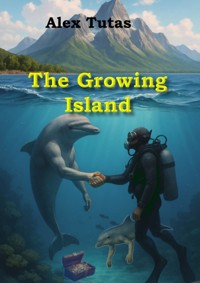
The book tells how Thomas once met extraterrestrials. They were half-humans, half-dolphins, and they lived in the water. They arrived from a planet that they had brought to such a state that life there became simply impossible. Upon reaching Earth, they met Thomas, who agreed to find them a place to live. In return, they gave him the ability to transform one substance into another. Thus, he became the owner of a technology for transforming garbage into construction and other materials for building an island, around which the dolphins settled. Thomas organized waste processing centers across Europe. The liquid that resulted from this process was delivered to the island via pipelines and there transformed into other substances. Over time, the island began to grow, and an archipelago was formed, which tourists started to visit. And another independent state was created. Thomas and his team were accompanied by various adventures during the process of building the island.
Sie lesen das E-Book in den Legimi-Apps auf:
Seitenzahl: 381
Veröffentlichungsjahr: 2025
Das E-Book (TTS) können Sie hören im Abo „Legimi Premium” in Legimi-Apps auf:
Ähnliche



















Alex Tutas
The Growing Island
Foreword
The book tells how Thomas once met extraterrestrials. They were half-humans, half-dolphins, and they lived in the water. They arrived from a planet that they had brought to such a state that life there became simply impossible. Upon reaching Earth, they met Thomas, who agreed to find them a place to live. In return, they gave him the ability to transform one substance into another. Thus, he became the owner of a technology for transforming garbage into construction and other materials for building an island, around which the dolphins settled.
Thomas organized waste processing centers across Europe. The liquid that resulted from this process was delivered to the island via pipelines and there transformed into other substances.
Over time, the island began to grow, and an archipelago was formed, which tourists started to visit. And another independent state was created.
Thomas and his team were accompanied by various adventures during the process of building the island.
Chapter 1: The Search for the Island
First Contact
It was hard for Thomas. He sat by the sea, sighing and contemplating his life. Despite the fact that he lived in Germany, he had a lot of problems. His first problem was breaking up with his girlfriend. They had been dating for almost a year, but she suddenly decided to leave, stating that she was tired of being with a loser. Tom really couldn't boast of great achievements in life. At thirty-five, he hadn't reached very high milestones. He worked at a computer company developing software, but his boss didn't appreciate his work. Every time Tom came to his boss with a new proposal, the boss pretended to listen but then rejected his ideas, only to present them as his own a few days later. Thus, Tom had to work on his ideas, but under his boss's authorship.
In addition, Thomas had other problems. He was already an adult, but he hadn't managed to find his path in life. All his university friends already had successful careers, families, houses, and cars. Tom, however, still lived in a small two-room apartment and drove a four-year-old car. This exacerbated his feeling of being a failure.
However, Thomas realized that he needed to change something in his life. He considered changing jobs or starting a new hobby, but he couldn't decide on a choice yet. He looked at the sea and thought that life goes on, and he had to take steps forward to achieve success in the future.
Thomas understood that sitting still and regretting the past wouldn't help him solve his problems. He started thinking about what he needed to do to change his life for the better. He decided to quit his job and start working on his projects independently. He also started engaging in sports, which helped him unwind and relieve stress. He began learning new skills to improve his chances in the labor market.
Furthermore, Thomas realized that he needed to surround himself with supportive people. He started communicating with more optimistic and inspiring people who could help him see the opportunities around him. He also began participating in various social events where he could meet new people and broaden his horizons.
Thomas understood that problems in life are inevitable, but it's important to learn how to deal with them. He started accepting life as it is and not dwelling on failures. He began to believe in himself and his abilities, which helped him overcome many difficulties. Thomas realized that it's important in life not only to achieve success but also to learn to enjoy the moment, live in the present, and appreciate what he already has.
His thoughts were interrupted by a hissing sound. He looked in the direction the sound was coming from and saw a meteorite fall. A long tail trailed behind it. The location was not far from him, so he got into his car and drove to see what had fallen there. On the way, he saw another meteorite that had fallen about two kilometers away from him.
When he arrived, he saw a strange sight. It turned out not to be a meteorite, but an alien ship. As he got closer, he saw four creatures that looked like dolphins. However, they were dressed in coveralls, and instead of front fins, they had hands, though short ones. Furthermore, one creature was in the water, while the three others were on the shore and were thrashing in convulsions, apparently suffocating. Without hesitation, Thomas set about rescuing the creatures. First, he saved the one that was near the water, and then the others. What was surprising was that the rescued creatures did not swim away but helped him, conversing in a language Thomas did not recognize.
When the rescue operation was over, the creatures were in no hurry to swim away but discussed something for a while. Finally, one of the creatures swam up to the shore and offered Thomas a helmet-microphone (or communication helmet), indicating that he should put it on. The helmet-microphone didn't fit perfectly on Thomas's round head, but he managed to put it on somehow.
The creature that swam up to the shore began speaking to Thomas in an unknown language. At first, he couldn't understand anything, but then he started to distinguish individual words, which eventually turned into normal human speech.
"Thank you, kind person," the creature said. "We were in danger and wouldn't have survived without your help. My name is Lumia, and I am a representative of our civilization. We arrived on your planet to explore it and establish contact with your race. But our ship crashed; it collided with a meteorite, and we found ourselves in danger. That meteorite fell not far from us. We are grateful to you for saving our lives and want to ask for your help in our mission." The creature explained that they had come to Earth to find a new home for their people.
Lumia explained that they had explored several planets but had not been able to find a suitable place to live.
Thomas was stunned by what he heard. He had always thought that there were other forms of life in the universe, but he had never expected to encounter them.
"Of course, I will help you," he said. "But I don't know how to do it. I'm not an expert in communicating with alien races."
"Don't worry," Lumia replied. "We will help you. We have technologies that will allow you to understand our language and communicate with us. In addition to this, we possess other knowledge. And we are ready to share our knowledge with you."
The conversation was interrupted by the sound of approaching cars. Thomas signaled with his hand for the creatures to hide in the water, and when they did, he walked out to meet the arrivals. It was already dark, so the spaceship the creatures had arrived in was not as visible. Among the newcomers were a couple of men who behaved particularly arrogantly. They addressed Thomas:
"Hey, did you see a meteorite fly by here?"
"I saw it, it fell over there," and he pointed to the spot where the meteorite had crashed. The men conferred and headed to the location Thomas had indicated to them.
He walked up to the shore and gestured for them to swim closer.
"Well, do you still want to get acquainted with our race?" he asked.
"Doesn't sound too appealing," replied the dolphin, whose name was Akio.
"They will put you in aquariums, one by one, and study you. Once they've extracted all your knowledge, your future fate is unknown," said Thomas.
He noticed that there was confusion among the dolphins—he couldn't call them fish; they were too intelligent—as they didn't know what to do next. Then Thomas suggested:
"Let's postpone our conversation until tomorrow. I'll think, and maybe a solution to this problem will occur to me."
They agreed to this. With Thomas's help, they dragged the ship into the water. They said goodbye, and he drove home.
The Dolphin Race
The dolphins lived on a planet where there was no land. It was a world entirely composed of ocean. Beneath the turquoise surface, where the sun's rays pierced the depths with thousands of sparkling arrows, their Eden unfolded.
The beginning of their history was calm and prosperous: the single ocean gave them abundance and peace. Possessing the gift of breathing with both lungs and gills, the dolphins created an entire civilization in the depths. They erected cities from bioluminescent corals, cultivated gardens of the rarest marine creatures, and built dwellings from durable materials capable of withstanding any deep-sea pressure.
Science flourished in their cities. They invented energy sources powered by tides and currents, and created communication and transport systems that linked them into a single world. Their civilization was self-sufficient and mindful of nature: the dolphins purified the water, maintained balance, and lived in harmony with the ocean.
Life was full of discoveries. Their hands—fins that had turned into tools—allowed them to build, assemble, and disassemble the most complex structures. The expanse of the ocean seemed infinite, and their population was modest.
But with the growth of technology, everything changed. They learned to convert water into other materials. With each generation, their numbers grew. Improved healthcare, conveniences, and abundant food—all led to overpopulation. Cities expanded, absorbing new territories. And then, the first cracks appeared in their world.
The main disaster was the water deficit. The very essence of their life was becoming scarce. Due to processing, there was less and less of it. Islands, and then continents, began to rise in the ocean. But the dolphins could not live on land.
Overpopulation spawned new troubles. Every family dreamed of more: spacious homes, new devices, and comfort. Coral reefs, once the foundation of their beauty and world, were turned into building material. The seabed, once full of algae and food, became covered with artificial structures. Light penetrated less and less through the dense buildings. Ancient paths of fish were blocked. The ocean, once clean, was changing its appearance more and more. Some species disappeared, others survived but broke the former balance.
Their cities were noisy. This noise destroyed the sonar patterns of the ocean, throwing whales off course. Every new invention, created for the convenience of one dolphin, turned into a disaster for all. They became prisoners of their own success.
Society changed. Collectivism gave way to selfishness. Clean water and pristine areas became a privilege. Elites and lower castes appeared, forced to live in overcrowded, polluted places. Conflicts over food and water erupted more frequently. Their songs became sadder, their games disappeared.
Realizing that the ocean was doomed, the dolphins decided on a desperate measure. They created spacecraft suitable for life and long journeys and set off into the boundless starry expanse. Using wormholes, they searched for a new home.
And after many years, they found a planet with vast oceans—so similar to their lost Eden. It was from there that our heroes came. Among the crew were two males and two females. But their journey was interrupted by a collision with a meteorite. With some of their technology and a pair of robots, they still reached Earth. And they told Thomas all about this at their next meeting.
The Dwelling Place
The morning was clear, but for Thomas, it began long before dawn. All night, while the world slept, he performed a colossal amount of work. Complex algorithms pulsed on the maps of Earth, sifting through terabytes of data. He wasn't just looking for a stretch of ocean—he was looking for a home. A home for the intelligent dolphins, whose world was slowly being destroyed by the onslaught of their own progress.
The task was incredibly difficult. The location had to be remote from prying eyes to preserve the secret of the dolphins' existence and their remarkable adaptations. It needed to have variable depths, capable of satisfying both their need for deep-sea exploration and their preference for shallow, sunlit gardens. And, most importantly, there had to be a small underwater mountain they could "anchor" to—a natural structure, sturdy and large enough to become the foundation for their future cities without destroying the fragile ecosystem around it.
His search led him south. Far south of the Azores, in the vast, little-explored expanses of the Atlantic Ocean, Thomas's algorithms discovered the ideal candidate. This was a region where tectonic plates created a unique underwater landscape.
The next day, Thomas, as he had promised, came to the meeting with the dolphins. During the night, he had done a considerable amount of work in finding a settlement location for the dolphins.
When Thomas met the representatives of the dolphin community, he saw in their eyes a weariness and anxiety familiar to him from his own experience of the last few years. The dolphins, with their deep, wise gazes, were all gathered to hear him. They knew he was the only one who could help them.
"I found it," Thomas's voice was calm but full of certainty. "It's a place where you can start over. It is hidden from human vessels, and its depths range from thousands of meters to a few dozen, which is ideal for all your needs."
He pointed to a spot on the map. "Right here, in the very heart of this region, there is an underwater mountain. It is large enough to become the foundation for your new city. Its slopes are covered with untouched reefs, and in its depths, there are cavities that we can use for protection."
The dolphins listened carefully; their clicks and whistles were the complete opposite of their usual lively reaction, showing the seriousness of the moment. They asked questions—about currents, about the availability of food, about the possibility of adapting it to their technologies. Thomas answered every question, using data and forecasts that his AI systems generated in real-time.
A sparkle of hope ignited in the dolphins' eyes. The weariness had not completely disappeared, but something new was mixed in with it—a belief in the future. Thomas was now taking on the role of a savior for another intelligent civilization. This was not just a promise; it was the foundation for a new, secret alliance that could change the fate not only of the dolphins but of the entire ocean.
Thomas's proposal became a ray of light in the deepening gloom for the intelligent dolphins. When he finished his story about the new, hidden Eden south of the Azores, silence fell in the underwater chamber. It was not the silence of doubt, but the silence of deep contemplation.
The first to respond was Akio, whose skin was scarred with traces of long years and countless journeys. He emitted a series of complex, melodic clicks and whistles—a language that Thomas now understood thanks to the helmet the dolphins had given him.
"Thomas," the words resonated in Thomas's mind, translated by the helmet, "you are offering us more than just territory. You are offering us a second chance. A chance to correct the mistakes that we, in our thirst for a better life, made to our home."
Thomas's proposal was a lifeline. It evoked in them a deep gratitude, not just for a powerful ally, but for someone who truly understood their desperate plight.
The dolphins, accustomed to adaptation, showed complete readiness for change. Their eyes held a determination to use this chance to create a more sustainable and harmonious coexistence with the ocean.
This act of goodwill by Thomas strengthened their trust in him to an unprecedented level. He showed that he saw them not merely as an object of study or a tool, but as an intelligent civilization worthy of rescue. This became the foundation for an even deeper and more enduring alliance, one that now stretched beyond shared threats and included the joint construction of a future.
"We accept your proposal, Thomas," came Akio's voice, followed by a chorus of agreeing echolocations. "We are ready to follow you to this new place. New water, new bottom, new beginnings." Thomas said he could show them where it was, but he had nothing to sail on. To be honest, he didn't really want to sail there. Akio asked him:
"Don't you have a navigation system?"
"Yes, we do," Thomas answered. He took out his mobile phone and gave them the coordinates of the location, showing it to them on the map at the same time. They were happy, but he told them they were celebrating too soon because every place had a price. When the dolphins heard that they had to pay for the location, they were a little puzzled. They did not have a defined source of income and didn't know how they could pay for this place. Thomas noticed their concern and explained that there was a way to obtain money.
"Simply look around when you move toward that location; maybe you will find a sunken ship with treasure," he said. The dolphins' spirits lifted; not all was lost yet.
Thomas gave them the mobile phone he had registered that morning, showing them how to use it. He explained that it would only work near large ships, as that's where the internet and mobile connection would be available. The dolphins were delighted with this gift. They immediately hid the phone in a waterproof container, and as for charging, they told Thomas not to worry. They had a device that allowed them to charge the phone using light. Thomas dismissed this statement at the time. With that, they agreed on their plan.
While they were scouting the location of their future home, Thomas would find out where he could get a permit for the purchase and how much it would cost. They camouflaged the ship and decided to swim light. After saying goodbye to Thomas, they swam off, lining up so as to cover the largest possible area for their treasure hunt. Thomas, in turn, set off to find out where he could buy a spot in the ocean; he had only a vague idea of where this could be done.
The Meeting
In high spirits, he set off on his search. What he was looking for, he didn't even know himself. He had learned a lot of new things about the Universe and alien races, and began to see his life from a new, broader perspective. It was nearing evening. He called his job and said he was quitting. This surprised his boss, who started persuading him to stay, promising to raise his salary, but Thomas was adamant. Asking, in the end, who the boss would steal ideas from now. The boss threatened him, saying he wouldn't be paid unemployment benefits for three months, but Thomas only laughed in response. He had savings, so he could easily manage those three months.
The morning didn't foreshadow anything unusual. Thomas was hurrying to the office, his head full of thoughts about the upcoming meeting. He had to solve a complex dilemma—how to get out of a situation that seemed like a dead end. He was approaching the door, mentally running through possible scenarios, when it suddenly flew open.
A woman exiting the office rushed into him like a whirlwind. The impact was unexpected. Thomas staggered back, stunned by the sudden collision. Standing before him was a pretty, natural brunette in her thirties, her eyes wide with surprise.
The shock quickly passed, and Thomas instantly collected himself. "I'm so sorry! It's completely my fault, I wasn't looking..." he began to apologize, feeling awkward.
The woman also recovered. "Oh no, it was my fault; I didn't see you," she replied, adjusting her bag. "Are you alright? Let's check if anything is hurt." They both started checking themselves and their belongings.
Thomas ran a hand across his forehead and felt a slight sting. A drop of blood was left on his fingers. "It seems like a small scratch," he said, but waved it off. "It's nothing serious, just a trifle." The brunette immediately grew anxious. "Nonsense, that needs to be treated! I have a first-aid kit, but it's better to buy a plaster." Her tone was caring and decisive. "Let's go to the nearest pharmacy, I'll help you." Thomas, though bewildered by the rapid turn of events, felt a warmth from her concern. "Alright, thank you, that's very kind of you."
They walked along the street, heading towards the pharmacy. The awkwardness faded, replaced by light conversation. "My name is Thomas," he introduced himself. "Helena," she smiled back. "I actually work somewhere around here. In a law firm."
Thomas was pleasantly surprised. "Seriously? I'm in this area too. It's quite possible we have a lot of common interests." The conversation flowed easily and casually. They discovered that they indeed had similar views on many things, from work to preferences in literature and art. Every step brought them not only closer to the pharmacy but also closer to each other.
At the pharmacy, they quickly bought everything necessary. Stepping outside, Helena skillfully and carefully helped Thomas put the plaster on the scratch on his forehead. Her touch was gentle and sure. "Thank you so much, Helena. You really helped me out," Thomas sincerely thanked her.
Not wanting this pleasant conversation to end, he suggested: "Perhaps you'd allow me to treat you to coffee at a cafe near the office? We could continue our talk." Helena readily agreed.
"I'd love to, Thomas."
They spent the rest of the evening in a cozy cafe, sitting at a table by the window. The hours flew by. They talked about everything, learning more and more about each other. A random, awkward collision had turned into the beginning of something new and promising. Thomas forgot about his morning problems, the meetings, and the dilemmas. Only one thing was important that evening: this pleasant acquaintance and the wonderful woman who had so unexpectedly burst into his life.
Thus, the unexpected collision became the start of their acquaintance, and the slight scratch on his forehead turned out to be insignificant compared to what they had found in each other.
The Dolphins' Journey
The journey of the dolphins to the new home promised by Thomas south of the Azores was long and full of anticipation. Led by Akio, who was skilled at navigating by Earth's subtle magnetic fields, they swam toward the designated area. They swam while maintaining an interval between themselves. Their path led through the boundless expanses of the ocean, and despite the hope for a new beginning, a shadow of recent losses lurked within each of them.
As they progressed, the dolphins did not stop their explorations. They surveyed the seabed, scanning every change in terrain, every crevice, as if searching for echoes of the past or promises of the future. This was their natural curiosity, mixed with a gatherer's instinct.
On the third day of the journey, when the vast waters around them seemed monotonous and the intelligent dolphins had already lost all hope of finding anything, their highly sensitive echolocators picked up an unusual response. Deep beneath them, far from the usual sea routes and any land, lay something massive and anomalous.
They changed course, rapidly diving into the blue abyss. The water grew colder, the light dimmed until it vanished completely, giving way to twilight. And there, a silhouette appeared before them. It was the remains of an old ship, lying at a considerable depth where the sun's rays could not penetrate.
The ship was covered with centuries of layering, algae, and colonies of deep-sea organisms, but its outlines were still discernible: massive wooden beams and dark gaps that were once decks and holds.
Akio gave the command to stop. This was a rare, unexpected find, especially so far from shore. The dolphins, using their dexterous hands in place of fins, began to thoroughly investigate the ship. They penetrated narrow passages, carefully cleared away silt and algae, their echolocators working at their maximum capacity, scanning through the wreckage.
Their explorations yielded astonishing results. Inside the holds, beneath a layer of sand and debris, they discovered what was once an incredible fortune. The echolocators clearly recognized the density and composition: a large amount of gold—ingots, coins, and massive objects. Alongside them lay other ornaments: glittering precious stones, items made of rare metals, fine ceramics, and remnants of fabrics that were once luxurious clothing. This was a lost cargo, a treasure carried to the bottom centuries ago.
The find caused excitement among the dolphins. This was something completely different from the problems they had been facing. It was a discovery that connected them to a distant, long-forgotten human world. They could use this treasure to start their new life with even greater comfort and opportunities. Or... they could share this information with the one who had paved the way to their new home.
Thomas was their long-awaited sponsor who had helped the dolphins solve their financial problems for a long time. And finally, the dolphins found gold and other valuables at the bottom of the ocean, which allowed them to solve all their financial problems.
First and foremost, the dolphins were glad that their hard work and searching had been rewarded. They felt confident in their abilities and could feel independent and free from financial problems. Now that the dolphins had found the gold and other valuables, they could once again turn to Thomas to share their discoveries and ask for his help in extracting the treasure and selling it. Now their dreams of building a new home were gaining real prospects.
They gathered together and began to decide whether to call Thomas now or when they were returning. They decided to call him later. They recorded the coordinates and swam on, fairly concluding that if the valuables had rested there for so many years, they would rest for a few more days.
Helena and Thomas
In the meantime, Thomas was knocking on the doors of various authorities. Who would have thought there were so many of them? For example, the International Maritime Organization (IMO) sets standards for maritime safety and the protection of the marine environment in international waters, and also develops rules and guidelines for the management of maritime activities. Another example is the Commission for the Conservation of Antarctic Marine Living Resources (CCAMLR), which regulates fishing in the southern waters and manages marine protected areas. There are also international organizations involved in the protection of marine animals, such as the Convention on International Trade in Endangered Species of Wild Fauna and Flora (CITES), which regulates the international trade of wild animals and plants, including some marine species. In short, the mere listing of these organizations made Thomas feel ill.
And then he remembered Helena; she worked at a law firm, after all. Their relationship developed quickly. This was not surprising, as they were not young anymore. Each new day only strengthened the bond between Thomas and Helena. They became inseparable, spending all their free time together, sharing their thoughts, dreams, and plans. They supported each other through difficult moments and celebrated each other's successes and achievements.
Thomas often came to the law firm to see Helena during her workday. He brought her flowers or small gifts to support her and show her that he was always there. In turn, Helena admired his care and support.
They were happy spending evenings together, exchanging affection and care. Their relationship became increasingly intimate, and they had already started sleeping together. This was a new and intimate experience for them that only strengthened their bond. Thomas and Helena realized that their relationship was developing very quickly, but they were both sure of their feelings. They felt they had found in each other what they had been searching for so long and decided not to waste any time.
Helena sometimes wondered about what might happen in the future, given their professional duties and responsibilities. However, she believed in the strength of her love for Thomas and knew that they could find a compromise and cope with any difficulties that might arise on their path.
Thus, Thomas and Helena continued to build their relationship, full of love, care, and mutual understanding. They knew their path would not be without challenges, but they were ready to walk it together, supporting each other and fighting for their happy future life.
With each passing day, Thomas and Helena grew closer to each other. They found pleasure in simple things, spending time together, taking walks, visiting restaurants, or simply enjoying quiet evenings at home.
They began to share their dreams and ambitions with each other. Thomas supported Helena in her career aspirations, and Helena, in turn, supported him in all his endeavors. They became an important anchor for each other, supporting and inspiring one another to reach new heights.
Thomas and Helena felt comfortable and calm together. They shared secrets, discussed their plans for the future, and built common goals. They knew their relationship was genuine and sincere, and they were ready to take responsibility for their decisions and actions.
Despite the fact that their relationship was developing quickly, they knew how to find a balance between intimacy and respect for one another. They discussed their expectations and boundaries so that both felt comfortable and confident.
Thomas and Helena knew that life could be unpredictable, but they were ready to accept any challenges they would have to face. They believed in the power of their love and looked toward the future with optimism.
Helena was surprised that he wasn't working anywhere, yet he had money, albeit a small amount. There was no talk of him being a loser or anything similar. He felt good and easy with her.
One time, during a visit, he asked her:
"A friend of mine decided to buy a spot in the ocean. Are you aware of the documents he needs for that?"
"Your friend is completely crazy. If it were an island, it would be easier, but a spot in the ocean!" When he asked what documents were needed, she answered without hesitation. Regarding the cost, she said it depended on the location he wanted to buy, what was there, and so on. Thomas immediately cheered up; he had thought more documents would be required. He asked her:
"Would you be able to take on this case?"
"Well, if he has a few thousand, why not," she replied.
Thomas was on cloud nine. He had been looking for this opportunity for so long, and it turned out to be right next to him.
They decided to go for a walk in the park. Thomas held Helena's hand, and she could feel his love and warmth filling her heart. They spent the entire day together, talking, laughing, and enjoying the beautiful weather. Helena began to realize that this day held a special meaning for Thomas. He was trying so hard to make her feel happy and loved. He smiled at her, looking into her eyes, and did everything possible to make every minute spent together unforgettable.
Late that evening, when they returned home, Thomas prepared a candlelight dinner for them. He decorated the table with roses and created a romantic atmosphere. Helena was stunned by his care and devotion. They enjoyed the delicious food and spent long hours in tender intimacy and conversation.
At the end of the evening, when the moon illuminated their bedroom, Thomas took Helena's hand and began to talk about his feelings. He spoke the words of love that she had waited so long to hear. They hugged and kissed, and at that moment, Helena realized that Thomas was the man she wanted to spend the rest of her life with. He embraced Helena and held her close. They would both remember this evening for a long time. They woke up in the morning, and Thomas prepared her a splendid breakfast; during that time, she managed to shower and get dressed. She didn't understand why Thomas was showering her with so much attention. Well, he had shown her affection before, but today was something extraordinary.
The Discovery
The dolphins' journey to the refuge promised by Thomas continued. Every day, their echolocators probed the abyssal depths, their eyes searched for signs of new life or echoes of the old. Sometimes they came across trash—ghosts of the human world: sunken nets, plastic debris, and rusting fragments of once-complex machinery. But this was nothing compared to their home planet, where their own cities were suffocating the ocean, and every corner was littered with traces of their consumption. The feeling of the boundless, still relatively clean ocean gave them a fragile hope.
One day, during a routine scan, their echolocators picked up familiar but distorted signals. Swimming toward the sound, they even saw dolphins, a group of several individuals. However, they looked somehow strange. Their movements were disorganized, their color dull, and the fin-hands that the intelligent dolphins themselves possessed were absent. These were ordinary dolphins, wild kin that had lost their adaptations, which was a genuine shock to the intelligent dolphins. Perhaps they were descendants of those who had once broken away from their community, or simply wild individuals who had mutated under the influence of pollution and emissions, which was previously alien to them and caused disgust.
The intelligent dolphins, driven by curiosity and an instinct of kinship, swam toward them slowly, emitting welcoming clicks and whistles. But their intentions were met coldly. The wild dolphins instantly gathered into a tight group, emitting sharp, anxious sounds. They met them aggressively, demonstrating threatening postures, circling the newcomers. This was a painful reminder of how much they had drifted away from their wild brethren and how hostile the world could be outside their highly organized cities. The dolphins decided not to engage in conflict and retreated, leaving their enigmatic relatives in peace.
Finally, after long days of swimming, the dolphins neared the destination indicated by Thomas. They swam, expecting to find a small underwater rock—a natural anchor point for their new home. Their echolocators were already calibrating to recognize underwater peaks and slopes.
But when they approached the location, what they discovered astonished them. Underwater, in place of the supposed rock, not just an underwater peak rose, but a small island. It was a natural formation, rising an average of one and a half meters above the ocean surface, creating a perfect shelter. Its slopes were covered with untouched reefs, and its depths had cavities that could serve as protection. The water around the island was crystal clear.
This was not an artificial object but a genuine, natural gift, perfectly matching Thomas's description. Its size and location precisely met the dolphins' needs—variable depths, secrecy, and the ability to anchor to a rock. This place was not just a hiding spot; they had found their new home, and it was exactly as nature itself had intended it. The hope they had been seeking took shape in this unexpected island.
The underwater world was full of mysteries and dangers, but the dolphins were intelligent and well-trained and decided to explore the island. They understood that they might face trouble, but their curiosity and desire to learn more took over. They dove into the water to explore the environment and saw a multitude of interesting creatures that were unusual to them. They encountered sea snakes, crabs, and many species of fish they had never seen before. They photographed the island to send to Thomas when they had the chance.
After resting a bit, they started on their return journey. When they saw a cruise ship, they matched its speed and called Thomas, sending him photographs of the island. They also told him that they would be waiting for him where they had discovered the treasure.
Thomas was extremely restless. He paced around the apartment, his brain, usually operating with machine precision, was consumed by anxiety. The problem of the dolphins, these amazing intelligent beings, was becoming more acute. He had promised them a new home, but where would he get it? And most importantly—where would he get the money?
Thoughts swirled in his head. Even if he managed to convince some government or international organization to sell him a small part of the ocean—a territory sufficient for the safe resettlement of the dolphins—it would cost astronomical sums. And an entire island, especially one with the necessary depths and seclusion, was beyond his wildest dreams. It seemed impossible. Such expenses, especially for concealing an entire civilization, were beyond reason.
It was at this moment that the phone rang. The image of Akio appeared on his screen. Thomas instantly picked up, his heart paused in anticipation.
"Thomas," the familiar, melodic voice, translated by the simultaneous interpreter, sounded in his mind. "We found it. That very island. It's waiting for us. And the treasure too." Then the connection was cut off.
This call sent Thomas's spirits soaring. The desperate situation seemed to have resolved itself. Not only was the ideal, natural home for the dolphins found—which was incredible in itself—but also the treasure that could solve the financial issues facing him. The problem of "where to get the money" vanished. The universe, it seemed, was on his side.
The next day, he went to the store and bought an expensive suit and tie. Then he called Helena and asked if she was busy. She asked, "What is it about?" To which he replied, "Remember I told you about a guy who wanted to buy a small part of the ocean?"
"I remember," she replied. "He's coming to see you now," he said.
Helena scheduled a meeting with him, asking, "And how will I recognize him?"
"You'll recognize him," he said.
At the appointed time, Thomas, uncharacteristically anxious, arrived at Helena's law firm. In his hands was a folder of documents—a stack of papers meant to give his extraordinary plans some legal form. After their first meeting, he felt not only a personal affection for Helena but also a deep respect for her sharp mind and professionalism. He decided to trust her, at least as much as his secrets would allow. He entered her bright, neat office. Helena looked up from her monitor, and a warm smile appeared on her face.
"Helena," Thomas said, his voice resolute, almost solemn. He handed her the folder. "The person who wants to buy an island is standing right in front of you."
Helena took the folder, her eyebrows raised in surprise. Thomas took a few photographs out of the folder and spread them on the desk in front of her. The images were stunning: a pristine, small island, surrounded by crystal-clear waters, with amazing underwater landscapes descending into the blue abyss. The pictures were so detailed that one could make out individual reefs and even schools of fish.
She was stunned. Her eyes widened, and her smile vanished, replaced by an expression of pure astonishment. Buy an island? This was something completely different from the problems clients usually brought to lawyers.
"Thomas," she finally managed to say, her voice full of disbelief. "Why do you need an island? You'll have to shell out a large sum for it." She knew perfectly well that such properties cost fabulous amounts of money, especially ones so untouched and in such a remote location. Thomas leaned in a little closer, his eyes burning with determination. He looked right at her, as if trying to convey the full importance of his plan.
"I need the island so I can be the governor there."
Silence fell in the office. Helena blinked, trying to process what was said. Governor? This was so absurd and grand at the same time that her mind refused to take it seriously. Thomas, who until this moment had seemed successful, suddenly laid his cards on the table, hinting at something much larger. Seeing her bewildered expression, he explained that he needed the island for a certain purpose. His friends had discovered a treasure, and it needed to be recovered and sold. But no one must know about it. Helena pointed out that he didn't have the money to pay for her legal services, to which he took out a bank card and said, "Withdraw the money, Frau Helena."
She took the card, went to the ATM, and withdrew two and a half thousand as an advance for the work to be done. How was she to know that only three thousand remained on the card?
"Well, and what area are you trying to snatch up?" she asked when she returned. "Well, I think twenty square kilometers, it all depends on the price they set," he replied. "Alright, we'll aim for that," she said.
They said goodbye, and Thomas went off to prepare for the upcoming expedition. There were many tasks ahead. He needed to find a suitable ship, equip it, but most importantly—where to get the money for all of it.
Unexpected Obstacle
The dolphins swam unhurriedly, as if the very surface of the sea dictated their measured rhythm. They knew that preparing the expedition would take time. Therefore, they dedicated their days and nights to studying marine life and learning about the world they were about to inhabit. This new ocean could not be compared to the space they had once flown from.
One day, they encountered killer whales. At first, the dolphins swam closer, wanting to make acquaintance, but when they realized the black-and-white giants saw them as prey, they had to use their weapon, which made the enemies flee.
When the intelligent dolphins reached the location of the sunken ship, a surprise awaited them. A vessel was rocking on the surface of the ocean, directly above the treasure. Divers were jumping into the water from the deck. Their figures in the sea depths looked like blurry shadows. The people were searching for something, but the dolphins quickly understood: the treasure was too deep; it lay below the limits of the divers' immersion.
However, everything soon changed. A deep-sea apparatus—a small but sophisticated bathyscaphe—was lowered into the water. Its searchlights cut through the darkness, and its cameras scanned every movement. The dolphins, hiding behind debris and in crevices, watched with alarm: their treasure was now in danger.
Dolfy—the youngest, bravest, and most cunning of the quartet—stepped forward:
"I'll distract their attention!" he signaled to his comrades with short echolocation clicks.
He swam cautiously toward the apparatus, staying on the edge of the cameras' field of view. The scientists noticed him and became animated:
"Look, a dolphin! How curious! Follow him, maybe he'll lead us to something important."
Dolfy played the role of a decoy skillfully. He swam close, looked into the portholes, and circled in front of the searchlight, as if calling for help. But all the while, he led the apparatus away from the sunken treasure, toward more complex and confusing underwater landscapes.
From their hiding place, his comrades watched his skill with admiration. It was then that Kira, the smartest and most tactically minded of them, sent Dolfy a mental signal:
"Hide!"
Dolfy instantly understood, dove behind a massive boulder, and disappeared. The scientists were confused:
"Where is he? We lost him! Turn around!"
And then Kira appeared—in a completely different place where the dolphin could not have reached so quickly. Another figure flashed shortly after, disappearing in the opposite direction. Thus began the game —the dolphins turned the treasure hunt into a confusing dance of illusions. When the apparatus was far away, they vanished, leaving the scientists in bewilderment.
When the vessel left, the dolphins once again examined the treasure site. Lumia discovered a strange object—a tablet made of an unusual, hard material. A map was engraved on it, pointing the way to another treasure, not far from there.
Inspired by the find, the dolphins set off. A new barrier awaited them—an underwater hill guarded by a giant squid. The battle was tough, but with their weapon, the dolphins temporarily paralyzed the guardian. It was then they saw: the hill was not just a rock, but a gigantic structure of metal and stone, created by an intellect surpassing the human one.
On its walls were complex symbols and drawings. Not for them, not for marine creatures—but for another intelligence. Inside the mountain, a huge hall opened up, filled with objects made of metal, stone, and unknown materials. Among them, gold artifacts of unknown purpose shined.
In a secret room, the dolphins discovered air—clean, transparent, as if the ocean itself had given way to the sky. In the center stood devices made of glowing material, humming barely audibly. They were clearly manufactured.
When one of the devices was touched, the mountain came alive. A vibration passed through their bodies, filling them with power. Lines of light flashed inside the rock, and the whole mountain glowed, like a colossal organism. This was not a refuge, but a storehouse of ancient power.
The dolphins realized: they had found not just a treasure, but an opportunity to touch the secrets of a mind that understood the deep laws of Earth. This was the beginning of a new chapter in their history.
When they left the mountain, they restored the paralyzed squid back to life—and swam on, carrying the radiance of a great secret in their hearts.
Preparation for the Expedition
Thomas faced a problem when trying to get a loan from banks to prepare for his expedition. He approached several banks but received negative answers everywhere. The reason for the refusal was that he did not have permanent employment or enough money in his bank account.
Thomas realized that if he revealed his true purpose —preparing for an expedition—the banks would not even consider his application and would simply refuse him. They might deem his venture too risky or a low priority.
However, instead of despairing and giving up, Thomas decided to look for alternative funding sources. He began searching for sponsors, grant opportunities, or subsidies for scientific or adventure projects. Thomas reached out to various organizations and foundations that supported research ventures. He presented his idea and showed his passionate drive to achieve his goal. But it was all in vain.




