


35,99 €
Mehr erfahren.
- Herausgeber: John Wiley & Sons
- Kategorie: Geisteswissenschaft
- Sprache: Englisch
THE HIDDEN HAND
Since its inception in 1947, the Central Intelligence Agency has played an outsized role in the political life of the United States, whether by formulating and implementing policy or by fueling popular culture and imagination. The Hidden Hand is an accessible and up-to-date history of the agency that succinctly takes the reader from its early days of intelligence gathering and analysis to its more recent involvement in the execution of foreign policy through covert operations, psychological warfare, and other programs. In manageable chapters and easy-to-digest prose, the author — a respected scholar who has researched intelligence for more than 30 years and also served as a high-ranking officer in the intelligence community — covers all aspects of the CIA from its mission to its performance to its record. He draws on the latest evidence and research to assess the agency’s successes and failures over the last half century, highlighting key operations of the past and present. Throughout, his assessment is balanced and thorough with an eye on the complex and controversial nature of the subject. This is a masterful account that demythologizes the CIA’s role in America’s global affairs while addressing its integral place within American political and popular culture.
Sie lesen das E-Book in den Legimi-Apps auf:
Seitenzahl: 513
Veröffentlichungsjahr: 2014
Ähnliche




















Table of Contents
Title Page
Copyright
Dedication
Preface and Acknowledgments
Note on Redactions
Chapter 1: Birth of an Enigma: 1945–1949
Geneology
Covert and Paramilitary Operations
Notes
Chapter 2: Halcyon Days and Growing Pains: 1950–1961
Operations Eclipse Analysis
Spies in the Sky
Notes
Chapter 3: The CIA and its Discontents: 1961–1976
13 Days in October
Vietnam
Nixon, Ford, and the Year of Intelligence
Notes
Chapter 4: A Time of Troubles: 1977–1987
The Carter Calamity
The Reagan Revival
Notes
Chapter 5: Victory Without Redemption: 1988–2000
Estimating an End to the Cold War
Assessing Afghanistan
The Challenge of Counterterrorism
Notes
Chapter 6: 9/11, WMD, GWOT, IRTPA, and ODNI: 2001–2004
Global War on Terror
Irresistible Impulse for Reform
Notes
Chapter 7: Crisis of Identity: 2005–2013
The Resurgence of the CIA
The Militarization of Intelligence
Notes
Index
This edition first published 2014
© 2014 John Wiley & Sons Inc.
Registered Office
John Wiley & Sons Ltd, The Atrium, Southern Gate, Chichester, West Sussex, PO19 8SQ, UK
Editorial Offices
350 Main Street, Malden, MA 02148-5020, USA
9600 Garsington Road, Oxford, OX4 2DQ, UK
The Atrium, Southern Gate, Chichester, West Sussex, PO19 8SQ, UK
For details of our global editorial offices, for customer services, and for information about how to apply for permission to reuse the copyright material in this book please see our website at www.wiley.com/wiley-blackwell.
The right of Richard H. Immerman to be identified as the author of this work has been asserted in accordance with the UK Copyright, Designs and Patents Act 1988.
All rights reserved. No part of this publication may be reproduced, stored in a retrieval system, or transmitted, in any form or by any means, electronic, mechanical, photocopying, recording or otherwise, except as permitted by the UK Copyright, Designs and Patents Act 1988, without the prior permission of the publisher.
Wiley also publishes its books in a variety of electronic formats. Some content that appears in print may not be available in electronic books.
Designations used by companies to distinguish their products are often claimed as trademarks. All brand names and product names used in this book are trade names, service marks, trademarks or registered trademarks of their respective owners. The publisher is not associated with any product or vendor mentioned in this book.
Limit of Liability/Disclaimer of Warranty: While the publisher and author have used their best efforts in preparing this book, they make no representations or warranties with respect to the accuracy or completeness of the contents of this book and specifically disclaim any implied warranties of merchantability or fitness for a particular purpose. It is sold on the understanding that the publisher is not engaged in rendering professional services and neither the publisher nor the author shall be liable for damages arising herefrom. If professional advice or other expert assistance is required, the services of a competent professional should be sought.
Library of Congress Cataloging-in-Publication Data is available for this title
ISBN 9781444351361 (hardback); ISBN 9781444351378 (paperback)
A catalogue record for this book is available from the British Library.
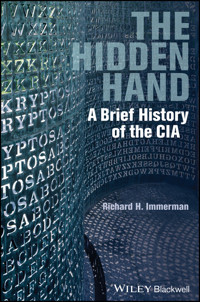
Cover image: Detail of Kryptos sculpture by Jim Sanborn in grounds of C.I.A. headquarters, Langley, Virginia. Photo from Carol M. Highsmith Archive, Library of Congress, Prints and Photographs Division.
Cover design by Simon Levy
To Anna, whom I hope will grow up in a world of greater transparency as well as security.
Preface and Acknowledgments
This is a short book with a long history. The number of debts I have accumulated along the way is therefore also long. The list begins with Walt LaFeber and Arnie Offner. Walt was almost solely responsible for shifting my interests from political science (“government” at Cornell) to history, specifically the history of US foreign relations. What is more, he provoked my curiosity about Latin America, particularly Central America. My decision to write my dissertation on the Central Intelligence Agency (CIA) intervention in Guatemala, accordingly, was a logical progression. The problem was that writing in the 1970s a history of a covert operation was highly illogical. There were no archives or, for that matter, documentation of any kind. As a graduate student, I received encouragement only from my faculty advisor, but he died. I then turned to Arnie Offner. Arnie, although at another university, believed in the project. More important, he believed in me. Under Arnie's guidance, I wrote my dissertation. It became a book, The CIA in Guatemala.
By the time of the book's publication, I had become a historian of intelligence, although I did not realize that I had. I continued to dabble in the subject over the subsequent years, but only dabble. Without fully appreciating the implications, during these same years I revived my interest in political science. Fred Greenstein and Bob Jervis are the reasons. Fred became the kind of mentor one never expects after completing the PhD. He introduced me to the literature on personality and politics, advising, and decision making. He also introduced me to Bob. Bob has no peer when it comes to applying theories of cognitive psychology to the study of international relations. He also has no peer as a scholar of intelligence. He inspired me in both spheres.
Athan Theoharis was the catalyst for my synthesizing these early influences and interests and finally admitting that I wanted to concentrate my writing on the CIA and the Intelligence Community. I knew Athan only by reputation. He of course is renowned for his scholarship on domestic surveillance, civil liberties, and the FBI. When he contacted me shortly after the 9/11 tragedy, however, it was to invite me to contribute to a collection of essays on the CIA. Athan wanted me to write a lengthy overview of the agency's history. All of the contributors would be co-editors.
I accepted Athan's invitation, and my “Brief History of the CIA” came out in 2006 as the first chapter of The Central Intelligence Agency: Security under Scrutiny. I took great pleasure in writing it, and it serves as the foundation of this book. The essay provided me with the opportunity to evaluate the CIA through a much broader lens than “operations.” I examined its origins and evolution over time, its relations with other elements in the Intelligence Community, the problems produced by the tensions inherent in its roles and missions, and more. Still, the project was as frustrating as it was exciting. I very much enjoy the challenge of trying to capture vast swaths of history in relatively few words. But an 80-page history of the CIA was a bridge too far.
Enter Peter Coveney into my story. Peter is a terrific editor with Wiley-Blackwell, a long-time favorite of many of us who boast of our membership in the Society for Historians of American Foreign Relations. I have no idea how many people read my “Brief History.” I would bet very few. But Peter was one, and he thought it had the makings of a book. We struck a deal, and I can't thank Peter enough for making it happen. The Hidden Hand not only was his idea, but I also benefited from his advice, editing, and attention from beginning to end. And I also benefited from those at Wiley-Blackwell whom Peter recruited to help me. Specifically, I must thank my copy editor, Jamila Niroop, and Annette Musker, who compiled the index, and Georgina Coleby, who managed the manuscript through production.
Peter was very patient with me. He had to be. That's because in 2007 the book, my career, and my life turned in a very unexpected direction. Thanks in large part to the late Nancy Bernkopf Tucker, a dear friend, distinguished scholar, and committed citizen, I was asked to come to Washington to serve as assistant deputy director of intelligence for analytic integrity and standards and analytic ombudsman for the Office of the Director of National Intelligence (ODNI). I was stunned. I had just returned to Temple from leave, I was finishing one book and had promised Peter I'd start on this one, and I had never, ever considered government work. But accepting was one of the smartest decisions I ever made. Leaving aside any assessments of my performance, I cannot exaggerate the new insights on the entire intelligence enterprise I gained during my eighteen-month tenure in the ODNI and the extent to which my appreciation for the dedication and capabilities of my coworkers grew. For this most rewarding and educational experience, I have my entire office to thank: Jim Marchio, Scott McCall, Karl Pieragostini, Kyle Rector, Steve Rieber, Glen Simpers, Jeff Stillman, Becky Strode, and Linda Whitehurst. I owe a special debt to my boss, Tom Fingar, the deputy director of national intelligence for analysis. As far as I am concerned, no one knows more than Tom about the finer points of intelligence. And no one is a better leader, or in my case, a better teacher.
I also must thank Tom and Bob Jervis, and Mel Leffler as well, for the advice and support they offered me in my ordeal with the requisite prepublication review of this book. I briefly describe this very difficult experience in a note immediately following these acknowledgments. Their assistance proved not only invaluable but also instrumental to reaching a resolution. I also express my gratitude to Jennifer Hudson. Her intervention months into the process was vital to reaching that resolution.
Whether I was struggling with my writing, readjusting to my comings and goings from Temple, or otherwise trying to find some semblance of balance in what became a very complicated life, I could not have asked for more support from my colleagues at Temple. The list is endless, but deserving special thanks are Petra Goode, Drew Isenberg, Jay Lockenour, Bryant Simon, Ralph Young, Vlad Zubok, and before they defected, Will Hitchcock and Liz Varon. For making me laugh as well as providing priceless assistance in so many ways, I also thank Vangie Campbell, Lafrance Howard, and, for always being there for me, Patricia Williams. My Temple students have always been a source of ideas as well as pleasure. Among the many that warrant thanks, Tim Sayle not only provided me with exceptional research help, but he also allowed himself to serve as my sounding board. I took full advantage. Matt Fay arrived at Temple as I was approaching the finish line, but not too late to provide essential assistance. Beth Bailey and David Farber warrant a category of their own, and not only for critiquing my text. For more than 25 years, whether or not at the same institution, they have been the closest of friends and the most gracious of colleagues and the closest of colleagues and the most gracious of friends. It's a distinction without a difference.
I have many friends and colleagues beyond Temple, and I have imposed on most of them over the years that it took to conceptualize and write this book. I can't name them all, but I must single out some. I asked Matthew Jones to read the entire manuscript. Matthew had been one of the principals in a British project on the CIA, “Landscapes of Secrecy.” I could not have asked for a better critic. I did not ask Jeffrey Engel. He volunteered. I must apologize as well as thank Jeff. He was so thorough, and made so many good suggestions, that had I followed up on them all I would have doubled the manuscript's length. So I compromised. Because of Jeff, the book is only several thousand words better.
Others I must thank include Sid Milkis and Jeff Jenkins of the University of Virginia. Their invitation for me to present a paper at the Miller Center on the politics of intelligence reform raised a whole new set of questions for me to address. My many conversations with Frank Costigliola about not just intelligence but also the craft of history has made me a much improved scholar. But in this case, Frank went a step farther by arranging for me to present some of my formative ideas to the University of Connecticut's Foreign Policy Seminar. Klaus Larres was similarly helpful by providing me with the opportunity to contribute to his U.S. in World Affairs lecture series at the University of North Carolina, Chapel Hill. And I owe a debt to Ara Keys that I can never hope to repay. Ara encouraged me to apply for the Miegunyah Distinguished Visiting Fellowship at Australia's University of Melbourne. Once I applied, she shepherded through the paperwork, rewriting much of it. I am sure I would not have received the Miegunyah without her help. Winning this fellowship forced me to accelerate the pace of my completing the manuscript even as I refined my argument for the public lecture. I could also undertake the revisions in the most wondrous and hospitable of settings.
In all of my previous books, I've ended my acknowledgments by thanking my family—for their presence in my life and, frankly, for when necessary staying out of my way. This time, however, my debt to them is greater, and deeper. My wife Marion is my best friend and greatest booster. She has over the past thirty-something years regularly made sacrifices for me, but never more so than when she all but commanded me to accept the position with ODNI. I was prepared to turn down the offer. Marion insisted that I would always regret doing so. She was right. My daughters, Morgan and Tyler, sacrificed almost as much. Morgan had to be satisfied with seeing her father only on weekends and hitching rides with her friends to high school throughout her senior year. Tyler not only returned from college to a fatherless home, but she also took over my responsibility for caring for our dog in its dotage. I owe them for making my experience at ODNI richer, and that experience made this book much more rich. Finally, Marion, Tyler, and Morgan, added to whom now are my son-in-law Fred and darling granddaughter Anna Isabella, have made my life richer. How can anyone adequately express thanks for that?
Note on Redactions
Throughout this book you will encounter blacked-out text. These blackened passages were redacted by the CIA's prepublication reviewers. Let me explain.
On September 4, 2007, I Entered on Duty (EOD is the government acronym) as assistant deputy director of national intelligence for analytic integrity and standards and analytic ombudsman for the Office of the Director of National Intelligence (ODNI). This joint position was one of the few that was established with any specificity by the text of 2004 Intelligence Reform and Terrorism Prevention Act. Deputy director of national intelligence Thomas Fingar offered it to me without my applying. My mission, he explained to me, was to use the skills I had learned as a scholar to assist in the training of analysts throughout the Intelligence Community in order to improve the quality of their analysis. I was flattered. I also saw this offer as an opportunity to provide what I hoped would be valuable public service. I was honored to accept.
On that day, as required, I signed a nondisclosure or what is commonly called a secrecy agreement. Several years later, after I had left ODNI to return to my faculty position at Temple University, I accepted an invitation to serve on the Advisory Committee on Historical Diplomatic Documentation to the Department of State (HAC). A year or two after that, by which time I had been elected HAC chair, the CIA required all committee members to sign its secrecy agreement (we had access to classified CIA documents). Both agreements stipulated that I must submit manuscripts for prepublication review in order to ensure that I do not divulge the classified information to which I had access. The briefing I received in each instance emphasized that I could continue to publish scholarship which relied on sources produced by the research methods in which I was trained. Further, if the Prepublication Review Board (PRB) had an issue with any of my publications, it was mandated to provide me in writing with the reason. I had no reservations about signing, and I assured my colleagues on the HAC that they need not have any either.
I submitted the manuscript for Hidden Hand to the ODNI prepublication review staff on January 25, 2013. In the multiple previous cases when I had submitted a manuscript for prepublication review, I received a response promptly (the law requires a response within a month); invariably, the reviewers approved my manuscripts with few if any concerns. In this instance, however, ODNI sent the manuscript to the CIA because the agency had such a substantive stake (equity) in the history I had written. Despite my queries and eventual protestations, I did not receive a report until July 12, 2013, close to six months after my initial submission. What is more, the report I finally received insisted on scores of redactions without a single word of explanation.
I had not referred to, even indirectly, any classified document or conversation that I had seen or heard as a consequence of my service to either the Intelligence Community or the Department of State. As a trained historian, I systematically cited my sources, all of which came from the public record. Yet the Board insisted that I delete words, sentences, and entire passages. On occasion it required that I delete my citations of newspaper articles that I had come across in the course of my research. On other occasions, and more seriously, it redacted words that communicated the judgments and arguments that are fundamental to my conclusion. At the core of the discipline of history are the formulation, articulation, and support of judgments and arguments.
I appealed. Several weeks later, I received approval to publish a significant proportion of the “offending articles,” to use the term used by a member of ODNI's pre-publication staff. Unable to discuss the redactions further over the phone or correspond by email because, officials explained to me, these modes of communication are insufficiently secure, some six month later I arranged to meet in person with two members of CIA's Prepublication Review Board. The meeting was cordial and frank. It resulted in authorization to publish more of the previously redacted material.
But as will be evident from the number of redactions remaining in this book, I did not receive authorization to remove all of them, or in my opinion, even enough of them. The CIA insists that any conduct which the U.S. government has not officially acknowledged is by definition classified, regardless of how widespread the press has reported on it or by other means it has “entered” the public sphere. Because of my privileged access to some classified material, I am prohibited from publishing any material deemed classified, including that to which I had no privileged access. My reminders that I served in ODNI only from September 2007 to January 2009, and that as a member of the HAC I have seen documentation with dates of issue no later than the early 1980s, were irrelevant.
Had I delayed publication another six months or more, I am confident I could have “won” the “release” of a bit more material here or there. But I am satisfied that as a result of my appeal and subsequent efforts, the integrity of the book remains intact. Nevertheless, I am highly dissatisfied with my experience. I valued my work at the ODNI very much, performed my duties to the best of my ability, and never expected a reward, Still, in return for my taking leave from my university position to perform public service, my rights were abridged and my scholarly career undermined. The appeal, which resulted in the PRB's backtracking on the majority of its initial demands, is evidence of the profound flaws that plague the prepublication process. It manifestly lacks an effective mechanism to police itself. Moreover, the remaining redactions, all of which hide material readily available in the public domain, reflect an obsession with secrecy in our government and a propensity for overclassification, which not only violates America's ideals and values but also undermines the national security.
Chapter 1
Birth of an Enigma: 1945–1949
The Central Intelligence Agency (CIA) is America's most enigmatic institution. Its mission requires secrecy, and, as a consequence, it and its history are shrouded in mystery. The “Company,” nevertheless, is among America's most well-known institutions, with its own YouTube site, Facebook page, and Twitter account. “CIA” is likewise among the world's most recognizable acronyms, and millions of people around the globe and within the United States consider the agency both a primary instrument of and an appropriate metaphor for US foreign policy.
The enigma of the CIA goes beyond its notoriety. Opinion poll after opinion poll in the United States reveal that it is among America's most unpopular, disrespected, and mistrusted institutions. “The agency's a funny place,” reads a recent comment, by one of its own veterans no less. “It's like middle schoolers with clearances,” he explained. Politicians and officials of both parties, from the president on down, are fine with this description and reputation. Attributing a policy disaster, security lapse, or even a war to an intelligence failure is easier for the American public to understand than would be a deep dive into the policymaking process, and of course the policymakers and legislators escape blame. Further, intelligence gaffes seem susceptible to quick fixes. The offending intelligence officers can readily be replaced, institutional reforms can be enacted, more spies can be sent into the field and better satellites built, and analysts can be more rigorously trained. For most Americans, writes another CIA veteran, the Company is a “combination of hope chest, voodoo doll, and the portrait of Dorian Gray.”1
Still, despite, or in a perverse sense because of, the CIA's image and reputation, the Company is unequivocally a cultural icon. The year 2001 and the tragic attacks on the Pentagon and World Trade Center brought unprecedented and unwelcome attention to the agency for its failure to “connect the dots” and prevent al-Qaeda's long-gestating operation. It was also the year that three popular series focusing on the CIA debuted on network television: “Alias” on ABC; CBS's “The Agency,” and Fox's “24”. All featured an attractive cast of racially and ethnically diverse men and women who are committed, competent, and courageous. Coincidentally, yet in retrospect appropriately, each of the programs aired for the first time only weeks after the 9/11 tragedy. In fact, CBS changed the sequencing of “The Agency's” episodes because the framework for the pilot script, an al-Qaeda plot to attack the West (Harrods in London) that repeatedly refers to Osama bin Laden, would have struck a raw nerve. Shortly after the show proved a success, however, CBS ran the pilot.2
While coincidental (the writers and producers were of course unaware of al-Qaeda's plans), the plot lines and character of these programs are revealing and suggestive of how twenty-first century Americans have come to perceive and understand the CIA. The television shows prior to 2001 that revolved around the agency were very different. “Get Smart” (1965), for example, was a slapstick comedy. “I Spy” (1965), with Bill Cosby, the first African American to play a lead in a television drama, was a light-hearted vehicle for promoting civil rights. And “Mission Impossible” (1966), which featured a make-believe CIA and decades later was turned into a series of movies to show off Tom Cruise, was pure escapism. None made an attempt to portray the CIA seriously; none raised any one of the multiple ethical, let alone legal, questions inherent in its responsibilities and behavior. This is how the CIA wanted it. Indeed, the agency went so far to buy the movie rights to novels to ensure that they never became movies and to refuse to cooperate with those movies that actually illuminated the CIA.
Lesen Sie weiter in der vollständigen Ausgabe!
Lesen Sie weiter in der vollständigen Ausgabe!
Lesen Sie weiter in der vollständigen Ausgabe!
Lesen Sie weiter in der vollständigen Ausgabe!
Lesen Sie weiter in der vollständigen Ausgabe!
Lesen Sie weiter in der vollständigen Ausgabe!
Lesen Sie weiter in der vollständigen Ausgabe!




