


40,99 €
Mehr erfahren.
- Herausgeber: John Wiley & Sons
- Kategorie: Fachliteratur
- Serie: Bloomberg Professional
- Sprache: Englisch
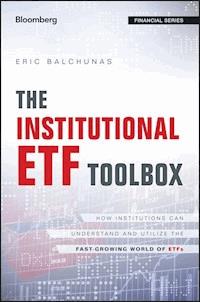
Get up to speed on the booming innovation surrounding institutional ETF usage. The Institutional ETF Toolbox is the institutional investor's guide to utilizing exchange-traded funds and taking full advantage of the innovative new products in their expanding repertoire. The ETF toolbox is expanding rapidly with nearly one new ETF launching every day this decade so far. As with any financial innovation, this phenomenon brings both opportunity and concerns, as well as a dire need for clarity and strong due diligence skills. This book is both reference and resource, providing data-driven explanations backed by real-world market examples--alongside valuable insight from leading practitioners. Coverage includes an examination of the advantages and growth of ETFs as well as current and future uses of ETFs, emerging markets, and the strategic and tactical perspectives you need to effectively use ETFs to optimal effect. The major concerns surrounding ETFs are addressed in full to give you the background you need to formulate a better ETF strategy. ETF allocations are expected to keep growing rapidly across all institutional types, and new and emerging products are becoming more and more liquid allowing easier expression of investment opinion. This book shows you how any investors can utilize these tools to strengthen your portfolio and safely expand into particularly appealing areas. * Understand how the ETF ticks and the how to take advantage of all the myriad of advantages * Learn how to perform effective due diligence using exposure, cost, liquidity, risk and structure * Utilize ETFs for cash equitization, portfolio rebalancing, liquidity management, and more * Learn how ETFs are expanding into equities, fixed income, emerging markets, and alternatives * Learn how to avoid unwanted costs, liquidity issues and hidden complexities ETF usage is climbing with assets growing by about 25 percent per year, and those who use them expect to expand their usage quickly. The Institutional ETF Toolbox provides the actionable information institutions need to identify and adopt the most suitable approach.
Sie lesen das E-Book in den Legimi-Apps auf:
Seitenzahl: 548
Veröffentlichungsjahr: 2016
Ähnliche



















The Bloomberg Financial Series provides both core reference knowledge and actionable information for financial professionals. The books are written by experts familiar with the work flows, challenges, and demands of investment professionals who trade the markets, manage money, and analyze investments in their capacity of growing and protecting wealth, hedging risk, and generating revenue.
Since 1996, Bloomberg Press has published books for financial professionals on investing, economics, and policy affecting investors. Titles are written by leading practitioners and authorities, and have been translated into more than 20 languages.
For a list of available titles, please visit our Web site at www.wiley.com/go/bloombergpress.
THE INSTITUTIONAL ETF TOOLBOX
How Institutions Can Understand and Utilize the Fast-Growing World of ETFs
Eric Balchunas
Cover image: 3d blue stock chart © Maxphotograph/iStockphoto; Red toolbox © John Solie/iStockphoto; Digital font © lekkyjustdoit/iStockphoto; Dark gray abstract background © Kritchanut/iStockphoto Cover design: Wiley
Copyright © 2016 by Eric Balchunas. All rights reserved.
Published by John Wiley & Sons, Inc., Hoboken, New Jersey. Published simultaneously in Canada.
No part of this publication may be reproduced, stored in a retrieval system, or transmitted in any form or by any means, electronic, mechanical, photocopying, recording, scanning, or otherwise, except as permitted under Section 107 or 108 of the 1976 United States Copyright Act, without either the prior written permission of the Publisher, or authorization through payment of the appropriate per-copy fee to the Copyright Clearance Center, Inc., 222 Rosewood Drive, Danvers, MA 01923, (978) 750-8400, fax (978) 646-8600, or on the Web at www.copyright.com. Requests to the Publisher for permission should be addressed to the Permissions Department, John Wiley & Sons, Inc., 111 River Street, Hoboken, NJ 07030, (201) 748-6011, fax (201) 748-6008, or online at www.wiley.com/go/permissions.
Limit of Liability/Disclaimer of Warranty: While the publisher and author have used their best efforts in preparing this book, they make no representations or warranties with respect to the accuracy or completeness of the contents of this book and specifically disclaim any implied warranties of merchantability or fitness for a particular purpose. No warranty may be created or extended by sales representatives or written sales materials. The advice and strategies contained herein may not be suitable for your situation. You should consult with a professional where appropriate. Neither the publisher nor author shall be liable for any loss of profit or any other commercial damages, including but not limited to special, incidental, consequential, or other damages.
For general information on our other products and services or for technical support, please contact our Customer Care Department within the United States at (800) 762-2974, outside the United States at (317) 572-3993 or fax (317) 572-4002.
Wiley publishes in a variety of print and electronic formats and by print-on-demand. Some material included with standard print versions of this book may not be included in e-books or in print-on-demand. If this book refers to media such as a CD or DVD that is not included in the version you purchased, you may download this material at http://booksupport.wiley.com. For more information about Wiley products, visit www.wiley.com.
Library of Congress Cataloging-in-Publication Data:
ISBN 9781119093862 (Hardcover) ISBN 9781119094104 (ePDF) ISBN 9781119094241 (ePub)
Limit of Liability/Disclaimer of Warranty: The publisher and the author make no representations or warranties with respect to the accuracy or completeness of the contents of this work and specifically disclaim all warranties, including without limitation warranties of fitness for a particular purpose. No warranty may be created or extended by sales or promotional materials. The advice and strategies contained herein may not be suitable for every situation. This work is sold with the understanding that the publisher is not engaged in rendering legal, accounting, or other professional services. If professional assistance is required, the services of a competent professional person should be sought. Neither the publisher nor the author shall be liable for damages arising herefrom. The fact that an organization or web site is referred to in this work as a citation and/or a potential source of further information does not mean that the author or the publisher endorses the information the organization or web site may provide or recommendations it may make. Further, readers should be aware that Internet web sites listed in this work may have changed or disappeared between when this work was written and when it is read.
The information provided to you herein should be viewed as informational and represents the opinions of each individual, not associated company, and is not intended to be considered a recommendation to participate in any particular trading strategy, or deemed to be an offer or sale of any investment product, and it should not be relied on as such.
For Trang, Gabriel, Elliott, and Mom and Dad.
Contents
Acknowledgments
Introduction: Institutions and ETFs
SECTION I THE ETF PHENOMENON
CHAPTER 1 Why Are ETFs So Popular?
Low Cost
Liquidity
Tax Efficiency
Transparency
Diversification
Easy Asset Allocation
Standardization
Democratic
No Emotion
Passive Investing
Flexibility
Anonymity
Price Discovery
Fiduciary Vehicles
Battle Proven
Convenience
Notes
CHAPTER 2 ETF Growth
Asset Growth
ETF Assets in Perspective
Trading Growth
Product Growth
Notes
CHAPTER 3 ETF Mechanics
The Story of the ETF
The Creation/Redemption Process
AMEX Wasn’t Alone
Finally Ready for Launch
Notes
CHAPTER 4 Institutional Usages
Cash Equitization
Manager Transitions
Portfolio Rebalancing
Portfolio Completion
Liquidity Sleeves
Shorting/Hedging
Long and Lend
Tactical Moves
In-Kind Creation/Redemption
Bespoke ETFs
Tax-Loss Harvesting
Long-Term Allocation
Personal Usage
Notes
CHAPTER 5 ETF Due Diligence
Exposure
Cost
Liquidity
Risk
Regulatory Structure
ETF Issuers
ETF Ratings
Notes
SECTION II THE ETF TOOLBOX
CHAPTER 6 U.S. Stock ETFs
Large Caps
Mid Caps
Small Caps
Broad Market
IPOs
Sector and Industry ETFs
The Tech Sector
Industries
Thematic ETFs
Notes
CHAPTER 7 Smart Beta
Controversy
Smart Beta versus Active Management
Growth and Value
Fundamentally Weighted ETFs
Single Factors
Notes
CHAPTER 8 International/Global ETFs
International Developed Markets
Global
Emerging Markets
The First Movers
Second-Generation EM
Next-Generation EM ETFs
Currency-Hedged ETFs
Single-Country ETFs
China
Notes
CHAPTER 9 Fixed Income
Regulations
Aggregate Bond ETFs
Treasuries
Mortgage-Backed Securities
Municipals
Corporates
Senior Loans
Interest Rate–Hedged ETFs
Multi-Asset Income ETFs
International Debt
Notes
CHAPTER 10 Alternatives
Hedge Fund Strategies (aka “Liquid Alts”)
Commodity ETFs
Physically Backed Commodity ETFs
Futures-Based Commodity ETFs
Notes
CHAPTER 11 Leveraged, Inverse, and VIX
Leveraged ETFs
The VIX
Notes
CHAPTER 12 Actively Managed ETFs
Fixed Income
Equity
Notes
Conclusion: Five Takeaways
Note
About the Author
Index
EULA
List of Tables
Introduction
Table I.1
Chapter 1
Table 1.1
Table 1.2
Table 1.3
Table 1.4
Table 1.5
Table 1.6
Table 1.7
Chapter 2
Table 2.1
Table 2.2
Chapter 4
Table 4.1
Table 4.2
Table 4.3
Chapter 5
Table 5.1
Table 5.2
Table 5.3
Table 5.4
Chapter 6
Table 6.1
Table 6.2
Table 6.3
Table 6.4
Table 6.5
Chapter 7
Table 7.1
Chapter 8
Table 8.1
Table 8.2
Table 8.3
Table 8.4
Table 8.5
Table 8.6
Chapter 10
Table 10.1
Chapter 11
Table 11.1
Table 11.2
Table 11.3
List of Illustrations
Chapter 1
Figure 1.1
ETFs Show Their Holdings Every Day
Figure 1.2
TAN’s Holdings Each Week during October 2014
Figure 1.3
Total Analyst Recommendations for Large U.S. Stocks
Figure 1.4
The Largest Trades for HEDJ from March 19, 2015, to June 19, 2015
Figure 1.5
EGPT’s Price and NAV Graph with Flows at Bottom
Chapter 2
Figure 2.1
Twenty-First-Century Disruptive Forces: The Internet and ETFs
Figure 2.2
ETFs vs Stocks Percent Volume on Exchange
Figure 2.3
Breakdown of Dollar Volume of ETFs by Country
Figure 2.4
New ETF Launches by Year, as of June 30, 2015
Chapter 3
Figure 3.1
SEC Lays out Idea for Market Basket Instrument in a 1988 Paper
Figure 3.2
The Crucial Role of the ETF Ecosystem
Figure 3.3
SPY’s Daily Volume January–June 1993
Figure 3.4
SPY’s Yearly Assets 1993–2014
Chapter 4
Figure 4.1
Varying Costs of Rolling S&P 500 Futures
Figure 4.2
How an Institution Would Compare Mid-Cap Futures versus an ETF
Figure 4.3
AGG’s Yearly Flows Since Inception
Figure 4.4
New York Life Group’s Historical Ownership of FM
Figure 4.5
ETFs Ranked by Highest Percentage of Shares Shorted
Figure 4.6
Holder of IWM Ranked by Size of Position
Figure 4.7
Windhaven’s 13F Filing as of 3/31/2015
Figure 4.8
JNK’s Daily Flows in 2012
Figure 4.9
Arizona’s 13F from December 31, 2014
Figure 4.10
ETNs Sorted by Assets Highlighting Four Fisher-Created ETNs
Figure 4.11
The Most Correlated ETFs to Schlumberger Limited
Figure 4.12
Holding Periods of Pensions, Endowments, and Insurance Companies of EFA
Figure 4.13
Bridgewater’s ETF-Heavy 13F Filing as of March 31, 2015
Chapter 5
Figure 5.1
ETF<GO>
Figure 5.2
Total Return of Two Frontier-Market ETFs, September 11, 2012, to December 31, 2014
Figure 5.3
Index Weighting Methodology
Figure 5.4
XOP’s Equal Weighting Gives It Extra Volatility
Figure 5.5
Some Serious Dispersion of P/E Ratios among China ETFs
Figure 5.6
Fundamental Breakdown of the Holdings of SPY
Figure 5.7
Largest Holders of EEM as of June 30, 2015
Figure 5.8
EEM’s Tracking Difference for 2014
Figure 5.9
ETF Issuers Underestimate Tracking
Figure 5.10
VTI’s Tracking Difference Is Less than Its Expense Ratio
Figure 5.11
PRF’s Quote Monitor Shows an 8 Cent Spread
Figure 5.12
Pricing History for the Past Four Years for ANGL
Figure 5.13
Dispersion of Creation Fees among the Very Largest ETFs
Figure 5.14
IWM’s Daily Premium/Discount (aka “Arbitrage Band”) for the Past 12 Months
Figure 5.15
EWZ’s Arbitrage Band Dropped after a Tax Was Lifted on Foreign Investment
Figure 5.16
HYG’s Arbitrage Band Since Inception
Figure 5.17
An ETF Can Pay Both Long-Term and Short-Term Capital Gains
Figure 5.18
ETF by Exchange Volume Showing the Haves and the Have-Nots
Figure 5.19
ETF Exchange Volume Inequality
Figure 5.20
A Thinly Traded ETF with Plenty of Implied Liquidity
Figure 5.21
Health Care ETFs Volume Compared to Their Implied Liquidity
Figure 5.22
A Look Inside the Implied Liquidity of an ETF
Figure 5.23
HEWG’s Assets Doubled on a Large Creation
Figure 5.24
The Smaller the ETF, the More Likely Trading Is Off-Exchange
Figure 5.25
ICOL Is an Example of Low Volume and Low Implied Liquidity
Figure 5.26
Market Makers with the Most Reported Volume in XLF
Figure 5.27
ETFs by Regulatory Structure
Figure 5.28
Breakdown of ETN Assets
Chapter 6
Figure 6.1
Largest U.S. Large-Cap ETFs by Assets
Figure 6.2
VOO Has Lowest Fee and Highest Return, but Barely
Figure 6.3
RSP Beating SPY Since Inception
Figure 6.4
SPY (Port) and RSP (Bmrk) Have Weighting Differences
Figure 6.5
IWB’s Dip into Mid Caps Gives It Slightly More Volatility than SPY
Figure 6.6
Are the QQQs an Equity Large-Cap ETF or a Tech Play?
Figure 6.7
IWM Is King of the Small-Cap Category
Figure 6.8
IWM Has Had the Best Liquidity but Not the Best Performance
Figure 6.9
VB’s Positive Tracking Error Is a Thing of Beauty
Figure 6.10
Months and Months of Inflows for VTI
Figure 6.11
An ETF Tracking IPOs Has Destroyed Large- and Small-Cap ETFs
Figure 6.12
Covered Call ETFs Offer Yield but Give Up the Upside
Figure 6.13
A Wide Range of Tech Sector ETFs as of End of June 2015
Figure 6.14
Return Dispersion among the Big Three’s Tech ETFs
Figure 6.15
A Look at the Institutional Owners of XLK
Figure 6.16
Top Holdings for TDIV
Figure 6.17
TDIV Held Up Well During a Tech Sell-off of Early 2013
Figure 6.18
PSCT Is a Mixed Bag of Returns in First Half of 2015
Figure 6.19
HACK Has Been Crushing the Largest Tech-Sector ETF Since Inception
Figure 6.20
Hedge Fund Owners of GDX
Figure 6.21
AMLPs Big Tracking Difference Due to Tax Treatment
Figure 6.22
GURU’s Performance Attribution in 2013 versus S&P 500
Figure 6.23
MOAT’s History of Holdings for Two Years as of June 30, 2015
Figure 6.24
NASH’s Grand Ole Outperformance of the S&P
Figure 6.25
NASH Has Large Weightings in Health Care Service Companies
Chapter 7
Figure 7.1
Smart-Beta ETFs Growing in Market Share
Figure 7.2
Application of Smart-Beta ETFs by Institutions
Figure 7.3
VTV and RPV versus SPY over the Past Two Years
Figure 7.4
Contribution to Total Return for PRF versus SPY
Figure 7.5
SPLV versus SPX Since Its Inception Four Years Ago
Chapter 8
Figure 8.1
ETFs Tracking Some Form of the Popular MSCI EAFE
Figure 8.2
A Look at EFA’s Allocations
Figure 8.3
EFA (Port) versus VEA (Bmrk) Shows South Korea as Biggest Difference
Figure 8.4
VT Serves up the Entire World in One Shot
Figure 8.5
ACWV (Port) Keeps Fairly Close Adherence to the Allocations of ACWI (Bmrk)
Figure 8.6
VWO’s Assets Passing EEM’s Assets in 2011
Figure 8.7
EEM (Port) versus VWO (Bmrk) Shows South Korea Difference
Figure 8.8
Unnecessarily Costly BRIC ETFs
Figure 8.9
DEM’s 18 Percent Russia Exposure Contributed –9 Percent of Return in 2014
Figure 8.10
Since Launching in 2010, ECON Has Utterly Destroyed EEM
Figure 8.11
PIE’s Historical Country Allocations Are Literally All Over the Map
Figure 8.12
CAFRX’s ETF Holdings
Figure 8.13
DXJ Performance (Top) and Flows (Bottom) All Changed When Abe Was Elected
Figure 8.14
Performance of Hedged DXJ versus Unhedged EWJ Since Abe’s Election
Figure 8.15
DXJ’s Institutional Ownership Includes Pensions, Endowments, Insurance Companies, and Hedge Funds Alike
Figure 8.16
The Largest Single-Country ETFs by Assets
Figure 8.17
Implied Liquidity Is Important Consideration for Single-Country ETFs
Figure 8.18
State of Tennessee’s DIY Single-Country ETF Portfolio as of June 30, 2015
Figure 8.19
Israel Is Down Near the Bottom of the Weightings in the EAFE Index
Figure 8.20
Single-Country EM Seeing More Flows Relative to the Regional EM through April 2015
Figure 8.21
CNXT Quick Start Since Inception
Figure 8.22
CN’s Lackluster Assets Contrasts the Value-Add of the ETF
Chapter 9
Figure 9.1
Asset Growth of Fixed-Income ETFs
Figure 9.2
Ownership of Corporate Bonds
Figure 9.3
HYG’s Daily Premium/Discount Since 2007
Figure 9.4
Why Institutions Don’t Use Fixed-Income ETFs
Figure 9.5
Cross-Section of AGG’s Bonds
Figure 9.6
AGG and BND’s Total Return from May 17, 2010, to June 29, 2015
Figure 9.7
TLT’s Compared to Other Diversifiers in 2008 When the S&P 500 Was Down 36 Percent
Figure 9.8
SHV’s Price Barely Changed Over Five Years
Figure 9.9
ZROZ and EDV’s Volatile Historical Returns Contrasted to IEF, a More Typical Treasury Bond ETF
Figure 9.10
BAB’s Duration Gives It Extra Volatility
Figure 9.11
ANGL Outpacing HYG Since Inception
Figure 9.12
Target Date Bond ETFs Sorted by Assets
Figure 9.13
Greenwich Survey Shows Investors Most Concerned with Interest Rates
Figure 9.14
LQDH Beat LQD in February 2015 When Interest Rates Rose
Figure 9.15
A Small Army of Rate-Hedged ETFs Is Waiting for Their Moment in the Sun
Figure 9.16
A Partial Look at PCY’s Country Allocation Shows It Going to All Corners of the World to Fetch Bonds
Chapter 10
Figure 10.1
QAI Holds Other ETFs to Replicate the Risk and Return of a Multi- Strategy Hedge Fund
Figure 10.2
The HFR Merger Arbitrage Index Getting Beat by Riskier MNA
Figure 10.3
Institutional Holders of GLD
Figure 10.4
Assets Since 2003 for SPY and GLD
Figure 10.5
Despite the Tough Times, GLD Still Outperforming SPY Since Inception
Figure 10.6
IAU versus GLD Since Inception
Figure 10.7
USO Return versus WTI Crude Oil Spot Price Since Inception
Figure 10.8
USO’s Heavy Hedge Fund User Base
Figure 10.9
Energy ETFs and ETNs Have Different Tax Treatments and Forms
Figure 10.10
USCI Return Since Inception versus DBC and DJP
Chapter 11
Figure 11.1
YINN versus Its Index April 9, 2015 to April 16 2015
Figure 11.2
Leveraged Long and Short Financials Were Both Down during Financial Crisis
Figure 11.3
YINN versus Its Index March 31, 2015, to April 8, 2015
Figure 11.4
UWTI and DWTI Both Down Big in First Half of 2015
Figure 11.5
VXX Total Return Since Inception versus the VIX
Figure 11.6
TVIX’s History of Premiums and Discounts Shows Just How Wild Things Got
Figure 11.7
The Field We Created Because of the TVIX Situation
Figure 11.8
XIV Destroying Everyone Since Inception
Chapter 12
Figure 12.1
Active ETFs Assets versus Smart Beta and Passive
Figure 12.2
BOND’s Performance Since Gross’s Departure
Figure 12.3
HYLD’s Dramatic Rise and Fall Compared to the Bellwether JNK and HYG
Figure 12.4
GVT’s Past Three Years versus the S&P 500 Value Index
Figure 12.5
HDGE Can Do Better Than Inverse ETFs During Long Market Declines
Guide
Cover
Table of Contents
Part
Pages
xiii
xiv
xv
xvi
xvii
xviii
xix
xx
xxi
1
3
4
5
6
7
8
9
10
11
12
13
14
15
16
17
18
19
20
21
22
23
24
25
27
28
29
30
31
32
33
34
35
36
37
38
39
40
41
42
43
44
45
46
47
48
49
50
51
53
54
55
56
57
59
60
61
62
63
64
65
66
68
69
70
71
72
73
74
75
76
77
78
79
80
81
82
83
84
85
86
87
88
89
91
92
93
94
95
96
97
98
99
100
102
103
104
105
106
107
108
109
110
111
112
113
114
115
116
117
118
119
120
121
122
123
124
125
126
127
128
129
130
131
132
133
134
135
136
137
138
139
140
141
143
145
146
147
148
149
150
151
152
153
154
155
156
157
158
159
160
161
162
163
164
165
166
167
168
169
170
171
172
173
174
175
176
177
178
179
180
181
182
183
184
185
186
187
188
189
191
192
193
194
195
196
197
198
199
200
201
202
203
204
205
206
207
208
209
210
211
212
213
214
215
216
217
218
219
221
222
223
224
225
226
227
228
229
230
231
232
233
234
235
236
237
238
239
240
241
242
243
244
245
246
247
248
249
251
252
253
254
255
256
257
258
259
260
261
262
263
264
265
266
267
268
269
270
271
272
273
274
275
276
277
278
279
280
281
282
283
284
285
286
287
288
289
290
291
292
293
294
295
296
297
298
299
300
301
302
303
304
305
306
307
308
309
310
311
312
314
315
316
317
318
319
320
321
322
323
324
325
326
327
328
329
330
331
332
333
334
335
336
337
338
339
340
341
343
344
345
346
347
348
349
350
351
352
353
Acknowledgments
I realize I’m not winning an Oscar here, but I feel some people need a shout-out. This book wouldn’t have been written without both direct and indirect help from the following people.
In terms of direct help, I owe a huge thanks to Suzanne Woolley, my amazing editor at Bloomberg. She not only taught me a lot about writing, but also connected me to Stephen Isaacs of Bloomberg Press. If not for Suzanne’s stamp of approval—and Stephen’s guidance—this book would not exist. Second, I would like to thank Matt Kelly and Doug Kenney in Bloomberg Global Data. They have been supportive of me for years now—not only in this book project but also encouraging me to take opportunities necessary to turn my job into a career.
In terms of the book itself, Sara Prager and Ryan Kreger deserve the biggest thanks. They were the only two people (poor souls) who read the entire first draft, which was double the length it is now. This was crucial in figuring out what to chop out and what to expand on
I also got great feedback on sections of the book from my Bloomberg colleagues James Seyffart and Michael Baradas. I also have to thank our wonderful interns Madeleine Hart and Kayla Glenn, who did some serious data crunches for the book and elevated the formatting for the tables and figures.
Many people from the ETF industry helped me immensely. There are too many to list, but special thanks should go to Wes Gray, Daniel Gamba, Brendan Ahern, Kathryn Bernhardt, Mike Eschmann, Paris Smith, Stephen Bloom, Howard Kramer, and Robbie Ross. I interviewed over 60 people for this book and all of them were very helpful as well. While you may see two to three quotes from each person, they were drawn from an hour-plus interview. And what I didn’t quote was highly useful background material that seeped into the overall content in some shape or form. So, big thanks to all of them.
I also have to give a special thanks to David Abner, who is a friend and a mentor within the industry. Dave has written two books on ETFs, which I’ve read multiple times. While this book is largely a different topic, his work and his attitude has influenced me and inspired me in subtle ways.
This book also would not exist if not for some folks in Bloomberg’s media operation, namely, Catherine Cowdery of Bloomberg Radio, as well as the folks over at Bloomberg TV—namely, Ted Fine and Jonah Davis who first let me on the air to talk ETFs. Every Friday for five years now I’ve traveled up to New York City to do a weekly segment on ETFs for radio and TV. This consistent deadline was a huge motivating force for me; it sent me into every nook and cranny of the ETF world. All told, I’ve done over 500 segments, and all of the notes from those deep dives provided a solid resource for me in writing this book—especially in the “toolbox” half of the book.
Like any writer, I have influences. My biggest influences come from my favorite ETF trade publications, starting with Dave Nadig and Matt Hougan of ETF.com. When I was first developing myself as an analyst, their articles and podcasts were a major source of knowledge and inspiration. If ETF analysis has a cutting edge, it’s those guys. I’ve also found enlightenment from fellow ETF analysts such as Todd Shriber, Victor Reklaitis, Chris Dieterich, Brendan Conway, Michael Rawson, Tom Lydon and Deborah Fuhr.
Every book I read, the author inevitably apologizes to his family for being so pre-occupied with writing their book. Now I know what they mean. It really does demand a lot of precious time. So to my wife and kids, thank you so much for all your support and patience during this book writing process. Daddy is as happy to be done writing it as you are!
Lesen Sie weiter in der vollständigen Ausgabe!
Lesen Sie weiter in der vollständigen Ausgabe!
Lesen Sie weiter in der vollständigen Ausgabe!
Lesen Sie weiter in der vollständigen Ausgabe!
Lesen Sie weiter in der vollständigen Ausgabe!
Lesen Sie weiter in der vollständigen Ausgabe!
Lesen Sie weiter in der vollständigen Ausgabe!
Lesen Sie weiter in der vollständigen Ausgabe!
Lesen Sie weiter in der vollständigen Ausgabe!
Lesen Sie weiter in der vollständigen Ausgabe!
Lesen Sie weiter in der vollständigen Ausgabe!
Lesen Sie weiter in der vollständigen Ausgabe!
Lesen Sie weiter in der vollständigen Ausgabe!
Lesen Sie weiter in der vollständigen Ausgabe!
Lesen Sie weiter in der vollständigen Ausgabe!
Lesen Sie weiter in der vollständigen Ausgabe!
Lesen Sie weiter in der vollständigen Ausgabe!
Lesen Sie weiter in der vollständigen Ausgabe!




