


5,49 €
Mehr erfahren.
- Herausgeber: Quick Reads
- Kategorie: Geisteswissenschaft
- Sprache: Englisch
Discover the incredible history of the Jurassic Era...
The Jurassic Era was a time of extraordinary biodiversity, shaping the world we know today. Dominated by towering dinosaurs and vast, evolving ecosystems, this period witnessed the rise of some of the most iconic creatures to ever walk the Earth. But the Jurassic wasn't just about the land giants; the seas teemed with marine reptiles, and the skies were ruled by pterosaurs, creating a planet unlike anything seen before or since.
In this captivating book, explore the fascinating details of how dinosaurs became the dominant force on Earth, the flourishing of diverse plant life, and the emergence of early mammals in the shadow of the dinosaurs. Delve into the discovery of remarkable fossils that provide a window into life millions of years ago, and trace the ecological shifts that eventually led to the Jurassic’s end.
Discover a plethora of topics such as:
* The Age of Dinosaurs and their ecological dominance
* The evolution of marine life and Jurassic seas
* The rise of early mammals and their survival strategies
* Pterosaur dominance in the skies
* The climate and environment that shaped Jurassic life
And much more...!
So, if you want a concise and informative book on the Jurassic Era, simply scroll up and click the "Buy now" button for instant access!
Das E-Book können Sie in Legimi-Apps oder einer beliebigen App lesen, die das folgende Format unterstützen:
Veröffentlichungsjahr: 2024
Ähnliche




















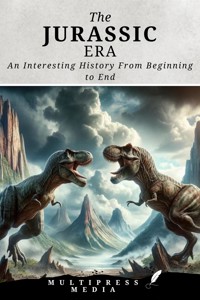
THE JURASSIC ERA
An Interesting History From Beginning to End
By
MultiPress Media
Important Legal Information:
Except as provided by United States of America copyright law, this book or any part of it may not be reproduced in any form, stored in any retrieval system, or distributed in any format by any means, whether electronic, mechanical, photocopy, recording, or otherwise, without the publisher's written permission.
Disclaimer:
This book's contents are solely for educational and informative purposes. We take no responsibility for any impacts or outcomes that may occur as a result of using this content. Despite making every attempt to offer accurate and sufficient information, the author accepts no responsibility for its correctness, usage, or abuse.
Copyright © 2024 by MultiPress Media.
All Rights Reserved.
Table of Contents
Introduction
Chapter 1: The Origins of the Jurassic Era
Chapter 2: The Age of Dinosaurs
Chapter 3: Marine Life in the Jurassic Seas
Chapter 4: Flora of the Jurassic Era
Chapter 5: The Evolution of Mammals
Chapter 6: Pterosaur Dominance in the Skies
Chapter 7: Climate and Environment of the Jurassic
Chapter 8: The Jurassic Period in Paleontology
Chapter 9: The Interconnected Ecosystems
Chapter 10: The End of the Jurassic Era
Chapter 11: Legacy of the Jurassic Era
Chapter 12: The Jurassic Era in Modern Science
Conclusion
Introduction
The Jurassic Era, spanning approximately 201 to 145 million years ago, represents a pivotal chapter in the history of our planet, a period marked by remarkable evolutionary advancements and profound ecological transformations. As the middle segment of the Mesozoic Era, often dubbed the "Age of Dinosaurs," the Jurassic witnessed the rise of diverse life forms that would dominate terrestrial and marine ecosystems for millions of years. This era is not only crucial for understanding the evolution of dinosaurs but also for examining the complex interplay of flora and fauna that shaped the environments of the time.
During the Jurassic, the Earth's continents were in a state of dynamic flux, drifting toward their modern configurations. This continental shift influenced climate patterns and allowed for the emergence of new habitats, fostering a rich tapestry of life. Key figures in paleontology, such as Richard Owen, who coined the term "Dinosauria" in the 19th century, laid the groundwork for our understanding of these majestic creatures, providing insights that continue to resonate in contemporary scientific discourse.
The Jurassic was characterized by the dominance of iconic dinosaur species, such as *Brachiosaurus*, with its towering stature, and *Allosaurus*, a formidable predator. The era also saw the flourishing of marine reptiles like ichthyosaurs and plesiosaurs, alongside an abundance of diverse plant life, including the first flowering plants. This complex web of interactions among species is crucial for comprehending not only the evolution of life on Earth but also the resilience and adaptability of organisms in the face of environmental changes.
Throughout this book, we will delve deeper into the significant events, innovative adaptations, and transformative ecosystems of the Jurassic Era. Each chapter will explore various facets of this extraordinary period, from the emergence of dinosaurs and marine life to the intricate relationships that defined Jurassic ecosystems. By examining the evidence left behind in fossils and geological formations, we aim to illuminate the legacy of the Jurassic Era and its enduring impact on the Earth’s biological narrative. As we embark on this exploration, we invite readers to engage with the past in a way that highlights both the complexities and wonders of life during this remarkable epoch.
Chapter 1: The Origins of the Jurassic Era
The transition from the Triassic to the Jurassic period, occurring around 201 million years ago, marked a significant turning point in Earth's history. This period was characterized by dramatic climatic changes and geological upheaval that set the stage for the rich biodiversity of the Jurassic Era. As the Pangaea supercontinent began to break apart, the environmental conditions shifted, fostering the emergence of new ecosystems that would support a diverse array of life forms.
The end of the Triassic period was marked by one of the largest mass extinctions in Earth’s history, known as the Triassic-Jurassic extinction event. This event, which occurred approximately 200 million years ago, resulted in the loss of around 75% of all species, paving the way for the dinosaurs to become the dominant terrestrial vertebrates. Evidence of this mass extinction can be traced to several regions, notably the Tethys Sea, which served as a crucial marine corridor connecting the newly forming continents. Fossils recovered from locations such as the Newark Supergroup in North America and the Molteno Formation in South Africa provide insights into the species that perished and those that thrived during this transitional phase.




