


Erhalten Sie Zugang zu diesem und mehr als 300000 Büchern ab EUR 5,99 monatlich.
- Herausgeber: Birlinn
- Kategorie: Geisteswissenschaft
- Sprache: Englisch
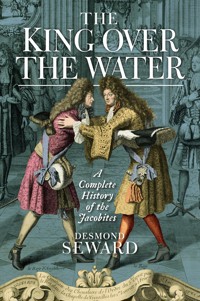
Shortlisted for the Military History Matters Book of the Year Award Few causes have given rise to such dramatic tales of loyalty, passion and betrayal as the Jacobite dream of restoring the Stuarts to the British throne. Although its failure brought savage retribution from the Hannoverians, the Jacobite flame continued to burn decades after Culloden. This is the first modern history of the entire Jacobite movement in Scotland, England and Ireland, from the 'Glorious Revolution' of 1688 that drove James II into exile and the death of his grandson, Cardinal Henry, Duke of York, in 1807. The Battle of Culloden and Bonnie Prince Charlie's flight through the heather are well known, but not the other risings and plots that involved half of Europe and even revolutionary America. The King Over the Water weaves together all the strands of this gripping saga into a vivid, sweeping narrative, full of insight, analysis and anecdote.
Sie lesen das E-Book in den Legimi-Apps auf:
Seitenzahl: 702
Veröffentlichungsjahr: 2019
Das E-Book (TTS) können Sie hören im Abo „Legimi Premium” in Legimi-Apps auf:
Ähnliche




















First published in 2019 by
Birlinn Limited
West Newington House
10 Newington Road
Edinburgh
EH9 1QS
Copyright © Desmond Seward 2019
ISBN 978 1 78885 307 1
The right of Desmond Seward to be identified as Author of this work has been asserted by him in accordance with the Copyright, Designs and Patents Act 1988. All rights reserved. No part of this publication may be reproduced in any form or by any means without permission from the publisher.
British Library Cataloguing in Publication Data
A catalogue record for this book is available from the British Library.
Designed and typeset by Initial Typesetting Services, Edinburgh
Printed and bound by Clays Ltd, Elcograf S.p.A.
ForHugo and Elizabethand forKit, Lettie and Millie
Although God hath given Mee three Kingdomes, yet in these He hath not now left Me any place, where I may with Safety & Honour rest my Head.
King Charles I, Eikon Basilike, or The King’s Book1
Contents
List of Illustrations and diagrams
Family Tree
Prologue – into Exile
Introduction: Jacobites – English, Scots and Irish
Chronology
PART ONEJAMES II – THE LOST THRONE
1 James, Duke of York – Heir to the Throne?
2 King James II and VII, 1685–1688
3 The Dutch Invasion, 1688
4 Revolution or Old Truth?
5 Hope and Despair – Scotland, 1689–1691
6 A Nation Once Again – Jacobite Ireland, 1689–1690
7 Disaster – the Battle of the Boyne, 1 July 1690
8 Defiance – the Siege of Limerick, August 1690
9 The Last Sad Hour of Freedom’s Dream, 1691
10 Invading England? 1691–1696
11 Murder Dutch Billy? 1695–1696
12 ‘King William’s Ill Years’ – Scotland, 1694–1702
13 Waiting for ‘the gentleman in black velvet’
PART TWOJAMES III – A SECOND RESTORATION?
14 Queen Anne, 1702
15 ‘A parcel of rogues in a nation’ – the Union, 1707
16 The ‘enterprise of Scotland’, 1708
17 ‘Fire smothered under flax’ – Ireland, 1708
18 Stuart or Hanover?
19 The Illustrious House of Hanover, 1714
20 ‘Now or Never!’ 1715
21 The Fifteen
22 The Battles of Sheriffmuir and Preston, 1715
23 King James VIII in Scotland, 1716
24 Hanover’s Reckoning, 1716
25 Swedes and Russians, 1716–1718
26 The Nineteen
27 A Prince of Wales Is Born, 1720
28 South Sea Foulness
29 The Atterbury Plot, 1721–1722
PART THREEWHIG TYRRANY
30 ‘A more dismal aspect?’
31 The Royal Oak Tree
32 The Private Life of King James III and VIII
33 The Honest Cause
PART FOURA KING IN WAITING
34 The Forty-Four?
35 The Irish Dimension – Fontenoy, Spring 1745
36 ‘I am come home, Sir’, Summer 1745
37 Building an Army, Autumn 1745
38 Charles Invades England, Winter 1745
39 The Forty-Five behind the Lines
40 Withdrawal to Scotland, Winter 1745
41 The Battle of Falkirk, 17 January 1746
42 Culloden, 16 April 1746
43 Hanover’s Revenge
44 ‘Skulking’, Summer 1746
45 Europe’s Hero, 1746–1748
46 Jacobite Revival, 1746–1750
47 The Elibank Plot, 1752–1753
48 ‘The Fifty-Nine’?
49 The Death of James III and VIII, 1 January 1766
PART FIVECHARLES III AND GEORGE III
50 King Charles III, 1766
51 The Last Stuart Queen, 1772
52 An American Dream? 1775
53 The Last Years of Charles III
PART SIXTWILIGHT
54 Henry IX, 1788–1807
55 The Heirs
Epilogue
Appendix – Novels about Jacobitism
Acknowledgements
Notes
Bibliography
Index
List of Illustrations and diagrams
Colour plates
James II and VII with Mary of Modena
Sir Neil O’Neill
James III and VIII
The Duke of Mar – ‘Bobbing John’
James III and VIII marries Clementina Sobieska
Prince Charles Edward Stuart in the 1740s
An Incident in the Rebellion of 1745
The last male Stuart as Duke of York and as Henry IX
Black-and-white plates
The exiled James II is welcomed to St Germain-en-Laye by Louis XIV
James Graham of Claverhouse – ‘Bonnie Dundee’
The Duke of Tyrconnell – ‘Fighting Dick’ Talbot
Patrick Sarsfield, Earl of Lucan
Mary of Modena
Lord George Murray
Bishop Atterbury
Flora Macdonald
Clementina Walkinshaw
Dr William King
Dr Samuel Johnson
Charlotte, Duchess of Albany
Diagrams
The Battle of the Boyne
The Sieges of Limerick
The Battle of Aughrim
The Battle of Sheriffmuir
The Battle of Culloden
Prologue – into Exile
I call to God to witness that I go not on my own motive; but if I stay in the kingdom I am very well informed of my destiny, and that no king ever came out of the Tower but to his grave.
James II1
In the small hours of 23 December 1688, a tall, thin, middle-aged man and an equally tall youth, accompanied by two other men, stole out from the backdoor of a large house in Rochester High Street. In the darkness, the little group crept silently through the garden, then down to the River Medway, where a small boat was waiting.
Rowing out into the estuary they hoisted the sail but found wind and tide against them, so for a time they took refuge on board a man-of-war whose captain could be trusted. It was evening before they reached their destination, a big sloop called the Henrietta, with a skipper who was also a naval officer. He set sail immediately.
The tall man was King James II and VII, who would never again set foot on English or Scots soil, and the youth was his natural son, James FitzJames, Duke of Berwick. The other two were courtiers.
The king had left a note, written just before he fled, His Majesties Reasons for Withdrawing Himself from Rochester, which at his wish was printed and published soon after. In it he complains of his son-in-law (and nephew) William of Orange replacing his Whitehall guards by Dutch troops, then ‘sending to me at One a Clock, after Midnight, when I was in Bed, a kind of an Order by three Lords, to begone out of mine own Palace before Twelve, that same Morning’. How can he feel his life is safe with a man who treats him like this, who says he does not believe the Prince of Wales is the king’s son, who makes him appear ‘as black as Hell to my own People, and to all the World besides’?
He explains that he is leaving his kingdom ‘to be within call whenever the Nation’s Eyes shall be opened’, when he hopes a new Parliament will agree to ‘Liberty of Conscience for all Protestant Dissenters; and that those of my own [Catholic] Perswasion may be so far considered and have such a share of it, as they may live peaceably and quietly as Englishmen and Christians’.
Yet this was the policy – too tolerant rather than intolerant – that had led to his downfall.
For many, the moment when the Henrietta sailed for France with King James on board marked the end of Britain’s rule by her ancient, natural and rightful line of sovereigns. It was also the beginning of Jacobitism.
Introduction:Jacobites – English, Scots and Irish
. . . if thou wilt restore me and mine to the Ancient rights and glory of my Predecessours.
King Charles I, Eikon Basilike1
The Jacobites were men and women who refused to accept the ‘Glorious’ Revolution of 1688 in which William of Orange deposed James II. For seventy years, English, Scots and Irish, did their best to restore the wronged House of Stuart – first James, then his son, and then his grandson.
The events of 1688 were not so much a revolution as an aristocratic coup d’etat that ended in a one-party state while, far from always trying to set the clock back, the Jacobites came to offer an escape from rule by a corrupt oligarchy. Until forty years ago they were dismissed as a handful of kilted anachronisms from the wilder areas of the Celtic Fringe. Nowadays they are taken much more seriously, but the new insights are restricted to academics.
Most recent books about the Jacobite movement have concentrated on the rising of 1745–6 that ended at Culloden, but these fail to tell the whole story in England, Scotland and Ireland, from James II’s flight in 1688 until his grandson Henry IXs death in 1807. This is to omit the context that explains the Jacobites’ motivation.
Their cause involved the entire British Isles, and if English, Scots and Irish Jacobites had somewhat different aims, they were all part of the same movement. Because of Scotland’s heroic contribution they are often seen as purely Scottish, ignoring the Irish war of 1689–91 and plans for risings in England and Ireland that were on the cards until well into the 1750s. Too many historians tend to forget that the Jacobites of each kingdom (and in a diaspora reaching from Russia to America) had the same objective – a Stuart Restoration.
Support for their would-be counter-revolution was underestimated by historians who until the late twentieth century failed to recognise their importance over many decades in British politics. Contemporaries did not make the same mistake. In 1738 Robert Walpole warned the House of Commons that Jacobites ‘are, I am afraid, more numerous than most gentlemen imagine’. They were taken very seriously indeed by the major European powers – the policies of the first two Georges in Germany ensuring that Hanover never lacked for enemies abroad. France, Spain, Sweden, Russia and Prussia all contemplated restoring the Stuarts – France considered restoring them in Ireland as late as 1796.
The Jacobite movement should be seen as the saga it was – a tale of loyalty and hope, yet in the end of bitter disillusion, lived by men and women who sacrificed all they had to restore the banished royal family. Few causes have aroused a more gallant response from the peoples of these islands than the Honest Cause, whether they were fighting for it at Killiecrankie, Prestonpans or Culloden, at the Boyne, Aughrim or Fontenoy, or dying for it on the scaffold.
To understand them better, I have written from a Jacobite perspective, which is why instead of ‘Pretenders’ I refer to the ‘kings over the water’ as ‘James III’, ‘Charles III’ (‘Bonnie Prince Charlie’) and ‘Henry IX’, as their supporters called them. The book’s sub-title, A Complete History of the Jacobites, has been chosen to show that it deals with support for the exiled sovereigns in England and Ireland as well as in Scotland, but does not imply that Jacobitism ended at Henry’s death in 1807. Even if no subsequent Head of the House of Stuart has ever claimed the throne, for a handful of diehards the cause is still alive today.
Chronology
1688
September
The Nine Years War begins
November
‘The Protestant Wind’ – William of Orange invades England
December
James II flees to France
1689
February
William and Mary declared King and Queen of England
March
James II lands in Ireland with French troops William and Mary declared King and Queen of Scots
April
Jacobites besiege Derry In Scotland Viscount Dundee begins the Highland War
May
James II summons the ‘Patriot Parliament’ at Dublin
July
Jacobite victory at Killiecrankie – but Dundee is killed Derry relieved
August
Marshal Schomberg invades Ulster Scottish Jacobites defeated at Dunkeld
November
Schomberg retreats from Dundalk
1690
February
Nonjuror priests and bishops deprived in England
May
Jacobite army defeated at the Haugh of Cromdale
June
William III invades Ulster
June
Williamite fleet defeated by French at Beachy Head
July
James II’s Irish army defeated at the Boyne by William III
King James flees to France
August
William III besieges Limerick After four weeks, William abandons the siege
1691
January
English Jacobite plot discovered – execution of John Ashton
July
Irish Jacobites defeated by Ginkel at Aughrim
August
Ginkel begins second Siege of Limerick
October
Limerick surrenders
Treaty of Limerick ends the Jacobite war in Ireland End of Scotland’s Highland War
1692
February
Massacre of the MacDonalds of Glencoe
May
French invasion fleet defeated at La Hogue
1694
December
Death of Mary II – William III reigns alone
1696
February
Discovery of English Jacobite plot to murder William
1697
January
Execution of Sir John Fenwick
September
Treaty of Ryswick – Louis XIV recognises William as King of Great Britain
End of the Nine Years War
1701
April
Act of Succession – Hanover family become heirs to the throne
September
Death of James II – Louis XIV recognises James III and VIII
1702
March
Abjuration Act – compulsory oath denying claims of James III
Death of William III, succeeded by Queen Anne
England and Scotland enter the War of the Spanish Succession
1705
August
Colonel Hooke’s mission to assess Jacobite support in Scotland
1706
December
Scots Parliament passes Act of Union with England
1707
January
Act of Union ratified by Parliament
April
Hooke’s second mission to Scotland – to organise a rising
1708
March
James III and VIII’s invasion fleet fails to land in Scotland
1710
February
Trial of the High Tory Dr Sacheverell – riots in London
October
Election – Tories win majority in House of Commons
1711
October
Articles of London – Britain makes peace with France
1713
April
Treaty of Utrecht signed – end of War of the Spanish Succession
1714
March
James III refuses to convert to Anglicanism
August
Death of Queen Anne, succeeded by George of Hanover
1715
March
Lord Bolingbroke escapes to France
September
Death of Louis XIV, the Jacobites’ most powerful friend Earl of Mar proclaims King James III and VIII
October
English Jacobites proclaim James king in Northumberland West Country Jacobites fail to rise
November
Battle of Preston – English and Scots Jacobites surrender Battle of Sheriffmuir – Mar misses his chance
1716
January
James III and VIII lands at Peterhead and joins Mar’s army Jacobites abandon Perth
February
James returns to France, accompanied by Mar
March
James moves his court to Avignon
1717
February
James leaves Avignon for Italy Swedish plot to invade England discovered
May
King James establishes his court at Urbino
June
Duke of Ormonde asks Tsar Peter to help James
1718
March
James betrothed to Princess Clementina Sobieska
May
Death of Queen Mary of Modena
October
Princess Clementina arrested en route for her marriage
1719
March
Spanish armada to restore James driven back by storms
April
Earl Marischal’s expedition lands on Lewis – the Nineteen
Captain Wogan rescues Princess Clementina
June
Jacobite defeat at Glenshiel – end of the Nineteen
September
James III marries Princess Clementina
1720
August
South Sea ‘Bubble’ bursts – George I makes a scandalous profit
December
Birth at Rome of Charles Edward Stuart, Prince of Wales
1721
April
Sir Robert Walpole becomes Prime Minister
Spring
Christopher Layer visits King James in Rome
1722
May
Discovery of Bishop Atterbury’s plot to restore James
1723
May
Christopher Layer executed for treason
Bishop Atterbury banished
1725
March
Birth in Rome of Henry, Duke of York
1727
June
Death of George I, succeeded by George II
1731
January
Lord Cornbury visits his cousin King James in Rome
1733
March
Uproar over Walpole’s Excise Bill
June
The Cornbury Plot to restore James III
November
France refuses to support the Cornbury Plot
1735
January
Death of Queen Clementina
1736
September
Porteous Riots – Jacobite involvement suspected
1739
October
War of Jenkins’ Ear between Britain and Spain begins
1740
December
War of the Austrian Succession begins
1742
February
Sir Robert Walpole resigns the premiership
1743
January
Death of Cardinal Fleury, opponent of Jacobitism
1744
February
The Forty-Four? French invasion fleet wrecked by storms
1745
April
Irish Brigade takes a leading role in France’s victory at Fontenoy
July
The Forty-Five – Prince Charles sails for Scotland
August
Standard of James III and VIII raised at Glenfinnan
September
Prince Charles captures Edinburgh Jacobites destroy Cope’s army at Prestonpans
November
Charles and his Jacobite army invade England
December
Jacobite army begins retreat to Scotland at Derby
1746
January
Jacobite army defeats General Hawley at Falkirk
April
Jacobites defeated at Culloden by Cumberland
Summer
Charles hunted through the Highlands
September
Charles reaches France in safety
1747
June
Henry, Duke of York, becomes a cardinal
1748
October
Treaty of Aix-la-Chapelle
November
Charles arrested in Paris – agrees to leave France
December
Charles goes to papal territory at Avignon
1749
February
Charles returns to Paris in secret
1750
September
Charles meets English Jacobite leaders in London
Charles joins the (nonjuring) Church of England
1751
February
Charles meets Frederick II of Prussia in Berlin
1752
June
Clementina Walkinshaw goes to live with Charles
1753
March
Betrayal of Elibank Plot by the spy ‘Pickle’
June
Dr Archibald Cameron executed – last Jacobite execution
1754
April
Prince Charles quarrels with the English Jacobites
1756
May
Outbreak of the Seven Years War
1759
February
The Fifty-Nine? France plans to restore James III
November
French invasion fleet destroyed at Quiberon Bay
1760
October
Death of George II, succeeded by George III
1766
January
Death of James III and VIII, succeeded by Charles III
Papacy refuses to recognise Charles as king
1772
April
Charles marries Louise of Stolberg, the last Stuart queen
1774
October
Charles establishes his court in Florence
1775
April
Tensions erupt into the American Revolution
Charles declines to become king in North America
1780
December
Queen Louise flees from Charles
1783
December
Charles visited by Gustav III of Sweden
1784
June
Charles creates his daughter Charlotte, Duchess of Albany
1785
December
Charles returns to Rome
1788
January
Death of Charles III, succeeded by Henry IX
1789
November
Death of Charlotte, Duchess of Albany
1807
July
Death of Henry IX, the last Stuart of the royal line
1824
January
Death of Countess of Albany (the Dowager Queen Louise)
PART ONE
James II – The Lost Throne
1
James, Duke of York – Heir to the Throne?
This is the heir; come let us kill him, and seize on his inheritance.
Matthew, xxi:33
History is full of wicked uncles who rob a nephew of his inheritance. Wicked nephews are rarer. The outstanding example is William, Prince of Orange, who stole the crown of Great Britain from his mother’s brother, King James II – not only his uncle but his father-in-law.
Early in autumn 1677 Princess Mary, elder daughter of James, Duke of York, who was the heir to the throne, burst into tears when told she must marry her cousin William. She cried until bedtime and all next day. Fifteen years old, her only education other than embroidery had been to play the spinet, apart from reading her Bible and that pious work The Whole Duty of Man. Although brought up as a Protestant by command of her uncle Charles II, she did not want to leave her Catholic father and stepmother.
Twelve years older than Mary, four our inches shorter, skeletal, roundshouldered, eagle-nosed and racked by asthma, William seldom spoke and rarely smiled. Even Bishop Burnet, who admired him, deplored his coldness and reserve. Despite a Stuart mother, his English was poor, and he spoke with a thick Dutch accent. Nevertheless, the marriage took place in November.
Three years before, the French ambassador had told Mary’s father to fear such a marriage as he feared death – warning that the Prince of Orange would one day become England’s idol and take away his crown. When that day came, James quoted a line from the Bible: ‘I repent that I gave my daughter to him for he sought to slay me.’1
Protestant inheritance, Catholic heir
As a boy James had been imprisoned by Parliament, escaping just before the execution of his father Charles I in 1649. In exile, service with the French army under the great Marshal Turenne taught him to think in terms of military discipline for the rest of his life. He took part in the savage skirmishes in and around Paris that crushed the Fronde – France’s last challenge to absolutism before the Revolution.
Soon after the Restoration, in 1660, he married Anne Hyde, the daughter of his brother Charles II’s chief minister, the Earl of Clarendon, by whom he had two children – Mary, who married the Prince of Orange, and Anne, who married Prince George of Denmark. Two years after the death of his first wife in 1671, he took a new one, Mary of Modena.
In 1676 he became a Catholic, but in secret. Four years later, however, he told his friend George Legge that he could no longer hide his religion and had resolved by God’s grace never to do so damnable a thing. If helpful in the next world, such firmness would be a handicap in this one.
His conversion was greeted with a horror that found expression in the Popish Plot of 1678. This was an imaginary conspiracy invented by Titus Oates who claimed that, bankrolled by Spain, the Pope and the Jesuits were about to invade England, kill King Charles and every Protestant, and put James on the throne. Forty innocent Catholics went to the scaffold. During what became known as ‘the Exclusion Crisis’ of 1679–81, the Whigs, who used the plot to dominate the House of Commons, passed a bill to stop James from succeeding his brother. If he became king, ‘a total change of religion within these kingdoms would ensue’.
Seventeenth-century England’s fear of Catholicism cannot be exaggerated – the nearest modern parallel is Islamophobia. On 5 November, ‘Gunpowder Treason Day’, parsons thanked God for saving ‘our Church and State from the secret contrivances and hellish malice of Popish Conspirators’. The recent Fire of London was supposedly among the contrivances, while people still shuddered at the memory of the fires of Smithfield lit by Bloody Mary, terrifyingly recalled in Foxe’s Booke of Martyrs, or at how Irish Catholics had massacred Protestants in 1641. It was easy for them to believe that there really had been a Popish Plot.
Catholics formed two per cent of the population at most (if 25 per cent in some areas of Lancashire), but included a fifth of the peerage and a tenth of the gentry, which made them seem more numerous than they really were. These ‘recusants’ kept secret chapels in their manor houses – the only places other than embassies where Mass could be heard – insisting on their tenants and servants being Catholics too. A tenant farmer or kitchen maid with a grudge might ruin them by reporting the presence of a chaplain. They also ran a highly efficient network for smuggling priests into the country and moving them from one safe house to another, and for sending children to be educated abroad.
Despite the dread of Catholics, eventually their more level-headed fellow countrymen saw through Titus Oates’s lies, realising that the Popish Plot had never existed. The Tories (as they were starting to be known) grew alarmed by Whig ambitions, and the Lords threw out the Exclusion Bill. Once again James was heir to the throne.
In his portraits, James’s hatchet-face with its lantern jaw is stiff and humourless. So was the man. Yet his arch-critic Gilbert Burnet thought him truthful, loyal and fair minded, if ‘bred with strange notions of the obedience due to princes’.2 He inspired respect among many who met him. ‘I do affirm he was the most honest and sincere man I ever knew, a great and good Englishman’, wrote the Earl of Ailesbury, one of his gentlemen in waiting.3 The diarist John Evelyn agreed, declaring he was somebody on whose word you could rely, while Samuel Pepys, who worked with James at the Admiralty, always remained a devoted supporter.
Frequently harsh, James did have a kindly side. When he became king, learning that the dramatist William Wycherley had spent seven years in a debtor’s prison, he paid Wycherley’s debts and gave him a pension of £200 because he had so much enjoyed his play The Plain Dealer.
James’s second wife, Mary of Modena, fifteen years old when they married, was a great beauty, with dark Italian eyes, jet black hair and a shapely figure, who, despite shedding tears on first seeing him, grew to love him deeply. High-spirited, intelligent, fluent in English, French and Latin, she developed into a Catholic of the narrow sort, beloved by Papists but loathed by Protestants.
Mary’s devotion to James was surprising since he was unfaithful. During his first marriage he had had two sons by the pale, sharp-witted Arabella Churchill, the elder of whom was created Duke of Berwick. In 1680 Catherine Sedley, even plainer and notable only for a wit as savage as Nell Gwynne’s and making her lover feel sinful’, became his main mistress. James’s brother laughed that his women were so ugly that the priests must have given them to him as a penance. To be fair, someone who saw Arabella’s legs when she fell off her horse could not believe that ‘such exquisite limbs’ belonged to Miss Churchill’s face.
James’s other amusement was horses and hounds. Pursuing the fox instead of the hare, he enjoyed hard riding as much as hound work and pioneered English fox hunting. When in London he went to the theatre, but without the same enthusiasm as his brother.
A Tory Church of England
During Charles II’s last years, when the Whigs were a broken faction, the old Cavalier party or Tories (which meant most landed gentry and Anglican clergy) rallied to James as heir to the throne. They saw him as a bulwark against another Civil War and, despite his Catholicism, as a defender of their Church.
An attractive form of Christianity, with its dignified liturgy, scholar divines and parson poets, a shared persecution during the Civil War and the Interregnum had endeared the Church of England to the Cavalier gentry, who had sheltered its priests, heard its outlawed services and taken its Sacrament at their manor houses behind locked doors. At the Restoration in 1660, ‘Church and King’ had become every Tory squire’s slogan.
The Church of England presided over the nation’s faith and morals. As most academics, schoolmasters and tutors were Churchmen, it largely shaped public opinion, with even the humblest parson’s sermon making an impact since everybody was bound by law to attend their parish church on Sunday. In its modest way it was almost as intolerant as the Church of Rome, loathing the Dissenters who had harried it during the Interregnum (that period of Republican rule between Charles I and II), seeing Quakers as lunatics and Papists as tools of the devil. Furthermore, a ‘Test Act’ proscribed that no non-Anglican could hold municipal office or become a Justice of the Peace unless he had taken Communion in his parish church, with the result that local government was monopolised by the Tory gentry.
Significantly the Anglican clergy had developed a cult of the Stuarts, commemorating the anniversary of His Sacred Majesty Charles I’s martyrdom. Some, it was said, spoke less in their sermons about Jesus Christ than they did about the Royal Martyr. They preached ‘passive obedience’ – that disobedience to a king could never be justified under any circumstances. Whosoever wore the crown was holy. As ‘The Vicar of Bray’ recalls,
Unto my Flock I daily Preach’d,
Kings are by God appointed,
And Damn’d are those who dare resist,
Or touch the Lord’s Anointed.
Not only parsons thought like this. So did Tory squires, sons of the Cavaliers, who, even when questioning royal policy, regarded the monarchy as an inviolable inheritance bestowed by God.
2
King James II and VII, 1685–1688
When Royal James possest the Crown
And Popery grew in fashion
‘The Vicar of Bray’
James became king following the death of his brother, Charles II, in February 1685, and was crowned at Westminster Abbey on 23 April by Archbishop Sancroft of Canterbury, swearing to defend the Church of England though declining to take Communion. The coronation service was magnificent, with noble music that included anthems by Blow and Purcell. But there were ill omens. Too big, the crown slipped down over the king’s face and the canopy borne above him collapsed. Even so, both Houses of Parliament seemed devoted to their new sovereign. A thanksgiving service was added to the Book of Common Prayer for ‘the day when His Majesty began his happy reign’.
Two failed rebellions
In April, the Earl of Argyll, who had been sentenced to death in 1681 for treason but had escaped, returned to Scotland and tried to raise a rebellion with a few hundred men, sending round the ‘fiery cross’ (a burning cross at the sight of which clansmen were supposed to make ready for war). He did not deign to say whom he wanted as king, merely flying a banner inscribed ‘No Popery’. Few joined him, not even Cameronian fanatics (Scottish Covenantors who followed the teachings of the Presbyterian Richard Cameron). His rising was speedily crushed and on 30 June 1685 at Edinburgh’s Mercat Cross he died face upward beneath the ‘maiden’ – a Scottish forerunner of the guillotine.
Argyll had intended his rising to coincide with a rebellion by James, Duke of Monmouth, Charles II’s natural son. A glamorous if shallow figure, whom at one time some had hoped might become king, Monmouth landed at Lyme Regis on 11 June to raise a force of West Country peasants. Declaring that he had a better right to the crown, he called his uncle James a usurper and accused him of planning to destroy Protestantism, poisoning King Charles and starting the Fire of London.
England rallied to James, however, and the duke’s motley army was cut to pieces by Lord Churchill at Sedgemoor on 6 July. The duke himself was swiftly caught, tried, condemned and beheaded. Many of his followers were punished without mercy by Judge Jeffreys in the ensuing ‘Bloody Assizes’.
Both rebellions had been feeble affairs, but James was uneasy, doubling his army to 20,000 men. He also recruited Catholic officers whom he dispensed from the Test Act that forced them to take the Anglican Sacrament and deny transubstantiation. When Parliament protested, he prorogued it with an angry speech, the first sign that in the teeth of most Englishmen’s disapproval he favoured Papists. ‘My dear Lord, who could be the framer of this speech?’, old Lord Bellasis, a Catholic, asked his kinsman the Earl of Ailesbury. ‘I date my ruin and that of all my persuasion from this day.’1
A Catholic yet tolerant king
In late autumn 1685 Huguenots began to flee from Louis XIV’s persecution, and although James referred publicly to ‘barbarous cruelties used in France against the Protestants’, few Englishmen accepted his disapproval at face value. It was doubly unfortunate that persecution across the Channel should coincide with a more public expression of his faith by the king, who now went daily with great pomp to Mass in the queen’s chapel at St James’s – and then to a new Catholic chapel at Whitehall that opened its doors on Christmas Day 1686.
He forbade the fining of recusants for non-attendance at Anglican services and appointed a Jesuit, Sir Edward Petre, as Clerk of the Closet, the royal household’s senior clerical post. An Essex baronet whose life James had saved during the Popish Plot, Fr Petre was a vain mediocrity. The king appointed another Jesuit, John Warner, as his spiritual adviser. To control his womanising (Sedley having been pensioned off ), Fr Warner made him practise the Jesuit ‘Exercises’, whose terrifying meditation on Hell may have contributed to his later nervous collapse.
Encouraged by Petre, James started appointing Catholic peers to the Privy Council, and early in 1687 he dismissed his Protestant brothers-in-law, the Earls of Clarendon and Rochester, from their posts as Lord Lieutenant of Ireland and Lord Treasurer. Catholic schools and chapels opened in London, and monks, friars and Jesuits were seen wearing their habits.
In contrast, Protestant prelates could be roughly treated. In summer 1686 Henry Compton, Bishop of London, already deprived of his place on the Privy Council and his post as Dean of the Chapel Royal, was suspended by Judge Jeffreys’s new Commission for Ecclesiastical Causes for refusing to discipline a parson who preached anti-Catholic sermons. A tough ex-cavalry officer, Compton was a dangerous enemy.
Yet, save for Petre and the Earl of Faversham, Protestants still held the main household offices. Nor was anybody dismissed because of his or her religion; Protestants in the household outnumbered Catholics by eighteen to one. Catholic gentlemen who applied for court posts were told there were no vacancies.2
Nonetheless, James’s Whitehall felt like a Catholic court. Each morning he processed with the queen to hear Mass in the new Chapel Royal, and if there were not many Papists in the household, there were plenty of Papist courtiers. When Sir William Trumbull, recalled from being ambassador in Paris, went to the king’s lever in 1686, he found him ‘in his nightgown at the fireside with a company of Irish and unknown faces, so that the only person in the room I had ever seen was my old Lord Craven’.3
A Catholic adviser, who as an Irishman was disliked even more than Fr Petre, Colonel Richard Talbot from Kildare was a veteran from the mid-century Irish wars. He had survived the Drogheda massacre when Parliamentarian forces under Oliver Cromwell stormed the besieged city, killing most of the garrison and numerous civilians, and had been arrested for plotting to murder Cromwell – who personally interrogated him – but escaped, and went on to serve with James in the army of Marshal Turenne. A tall, charming womaniser, gambler and duellist called ‘Fighting Dick’ by his friends but ‘Lying Dick’ by those whom he crossed, he was clever and ruthless. Created Earl of Tyrconnell and commander-in-chief of the Irish army, with James’s encouragement he began replacing Protestant officers across the Irish Sea with Catholics.
The Lord President of the Council, the handsome Earl of Sunderland who turned Catholic purely to curry favour with James, was no less detested. Fawning on those above him, a bully to those below, without principles, loyalty or gratitude, he cynically encouraged the king to ignore criticism. ‘Pen cannot describe worse of him than he deserved’, wrote Ailesbury.4
There was a growing suspicion that besides planning to force everyone to convert, King James intended to copy Louis XIV and make Britain an absolute monarchy – in popular thinking, ‘arbitrary government’ went hand in hand with Popery.
Moreover, on becoming queen, Mary of Modena had developed an intolerant streak. Anyone who refused to change their religion she thought either stupid or perverse, and she threw hairbrushes at Protestant ladies of the court unable to accept her arguments in favour of the One True Faith.
Yet in 1685 James had granted the Jewish community in London freedom to practise their religion. Early in 1687 he issued a declaration of indulgence in Scotland that allowed Catholics to hear Mass, hitherto a crime punishable by death on a third offence.
He then came up with a plan for England that in its day was breathtaking. This was to ally with Dissenters (Presbyterians, Baptists, Congregationalists, Independents or Quakers), who like Catholics suffered restrictions on worship and were excluded from public office by the Test Acts. Accordingly, in April 1687 he issued a Declaration of Liberty of Conscience for his English subjects. While admitting he would prefer everybody to be a Catholic, he declared, ‘matters ought not to be constrained nor people forced in matters of mere religion’. Promising to protect the Church of England, James gave everyone ‘leave to meet and serve God after their own way and manner’ in private houses or chapels. Nobody need take the oaths previously required for public office.
The plan was entirely his own idea. ‘Our Blessed Saviour whipt people out of the Temple, but I never heard he commanded any should be forced into it’, he later told his son. ‘I make no doubt if once Liberty of Conscience be well fixed, many conversions [to Catholicism] will ensue.’ His motive was not so much tolerance as a desire to win people over to his Church.5 ‘James did not fill the gaols of London over the course of his reign; he emptied them, with two successive [general] pardons in March 1686 and September 1688’, the historian Scott Sowerby stresses. ‘He extended individual pardons to many of the dissidents who had fled to exile in the Netherlands at the end of his brother’s reign.’6
Whatever the Declaration’s merits, his tactlessness and inability to grasp legal argument were grave handicaps. Yet it attracted supporters in modest numbers from all the Nonconformist sects, whom the king asked for advice. They included the Baptist (and ex-Cromwellian colonel) Benjamin Sawley, the Presbyterian Vincent Alsop, the Congregationalist Stephen Lobb and the Quaker Sir William Penn. There were even one or two High Churchmen, such as Thomas Cartwright, Bishop of Chester and Denis Granville, Dean of Durham, although they were inspired by loyalty rather than thirst for toleration.
Between April 1687 and October 1688, 200 public addresses, mainly from the sorely persecuted Baptists and Quakers, were sent to the king, thanking him for the Declaration, all of which were printed in the London Gazette. Only six came from Anglicans while most Presbyterians, who made up the majority of Dissenters, rejected it. But Lord Halifax was too cynical in cautioning ‘You are therefore to be hugged now only that you may be the better squeezed at another time.’7 James was absolutely sincere.8
Anglicans, clerical and lay, who disliked Dissenters almost as much as they did Papists, were outraged by the denial of their role as national Church. When the Prayer Book blamed the Great Rebellion on ‘traitorous, heady and high-minded men who under the pretence of Religion . . . contrived and well-nigh effected the utter destruction of this Church and Kingdom’, it meant Dissenters. Abolishing the Test Act would deprive the Tory gentry of their monopoly of local government.
James made matters worse by aggressively promoting his co-religionists. He installed Papists as masters or fellows of colleges at Oxford and Cambridge, appointed others to high public office and made Petre a privy councillor when most Englishmen regarded Jesuits as devils in human form. In 1685, a Papal Nuncio, Count D’Adda, was received in state. ‘Dada’ reported to Rome when Lord Rochester was sacked that ‘rumour runs among the people how the minister was ejected for not being Catholic and opposing the extermination of Protestantism’. The Pope advised moderation. So did Lords Bellasis and Arundel, two sensible Catholic privy councillors who favoured dropping the Penal Laws but keeping the Test Act.
The king would not compromise. In April 1688 he re-issued the Declaration of Liberty of Conscience, ordering it to be read from every pulpit. Archbishop Sancroft of Canterbury and six other prelates told him, deferentially but firmly, that they could not allow this. In response, he sent them to the Tower of London to await trial for sedition – although the penalty they faced was not imprisonment but a fine.
To obtain a Parliament that would repeal the Test Acts, he planned to create sixty new peers and tried to find biddable MPs by pressuring the relatively few voters to elect the Crown’s candidates. This was to be done in the shires by lord lieutenants, and in towns and cities by the corporations, a high proportion of whose members were Dissenters. Many lord lieutenants resigned in protest.
On 30 June the ‘Seven Bishops’ tried for seditious libel were acquitted amid wild rejoicing. Even the royal army camped on Hounslow Heath cheered. Nonetheless, everybody thought a French invasion was coming soon and that they would forced to convert to Catholicism or have their throats cut by Irish soldiers.
3
The Dutch Invasion, 1688
A great king, who had a good army and a strong fleet, did choose rather to abandon all, than to expose himself to any danger with that part of the army that was still firm to him, or stay and see the issue of a parliament
Bishop Burnet, History of his Own Times1
On 10 June 1688 the queen gave birth to a Prince of Wales, James Francis Edward Stuart, who replaced Princess Mary as heir to the throne. The king saw this as a sign of divine approval. His subjects did not, horrified by the prospect of another Popish monarch.
A rumour circulated that the baby was an impostor, smuggled into Whitehall in a warming pan, and even the level-headed Burnet suspected the queen of pretending to bear a child out of jealousy of her stepdaughters. The painter Sir Godfrey Kneller demolished the story, but not until 1697. ‘Vat de devil, de Prince of Wales the son of a brickbatt woman?’ he cried. ‘Be Got, it is a lie! . . . His fader and moder have sat to me about thirty-six times a-piece, and I know every line and bit in their faces. I say, the child is so like them both that there is not a feature in his face but what belongs to father and mother.’2
Even so, the ‘warming-pan theory’ was widely believed. Among those who credited it was the king’s younger daughter, Princess Anne – she wrote to her elder sister Mary across the North Sea, convincing her that the story was true.
The secret enemy – William of Orange
One quarter from which the king never anticipated danger was Holland. He was on excellent terms with his nephew, even if he resented William giving refuge to the troublesome Burnet, who had gone into exile in 1685. Nor did he chide him for an affair with one of his daughter’s ladies in waiting, Elizabeth Villiers. The two men regularly exchanged letters. Meanwhile Dyckvelt, the Dutch States General’s envoy and William’s agent, was secretly encouraging the English to see William as their saviour. Eventually, a group known as the ‘Immortal Seven’, which included men of great influence – such as the Earl of Danby, once Charles II’s key adviser, and Bishop Compton – wrote to the prince, asking him to come and rescue Protestant England.
Desperate to save Europe from French domination, William, who feared that his father-in-law might go to Louis XIV’s aid with his new army, had been planning to invade England since 1687. The Nine Years War broke out in 1688, tying up Louis’s forces in Germany. The Seven’s letter gave him his cue, and he assembled an invasion force.
Still euphoric after the Prince of Wales’s birth, James refused to believe his nephew would attack him until the Dutch fleet set sail in October. He panicked, begging the bishops to tell England they supported their king. In response they demanded that he enforce the Penal Laws and the Test Act, and call a free Parliament. He agreed, but rushed in more Irish troops. Then, learning that William’s ships had been driven back by gales, he cancelled the writs for a Parliament and his concessions.
During these weeks ‘God Save the King’ (modelled on a French anthem in praise of Louis XIV) was sung for the first time at the St James’s Palace chapel. It remained a Stuart anthem for over half a century.3 ‘Send him victorious’ became a cry for help when news arrived that his nephew’s invasion was coming after all.
On 5 November a ‘Protestant Wind’ blew William’s fleet, bigger than any Spanish armada, into Torbay with 15,000 Dutch, German and Swiss troops. William spent a week at Exeter, finding horses for his cavalry, but James failed to attack. The Dutchman announced that he came to save the religion, laws and liberties of England – ‘not only we ourselves, but all good subjects of these Kingdoms, do vehemently suspect the pretended Prince of Wales was not born by the Queen.’ Then he led his army towards London.
James’s army had grown to 35,000, twice the size of his son-in-law’s, led by professionals from whom political unreliables had supposedly been weeded out. He might have won had he entrusted command to General John Churchill instead of the inept Earl of Faversham, and had Churchill stayed loyal.4 But at Salisbury he was struck down by a nose bleed lasting for three days. He behaved so oddly that some observers thought he was suffering from a tumour on the brain.
Senior officers went over to the enemy. Crucially, they included Churchill and – not such a loss – James’s other son-in-law, George of Denmark, who was soon joined by Princess Anne. Hoping to make a stand on the Thames, the king retreated. Finally he lost his nerve altogether and took refuge at Whitehall. His breakdown is unlikely to have been syphilis, as has been sometimes suggested, but was probably a minor stroke or mental collapse – or both. Belated awareness of the incompetence of his commander-in-chief, Faversham, may have contributed, even his confessor’s warnings of fire and brimstone.5
Reinforced every day by English recruits, William’s army advanced towards London under strict discipline; there was no looting. On 7 December William reached Hungerford, a little market town on the Berkshire–Wiltshire border, where he waited at the Bear Hotel, giving no hint of his plans. He guessed that James’s nerve would break.
Abandoned by those whom he trusted, even by his children, his army disintegrating, rebellion everywhere, the City in uproar, James called a meeting of all privy councillors and peers in London. They told him to negotiate with William, whose terms were surprisingly moderate. Protestants must take command of the Tower and all fortresses, Parliament must be called with neither side’s army within twenty miles of London while it sat, and when William came to London he must have the same number of guards as the king.
James called a new Parliament for January 1689, convinced it would undo all he had done for Catholics. He thought that if he stayed, he might at best keep his throne, but only as ‘a Duke of Venice’, with the Prince of Wales declared a bastard or brought up a Protestant and destined for Hell. Or he might end in the Tower. He had surely read what his father wrote in Eikon Basilike – ‘there are but few steps between the Prisons and Graves of Princes’.6 He ordered the queen to leave for France secretly with their son, preparing his own escape.
Flight
Confident that loyal officers could muster 3,000 horse and even more foot, on 10 December Lord Ailesbury begged James not to flee but to march north, brushing aside ‘broomsticks and whishtail militia’, and go to Scotland, where ‘that kingdom will be entirely yours’. (On his deathbed, James sent Ailesbury a message in which he wishes he ‘had never rendered my soul to God my Creator in a foreign country’.)
At 3 a.m. on 11 December 1688 James left his Whitehall bedroom through a secret passage and crossed the Thames by wherry to Lambeth, purposefully dropping the Great Seal in the river. Relays of fast horses took him to a ship bound for France. However, it ran aground on the Kentish coast and was boarded by a mob of fishermen who mistook him for ‘a hatchet-faced Jesuit’. He was stripped to his shirt and searched, and had tobacco smoke blown in his face.
Rescued by Lord Ailesbury, he returned to London. As his coach drove to Whitehall he was cheered by the crowds, who thought his presence would guarantee law and order and save them from having their throats cut by Irish soldiers – who were rumoured to be approaching. Momentarily he was so reassured that he thought he might keep his throne.
Learning that William had installed himself at Windsor Castle, James sent Lord Faversham to invite him to London and to talk – he could use St James’s Palace as headquarters and bring as many troops as he liked. William, who by now had no intention of parleying, put Faversham under arrest, then ordered his cousin, Count Solms, to take the Dutch Blue Guards to London and occupy Whitehall.
The Earl of Craven, who commanded the Coldstream Guards on duty at the palace, begged the king to let them defend it to the last man, but James refused, and they were replaced by Dutchmen. Placed under arrest, the king was told he must go to Ham House (his manor beside the Thames at Richmond), but asked to go to Rochester instead. Guessing why, William, who wanted him out of the country as fast as possible, granted his request. The back door of the house where he was kept was deliberately left unguarded.
After dinner on 22 December, James told Ailesbury, who had escorted him to Rochester, that if he stayed in England, ‘I shall certainly be sent to the Tower, and no king ever went out of that place but to his grave.’ He was leaving to save his life. ‘Can you advise me to stay?’ When Ailesbury said he did not dare to give an opinion, the king embraced him in a tacit farewell.7
The future Bishop Burnet, who accompanied William on his invasion, believed James had been destroyed by the ‘spiteful humours of a revengeful Italian lady’ (the queen) and ‘the ill laid, and worse managed, projects of some hot meddling priests’.8
Ailesbury differed, commenting that the king was ruined by ‘a fool and a knave’. ‘God damn Father Petre!’ he heard Mr Dixie, the royal coachman, cry ‘with bloody oaths’ as he whipped on his horses after the king’s downfall. ‘I said to him, ‘‘Dixie, what harm hath he done you?” “Damn him!”, he replied again, “but for him we had not been here.” He spoke so much truth that I had not the force to chide him.’9 If Petre was the fool, the knave was Sunderland who, when asked why he gave James disastrous counsels, ‘replied with a sneer that but for those counsels the Prince of Orange had never landed and succeeded’.10
For all the talk of ‘revolution principles’ and ‘liberty’, the real reason why James lost his throne was England’s neurotic terror of Catholicism, a terror exploited by ambitious politicians.
4
Revolution or Old Truth?
Old Principles I did revoke,
Set Conscience at a Distance
‘The Vicar of Bray’
On Christmas morning, off the French coast near Boulogne, a frigate hailed an English sloop and asked for news of the King of England. In the dark the only man on deck shouted back, ‘I am the King of England.’ About 6 a.m., after a stormy voyage, he landed at the tiny port of Ambleteuse. His wife (who had left Whitehall disguised as a laundress) and his son had suffered an even more wretched journey.
They were pleasantly surprised by Louis XIV’s welcome and their new palace, the château of St Germain-en-Laye, a few miles west of Paris – the greatest château in France after Versailles. Richly furnished, in lovely country, it made a sumptuous refuge. Louis gave them £45,000 a year, with £10,000 for immediate expenses, treating them as reigning sovereigns. Louis’s generosity was not altogether selfless. He knew William would do his best to stop him seizing the territory he coveted to complete France’s ‘natural frontiers’, and as ruler of England the Dutchman had become the soul of a Grand Alliance that included Holland, the Holy Roman Empire and Spain – the League of Augsburg. However, Louis believed that a second Stuart Restoration could defeat them.
Soon St Germain contained leading men from England, Scotland and Ireland, who had left mansions and estates, parsonages and livings. Called ‘Jacobites’ from the Latin for James, they took the White Rose of York as a badge because he had once been Duke of York. Life was pleasant – a round of hunting parties, balls and picnics. There were many young people in a court a thousand strong, children of courtiers or pensioners. Concerts were given in the chapel, the theatre or the royal apartments by musicians who included François Couperin. Optimism prevailed, everyone looked forward to the second Restoration.1
It is not true, as Thomas Macaulay says, that Protestant courtiers were banished to the attics and when they died were refused burial according to their Church’s rites. That tale comes from A View of the Court of St Germain by a Whig spy, published at London in 1696, which claims that a Scottish bishop was ‘reduced to the necessity of abjuring his Religion for want of Bread’ – a lie.2 Admittedly, major court posts at St Germain did go to Catholics, with John Drummond, Earl (later Duke) of Melfort becoming secretary of state and Lord Caryll being made Queen Mary’s secretary. A Scottish convert, widely disliked, Melfort led the ‘Non-Compounder’ party, abetted by John Caryll, an elderly Sussex recusant whom Ailesbury called ‘a grand bigot . . . doubting, positive and peevish’. In their view, James should punish everyone involved in the Revolution.
The Interregnum
Across the Channel the Tories (which meant most peers, gentry and clergy) were shocked by the royal family’s flight and by the sight of Dutch Guards at Whitehall. They had wanted William to curb James’s Catholicism, not to oust him. Sons of Cavaliers, their anchors were the Crown, Anglicanism and the Common Law. James might be misguided, but they venerated the monarchy. Half a century later, Lord George Murray wrote how he had heard his father, the Duke of Atholl, with ‘many people of integrity’ in both England and Scotland, say that ‘not one in a thousand had the least notion of a Revolution and the royal line being excluded when the Prince of Orange was invited over’3
Only twenty years before, a Dutch fleet had sailed up the Thames to Gravesend after burning the British fleet at anchor in the Medway. Many questioned the motives of James’s enemies. ‘The transaction was, in almost every part, discreditable to England’, even the Whig Macaulay admits. ‘The Revolution was in a great measure effected by men who cared little about their political principles.’4 But they were very clever, very determined men.
The peers had summoned a ‘Convention Parliament’ when the king was still at Rochester. Consisting of the House of Lords and MPs elected in Charles II’s reign, this met on 22 January 1689. In the Lords, Archbishop Sancroft moved that James be replaced by a regency, a motion supported by forty-nine in a hundred peers, but which the Whigs rejected as unworkable. Sancroft then moved that James be brought back under strict restraint. Again, the Whigs refused to countenance the motion.
Bewilderment was evident on 30 January 1689, Charles the Martyr’s Day, when at St Margaret’s, Westminster, the Commons heard Dr John Sharp, Dean of Norwich, ask God to bless James, giving thanks for ‘the wonderful deliverance of these kingdoms from the Great Rebellion’. Then he preached a sermon damning subjects who dethroned their king. Yet only a short time before, James had suspended Sharp for refusing to read the Declaration of Indulgence.
The debate went on for weeks, many Tories wanting a regency, some Whigs a republic. Opinion hardened in favour of offering the throne to Princess Mary, but William threatened to go home to Holland and leave everybody at James’s mercy unless he were made king for life.
On 13 February, Parliament passed a Bill of Rights largely drafted by John Somers, a brilliant Whig lawyer whose father had fought for Cromwell. Pretending that James had abdicated, the bill implied he was a criminal, listing thirteen of his ‘infractions’, with thirteen clauses limiting royal power. It resolved that ‘William and Mary, Prince and Princess of Orange be, and be declared, King and Queen of England’. Both partners in this ‘double-bottomed monarchy’ (Burnet’s term) would reign, but only William was to rule. On the same day, in the Banqueting House at Whitehall, the couple accepted the throne. They were crowned at Westminster Abbey in April by Henry Compton, Bishop of London. Parliament ‘had tried to patch up the ancient constitution and to get it working again with as few changes as possible.’5
‘Glorious Revolution’?
Whether this was coup d’etat or conservative revolution is still debated. Whigs called it ‘glorious’, others disagreed. If it limited the powers of the Crown, many failed to see the benefits. They recalled Charles I the Martyr’s warning – ‘the Devill of Rebellion doth commonly turn himself into an Angell of Reformation; and the old Serpent can pretend new Lights’6
A Toleration Act followed, allowing Dissenters to worship in their own chapels and run their own schools but not to hold public office – a poor substitute for James’s Declaration. Even so, it outraged High Churchmen, who saw it as betraying the Anglican claim to be the national Church. However, it insisted on enforcing laws against recusants, such as that forbidding them to come within ten miles of London. As the historian Paul Kléber Monod puts it, ‘the Revolution was the victory, not of timeless conceptions of “liberty”, but of virulent anti-Catholicism’7
While most Englishmen thought they had escaped a rekindling of the fires of Smithfield, they were uneasy. Some suspected the revolution was a coup by ‘Rye House plotters and haunters of conventicles’ who wanted a republic with William and Mary as figureheads. Churchmen were horrified. Deposing a king could never be right – even Nero had been accepted by St Paul. To abandon James was to abandon his father, the Martyr.
The nonjurors
Many clergy (and laymen) believed in ‘passive obedience’ – the Crown must be obeyed because its authority came from God via descent from Adam, mankind’s first king. In practice, this could be surprisingly flexible. When the Seven Bishops resisted the Declaration of Indulgence they saw themselves as saving James from evil advisers. But there could be no compromise with usurpation.
Thomas Cartwright, Bishop of Chester, went into exile, joining James in France, while Archbishop Sancroft and five of the six bishops imprisoned with him in 1688 refused to swear allegiance to William and Mary. They were joined by four other prelates and 400 clergy (one in six parsons). These ‘nonjurors’, some among England’s finest minds, were deprived of dioceses or livings, giving up palaces or parsonages for homelessness and want. When they could, they worshipped with like-minded congregations in makeshift chapels.
More than 200 clergy who had been educated at Cambridge were deprived. A third of the Fellows of St John’s College refused the oath, resulting in a Whig purge, although most survived and the college remained a Jacobite bastion. In January 1692, undergraduates from St John’s rioted in protest when the university’s vice chancellor declared his loyalty to William and Mary.8 Their attitude was summed up by a Sussex parson, Thomas Eades of Chiddingly, who, evicted for refusing the oath, wrote his own epitaph:
A faithful shepherd that did not pow’rs fear
But kept Old Truth, and would not let her go
Nor turn out of the way for friend or foe.
He was suspended in the Dutchman’s days
Because he would not walk in their strange ways . . .




