


Erhalten Sie Zugang zu diesem und mehr als 300000 Büchern ab EUR 5,99 monatlich.
- Herausgeber: 404 Ink
- Kategorie: Geisteswissenschaft
- Serie: Inklings
- Sprache: Englisch
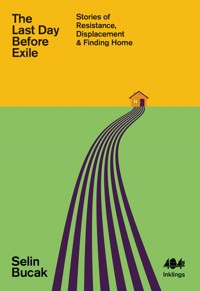
When we hear news stories about displaced people, people running away from war, living in exile, they're always accompanied by big numbers, presented as waves of immigrants. The Last Day Before Exile re-focuses the narrative to the human side, sharing some of the hardest moments of their lives, where they had to make the decision to stay or go. Tracing the steps of professionals who have moved from the Gaza Strip, Pakistan, Morocco, Iran, Afghanistan Turkey, and Ukraine, Selin Bucak shares stories of rebellion, fear, and, in some cases, victory. To truly understand what immigrants often have to go through at the hands of governments, legislation, and war, we need to put ourselves into the shoes of the people living in exile.
Sie lesen das E-Book in den Legimi-Apps auf:
Seitenzahl: 105
Veröffentlichungsjahr: 2023
Das E-Book (TTS) können Sie hören im Abo „Legimi Premium” in Legimi-Apps auf:
Ähnliche




















The Last Day Before Exile
Published by 404 Ink Limited
www.404Ink.com
@404Ink
All rights reserved © Selin Bucak, 2023.
The right of Selin Bucak to be identified as the Author of this Work has been asserted by her in accordance with the Copyright, Designs and Patent Act 1988.
No part of this publication may be reproduced, distributed, or transmitted, in any form or by any means, electronic, mechanical, photocopying, recording, or otherwise, without first obtaining the written permission of the rights owner, except for the use of brief quotations in reviews.
Please note: Some references include URLs which may change or be unavailable after publication of this book. All references within endnotes were accessible and accurate as of October 2023 but may experience link rot from there on in.
Editing: Laura Jones-Rivera
Typesetting: Laura Jones-Rivera
Proofreading: Laura Jones-Rivera
Cover design: Luke Bird
Co-founders and publishers of 404 Ink:
Heather McDaid & Laura Jones-Rivera
Print ISBN: 978-1-912489-80-0
Ebook ISBN: 978-1-912489-81-7
The Last Day Before Exile
Stories of Resistance, Displacement & Finding Home
Selin Bucak
Contents
Introduction
Chapter 1: Can you feel at home in a foreign country?
Chapter 2: Those who didn’t know
Chapter 3: A state of terror and confusion
Chapter 4: Waiting to return
Conclusion
References
About the Author
About the Inklings series
Introduction
I have a vague memory from when I was a child, maybe around six years old, of my brother telling me that our father had been in prison. Of course, at the time I didn’t quite understand what it meant, or why he had been imprisoned. I didn’t know the concept of ‘thought prisoners’, a term used in Turkey for those who were convicted of crimes because of their views and the expression of such views. It wasn’t until years later that I learned what had happened.
My father had been living in exile in the UK through the ’80s, unable to return to Turkey. If he did, he would have faced imprisonment, or worse. It wasn’t until October 1989, months before my birth in the UK in February the following year, that he travelled to Turkey to face the charges lobbied against him. The last time he had set foot on his homeland was in 1979, the year before a devastating military coup installed a military junta in Turkey. My father was accused of many things, including treason, participating in subversive activities against Turkey, degrading Turkey’s reputation abroad, and being a communist. Returning at any point would likely mean being arrested and indeed, in months spanning 1989 and 1990, he ended up spending nearly a year in prison, freed only after laws were changed and the articles he was charged under were scrapped from the penal code.
In 2012, my family and I were on a trip to Kos, the Greek Island that’s only a 45-minute boat ride from the Turkish coast. You can actually see Turkey’s coastline from Kos, it’s that close. My father explained that during the years he was exiled within the UK, he would travel to Kos to look across the Mediterranean at the home they couldn’t return to. It hit me then, the longing for home that accompanies being in exile.
My father and his friends now freely talk about years they spent living in exile, like it was no big deal. For them it’s just part of their history, something that they went through and emerged from on the other side. There is no reason to dwell on the pain. But it is clear that being so far from home has greatly impacted who they have become and their world views. While current younger generations are typically more eager to leave Turkey due to its oppressive politics and crumbling economy, my father’s generation is more determined to stay, even as human rights and the quality of life deteriorate every day. When you’ve been in exile yet able to return safely, it’s not surprising that you don’t want to leave again, no matter how bad it gets.
After my studies in the US and the UK, I decided to continue living abroad, and my father pointed out how his parents, Gagauz Turks born in Bessarabia, spent most of their lives living abroad in Turkey and how he and my mother also spent years living outside of their home country. He seemed slightly sad that my brother and I would also be spending most of our lives in a foreign country – although our moves were comparatively voluntary.
That’s why I want to share the stories of people living in exile. Nowadays, there are a lot of statistics about asylum seekers and refugees and it’s depressingly easy to ignore the individuals behind the numbers. Eight people from eight different countries have given me insight into their journeys and I share them with you here. Many of them are living in France as I am currently based in Paris and was able to connect with them through the Agency of Artists in Exile. My aim is to bring the human side back into the story beyond the headlines of waves of immigrants. Although I will share some of those numbers, what truly matters most are the stories of the individuals and what their experiences can tell us about a world obsessed with borders and control.
At the time of writing in 2023, it has been eight years since the infamous image of Alan Kurdi, the two-year-old Syrian boy who drowned in the Mediterranean Sea, made global headlines. You couldn’t avoid the photograph of his small, lifeless body laid face-down on a cold shore, plastered all over papers and online. He drowned along with his mother and brother as they tried to leave Turkey amid the European refugee crisis of 2015.1
Alan and his family fled the war in Syria to Turkey, hoping to join relatives in Canada. He was among millions trying to enter the European Union using a small inflatable boat. That year, nearly 4,000 refugees died in the eastern Mediterranean.2
Although Alan became a symbol and his photograph sparked outrage across the world, immigration has continued to be presented in a negative light by those in power, directly influencing and perpetrating racist public views.3 One research study found that 54% of Czechs and 51% of Hungarians supported a total ban on the entry of Muslim migrants.4 In fact, on average, almost one in four Europeans support a ban on Muslim immigration to their country.5
In these early 2020s, the UK and the US have stood out amongst countries addressing what they call the ‘illegal migration’ problem, coming up with ‘solutions’ that disadvantage legitimate refugees and asylum seekers. In the UK, home secretary Suella Braverman has been outspoken of her disdain towards migrants with the Conservative Party making the negative impacts of ‘illegal migration’ and ‘illegal asylum seekers’ a consistent party line.6 Braverman previously said it is her dream to see a plane full of asylum seekers flown from the UK to Rwanda.7
In truth, there is no such thing as an illegal asylum-seeker as every human being has a right to seek asylum in another country under international laws and if a person has applied for asylum, they are not doing so illegally. Regardless, politicians are quick to blame migrants for their countries’ various failures. The most visible scapegoats at the moment of writing are arguably those crossing into the UK from Calais via small boats with the government’s galling slogan of ‘STOP THE BOATS’ emblazoned across press junket lecterns.
Meanwhile, under pressure from his far-right opponents, President Emmanuel Macron of France sought to pass new laws to curb immigration. The president has linked immigration to delinquency saying that around half of petty crimes in Paris are being committed by foreigners.8 The government is looking to pass a bill titled ‘Controlling immigration while improving integration’, which will expand the scope for deportations and fast-track the asylum application process.9 The bill has been criticised on both sides of the political spectrum with right-wing politicians disliking the sections that allow the legalisation of undocumented workers and the left-wing politicians claiming it is repressive.10
The meaning and psychology of living in exile
Estimates vary but the average length of time people spend in exile can range from 10 years to 26 years.11 Such prolonged absences and the trauma caused by being forced to leave one’s home country, traditionally for political reasons, can have a deep impact on a person’s mental health and identity.
There are three main stages of migration that each have a different impact on psychology: pre-migration, transit, and post-migration. Refugees can face various problems at any of these stages, including but not limited to exposure to armed conflict and persecution, detention and lack of access to services, separation from family members, and uncertainty regarding legal status.12 According to the World Health Organisation, ‘factors that negatively impact the mental health and well-being of migrant and refugee children include socioeconomic deprivation, discrimination, racism, low family cohesion, and frequent school changes.’13 Many refugees will experience distress that can present as anxiety, hopelessness, fatigue, irritability and anger, and although these symptoms largely improve over time, for some, it has a long-lasting impact.
Exile can qualify as a social trauma, and it has been suggested that the process of mourning can help to continue ‘being’. Meanwhile, nostalgia can help to protect the ego from inadequacy. However, if nostalgia doesn’t evolve beyond looking back, ‘the individual enters a depressed state with accompanying feelings of self-pity, resentment, envy, and guilt, which prevents the mourning process from developing.’14 According to psychologist Dr. Ruth Lijtmaer, when a person arrives as an immigrant or an exile, a psychic depletion can occur and these changes can lead to period of disorganisation, pain, frustration, and a sense of loss.
Such emotions are seen time and time again across refugees, as we’ll see in the stories that follow. None arrived in their host country by boat, and they all managed to successfully claim asylum, but that doesn’t make their experiences any less difficult. Telling their stories of how they spent their last day in their home country and their experience of settling in a different place is an attempt to move beyond the tabloid headlines. Their stories are difficult but exemplary of finding hope in despair and, as Litjmaer says, discovering ‘new possibilities and a hopeful future’.
Chapter 1: Can you feel at home in a foreign country?
A failed abduction and a dissident
Taha Siddiqui was in a taxi heading to the airport in Pakistan’s capital Islamabad just as he had done countless times before travelling to London for work. They were taking the main expressway when a car screeched to a stop in front of the taxi and four men tumbled out, armed with AK-47s. They were there to abduct Taha.
Taha, a prominent, award-winning journalist in Pakistan, worked for a number of different publications including the New York Times, the Guardian and France 24. He was known as a critic of the country’s military, so security agencies kept a close watch on his work, often calling him and harassing him over articles he published.
The men dragged him out of the taxi and beat him, threatening to shoot him multiple times if he didn’t cooperate. Forced into the vehicle as it pulled away, Taha noticed that the door on the other side was unlocked. Seeing his chance, he jumped out while the car was moving. Although he tried to get help from a military vehicle passing by, it was useless – one of the abductors just gestured for the military vehicle to continue driving and they obliged. Taha knew he had to get away and continued to run into oncoming traffic, finally jumping into a taxi that drove him at least a few hundred metres away from his assailants. When he got out, he ran through ditches along the highway until he was out of sight and free to hide.
A few months before the abduction attempt, Taha had complained of being harassed by Pakistan’s security services. While many would have shut up after such an attack, it didn’t deter Taha. ‘The attack happened and that was January 10th




