


11,49 €
Mehr erfahren.
- Herausgeber: Grove Press UK
- Kategorie: Geisteswissenschaft
- Sprache: Englisch
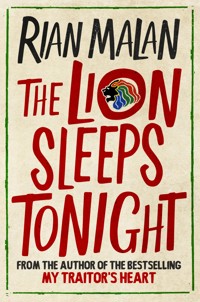
For Rian Malan, the blessing of living in South Africa is that every day presents him with material whose richness astounds those who live in saner places. Twenty years after the publication of his bestseller My Traitor's Heart, he is still strongly committed to the struggle against suffocating political rectitude. Malan eviscerates politicians, provokes rabid fury in Aids activists, pursues justice in the music industry, and exults in the company of an extraordinary cast of characters from truckers to tycoons.
Das E-Book können Sie in Legimi-Apps oder einer beliebigen App lesen, die das folgende Format unterstützen:
Veröffentlichungsjahr: 2013
Ähnliche




















The LionSleepsTonight
Also by Rian Malan
My Traitor’s Heart
The LionSleepsTonight
and Other Stories of Africa
Rian Malan
Grove Press UK
First published in the United States of America in 2012 by Grove/Atlantic Inc.
First published in Great Britain in 2013 by Grove Press UK, an imprint of Grove/Atlantic Inc.
Copyright ©Rian Malan, 2012
The moral right of Rian Malan to be identified as the author of this work has been asserted by him in accordance with the Copyright, Designs and Patents Act of 1988.
All rights reserved. No part of this publication may be reproduced, stored in a retrieval system, or transmitted in any form or by any means, electronic, mechanical, photocopying, recording, or otherwise, without the prior permission of both the copyright owner and the above publisher of the book.
Every effort has been made to trace or contact all copyright-holders. The publishers will be pleased to make good any omissions or rectify any mistakes brought to their attention at the earliest opportunity.
Some of the pieces in this collection first appeared, some in a different form, in The Spectator, Esquire, Rolling Stone, Maverick, Daily Telegraph, Sunday Telegraph, The Observer, The Independent on Sunday, Empire, The Wall Street Journal, Frontiers of Freedom, and in liner notes published by Fresh Records.
1 3 5 7 9 8 6 4 2
A CIP record for this book is available from the British Library.
ISBN 978 1 61185 994 2
Grove Press, UK
Ormond House
26–27 Boswell Street
London
WC1N 3JZ
www.groveatlantic.com
Acknowledgments
I’d like to doff the hat to all the brave and patient editors who assisted at the birth of these pieces, especially Bill Tonelli at Rolling Stone, Rosie Boycott at Esquire UK, Alan Jenkins at the Observer, Stuart Reid at the Spectator, Branko Brkic at Maverick, and Graham Boynton at the Sunday Telegraph.
Sincere thanks also to Kevin Bloom for an astute reading, and to Ann Seldon Roberts for the WABI.
And, finally, thanks to Morgan for heroic feats of patience and forgiveness, and to Peter Blackstock and Michael Hornburg in New York for their labors on this edition.
Contents
Foreword
1. Politics
The Last Afrikaner
Invictus
Season of the Leopard
Report from Planet Mbeki
2. Culture
In the Jungle
The Beautiful and the Damned
Great White Hyena
Jewish Blues in Darkest Africa
3. Disease
The Body Count
Among the AIDS Fanatics
4. Truth
A Truth of Sorts
The Queen
A Question of Spin
5. Light
The Apocalypse that Wasn’t
The People’s Republic of Yeoville
6. Darkness
House for Sale in Doomed Country
Ugly Scenes in Boer Provence
Nemesis
Messiah of the Potato Fields
7. Mutations
Did You Hear the One About Apartheid?
Those Fabulous Alcock Boys
Postscript
Foreword
Once upon a time in America, I worked for a semiunderground newspaper that had offices on a seedy stretch of Hollywood Boulevard and at least one great writer on its masthead. Michael Ventura was a New Yorker who’d somehow reinvented himself as a straight shootin’, hard drinkin’ cowboy from the lonesome plains of Texas. I guess that was the Larry McMurtry part of his complex persona. He also had a Kerouac aspect and broad streaks of Mailer and Hemingway, but on the page, the spirit he most often channeled was Thomas Wolfe, whose incantatory rhythms he could mimic with uncanny accuracy. Ventura started out as a reporter but decided that “nobody can write fast enough to tell a true story” and moved on to movie reviews. If we were lucky, he’d pitch up on deadline day with black rings around his eyes and two days’ stubble on his chin, bearing a searing five-thousand-word essay on whatever Hollywood blockbuster had irritated him that week.
The best of those reviews concerned a movie about Jack Kerouac, the bebop hophead whose amphetamine-fueled prose more or less defined the Beat Generation. Hollywood had (of course) turned Kerouac into a likable middle-class guy with straight teeth, a cleft chin, and a lifestyle that deviated from the American norm only to an extent likely to titillate the good folk in Peoria. Ventura was hugely offended. His review began, “This is a chickenshit movie,” and by the time it was done, several Hollywood reputations had been reduced to dog meat.
I dread the thought of Ventura getting his hands on this book. He’d say, “This is a chickenshit collection,” and he’d be right. But I’d like to proffer some excuses, if I may. Let’s begin with Ventura’s aphorism about the alleged impossibility of writing a true story. This is of little consequence to news reporters who glance at the police blotter and produce a dry recitation of the basic facts, but hacks of my generation had other dreams, inspired for the most part by the incendiary revelations of American New Journalism. I suppose the ideal was a piece of nonfiction so carefully observed and exhaustively reported that reading it was almost as good as being there.
This was a fiendishly difficult thing to pull off, even in America, where people spoke the same language, shared most values, and understood with a reasonable degree of certainty the boundaries of the matrix they inhabited. The laws of cause and effect were known. The narrative might twist and turn but the forces that drove it were quantified. Even so, your chances were slender. You could set the words down and polish them until your fingers bled, but Ventura was generally right: the ideal was beyond attainment. Nobody can write fast enough to tell a true story.
In America, this was an artsy verdict on the limitations of the form. In South Africa, it’s like a law of nature: there’s no such thing as a true story here. The facts may be correct, but the truth they embody is always a lie to someone else. Every inch of our soil is contested, every word in our histories likewise; our languages are mutually incomprehensible, our philosophies irreconcilable. My truths strike some South African writers as counterrevolutionary ravings. Theirs strike me as distortions calculated to appeal to gormless liberals in the outside world. Many South Africans can’t read any of us, so their truth is something else entirely. Atop all this, we live in a country where mutually annihilating truths coexist entirely amicably. We are a light unto nations. We are an abject failure. We are progressing even as we hurtle backward. The blessing of living here is that every day presents you with material whose richness beggars the imagination of those who live in saner places. The curse is that you can never get it quite right, and if you come close, the results are often unpublishable.
I would say, looking back, that the only worthwhile writing I’ve done over the past two decades appeared in letters to friends in whose company I could ignore the crushing taboos that govern discussions of race among civilized people. In public . . . I don’t know. I think it was T. S. Eliot who said the purpose of all exploring is to return to the place from whence you came and see it as if for the first time. I spent eight years on the far side of the planet and when I came home, in the late 1980s, I saw that I was in Africa, and that changed everything. Those I’d left behind remained obsessed with apartheid. I became obsessed with what replaced it. They thought apartheid was the source of all South Africa’s pain. I thought we were doomed unless we figured out what had gone wrong elsewhere in Africa, and how to avoid a similar fate. I was an atheist in the great revival tent of the new South Africa. The faith on offer was too simple and sentimental, the answers it offered too easy.
Those who stayed saw it differently, but to me the most telling creation of apartheid was not the system of laws designed to keep blacks in their place, or the passes that restricted their movement, or the secret police, or the mines and factories that generated the taxes that paid for repressive measures. Apartheid’s great triumph was the world I grew up in—the whites-only suburbs of northern Johannesburg, where whites took their cues from the great white mother culture, reading the same books, enjoying a similar lifestyle, espousing similar values, and somehow imagining that all this was normal and would continue indefinitely. The denizens of this world were not racist, at least not overtly so. We listened to Bob Dylan and voted the white liberal ticket. We read Norman Mailer and Carlos Castaneda. After high school, we attended the University of the Witwatersrand, where white professors faithfully propagated doctrines laid down on the far side of the planet by the high priests of white civilization.
By the time Nelson Mandela came out of prison in 1990, those doctrines were generally of the variety called “progressive,” which rejoiced in the downfall of white supremacy. Practitioners of this doctrine saw themselves as part of, sometimes even heroes of, the uprising of the natives. They thought the wrath of the masses would fall on the bad whites responsible for apartheid, while “good” whites merged into a smiley-face culture of soft socialism and interracial harmony. I said, bullshit, gentlemen, Africa calls for another outcome entirely. The wind of change will eventually sweep everything away—your job, your illusions, your university as presently constituted, the wires that bring light at the flick of a switch, the pipes that discreetly remove your turds, the freeways on which you drive, the high-tech chemical farms that put food on your table, the investments intended to sustain your comfortable old age, and the clean, efficient hospitals in which you plan to expire. All these things are creations of the white empire, and when it fades they will, too.
That was more than two decades ago. Every day since has brought thunderous confirmation of the rectitude of my prognostications. Every day also brought irrefutable proof of the fact that I was mistaken. I cursed Mandela when he refused to shake F. W. de Klerk’s hand during some televised debate during the early 1990s peace talks era. A few months later I was fighting back tears at his inauguration. I claimed vindication when our currency began its great collapse, and ate my words when it bounced back again. Every white murdered on a lonely farm seemed to herald the onset of generalized ethnic cleansing. Every visit to Soweto left me believing in the brotherhood of man again.
There was a time when I thought these howling ambiguities could only be resolved by a great cleansing apocalypse, but apocalypse never came. Instead, we had the miraculously peaceful transition of 1994, followed by the delirious triumph of the 1995 rugby World Cup, where hefty Boers wept and said, “That is my president,” as Mandela raised a golden trophy into the blue heavens celebrated in our national anthem. The resulting goodwill was obliterated by the one-sided maunderings of Archbishop Tutu’s Truth and Reconciliation Commission, but it made a comeback when the economy rebounded under President Mbeki. Five years later, the collapse of neighboring Zimbabwe put catastrophe back on the agenda, and by the time the lights went out in 2008, the end seemed nigh. Computers stopped working. Factories and mines fell silent. Traffic gridlocked on city streets. The national power company had been mismanaged back into the Dark Ages by incompetent bureaucrats who owed their appointments to “cadre deployment”—the reservation of important jobs for loyalists of the ruling African National Congress.
The great blackout of 2008 was not an isolated event. It was a metaphor for a country in which everything seemed to be disintegrating: the civil service, the sewerage system, the highways, the hospitals, the schools, and, above all, the moral integrity of the Rainbow Nation, shredded by ceaseless corruption scandals. But even as the rot deepened, we saw the rise of the only force that could check it—black people willing to stand up and say, This cannot be tolerated.
This was a development I had not anticipated, because the chains of black solidarity are far heavier than the taboos that keep timid white liberals quiet. Forged by centuries of oppression, those chains bound black South Africans in absolute loyalty to the party that liberated them. For years, no thoughtful African dared speak out in public against Nelson Mandela’s mighty African National Congress; to do so was to be instantly branded a traitor. But something changed once it became clear that Mandela’s party was turning into a self-enrichment machine for the ruling elite. The black poor rose up in a thousand shantytowns, demanding the removal of corrupt municipal councillors. Black intellectuals started speaking out in terms that made my plaints seem ladylike. Black journalists began to expose corruption and malfeasance, often in alliance with black commentators who did not flinch from calling the disease by its name: South Africa, says trade unionist Zwelinzima Vavi, is ruled by a “predatory class” of political opportunists who feed “like hyenas” off the carcasses of the poor. If you’d told me in 1990 that I would one day find myself in agreement with Comrade Vavi, a stalwart of our Communist Party, I would have laughed. But here I am, eating my hat. Again!
Which brings us back to Michael Ventura. I imagine him shaking his head in disbelief as he reads this. “Chickenshit,” he says. “Malan can’t make up his mind. He’s been sitting on the fence so long the wire is cutting into his cowardly ass.” I agree entirely, but if there is an overarching truth here, it eludes me. The only true line I’ve ever written about South Africa is this one: “We yaw between terror and ecstasy. Sometimes we complete the round-trip in fifteen minutes.” Anyone who has lived here understands these oscillations, but I’m a journalist, which means that I leave behind a trail of judgments that often turn out to be mortally embarrassing in retrospect. There is no excuse for such failings, but if I may, some evidence in mitigation.
In the past two decades, South Africa has been stricken almost weekly by scandals that would have toppled governments in the West but seem almost meaningless here. Did Nelson Mandela really ask the Zambian government to jail a troublesome witness against his wife Winnie, on trial for kidnapping and murdering a child? Did President Mbeki really negotiate our $8 billion arms deal on a “government to government” basis and pocket the resulting commissions? Did he really tell state investigators to bring him the head of his archrival Jacob Zuma, even if that entailed fabricating evidence and setting honey traps? When these stories break, you think they’re going to tear the country apart and alter everything, forever. But they don’t. They linger for a week or two and then fade into oblivion, blown off the front pages by the next dumbfounding scandal. The ordinary laws of cause and effect don’t seem to apply here. The boundaries of the matrix we inhabit remain unknown.
But anyway, there’s something to be said for practicing journalism on the edge of an abyss, trying to follow your targets into the murk that surrounds. In the pieces that follow, I often miss, but there are a few passages that come close to disproving Michael Ventura’s dictum. For the rest, I tried my best, and provoked reactions as richly varied as the reality we inhabit. A few people said nice things—“a born storyteller,” according to the judges on some American awards jury—but the reactions that lodge in my memory are mostly the angry ones. Some said racist, but that’s so commonplace it’s barely worth mentioning; any South African journalist who hasn’t been called a racist or a self-hating house Negro is a fawning ingrate whose lips are chapped from sucking the unmentionable appendages of those in power. The more interesting accusations were incest, homosexual tendencies, heterosexual debauchery, incompetence, deceit, murder, sissiness, “carbuncular” practices, a secret alliance with the diabolical President Mbeki, spying for the Zulu nationalists, drinking too much, taking drugs, and smelling bad.
What can I say? My name is Rian Malan and I called it as I saw it.
Part OnePolitics
The Last Afrikaner
The early 1990s was a time of agonizing crisis for Afrikaners. After 350 years in Africa, we’d come to the end of the line. Nelson Mandela was free, the country was burning, and President F. W. de Klerk was negotiating the terms of our surrender. Some Boers were willing to follow him into an uncertain African future. Others said, Over our dead bodies. It was in this climate of massive psychic dislocation that I stumbled upon the parable of Tannie Katrien, a little old lady whose experience defied at least some of our myths about darkest Africa.
Once upon a time there was a British colonial family named Hartley who had a magical farm in Africa. It lay on the slopes of Mount Meru, a cool green island in a sea of sun-blasted yellow savannah. Twice a year, monsoon winds deposited heavy rains on Meru’s leeward slopes, which were clad in dense rain forest, full of rhino and buffalo and elephant. Several swift, clear streams came tumbling out of the jungle and meandered across a level plain where the soil was so rich and deep that anything you planted bore fruit in astonishing profusion—peaches, apricots, beans, maize, and the sun so close you got two harvests every year.
The Hartleys bought this farm in 1953. Their homestead lay on the shoulder of the volcano, so high that it was often above the clouds. Sometimes they would wrap themselves in blankets at night and sit on the veranda with the clouds at their feet, watching the moon rise over the glittering summit of Mount Kilimanjaro, forty miles away. In the morning, it would be burning hot again, and you could sit on the same stoop with a pair of binoculars, tracking the movement of elephant herds across the parched plains far below. “I loved that house,” Kim Hartley told me. “The veranda was ninety-nine feet across. It had big white Cape Dutch gables, and the previous owner had left a portrait of Hitler in the cellar.” I didn’t have to ask who’d built it. It had to have been a Boer.
In 1902, in the aftermath of the Anglo-Boer war, disaffected Afrikaners sent a scouting party up the spine of Africa in search of a place where a Boer could live free of British domination and rid his mouth of the bitter taste of defeat. They found Mount Meru. Two years later, the first ox wagons came trundling across the savannah, carrying Afrikaners who settled in a giant semicircle around the northern base of the volcano. At first they lived by the gun, but in time they cleared the land and began to till it with ox plows. In the beginning, they dreamed of linking up with Afrikaners who’d settled in Kenya and resurrecting the lost Boer republics, but there were too few of them, so it came to nothing, and what they had was fine, anyway: perhaps the best farmland in the world.
Lesen Sie weiter in der vollständigen Ausgabe!
Lesen Sie weiter in der vollständigen Ausgabe!
Lesen Sie weiter in der vollständigen Ausgabe!
Lesen Sie weiter in der vollständigen Ausgabe!
Lesen Sie weiter in der vollständigen Ausgabe!
Lesen Sie weiter in der vollständigen Ausgabe!
Lesen Sie weiter in der vollständigen Ausgabe!
Lesen Sie weiter in der vollständigen Ausgabe!
Lesen Sie weiter in der vollständigen Ausgabe!
Lesen Sie weiter in der vollständigen Ausgabe!
Lesen Sie weiter in der vollständigen Ausgabe!
Lesen Sie weiter in der vollständigen Ausgabe!
Lesen Sie weiter in der vollständigen Ausgabe!
Lesen Sie weiter in der vollständigen Ausgabe!
Lesen Sie weiter in der vollständigen Ausgabe!
Lesen Sie weiter in der vollständigen Ausgabe!
Lesen Sie weiter in der vollständigen Ausgabe!
Lesen Sie weiter in der vollständigen Ausgabe!
Lesen Sie weiter in der vollständigen Ausgabe!
Lesen Sie weiter in der vollständigen Ausgabe!
Lesen Sie weiter in der vollständigen Ausgabe!
Lesen Sie weiter in der vollständigen Ausgabe!
Lesen Sie weiter in der vollständigen Ausgabe!
Lesen Sie weiter in der vollständigen Ausgabe!
Lesen Sie weiter in der vollständigen Ausgabe!
Lesen Sie weiter in der vollständigen Ausgabe!
Lesen Sie weiter in der vollständigen Ausgabe!




