


Erhalten Sie Zugang zu diesem und mehr als 300000 Büchern ab EUR 5,99 monatlich.
- Herausgeber: Birlinn
- Kategorie: Geisteswissenschaft
- Sprache: Englisch
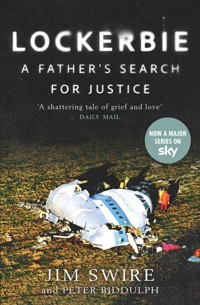
The book of the Sky Original miniseries, starring Colin Firth as Jim Swire and directed by Otto Bathurst. The destruction of Pan Am Flight 103 over the Scottish town of Lockerbie in December 1988 was the largest attack on Britain since World War Two. 259 passengers and 11 townsfolk of Lockerbie were murdered. Libyan Abdelbaset al-Megrahi was convicted of the crime. He maintained his innocence until his death in 2012. Among the passengers was Flora, beloved daughter of Dr Jim Swire. Jim accepted American claims that Libya was responsible, but during the Lockerbie Trial he began to distrust key witnesses and supposed firm evidence. Since then it has been revealed that the USA paid millions of dollars to two central identification witnesses, and the only forensic evidence central to the prosecution has been discredited. The book takes us along Dr. Swire's journey as his initial grief and loss becomes a campaign to uncover the truth behind not only a personal tragedy but one of the modern world's most shocking events. 'A shattering tale of grief and love' – Daily Mail
Sie lesen das E-Book in den Legimi-Apps auf:
Seitenzahl: 422
Veröffentlichungsjahr: 2021
Das E-Book (TTS) können Sie hören im Abo „Legimi Premium” in Legimi-Apps auf:
Ähnliche




















THE LOCKERBIE BOMBING
THELOCKERBIEBOMBING
A FATHER’S SEARCHFOR JUSTICE
JIM SWIREandPETER BIDDULPH
First published in 2021 by
Birlinn Limited
West Newington House
10 Newington Road
Edinburgh
EH9 1QS
www.birlinn.co.uk
Copyright © Jim Swire and Peter Biddulph 2021
ISBN 978 1 78027 648 9ePUB ISBN 978 1 78885 305 7
The right of Jim Swire and Peter Biddulph to be identified as Authors of this work has been asserted by them in accordance with the Copyright, Designs and Patents Act 1988.
All rights reserved. No part of this publication may be reproduced in any form or by any means without permission from the publisher.
British Library Cataloguing in Publication Data
A catalogue record for this book is available from the British Library
Designed and typeset by Hewer Text UK Ltd, Edinburgh Printed and bound by Bell & Bain Ltd, Glasgow
For Flora and all who seek Truth
Contents
Authors’ Note
Preface
Family Life
Into a New Existence
Two ‘Guilty’ Men?
The Trial
A Desperate Appeal
Concealed Evidence, False Evidence
Libya Destroyed, a Deathbed Farewell
Truth Will Find a Way
Spring 2021: Aftermath
Epilogue
Notes
Acknowledgements
Index
Authors’ Note
THE WITNESSES WHO appear in this account from Chapter 12 onwards are only a selection. They appear because their evidence is central to the prosecution case.
Preface
THIS BOOK IS partly the story of over thirty years of my life. Although of course it centres on the aftermath of the Lockerbie disaster, I believe it also has to be set in some autobiographical context. How could initial faith in the establishment take thirty years to convert into distrust towards all those touched by that addictive drug we call power?
One of my most vivid memories of early life comes from 1940 when I was five, crossing the Atlantic in a convoy, my father having been recalled to Britain after running the British garrison in Bermuda on the outbreak of war. He was an officer in the Royal Engineers and a man of principle of whom I was already deeply in awe. He and my mother Otta (née Tarn), and my elder sister Flora, were listening to words of defiance from Winston Churchill, speaking over the ship’s Tannoy: England would never surrender. What made it so memorable was that they were totally absorbed by that defiant and powerful rhetoric; it cut them off from the reality around them. I think that if a torpedo had chosen that moment to strike, they would have stayed exactly where they were to the end.
My parents had married late in their thirties and were steeped in the mores of the late Victorian era. In our households there were two communities, upstairs and down. Parents inhabited the ‘drawing room’, and we children were sent to fraternise with them with brushed hair and on best behaviour for an hour in the evening.
Once we were back in the UK, my father, Colonel Roger Swire, was away most of the time fighting WWII. I believe his psyche had been forever altered by his experience of the ‘Great’ War – as a young Royal Engineer subaltern aged seventeen he was sent on a horse and with a sabre to the trenches, winning a MC and Bar, but witnessing the mayhem of machine-gun bullets churning the mud of the parapets and sometimes the flesh of his men. One of the worst experiences seems to have been when playing tennis behind the lines with his best friend, the friend was shot dead on court by a sniper. None of these things would he ever mention himself. Meanwhile, Otta had to run the family on her own and apply the discipline that the Colonel would have required.
Looking back later, I wonder what it cost him to teach me to use a gun in Skye, or what memories were evoked for him when he and I used to go out onto the moors there in winter with lengths of wire to repair the phone lines blown off their poles by storms.
When the family settled into Orbost House in Skye in 1947, one of my regular tasks was to trim the wicks and clean the chimneys of the ordinary paraffin lamps, and to fill and pump up the tanks of the Tilley pressure-driven lamps which alone were powerful enough to light an entire space the size of the drawing room. The hiss of a Tilley and the smell of methylated spirit with which they had to be pre-warmed remain with me still.
It was necessary to ensure that any smell of spilled paraffin was scrubbed off me, and this was always achieved by our nanny, Louisa Macdonald, a Skye lady. She loved my elder sister Flora and myself like a mother and had been with the family from my sister’s birth. Both my grandmothers had come from Skye, and it was because of our family’s long association with the island that she was recruited from there. She had started with us when our family was billeted at number twenty-four the Cloisters in Windsor Castle, where my sister and I were born. ‘Louie’ had been with us in Bermuda, braved the Atlantic with us, and had lived to see and love our own children too. Like me, she was hugely in awe of the Colonel.
Sent down to England from the age of seven to stay in the best boarding schools, I think I was being prepared to take on the mantra of a leader. But the role did not fit; I felt I had neither the self-confidence nor the ambition.
School holidays were spent roaming the hills of Skye, bringing home meat and fish for the table. During term time Nanny, who had bought herself a shotgun, made up for shortages in my absence. No doubt my long-isolated hunting treks over the Skye moors, and fishing trips in my homemade single-seat canoe, reinforced my shyness.
National Service as a second-lieutenant in the Royal Engineers in Archbishop Makarios’s terrorist infested but beautiful island of Cyprus and in Port Said in the Suez crisis taught me about esprit de corps, plastic explosives, the workings of bombs, the sadness, madness and loss of war, and also about the shapes of organised religion and the power of the financial might of America.
After that came three lovely years reading geology in Cambridge where, on 21 June 1960, I met a delightful young trainee teacher, Jane, and on 16 December 1961 we married: a ceremony which forever transformed my life for the better. Jane is brave, tough and loving. Somehow she knew, twenty-seven years later, after Flora’s murder, that my campaign was at least in part my way of coping with the loss.
From 1960 I enjoyed my job as a TV technician in the BBC; electronics had been a major hobby, and ‘Auntie’ reinforced that with a professional training course. But when I finally did decide to read medicine, which meant initial years of penury, Jane backed my decision.
The arrival of our first child, Flora, changed the world for us. Flora was everything a first-born could possibly be. Even on the breast as a baby her eyes were looking around, weighing up her people and her world, full of fun and curiosity, bursting with energy. Soon she had a sister, Cathy, and then a brother, William, and we were a fortunate and happy family. Flora’s clever hands gave her skills in many hobbies including dressmaking.
Flora had a lovely voice and became an accomplished pianist and skilled guitar player, winning diplomas at music festivals. I vividly remember her singing to her own guitar when she was about ten in a croft house in Skye, with the croft’s budgerigars twittering in time to her beat, all of us crammed in around the peat fire. Having worked at the BBC I was into recording, but I still can barely listen now to that cosy evening ceilidh with young Flora singing ‘I dreamed the world had all agreed to put an end to war . . .’, and the words of love and appreciation that her fresh skills had evoked.
Later, Flora decided to study medicine, and I have fond memories of discussions between us about diseases old and new. Like most medical students she went through phases of believing that she had one of the diseases being studied. Once she became worried about a deeply coloured spot on one of her toes: was it a malignant melanoma? After close examination and a few giggles it was clearly not, but she being Flora I had to explain why I was sure that it was not.
There is no bond stronger than that between a mother and her child, and it shines through what Jane has written about those happy years before Flora’s murder. Jane’s words evoke the spirit of Flora as no others can; to read them blurs my eyes with tears.
Breaking the embargo against families being allowed to see the victims’ bodies, I arranged to visit the Lockerbie ice rink after the disaster, where our lovely Flora’s body had been thoughtfully arranged for me. She had received fatal injuries when the bomb exploded almost under her feet and the fuselage ripped apart at 31,000 feet, throwing her body into the screaming, freezing dark. She had landed on a green Scottish hillside, but her face had been so distorted by impact that I had to make sure it was indeed her body. The pathologist moved the sheet from over her feet, and there on her toe was the same dark mark which she and I had examined years before.
Mrs Thatcher attended the memorial service in Lockerbie. To us was read the story of the restoring to life of Lazarus. I suppose the vast majority of us there were agnostics, unable honestly to decide what, if anything, follows this life. For me it was a wildly inappropriate choice of reading, for the one thing we could not be granted was the return of our lost loved ones to be with their families again.
Within a month of the disaster I obtained a detailed warning from West Germany, received by the UK Government in October 1988, several weeks before the Lockerbie attack. It described the design and function of a series of improvised explosive devices (IEDs) built into domestic tape recorders and the like. It explained how they would always give a plane around thirty-five minutes of flight time before exploding, being fully automated.
I was also able to access a ‘warning about this warning’ sent on to Heathrow security by the UK Department of Transport just before the night of the Lockerbie attack. In it the Heathrow people were told: ‘Any item about which a searcher is unable to satisfy himself/ herself must, if it is to be carried in the aircraft, be consigned to the aircraft hold.’ The crass stupidity of this advice took my breath away, demolishing my faith in those who had been charged with the protection of our families. An early target for me became the improvement of aviation security, but the system proved arrogantly resistant to criticism, aided by Margaret Thatcher’s refusal to allow an enquiry.
On 21 December 1988 just such a bomb was duly loaded into the hold of our Flora’s aircraft at Heathrow. It exploded after thirty-eight minutes of flight at 31,000 feet over Lockerbie, just as the German police warning had predicted.
Was the failure of Margaret Thatcher’s government to act on that precise warning from Germany part of the reason why they denied us any inquiry? We do not of course know, for Lockerbie files remain sequestered now beyond even the thirty-year time limit. If you read Lady Thatcher’s tale The Downing Street Years you will find that there is no mention of Lockerbie. Indeed, you will find she claims on page 449 that following her support for the USAF bombing of Tripoli and Bengazi in April 1986, the aftermath was that ‘the much vaunted Libyan counter-attack could not and did not take place . . . There was a marked decline in Libyan sponsored terrorism in succeeding years.’
Are we to assume then that 1988 was not a ‘succeeding year’ to 1986? Or could it be that she knew all along that the tale of Libya being responsible for the Lockerbie bombing was false?
It was Alphonse Marie Louis de Prat de Lamartine, statesman in France’s Second Republic, who wrote of how ‘absolute power corrupts the best natures’. Perhaps power had already corrupted one of England’s most illustrious prime ministers? Could the ‘Iron Lady’ have steeled her heart against allowing even the parents of terrorist victims to know the truth about why no meaningful effort had been made to protect their children? Students who wish to study such a terrible possibility may gain insight from The Importance of Being Awkward, the biography of that late and much missed redoubtable defender of truth, Tam Dalyell MP.
In November 1991 indictments were issued against two Libyans over the Lockerbie bombing. Up until the end of the Zeist trial, in January 2001, I had managed to cling to the belief that the authorities were indeed genuinely seeking the killers of the innocent. The unfolding ‘evidence’ in the court finally convinced me otherwise.
Those ten years from 1991 to 2001 had been pivotal for me. They started with my taking my courage in both hands and going, accompanied only by a single Arab journalist Nabil Nagamel din, to see that much dreaded dictator Muammar Gadda fi, with only the most rudimentary idea of whether I would be taken hostage or even shot on sight. Another terrible test as you will read, for my beloved Jane.
As time passed, I met with my now long-term friend Robert Black QC, FRSA, FRSE, FFCS, ILTM, Professor Emeritus of Scots Law at the University of Edinburgh. His concern, like mine, was to find a way to get the accused to trial under Scots law, for the plane had crashed in Scotland. Besides, I felt sure that if the accused were to be tried in America they would receive the death penalty. I remember that my idea of law professors was that they would probably be smartly dressed in dark suits with polished shoes and briefcases, so I was slow in identifying the professor for the first time at the airport, in his jeans and with a backpack slung over his shoulder. He has dispelled many imaginary cobwebs from my mind since then. His company has been one of the great tonics that keeps our search for truth going. There have been so many other friends too. His was the original idea for the nature of the Zeist trial; we travelled together promoting this, and our intent was to find a solution for the refusal of Colonel Gaddafi to allow a trial under US, Western or international law.
It says a great deal for the integrity of the professor that when the trial was over he said, upon meeting the convicted Abdelbaset al-Megrahi in prison in Scotland, ‘As a result of today’s meeting I am satisfied that not only was there a wrongful conviction, but the victim of it was an innocent man. Lawyers, and I hope others, will appreciate this distinction.’
I found to my amazement that I could talk to people like Colonel Gaddafi, though he was a man of deep mood swings. On one visit the Colonel was almost mute (he could speak excellent English normally, but was in pain and was sulking). The professor and I found ourselves cooped up with him in a tiny tent in the desert behind Sirte, and we knew him well enough by then that his armed guards had been dispensed with. He would say nothing. What to do? I tried the schoolboy trick of pretending to look furtively under the folding table, and when the Colonel asked what I was doing, I said I was checking that Monica Lewinsky was not hiding there. Mercifully he did not get out his gold-plated automatic but guffawed with laughter. After that we could and did talk.
You will read how the trial progressed and how, in January 2001, the verdict of guilty was given against al-Megrahi, and how the last vestiges of my faith in the integrity of the official search for the perpetrators evaporated.
After many years running the British Empire we have evolved all sorts of subtle ways of concealing truth when it is inconvenient for government to admit failure. Supposedly even these subtle secrecies are limited by a ‘thirty-year rule’; but now we sail into a future where up to fifty Lockerbie documents are sequestered from public view well beyond that thirty-year limit with no explanation as to why. There seems no sign of conscience or even knowledge of right and wrong. My daughter and all those who died with her deserve better; it is as though their deaths simply did not matter.
But as Victor Hugo wrote, ‘Life is a flower and love is the honey.’ Flora cannot die from the earth for she will always be honey in our hearts, and I prefer to remember with her those many who sympathised with our needs and tried to help. Bless you all.
Destroyed is the respect and awe I used to feel towards authority. Was it for these deceits that men like my father fought and very nearly died for our country? Of course decent men remained, such as the late Tam Dalyell, ‘Father of the House’ of Commons. He did his utmost to assist when few others would listen. Douglas Hurd, as foreign secretary, recorded in Cabinet minutes that he regarded our bereaved-relatives’ group as responsible people who should be kept informed. But probably the most forthright adviser was the late great Nelson Mandela; he warned us that ‘No one country should be complainant, prosecutor and judge.’
There seems no doubt now that Lockerbie was a revenge attack for the destruction by two US missiles some five months earlier of an Iranian airbus with 290 innocents aboard. In the cemetery where those victims lie, the fountain runs with blood-red water; I think it runs to tell us that too much human blood has been spilt. That water flows for Flora too, and Truth, Justice and Forgiveness are the healers, never hatred nor revenge.
I have, dear Flora, done my best to discover why you had to die. I know that you and I have discovered truth where others have not. That has to be our warm, shared knowledge. It will be for others now to see to it that our country learns that it must protect its young people properly and relate the truth, with honesty, to its citizens. Nelson Mandela also once said, ‘When a man has done what he considers to be his duty to his people and his country, he can rest in peace.’ I wish, Flora, that at some point during the richly rewarding life you were denied, I could have introduced you to him. He too would have tasted the honey.
Jim SwireApril 2021
Family Life
THE TERRIBLE EVENTS that took place on Pan Am 103 in the sky above Lockerbie just after 7 p.m. on 21 December 1988 tore our hearts in two. A terrorist bomb, loaded into the hold of our daughter’s aircraft at Heathrow Airport, exploded after thirty-eight minutes of flight. We knew at once that this was not something we would ever ‘get over’ and that life would never be the same.
Flora was on the eve of her twenty-fourth birthday. She was born on 22 December 1964, some three years after our marriage in December 1961 (Jim and I having met in Cambridge in 1960 where he was about to take a degree in Natural Sciences at Trinity College, and I was at Homerton College training to be a teacher). At the time of her birth, Jim had recently made a career switch, abandoning his work as a BBC television engineer to become a trainee doctor at Birmingham University’s Medical School, and we lived in a rented flat in Edgbaston. The winter of that year was harsh and snowy, and quite a challenge for all, but baby Flora took it in her stride, after a few short months alert to everything. In the spring she could sit up in the garden to enjoy the company of friends in this leafy area of Birmingham. Next door lived three-year-old Louise, known by Flora as ‘best friend Weeze’, a trusty chum and playmate from their first acquaintance, and surely there is nothing sweeter to a busy mother’s ears than the sound of happy children playing.
In September 1967 we moved to the Worcestershire village of Blackwell, agreeably situated in the Lickey Hills between the village of Barnt Green and the town of Bromsgrove. Our second daughter, Catherine Mary Jane, was on her way, and was born on 23 December at the Queen Elizabeth Hospital, where Jim worked as a Senior House Officer on the Professorial Unit under the distinguished consultant physician Professor Melville Arnott. His job was challenging and hard, requiring him to stay at the hospital whenever on call. Thus, in our early months living in Blackwell, some ten miles to the south, I was often alone with the children. Paternity leave was unheard of. Occasionally I wished I had someone to reassure me or advise, but perhaps it was as well that there was no time for self pity as I now had two small children utterly dependent on me for every hour of daily care. And so life was busy and exhausting for both Jim and me.
Some five years later our lives had eased to a satisfactory pace. In January 1972 our son William arrived, and soon after his birth Jim took the significant step of leaving hospital medicine to join a GP practice in Bromsgrove. To have at last sufficient income and free time for a stable family life was a joy. It meant that I could devote myself entirely to our beloved children whose well-being and education meant so much to us.
Our new life arranged itself well. We were able to double the size of the house, enabling each child to have their own bedroom, plus a spare room for my mother to use when visiting from her home in Spain. One of the best features was a half-acre rear garden full of apple and pear trees, giving cascades of white blossom in the spring and barrow loads of fruit in the autumn. At the end of the garden was a wooden shed which Jim equipped with bunk beds should the children choose to sleep with their friends for an overnight ‘adventure’. Flora, by then aged twelve, emerged as the self-styled proprietor, imposing strict rules for its use, together with charges for a night’s stay, and extra penalties and charges for any misuse or breakages. In spite of her strict rules our children soon developed a growing circle of friends from the neighbourhood. All in all it was a happy time, and in 1983 we were fortunate to purchase Caspidge House, a large home just to the north of Bromsgrove.
Flora was now at school and proving herself to be an able and industrious student. School days are not always as much fun as some would have us believe, but Flora always appeared to be happy, with plenty of time left for hobbies, making things with her clever hands, and for her music and singing. Piano exams were taken and passed with distinction; she earned herself first prize certificates and a silver cup for singing with her guitar in local music festivals; she took the main part of the little sweep in Benjamin Britten’s opera performed by her school in 1976; sang in the choir of our local Methodist church; won first prize in a French speaking competition at Birmingham University; and showed herself gifted in many spheres, not least at sewing and dressmaking. After saving her pocket money for more than a year she became the proud owner of a Husqvarna sewing-machine and was to design and, astonishingly, make a whole wardrobe of clothes for herself. Her schoolwork was broadened and enhanced, rather than hindered, by these extra activities. Her Maths teacher invited her to join the Maths Club, held on Saturday mornings at the University. There she joined other young people from all over Birmingham with high mathematical ability to play number games and puzzles, a skill which amazed all of us. She finished her school days at King Edward’s High School with high grades in Maths, Physics and Chemistry at A level, and won an Upper Sixth Form Prize and a Physics prize. Afterwards a group of sixth formers, boys and girls, joined Flora and our family for a week on the Isle of Skye, where energetic swimming and walking was followed by evenings of wild card games. It was a good time to be young and full of fun.
In her last year of school her entry to medical school had to be negotiated. The final choice was Nottingham, where her friend Geoff Marston had also been offered a place, and the pair started their course in the autumn of 1983. For her first year Flora stayed in Derby Hall, purpose built for undergraduates in the University Park. She plunged headlong into university life with eagerness and verve – very soon she and a friend, Lisa, were designing and making their own party clothes for the Medics Ball, and special fancy-dress costumes for the witch and her cat for Halloween celebrations. She joined a madrigal group, played a leading role in the University Dramatic Society’s production of Don Juan, joined in a race to get to Paris and back for charity, and assembled a throng of male admirers along the way. Apart from all this there was physiology and anatomy to be studied, and time spent at the dissecting table. Always able to be single-minded, she amazed her friends by being able to withdraw and concentrate completely on her medical studies in the library, only to emerge with enough energy and joie de vivre to drink everyone else under the table. This legendary reputation was even remarked upon in the University’s Medic’s Year Book of 1986. Finally her hard work rewarded her with a degree of Bachelor of Medical Sciences with first class honours, and Jim and I, along with other proud parents, attended the congregation for the conferment of her degree on 10 July 1986.
Such praiseworthy success brought Flora to the attention of her professors at the medical school and an invitation arrived for her to join Professors Marsden and Birmingham in a programme of research in the Department of Physiology and Pharmacology at the Nottingham Queen’s Medical Centre. A philosophy doctorate in the middle of her current medical course seemed to her interesting, but she knew there was still a three-year clinical course to be completed. The medical course was lengthy without these extra years, so her response was not immediately and unequivocally positive. A good deal of nail biting went on when she came home for holidays at Bromsgrove, but eventually she agreed to join the research project. The title was ‘Effects of two H1-receptor antihistamines on event-related potentials (ERPs) and psycho-motor performance’. (A project rather above the heads of the rest of us!) Flora informed us that it was to do with the measurement of the effects of sedatives on memory and attention.
Throughout the first year of her PhD, Flora worked in the laboratories at the Queen’s Medical Centre, and took her turn at teaching medical students. Both Professor Marsden and Professor Birmingham regarded her as a future doctor of exceptional promise, and when she was offered a further opportunity to do research at the prestigious Institute of Neurology in Queen Square, London, under Dr Martin Halliday, they encouraged her to accept.
In London her project was on Alzheimer’s disease, comparing the records of brainwaves through electrodes on the scalps of patients with those of healthy volunteers. Both Jim and I were entreated to take part and enjoyed the experience of having our brainwaves measured according to our ability to respond to the correct visual stimuli. Also doing research at the same hospital were Hart Lidov, an attractive young American doctor, and Dr Gabriella Turano from Italy. Both became Flora’s firm friends. It was not long before Flora and Hart became romantically attached and, when he had to go back to his department at Harvard University, Flora went to stay with him and to meet his parents. Cathy too was hoping to visit America with her at some point and even thought about buying a ticket to travel on Flora’s Pan Am 103 plane. With a promise to Hart that she would return shortly before Christmas 1988 to celebrate her twenty-fourth birthday with him, Flora returned to London to write up her thesis.
As the year 1989 approached we looked forward to family celebrations through Christmas and into the New Year that would be wonderful, light-hearted and convivial. Our children and home were ‘safe’, a comfortable retirement beckoned. All was settled, vivid and happy. None of us could suspect the disaster that lay ahead.
True to her promise to Hart, Flora booked a flight to New York with Pan Am for the evening of 21 December 1988. At New York she intended to transfer to a flight for Boston, arriving in time to celebrate her birthday the next day. But at three minutes past seven on the evening of the 21st a terrorist bomb ripped her plane apart. Our darling Flora and 269 others were killed.
She was a rare spirit with an irrepressible sense of humour and that special vibrant energy that always characterises the truly great. And truly great we think she would have become if only she had been allowed to live. She had all the right ingredients: a good intelligence, boundless energy, and most of all a warm and loving heart with her feet planted firmly on the ground. When the dreadful news of the crash came through on the television, with the images of burning buildings in the little town of Lockerbie, there are no words which can adequately describe our paralysing shock, fear, grief and devastating sadness. So much is there a need for the Floras of this world and we, her family, needed her too. Over the past thirty years we, her parents and Cathy and William, have each missed her in our own individual and unique ways, finding space within the family for each other to mourn. Jim’s channelling of all his emotional energy into a campaign to find the truth and hold governments to account has been his recipe for survival and, as this book reveals, he has searched tirelessly and single-mindedly for knowledge of the political events that led to the outrage. He travelled widely, visiting Malta, Germany, France, Sweden, the United States and Libya in this cause. He has sought to tighten up the lax airline security systems that were in place to allow the bombing to occur. At times I and the children have found such an extroverted media campaign quite hard to cope with. We all shared feelings of loss and grief, each in our own ways. For me the who, why, where and how questions have seemed almost irrelevant when faced with the loss of a person so precious that at times life itself seemed almost insupportable.
Jane SwireApirl 2021
Into a New Existence
Chapter 1
WEDNESDAY 21 DECEMBER 1988. 6.30 P.M.
I SETTLE INTO my study chair and it creaks in sympathy; a long day in surgery, an avalanche of anxious patients. In these pre-Christmas days, time and the affairs of man brook no prisoners. Along the passageway our kitchen echoes with the rattle of cooking as Jane prepares a comforting meal. Beyond the wood and fields, across our tiny town of Bromsgrove, driven by a north wind, midwinter drizzle sweeps down along the high street, below the twinkle of Christmas lights, where folks busily gather in last-minute presents.
Our teenage son, William, is somewhere, impossible to find in this rambling old home, Caspidge House. Four days ago was our wedding anniversary and tomorrow comes the twenty-fourth birthday of our first-born daughter, Flora, by now on her way to America courtesy of Pan Am Airways. Our second-born daughter, Cathy, waved her goodbye at Heathrow and is homeward bound somewhere on the M40.
My eyes are tiring. I struggle to focus on what will be a Christmas calendar constructed from a dozen photographs, each a happy memory. I’ll assemble them in some kind of order to create a series of Christmas-card sized pages, then I’ll print off a dozen sets as presents for the family. My thoughts wander across a photo of the mother of a girl who worked as a housemaid for my parents on the Isle of Skye – a wrinkled old woman, firm and stalwart, born and died in the Western Isles, her face tanned and leathered by seventy Hebridean summers and winters.
Suddenly Jane shouts something I can’t make out. She chokes and struggles with more words. Slowly I understand: ‘There’s a plane down, an airliner’. The world rocks on its axis. I blunder into the sitting room and stand transfixed before the television.
‘A Pan American jumbo jet with more than two hundred and fifty people on board has crashed tonight in the Scottish Borders. It hit a petrol station in the centre of the town of Lockerbie. Police say there are many casualties.’
Paralysed with dread, we watch the little town of Lockerbie burn. TV cameras pan across destroyed streets then cut to the glowing gable ends of a bungalow, a chimney standing above a crushed wall, the roof gone, flames and sparks showering heavenward, images that will return to me day and night until I die.
I wrap my arms around Jane’s shoulders. Her arms hang by her side as if dislocated. We stand in a tableau drawn with hard, black lines. The scent of a mother’s hair drifts upwards, her face just below my chin. Against me her heart thuds with a quick, regular beat, an icy fear that only a mother can know when her child is in danger.
The emergency contact numbers flashing on the TV screen are all engaged. Within minutes we are on an evil merry-go-round, I’m switching the phone from ear to ear, searching for a voice that might understand my incoherence.
‘Is Flora on the flight? Is Flora on the flight? Tell me!’
Jane starts to shuffle backward and forward like an imprisoned animal. I dial and dial, the skin of my fingers growing sore, but still no answer. Flora’s face fills my brain, the room grows cold around us. Suddenly Cathy’s car crunches along the drive and she stumbles in. We embrace in silence.
Midnight. Five hours have passed. The emergency numbers are all still engaged. Are ghoulish tricksters ringing the numbers to block us out? Finally I discover the direct route. ‘Hello, is that JFK airport, the Pan Am desk? Why can’t you tell me? Why with all your damn computers can’t you say whether my child is on the plane?’
‘Sir, I can’t.’ Fighting for self-control the Pan Am lady puts down the phone, her desk besieged by panicking relatives and hysterical media.
We sit, holding hands, constantly switching TV channels until all close down; then on the radio the BBC World Service, each bulletin adding more death. We turn the radio off and wait.
Suddenly the phone rings. Pan Am New York is calling. The passenger list has been checked. Flora MacDonald Margaret Swire was on the plane, no survivors, no point in going to Heathrow, no point in doing anything. My daily toil in surgery and hospital has made me all too familiar with death, and yet how I need in the depths of this night to see her, to know the truth of it all. I force myself to imagine her walk, her hair, her face, her laughter. As the plane cracked open beneath a starry sky and a 500mph wind impacted, what did she see and hear and feel? How long was she conscious? Was there time for a single thought before death came? Has she been disfigured, dismembered? My body shudders uncontrollably as the questions encircle us like hungry demons.
Soon grey dawn claws into our sleeplessness. The first day of a new existence passes, and then another. Friends telephone, then visit. What can they say? In the street a few folks we’ve known for years see us from a distance and cross to the other side of the road to avoid us. Two hundred and seventy murders in a split second, parents, sons, daughters, children, babes in arms, entire families on the plane and in the town of Lockerbie. Death on such a scale terrifies, people cannot comprehend it. Relatives visit and hug, unafraid to touch. Others shake hands as if across a room and murmur, ‘Let us know if you need help.’
As the first days of our new existence pass by, unknown to us and far to the north, the townspeople of Lockerbie silently watch as vans pass in procession towards the town’s municipal ice rink. In time we will learn that the collected bodies and body parts would not fit into Lockerbie hospital’s tiny mortuary. Thus, the ice rink, so often echoing with the laughter of children, is now filled with silence and simple wooden pallets upon which rest the dead, each covered by a white sheet, each queuing for dissection seeking evidence of cause. My daughter! Have they found her? I know well the process of a post-mortem, know well each bloody detail. And until that is done, and checked and rechecked, and is complete and written down and all confirmed, heart’s closure of the grave will remain denied.
Television crews swarm across the tiny Scottish town. In close focus, repeated often in news reports, Prime Minister Margaret Thatcher and her entourage walk amid the bodies and debris. As a northern wind flicks her blonde hair back and forth she stands powerless as American search teams locate and remove ‘sensitive’ material. At her shoulder walks the American ambassador. For all present it is a devastating experience, a memory that will surely stay with them throughout their lives. And yet, in her memoirs,1 to be published but six years in the future, she will not only fail to describe the trauma of her visit, she will not even mention the word Lockerbie.
* * *
To add to our suffering and that of all the families who are part of the Lockerbie disaster, the cruelty of events grows daily. News reports claim that Flora’s flight was destroyed by a bomb and that two weeks before the crash an anonymous telephone caller warned that a bomb would be placed on a Pan Am plane flying from Frankfurt to the USA. The US State Department passed the warning to government embassies, airlines and Interpol. Passengers were not told. Washington claims that the warning came from an anti-PLO Abu Nidal Group. Some embassy staff flew to London direct from Moscow and other European cities in order to avoid Frankfurt. When asked why passengers were not told, a Pan Am spokesman said: ‘It is the airline’s policy not to discuss publicly any threat to the airline.’ For the first time in my life the word ‘publicly’ has become significant.2
In spite of this, both London and Washington say no specific warning was received. Why the word ‘specific’? In the background are rumours that South African President Pik Botha and his team cancelled their Pan Am 103 flight just before boarding.3 It was a Boeing 747-100, named Maid of the Seas, capable of seating more than 500 passengers; yet Flora’s plane was carrying only 243. Did many other would-be passengers cancel because of the warning? The papers are full of news that Iran, Syria and the Popular Front for the Liberation of Palestine General Command (the PFLP-GC) did it. The Daily Express claims that a passenger, Khaled Jafaar, was a US Drug Enforcement Agency (DEA) courier. He carried the bomb on board thinking he was carrying a controlled delivery of drugs. The information was said to come from ‘sources’ within the FBI and Scotland Yard.
We find ourselves surrounded by a special kind of loneliness; Jane presses me to eat, but it proves almost impossible, just enough to stay alive. I do not go to work, I’m not sure I’ll ever work again. What remains of Flora lies somewhere in Scotland and that is all that matters. Reporters flood to our front door, it is impossible to know who is who. We share a long twisting drive with a neighbour farmer that ends with our gravelled frontage and garden. Again and again the reporters and strangers brave the narrowness, the bracken and thorns, trudge across the gravel and ring our doorbell. At first we find a way to reply to them politely, sympathetically. It’s a comfort, like putting on the kettle and making tea. But soon the story develops a sinister momentum. We have become just names and pictures, things. To the world’s media Flora no longer matters. Are camera teams camped out around every bereaved home, poking their lenses into every sad face? We send every reporter away and I slam my oldest car across the end of the drive to stop them all.
David Johnston, a Scottish journalist, says he’s discovered that FBI agents were quickly on the scene, wandering the hills looking for something of which they will never tell. Tam Dalyell MP is speaking out about something he hasn’t yet defined; journalists speculate, moving the story onward to more murder. The facts will prove even more sinister. A source with trusted intelligence contacts claims that within fifty minutes of the crash – even allowing for delays in confirmation that an airliner crash had occurred – an Arctic-camouflage-white helicopter with a postcard size image of the Stars and Stripes on its tail-rotor boom was scrambled from the secret US Navy Seal base at Machrihanish on the Mull of Kintyre. Its instructions were primarily to search for the suitcase of Ch arles McKee, leader of a CIA team returning from Beirut.4 Inside the case were top secret documents so sensitive that the United States government will impose a total ban on all mention of it.
Two United States intelligence agencies are already deep into their own style of investigation. The FBI made their presence widely known by their search of the Lockerbie hills within two hours of the bombing. The Central Intelligence Agency too are there but in the background. Their Middle Eastern structures have been in place for decades and will prove highly useful. The CIA Lockerbie team is led by a Vincent Cannistraro, a long-experienced agent.
Jane confesses to feeling shredded, imprisoned by anguish and grief. Cathy and William offer what comfort they can muster from their own deep sorrows. All watch, powerless to help, as my numbness warms to a kind of anger. A policeman arrives.
‘Do you know where Flora’s dental records are kept, do you have information that will identify her, do you . . ., do you . . .?’
The Lockerbie police come again and take us through it all. A Bromsgrove constable tries to ask us the same questions. We tell him, ‘We’ve said all we’re going to say, so please go away.’
The Lockerbie police come yet again: ‘Do you know where . . . Do you know what . . . Do you know if . . .?’
We tell it all again and for a time all goes silent. What else do they need? The word ‘murder’ echoes around the world; every broadcast, every news article. Each time I hear it my spine tingles. I’ve always understood the word to be something singular, an act performed against one person, someone you know; I’ve never believed it can be the killing of rows of faces sitting in aircraft seats.
For you who read these words, I suspect that few have ever witnessed a single murder. During 1988, however, almost 600 murders were committed within the Lockerbie framework. Five months before the bombing of Flora’s plane, an airbus carrying 290 pilgrims to Mecca was blown from the sky by the USS Vincennes. The names of the first group will never be known in Western media circles since the Iranian nation did not at the time possess the technology to record and publicise them. Only their families hold their memories in the form of photographs and memorabilia. We Western nations, in matters of war always correct, lawful and civilised, have widely published the names of our dead. We ask you therefore, to pause for a while to witness an image of the murder of 270 human beings in a single half minute, and reflect on the existence of a parallel Iranian list of persons whom we will never see or know, their names now deep in the sediments of the history of war.
The dead of Pan Am 103 and the town of Lockerbie:
John Michael Gerard Ahern, 26, Rockville Centre, N.Y. Sarah Margaret Aicher, 29, London, England. John David Akerstrom, 34, Medina, Ohio. Ronald Ely Alexander, 46, New York, N.Y. Thomas Joseph Ammerman, 36, Old Tappan, N.J. Martin Lewis Apfelbaum, 59, Philadelphia, Pa. Rachel Marie Asrelsky, 21, New York, N.Y. Judith Ellen Atkinson, 37, London, England. William Garreston Atkinson, 33, London, England. Elizabeth Nichole Avoyne, 44, Croissy-sur-Seine, France. Jerry Don Avritt, 46, Westminster, Calif. Clare Louise Bacciochi, 19, Warwickshire, England. Harry Michael Bainbridge, 34, Montrose, N.Y. Stuart Murray Barclay, 29, Farm Barnard, Vt. Jean Mary Bell, 44, Berkshire, England. Julian MacBain Benello, 25, Brookline, Mass. Lawrence Ray Bennet, 41, Chelsea, Mich. Philip Bergstrom, 22, Forest Lake, Minn. Alistair David Berkley, 29, London, England. Michael Stuart Bernstein, 36, Bethesda, Md. Steven Russell Berrell, 20, Fargo, N.D. Noelle Lydie Berti, 40, Paris, France. Surinder Mohan Bhatia, 51, Los Angeles, Calif. Kenneth John Bissett, 21, Hartsdale, N.Y. Diane Anne Boatman-Fuller, 35, London, England. Stephen John Boland, 20, Nashua, N.H. Glenn Bouckley, 27, Liverpool, N.Y. Paula Bouckley, 29, Liverpool, N.Y. Nicole Elise Boulanger, 21, Shrewsbury, Mass. Francis Boyer, 43, Toulosane, France. Nicholas Bright, 32, Brookline, Mass. Daniel Solomon Browner (Bier), 23, Parod, Israel. Colleen Renee Brunner, 20, Hamburg, N.Y. Timothy Guy Burman, 24, London, England. Michael Warren Buser, 34, Ridgefield Park, N.J. Warren Max Buser, 62, Glenrock, N.J. Steven Lee Butler, 35, Denver, Colo. William Martin Cadman, 32, London, England. Fabiana Caffarone, 28, London, England. Hernan Caffarone, 28, London, England. Valerie Canady, 25, Morgantown, W.Va. Gregory Capasso, 21, Brooklyn, N.Y. Timothy Michael Cardwell, 21, Cresco, Pa. Bernt Wilson Carlsson, 50, New York, N.Y. Richard Anthony Cawley, 43, New York, N.Y. Frank Ciulla, 45, Parkridge, N.J. Theodora Eugenia Cohen, 20, Port Jervis, N.Y. Eric Michael Coker, 20, Mendham, N.J. Jason Michael Coker, 20, Mendham, N.J. Gary Leonard Colasanti, 20, Melrose, Mass. Bridget Concannon, 53, Oxfordshire, England. Sean Concannon, 16, Oxfordshire, England. Thomas Concannon, 51, Oxfordshire, England. Tracey Jane Corner, 17, Sheffield, England. Scott Cory, 20, Old Lyme Court, Conn. Willis Larry Coursey, 40, San Antonio, Texas. Patricia Mary Coyle, 20, Wallingford, Conn. John Binning Cummock, 38, Coral Gables, Fla. Joseph Patrick Curry, 31, Fort Devens, Mass. William Allan Daniels, 40, Belle Mead, N.J. Gretchen Joyce Dater, 20, Ramsay, N.J. Shannon Davis, 19, Shelton, Conn. Gabriel Della-Ripa, 46, Floral Park, N.Y. Joyce Christine Dimauro, 32, New York, N.Y. Gianfranca Dinardo, 26, London, England. Peter Thomas Stanley Dix, 35, London, England. Om Dixit, 54, Fairborn, Ohio. Shanti Dixit, 54, Fairborn, Ohio. David Scott Dornstein, 25, Philadelphia, Pa. Michael Joseph Doyle, 30, Voorhees, N.J. Edgar Howard Eggleston III, 24, Glens Falls, N.Y. Siv Ulla Engstrom, 51, Berkshire, England. Turhan Ergin, 22, West Hartford, Conn. Charles Thomas Fisher IV, 34, London, England. Joanne Flannigan, 10, Lockerbie, Scotland. Kathleen Mary Flannigan, 41, Lockerbie, Scotland. Thomas Brown Flannigan, 44, Lockerbie, Scotland. Clayton Lee Flick, 25, Coventry, England. John Patrick Flynn, 21, Montville, N.J. Arthur Fondiler, 33, West Armonk, N.Y. Robert Gerard Fortune, 40, Jackson Heights, N.Y. Stacie Denise Franklin, 20, San Diego, Calif. Paul M. S. Freeman, 25, London, England. James Ralph Fuller, 50, Bloomfield Hills, Mich. Ibolya Robertine Gabor, 79, Budapest, Hungary. Amy Beth Gallagher, 22, Quebec, Canada. Matthew Kevin Gannon, 34, Los Angeles, Calif. Kenneth Raymond Garczynski, 37, North Brunswick, N.J. Paul Isaac Garrett, 41, Napa, Calif. Kenneth James Gibson, 20, Romulus, Mich. William David Giebler, 29, London, England. Olive Leonora Gordon, 25, London, England. Linda Susan Gordon-Gorgacz, 39, London, England. Anne Madelene Gorgacz, 76, Newcastle, Pa. Loretta Anne Gorgacz, 47, Newcastle, Pa. David J. Gould, 45, Pittsburgh, Pa. Andre Nikolai Guevorgian, 32, Seacliffe, N.Y. Nicola Jane Hall, 23, Sandton, South Africa. Lorraine Frances Halsch, 31, Fairport, N.Y. Lynne Carol Hartunian, 21, Schenectady, N.Y. Anthony Lacey Hawkins, 57, Brooklyn, N.Y. Dora Henrietta Henry, 56, Lockerbie, Scotland. Maurice Peter Henry, 63, Lockerbie, Scotland. Pamela Elaine Herbert, 19, Battle Creek, Mich. Rodney Peter Hilbert, 40, Newton, Pa. Alfred Hill, 29, Sonthofen, West Germany. Katherine Augusta Hollister, 20, Rego Park, N.Y. Josephine Lisa Hudson, 22, London, England. Melina Kristina Hudson, 16, Albany, N.Y. Sophie Ailette Miriam Hudson, 26, Paris, France. Karen Lee Hunt, 20, Webster, N.Y. Roger Elwood Hurst, 38, Ringwood, N.J. Elizabeth Sophie Ivell, 19, East Sussex, England. Khalid Nazir Jaafar, 20, Dearborn, Mich. Robert Van Houten Jeck, 57, Mountain Lakes, N.J. Paul Avron Jeffreys, 36, Surrey, England. Rachel Jeffreys, 23, Surrey, England. Kathleen Mary Jermyn, 20, Staten Island, N.Y. Beth Ann Johnson, 21, Greensburg, Pa. Mary Alice Lincoln Johnson, 25, Wayland, Mass. Timothy Baron Johnson, 21, Neptune, N.J. Christopher Andrew Jones, 20, Claverack, N.Y. Julianne Frances Kelly, 20, Dedham, Mass. Jay Joseph Kingham, 44, Potomac, Md. Patricia Ann Klein, 35, Trenton, N.J. Gregory Kosmowski, 40, Milford, Mich. Elke Etha Kuhne, 43, Hanover, West Germany. Minas Christopher Kulukundis, 38, London, England. Mary Lancaster, 81, Lockerbie, Scotland. Ronald Albert Lariviere, 33, Alexandria, Va. Maria Nieves Larracoechea, 39, Madrid, Spain. Robert Milton Leckburg, 30, Piscataway, N.J. William Chase Leyrer, 46, Bayshore, N.Y. Wendy Anne Lincoln, 23, North Adams, Mass. Alexander Silas Lowenstein, 21, Morristown, N.J. Lloyd David Ludlow, 41, Macksville, Kan. Maria Theresia Lurbke, 25, Balve Beckum, West Germany. William Edward Mack, 30, New York, N.Y. James Bruce Macquarrie, 55, Kensington, N.H. Douglas Eugene Malicote, Army specialist four, 22, Lebanon, Ohio. Wendy Gay Malicote, 21, Lebanon, Ohio. Elizabeth Lillian Marek, 30, New York, N.Y. Louis Anthony Marengo, 33, Rochester, Mich. Noel George Martin, 27, Clapton, England. Diane Marie Maslowski, 30, New York, N.Y. William John McAllister, 26, Middlesex, England. Lilibeth Tobila McAlolooy, 27, Kelsterback, West Germany. Daniel Emmet McCarthy, 31, Brooklyn, N.Y. Robert Eugene McCollum, 61, Wayne, Pa. Charles Dennis McKee, 40, Arlington Hall Station, Va. Bernard Joseph McLaughlin, 30, Cranston, R.I. Jane Susan Melber, 27, Middlesex, England. John Merrill, 35, Hertfordshire, England. Suzanne Marie Miazga, 22, Marcy, N.Y. Joseph Kenneth Miller, 56, Woodmere, N.Y. Jewel Courtney Mitchell




