


23,99 €
Mehr erfahren.
- Herausgeber: John Wiley & Sons
- Kategorie: Fachliteratur
- Serie: Peate's Body Systems
- Sprache: Englisch
PEATE’S BODY SYSTEMS
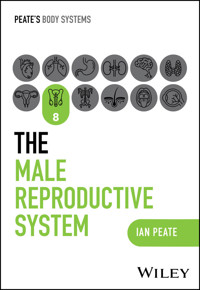
THE MALE REPRODUCTIVE SYSTEM
A CONCISE, ILLUSTRATED, AND ACCESSIBLE GUIDE TO THE MALE REPRODUCTIVE SYSTEM
Each of the twelve volumes in Peate’s Body Systems series is rooted in the belief that a deep and thorough understanding of the human body is essential for providing the highest standard of care. Offering clear, accessible and up-to-date information on different body systems, this series bridges the gap between complex scientific concepts and practical, everyday applications in health and care settings. This series makes for an invaluable resource for those committed to understanding the intricacies of human biology, physiology and the various systems that sustain life.
The Male Reproductive System is the perfect companion for students and newly registered practitioners across nursing and allied health fields with an interest in male reproductive health, providing a comprehensive yet easy-to-digest guide for both academic and clinical application.
- Equips healthcare students and practitioners with the necessary information to provide safe and competent care
- Features colourful illustrations to aid comprehension, clarify complicated concepts, and render content more engaging and accessible
- Empowers readers to adapt to a rapidly evolving healthcare landscape, preparing them for the future of healthcare delivery
- Contains information necessary for effective patient care of those with testicular torsion, Lower Urinary Tract Symptoms (LUTS), prostate cancer, and other male reproductive diseases and conditions
Sie lesen das E-Book in den Legimi-Apps auf:
Seitenzahl: 315
Veröffentlichungsjahr: 2025
Ähnliche












Table of Contents
Cover
Table of Contents
Title Page
Copyright
Preface
Acknowledgements
Chapter 1 The Anatomy and Physiology: The Male Reproductive System
Production, Maintenance and Transportation of Male Sperm and Seminal Fluid
Ejaculation of Semen from the Penis
Production and Secretion of Male Sex Hormones
Integration with Other Body Systems
The Scrotum
The Testes
Spermatogenesis
Sperm
Epididymis
The Vas Deferens, Spermatic Cord and Ejaculatory Duct
The Seminal Vesicles
The Prostate Gland
The Zones of the Prostate Gland
Surfaces of the Prostate Gland
Prostate Gland Function
Structures Located Around the Prostate Gland
Prostate-Specific Antigen
The Penis
Hormonal Control of Male Reproduction
Conclusion
Glossary of Terms
Multiple Choice Questions
References
Chapter 2 Assessment of the Male Reproductive System
Men’s Health
Inclusive Healthcare
Assessing Needs
The History
Subjective Objective Data
The Physical Examination
Conclusion
Glossary of Terms
Multiple Choice Questions
References
Chapter 3 Testicular Torsion
Pathophysiological Changes Associated with Testicular Torsion
Epidemiology
Risk Factors
Extravaginal
Intravaginal
Clinical Presentation
Clinical Investigations and Diagnosis
Management
Health Teaching
Conclusion
Glossary of Terms
Multiple Choice Questions
References
Chapter 4 Lower Urinary Tract Symptoms
Pathophysiological Changes Associated with LUTS
Epidemiology
Risk Factors
Clinical Presentation
Storage Symptoms
Voiding Symptoms
Post-micturition Symptoms
Clinical Investigations and Diagnosis
Management
Health Teaching
Conclusion
Glossary of Terms
Multiple Choice Questions
References
Chapter 5 Penile Disorders
Pathophysiological Changes Associated with Peyronie’s Disease
Epidemiology
Risk Factors
Clinical Presentation
Clinical Investigations and Diagnosis
Management
Health Teaching
Conclusion
Glossary of Terms
Multiple Choice Questions
References
Chapter 6 Prostate Cancer
Cancer
Trans Women
Screening for Prostate Cancer
Pathophysiological Changes Associated with Prostate Cancer
Epidemiology
Risk Factors
Clinical Presentation
Clinical Investigations and Diagnosis
Management
Prostate Cancer Stages
Histological Grading
Treatment Options
Supporting Patients
Health Teaching
Conclusion
Glossary of Terms
Multiple Choice Questions
References
Chapter 7 Erectile Dysfunction
The Erectile Process
Pathophysiological Changes Associated with ED
Primary and Secondary ED
Epidemiology
Risk Factors
Clinical Presentation
Clinical Investigations and Diagnosis
Management
Treatment
Health Teaching
Conclusion
Glossary of Terms
Multiple Choice Questions
References
Chapter 8 Male Infertility
Pathophysiological Changes Associated with Male Infertility
Congenital Causes
Anatomical Causes
Pathological Causes
Sexual Causes
Acquired Causes
Epidemiology
Risk Factors
Clinical Presentation
Clinical Investigations and Diagnosis
Physical Examination
Semen Analysis
Management
Sperm Banking and Fertility Preservation
Health Teaching
Conclusion
Glossary of Terms
Multiple Choice Questions
References
Index
End User License Agreement
List of Illustrations
Chapter 1
Figure 1.1 The male reproductive system.
Figure 1.2 The scrotal sac and testes.
Figure 1.3 A testicle, seminiferous tubules.
Figure 1.4 Spermatogenesis.
Figure 1.5 The sequential steps involved in spermatogenesis.
Figure 1.6 The components of a sperm.
Figure 1.7 The prostate gland.
Figure 1.8 The anatomy of the penis.
Figure 1.9 Primary and secondary sex characteristics.
Figure 1.10 Negative feedback system associated with the control of testosterone in the bl...
Chapter 2
Figure 2.1 Palpation for inguinal hernia.
Chapter 3
Figure 3.1 Testicular torsion.
Chapter 4
Figure 4.1 The male lower urinary tract, disease or dysfunction related to LUTS.
Figure 4.2 Risk factors.
Figure 4.3 Frequency volume chart.
Figure 4.4 Bladder distension.
Chapter 6
Figure 6.1 The prostate gland is located at the apex of the urinary bladder, surrounding ...
Figure 6.2 Symptoms and syndromes of prostate cancer.
Chapter 7
Figure 7.1 The arterial blood supply to the penis.
Figure 7.2 Vascular events controlling erection.
Chapter 8
Figure 8.1 History and examination of the male in relation to infertility.
List of Tables
Chapter 2
Table 2.1 Men-specific health issues
Table 2.2 Subjective and objective data related to a man’s reproductive health
Table 2.3 Palpation, percussion, auscultation and inspection techniques
Chapter 3
Table 3.1 Some risk factors associated with testicular torsion
Table 3.2 Differentiation clinical features
Table 3.3 The cremasteric reflex and Prehn’s sign
Chapter 4
Table 4.1 Storage, voiding and post-micturition symptoms
Table 4.2 Pathophysiological changes associated with non-neurogenic lower urinary trac...
Table 4.3 An overview of risk factors associated with lower urinary tract symptoms (L...
Table 4.4 Some common investigations associated with a diagnosis of lower urinary trac...
Chapter 5
Table 5.1 Contributory factors associated with Peyronie’s disease
Table 5.2 Risk factors associated with Peyronie’s disease
Table 5.3 The physical examination
Table 5.4 Some key health teaching needs for men with Peyronie’s disease
Chapter 6
Table 6.1 Modifiable and non-modifiable risk factors associated with prostate cancer
Table 6.2 Clinical presentation of prostate cancer
Table 6.3 The physical examination
Table 6.4 The physical examination
Table 6.5 The Gleason system
Table 6.6 Common management strategies associated with prostate cancer
Table 6.7 Supportive strategies for patients making decisions regarding treatment for pr...
Chapter 7
Table 7.1 Ejaculatory disorders
Table 7.2 Distinctions in erectile dysfunction (ED)
Table 7.3 Risk factors associated with erectile dysfunction (ED)
Table 7.4 Advantages and disadvantages that may be associated with penile implants
Chapter 8
Table 8.1 Risk factors associated with male infertility
Table 8.2 Components of the male reproductive physical examination
Table 8.3. Semen analysis: normal findings
Guide
Cover
Table of Contents
Title Page
Copyright
Preface
Acknowledgements
Begin Reading
Index
End User License Agreement
Pages
iii
iv
viii
ix
x
1
2
3
4
5
6
7
8
9
10
11
12
13
14
15
16
17
18
19
20
21
22
23
24
25
26
27
28
29
30
31
32
33
34
35
36
37
38
39
40
41
42
43
44
45
46
47
48
49
50
51
52
53
54
55
56
57
58
59
60
61
62
63
64
65
66
67
68
69
70
71
72
73
74
75
76
77
78
79
80
81
82
83
84
85
86
87
88
89
90
91
92
93
94
95
96
97
98
99
100
101
102
103
104
105
106
107
108
109
110
111
112
113
114
115
116
117
118
119
120
121
122
123
124
125
126
127
128
129
130
131
132
133
134
135
136
137
138
139
140
141
142
143
144
145
146
147
148
149
150
151
153
154
155
156
157
158
159
Peate’s Body Systems
The Male Reproductive System
Ian Peate, OBE FRCN EN(G) RGN DipN(Lond) RNT BEd(Hons) MA(Lond) LLM
Editor in Chief, British Journal of Nursing;
Consultant Editor, Journal of Paramedic Practice;
Consultant Editor, International Journal for Advancing Practice;
Visiting Professor, Northumbria University;
Visiting Professor, Buckinghamshire New University;
Professorial Fellow, University of Roehampton;
Visiting Senior Clinical Fellow, University of Hertfordshire
This edition first published 2025.
©2025, John Wiley & Sons Ltd
All rights reserved, including rights for text and data mining and training of artificial intelligence technologies or similar technologies. No part of this publication may be reproduced, stored in a retrieval system, or transmitted, in any form or by any means, electronic, mechanical, photocopying, recording or otherwise, except as permitted by law. Advice on how to obtain permission to reuse material from this title is available at http://www.wiley.com/go/permissions.
The right of Ian Peate to be identified as the author of this work has been asserted in accordance with law.
Registered Office(s)
John Wiley & Sons, Inc., 111 River Street, Hoboken, NJ 07030, USA
John Wiley & Sons Ltd, The Atrium, Southern Gate, Chichester, West Sussex, PO19 8SQ, UK
For details of our global editorial offices, customer services, and more information about Wiley products visit us at www.wiley.com.
Wiley also publishes its books in a variety of electronic formats and by print-on-demand. Some content that appears in standard print versions of this book may not be available in other formats.
Trademarks: Wiley and the Wiley logo are trademarks or registered trademarks of John Wiley & Sons, Inc. and/or its affiliates in the United States and other countries and may not be used without written permission. All other trademarks are the property of their respective owners. John Wiley & Sons, Inc. is not associated with any product or vendor mentioned in this book.
Limit of Liability/Disclaimer of Warranty
The contents of this work are intended to further general scientific research, understanding, and discussion only and are not intended and should not be relied upon as recommending or promoting scientific method, diagnosis, or treatment by physicians for any particular patient. In view of ongoing research, equipment modifications, changes in governmental regulations, and the constant flow of information relating to the use of medicines, equipment, and devices, the reader is urged to review and evaluate the information provided in the package insert or instructions for each medicine, equipment, or device for, among other things, any changes in the instructions or indication of usage and for added warnings and precautions. While the publisher and authors have used their best efforts in preparing this work, they make no representations or warranties with respect to the accuracy or completeness of the contents of this work and specifically disclaim all warranties, including without limitation any implied warranties of merchantability or fitness for a particular purpose. No warranty may be created or extended by sales representatives, written sales materials or promotional statements for this work. This work is sold with the understanding that the publisher is not engaged in rendering professional services. The advice and strategies contained herein may not be suitable for your situation. You should consult with a specialist where appropriate. The fact that an organization, website, or product is referred to in this work as a citation and/or potential source of further information does not mean that the publisher and authors endorse the information or services the organization, website, or product may provide or recommendations it may make. Further, readers should be aware that websites listed in this work may have changed or disappeared between when this work was written and when it is read. Neither the publisher nor authors shall be liable for any loss of profit or any other commercial damages, including but not limited to special, incidental, consequential, or other damages.
Library of Congress Cataloging-in-Publication Data
Names: Peate, Ian, author.
Title: The male reproductive system / Ian Peate, OBE FRCN EN(G) RGN DipN(Lond) RNT Bed BEd (Hons) MA(Lond) LLM Editor in Chief, British Journal of Nursing; Consultant Editor, Journal of Paramedic Practice; Consultant Editor, International Journal for Advancing Practice; Visiting Professor, Northumbria University; Visiting Professor, St Georges University of London and Kingston University London; Professorial Fellow, Roehampton University; Visiting Senior Clinical Fellow, University of Hertfordshire.
Description: Hoboken, NJ : John Wiley & Sons Ltd, 2025. | Series: Peate’s body systems | Includes bibliographical references and index.
Identifiers: LCCN 2024041166 | ISBN 9781394252565 | ISBN 9781394252572 (epub) | ISBN 9781394252589 (adobe pdf)
Subjects: LCSH: Generative organs, Male–Textbooks.
Classification: LCC QP253 .P43 2025 | DDC 616.6/92071–dc23/eng/20241218
LC record available at https://lccn.loc.gov/2024041166
Cover Images: © marinashevchenko/Adobe Stock, © phototechno/Getty Images, © 4luck/Adobe Stock, © Oleksandr Pokusai/Adobe Stock
Cover Design: Wiley
Preface
Welcome to Peate’s Body Systems; there are 12 books in the series. This is a comprehensive collection of textbooks designed to support and enrich the knowledge of health and care workers across various fields. This series is intended to be a valuable resource for those who are dedicated to understanding the intricacies of human biology, physiology and the various systems that sustain life.
Peate’s Body Systems series is rooted in the belief that a deep and thorough understanding of the human body is essential for providing the highest standard of care. Each book in this series is thoroughly crafted to offer clear, accurate and up-to-date information on different body systems. The aim is to bridge the gap between complex scientific concepts and practical, everyday applications in healthcare settings.
Purpose and Scope
The purpose of this series is to provide health and care workers with:
Foundational knowledge, with explanations of the anatomical structures and physiological functions of the body systems
Insights into how these systems interact with each other and how they are impacted by various diseases and conditions, highlighting clinical relevance and encouraging practical application
Structure of the Series
Each book in Peate’s Body Systems focuses on a specific body system:
The Cardiovascular System
The Respiratory System
The Digestive System
The Renal System
The Nervous System
The Endocrine System
The Female Reproductive System
The Male Reproductive System
The Musculoskeletal System
The Skin
The Ear, Nose and Throat
The Eyes
Every chapter is designed to be comprehensive yet accessible, making complex information easier to digest and apply. Figures, tables, boxes, illustrations and flowcharts have been extensively used to support visual learning and reinforce key concepts.
This series is tailored for:
Healthcare students: those in nursing and allied health programmes
Practicing professionals: nurses, therapists and other care workers seeking to deepen their understanding and stay current with the latest developments in health and care
Educators and trainers: educators who require reliable and comprehensive teaching materials to advise and instruct the next generation of healthcare providers
Commitment to Excellence.
The series is committed to providing quality educational resources that not only inform but also inspire and empower health and care workers. By equipping you with a robust understanding of the systems of life, you will be better prepared to make informed decisions, deliver compassionate care and ultimately improve patient outcomes.
Thank you for choosing Peate’s Body Systems as your trusted resource. I hope these textbooks serve as a valuable tool in your ongoing journey of learning and professional development.
Ian Peate
London
Acknowledgements
I would like to acknowledge the help and support of my partner Jussi Lahtinen. Acknowledgements also go to staff at the RCN Library in London. My thanks go to Tom Marriott, Christabel Daniel Raj, Bhavya Boopathi and all those at Wiley.




