


7,19 €
Mehr erfahren.
- Herausgeber: Orenda Books
- Kategorie: Gesellschafts- und Liebesromane
- Serie: Disco Days
- Sprache: Englisch
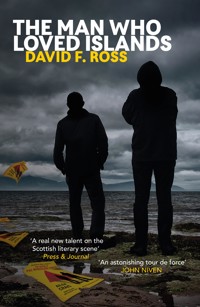
The unforgettable finale to the international, bestselling Disco Days Trilogy … Bobby, Joey and Max Mojo return in an attempt to reclaim the elusive stardom of their youth, reuniting a legendary band that didn't quite live up to expectations, with predictable results… 'A real new talent on the Scottish literary scene' Press & Journal 'By turn hilarious and heart-breaking, more than anything Ross creates beautifully rounded characters full of humanity and perhaps most of all, hope' Liam Rudden, Scotsman 'David Ross carved out an enduring place for himself among contemporary Scottish novelists' Alastair Mabb, Herald Scotland –––––––––––––––––––––––– The Disco Boys and The Band are back… In the early 80s, Bobby Cassidy and Joey Miller were inseparable; childhood friends and fledgling business associates. Now, both are depressed and lonely, and they haven't spoken to each other in more than ten years. A bizarre opportunity to honour the memory of someone close to both of them presents itself, if only they can forgive ... and forget. With the help of the deluded Max Mojo and the faithful Hamish May, can they pull off the impossible, and reunite the legendary Ayrshire band, The Miraculous Vespas, for a one-off Music Festival – The Big Bang – on a remote, uninhabited Scottish island? Absurdly funny, deeply moving and utterly human, The Man Who Loves Islands is an unforgettable finale to the Disco Days trilogy – a modern classic pumped full of music and middle-aged madness, written from the heart and pen of one of Scotland's finest new voices. –––––––––––––––––––––––– Praise for David F. Ross 'A warm, funny consideration of reconciliation between middle-aged friends and a celebration of music's healing powers. Suggest to fans of Nick Hornby' Library Journal 'Warm, funny and evocative. If you grew up in the eighties, you're going to love this' Chris Brookmyre 'Dark, hilarious, funny and heart-breaking all at the same time, a book that sums up the spirit of an era and a country in a way that will make you wince and laugh at the same time' Muriel Gray 'An astonishing tour de force' John Niven 'This is a book that might just make you cry like nobody's watching' Iain MacLeod, Sunday Mail 'Crucially Ross's novel succeeds in balancing light and dark, in that it can leap smoothly from brutal social realism to laugh-out-loud humour within a few sentences' Press & Journal 'Full of comedy, pathos and great tunes' Hardeep Singh Kohli 'If I saw that in a store I would buy it without even looking at what was inside' Irvine Welsh 'Like the vinyl that crackles off every page … as warm and authentic as Roddy Doyle at his very best' Nick Quantrill 'A solid-gold hit of a book! The closest you'll ever get to being on Top of the Pops' Colin McCredie
Das E-Book können Sie in Legimi-Apps oder einer beliebigen App lesen, die das folgende Format unterstützen:
Seitenzahl: 476
Veröffentlichungsjahr: 2017
Ähnliche
















PRAISE FOR DAVID F. ROSS
‘A madcap romp through the 1980s with Ayrshire’s greatest band. It captures a world of indie rock and fucking wallopers with hilarious élan’ Stuart Cosgrove
‘An hilarious and caustic Boy’s Own tale of achieving every wannabe pop star’s dream … a No.1 Hit Single. The closest you’ll ever get to being on Top of the Pops. A solid gold hit of a book!’ Colin McCredie
‘Full of comedy, pathos and great tunes’ Hardeep Singh Kohli
‘Warm, funny and evocative. If you grew up in the eighties, you’re going to love this’ Chris Brookmyre
‘If you lived through the early eighties this book is essential. If you didn’t it’s simply a brilliant debut novel’ John Niven
‘Dark, hilarious, funny and heart-breaking all at the same time, a book that sums up the spirit of an era and a country in a way that will make you wince and laugh at the same time’ Muriel Gray
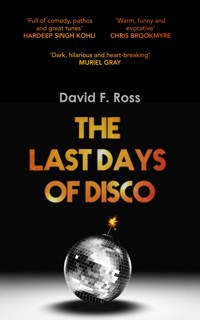
‘Like the vinyl that crackles off every page, The Last Days of Disco is as warm and authentic as Roddy Doyle at his very best’ Nick Quantrill
‘Took me back to an almost forgotten time when vengeance was still in vogue and young DJs remained wilfully “uncool”. Just brilliant’ Bobby Bluebell
‘More than just a nostalgic recreation of the author’s youth, it’s a compassionate, affecting story of a family in crisis at a time of upheaval and transformation, when disco wasn’t the only thing whose days were numbered’ Herald Scotland
‘The Last Days of Disco is a scream, an early 80s teenage dream of vinyl and violence, where Phoenix Nights meets Begbie – catfights and kickings at the disco, polis, payoffs, Masons, pals, and a soundtrack “Kid” Jensen would be proud of … David Ross’s debut novel punches the air and your face, hilarious and raging; a falling glitterball. Thatcher’s Kilmarnock is the coalition’s Kilmarnock, where the politics is bitter but the kids are alright; the last days of disco are the days we still dance in. This is a book that might just make you cry like nobody’s watching’ Iain MacLeod, Sunday Mail
‘The author himself grew up in Kilmarnock and his book gives a poignant portrayal of the humour and the horror of growing up in a small town in Scotland in the early 1980s. Crucially Ross’s novel succeeds in balancing light and dark, in that it can leap smoothly from brutal social realism to laugh-out-loud humour within a few sentences. It is a triumphant debut novel, which announces a real new talent on the Scottish literary scene’ David Kerr, Press & Journal
‘Ross perfectly plays the nostalgia card through the music and TV shows of the day, transporting readers back to the decade that, arguably, set the UK on the destructive political path it follows even now … By turn hilarious and heart-breaking, more than anything Ross creates beautifully rounded characters full of humanity and perhaps most of all, hope. It will make you laugh. It will make you cry. It’s rude, keenly observed and candidly down to earth. You should read this, especially if you were eighteen as the Falklands Conflict developed and recall the fear those call up papers might be dispatched at any moment’ Liam Rudden, Scotsman
‘There’s a bittersweet poignancy to David F. Ross’s debut novel, The Last Days of Disco’ Edinburgh Evening News
‘It’s very sweary, often funny (their early gig supporting a dodgy hypnotist is the stuff of legend) and the strong cast of characters throbs with positivity and humanity. Even small-time gangster Fat Franny Duncan succeeds in evoking a measure of sympathy … if the final book is up to the same standard he will have carved out an enduring place for himself among contemporary Scottish novelists’ Alastair Mabb, Herald Scotland
‘Ross has written a great coming-of-age novel that is full of wonderful prose and characters who are instantly likeable. At times the book is reminiscent of Irvine Welsh; Kilmarnock takes the place of Leith, and vinyl, rather than heroin, is the drug of choice’ Literature for Lads
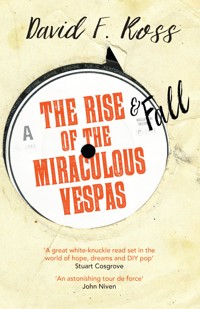
‘The Rise and Fall of the Miraculous Vespas is a ride down memory lane – back to the pop scene of the early 1980s. It is funny, witty, and extremely well written’ Trip Fiction
‘Set against a backdrop of rising unemployment levels and the brewing Falklands War, The Last Days of Disco – with its anger, wit and rebellion – is the novel version of an impassioned punk song. The humour is well pitched and executed, in places even sublime – but David F. Ross has a talent for social angst, and it’s this I’d love to see more of in the future’ Louise Hutcheson, A Novel Book
‘An absolute must-read’ By the Letter Book Reviews
‘It’s a strong premise and Ross handles the two threads skilfully, stepping backwards and forwards to follow the disco conflict through the local corridors of power … Rather as Jonathan Coe does with the 70s in The Rotters’ Club, Ross celebrates the music of the early 80s through the commitment and passion of Bobby and Joey to their favoured bands’ Blue Book Balloon
‘The Last Days of Disco strikes the perfect balance between weighty socio-political commentary and witty observation. I laughed out loud a great many times and shrunk in sadness during the harder moments. A tragic comedy of deep family difficulties and the comedic coping mechanisms, it makes for a strikingly authentic and enjoyable read’ Publish Things
‘I defy anyone not to be humming Shaking Stevens when reading this. You will … This is a funny, charming, slightly crazy and intelligent tale … retro comic magic’ Northern Lass
‘David Ross captures the mood and spirit of the time impeccably, with a wonderful cast of characters and a fabulous soundtrack … there are definite echoes of the late, great, much-missed Iain Banks here – there are plenty of comparisons to be drawn, with a sprawling Scottish small-town cast, delicately intertwined plotlines, social commentary and a deft turn of often quite black humour’ Espresso Coco
‘The Last Days of Disco captures the decade in all its harsh monochromatic glory … Filled with characters that will make you want to laugh and cry, often in the space of a single page, Ross has written a tragi-comedic novel that might topple Trainspotting’s crown and become Scotland’s favourite book of the last fifty years’ Andy Lawrence, Eurodrama
‘From about halfway through the novel, the Eastenders-esque drum bash moments, revelations where your mouth will drop, come thick and fast. That said, Ross is the master of bad-taste comedy. Fancy a children’s entertainer who makes phallic balloon animals? Or sex in a shed involving a dry-ice machine? Honestly, they say you couldn’t make it up, but Ross really can … Outstanding’ Amy Pirt, This Little Bag of Dreams
ABOUT THE AUTHOR
David F. Ross was born in Glasgow in 1964 and has lived in Kilmarnock for over thirty years. He is a graduate of the Mackintosh School of Architecture at Glasgow School of Art, an architect by day, and a hilarious social media commentator, author and enabler by night. His most prized possession is a signed Joe Strummer LP. Since the publication of his critically acclaimed, bestselling debut novel The Last Days of Disco, he’s become something of a media celebrity in Scotland, with a signed copy of his book going for £500 at auction.
The Man Who Loved Islands
DAVID F. ROSS
This one’s for Karen … and the indomitable people of Ayrshire
Contents
‘We’re no longer as thick as thieves, no,
We’re not as thick as we used to be.’
– The Jam: ‘Thick as Thieves’
‘Ye aw’right, though?’
‘Aye. Ach fuck, who kens? You?’
‘Ma mum and dad have split up. For good this time. He’s away back up north. No’ really surprised tae be honest. He was a total fish oot ae water away fae the city.’
‘Sorry tae hear that, Joe.’
‘Ach, fuck it. No’ really that bothered. Him an’ me … nae real connection. Fitba, that wis aboot it. No’ like you an’ auld Harry.’
It seemed like such a natural thing to say, but as soon as it was out there, Joey Miller regretted it. It still felt too soon. He was sitting on a damp wooden bench on the edge of the Kay Park lake with his closest friend, Bobby Cassidy; a friend whom he hadn’t seen for almost four months.
‘Ah didnae mean tae … ach, fuck sake, why am ah so fuckin’ anxious here?’ Joey admitted aloud.
Bobby smiled. ‘It’s fine. Ah ken whit ye meant, man.’
‘So, ye gonnae tell me, or dae ah have tae keep guessin’?’ said Joey, getting to the point of their meeting, from his perspective at least.
‘Tell ye whit?’
‘Where ye’ve fuckin’ been since July?’
Joey was becoming exasperated. They had spent the initial ten minutes talking about last night’s television; skirting around the main issues. Bobby had had a very tough time of it over the summer. His older brother Gary’s Falklands War resurrection, and his father’s sudden death all in the same week would have been hard for anyone to cope with, but rather than call on the support of his best friend, Bobby Cassidy had effectively vanished, disappearing into the ether almost as soon as Harry Cassidy’s body was in the ground. Hettie, Bobby’s concerned younger sister, had heard nothing from him. His troubled brother had reluctantly returned to barracks in London, haunted by his own preoccupations. Even Ethel, his poor old mum, was now blissfully anaesthetised against her family’s domestic carnage, countless tranquilisers keeping her in an all-day haze. Bobby’s family – apparently once so close – had fragmented. Perversely, only Joey Miller seemed preoccupied with that.
‘Ah had tae get away, man. Couldnae fuckin’ cope wi’ it aw. It wis just too much, mate,’ said Bobby. ‘Ah’m sorry. Ah couldnae really tell ye.’
‘So where did ye go, then?’ asked Joey.
‘Benidorm,’ replied Bobby.
‘Whit, for four bloody months?’
‘More or less.’
‘Must be fuckin’ great, eh?’ said Joey sarcastically. ‘Ye get a job wi’ Judith Chalmers or somethin’?’ The tone had changed.
‘Don’t start, Joe. Ah just dinnae need it, right?’ Bobby eased himself onto the slatted back of the park bench. He zipped his black Harrington jacket up against the early-winter cold and folded his arms before haunching down on his knees.
‘Thought we were meant tae be best mates, Bobby? Felt like a right fuckin’ tit wi’ everybody askin’ me where ye were an’ me huvin’ tae say that ah didnae have a bastardin’ scooby.’ Joey looked away, readying himself for his principal objection. ‘An’ then Hammy … fuckin’ Hammy … tells me yer away wi’ Lizzie, an’ he kens this because he got a fuckin’ postcard fae ye in August.’ Joey was angry but trying to keep it in check.
‘So ye knew ah wis in Spain, then? So whit’s wi’ the Spanish Inquisition?’ said Bobby.
‘Where’s ma fuckin’ postcard, ya prick?’ said Joey.
Bobby laughed, but Joey was being serious. Bobby reached into a side vent pocket. He brought out a folded card, which had a cartoon of a blonde Diana Dors lookalike with enormous tits smiling seductively and lying on her back on a colourful beach towel, a broken signpost pointing to her cleavage. The words on the sign read Wish you were here … Joey snatched the card from Bobby and turned it over. The only words written on it were his name and ‘Onthank’ underneath it.
‘Ah didnae post it. Couldnae remember yer exact address. Ah wis never over at yours that often, you were always at mine.’ Bobby’s tone was conciliatory.
Joey’s wasn’t: ‘So whit wis ye dain’ aw that time, sunbathin’? Sellin’ cheap sunglasses on the beach?’
‘Lizzie got the chance ae a week away an’ ah’d just had a fuckin’ massive barney wi’ Gary. Ah thought fuck it, packed a bag, lifted some money an’ ma passport an’ just went wi’ her. Got a decent price oan a last minute flight. We had nae intention ae stayin’ longer than a week, but one ae her pals wis workin’ on the 18–30 stuff an’ asked her boss if we could stay a bit. We both got a job an’ ah wis dain’ a bit ae the DJ’ing. It wis magic, man. Ye should come wi’ us next year.’
‘Whit aboot Hettie?’ said Joey.
‘Whit aboot her? She’s got her ain life. We’re no’ weans anymore, mate.’
‘She’s only fuckin’ sixteen, Bobby … an’ she’s just lost her dad, and her two brothers.’
‘How has she lost us?’ asked Bobby. ‘We’re still here, for fuck’s sake.’
‘Aye. Right.’
Joey’s attitude was beginning to really irritate Bobby. ‘Look Joe, whit’s the Hampden here? Aw this concern aboot Hettie, whit’s it got tae dae wi’ you?’
Joey formed the words but then drew back from uttering them. The truth would have put him on the back foot and he wasn’t ready for that. Instead he settled for a long and awkward pause. His best friend had undergone a transformation during the last few months. Where previously they had been inseparable, for Joey, it now felt like little connected them.
‘Did ye pick up the news that Weller had split the group?’ said Joey at last, reaching for the old days.
‘Not initially, but Hammy came oot in September, an’ he…’
‘Hammy?’ exclaimed Joey, his annoyance ramping up a notch. He was now at Def Con Two. He felt like he had definitely been conned. Twice.
‘So ye wurnae here for ma eighteenth, an’ ye find oot aboot The Jam split fae Hammy fuckin’ May?’ A line had now been crossed.
‘Well, nothin’ lasts forever, does it?’ That was harsher than Bobby intended.
‘Aye, apparently so,’ shouted Joey.
‘Ah’d better go.’ Bobby got up and stood in front of Joey. ‘Ah’ll maybe see ye at the weekend, then?’ But Joey didn’t answer him; wasn’t even looking at him. So Bobby turned and headed in the direction of the town.
When Bobby was around fifty yards away, Joey stood up, intending to shout after his friend. But again the words didn’t come. He wanted to say that he had missed Bobby badly and that he just wanted things to be back to some semblance of normality between them.
Instead, he simply whispered, ‘Some things last forever, pal.’
‘Ah! yet doth beauty like a dial-hand,
Steal from his figure, and no pace perceived.’
(From ‘Sonnet 104’ by William Shakespeare)
Wide awake.
Wide awake in unfamiliar – but all too familiar – circumstances. Wide awake when you know you shouldn’t be; when every other person in a thousand-mile radius is asleep, readying themselves for the next cycle of work, or of play, or of whatever they will do that reminds them that they are alive. Or at least that’s what my confused brain is telling me.
‘How can I be happily alone with my thoughts when all they do is torment me? When they haunt my sleeping moments until I wake, and then torture the waking ones until I can’t escape them.’
The unbearable solitude of 3 am. Looking forlornly out of yet another anonymous hotel window. A now regular stop on the umpteenth circumnavigation of a ridiculously firm mattress. It’s the same view as it was an hour ago; as it will be an hour from now. Blinking lights hint at life but there is none. Not yet anyway. Because every fucker in the world is asleep. Except me. Or so it seems.
I only checked in twelve hours ago and yet I know every square inch of this room, like I constructed it myself. Its maintenance-free parquet floor. Its lowest-common-denominator beige walls. Prints that are blood relatives of the ones in every other economy-priced hotel I’ve ever stayed in (business isn’t quite as good as it used to be). Smoke detector. Sprinkler head. Siemens dials. Acknowledgments that this is a consistent set-up. An old silver Toshiba TV balancing unconvincingly on a Corian worktop in the corner. No upgrades to a flat monitor. Local channels in a language I don’t understand. My distorted reflection in its slightly curved screen when the bedside lamp goes on again. Shades of veneers imitating real wood in finishes that don’t quite match. Someone else’s concept of traveller comfort.
Two white china cups. Both deployed into early service. A tiny kettle. It has worked hard; I’ll give it that. Empty sachets of convenience tea or powdered coffee. Nothing in the fridge. Nothing to do. Back to the window. Pleading in vain for the sun to begin to rise. Just to make the loneliness go away. Back to the unrelenting berth. Lights out. Again.
Pains, both there and not there emerge. Some remnants from the sixteen hours it took to get here. Reminders that I’m too old to be doing this; that work-related travelling is a young man’s conceit. Gentle, but jagged jabs in the blackness, which begin to score points for the illogical part of the brain. The part that subtly suggests I might never see my daughter again then leaves that thought to corrode. That points out how remote she is from me despite the world getting smaller. It skilfully plants seeds that instantly grow out of control like mutating Leylandi. The further away I am, the more disconnected from her daily routines I feel. Different issues. Different time zones. Half a world away. Out of sight, etc. The more reasonable part that allows me to function normally isn’t fighting back. It seems to be the only part of me that is actually dormant. It is content to let irrationality dominate for the next few hours.
Lights on. Again. Hated the darkness when I was a child and now here I am, back there again. Yet another walk to a small, cracked basin in an adjoining space in this air-conditioned prison cell. A route that is becoming a circadian rhythm all of its own. Sharp, piercing light of a different kind. Shooting out from a horizontal tube above a small mirror. Reminding me that all I am is my father’s son. The same corrugated contoured lines at the eyes. The same greying temples. The same elastic, leathery facial skin. The same paunch at which – every few months – I stare and resolve to remove. But I won’t. It’s a downward slide and I can’t turn the clock back. Can’t recover that feeling from when I looked a lot less like him. From the times when I felt I was made of different DNA. From when I wasn’t going to make the same mistakes. From when I was going to be incomparable to him. Desperate to sleep and – at least for now – relegate regret to the sub-conscious.
The floor is solid not solely because it is easier to maintain, but because people like me would wear tracks in a carpet. Outside it’s getting darker.A fog is draping itself over the canyons of the city. The tops of the buildings are now invisible. But their inhabitants will soon witness the sun rise before me. And I’m jealous of them for that. Time, in this time zone moves painfully slowly. Dripping languidly, like Dali represented it. At least during the seemingly endless hours of the first few nights.
I put some music on. Nothing specific, just a shuffling Hobson’s Choice through a never-ending mobile library. The Durutti’s ‘Otis’, ‘We’re All Going To Die’, ‘Dress Sexy for My Funeral’ … they don’t intend to, but they just depress me more. Music, once so important, only underscores my mood and taunts me with its messages:
‘Said somethin’ I did not mean to say … all just came out the wrong way.’
He was right all those years ago; nothing lasts forever.
Tomorrow will be a bit easier. But perhaps only a bit…
PART ONE
BONFIRE OF THE PROFUNDITIES
ChapterOne
October 2014. Shanghai, China
This was a watershed moment. Finally. He glances again at the words written on the folded page of the black A5 Moleskin journal. It might have been three days since the ink dried; perhaps even four. He can’t remember actually composing the sentences, but he does feel a new clarity of thought that couldn’t have been much in evidence when pen touched paper. At its best, Joseph Miller’s sleep pattern is merely polyphasic, no better. He stares at the large clock in the corner of the room. It’s a reproduction copy of an antique, its long hands apparently static, its elaborately enamelled second hand the only indication that it’s still working. Time, for Joseph Miller, is slowing to the point where it feels like the wind-up key has gone missing. Days are like weeks. This isn’t supposed to be the case. At his age, people lament the increasing pace of their lives, conscious of time appearing to accelerate as it runs relentlessly away from their younger selves. For him, it feels like it’s gradually grinding to a halt. Nevertheless, rereading the words prompts a fleeting focus. He has decided on a task that initially seemed beyond him. A sense of responsibility has returned, though. He knows he has to make the best of this clarity before it evaporates in the polluted haze.
‘Mr Miller? Mr Miller; is everything okay sir?’
Joseph Miller glances to his left, towards the origin of a sound that has softly punctured the silence.
‘Mr Miller, your office in Scotland has been trying to reach you.’
It’s a lovely sound, Joseph concedes; female, youthful, life-affirming, Californian: everything he isn’t. He finds it strange that someone from the hotel is calling through a closed door. Housekeeping normally knock once and then just barge in. Why didn’t reception call the room’s phone to let him know about any messages? He glances at the telephone. Its red light is flashing. He also catches sight of envelopes that have been slid under a door he doesn’t even recall locking. It seems likely that the voice out in the hall has been despatched to ensure that this particular guest hasn’t fled; or died.
‘Mr Miller?’
The sound entices him towards the door as if it comes from a siren. He knows the dangers that lie on the other side but he can’t help himself.
The beguiling voice won’t stop: ‘Mr Miller, your colleagues wanted to wish you a happy birthday … and, on behalf of Doubletree Hotels, I’d like to as well.’
‘Ah’m sorry. Just a minute, eh?’ Joseph Miller clears up the various little brown bottles and their scattered pharmaceutical contents. He scans his reflection. Mirror, mirror on the wall; who’s that human car crash looking back at me. Not the fucking fairest in the land, that’s for certain.
He pulls on a white t-shirt. It has a dried coffee stain on it; he can’t remember that happening. He yanks a pair of black Levi’s on. His jaw is maybe a week of rough terrain. He might’ve looked acceptable if he was a mature, touring rock star. Despite his various hang-ups and anxieties, Joseph had always managed to look younger than his age. Until this last year, when the grey has descended down the sides of his head like a sudden avalanche. His skin, his teeth, and – bizarrely – his fingernails have all degenerated as if his body was a squalid apartment recently acquired by Peter Rachman. He turns on the cold tap, uses the water to pat down wild, freeform-jazz hair and sighs deeply.
‘I’m sorry if I disturbed you Mr. Miller.’ The entrancing voice belongs to a ludicrously healthy-looking young woman. Her naturally blonde hair hangs to just beyond the shoulders of her black business suit. Her teeth beam out, like xenon headlights, from a perfectly shaped mouth. Piercing blue eyes shine down at Joseph. She wears heels, making her taller than him. Her dazzlingly white shirt is open just enough to reveal about an inch of carefully constructed cleavage. She introduces herself as Megan Carter, Guest Relations Manager, but in a way that suggests everyone at the hotel is a manager of something. He notices that the description on her lapel badge puts the words in a different order. She seems nervous, as if this is her first day in the role. She is holding a large, wicker basket of fruit wrapped in cellophane. A purple bow with ‘Congratulations’ written in flowery silver script encircles it. In her other hand she holds a sheaf of notes and some envelopes. She hands both to him at the same time.
‘I’m sorry; we didn’t know it was your birthday, Mr Miller.’
‘How would ye have known?’ This sounds a bit harsher than he intended. ‘Ah’m sorry, I’m just a bit … y’know … buggered.’ He addresses her confusion. ‘Tired. A bit of jet-lag still.’
She smiles. He doesn’t reciprocate. It’s been so long; he can’t really remember how to without it appearing unnatural.
A few languid seconds pass in which neither of them speaks or moves. To the young Manager of Guest Relations, this seems like about an hour. Her experience of unusual or difficult guest situations is limited. She has only been a Manager of Guest Relations for a month – promoted internally to respond to an increasingly waspish clientele. The major World Expo of 2010 had opened Shanghai up to almost seventy-five million visitors during its six months, and The Doubletree Group had carefully plotted their customer demographics. Mainstream Western advertising campaigns followed and this particular hotel had boomed.
Megan Carter considers her training. Generally, residents only lightly brush against her honed, have-a-nice-day persona. She imagines they go about their business without much of a thought about her, save perhaps for a grudging acknowledgement that Americans really do perfect the art of service. A subtle and fleeting interaction: that is her purpose in life and – right now – that suits her just fine. Her polished and manicured veneer conceal a recent past that involves an abusive and criminal husband, his religious zealot of a mother and her own uninterested don’t-come-running-to-me-when-it-all-turns-to-shit father.
She married the man almost six years ago. Madison Megan Carter and Vincent Antonio Sevicci: childhood sweethearts; Prom King and Queen of Albany High School. The façade of the American Dream was celebrated in front of family, friends and community in the beautiful little Epworth Chapel of the Holy Father. It was a crisp November day, which would go down in history as the same day her country elected its first black President. Shifting planes of history and optimistic dreams for many, but not all. Before the formal wedding photographs had been returned to them, her new husband had given her a heavily bruised eye socket and a broken clavicle. She’s always been a klutz was the generally accepted analysis, following her complicit explanation that she’d fallen down the steep stairs leading to the basement in their new home. She had been blinkered. Love can do that to an idealistic young woman, she now reasons, to help her dismiss the distressing idea that her own hubris brought these troubles upon her head. She had known he was connected, but the Italians always looked after their women, or so she thought. For months after the wedding, Vinnie and his crew had met in their basement. She acknowledged the over-the-top respect they gave her when she took pizza and beer down to them. But also heard Vinnie’s voice, followed by their loud forced laughter, as she climbed back up the stairs. She found it hard to ignore these hard edges like the other wives seemed to. They were paid for their silence in furs and jewels and dollars, but these things held little interest for her. She didn’t want to be kept like a prized show dog. She wanted her own identity, to be able to follow her own dreams as well as the ones she had once believed they both shared.
She put up with the cocaine and booze-fuelled batterings, the unpredictable behaviour and the suspected – but unproven – sleeping around. Just over a year into this penury, when she announced that she was pregnant, her paranoid husband Vinnie kicked her repeatedly in the stomach, convinced the baby growing inside her wasn’t his. He was a psychopath. It was barely conceivable that he’d been able to hide this throughout their high school courtship. But then hiding things was his speciality.
‘Listen to me, honey. If you don’t get gone, you’ll be gone.’ – The simple, but intuitive words from an experienced nurse, well versed in reading between the lines of those presenting with such distinctive body bruising. Vinnie had only left her bedside to go to the toilet but that one sentence was enough.
Losing the baby was the final straw. For it to make any kind of sense at all, it needed to be a full stop, too. Madison took a cache of his hidden money and, with the covert help of a close, trusted colleague from the bank where she had previously worked, buried it in a new personal account. Together they then manufactured a new identity, new papers and sufficient falsified references for her to get work and temporary overseas residency status, all without Vinnie even conceiving that it was being planned right under his Roman nose.
And then, one day, when Vinnie and his crew were concluding a deal in Miami, she just vanished.
The ‘made’ men Vinnie’s crew answered to initially suspected a hit from a rival, but civilians – especially wives – had always been off limits. What betrayed her was the discovery that the money was missing – Vinnie had thought it was still buried under layers of ash in the solum of the basement. Even now she shudders when she recalls excavating those substantial sums without his knowledge, and shakes when she imagines him destroying the fabric of their house, wishing it was her face.
Maybe he’s dead by now. The deep family values that underpin organised crime extend only so far. If some of that money was payments up the chain, honour wouldn’t necessarily save him. It is a complex consideration for her: she doesn’t ever want to see him again, but that doesn’t mean she wants him dead.
Over four years – and a few detours – later and here she is in Shanghai, using her middle name as her first. The Pacific Ocean separates her from a past existence, and she will never go back.
ChapterTwo
June 1986. Benidorm, Spain
‘Ah’m fucking totally sick ae this Bobby.’
‘Whit, aw the sparkling conversation an’ jokey repartee? How could anybody be sick ae that?’
‘If ah wanted constant bitin’, cuttin’-edge sarcasm, ah’d fly back tae Ayrshire.’
‘Well, maybe it’s time up for it here then.’ Bobby Cassidy said this under his breath but he was certain Lizzie King, his girlfriend of four years, had heard him. If she had, she wasn’t acknowledging it, though. More times than not these days, it felt to Bobby like they were an old married couple. Being ignored by her wasn’t so out of character in that context.
Bobby and Lizzie had been through a lot together since they had met back in Kilmarnock in 1982. Lizzie had been instrumental in setting Bobby’s fledgling DJ career on its tottering way. Her eighteenth birthday party had been the first booking Bobby had taken in pursuing his dream of establishing a mobile DJ business with his then best friend, Joey Miller. She had been a shoulder – and an emotional release – for him during the surreal times of summer 1982, and for that he’d always be grateful. But their now overfamiliarity – a result of living and working long, tiring hours in claustrophobic proximity during the annual Benidorm summer seasons – was taking its toll on both of them.
They had headed to Spain four years earlier, both seeking escape, but for different reasons. Bobby’s intention was simply to shrug off the pressures of life in the aftermath of his dad’s untimely death and his brother’s stressful return from the Falklands War. Lizzie had wanted to get away from an overcrowded council flat and the factory worker’s destiny that seemed predetermined for her. She wanted to live her life away from daily family arguments about whether the rent would get paid before the bookies that month; about whether her unemployed father might eventually find something more productive to do with his life than impregnate Lizzie’s step-mum. Christ Almighty, if reproduction was a specialist subject, Frank King would win University Challenge as a solo entrant. She lived with well-meaning people, but their life choices and the brutal steel of Thatcherism kept them struggling joylessly. Lizzie had only been eighteen then but she was already worn down by it all. She might not have had unrealistic dreams of being an air hostess, but Lizzie still wanted to experience a more colourful part of the world, even if it was one that seemed to have been transplanted from more familiar places in England; Blackpool wi’ sunshine an’ a wider choice ae sexually transmitted diseases being the way Benidorm had been described to her by a friend who’d gone out the year before them. That was enough though. It offered opportunities for personal development that none of those Tory, slave-labour redundancy displacement schemes could compete with.
Lizzie and Bobby had travelled out together for a few weeks in August 1982, and then returned for the whole season the following year. They worked long, tiring, but largely enjoyable hours: Lizzie as a junior rep for Twenty’s and Bobby as an assistant bartender. Like everyone else, though, they also indulged like it was the last days of Caligula. Bobby’s close friend, Hamish May, had come out sporadically – a week here, a long weekend there; but despite Bobby’s attempts, Joey Miller – his best mate since schooldays – had always declined the offer. So he simply stopped asking. Lizzie liked Joey, but she could see that he had become a constant reminder of the things Bobby was fleeing: in particular his depressed and unhinged brother, Gary, who was unable to comprehend the madness of a war that he had survived; and Hettie, his younger sister – an insistent moral conscience at a time in his life when he wanted to act without such constraints.
Bobby Cassidy and Lizzie King ambled aimlessly along the Playa de Levante. Bobby surreptitiously checked his watch. He desperately wanted to head back to the bar. He had two thousand pesetas on Argentina to beat England in the World Cup quarter-final. Hamish – or Hammy as he preferred to be known – would be waiting for him, the San Miguels lined up. It felt to Bobby like he and Lizzie were already on their last waltz around the floor, but still he was reluctant to put the relationship out of its misery. If the end had to come, it would have to be Lizzie King that put the pillow over its face.
Even this late, the sun having long since departed, holidaymakers still lay on the gentle sandy slope of the beach. They were a mix of those trying to look like Madonna – both the young New York singer and the religious icon – and Andrew Ridgeley from Wham!. String vests predominated. Older men wore them because they always had; younger men because they were de rigueur. Some rebels favoured white espadrilles. Others bore the scalded, flaking signs of having lain far too long defying the big orange orb to try harder, as if daring it to fully char their pale, blueish British skin. Some, on the other hand, looked like they had just turned up, perhaps preparing to remain on the beach in the absence of any alternative roofed structure being available to them. More often than not sleeping under the Spanish stars was more pragmatism than romanticism.
Bobby and Lizzie strolled amongst those who may have been considering these options – as they had done on many occasions over the last three years – observing them in silence.
Finally Lizzie broke it. ‘Don’t be so bloody awkward, we need tae talk,’ she said. ‘Ah’ve barely seen ye for a fortnight. We’ve got stuff we need tae think aboot.’
‘An’ ye had tae pick tonight?’ Bobby was finding the application and commitment needed to maintain their equilibrium inversely proportionate to the joy it now afforded him. They were both only twenty-two and their conversations already reminded him of unhappier times back at home in McPhail Drive, when Harry and Ethel, his mum and dad, argued over Gary. It wasn’t supposed to be like this.
‘Ah’m workin’, Lizzie. Just like you are! Ye knew this when we came out here. It’s no’ aw fuckin’ sunshine in paradise, is it?’ he scowled.
But, by and large, it actually had been. In their first full year as a working couple, they had been happily inseparable. Their lives were exciting. Admittedly, their wages were as basic as the lodgings they were forced to share with six other reps, but Lizzie was used to such domestic congestion. At least this new crowded house had sunshine, and for Lizzie it had Bobby. Things got a tiny bit more congested when Hammy May flew out late on in the season of 1982. Hammy was a clever young man. He had aced all of his Highers with considerable ease and his proud father had lined up a variety of options in the Diplomatic Corps, where he worked, on condition that Hammy’s subsequent progress through university was smooth. A life of comparative privilege stretched out before him. All he had to do was work hard and follow this predetermined mouse trail.
In fact, Hammy had inherited Stanley May’s pioneering spirit, but he had very different ideas about how he would apply it. Despite acceptances from numerous notable universities, Hamish May turned his nose up at all of them, preferring the chance to work five months of the year as a beach club dogsbody for an unscrupulous holiday company.
At each summer season’s closing, they returned home to a bleak, lifeless Kilmarnock, which, when compared to the vibrant Costa Brava, looked like all colour had been drained from its structures and people. The three friends stayed in the Cassidy home, now free of any familial hassle. In a thoughtless move, which only widened the gulf between Bobby and his brother, the younger man betrayed their father’s principles and used his part of the sum left to them to acquire the council house through Margaret Thatcher’s right-to-buy initiative. He argued that it was an investment. Bobby’s younger sister, Hettie had moved to the Dowanhill student dorms near Glasgow University in the summer of 1983, and his tortured brother Gary had returned to his army barracks in London nearly a full year earlier.
Lizzie King’s initial dissatisfaction with Hammy being the couple’s third wheel quickly diminished. Her boyfriend was a young man who craved – perhaps even depended on – close and unquestioning friendship; and even his love relationships had to be resolutely optimistic and upbeat. There was no place for contemplative reflection of events past. Bobby was a laconic young guy but with a relentless eye for the present tense. Unshakeable positivity and a nonconfrontational attitude were the sole CV requirements for a position at Bobby Cassidy’s side. Since Hammy and Lizzie both understood these crucial rules of engagement, they all quickly settled into their primary roles.
After only five weeks working in the hotel’s outdoor beach bar, Bobby got his opportunity. Lizzie’s friend, an occasional sexual partner of Sergio, the Entertainments Manager, put a word in for Bobby and he was given a week’s unpaid trial as a DJ. Bobby had a degree of freedom to play his own music selections in a low-risk, unpressurised, day-time slot at the hotel. Even beyond his probation, the gig paid little, but it was a substantial step up from hearing ‘Haw son, can ah have a Slow Comfortable Screw against a Wall, eh?’ five hundred times a day. Bobby loved the new job. It had been spine tingling for him to hear Afrika Bambaataa, Man Parrish or Indeep blasting out of the impressive speakers even if it was to a largely uninterested audience. It also gave him the space to practise blending and linking the records in ways that the old Heatwave Disco’s birthday party or wedding function demographic hadn’t permitted. He’d even tested out some unusual cuts, such as New Order’s energetic New York-influenced ‘Confusion’ mixed into Prince’s smooth pop classic ‘Little Red Corvette’.
Soon after, Derek Dees, the semi-legendary DJ for Valentino’s, the hotel’s bar, vacated the booth, lured away by a bigger and better gig. So, after just a month as this old sorcerer’s apprentice, Bobby nervously put his name forward as his replacement. His personal playlists would have to go but Bobby was more than happy to give up such experimental freedom and toe the party line when he eventually graduated to Valentino’s main stage. The equipment decks and sound quality there were far more advanced, although his billing was unusual to say the least. DJ Bobby appeared in support of an astonishing magic show in which a dexterous Spanish woman, known professionally as Sticky Vicky, pulled unusual objects from her vagina. Lizzie didn’t believe Bobby initially when he described the elegance with which ping-pong balls, eggs, sausages and even razor blades were excavated from deep inside this bizarre woman.
‘Ye want tae see this,’ he told a sceptical Lizzie and a stunned Hammy. ‘She slides aw this stuff oot fae her fanny like she wis a fuckin’ ballet dancer. It’s like … art or somethin’.’
Hammy demanded to see it for himself. And their next night off, Lizzie and Hammy got complimentary tickets for one of Vicky Leyton’s six-times-a-night, half-hour adult cabaret show. Bobby played extended remixes of Wham’s ‘Club Tropicana’ on rotation until her performance began.
On their days off, Bobby and Lizzie participated in the occasional booze cruises, and often the midnight swims too. And until only very recently, Hammy had sex on various beaches with various female tourists. The frightening prospect of ‘dying of ignorance’ had become a real possibility, and thus curtailed his activities.
All three had only just left their teenage years behind them. They agreed that a prescriptive life of domestic drudgery and living on Thatcher’s meagre and diminishing benefits back in grey, miserable Kilmarnock was for other mugs; the mugs who only got out here to sample this lifestyle once a year, for a week if they were lucky.
But, just as soon as it looked like it would propel them forward, their luck ran out. Lizzie got pregnant and had to return home to her family’s congested flat. Having signed a contract for the rest of the ’84 summer season up until November, Bobby – encouraged by Hammy – made the selfish decision to remain. Unsurprisingly, it was the beginning of the end for the young lovers. Lizzie suffered a miscarriage three weeks after returning to Scotland. Bobby and Hammy came home at the end of the season, but Lizzie continued staying with her family until they were due back out in spring 1985. Although the couple seemed to have put the heartbreak behind them, for Bobby at least, things were never the same. Too much had changed. Serious adult issues had intervened in Bobby Cassidy’s Peter Pan lifestyle, and Lizzie King had been tainted by them too. He couldn’t look at her in the same way. He couldn’t ever admit to her that he was relieved. Better to just put distance between them and avoid any emotional confrontation.
Now – four years after immersing themselves in its uncomplicated warmth – the holiday capital of the Costa Blanca had suddenly lost all the appeal it had once held for them. Lizzie, the girlfriend that Bobby Cassidy once thought would be the love of his life, told him she was pregnant again. As she spoke the words, a loud roar went up from the beachfront bars. Diego Maradona had just punched the ball over Peter Shilton’s head and into the England net. By the time he had waltzed and snaked through the entire English defence to score one of the greatest World Cup goals ever seen, Bobby and Lizzie’s relationship was over. She had hurtfully jibed that this time the baby wasn’t his, but Javier’s; the head rep at the hotel complex where they all worked. Hammy later reckoned his friend had dodged a bullet, but it would take a while – and a decision to move to a different resort – for Bobby to see it that way.
ChapterThree
October 2014. Shanghai, China
Joseph Miller can’t conceive that he has anything in common with this astonishingly beautiful and composed young woman. But there are many things: not solely time and circumstance. He too had once been able to conceal a darker side in the pursuit of businesslike normality. The development of new commercial relationships requires dogged positivity. No one at a conference junket or promotional lunch wants to hear about family pressures or depressed, dangerous thoughts. Such coruscating events are populated by the never-been-better brigade; recessions were things that happened to other companies, other people who didn’t – or couldn’t – work as hard. Others with less stamina. With smaller dicks. Men and women.
Joseph can’t fake this master-of-the-universe bullshit anymore. For nearly a decade, he has been principally responsible for overseas business development at his firm of design consultants. He had foreseen that the ridiculous growth enjoyed by the construction industry in the first few years of the century was as false as the banking philosophies on which they were built. The boom years of credit-based prospecting couldn’t possibly last, despite Tony Blair’s deceptively unbridled and smiling optimism. Exporting expertise overseas to those countries whose public infrastructure was way behind the UK’s was a clear strategy. His partners had backed his theory but on condition that he was the principal – or sole – focus of it. It had been a shot to nothing for them. Joseph and his small team had been successful; up to a point. This initially made him feel free. Free of the mundane matters of business management, but also free of the demeaning barbs and the financial handcuffs of Lucinda, his bitter ex-wife. Now though, he is finding it requires a level of energetic sociability that is as foreign to him as many of the customs he is expected to know and remember. While domestic work is on the increase once more, profits in overseas work are down. What’s more, the high-risk international game that took Joseph from Libya to the Middle East to India and onto the promised land of China, has left a legacy in the form of an unsustainable level of financial exposure. In the early days the opportunities rolled in, their designs elevated the profile of the practice and some of them even resulted in projects that made decent profits. But then the Arab Spring changed much of the political and cultural landscape for many of the practice’s foreign opportunities. Reckless American financiers and bankers did the rest for any necessary economic momentum. In the last year the firm has lost ground just as Joseph has lost interest. His impatient younger partners blamed the former firmly on the latter and effectively sidelined their firm’s remaining active founder as a result.
‘Sir, are you fine?’ A new voice. Less serene, more insistent. An unusual turn of phrase.
‘Em … aye. Yes, sorry.’ Joseph is standing in the corridor. The hotel’s Manager of Guest Relations has gone. An older Asian woman – presumably a fellow guest – is now leaning in to hear him answer. He has no idea how long he’s been standing there. His room door is closed behind him and the colourful basket is parked carefully against the wall, the papers having been folded in half and tucked neatly inside the bow.
His journey down to reception to get a new room keycard is punctuated by a few strange looks and a small English child repeatedly asking his mother why the man in the lift has no shoes or socks on. No explanation is given by any of the adult occupants and the child remains ignored.
Later that evening, Joseph Miller walks aimlessly through the bustling lanes and squares of Xintiandi. He has polished shoes on and a freshly laundered, black Calvin Klein suit. A crisp white shirt, open at the neck, completes the metamorphosis. He blends in to the new cosmopolitan Shanghai seamlessly, like any other poised professional man of fifty years of age. It’s a popular local demographic. When he puts his mind to it, the mask can still be very convincing. If only its power could be maintained. He strolls through the narrow passages with their carefully reconstructed facades, as he has done many times before. As an example of urban place-making, Joseph considers it to be amongst the best he’s ever witnessed. It has all the proper emotional ingredients of yearning, romance, memory and connection that make all great public spaces magnetic. But it is all based on a lie; an elaborate stage set that has little real authenticity. What’s more, to clear a path for it required the brutal displacement of almost four thousand Shanghainese families. This whole style / substance / collateral damage conundrum is one he understands only too well. He feels a curious belonging here. He is a stranger in a strange land, but one which has embraced so much in its relentless desire to be accepted on more recognisably Western terms, while stoically trying to hold onto aspects of a culture and tradition that are as old as any on earth.
He sits on the periphery of activity, observing people as they come and go. He watches a well-dressed couple approach, remarkable only in that the bulky man is wheelchair-bound and his tiny female companion struggles to push him across uneven cobblestones. She looks exhausted; he looks defeated, being unable to offer any assistance whatsoever. They are a difficult couple to age, but by Western standards they would never be referred to as elderly. The man appears almost totally dependent. The woman applies the brake at a table near Joseph’s. She sits and the relief spreading across her face is immediately obvious. They don’t speak or look at each other. Is he her cross to bear? Does their love for each other render such sacrifice beyond all question? Are there times when both crave the release that a suffocating pillow would bring?
The woman brings two drinks back to the table: one for her and the other, with a straw, for him. Before she has sipped from her own, she offers him the straw. His mouth barely opens to receive it. Liquid dribbles from the corner of his mouth and frustration flashes in his eyes. She lifts a napkin and dabs like a patient mother would a baby. Joseph is saddened by the scene; saddened more by the brutal truth of his own situation. At least the couple has company, compromised though it is. He opens his notebook and writes: From the moment we are born, we are all essentially preparing to die. Some prepare better than others, that’s all.
Joseph Miller considers such things purely because he has never shared a love to light the fire of unquestioning devotion in his heart.
He nurses a coffee. He unfolds the papers printed and copied onto Shanghai Doubletree’s headed notepaper. They comprise a month or so of increasingly concerned messages from home; from back in Glasgow. Amanda, his all-too-faithful secretary, has obviously been to the flat. He sometimes worries that she has too much access, but in truth there is nothing to hide. She knows it all. There’s a note of gratitude from the Scottish Labour Party, thanking him for voting ‘NO’ to Scottish Independence, even though he didn’t. He considers the Labour Party he had once been so loyal to much as he does the vinyl-era mobile DJs: on a downward arc headed towards virtual obsolescence. There is a scanned copy of a letter from the NHS. As fiftieth birthday greetings go it is brutally direct. It invites him to dig a wee wooden spatula into his poo and send it back to them. But at least they have bothered to write and mark the date, bless them. Unsurprisingly, there are no such acknowledgements from the tiny band of people he refers to as family. Those boats have long since been burned. The rest of the papers are exclusively from work. Records of numerous calls and printed emails from his younger business partners, apparently worried about his mental state since he went ‘off the reservation’ at the beginning of September. Amanda has clearly been tracking his movements through credit-card transactions. And there is one from his retired former colleague, Carlos Martorell, with whom he founded the practice almost twenty years previously.
This one intrigues him. The two men haven’t properly communicated since the day of Andy Masson’s funeral in 2004. Masson was the third ‘M’. The practice had been christened M(cubed) to avoid any suggestion of hierarchy or the need to explain an alphabetical basis for the original Vaudevillian name, Martorell, Masson & Miller. In truth, Joseph Miller was the instigator of the practice, and formalised it along with his university friend from Barcelona. Joseph liked the idea of them feeling like a band; of them having values and principles that would govern their work. Andy Masson had come into the picture a few weeks later, when the Lennon & McCartney had realised that they needed a pragmatic George Harrison to keep their boundless design energy and innovation grounded in practicality. Joseph Miller held to the view that a Ringo wasn’t necessary. It was all about the attitude and the creativity. The practice name hadn’t yet been established and M(cubed) seemed clever and relevant. Andy had provided that sound judgement and business nous for twelve years, until cancer of the oesophagus took his life with brutal speed and at the tragically young age of forty-five. Andy was older than his two partners. He had married Carole when both were young and they had seemed blissfully happy. He was well liked by everyone at the firm and his measured, unruffled demeanour had defused many difficult meetings. In the latter years, his role seemed to be regularly reminding his colleagues why they had actually elected to be in business with each other in the first place.
Andy’s death changed everything. He had – rightly in Joseph’s opinion – been the driving force behind the development of a realistic succession plan: young, talented designers were openly encouraged to understand their potential place in the future of the practice. They were given their heads to a large extent, in terms of delivering projects, which freed up Carlos to focus on client relationships and Joseph to concentrate on the initial design concepts. It was a successful formula. M(cubed) won a number of regional design awards, it had a healthy financial position and when Andy was forced to withdraw from the practice in the summer of 2004, it employed fifty-eight people on a full-time basis.
The only time Andy had put a foot wrong in his time guiding the management of the practice was to promote Felix Masson to




