


9,99 €
Mehr erfahren.
- Herausgeber: 50Minutes.com
- Kategorie: Geisteswissenschaft
- Serie: History
- Sprache: Englisch
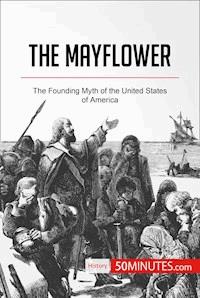
Keen to learn but short on time? Get to grips with the story of the Mayflower in next to no time with this concise guide.
50Minutes.com provides a clear and engaging analysis of the voyage of the
Mayflower. In 1620, a group of Puritans now known as the Pilgrim Fathers set sail for America to escape the religious persecution they faced in England. Despite delays, tempests, food shortages, disease and discord, they managed to establish the colony of Plymouth. This settlement’s success was due in no small part to the alliance the colonists made with the local Wampanoag tribe, and the harmony they initially lived in has been immortalised in the American tradition of Thanksgiving. Other colonists followed their example and flocked to America in droves, but this led to widespread conflict with the Native American population, and the true scale of the devastation they wrought has only been recognised in recent years.
In just 50 minutes you will:
• Find out about the religious persecution that motivated the Pilgrims’ journey across the Atlantic
• Learn about the early days of the colony they founded in New England
• Understand the conflicts that arose between the colonists and the Native Americans in the following years
ABOUT 50MINUTES.COM | History & Culture
50MINUTES.COM will enable you to quickly understand the main events, people, conflicts and discoveries from world history that have shaped the world we live in today. Our publications present the key information on a wide variety of topics in a quick and accessible way that is guaranteed to save you time on your journey of discovery.
Das E-Book können Sie in Legimi-Apps oder einer beliebigen App lesen, die das folgende Format unterstützen:
Seitenzahl: 35
Veröffentlichungsjahr: 2018
Ähnliche

















The Mayflower
Key information
When: September to November 1620.Where: from Plymouth (England) to Plymouth (North America), via present-day Provincetown, Cape Cod.Context:The European wars of religion (1524-1648) were raging across the continent.King James I of Great Britain and Ireland (1566-1625) was taking action to suppress the activity of Puritan separatists, a Calvinist Protestant minority that sought to secede from the Church of England.The first permanent British colonies were being established in North America.Key protagonists:The Pilgrim Fathers, a group of Puritans whose beliefs conflicted with the teachings of the Church of England and who therefore wanted to secede from it and create a society where they could live according to their own religious beliefs.Non-Puritan or non-separatist English citizens with no real religious convictions who were nevertheless looking for a fresh start.The Wampanoag, the Native American civilisation living in the region the Pilgrims settled in.Impact:The colonisation of New England.The outbreak of the American Indian Wars.The creation of the founding myth of the United States of America.Introduction
During the 16th and 17th centuries, Europe was engulfed in a series of conflicts driven by religious dissent. The Protestant Reformation, which was started by the German theologian Martin Luther (1483-1546) in 1517, challenged the legitimacy of the power wielded by the Pope and the clerical hierarchy of the Catholic Church. This led to a schism between the Roman Catholic Church and the Protestant Church which sent shockwaves through the political landscape of Europe, and several heads of state seized this opportunity to throw off the shackles of papal authority. For example, in 1534, King Henry VIII of England (1491-1547) founded the Church of England, a Protestant church that was to be governed directly by the King himself – in other words, without papal intervention. Although this new state religion was abolished during the reign of his daughter Queen Mary I (1516-1558), it was re-established and consolidated by her half-sister and successor Queen Elizabeth I (1533-1603) and the monarchs who succeeded her. Following a period of religious uncertainty, Anglicanism (the doctrine preached by the Church of England) emerged as the dominant religion in Great Britain, and any deviation from its teachings was banned.
The prevailing climate of religious repression in England at this time led 102 migrants, the majority of whom were Puritans who disagreed with the teachings of the Church of England, to board a ship called the Mayflower at Plymouth harbour in 1620 and set sail for the uncharted lands of North America in order to forge a new life there. Although the voyage promised to be long and fraught with danger, the prospect of being able to openly practise their religion proved sufficient motivation for them to take their chances. These travellers set a precedent that paved the way for countless other British colonists to cross the Atlantic, and their story was immortalised for generations to come as the founding myth of the United States of America.
Political, social and religious context
Religious persecution in England
When Mary Tudor was crowned Queen of England in 1553, she attempted to abolish the Church of England that had been founded by her father Henry VIII. She was the only surviving child from her father’s marriage to his first wife, the Spanish princess Catherine of Aragon (1485-1536). Like her mother, Mary I was a devout Catholic, and her determination to restore the Catholic Church in England resulted in the ruthless persecution of Protestants throughout the country. In fact, Mary went as far as to sentence 284 people to death, generally by being burned at the stake, which earned her the nickname “Bloody Mary”. When she died in 1558, she was succeeded by her younger half-sister Elizabeth I, who restored Anglicanism as the state religion.




