


Erhalten Sie Zugang zu diesem und mehr als 300000 Büchern ab EUR 5,99 monatlich.
- Herausgeber: Biteback Publishing
- Kategorie: Geisteswissenschaft
- Sprache: Englisch
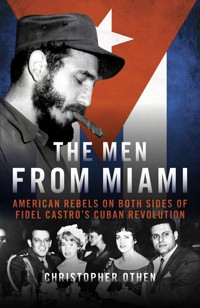
An exhilarating real-life Cold War thriller about the Americans who fought for Fidel Castro in the Cuban Revolution – then switched sides to try to bring him down Back in 1957, Castro was a hero to many in the USA for taking up arms against Cuba's dictatorial regime. Two dozen American adventurers joined his rebel band in the mountains, including fervent idealists, a trio of teens from the Guantánamo Bay naval base, a sleazy ex-con who liked underage girls, and at least two future murderers. Castro's eventual victory delighted the world – but then he ran up the red flag and some started wondering if they'd supported the wrong side. A gang of disillusioned American volunteers – including future Watergate burglar Frank Fiorini and journalist Alex Rorke, whose 1963 disappearance remains unsolved – changed allegiances and joined the Cuban exiles, CIA agents and soldiers of fortune who had washed up in Miami ready to fight Castro's regime by any means necessary. These larger-than-life characters wreaked havoc across the Caribbean and went on to be implicated in President Kennedy's assassination, a failed invasion of 'Papa Doc' Duvalier's Haiti and the downfall of Richard Nixon. The Cold War had arrived in Miami, and things would never be the same again.
Sie lesen das E-Book in den Legimi-Apps auf:
Seitenzahl: 532
Veröffentlichungsjahr: 2022
Das E-Book (TTS) können Sie hören im Abo „Legimi Premium” in Legimi-Apps auf:
Ähnliche


















iii
CONTENTS
PROLOGUE
MISSING OVER CUBA: $25,000 REWARD
On 24 September 1963, Alexander Irwin Rorke climbed into a small twin-engine aeroplane at Fort Lauderdale airport and took off on a flight across the Caribbean Sea. He was never seen again. When the handsome 37-year-old with black hair and blue eyes failed to return, Rorke’s panicky wife telephoned New York for help. Her father had influential friends.
Sherman Billingsley owned the Stork Club, three storeys of white tablecloths and potted palms just east of Fifth Avenue. In the club’s glory days, big-name actors from Hollywood had drunk its overpriced cocktails and pranced around to the band while a fourteen-carat gold chain across the door kept out ordinary folk. These days the Stork was looking a lot less glitzy. A picket line protested outside most nights over Billingsley’s refusal to unionise and the celebrities had been replaced by anyone with $1.99 to spare for a burger and fries.
Despite his club’s decline, Billingsley still had important contacts on both sides of the law. Jacqueline Rorke begged him for help finding her husband. Alex’s friends Frank Sturgis and Gerry Patrick viiiwere organising a search party, but they were penniless members of the Miami political underground. She needed professional help.
It was a tough sell. Billingsley had always hated his son-in-law and refused to allow him into the family mansion on Park Avenue. When Jacqueline brought their son Alex III around for visits, Rorke had to wait outside in the car. Billingsley was convinced the marriage was just an act of rebellion by his favourite daughter, and it was only when Jacqueline began sobbing down the telephone from Florida that he realised how much Rorke meant to her.
‘Oh my God, you really loved him,’ said Billingsley in surprise.1
He reached out to some friends in the Federal Bureau of Investigation. They already knew all about Alex Rorke. Agents had been keeping an eye on Billingsley’s son-in-law ever since he first got mixed up with Fidel Castro and the Cuban Revolution.
• • •
Cuba was 42,000 square miles of sunlit archipelago floating in the Caribbean Sea. It had entered modernity as a Spanish colony and remained one until the end of the nineteenth century. With independence came choices to be made about trade, investment and the free market. Cuba settled on exporting sugar cane and importing tourists, especially those who liked their cocktails strong and their morals loose. Havana transformed into a Shangri-La of sin whose economy was built around providing visiting Americans with sex and booze and every other sensual pleasure under the sun.
By the 1950s, the American Mafia controlled most of the city’s fleshpots. Gangsters had been in Cuba for decades, but their presence metastasised under the shamelessly corrupt rule of glossy-haired tyrant Fulgencio Batista. The relationship with organised ixcrime became so symbiotic that when Batista began awarding a free gaming licence to every new hotel costing over $1 million, it only ever seemed to be Mafia developments that got the green light. The resulting construction boom benefited the gangsters, the government and the urban elite, but the rest of the country remained a neglected backwater where subsistence farmers struggled to feed their families. On paper, Cuba was the richest country in Central America, but the top 20 per cent of the population earned 55 per cent of the island’s income and the poorest 20 per cent took home only 5 per cent.2 There was a racial angle too: the rich tended to be white or light-skinned and the poor mixed race or Afro-Cuban, although Batista complicated any easy socio-political analysis by coming from a peasant family with indigenous and African ancestry.
Cuba’s northern neighbour America disapproved of the corruption piling up only 250 nautical miles from its shores but refused to intervene. Batista had declared himself an ally in the Cold War, an ongoing series of proxy battles that had been raging between the West and the Soviet bloc since the late 1940s, and the powerbrokers in Washington were prepared to tolerate any amount of bad behaviour as long as Cuba’s leader was fighting beside them in the geopolitical trenches. Ordinary Cubans, less invested in Cold War stratagems, seethed as their government got rich while they stayed poor. In 1956, the young and the radical followed an unsuccessful lawyer called Fidel Castro into the mountains to launch a guerrilla war against the Batista regime.
At first no one in Havana took the uprising seriously, and neither did most Americans. That changed in February the next year when Herbert Matthews of the New York Times got an exclusive interview with Castro that convinced readers the bearded revolutionary xwanted nothing more than free elections, justice for all and an end to tyranny. Matthews’s reporting turned Castro into a hero of US popular culture: the beard, the cigar, the green army fatigues, the struggle against a dictator. It was a caricature of a complex man, but an effective one. Popular pressure forced President Dwight Eisenhower’s government to suspend military aid and left Batista to fight off the rebellion on his own.
Around twenty-five Americans smuggled themselves into the Cuban mountains to join Castro’s struggle. One was Alex Rorke’s future friend Frank Sturgis, a bar-owning tough guy from Virginia who got his mind wrecked fighting as a Marine in the Pacific and returned home unable to cope with regular life. His real name was Frank Fiorini, although people also knew him as Frank Campbell, Frank Attila or any of the other fake names that came in useful for a man always operating on the borders of legality. Patriotic, Catholic and no one’s idea of an intellectual, Fiorini had gone ricocheting through peacetime looking for a cause. He found it in 1957 when relatives in Miami introduced him to a group of Cuban exiles assisting Castro’s efforts from abroad. Fiorini helped fly weapons into the Sierra Maestra mountains and returned home convinced the bearded guerrilla leader was a fellow anti-communist patriot. It was a serious misjudgement, but few people outside Castro’s inner circle were in a position to realise that at the time. Fiorini set himself up as a full-time gunrunner before joining a rebel column to fight against Batista’s troops.
A stream of other American misfits and adventurers had already signed up, including a trio of teenagers from the Guantánamo Bay naval base, a Staten Island street rat who wanted to be a hero, a handful of American military deserters, some soldiers of fortune looking for a payday, a sleazy ex-con who liked underage girls, and xiat least two future murderers. Some had genuine mental health issues (‘kill-crazy’ in one volunteer’s words)3 and Korean War veteran Neill Macaulay coolly watched his Cuban comrades lynch unarmed prisoners. Others had more to offer. One-time jailbird William Alexander Morgan became so respected by a rebel faction that they made him comandante of a column.
Some American volunteers stayed only a few weeks. Others fought for months against Batista’s forces and were part of the triumphant guerrilla army of January 1959 that rode jeeps into Havana through a rain of flowers tossed by cheering supporters. The American government immediately sent a message of congratulations to Castro. Washington’s political elite felt quietly confident that Cuba’s new leader would take his place on the Cold War chessboard as a loyal ally, just like his predecessor. Castro seemed to agree. Within a few months of his victory, he made a goodwill tour of America, full of crowd-pleasing gestures like wearing a Stetson to a Texas rodeo.
In return, a wave of Americans came pouring into revolutionary Cuba looking for work. Among them was Gerald Hemming, or Gerry Patrick to the FBI and anyone else he pestered with pseudonymous telephone calls about the need to fight communism and smack around beatniks who threatened the American way of life. He was a 6ft 6in. former Marine in his twenties, never able to stick at anything long enough to make it a success. Hemming ditched a promising military career to bum around California then turned up in revolutionary Havana as a military volunteer for the new regime. He didn’t care about politics or the Cold War. Cuba just seemed the right place for a fresh start.
As 1959 got into its stride, the island was buzzing with hope and opportunity and a sense that good had triumphed over evil. The revolutionary euphoria wouldn’t last. It never does. xii
• • •
The first to slip away into Miami exile were the Batista loyalists. No one was surprised to see men with guilty consciences flee the firing squads, but soon former Castro lieutenants were joining the exodus, disillusioned by the authoritarian tone of the new regime. Thousands more would follow over the coming months as government rhetoric became more extreme and the food scarcer. Soviet advisers were seen in Havana. Marxism–Leninism became the official state ideology.
Almost all the Yankee adventurers who had fought with Castro in Cuba would leave in the next year or so, some voluntarily and some at gunpoint. A significant number changed sides to fight against the man they had helped put in power. William Morgan worked undercover in Havana for a counter-revolutionary group while Neill Macaulay trained Cuban exiles in the expanse of Florida wetlands known as the Everglades. Others ran guns, flew bombing missions over Havana or launched guerrilla raids across the Caribbean.
Frank Fiorini was one of the most prominent turncoats. He ditched the revolution in the summer of 1959 after watching the new government get packed full of communists, then moved to Miami and submerged himself in a festering swamp of right-wing resentment and private armies. Out in the Everglades, exiled Cuban nationalists were training to take back their country alongside gangs of unemployed American adventurers who gave themselves grand names like the Cuban Revolutionary Army of Liberation and the International Anti-Communist Brigade and paid the rent by donating blood every two months.
Reporting on and often working alongside these men was Alex Rorke, who soon became one of the most familiar faces in Miami’s xiiiLittle Havana. He styled himself a freelance foreign correspondent, a job that mostly involved lugging a camera around potential hotspots in the Caribbean and selling the results to NBC. Rorke had first got mixed up in Cuba back in August 1959 after receiving a tip about a potential coup d’état from some gangsters anxious to reclaim casinos closed by the revolution. The coup failed to happen and the Cuban police jailed him for a week. Deported back to America, Rorke became a fanatical anti-communist who often blurred the lines between being a journalist covering a story and an active participant fighting Castro.
Rorke, Fiorini and the rest were amateurs at regime change compared to the experts in Washington. President Eisenhower was convinced Cuba had become a tentacle of the Soviet bloc slithering through the Caribbean, and he ordered the Central Intelligence Agency to replace the Castro regime with something more friendly. CIA agents recruited an invasion force from exiles training in the Everglades, while veteran spies held discreet talks with Mafia hit men in pastel-coloured hotel bars about the prospects of wiping out Fidel in a gangland hit.
Some exiles tried to launch their own invasions of Cuba ahead of the Americans. The most prominent was Rolando Masferrer, a former communist who had fought with the International Brigades in the Spanish Civil War but slid to the other end of the ideological spectrum as a death squad commander under Batista. Masferrer’s reputation was so toxic the CIA froze him out of its own operations but couldn’t stop him organising an ill-fated landing in Cuba with a ragbag of fellow exiles and some American soldiers of fortune, one of them an asthmatic carpenter well out of his depth. It didn’t end well. CIA agents told the exile community to let the professionals handle things in future. xiv
The Cold War had arrived in Miami, a tourist city where everyone seemed to be wearing plaid shorts and sun hats and smoking cigarettes as they got in and out of fin-tailed cars. A Little Havana district bloomed around South River Drive and restaurants all across town ordered up Spanish-language menus. The exiles convinced themselves their stay was only temporary.
• • •
Early in the morning of 17 April 1961, the CIA landed its official invasion force at the Bay of Pigs, a beach-lined inlet surrounded by swamp. The agency expected an easy victory, but their exile troops walked straight into the waiting guns of the Cuban militia. American assessments of everything from Castro’s popularity to the suitability of the landing point were proved fatally wrong. The fighting went on for two more desperate days and when it was over, there were 100 dead from the brigade and 1,000 men in a Cuban prison. Recently elected President John F. Kennedy denied any official US involvement, but no one believed him.
In the aftermath, hundreds of red-blooded American boys with buzzcut hair and hard eyes flooded into Florida to drink beer, shoot guns and wave the Star-Spangled Banner in the face of those Godless Reds. The CIA didn’t need their help and the local police tried to run them out of town, but these would-be soldiers of fortune were determined to show the world that the USA didn’t lose wars. Among them was a familiar face: Gerald Hemming had changed sides after being thrown into a Havana prison for getting too friendly with some Nicaraguan revolutionaries. He formed a group called the Intercontinental Penetration Force and announced he would personally lead the charge to liberate Cuba. Hemming connected xvwith Frank Fiorini through their shared hatred of communism and a common background as former military men. Rorke made it a trio, even if he annoyed the others with his habit of hogging the limelight.
America’s war against Castro continued, in a more covert manner, and the three musketeers of anti-communism watched in frustration as their government threw money at any Cuban group with a boat and a gun but refused to give them a taste. The CIA had no interest in funding amateurs. Rorke’s wife helped him financially while Hemming lived off food scrounged from local Cuban businesses and Fiorini got a job selling used cars. When an exile leader donated $100 as a gesture of solidarity, it felt like Christmas. The trio eventually managed to scrape together enough cash for their own private operations. In 1961, Fiorini and Rorke scattered anti-Castro leaflets over Havana by plane and tried to establish a presence in Guatemala while Hemming’s Interpen found themselves a base out at No Name Key, a desolate wilderness of snakes and alligators, where they trained anyone with enough cash to pay for a weekend of survival instruction.
In October 1962, the Cuban missile crisis changed everything. The presence of Soviet nuclear weapons on the island pushed Kennedy and Nikita Khrushchev into a tense showdown that took the world to the brink of war. Eventually, both sides backed down. The missiles were removed and, in return, the Americans promised to halt any more aggression against Cuba. Most of the Miami scene listened, but Rorke and his friends ignored the threat of nuclear holocaust and kept fighting their own private war. They made night-time boat trips to the island for guerrilla missions and launched air raids over Havana; Hemming’s Interpen nearly started the Third World War with an ill-timed commando raid on Cuban xviterritory. Hard-faced CIA agents told them to stop, or at least be discreet, but Rorke went straight to the newspapers after every successful mission. The reporter was never keen on keeping his mouth shut.
‘By his own admission [he] is somewhat garrulous,’ noted a CIA report.4 ‘He did not appear to be a sharp operator.’
His wife last saw Rorke in late September 1963 when he kissed her goodbye and climbed into the car, talking about visiting Central America for an import–export business. The plane set off from Fort Lauderdale, refuelled on the Mexican island of Cozumel, then filed a flight plan for Honduras. No one ever saw the blue-and-white twin-engine Beechcraft again. Sherman Billingsley was one of many who assumed the Honduras destination was a bluff and his son-in-law had diverted east for a mission over Cuba. He held a press conference at the Stork Club and offered a $25,000 reward for Rorke’s safe return. Fiorini and Hemming were already searching for their missing friend.
Rorke was yet another casualty of the fight for, and then against, Castro by a miniature army of American adventurers. Some got shot in mysterious circumstances. Some went to prison. Some blew up in planes over Havana and could only be identified by their dental records. When a sniper assassinated President Kennedy in Dallas, conspiracy theorists decided the surviving adventurers must have been involved and forced them to spend the rest of their lives denying everything. Frank Fiorini became a Watergate burglar and inadvertently brought down another US President. The really unlucky ones held on to their Miami mercenary dream and joined an invasion of ‘Papa Doc’ Duvalier’s Haiti, sponsored by CBS in exchange for exclusive television rights and overseen by a ghostly voodoo guide channelled from the spirit world by a Cuban witch. xviiThat invasion was doomed from the start. Haiti may have been a nightmare of dictatorship and death squads, but it was also an ally of Washington in the Cold War and the invaders had forgotten to get official approval before they sailed.
The men from Miami saw themselves as warriors in a titanic battle between opposing historical forces – liberty versus despotism, democracy versus communism, West versus East. Sharper minds pointed out that the battle would never have begun if American tourists hadn’t enjoyed drinking and getting laid in 1950s Havana so much. xviii
PART I
2¡REVOLUCIÓN!
1
THE CITY OF SUPERMAN
HAVANA, EARLY 1957
Superman had a fourteen-inch penis and performed nightly at the Teatro Shanghai for tourists and local perverts. Welcome to Havana.
Girls in bikinis opened the show with a mambo dance down the sticky theatre aisles before handing off to a repertory company so wooden they made the average ventriloquist’s dummy look like Orson Welles. The actors mumbled their way through a few skits rammed full of double entendres then gave way to a naked chorus line that shuffled on for some sweaty high-kicks. Management lowered a screen during the interval and projected a scratched-up hardcore pornographic film through the darkness to keep everyone in their seats. Finally, Superman appeared with his member flapping between his legs and had disinterested sex with a girl or two until the red velvet curtain came down.
The Shanghai’s star attraction was a lean 6ft Cuban with some African blood and a unit that inspired lust, envy and a regular pay cheque. No one knew Superman’s real name, but neighbours in his 4working-class district called him Enrique la Reina (Enrique the Queen), although never to his face. He had a temper and a knife. For many foreign visitors, Superman was Havana’s main tourist attraction, a phallic monument in a corrupt city throbbing with clubs, casinos, brothels, bars, restaurants, shows, tanned flesh and cheap drinks, where it was all part of the fun when a gay man had sex with bored girls for money in front of 800 patrons three times a night.
So many Americans visited the Shanghai in search of cheap thrills that it was hard to find a Yankee tourist who didn’t buy a ticket. In the spring of 1957, one miraculously appeared, wandering the streets of Havana and doing his best to look inconspicuous. Frank Fiorini was a 33-year-old war veteran searching for a cause. He’d tried the peacetime army, the police and the nightclub business but found only late nights and broken marriages before Cuba came along and gave the damaged ex-serviceman something to fight for. He was in town on an undercover mission to help anti-government rebels up in the mountains.
The Havana police, usually alert to smugglers and undercover activists, missed him completely. Fiorini had taken care to look just like all the other American visitors who poured in daily to spend their post-war boom money on glorious sensual excess far from the repressive buttoned-down world of Eisenhower America. In Havana, the hotels were full, the sun shone hard and sex was everywhere. Showgirls swayed in elegant formation at the Tropicana nightclub. Dancers shimmied across the floor at Club 66 and the flocks of prostitutes who posed in doorways across the city, day and night, hid the sadness in their eyes behind bright smiles. It was heaven on earth for degenerate tourists with fat wallets and, unlike Fiorini, most of them found time to visit the legendary Teatro Shanghai at least once. 5
The Shanghai had begun as a straight entertainment venue for the local Chinese community back in the early 1930s. It was the wrong time to invest in traditional Mandarin drama. The place had barely opened before Cuba got hit by a global recession that originated in the crash of the American stock market and spread to every corner of the world. Businesses collapsed and banks went under. Cuba’s President, the silver-haired ex-military man Gerardo Machado, soon discovered that sugar cane revenues and tourism weren’t enough to pay the bills. His mishandling of the situation got him got chased out by an unholy coalition of far-right students, underpaid plantation workers and leftist intelligentsia. His replacement only lasted three weeks.
Glossy-haired strongman Fulgencio Batista y Zaldívar took power at gunpoint and spent the rest of the decade pulling the strings of a series of puppet Presidents. Even Batista’s enemies had to respect the unstoppable ambition of this working-class, mixed-race Army sergeant who cut straight through the traditional Cuban hierarchies of class and race like a machete through a cane stalk. Under his authoritarian rule, the island wobbled through the Depression and came out the other side poor but intact.
Frank Fiorini had been a child in Virginia back then, a pupil at a Catholic school run by nuns who smacked his knuckles with a ruler for every act of disobedience. He was born in a port town called Norfolk to Italian-American parents one generation removed from the old country of wine and olives and poverty. Fiorini retained a few vague memories of his breezy hometown on the Chesapeake Bay before everything changed and life became a crowded blue-collar household in Philadelphia with no sign of his father or older sister. It was a while before he fully understood that his sister had died in a fire and the resulting trauma destroyed his parents’ marriage. 6
He and his younger sister Frances grew up with his mother, her parents and Aunt Katherine and her son Joey living all over each other in three narrow storeys of red brick. At mealtimes, everyone yelled across the table in English and Italian as the serving dishes passed from hand to hand. On Sundays, the household trooped off to the local Catholic church for Mass. Fiorini served as an altar boy. He liked to prank worshippers by spiking the communion wine with vodka, but religion was the moral centre of his life.
‘Before the war I had strong leanings towards becoming a Catholic priest,’ he said.1 ‘And, if the war hadn’t come about, I would have.’
On 7 December 1941, swarms of Japanese fighter planes screamed out of the sun over the Hawaiian naval base at Pearl Harbor. When the attack ended, at least 2,400 Americans were dead and eight battleships had gone down into the oily water. The next year, Fiorini dropped out of his senior year at high school and joined the Marines. He was black-haired, 5ft 10in. tall and seventeen years old. The school measured his IQ at ninety-six. He was an average American from an average city going off to fight for his country.
• • •
Three years later, Marine Corporal Frank Fiorini was sitting in an Oregon psychiatric ward with shell shock. The service had sent him to the Pacific theatre, where he hunted Japanese soldiers across Guadalcanal, New Georgia Island, Emirau Island, Guam and Okinawa. He got shot in the wrist and bayoneted in the foot. By the summer of 1945, it was all too much and the Marines sent him to a psych ward back home to lie on a bed and stare blankly at the ceiling. Talk therapy and sodium pentothal turned him into something close to a functioning human. 7
‘Naturally, during wartime you’re brainwashed to a point psychologically where you have to kill the enemy,’ said Fiorini.2 ‘But now that the war is over, you have a trained professional man who’s been trained and cannot adjust to civilian life.’
Cuba was making its own painful adjustments to the post-war world. In 1940, Batista had left the shadows and easily won the presidential election, although enemies grumbled about missing ballot boxes and rigged polls. Four years later, he was kicked out of power by voters sick of the way he pandered to American mobsters. Mafia men from Chicago and New York had turned Havana into a gangster’s paradise which milked dry any tourist who liked to gamble, drink or watch a floorshow. Even the owners of the Teatro Shanghai ditched the Mandarin drama and introduced burlesque shows full of dancers in ostrich feathers. Batista’s removal brought in a lot of fine talk about eliminating corruption, but the Mafia just rerouted its bribes to the new intake of politicians and nothing much changed. Within a few years, a presidential decree would exempt the nation’s hotels, most of them gangster-owned, from paying taxes.
Fiorini heard all about Cuban politics from a new perch in Miami. His mother had remarried to a man called Sturgis, divorced, then moved to Florida to live with her brother. She married for a third time, to a bus driver, and seemed happy. Fiorini spent time there after demobilisation and, thanks to Uncle Angelo’s contacts with the local Cuban scene, heard plenty of talk at the dinner table about Batista, corruption and hope for the future. Away from the house, Fiorini indulged his more basic instincts, chasing girls and hanging out in strip joints. He fell in love with a prostitute named Betty, married her and returned to his barely remembered birthplace of Norfolk. His father’s family had enough influence up 8there to get him a job in the police force. The ranks and uniform seemed reassuring after the war.
Fiorini lasted four months. In his version, the casual corruption disgusted him and he quit after a confrontation with the sergeant at roll call. Friends thought his wife still working as a prostitute played an equally important role in ending his police career.
For the next few years, Fiorini rattled around Norfolk looking for peace but rarely finding it. A short career as a cab driver ended with an arrest for drinking. He became manager of a bar called the Havana-Madrid that catered to foreign sailors who regularly needed their heads cracked open with a baseball bat when the inevitable brawl broke out. Fiorini joined the Naval Reserves to spend his weekends in uniform training to pilot light aircraft. In a rare moment of clarity, Fiorini realised he no longer liked his wife or current life very much. He joined the Army in August 1948 to get away from both. The military posted him to Berlin, where East and West were fighting over the carcass of Adolf Hitler’s Germany.
• • •
The heart of the German Third Reich had been a hunk of burning rubble and desperate people at the end of the war. Three years later, it was back on the front lines of another conflict after a post-war land grab had divided Germany between the victorious Soviets and the Western Allies. The division was replicated in miniature with Berlin, until Soviet dictator Joseph Stalin shattered the fragile status quo with a blockade intended to starve out the other occupiers and take the capital for himself. An Allied airlift kept Berlin alive but intensified the Cold War between East and West while the 9world looked on, praying the confrontation would not lead to another global conflict.
Frank Fiorini played a minor role in the geopolitical drama. He led a tense but uneventful life escorting an American general around Berlin at the height of the crisis until a pointless squabble over a local girl saw him transferred out to an intelligence unit. Friends back home were told tall stories about femme fatales and top-secret clearances, but the truth was a dull secretarial job in the typing pool and a deepening scepticism towards communism. After nine months in uniform, he quit, claiming his mother needed his financial support, and went back into the Norfolk bar business.
Fiorini had never got over his shell shock from the Pacific War and in those days a killer rage was always close to the surface. One night he beat his wife so badly the police intervened. The charges were dropped, but Fiorini found it wise to join the Merchant Marine and sail back and forth to Europe for a while. He came home with tales about helping beautiful Jewish spies smuggle out secrets for Israel that may have been true but which no one in his hometown believed.
After the Merchant Marine, Fiorini returned to bar management with a place called Café Society, where the owner liked him enough to partner up and go halves buying into the Top Hat nightclub. Fiorini had a talent for the business of glad-handing and complimentary drinks that were essential elements in the business, along with a .45 automatic kept by the cash register. In his free time, the former Marine studied at the College of William & Mary for a semester or two until he got bored, then became a flight instructor in the Civil Air Patrol. His cousin Joey died in the Korean War and Fiorini’s dislike of communism flamed into an almost pathological hatred. 10
Around this time, he legally changed his name to Frank Sturgis. Explanations ranged from being pushed into it by his mother, who may still have been using the name of her second husband, to an attempt to tidy up the bureaucracy of having been underage at the time of that marriage. Friends thought there might be another reason.
‘He was going by the name of Frank Sturgis ’cause his real name had a Mafia twang to it,’ said a customs officer who knew him.3
The years ticked by and Fiorini seemed to have settled down into the rougher end of civilian life, the kind that lived at night and saw the law as something to be negotiated rather than obeyed. He was separated from his wife Betty by 1954 when a fellow prostitute shot her in the heart during an argument. Fiorini didn’t seem especially troubled by the loss and was already seeing a new girl called Juanita. The relationship led to a marriage that almost immediately became as troubled as his first one. The couple would take regular long, squabbling car trips down to Miami, where Fiorini’s Uncle Angelo lived with a new Cuban wife whose family had been driven into exile by the recent upheavals in the homeland. Angelo’s in-laws remained loyal to former President Carlos Prío Socarrás, a smooth but ineffectual politician whose main interests in office had been looting the Treasury and breeding prize-winning chickens. He stood no chance when Fulgencio Batista swept him aside in a well-organised military conspiracy.
‘They say that I was a terrible President of Cuba,’ said Prío.4 ‘That may be true. But I was the best President Cuba ever had.’
Prío fled to Florida and became a big noise in the exile scene while Batista turned himself into the kind of President who talked about democracy but gave American mobsters official positions in his government. Havana got even sleazier, but that only seemed 11to encourage the huge numbers of American tourists who arrived daily by the boatload. Now the Shanghai held 300 in the balcony and 500 on the floor and sold pornographic books in the foyer. The burlesques had become stripteases, the comedy routines turned into nude tableaux and Superman was having sex on stage. Signs on the walls in Spanish and bad English told patrons to leave the girls alone. No las molestes. The tabloids out of New York pretended to be outraged.
‘If you’re a decent guy from Omaha, showing his best girl the sights of Havana,’ said scandal rag Suppressed, ‘and you make the mistake of entering the Shanghai, you’ll curse [the manager] and will want to wring his neck for corrupting the morals of your sweet baby.’5
A lot of Cubans felt the same. For them, the Shanghai was an ulcerating lesion that symbolised how their virgin land had been defiled by foreign pimps. Up in the Sierra Maestra of Oriente province, a rebel group under the command of lawyer turned revolutionary Fidel Castro were plotting to overthrow the government and bring about a new dawn for Cuba. Their struggle had been kick-started by a $50,000 donation from Prío Socarrás, but now the former President was hearing disturbing rumours that the rebels had dismissed him as a relic of the past and were pursuing a more radical direction. He asked around for someone reliable to go undercover in Cuba and find out more about Castro’s plans. The name Frank Fiorini kept coming up as a trustworthy foreigner who’d been involved in exile circles for the past few years.
The Top Hat nightclub had passed into other hands by now and Fiorini was scraping a living selling real estate in Norfolk. A trip abroad promised action, an escape from a failing second marriage and a chance to see Castro’s operation up close. The rebel leader had 12become a popular hero in America thanks to an interview given to a New York Times journalist in the mountains a few months earlier which had surprised a lot of people in Havana who thought Castro was dead. Fiorini took the job.
2
INVENTING A CARIBBEAN PARADISE
SIERRA MAESTRA, FEBRUARY 1957
Ángel Castro y Argiz would have happily lived his whole life without leaving the green hills of north-west Spain, but the Army needed conscripts to protect the empire and his name was on a list. In 1895, the Galician peasant with thick black eyebrows and a permanent frown found himself in Havana obeying orders to put down a nationalist uprising.
The island had become Spanish 400 years earlier when a Genoese explorer called Cristoforo Colombo made landfall at Guantánamo Bay. His three ships of half-mutinous sailors had set off looking for a new route to the East Indies but instead sailed into the previously unknown waters of the Caribbean. Colombo disembarked to be greeted with shy smiles and gifts of fruit by placid native farmers whose only vice was tobacco. The old world met the new. European diseases killed off the natives inside three generations.
Cuba became a Spanish colony powered by imported African slaves who sweated in the sugar cane plantations to make their 14white owners rich. By the nineteenth century, slavery was fading out and the Cubans felt separate enough as a people to fight Spain for their independence. An 1868 revolt failed, but another effort twenty-seven years later succeeded when the American government backed the nationalist rebels. Ángel Castro y Argiz found himself a cavalryman on the losing side and returned home to Galicia humbled but fascinated by the newly independent island and the opportunity it offered. In 1906, he and his brother immigrated to Cuba as the island celebrated its freedom with a few small-scale civil wars. None of that distracted Castro from the business of making his fortune.
He started off as an employee of the American United Fruit Company then set up his own timber business. The money rolled in and Castro invested it wisely. By the First World War, he was a landowner with a sugar cane plantation and a wife who gave him five children before forcing her husband to sleep in a separate bed. Castro remained fertile as a Mesopotamian flood plain and enlisted a young mistress called Lina Ruz González to give him seven more children, including a son born in 1926 whom they named Fidel Alejandro Castro Ruz.
Twenty-six years later, all but one of Castro’s children were well into adulthood and Cuba was a very different place. Batista had clawed his way back into power, the Mafia owned half of Havana and Superman was performing nightly at the Shanghai. Batista called himself the father of the nation and thought he could rule for ever this time.
On 26 July 1953, leftist guerrillas opposed to his dictatorship launched an attack on an Army barracks near Santiago de Cuba in the drooping east of the island. It went badly wrong and left bodies from both sides scattered across the landscape. Batista’s men 15tracked the 26-year-old guerrilla leader to a mountain hideout and dragged him off to a show trial. It was Castro’s son, Fidel Alejandro Castro Ruz.
• • •
Students at the University of Havana took their politics seriously. They held regular demonstrations and did enough macho gangster posing with guns that Al Capone could have been a varsity mascot. Gunfights between opposing factions were better attended than lectures and the tougher students hired themselves out to Havana’s crooks during the holidays as gangland killers.
It was here that political dogma first entered Fidel Castro’s life. Leftist classmates took the law student under their collective wing and taught him a whole new way of looking at the world. Class struggle and the alienation of the workers made immediate sense to a young man who, despite his background, had not grown up in luxury. Castro’s father had hidden away his illegitimate second family among the servants on the estate then farmed them out to underpaid tutors and tough Jesuit schools. Fidel preferred sports to studying but got good enough marks to enter the University of Havana, where he soon became an enthusiastic partisan of an ideology where the rich were always to blame for something.
Castro joined leftist demonstrations, raged against US foreign policy and carried a pistol to class. The reform-minded Partido Ortodoxo offered a political home for a while but proved too mainstream for a law student who had come to regard himself as a man of action. In 1947, Castro joined a paramilitary group that called itself the Caribbean Legion and was prepping to invade the neighbouring Dominican Republic, whose moon-faced dictator Rafael 16Leónidas Trujillo Molina held his country in an iron fist so encompassing that even drinking fountains carried signs reading ‘Trujillo Gives Us Water’.1
Despite high hopes, the legion never left Cayo Confites port. American officials, who preferred any regime change to be organised by themselves, pressured the Cuban government into calling off the invasion and the police raided the legion’s ships. Fidel Castro enhanced his political reputation by diving overboard to escape arrest, but foreign observers remained unimpressed by his heroics.
He was ‘one of the young, “student leaders” in Cuba, who manages to get himself involved in many things that do not concern him’, noted a CIA report.2
After the Dominican disaster, Castro married a wealthy philosophy student, honeymooned in the America he distrusted so much and made some anti-government speeches rabid enough to get his face in the newspapers. He drifted further to the left and was flirting with Marxism by the time he graduated in 1950, convinced the world was only one violent revolution away from proletarian paradise. His wife begged him to drop the politics, but Castro defiantly set up a law firm that fought capitalism by specialising in clients too poor to ever pay their bills. Poverty inevitably followed. The birth of a son looked as if it might nudge him towards a more conventional life, but then Batista’s military coup came along in 1952 and reawakened the man of action. Castro formed an underground revolutionary movement and launched his botched attack on the Moncada Army barracks.
At the resulting trial, Castro’s oratory about equality and the rule of law made him a hero to fellow opponents of Batista but resulted in a fifteen-year sentence. His wife left him and took their son. The government released the rebel activist two years later in a general 17amnesty but immediately regretted it when Castro set up a new group called the Movimiento 26 de Julio (M26J) and returned to the fight. In December 1956, he and eighty-one companions sailed in from their training ground in Mexico to bring guerrilla war to Oriente province. Their 61-foot wooden cruiser boat had been paid for by Carlos Prío Socarrás.
An ambush by Batista’s troops killed or captured all but twelve of the rebels and news of Castro’s death quickly spread. In America, the veteran journalist Herbert Matthews wrote a front-page story for the New York Times about the collapse of the rebel movement and dismissed any efforts to overthrow the Cuban government.
‘Could anything be madder?’ he wrote.3
Most Americans agreed. They didn’t welcome any disruption to an island regarded as the unofficial fifty-first state of the Union, albeit one whose only purpose was to provide a vacation spot for the other fifty. In 1956, over 350,000 Americans visited Cuba, making up 85 per cent of all foreign tourists. They came by car ferry (departing from Miami, Key West and New Orleans), cruise ship or aeroplane (sixty-five minutes from Miami or a five-hour direct flight from New York) with no passport or visa required. Dollars were accepted alongside the local pesos and a dedicated Tourist Police, wearing armbands that read ‘National Police – Speak English’, patrolled the streets to keep Yankees out of trouble. Travel brochures marketed the island as a place for uninhibited fun deliciously distant from the usual American moral standards; the sleazier tabloids pointed visitors towards the Shanghai and Superman.
Not long after Matthews’s piece appeared, an M26J activist approached the resident New York Times correspondent in Havana and offered up a scoop: Castro had survived the ambush. American media outlets had huge symbolic power in Cuba, a country where 18the locals had long rejected Spanish culture in favour of Hollywood films, dubbed television serials and baseball. The New York Times was the ideal place to announce the rebel leader’s survival, but the plan immediately ran into trouble when correspondent Ruby Phillips refused to believe the story. The lifelong chain-smoker blew a plume of smoke in the activist’s face and demanded proof. Two days later he returned with a rebel who’d been in the mountains with Castro. This time Phillips was convinced but decided, reluctantly, that a story this big needed a more experienced journalist.
She cabled head office in New York suggesting they send down the man who had written the paper’s original piece about the rebel movement. On 9 February, Herbert Matthews and his wife flew in from Idlewild to find out if Castro was still alive.
• • •
The foothills of the Sierra Maestra were a foggy jungle of muddy paths and dripping foliage. Herbert Lionel Matthews had seen worse. Thin-haired and stooped, the 57-year-old foreign correspondent had reported from an invaded Ethiopia, a divided Spain and a London shattered by German bombs. He was experienced and respected enough a journalist not to be struggling up the slopes of Pico Turquino at midnight in search of a story, but Matthews had a feeling this Castro tale could turn into something big.
For many younger journalists, Matthews was the father of modern war reporting. He had made his name in Ethiopia when he rode a tank with the invading Italians and watched their machine guns mow down waves of native warriors armed only with swords and spears. His vivid prose pleased the New York Times readers back home, but some saw Fascist sympathies in the enthusiasm 19shown for Italian colonialism by this child of Jewish immigrants. He barely bothered to deny it.
‘If you start from the premise that a lot of rascals are having a fight,’ he said at the time, ‘it is not unnatural to want to see the victory of the rascal you like, and I liked the Italians during that scrimmage more than I did the British or the Abyssinians.’4
His attitude changed in 1936 when the Spanish Civil War erupted. An initial enthusiasm for the right-wing Nationalists quickly faded when Nazi Germany intervened on the same side. Matthews switched allegiances and reinvented himself as a man of the left, a transformation helped along by some well-regarded Second World War reporting. In 1949, he joined the New York Times editorial board but elected to keep working as a reporter, which caused some controversy among colleagues but gave him the freedom to pick and choose his stories. When word came through that Castro might still be alive, Matthews snapped up the assignment and headed for Cuba.
He and his wife Nancie settled into the elegant Sevilla Biltmore hotel and went snooping around town. An American businessman from the United Fruit Company talked about working with Castro’s father; the US embassy claimed rebel soldiers were already deserting the fight; a Cuban contact alleged Batista spent more money on snappy uniforms to keep vain generals happy than on anti-guerrilla training for his troops. Within a week, M26J activists made contact and took Matthews and his wife on a long night-time drive down to the eastern port city of Manzanillo with its filigree architecture and fish-canning factories. Nancie stayed at the home of two schoolteacher sympathisers while guides escorted her husband into the foothills of the Sierra Maestra. It took hours of uphill slogging through dark, damp woods to reach the rebel camp. 20
Matthews found makeshift huts and rebels in civilian clothes, with the whole scene illuminated by the light of flickering camp fires. The men crowded around him to give their stories: one had been a minor league baseball player, others had worked in America and wanted to practise their English. A young man with long hair wandered past and was introduced as Raúl Castro, younger brother of the rebel leader. It was near dawn when a tall man in a uniform strode into the clearing. Fidel Castro was still alive.
The journalist found Castro a physically impressive figure (‘a powerful six-footer, olive-skinned, full-faced, with a straggly beard’) who towered over the other rebels as he waved around a Swiss-made telescopic rifle and boasted about picking off government troops from 1,000 yards out.5 Long weeks spent in the mountains had turned the lawyer into a muscled military man with a bushy beard, green combat fatigues and a cigar permanently bobbing in the corner of his mouth. The two men talked for three hours in Spanish. Castro convinced the American that he hated communism, respected democracy and had no interest in remaining a public figure once Batista had been removed. Matthews snapped a few photographs and asked Castro to sign and date his interview notes as proof of life. Fidel Castro, Sierra Maestra, Febrero 17 de 1957. Blue ink on a loose sheet of lined paper. Then the meeting was over.
Matthews and Nancie reunited in Manzanillo for a flight back to the capital. In Havana, they had time for an interview with the student leaders of another anti-government group, called Directorio Revolucionario Estudiantil, and dinner with the writer Ernest Hemingway, a friend from Spanish Civil War days who lived in a small fishing village just outside the city. As they headed for the airport and New York, Nancie smuggled the notes and film past 21Cuban customs police in her girdle. Matthews began writing as the aeroplane climbed off the runway. Castro had urged him to get the story out as quickly as possible.
• • •
Matthews’s first piece appeared on the New York Times front page for Sunday 24 February 1957 alongside dull local news (‘Mediators Seek a New Tug Pact: Pier Men Return’), domestic stories (‘Dulles Will See Senate Leaders Today on Israel’) and international business involving a Spanish-speaking dictator (‘Franco Shuffles Cabinet to Press Spanish Reforms’). Squeezed in between was a photograph of Castro posing with rifle above a reproduction of his signature taken from Matthews’s notes. A column of prose to the left launched breathlessly into the facts: ‘Fidel Castro, the rebel leader of Cuba’s youth, is alive and fighting hard and successfully in the rugged, almost impenetrable fastness of the Sierra Maestra, at the southern tip of the island.’6
The rest of the story was buried deeper in the paper, on page 34. Matthews gave himself star billing as an intrepid reporter dodging Army patrols, trekking through jungle and playing undercover spy at official checkpoints. There was a lot of colourful prose, seasoned traveller observations and frequent use of the word ‘youth’ when referring to the rebels. Readers had to wait until the last paragraphs to find out the uprising’s aims.
‘Castro has strong ideas of liberty, democracy, social justice, the need to restore the constitution, to hold elections,’ wrote Matthews, unaware – like everyone else except the rebel leader’s closest companions – that those strong ideas were mostly negative.
A second story the next day analysed the Cuba situation and 22predicted Batista would lose the struggle. A third and final piece on Wednesday reported on the anti-government student activists Matthews had met in Havana but downplayed the importance of their activities. Readers were left with the impression that Castro offered the only real opposition to the government. Matthews didn’t seem to understand that the Movimiento 26 de Julio had many rivals in the fight against Batista, including the long-established Los Auténticos who remained loyal to former President Prío Socarrás; the remnants of the Partido Ortodoxo still carrying on the fight; the students of Directorio Revolucionario Estudiantil; the religious-minded crusaders of the Agrupación Católica who fought the regime beneath the sign of the cross; and many others. All had different, often competing, ideas and goals.
Despite the omissions and distortions, Matthews’s work turned Castro into a minor celebrity, discussed in American radio programmes and dissected in editorials. In Havana, Batista’s Minister of Defence claimed the whole interview was fake and challenged Matthews for proof that showed the reporter and rebel leader together. The New York Times quickly published the reporter’s private photograph of the two men seated on a blanket companionably smoking cigars. A humiliated Batista sent for his generals and ordered an assault on Oriente province to wipe out the rebel forces.
Cuba had barely recovered from the story when another kind of US intervention took place. Three American teenagers from Guantánamo Bay naval base had run away from home to join the rebels. They were all over the newspapers, but they soon found guerrilla warfare was tougher and more dangerous than they expected.
3
TEENAGE REBELS
GUANTÁNAMO BAY NAVAL BASE/SIERRA MAESTRA, SPRING 1957
Guantánamo Bay was forty-five square miles of all-American military presence at the tip of eastern Cuba. It had fallen into the hands of the US Navy back in 1903 for the bargain price of $2,000 a year in gold coins as an expression of thanks for helping expel the Spanish during the independence struggle. By 1957, the base housed 4,000 American Navy personnel and their families in a miniature city of barracks and runways split either side of the bay. The brass supplied baseball fields and air conditioning and Budweiser flown in every Friday to make everything seem just like home, but no one was fooled, especially not the sailors who took a bus out of the base every evening to get stinking drunk in ramshackle brothels with dark-eyed señoritas.
As the adults did their part for Uncle Sam, their kids attended the base high school and sat stewing in boredom while the teachers droned through the syllabus. In February 1957, Chuck Ryan and two teenage friends escaped into the Sierra Maestra to find some 24adventure. Nineteen-year-old Ryan, the son of a Navy medic and the kind of young man who believed he had the answer for all the world’s problems, had forged a friendship with Mike Garvey and Vic Buehlman at Sunday Mass. During the week, they sneaked into brothels alongside the sailors and drank themselves into a stupor while the music played loud and couples slipped away into curtained alcoves. The seventeen-year-old Buehlman was a dandy with a fetish for bow ties and well-shined shoes, while fifteen-year-old Garvey greased up his quiff like Elvis Presley. Both were happy to listen as the older Ryan lectured them about politics and culture and whatever else came to mind as they pounded down beers.
Ryan was obsessed with the recent Hungarian Revolution, when the people had risen against communism in the streets of Budapest and been crushed by Soviet tanks. He thought things would have turned out differently if some Americans had been there to help. It wasn’t a big leap from Budapest to Havana and the rebels who’d gone up into the mountains a few months back to overthrow Batista. All three teens sympathised with the cause.
‘I didn’t like Batista’s police standing on the street corners with guns,’ said Garvey.1 ‘I didn’t like what his cops did to young people. People were disappearing.’
One evening in January, a nearby group of Cubans who’d been eavesdropping on the teens’ conversation introduced themselves as members of the M26J movement. After some heavy hints about guns being in short supply up in the Sierra Maestra but plentiful in the US naval base, a boozy Ryan told them he could help with that. When the hangover wore off the next day, it still seemed like a good idea. The trio started to hang around the beer parties on Windmill Beach where off-duty sailors drank too much and drooled over the base’s contingent of high-school girls. 25
‘We’d go out there and get drunk,’ said Garvey.2 ‘The sailors thought we had access to teenage girls, and they’d say: “She’s a fox. Hey buddy, what’s her name? Can we buy you a six-pack?” We’d say sure. And guns too.’
By February, the teens were part of a smuggling operation based in a local bakery that trafficked guns out of Guantánamo and up into the mountains hidden in barrels of flour. When Ryan heard that a column of fifty-five Cuban volunteers from the area were setting out to fight with the rebels, he persuaded his friends to tag along. There didn’t seem much point in telling their parents first.
• • •
Herbert Matthews had been receiving fan mail at the New YorkTimes ever since the appearance of his first article about Castro. Some congratulated him on his bravery while others called him a commie spy who didn’t appreciate Batista’s position, but the majority of letters came from young American men who wanted to join the rebels. Typical was one from a student at Berkeley asking for advice about bluffing his way through the government lines around Pico Turquino. He and seven friends intended to buy some Army surplus jeeps and spend spring break with Castro’s guerrillas.
‘We are all honor students at the University of California,’ the Berkeley man wrote.3 ‘We have all been student leaders. Some of us have spent a summer with the American Friends Service Committee [a Quaker charity] in Mexico. We consider ourselves liberals. Lastly, we are all adventurous.’
The letters horrified Matthews. During the Spanish Civil War, he’d seen enough idealistic Americans join the International Brigades to fight fascism overseas and end up in shallow graves outside 26Madrid. When the letters about Cuba started arriving, he told his correspondents to leave the fighting to the professionals and limit their activities to propagandising for the rebel cause on campus. Then news came in about three American teenagers up in the Sierra Maestra and Matthews felt a pang of guilt that his writing might have encouraged them to risk their lives. It was a relief to find the trio had set out a week before his stories appeared in the newspaper.
Chuck Ryan and his two friends had walked off the base on 17 February and entered a safe house to find other volunteers chattering nervously as they posed for photographs in their new red-and-black M26J armbands. The group spent a week waiting for guides who could take them up into the mountains and had barely started the journey when the New York Times interview with Castro appeared. Suddenly, the Americans were being ecstatically slapped on the back by their fellow volunteers, heroes just for being the same nationality as the newspaper which had brought their cause to the attention of the world.
It took more safe houses and some creeping through government lines before they reached rebel headquarters up in foggy Pico Turquino and found that the famed rebels were a tiny group, ragged as shipwrecked sailors in disintegrating uniforms and shoes held together by electrical wire. An excited Castro strode forward, his prayers for a fresh propaganda coup answered by a God he didn’t believe in, and pumped the Americans’ hands in welcome. He immediately sat them down to write open letters to President Dwight Eisenhower and the American ambassador in Cuba. Ryan picked up a pen and got to work.
‘We are trying to bring them some friendship from our country,’ he wrote.4 ‘We feel that young men in the United States would help if they had the chance to. We trust that our government will make 27every effort to help us not hinder us. We are fighting side by side with the Cuban people. I personally will fight Batista until Cuba is free or I have not any life in my body.’
He signed the letter Charles Edward Ryan. Castro insisted on adding some barbed comments about the American government’s support for Batista; the rebels were convinced the bombs being dropped on them by air had been supplied by Washington as a reward for the dictator breaking diplomatic relations with the Soviet bloc. The teens posed for more photographs against the jungle foliage with rifles before M26J couriers smuggled the film out to exile publications in the USA, which would run the pictures under headlines like ‘Saving the Honor of the American People’ (La Batalla




