


Erhalten Sie Zugang zu diesem und mehr als 300000 Büchern ab EUR 5,99 monatlich.
- Herausgeber: IVP Academic
- Kategorie: Religion und Spiritualität
- Serie: Hansen Lectureship Series
- Sprache: Englisch
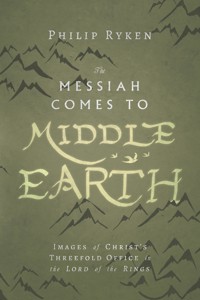
"... Ryken shows how profoundly Tolkien's imagination was shaped by Jesus Christ himself, revealing the rich theological insights we can receive from the great tales if we are attentive to them. This book is a treat, filled with surprises." – Tim Keller How can we grasp the significance of what Jesus Christ did for us? Might literature help us as we seek to understand the Christian faith? J.R.R. Tolkien's The Lord of the Rings has generated much discussion about the relationship between Christianity and literature. It is well known that Tolkien disliked allegory. Yet he acknowledged that his work is imbued with Christian symbolism and meaning. Based on the inaugural Hansen Lecture delivered by Philip Ryken, this volume mines the riches of Tolkien's theological imagination. In the characters of Gandalf, Frodo, and Aragorn, Ryken hears echoes of the threefold office of Christ—his prophetic, priestly, and royal roles. Guided by Ryken, readers will discover that they can learn much about the one who is the true prophet, priest, and king through Tolkien's imaginative storytelling. About the Series The Hansen Series celebrates the literary and spiritual contributions of seven British authors whose works have captivated readers across generations: Owen Barfield, G. K. Chesterton, C. S. Lewis, George MacDonald, Dorothy L. Sayers, J. R. R. Tolkien, and Charles Williams. These seven authors were all deeply involved in the friendships and intellectual exchanges that shaped the Inklings, a mid-twentieth-century group of Christian writers and thinkers in Oxford, England. This series invites readers to deepen their engagement with these timeless voices and their enduring influence on literature, faith, and the life of the imagination.
Sie lesen das E-Book in den Legimi-Apps auf:
Seitenzahl: 235
Veröffentlichungsjahr: 2017
Das E-Book (TTS) können Sie hören im Abo „Legimi Premium” in Legimi-Apps auf:
Ähnliche









HANSEN LECTURESHIP SERIES
TheMESSIAH COMES TO
IMAGES of CHRIST’S THREEFOLD OFFICE inthe LORD of the RINGS
CONTENTS
INTRODUCTIONto the HANSENLECTURESHIP SERIES
WALTER HANSEN
THE KEN AND JEAN HANSEN LECTURESHIP
I was motivated to set up a lectureship in honor of my parents, Ken and Jean Hansen, at the Wade Center primarily because they loved Marion E. Wade. My father began working for Mr. Wade in 1946, the year I was born. He launched my father and mentored him in his business career. Often when I look at the picture of Marion Wade in the Wade Center, I give thanks to God for his beneficial influence in my family and in my life.
After Darlene and I were married in December 1967, the middle of my senior year at Wheaton College, we invited Marion and Lil Wade for dinner in our apartment. I wanted Darlene to get to know the best storyteller I’ve ever heard.
When Marion Wade passed through death into the Lord’s presence on November 28, 1973, his last words to my father were, “Remember Joshua, Ken.” As Joshua was the one who followed Moses to lead God’s people, my father was the one who followed Marion Wade to lead the ServiceMaster Company.
After members of Marion Wade’s family and friends at ServiceMaster set up a memorial fund in honor of Marion Wade at Wheaton College, my parents initiated the renaming of Clyde Kilby’s collection of papers and books from the seven British authors—C. S. Lewis, J. R. R. Tolkien, Dorothy L. Sayers, George MacDonald, G. K. Chesterton, Charles Williams, and Owen Barfield—as the Marion E. Wade Collection.
I’m also motivated to name this lectureship after my parents because they loved the literature of these seven authors whose papers are now collected at the Wade Center.
While I was still in college, my father and mother took an evening course on Lewis and Tolkien with Dr. Kilby. The class was limited to nine students so that they could meet in Dr. Kilby’s living room. Dr. Kilby’s wife, Martha, served tea and cookies.
My parents were avid readers, collectors, and promoters of the books of the seven Wade authors, even hosting a book club in their living room led by Dr. Kilby. When they moved to Santa Barbara in 1977, they named their home Rivendell, after the beautiful house of the elf Lord Elrond, whose home served as a welcome haven to weary travelers as well as a cultural center for Middle-earth history and lore. Family and friends who stayed in their home know that their home fulfilled Tolkien’s description of Rivendell:
And so at last they all came to the Last Homely House, and found its doors flung wide. . . . [The] house was perfect whether you liked food, or sleep, or work, or story-telling, or singing, or just sitting and thinking best, or a pleasant mixture of them all. . . . Their clothes were mended as well as their bruises, their tempers and their hopes. . . . Their plans were improved with the best advice.1
Our family treasures many memories of our times at Rivendell, highlighted by storytelling. Our conversations often drew from images of the stories of Lewis, Tolkien, and the other authors. We had our own code language: “That was a terrible Bridge of Khazad-dûm experience.” “That meeting felt like the Council of Elrond.”
One cold February, Clyde and Martha Kilby escaped the deep freeze of Wheaton to thaw out and recover for two weeks at my parents’ Rivendell home in Santa Barbara. As a thank-you note, Clyde Kilby dedicated his book Images of Salvation in the Fiction of C. S. Lewis to my parents. When my parents set up our family foundation in 1985, they named the foundation Rivendell Stewards’ Trust.
In many ways, they lived in and they lived out the stories of the seven authors. It seems fitting and proper, therefore, to name this lectureship in honor of Ken and Jean Hansen.
ESCAPE FOR PRISONERS
The purpose of the Hansen Lectureship is to provide a way of escape for prisoners. J. R. R. Tolkien writes about the positive role of escape in literature:
I have claimed that Escape is one of the main functions of fairy-stories, and since I do not disapprove of them, it is plain that I do not accept the tone of scorn or pity with which “Escape” is now so often used: a tone for which the uses of the word outside literary criticism give no warrant at all. In what the misusers of Escape are fond of calling Real Life, Escape is evidently as a rule very practical, and may even be heroic.2
Note that Tolkien is not talking about escapism or an avoidance of reality, but rather the idea of escape as a means of providing a new view of reality, the true transcendent reality that is often screened from our view in this fallen world. He adds:
Evidently we are faced by a misuse of words, and also by a confusion of thought. Why should a man be scorned, if, finding himself in prison, he tries to get out and go home? Or if, when he cannot do so, he thinks and talks about other topics than jailers and prison-walls? The world outside has not become less real because the prisoner cannot see it. In using Escape in this [derogatory] way the [literary] critics have chosen the wrong word, and, what is more, they are confusing, not always by sincere error, the Escape of the Prisoner with the Flight of the Deserter.3
I am not proposing that these lectures give us a way to escape from our responsibilities or ignore the needs of the world around us, but rather that we explore the stories of the seven authors to escape from a distorted view of reality, from a sense of hopelessness, and to awaken us to the true hope of what God desires for us and promises to do for us.
C. S. Lewis offers a similar vision for the possibility that such literature could open our eyes to a new reality:
We want to escape the illusions of perspective. . . . We want to see with other eyes, to imagine with other imaginations, to feel with other hearts, as well as with our own. . . .
The man who is contented to be only himself, and therefore less a self, is in prison. My own eyes are not enough for me, I will see through those of others. . . .
In reading great literature I become a thousand men yet remain myself. . . . Here as in worship, in love, in moral action, and in knowing, I transcend myself; and am never more myself than when I do.4
The purpose of the Hansen Lectureship is to explore the great literature of the seven Wade authors so that we can escape from the prison of our self-centeredness and narrow, parochial perspective in order to see with other eyes, feel with other hearts, and be equipped for practical deeds in real life.
As a result, we will learn new ways to experience and extend the fulfillment of our Lord’s mission: “to proclaim freedom for the prisoners and recovery of sight for the blind, to set the oppressed free” (Lk 4:18 NIV).
THE GOOD CATASTROPHE
One particular scene from Tolkien’s The Return of the King captures well what I hope this lecture series will provide. This scene takes place just outside the Crack of Doom after the One Ring of Power was destroyed:
“I am glad that you are here with me,” said Frodo. “Here at the end of all things, Sam.”
“Yes, I am with you, Master,” said Sam, laying Frodo’s wounded hand gently to his breast. “And you’re with me. And the journey’s finished. But after coming all that way I don’t want to give up yet. It’s not like me, somehow, if you understand.”
“Maybe not, Sam,” said Frodo; “but it’s like things are in the world. Hopes fail. An end comes. We have only a little time to wait now. We are lost in ruin and downfall, and there is no escape.”5
But then there is a sudden turn in the story. We see in the next scene that ruin and downfall, the end of all things, the worst catastrophe, is unexpectedly reversed, and it becomes a good catastrophe, a “eucatastrophe.” Our sorrow turns to joy as Frodo and Sam are lifted on eagles’ wings and borne to safety and recovery.
Tolkien coined the word eucatastrophe—the good catastrophe—to express the reality of “a sudden and miraculous grace.” It gives the reader “a catch of breath, a beat and lifting of the heart, and a piercing glimpse of joy and heart’s desire.”6 The gospel, Tolkien says, “is the greatest and most complete conceivable eucatastrophe. But this story has entered History and the primary world. . . . Art has been verified. . . . Legend and History have met and fused.”7
I have a book from my father’s library by Clyde Kilby, Tolkien & “The Silmarillion,” signed “To Jean and Ken with love, Clyde Kilby.” Beneath Dr. Kilby’s signature my father wrote this note, dated January 1, 1991: “I must have read earlier but this reading was a special one for me. How I would enjoy rereading with my Jean.” This type of reading nourished and strengthened my father during dark days of loneliness after my mother died in 1989. In his typical fashion, my father underlined sentences while he was reading, including these where Kilby quotes from Tolkien:
The Gospels resemble fairy-stories in their far-flung intimations of an unearthly Joy. “The Birth of Christ is the eucatastrophe of Man’s history. The Resurrection is the eucatastrophe of the story of the Incarnation. This story begins and ends in joy.” . . . The “Great Eucatastrophe” is the final redemption of man as declared in the Scriptures.8
During the final months of my father’s life in 1994, he filled his heart and mind with the gospel stories and the stories of the seven authors represented here in the Wade Center. He was well prepared by these stories of eucatastrophe to pass through a terribly painful death with courage into the presence of the Lord.
It is my prayer that the Hansen Lectures by Wheaton College faculty on these seven authors will give the hope and joy of the gospel, “the most complete conceivable eucatastrophe” to all who have reached the end of themselves and see no way of escape.
The lectures by Philip Ryken in this volume point to the way of escape from destructive powers by focusing on images of the Messiah in Tolkien’s story. Dr. Ryken serves as a wise guide through Middle-earth and The Lord of the Rings so that we see with deeper understanding how the Messiah came to our earth as our prophet, priest, and king to be our way of deliverance from evil powers.
Drawing from familiar images in Tolkien’s story, I offer this benediction on all who will hear and read the Hansen Lectures:
May you find healing at Rivendell.
May you receive gifts for your journey at Lothlórien.
May you escape the darkness of Mordor on eagles’ wings.
May you always love and be loved in the Fellowship of the King.
ABBREVIATIONS
FR
J. R. R. Tolkien, The Fellowship of the Ring, part one of The Lord of the Rings (Boston: Houghton Mifflin, 1993).
RK
J. R. R. Tolkien, The Return of the King, part three of The Lord of the Rings (Boston: Houghton Mifflin, 1993).
Sil
J. R. R. Tolkien, The Silmarillion, 2nd ed., ed. Christopher Tolkien (Boston: Houghton Mifflin, 2001).
TT
J. R. R. Tolkien, The Two Towers, part two of The Lord of the Rings (Boston: Houghton Mifflin, 1993).
1
The PROPHETIC MINISTRY of GANDALFthe GREY
As the Nine Walkers seek passage through the Misty Mountains, by way of Moria, they face terrifying evil. Dark spirits have been awakened from the deep, and their drum beats roll through the mine, echoing in the caverns and throbbing fear into the heart of the Fellowship of the Ring: doom, doom. A grim company of orcs attack, accompanied by massive trolls. For a moment, the Walkers narrowly escape, but soon their enemies are after them again: doom-boom, doom-boom!
As they run for their lives, the leader of their company—Gandalf the Grey—suddenly faces an enemy he has never met before. It is “like a great shadow, in the middle of which was a dark form, of man shape maybe, yet greater; and a power and terror seemed to be in it and to go before it. . . . In its right hand was a blade like a stabbing tongue of fire; in its left it held a whip of many thongs.”1 The fell creature is a Balrog—one of the last fiery demons who rebelled against Ilúvatar, the One God.2
As the Fellowship comes to the final bridge out of the mountains—the Bridge of Khazad-dûm—Gandalf seeks to hold the narrow passage long enough for his friends to escape. “You cannot pass,” the wizard says. “Go back to the Shadow! You cannot pass.” For a moment, the Balrog seems to wither. But then he draws himself up to his full height, leaps on the bridge, and strikes with deadly force:
At that moment Gandalf lifted his staff, and crying aloud he smote the bridge before him. The staff broke asunder and fell from his hand. A blinding sheet of white flame sprang up. The bridge cracked. Right at the Balrog’s feet it broke, and the stone upon which it stood crashed into the gulf, while the rest remained, poised, quivering like a tongue of rock thrust out into emptiness.
With a terrible cry the Balrog fell forward, and its shadow plunged down and vanished. But even as it fell it swung its whip, and the thongs lashed and curled about the wizard’s knees, dragging him to the brink. He staggered and fell, grasped vainly at the stone, and slid into the abyss. “Fly, you fools!” he cried, and was gone.3
It is easy to recognize Gandalf’s heroic stand against the Balrog as an act of Christlike love. “Greater love has no one than this, that someone lay down his life for his friends,” Jesus said (Jn 15:13). And this is precisely what Gandalf does: he sacrifices his life so that his friends may escape the dark power of evil. What I wish to argue is that Gandalf is Christlike in a particular way—that his work as a wizard is analogous to the ministry of the biblical prophets and thus illuminates both the office of Christ as prophet and the prophetic calling of every Christian. In the unforgettable character of Gandalf the Grey, J. R. R. Tolkien has portrayed the archetypal prophet.4
But this is only one-third of the argument that I wish to make in these inaugural Hansen Lectures.5 There are really three main Christ figures in The Lord of the Rings, and each one echoes a different aspect of the work of Christ—what theologians call his “threefold office” as prophet, priest, and king.
At the conclusion of his excellent book The Philosophy of Tolkien, Peter Kreeft astutely observes, “There is no one complete, concrete, visible Christ figure in The Lord of the Rings, like Aslan in Narnia. But Christ is really, though invisibly, present in the whole of The Lord of the Rings.”6 Perhaps this pervasive Christology helps to explain the unique power of Tolkien’s epic fantasy, which some regard as the greatest fictional work of the twentieth century. The character of Christ is not a single thread in the story but is deeply woven into the entire narrative fabric. Indeed, is it possible for us to think of a book that more richly incarnates the themes of the gospel?
As Kreeft continues, he tells us more specifically where to look for the real but invisible presence of Christ:
He is more clearly present in Gandalf, Frodo, and Aragorn, the three Christ figures. First of all, all three undergo different forms of death and resurrection. Second, all three are saviors: through their self-sacrifice they help save all of Middle-earth from the demonic sway of Sauron. Third, they exemplify the Old Testament threefold Messianic symbolism of prophet (Gandalf), priest (Frodo), and king (Aragorn).7
I wish to explore these connections more deeply by surveying the history of Christian thought on the threefold office of Christ and by considering how reading Tolkien can help us live out the prophetical, sacerdotal, and regal dimensions of our own calling as Christians. My approach will be literary, theological, and practical as I consider first “The Prophetic Ministry of Gandalf the Grey” and then “Frodo, Sam, and the Priesthood of All Believers,” concluding with “The Coronation of Aragorn Son of Arathorn.”
CHRIST’S THREEFOLD OFFICE IN THE CHURCH FATHERS
We begin by tracing some historical-theological background from the early church.8 Apparently, the first theologian to describe the work of Christ in terms of his prophetic, priestly, and kingly ministry was Eusebius, the early fourth-century bishop of Caesarea.
Eusebius began his famous Ecclesiastical History by defining the term Christ, which, he noted, went all the way back to Moses and his anointing of Aaron as the high priest in Israel. The Messiah—or the Christ, to use the later Greek term—literally means “the anointed one.” The majority of occurrences of this term in the Hebrew Bible refer to anointing the shepherd-king of Israel with holy oil (e.g., 1 Sam 10:1; Ps 89:20).9 Eusebius also found the term in Psalm 2, a messianic song for the Son of David. On the basis of these and other scriptures, the venerable historian concluded that the work of Christ as the anointed one pertains to more than one Old Testament calling:
Thus, it was not only those honoured with the high priesthood, anointed with prepared oil for the symbol’s sake, who were distinguished among the Hebrews with the name of Christ, but the kings too; for they, at the bidding of God, received the chrism from prophets and were thus made Christs in image, in that they, too, bore in themselves the patterns of the kingly, sovereign authority of the one true Christ, the divine Word who reigns over all. Again, some of the prophets themselves by chrism became Christs in pattern, as the records show, so that they all stand in relation to the true Christ, the divine and heavenly Word who is the sole High Priest of the universe, the sole King of all creation, and of the prophets the sole Archprophet of the Father.10
The Old Testament priests, kings, and prophets were images or patterns, but there is only one true Christ, for whom Eusebius offered high praise:
He did not receive the symbols and patterns of the high priesthood from anyone; He did not trace his physical descent from the acknowledged priests; He was not promoted by the soldiers’ weapons to a kingdom; He did not become a prophet in the same way as those of old; He did not receive from the Jews any rank or pre-eminence whatever. Yet with all these, not indeed in symbols but in very truth, He had been adorned by the Father. . . . He is more entitled than any of them to be called Christ . . . being Himself the one true Christ of God.11
Among the church fathers who followed Eusebius, the threefold office of Christ—or munus triplex—received little more than occasional mention. We do find the golden-tongued preacher John Chrysostom telling his congregation in Constantinople that “in old times, these three sorts were anointed”: prophets and priests and kings.12 We also find Peter Chrysologus, the fifth-century bishop of Ravenna, saying in one of his sermons that Jesus “was called Christ by anointing, because the unction, which in former times had been given to kings, prophets, and priests as a type, was now poured out as the fullness of the divine Spirit into this one person, the King of kings, Priest of priests, Prophet of prophets.”13
CHRIST’S THREEFOLD OFFICE IN SACRED SCRIPTURE
We will have to wait until the Protestant Reformation in Europe—which we will consider in the next chapter—to see how this three-dimensional schema gets developed in Christian doctrine. In the meantime, we should recognize that in commenting on Christ’s threefold anointing, Eusebius, Chrysostom, and other patristic scholars were tapping into a rich vein of biblical truth. There are three primary forms of leadership in Old Testament Israel: prophet, priest, and king. To observe how these leaders operate and interact is to understand in many ways God’s purposes for his people.
We can illustrate this from prophetic ministry. From Moses to Malachi, the prophets performed miraculous signs and gave God’s Word to God’s people, boldly speaking truth to power in the contemporary situation and perceptively foretelling the future.14 This answered the people’s need for guidance and deliverance.
Each of the Old Testament prophets received a divine call to sacred ministry. Think of Moses at the burning bush (Ex 3:1-10) or Isaiah in the temple, where he saw the holy Lord lifted high on his lofty throne (Is 6:1-8). The biblical prophets were not self-appointed; they were sent by God. On occasion—and here Elisha is the notable exemplar (1 Kings 19:16)—they were anointed for their holy office with sacred oil.
The biblical prophets fulfilled their calling to communicate God’s Word, yet they were not without their flaws. Moses struck the rock in sinful anger (Num 20:2-13). Elijah ran away from his calling, threw himself down under a tree, and told God that he had had enough (1 Kings 19:1-10). Jeremiah cursed the day that he was born (Jer 20:14-18). As they considered the failings of these and other prophets, careful students of the ancient Scriptures looked in hope for God to fulfill his promise and raise up a prophet like Moses—one who would have God’s very words in his mouth (Deut 18:15).
Enter Jesus, the Christ. In his singular person, Jesus fulfilled the promise of the prophetic office and indeed of all three offices, as various theologians have noted. Here is how the Anglican bishop John Henry Newman summarizes the ways in which our Savior fulfilled his threefold office, from a notable Easter sermon he preached in 1840:
Christ exercised His prophetical office in teaching, and in foretelling the future;—in His sermon on the Mount, in His parables, in His prophecy of the destruction of Jerusalem. He performed the priest’s service when He died on the Cross, as a sacrifice; and when He consecrated the bread and the cup to be a feast upon that sacrifice; and now that He intercedes for us at the right hand of God. And He showed Himself as a conqueror, and a king, in rising from the dead, in ascending into heaven, in sending down the Spirit of grace, in converting the nations, and in forming his Church to receive and to rule them.15
For Karl Barth, who uses the threefold office of Christ as the structure for his soteriology, Jesus Christ is “the God-man who is instituted by God Himself, and who in the midst of world-history exists in His name, with His authority and in fulfillment of His will, suffering as High-priest, ruling as King and revealing Himself as Prophet.”16 Richard Mouw says, “We might put the case this way. In ancient Israel’s social economy, God saw fit to develop three separate offices—prophet, priest, and king—along distinct and distinguishable lines. The roles and functions were separated for developmental preparatory purposes. But with the coming of Christ the offices are now gathered into an integral unity within one person.”17 And according to pastor and author Tim Keller, the promised Christ fulfills “all the powers and functions of ministry.”18
To know our Savior in all his offices is to know him in a more complete way. So consider Christ in his prophetic office. At the outset of his public ministry, Jesus was set apart as a prophet—not by a mere anointing with oil but with the baptism of the Holy Spirit (Mt 3:16). On the basis of this divine chrism, Jesus read Isaiah’s promise of the Messiah-prophet (“The Spirit of the Lord is upon me, because he has anointed me to proclaim good news to the poor”), sat down with prophetic authority, and announced, “Today this Scripture has been fulfilled in your hearing” (Lk 4:18-21; cf. Ps 105:15; Is 61:1).
In his own name and person, Jesus proceeded to preach the coming of God’s kingdom (e.g., Mk 1:14-15) and to teach as no one had ever taught before—with personal divine authority. He claimed the unique ability and rightful commission to speak on his Father’s behalf (Jn 8:26-29; 12:49). Although opinions about his identity varied (see Mt 16:13-14; Jn 7:40-43), there was no doubt as to his prophetic calling. Jesus performed miraculous signs, clarified the true meaning of the law, rebuked false teaching, and made many predictions about his own death and resurrection (e.g., Lk 9:22) as well as the final judgment and the end of the world (e.g., Mt 24). In response, the crowds said, “This is the prophet Jesus” (Mt 21:11; cf. Jn 1:45), and “This is indeed the Prophet who is to come into the world!” (Jn 6:14; cf. Lk 7:16; 24:19).
When the time came for him to die, Jesus exercised his prophetic office by teaching the Word of God. He used his “seven last words” to remind us of the promises of God and to prophesy an entrance to paradise for the penitent thief who died on the cross next to him (Lk 23:43). Nor was death the end of his ministry as prophet. As soon as he was raised from the dead, Jesus resumed preaching the kingdom of God, teaching his disciples the implications of the cross and the empty tomb (Lk 24:44-49; Acts 1:1-3). This prophetic ministry of the gospel was not merely for the forty days leading up to the ascension but would also continue as the Holy Spirit guided the disciples into all truth (Jn 14:26; 16:13). Right up to the present moment, Jesus the anointed prophet remains “the faithful and true witness” (Rev 3:14).
GANDALF AS PROPHET
With this biblical and christological background in mind, we are ready to consider some of the ways in which Gandalf’s coming to Middle-earth illuminates the ministry of anyone who is called to be a prophet.
To be sure, Gandalf is a wizard—Gandalf the Grey—whom Tolkien characterized as an “incarnate angel.”19 It is also true that on certain occasions Tolkien describes Gandalf as bearing kingly dignity. When he sits at the Council of Elrond, for example, and appears shorter in stature than the elves sitting beside him, nevertheless “his long white hair, his sweeping silver beard, and his broad shoulders, made him look like some wise king of ancient legend.”20
But Gandalf’s long white hair and sweeping silver beard equally call to mind the venerable mien of some biblical prophet. The wizard also carries a staff in his right hand—a staff that features prominently in Frodo’s lament after Gandalf meets his doom in the mines of Moria:
A lord of wisdom throned he sat,
swift in anger, quick to laugh;
an old man in a battered hat
who leaned upon a thorny staff.
He stood upon the bridge alone
and Fire and Shadow both defied;
his staff was broken on the stone,
in Khazad-dûm his wisdom died.21
Readers and moviegoers alike will remember Gandalf’s stubborn reluctance to part with his old man’s walking stick in the hall of Théoden.22




